分类: science

  • Smallest last quarter moon of 2026 observed in China’s Heilongjiang

    Smallest last quarter moon of 2026 observed in China’s Heilongjiang

    Astronomical observers in Northeast China were treated to a rare celestial spectacle on March 11, 2026, as the smallest last quarter moon of the year graced the night skies over Jiayin County, Heilongjiang province. This lunar phenomenon, captured in stunning detail by Xinhua photographers, represented the most diminished final quarter phase observable throughout 2026.

    The last quarter moon, characterized by its distinctive half-illuminated appearance, follows a unique celestial schedule unlike other lunar phases. This particular phase emerges around midnight and remains visible until approximately noon the following day, offering extended observation opportunities for both professional astronomers and amateur stargazers.

    Scientific analysis indicates that the apparent size variation of the moon results from its elliptical orbit around Earth. During periods when the moon reaches its apogee—the farthest point from Earth in its orbital path—it presents a noticeably smaller visual diameter. The March 11th occurrence coincided with such an orbital position, creating the most miniature appearance of the final quarter phase for the entire year.

    The photographic documentation of this event provides valuable comparative data for astronomical researchers studying lunar orbital mechanics and visual perception phenomena. Such observations contribute to our understanding of celestial mechanics while simultaneously offering breathtaking visual experiences for astronomy enthusiasts worldwide.

  • North America ‘heat dome’ left winners and losers: study

    North America ‘heat dome’ left winners and losers: study

    A comprehensive scientific investigation has documented the severe ecological consequences of North America’s unprecedented 2021 heat dome phenomenon, revealing both catastrophic losses and unexpected beneficiaries within affected ecosystems. Published in Nature Ecology and Evolution, the research demonstrates how this extreme weather event—intensified by human-induced climate change—created dramatically divergent outcomes across species populations.

    The record-shattering heatwave that engulfed western North America, with temperatures surpassing 50°C (122°F), triggered a chain reaction of environmental impacts. Researchers from the University of British Columbia and University of Victoria conducted multidisciplinary analysis combining meteorological, ecological, and hydrological data with wildfire tracking and scientific modeling to assess the full scope of damage.

    Findings indicate that over three-quarters of the 49 terrestrial and marine species examined suffered significant negative effects, with population declines ranging from moderate to near-total collapse. Marine ecosystems experienced particularly devastating losses, with 92% of Bay mussels perishing and more than half of the thatched barnacle population eliminated. Bird species faced critical challenges, as evidenced by a 56% reduction in surf scoter populations and nest abandonment among fledglings incapable of escaping overheating nests.

    Terrestrial mammals displayed varied responses. Caribou sightings decreased by 50% according to camera trap data, while moose populations demonstrated remarkable resilience, maintaining pre-heatwave observation levels potentially through strategic selection of cooler microclimates in densely forested areas.

    The research identified several unexpected beneficiaries of the ecological disruption. Sea lettuce capitalized on the diminished competition from other algae species, expanding its beach coverage by 65% following the heat event. This differential impact highlights how species-specific traits—including heat tolerance, behavioral adaptations, access to vegetation cover, and mobility—determined survival outcomes during the extreme thermal event.

    The study further noted that the heat dome contributed to a nearly 400% increase in wildfire activity across affected regions, compounding the ecological disruption through habitat destruction and air quality deterioration. Scientists emphasize that these findings provide critical insights into ecosystem vulnerability and adaptive capacity as climate change increases the frequency and intensity of extreme weather events worldwide.

  • Fisheries research base in China’s Chongqing conserves rare fish species

    Fisheries research base in China’s Chongqing conserves rare fish species

    In a significant conservation initiative, the Dazhou fisheries research base in Chongqing’s Wanzhou district has emerged as a critical sanctuary for preserving endangered aquatic species native to the upper Yangtze River basin. This specialized facility functions as a wild acclimation center where rare fish undergo preparatory training before their reintroduction into natural habitats.

    The research station operates an extensive network of 32 net cages spanning approximately 800 square meters, creating controlled environments that simulate natural river conditions. This infrastructure supports the conservation of more than 20 distinct fish species, including both rare genetic populations and commercially valuable varieties. The base’s breeding programs have achieved remarkable productivity, with annual output exceeding 20 million high-quality fry of endangered and premium fish species.

    Recent advancements in conservation methodology have seen the base enhance its wild acclimation protocols, implementing rigorous short-term survival training for juvenile fish prior to their release. This scientific approach has demonstrated measurable success in boosting the reproductive rates and survival capabilities of endangered species once they return to their natural ecosystems. The program represents a sophisticated integration of aquaculture technology and ecological restoration, providing a sustainable model for aquatic biodiversity conservation in one of China’s most vital river systems.

  • Chinese scientists propose human-wildlife conflict resolution strategy

    Chinese scientists propose human-wildlife conflict resolution strategy

    Chinese researchers from the Northwest Institute of Plateau Biology (CAS) have pioneered a groundbreaking temporal livestock management approach to address the persistent global challenge of human-wildlife conflicts. Their innovative study, published in Integrative Zoology, offers a scientific framework for balancing biodiversity conservation with sustainable development in agropastoral communities.

    The research team, led by Dr. Lian Xinming, conducted an extensive decade-long field investigation in China’s ecologically critical Sanjiangyuan region—known as the nation’s water tower. Through sophisticated monitoring techniques involving 422 infrared cameras across 2,580 square kilometers, scientists gathered unprecedented data on four large carnivores: snow leopards, wolves, lynxes, and brown bears.

    Employing advanced kernel density estimation methods, the team analyzed diel activity patterns and seasonal variations among these predators. The findings revealed distinct nocturnal behaviors with species-specific peak activity times. Wolves demonstrated particularly notable seasonal variations in their activity patterns compared to other species.

    Crucially, the research identified precise high-risk windows for livestock predation and human encounters. For brown bears, the most dangerous period for home invasions occurs between 20:42 and 02:36, requiring heightened vigilance during these hours. The study recommends strategic interventions including guard dogs and electronic deterrents during identified risk periods.

    Dr. Lian emphasized that integrating spatial utilization zoning with temporally-regulated grazing schedules can significantly reduce human-carnivore encounters. This evidence-based approach represents a paradigm shift from reactive conflict management to proactive, scientifically-informed coexistence strategies that benefit both wildlife conservation and local livelihoods.

  • A 1,300-pound Nasa spacecraft to re-enter Earth’s atmosphere

    A 1,300-pound Nasa spacecraft to re-enter Earth’s atmosphere

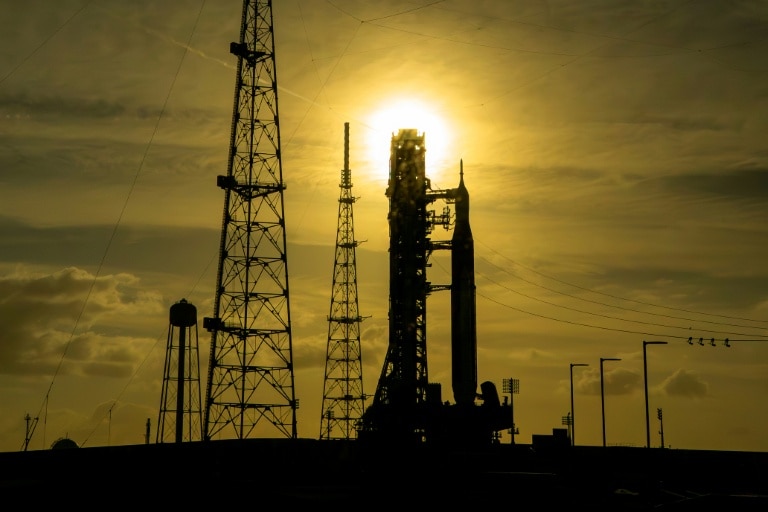
    A retired NASA spacecraft is making its final descent toward Earth’s atmosphere nearly 14 years after its landmark launch. The Van Allen Probe A, weighing approximately 1,300 pounds (600 kg), is projected to re-enter atmospheric boundaries around 19:45 EST (00:45 GMT) on Tuesday, according to coordinated predictions from NASA and the U.S. Space Force.

    The space agency emphasizes that while precise timing carries a 24-hour uncertainty window, the vast majority of the spacecraft will disintegrate during atmospheric transit. NASA’s risk assessment indicates minimal danger to Earth’s population, calculating approximately a 1 in 4,200 chance of injury from surviving components—a probability characterized as ‘low risk’ by space debris standards.

    Originally designed for a two-year operational lifespan, the twin Van Allen Probes (A and B) dramatically exceeded expectations by collecting unprecedented scientific data for nearly seven years. The mission concluded in 2019 when both spacecraft exhausted their fuel reserves and could no longer maintain proper solar orientation.

    From 2012 through 2019, these pioneering probes conducted detailed measurements of Earth’s Van Allen radiation belts—concentric rings of charged particles held by the planet’s magnetic field. These natural barriers provide critical protection against cosmic radiation, solar storms, and solar wind emissions that pose threats to both human health and technological infrastructure.

    The mission yielded several groundbreaking discoveries, including the first documented evidence of a transient third radiation belt that forms during periods of intense solar activity. This finding significantly advanced scientific understanding of space weather dynamics and their effects on Earth’s magnetosphere.

    While Van Allen Probe A completes its final journey, its identical twin remains in orbit and is not expected to re-enter Earth’s atmosphere before 2030. NASA and Space Force personnel continue to monitor the descending spacecraft and will provide updated trajectory predictions as new data becomes available.

  • China’s ‘super microscope’ achieves milestone with first neutron beam output

    China’s ‘super microscope’ achieves milestone with first neutron beam output

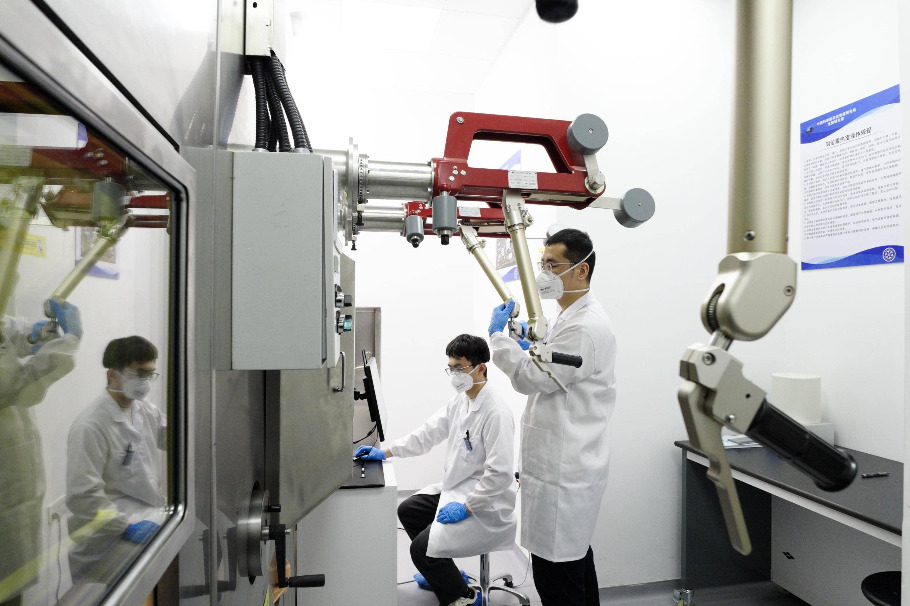
    China’s ambitious Phase II expansion of its premier scientific facility, the China Spallation Neutron Source (CSNS), has achieved a groundbreaking milestone with the successful generation of its first neutron beam. This achievement marks a pivotal moment in the project’s development timeline, demonstrating significant progress in China’s advanced scientific infrastructure capabilities.

    Situated in Dongguan, Guangdong province, the CSNS represents China’s inaugural pulsed spallation neutron source and ranks as the world’s fourth such facility. Operated under the auspices of the Institute of High Energy Physics within the Chinese Academy of Sciences, this sophisticated installation functions as an ultra-precise microscopic observatory. By employing neutron scattering techniques, scientists can examine materials at unprecedented resolutions, revealing critical structural information about metal fatigue, battery performance characteristics, and numerous other material properties that remain invisible to conventional imaging methods.

    The newly operational neutron technology development station serves as a specialized testing platform for advancing detection methodologies. Featuring an ultra-clean environment with minimal interference, this station enables researchers to capture extremely faint neutron signals with remarkable efficiency. The successful beam output follows five years of intensive interdisciplinary collaboration addressing complex engineering challenges including precise neutron beam control, dynamic equipment switching mechanisms, and the relocation of heavy components.

    Concurrently, CSNS has demonstrated remarkable operational stability, achieving a record-breaking 185 kilowatts beam power on target during a 72-hour continuous operation period. This performance builds upon previous milestones of 160 and 170 kilowatts reached in 2024. The enhanced power output significantly reduces experiment durations while optimizing facility utilization, providing stronger technical support for cutting-edge scientific investigations.

    The Phase II project, initiated in 2024 with anticipated completion by 2029, will elevate the facility’s proton accelerator target power to 500 kilowatts. This substantial enhancement will increase the neutron beam’s intensity, enabling scientists to detect fainter structural signals and achieve nanoscale precision in material analysis. The advancements will significantly bolster China’s research capabilities across multiple disciplines including renewable energy development, aerospace engineering, and bioscience innovation.

  • Chinese scientists refine lunar global chemistry mapping using farside ground truth information

    Chinese scientists refine lunar global chemistry mapping using farside ground truth information

    Chinese researchers have achieved a groundbreaking advancement in planetary science by creating the first high-resolution global chemical atlas of the Moon incorporating critical ground truth data from its far side. This scientific milestone, led by the Shanghai Institute of Technical Physics of the Chinese Academy of Sciences, addresses a long-standing gap in lunar geological understanding.

    The research team developed an innovative intelligent inversion framework utilizing residual convolutional neural networks, combining Chang’e-6 mission samples with high-resolution multispectral orbital imagery. This sophisticated approach enabled the generation of unprecedented high-precision global maps detailing the distribution of major elemental oxides across the lunar surface.

    Previous lunar chemical mapping efforts relied exclusively on near side calibration data, creating significant uncertainties in geological models, particularly within the scientifically crucial South Pole-Aitken basin. The incorporation of far side ground truth information has now successfully constrained the composition and extent of previously uncharacterized lunar terrains.

    The refined chemical maps reveal a substantially higher proportion of magnesian anorthosite in the far side highlands compared to the near side hemisphere. This quantitative evidence provides compelling support for the theory of asymmetric crystallization and differentiation within the lunar magma ocean during the Moon’s early formation.

    This research represents a transformative development in lunar science, offering new insights into crust-mantle structure, hemispherical evolutionary differences, and the formation mechanisms of the Solar System’s largest impact basin. The high-precision geochemical data will inform future landing site selection, resource exploration strategies, and mission planning for lunar exploration programs worldwide.

    The Chang’e-6 mission, which launched on May 3, 2024, and returned with 1,935.3 grams of far side samples on June 25, 2024, provided the essential ground truth data that made this scientific breakthrough possible. The findings were published in the prestigious journal Nature Sensors.

  • Chinese scientists develop ‘molecular bridge’ to boost cancer treatment

    Chinese scientists develop ‘molecular bridge’ to boost cancer treatment

    Chinese researchers from the Institute of Process Engineering at the Chinese Academy of Sciences have engineered a groundbreaking molecular enhancement that significantly improves the effectiveness of CAR T-cell therapy against leukemia. Published in the prestigious journal Cell, their innovation addresses a critical limitation of current cancer immunotherapies where malignant cells evade detection by shedding surface markers.

    The team developed a novel helper molecule dubbed FACE (Ferritin-based Adhesion and Connection Enhancer), constructed from naturally occurring ferritin protein. This breakthrough emerged from analyzing patient samples that revealed both leukemia cells and immune cells abundantly express the CD71 surface protein. FACE strategically exploits this commonality by binding to CD71 receptors on both cell types, effectively creating a molecular bridge that maintains cellular connection even when cancer cells attempt to hide.

    Dr. Wei Wei, lead researcher on the project, explained: “FACE functions as both a microscopic bridge and powerful biological adhesive. When leukemia cells reduce their identifiable markers to escape detection, FACE ensures CAR T-cells maintain their grip and complete their therapeutic mission.”

    Laboratory results demonstrate remarkable efficacy. In mouse models where conventional CAR T therapy failed due to diminished cancer cell markers, the FACE-enhanced approach achieved 100% survival rates by enabling continuous cancer cell targeting and elimination. The technology shows particular promise because it utilizes biologically compatible materials already approved for medical applications, potentially streamlining regulatory approval processes.

    The research has been validated across multiple clinically relevant animal models and human patient-derived samples, indicating strong translational potential. This development represents a significant advancement in adaptive cancer immunotherapy, offering new hope for patients with recurrent or treatment-resistant leukemia without adding substantial complexity or cost to existing therapeutic protocols.

  • Wildflowers cover Death Valley in best display since 2016

    Wildflowers cover Death Valley in best display since 2016

    Death Valley National Park, renowned as one of Earth’s most extreme and arid environments, is currently experiencing a spectacular natural phenomenon—its most vibrant wildflower superbloom since 2016. This extraordinary floral display has transformed the typically stark desert landscape into a breathtaking tapestry of color, attracting botanists, photographers, and nature enthusiasts from across the globe.

    The ecological catalyst for this remarkable event was an unusually intense wet season during autumn 2022. Exceptionally heavy rainfall penetrated the park’s parched soils, effectively hydrating millions of long-dormant wildflower seeds that had lain dormant for years. The substantial precipitation not only provided crucial moisture but also served to wash away the protective coatings that naturally inhibit premature germination in desert seeds.

    Botanists specializing in desert ecosystems note that this particular superbloom exhibits exceptional density and diversity, with species including the golden desert sunflower (Geraea canescens), vivid purple sand verbena (Abronia villosa), and delicate white gravel ghost (Atrichoseris platyphylla) creating striking visual contrasts against the desert backdrop. The phenomenon represents a sophisticated survival mechanism where desert plants rapidly complete their entire life cycle during brief windows of favorable conditions.

    Park officials report that the bloom has progressed through elevation gradients, with lower elevations peaking first followed by successive waves at higher altitudes. The biological significance extends beyond visual splendor, as the abundant flowers provide critical nourishment for pollinators including native bees, butterflies, and migratory birds, creating a temporary but vital ecosystem boom in this challenging environment.

  • Concern over US travel visas prompts Ig Nobels to move its awards to Europe

    Concern over US travel visas prompts Ig Nobels to move its awards to Europe

    In an unprecedented move reflecting global immigration tensions, the iconic Ig Nobel Prize ceremony is abandoning its traditional American venue for European shores. Organizers of the satirical science awards announced Monday that the 36th annual event will transition from its customary September slot in the United States to Zurich, Switzerland—marking the first continental shift in the ceremony’s history.

    The Annals of Improbable Research, the digital publication behind these awards honoring research that “first makes people laugh, then think,” cited mounting concerns about visa accessibility for international attendees. Ceremony host and magazine editor Marc Abrahams revealed to The Associated Press that the decision stemmed from safety considerations for participants. “During the past year, it has become unsafe for our guests to visit the country,” Abrahams stated via email. “We cannot in good conscience ask the new winners, or the international journalists who cover the event, to travel to the USA this year.”

    This relocation occurs against the backdrop of the Trump administration’s intensified immigration enforcement, which has targeted both undocumented migrants and holders of student and exchange visitor visas. For 35 years, recipients have journeyed to American institutions including Harvard University, MIT, and Boston University to accept their honors amidst the tradition of paper airplane showers.

    The Zurich edition will be produced collaboratively with the ETH Domain (Swiss Federal Institute of Technology) and the University of Zurich. Abrahams praised Switzerland’s history of nurturing “unexpected good things,” citing Albert Einstein’s physics, the global economy, and even the cuckoo clock. The ceremony will alternate between Zurich and other European cities biennially, with no current plans to return to American venues.

    Past honorees have included researchers studying zebra-striped cattle as fly deterrents, pizza preferences of lizards, alcohol’s effect on foreign language acquisition, and decades-long fingernail growth studies. Notably, four of last year’s ten winners declined to attend the Boston ceremony, signaling growing travel concerns.

    Epidemiologist Milo Puhan, University of Zurich researcher and 2017 Ig Nobel laureate for demonstrating didgeridoo playing’s benefits against snoring and sleep apnea, welcomed the move. “The Ig Nobel Prize makes research visible, and does so with a wink,” Puhan remarked, highlighting the ceremony’s unique blend of humor and scientific recognition.