For nearly 20 years, scientists have confirmed that water exists on the Moon — but critical questions remain unanswered. How much harvestable water ice is trapped in the Moon’s permanently shadowed polar craters, where sunlight has not touched the surface for billions of years? How deep is this ice buried, and what physical form does it take? These are the mysteries China’s upcoming Chang’e-7 lunar mission aims to solve, as the world enters a new era of lunar exploration focused not just on reaching the Moon, but unlocking its resources for long-term human activity.
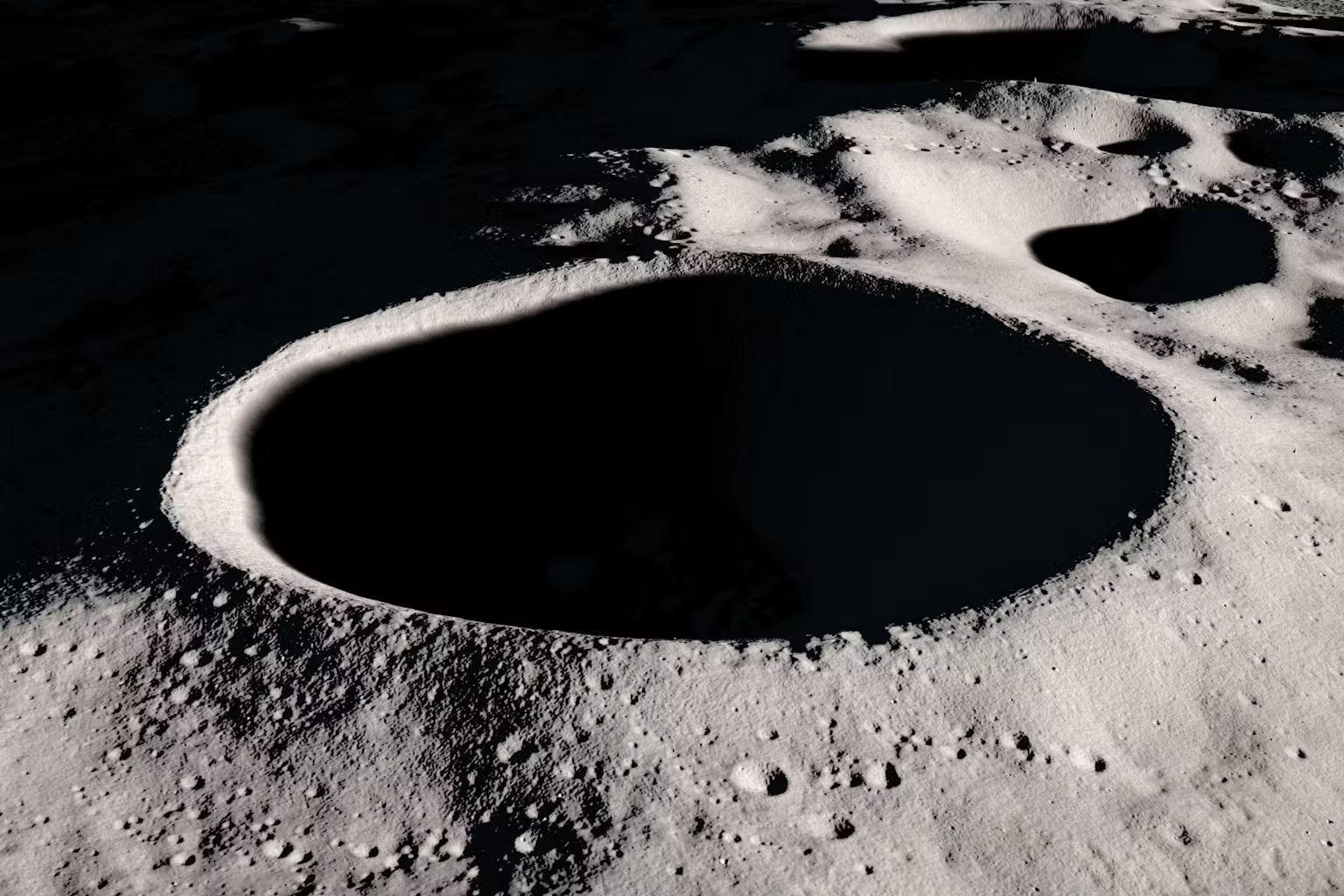
Exploring these permanently shadowed craters is no small feat. Tucked at the base of deep, uneven craters near the lunar south pole, these regions sit at temperatures well below -200°C, cut off from sunlight and unreachable for most conventional exploration craft. Yet they are also among the most valuable real estate on the Moon: if the water ice they hold can be accessed and processed, it could provide drinking water, oxygen, and rocket fuel for future crewed missions and permanent lunar outposts.
The journey to this point stretches back more than six decades, starting when the Soviet Union’s Luna-1 became the first probe to reach the Moon’s vicinity in 1959. Early lunar exploration centered on simply reaching the celestial body; today, the core challenge has shifted to navigating and studying the most extreme, hard-to-reach lunar environments, and determining whether the Moon can supply the resources future explorers will need. China has built its incremental, ambitious lunar exploration program — named for Chang’e, the ancient Chinese goddess of the Moon — over the past 20 years, and Chang’e-7 represents the next bold step in that roadmap.
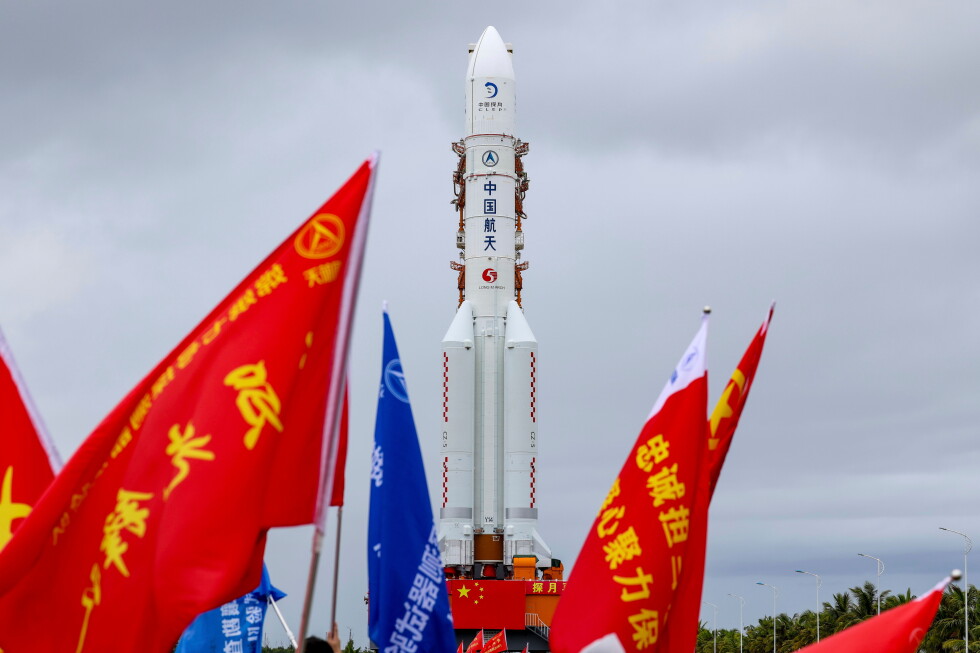
Scheduled for launch later this month, the mission’s timeline carries minor uncertainty following a recent failure of an unrelated Chinese rocket, but preparations remain largely on track. Unlike previous missions, Chang’e-7 uses an innovative multi-component design: it comprises an orbiter, a lander, a wheeled rover, and a revolutionary hopping craft that will act as the mission’s centerpiece. The Queqiao-2 lunar relay satellite, launched separately in March 2024, is already in position to support the mission, having previously served the successful Chang’e-6 sample return mission. Queqiao-2 will maintain steady communications between the exploration craft on the lunar surface and mission control on Earth.
While a final landing site has not been officially announced, the leading candidate is a sunlit ridge on or near Shackleton Crater, one of the most prominent permanently shadowed impact structures in the Moon’s south polar Aitken Basin. From this landing zone, the mission’s hopper will undertake the core exploratory work: unlike wheeled rovers, which cannot navigate the steep, broken crater walls that lead into permanently shadowed regions, the hopper is engineered to leap over treacherous terrain and descend into the dark craters that have remained undisturbed for billions of years. This design addresses the key challenges of steep slopes, permanent darkness, fragmented ground, and the need for autonomous navigation in the harsh polar environment.
Notably, Chang’e-7’s team is not searching for new evidence of water — scientists already have overwhelming confirmation of lunar polar water. Instead, the mission’s core objective is to characterize the existing water: map its exact distribution, determine its concentration and physical form, and assess whether it can be practically extracted for future use. This mission marks a key turning point for lunar exploration, shifting from mere discovery to evaluating the viability of in-situ resource utilization.
Other global space powers share the same long-term goal of establishing sustained lunar operations, but are pursuing different approaches to solve the same challenges. NASA, the United States’ space agency, has moved away from the traditional centralized state-led mission model in favor of its Commercial Lunar Payload Services (CLPS) initiative, which seeks to build a commercial lunar marketplace. NASA contracts private companies that own and operate their own spacecraft to deliver payloads and provide mobility and research services, and currently has 17 contracted deliveries carrying more than 60 scientific instruments.
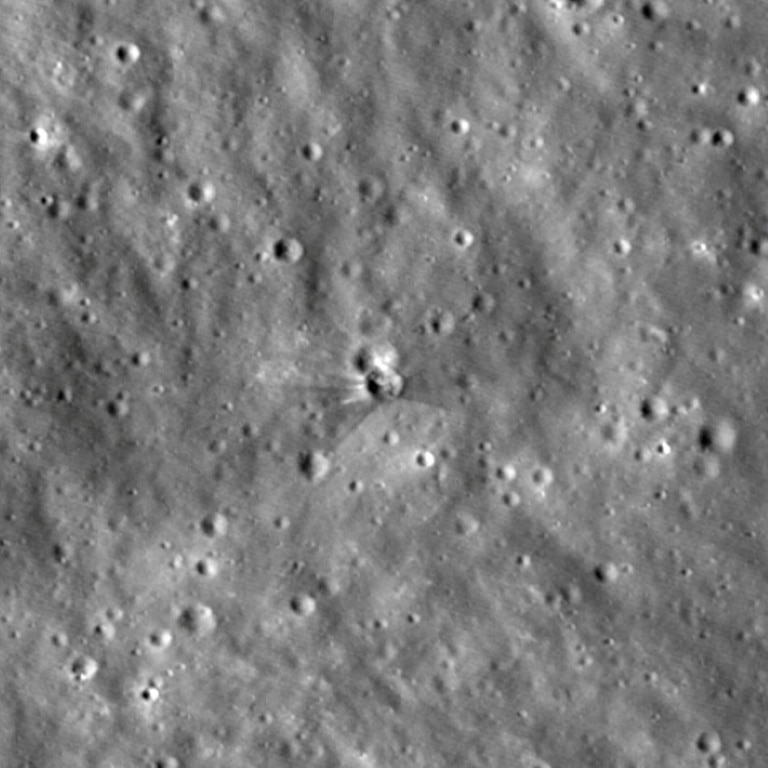
NASA’s commercial approach has already produced early lessons: Intuitive Machines’ Athena mission (IM-2) undertook remarkably similar objectives to Chang’e-7, carrying a drill, a mass spectrometer to search for volatile compounds including water, a small hopping exploration craft, and an experimental mobile communications network. However, the mission ended prematurely when the lander tipped over at its landing site and powered down just one day after arrival. This contrast highlights that while both programs target the same critical lunar science questions, they are testing distinct strategic models to overcome the shared challenges of polar exploration.
Chang’e-7 is only the next step in a longer roadmap for lunar development. Following this mission, China plans to launch Chang’e-8 as early as 2028, which will focus on demonstrating practical technologies to utilize lunar resources. Down the line, crewed missions are expected to follow, leading to the construction of the International Lunar Research Station, a joint project between the China National Space Administration and Russia’s Roscosmos. On the U.S. side, CLPS will feed technological and scientific data into NASA’s larger Artemis Program, which is explicitly designed to lay the groundwork for long-term sustained lunar exploration.
At the end of the day, the extreme environment of the lunar south pole does not differentiate between programs or nations. Any craft exploring its permanently shadowed craters must contend with the same unforgiving conditions: total darkness, crippling cold, fragmented terrain, and significant communications hurdles. Reaching the Moon was one of the defining technological challenges of the 20th century. Mastering how to live and operate sustainably on its surface will go down as one of the great challenges of the 21st century — and Chang’e-7 is set to mark a major step forward in that global effort.