分类: politics

  • US-based Tanzanian activist blames government for Instagram ban

    US-based Tanzanian activist blames government for Instagram ban

    In a significant development highlighting digital activism and political repression, prominent Tanzanian critic Mange Kimambi has alleged government involvement in the removal of her Instagram accounts, which boasted nearly three million followers. The US-based former fashion model has been utilizing these platforms to organize opposition against President Samia Suluhu Hassan’s administration.

    Meta, Instagram’s parent company, stated the accounts were eliminated due to recidivism policy violations, specifically prohibiting the creation of new accounts resembling previously removed ones. However, Kimambi maintains this action represents governmental retaliation for her activism.

    Tanzanian authorities have dismissed these allegations, with government spokesman Gerson Msigwa demanding proof. This controversy emerges amidst ongoing political turmoil following the October 29 elections, which President Hassan won with approximately 98% of votes after key opponents were disqualified or detained.

    The situation has attracted international attention, with the US State Department announcing a comprehensive review of bilateral relations with Tanzania. Thursday’s statement cited concerning democratic backsliding, human rights violations, repression of religious freedom and speech, and failure to prevent electoral violence.

    Kimambi faces legal challenges in Tanzania, including charges of economic sabotage and money laundering involving $56,000. She contends these allegations are politically motivated attempts to silence her criticism. Despite her accounts’ removal, Kimambi continues advocating for peaceful protests through her remaining X platform, addressing an open letter to US President Donald Trump requesting Meta reinstate her pages.

    This case highlights growing tensions between digital activism and state control, with Tanzania’s political landscape becoming increasingly scrutinized by international observers concerned about democratic principles and human rights protections.

  • Cracking down on cross-border crooks

    Cracking down on cross-border crooks

    In a landmark demonstration of international judicial cooperation, Chinese authorities alongside their Thai and American counterparts have successfully intercepted a massive transnational drug trafficking operation, seizing approximately 5 metric tons of illicit substances. This operation marks a significant achievement within China’s ongoing efforts to strengthen its foreign-related legal framework over the past five years.

    The successful drug interception exemplifies the tangible outcomes of China’s enhanced international legal partnerships. Beijing has systematically expanded its global judicial network through the signing of more than 90 mutual legal assistance treaties with nations worldwide. These agreements have established formal channels for cross-border law enforcement collaboration, evidence sharing, and joint investigative operations.

    China’s judicial system has demonstrated remarkable capacity in handling international cases, processing approximately 16,000 cross-border legal matters during this five-year period. The robust foreign-related legal infrastructure has enabled Chinese authorities to effectively pursue criminal elements across national boundaries, proving that geographical distance no longer provides sanctuary for transnational criminal organizations.

    This development reflects China’s broader strategy of integrating its legal system with international standards while maintaining judicial sovereignty. The sophisticated network of judicial cooperation treaties facilitates smoother information exchange and coordinated action against increasingly complex global criminal networks that exploit jurisdictional boundaries.

    The successful multinational operation signals a new era of pragmatic law enforcement collaboration that transcends traditional diplomatic boundaries, creating a more formidable barrier against international criminal activities while promoting global justice and security.

  • Putin arrives in New Delhi on a state visit aimed at bolstering Russia-India ties

    Putin arrives in New Delhi on a state visit aimed at bolstering Russia-India ties

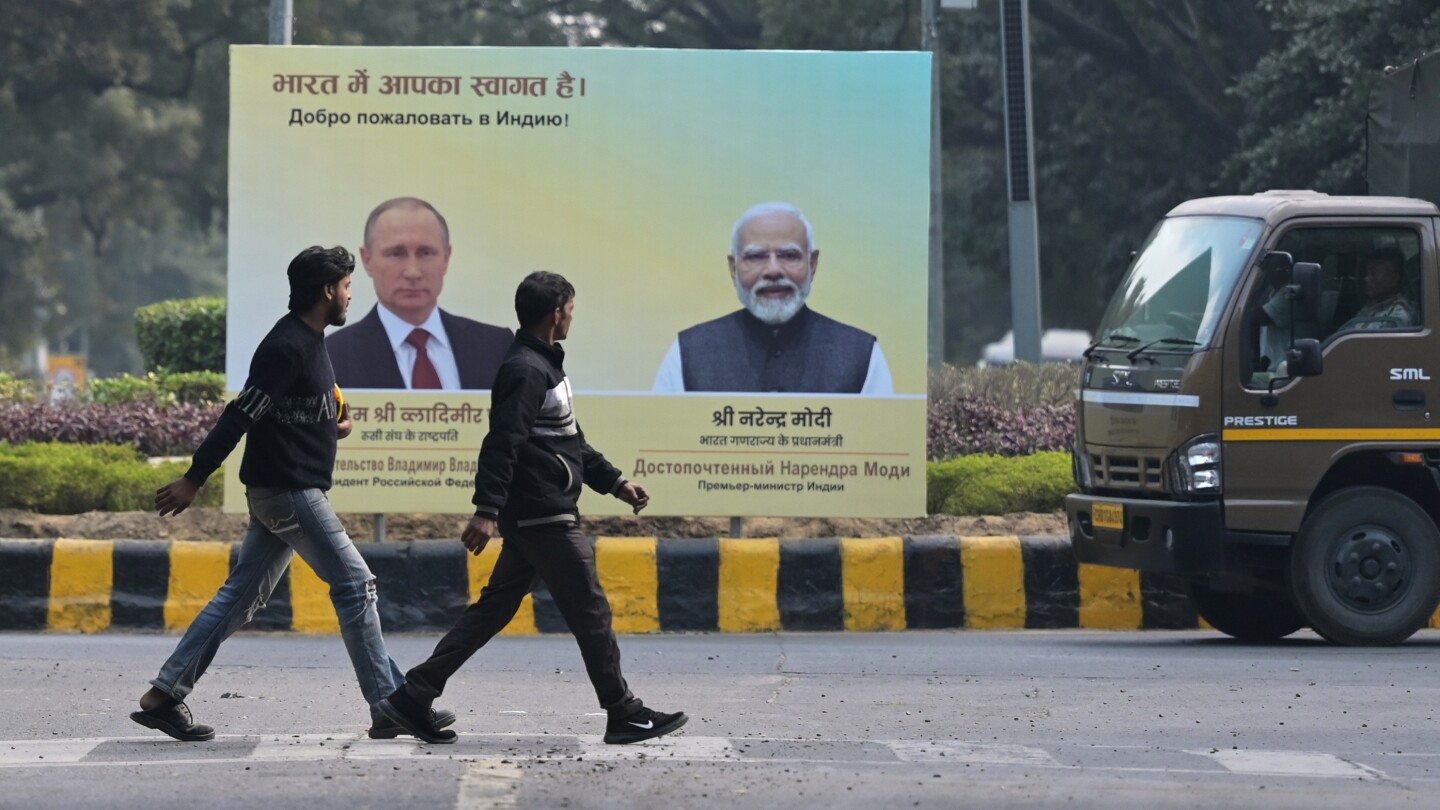
    Russian President Vladimir Putin arrived in New Delhi on Thursday for a highly anticipated state visit, signaling a reinforcement of the longstanding bilateral partnership between Russia and India. The diplomatic engagement, marked by visible warmth between the two leaders, underscores the complex geopolitical balancing act India maintains amid ongoing global tensions.

    Indian Prime Minister Narendra Modi personally welcomed Putin at the airport with an enthusiastic embrace and firm handshake, demonstrating the depth of their personal rapport. The Russian leader’s itinerary includes an intimate dinner at Modi’s officially decorated residence, followed by formal discussions on Friday during the 23rd India-Russia Summit.

    The summit agenda focuses on expanding economic collaboration across critical sectors, particularly defense systems, energy security, and facilitating the movement of skilled professionals between the nations. This meeting occurs against a backdrop of intensified U.S. diplomatic efforts to broker a peace agreement ending the Russia-Ukraine conflict, now approaching its fourth year.

    Putin’s first visit to India since 2021 and Modi’s recent trip to Moscow in 2023 highlight the continuity of diplomatic exchanges. The leaders previously convened briefly in September during the Shanghai Cooperation Organization summit in China, maintaining consistent high-level dialogue despite international pressures.

    The current visit represents a significant test of India’s foreign policy strategy, which seeks to maintain strong ties with both Moscow and Washington simultaneously. As global powers realign amid ongoing conflicts, India’s ability to navigate these complex relationships while advancing its national interests remains a subject of international scrutiny.

  • US Institute of Peace renamed after Trump

    US Institute of Peace renamed after Trump

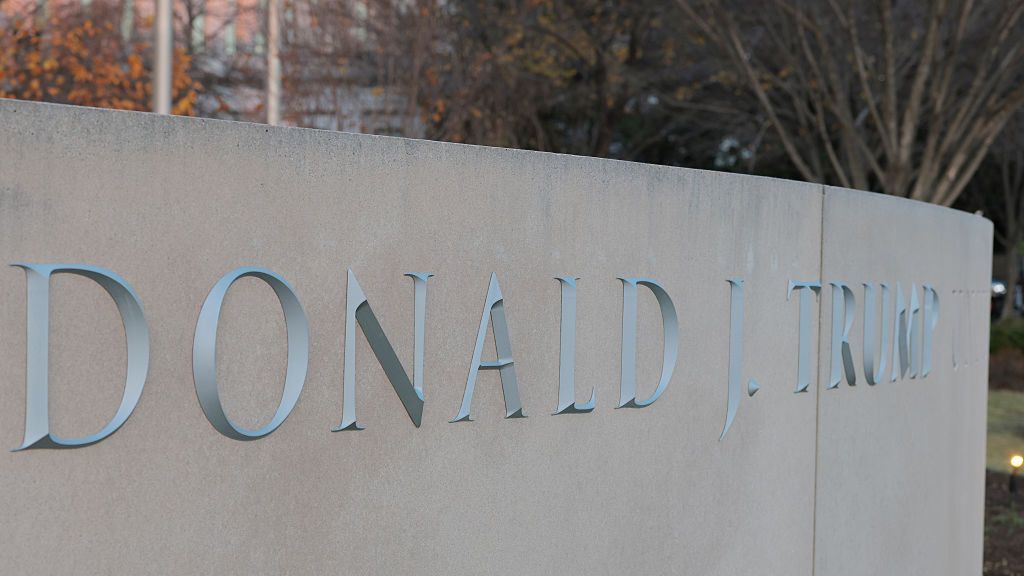
    The U.S. Institute of Peace building in Washington has been formally rebranded as the “Donald J. Trump Institute of Peace” following a directive from the Department of State. The renaming occurred on Wednesday, just ahead of a scheduled peace agreement signing ceremony between Rwanda and the Democratic Republic of Congo at the venue.

    Founded as an independent, Congressionally-funded nonprofit think tank, USIP has recently become embroiled in legal battles with the Trump administration over attempts to cut staff and budgets. The State Department announced the change on social media, stating the move was made “to reflect the greatest dealmaker in our nation’s history” and adding that “the best is yet to come.”

    White House deputy press secretary Anna Kelly shared the announcement with the comment “Congratulations, world,” while Secretary of State Marco Rubio endorsed the decision by calling Trump the “President of Peace” and noting it was time for the department to “display that.”

    The rebranding represents a significant shift in the administration’s approach to the institute, which earlier this year was at the center of controversy when the Trump administration removed staff and replaced leadership until judicial intervention halted the changes. The future of the organization remains uncertain as legal proceedings continue.

    This renaming is part of a broader pattern of high-profile rebrandings since Trump began his second term in January. Previous changes include redesignating the Department of Defense as the Department of War, renaming the Gulf of Mexico as the Gulf of America, and reverting Denali to Mount McKinley. Additionally, Republican lawmakers have proposed various tributes including a $500 bill featuring Trump’s portrait and renaming Dulles International Airport in his honor.

    The modern-day USIP website currently describes the institute as “the nation’s independent, nonpartisan institute that supports the Executive Branch in resolving violent conflict abroad,” though its future direction under the new name remains unclear.

  • Trump orders increased vetting of resumes, LinkedIn profiles of H-1B visa applicants

    Trump orders increased vetting of resumes, LinkedIn profiles of H-1B visa applicants

    In a significant policy shift impacting international tech recruitment, the Trump administration has instituted rigorous new screening protocols for H-1B visa applicants. A recently disclosed State Department directive mandates comprehensive review of professional backgrounds, including detailed examination of resumes and LinkedIn profiles, to identify individuals involved in content moderation activities.

    The diplomatic cable, circulated to all U.S. missions on December 2, 2025, instructs consular officers to scrutinize applicants’ employment histories for evidence of involvement in misinformation management, disinformation mitigation, fact-checking operations, or online safety enforcement. The policy specifically targets those who have participated in what the administration characterizes as ‘censorship of protected expression’ within the United States.

    Under the new guidelines, consular officials are directed to pursue visa ineligibility findings under the Immigration and Nationality Act for applicants deemed complicit in speech suppression practices. The enhanced vetting applies to both initial applicants and renewal cases, with particular emphasis on technology sector professionals employed by social media and financial services companies.

    A State Department spokesperson confirmed the administration’s position, stating: ‘We do not support aliens coming to the United States to work as censors muzzling Americans.’ The spokesperson referenced President Trump’s personal experiences with social media platform restrictions as motivation for the policy, adding that ‘allowing foreigners to lead this type of censorship would both insult and injure the American people.’

    This development represents the latest escalation in the administration’s broader campaign against perceived suppression of conservative voices online. The policy aligns with previous actions including heightened student visa screenings and new fee structures for H-1B visas, continuing Trump’s extensive immigration reform agenda. The administration has previously engaged with European governments regarding right-wing speech limitations, with officials like Marco Rubio having threatened visa bans for foreign nationals involved in regulating American tech companies.

  • Former EU foreign policy chief facing fraud probe resigns as head of the College of Europe

    Former EU foreign policy chief facing fraud probe resigns as head of the College of Europe

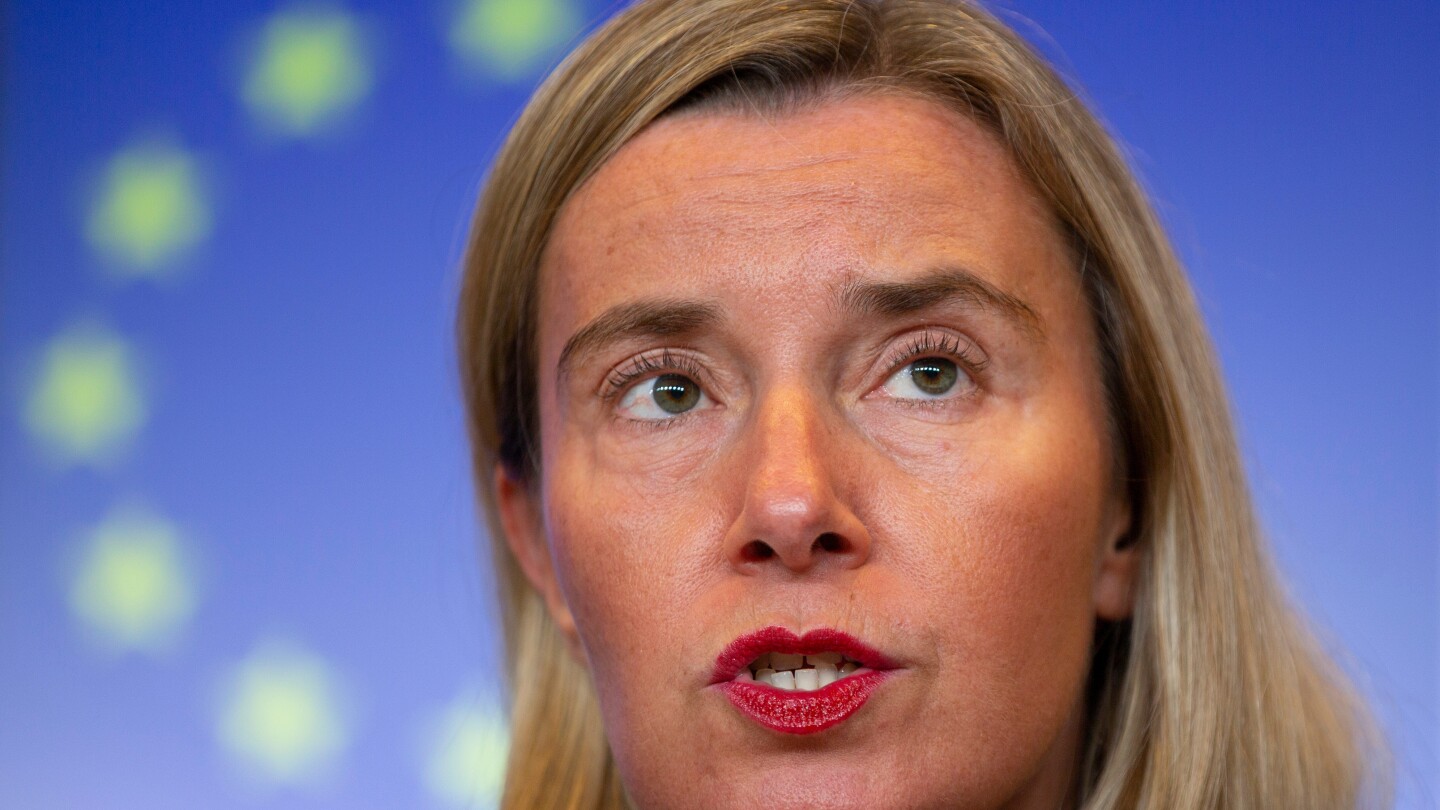
    BRUSSELS — Federica Mogherini, the European Union’s former foreign policy chief, has resigned from her leadership role at the prestigious College of Europe following her involvement in a burgeoning fraud investigation. The announcement came Thursday as Belgian authorities continue their probe into alleged procurement irregularities at the institution.

    Mogherini stepped down from her dual positions as Rector of the Bruges-based College of Europe and Director of the European Union Diplomatic Academy. In her resignation statement, she emphasized her commitment to “utmost rigor and fairness” in fulfilling her duties but provided no specific explanation for her departure.

    The investigation escalated Tuesday when Belgian federal police conducted simultaneous raids at both the EU diplomatic service headquarters in Brussels and the College of Europe campus in Bruges. Mogherini was detained for questioning along with a senior college administrator and a European Commission official. All three were subsequently released after investigators determined they presented no flight risk.

    According to the European Public Prosecutor’s Office, the investigation centers on multiple allegations including procurement fraud, corruption, conflict of interest, and breaches of professional secrecy. The probe examines potential misconduct in the awarding of contracts and management of funds at the esteemed institution known for training Europe’s future diplomats.

    Despite the serious allegations, Mogherini expressed pride in her accomplishments during her tenure and gratitude for the support received from students, faculty, and alumni. The College of Europe, established in 1949, has long served as a premier educational institution for European affairs and international relations.

  • UK sanctions Russia’s GRU spy agency over 2018 nerve agent attack

    UK sanctions Russia’s GRU spy agency over 2018 nerve agent attack

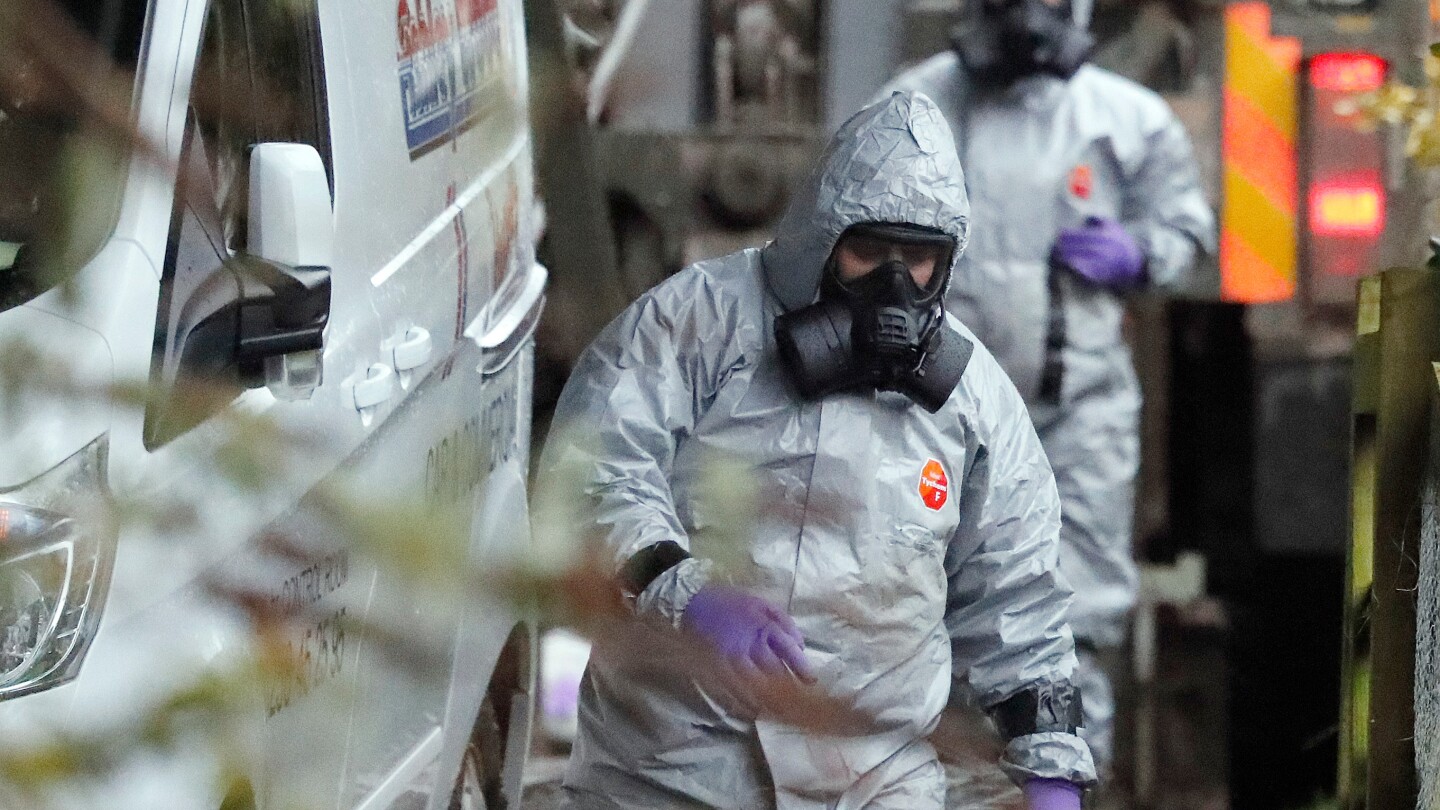
    The British government has imposed comprehensive sanctions against Russia’s GRU intelligence agency and summoned Moscow’s ambassador following an official inquiry that established President Vladimir Putin’s direct responsibility for the 2018 nerve agent attack on British territory.

    An investigation led by former UK Supreme Court Justice Anthony Hughes concluded that the assassination attempt targeting former Soviet agent Sergei Skripal in Salisbury was “authorized at the highest level” by the Russian president. The attack severely injured Skripal and his daughter Yulia through exposure to the military-grade nerve agent Novichok.

    The inquiry further determined that Dawn Sturgess, a British civilian who subsequently died after encountering a discarded perfume container containing the chemical weapon, represented “an innocent victim of an attempt by officers of a Russian state organization.” Her partner and police officer Nick Bailey also suffered serious medical complications but survived the exposure.

    In addition to sanctioning the GRU in its entirety, the UK Foreign Office identified eight alleged cyber military intelligence officers accused of targeting Yulia Skripal with malware half a decade prior to the Novichok incident.

    Prime Minister Keir Starmer characterized the findings as “a grave reminder of the Kremlin’s disregard for innocent lives,” stating that Sturgess’ “needless death was a tragedy and will forever be a reminder of Russia’s reckless aggression.” Moscow continues to deny any involvement in the chemical weapons incident.

  • Honduras election on knife-edge as count delayed by technical glitch

    Honduras election on knife-edge as count delayed by technical glitch

    The Honduran presidential election remains exceptionally close as vote counting extends into its fourth day, marked by technical failures and heightened international attention. With approximately 84% of ballots processed, conservative candidate Nasry Asfura holds a razor-thin lead of just 0.3 percentage points over centrist challenger Salvador Nasralla.

    The electoral process has been plagued by repeated technical outages that electoral authorities have deemed ‘inexcusable.’ On Wednesday, counting operations halted for several hours when the private contractor responsible for tabulation conducted unscheduled maintenance without consulting the National Electoral Council (CNE). This followed Tuesday’s crash of the real-time results portal, further delaying the process and intensifying political tensions.

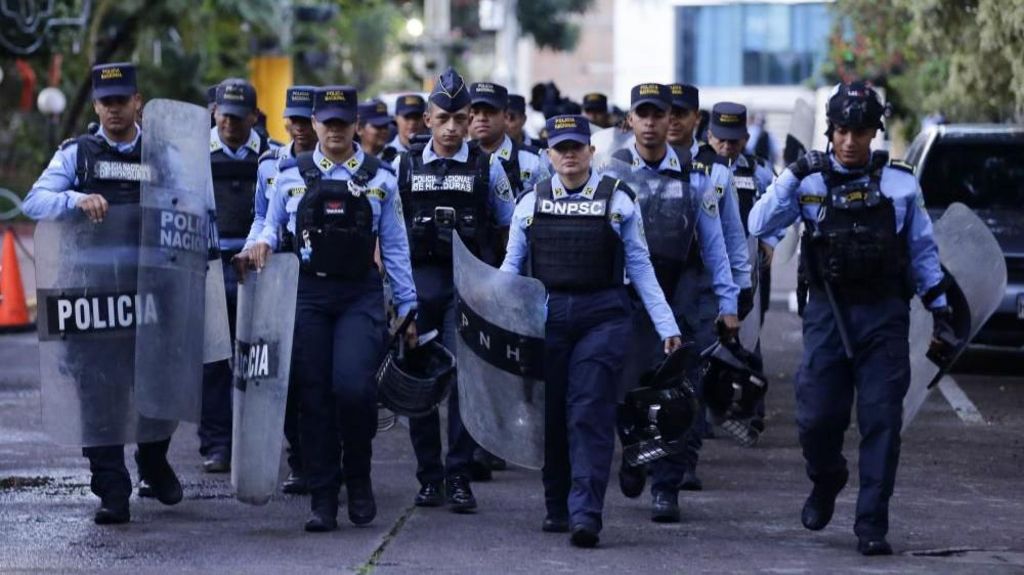
    CNE President Ana Paola Hall expressed frustration with the technical contractor’s performance while urging public patience. Security has been reinforced around the Tegucigalpa hotel serving as the vote-counting center, with police maintaining a visible presence.

    The election has drawn significant international attention, particularly from the United States. President Donald Trump has openly endorsed Asfura, threatening to cut off aid to Honduras if the conservative candidate isn’t elected. Trump has additionally alleged, without presenting evidence, that electoral authorities were ‘trying to change’ the outcome when preliminary results briefly showed Nasralla leading by approximately 500 votes on Monday.

    Both candidates maintain confidence in their eventual victory, citing internal party projections. The election’s outcome remains uncertain as technical challenges continue to slow the final count.

  • Lithuanian court convicts the leader of a governing party of inciting hatred against Jews

    Lithuanian court convicts the leader of a governing party of inciting hatred against Jews

    A Vilnius district court has delivered a landmark verdict against Remigijus Žemaitaitis, leader of the coalition partner Nemuno Aušra party, convicting him Thursday for antisemitic hate speech and Holocaust minimization. The court imposed a €5,000 fine—significantly below prosecutors’ requested €51,000 penalty—for comments deemed to have “incited hatred against Jews” and “grossly downplayed Nazi Germany’s crimes.

    The case centered on inflammatory social media posts from May-June 2023, including one comparing the demolition of Palestinian schools to “pastime” activities for Lithuanian Jews, alongside antisemitic nursery rhymes and historically distorted World War II references. Judge Nida Vigelienė condemned Žemaitaitis’s language as “degrading, violating human dignity and demonstrating hatred.”

    Despite having resigned from parliament in 2024 following a constitutional court ruling that he violated his oath, Žemaitaitis returned to politics through elections last year. His populist party subsequently joined the center-left Social Democrats’ governing coalition, though he holds no cabinet position.

    The convicted leader, absent during proceedings, denounced the verdict as “politicized” and plans to appeal. Meanwhile, the Social Democrats issued a Facebook statement condemning antisemitism and Holocaust denial as incompatible with party values, while acknowledging the non-final status of the ruling.

  • Henry Zeffman: Less than meets the eye to Starmer’s words on Brexit

    Henry Zeffman: Less than meets the eye to Starmer’s words on Brexit

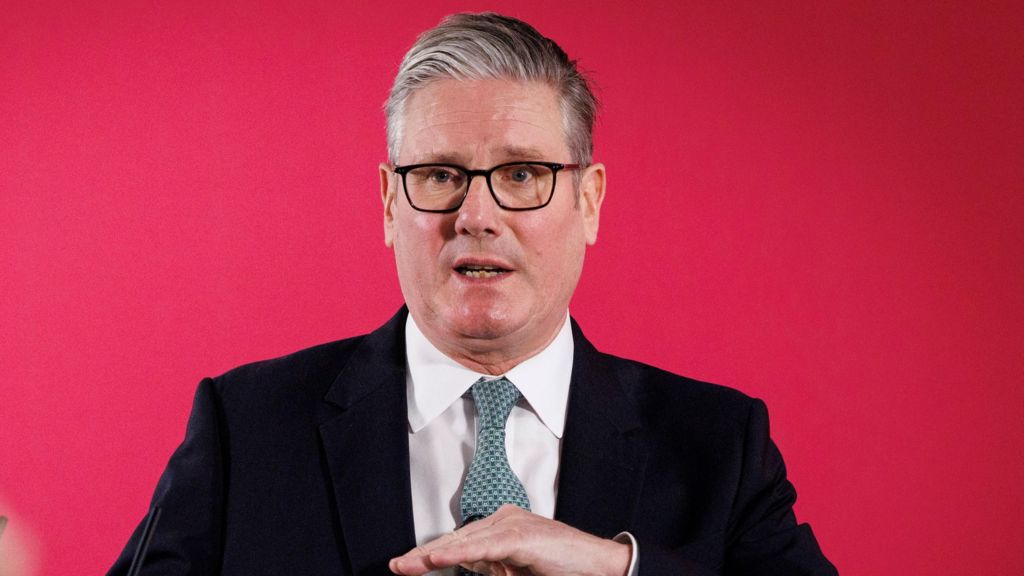
    In a notable rhetorical pivot, British Prime Minister Keir Starmer has initiated a deliberate campaign to advocate for enhanced economic collaboration with the European Union, while simultaneously affirming his commitment to the fundamental structure of the post-Brexit settlement. This nuanced positioning represents Starmer’s most explicit acknowledgment to date that the current Brexit agreement has adversely impacted Britain’s economic landscape.

    The Prime Minister articulated this stance across multiple high-profile platforms on Monday, including an op-ed in The Guardian and speeches to influential audiences. He characterized the implementation of Brexit as ‘botched’ and lamented the ‘wild promises’ made to the British public that remained unfulfilled. ‘One element of our economic renewal will be continuing to move towards a closer trading relationship with the EU,’ Starmer declared, marking a significant evolution from his previous cautious approach to EU relations.

    Despite this rhetorical shift, government sources emphasize that substantial policy changes remain unlikely. During Wednesday’s Prime Minister’s Questions, Starmer reaffirmed that remaining outside the single market and customs union constitute ‘clear red lines’ for his administration. The apparent contradiction between rhetoric and policy reflects a carefully calibrated strategy to prepare the ground for incremental improvements in specific sectors rather than wholesale renegotiation.

    Current negotiations focus on technical enhancements including streamlined food checks, carbon tariff agreements, and potential youth mobility schemes. The recent cabinet appointment of Nick Thomas-Symonds, who has overseen EU negotiations, has sparked speculation about more ambitious goals, though government insiders characterize this as organizational restructuring rather than policy shift.

    Within government circles, a quiet debate persists regarding the possibility of customs union reintegration. Some advisors, including Starmer’s chief economics adviser Baroness Shafik, reportedly advocate rejoining the customs union as the most straightforward method to stimulate economic growth. However, practical obstacles remain substantial, including potential EU demands for concessions and the sacrifice of Britain’s independent trade policy—a cornerstone of the government’s current international approach.

    Politically, Labour strategists detect shifting public attitudes toward Brexit. According to one ‘red wall’ MP representing a strongly pro-Leave constituency: ‘It’s much less visceral than it was. Even in constituencies like mine there’s space to go quite far. The single market is a non-starter because you reopen the immigration issue. But there’s space to rejoin the customs union. It’s about trade. No-one is going to object to better trade.’

    This assessment finds support in recent polling indicating majority public belief that leaving the EU was mistaken. A cabinet minister noted the changing political landscape: ‘Brexit is becoming like the Iraq War. Lots of people supported it at the time but now you can’t find anyone who admits to it.’

    The government’s calibrated approach reflects both economic pragmatism and political calculation, seeking to appeal to progressive voters desiring closer EU ties while avoiding alienation of traditional Brexit supporters. This balancing act will likely define Britain’s evolving relationship with Europe throughout Starmer’s premiership.