分类: politics

  • EU targets Russia’s shadow fleet with new sanctions, hitting businessmen and companies

    EU targets Russia’s shadow fleet with new sanctions, hitting businessmen and companies

    In a significant escalation of economic pressure against Moscow, the European Union has imposed targeted sanctions on five prominent businessmen affiliated with Russian state-controlled oil giants Lukoil and Rosneft. The measures, ratified during a meeting of the bloc’s foreign ministers in Brussels, specifically address elaborate sanction-evasion schemes involving aging oil tankers operating as part of Russia’s shadow fleet.

    These newly designated individuals are accused of controlling vessels that deliberately obscure the Russian origin of crude oil and petroleum products while engaging in irregular and high-risk maritime practices. Additionally, four shipping companies based in the United Arab Emirates, Vietnam, and Russia found themselves subject to EU restrictions for their roles in owning or managing these sanction-busting tankers.

    This strategic move directly targets the lifeblood of Russia’s war economy. Oil revenues provide the Kremlin with essential financial resources to sustain military operations in Ukraine without triggering domestic inflation or currency instability. Member states, with France taking a particularly assertive stance, have committed to dismantling this shadow network estimated to exceed 400 vessels. Diplomatic efforts are underway to secure cooperation from flag states to facilitate vessel inspections and enforcement.

    The sanctions package extends beyond energy networks to include members of Russia’s military intelligence agency (GRU) and the hacking collective Cadet Blizzard, citing their involvement in cyber attacks against Ukraine, EU entities, and NATO allies. Several foreign policy analysts and influencers propagating pro-Russian disinformation and conspiracy theories were also added to the sanctions list. These measures primarily involve asset freezes and travel bans within EU jurisdiction.

    This development occurs alongside increased physical pressure on Russia’s shadow fleet, notably through Ukrainian naval drone strikes on sanctioned tankers in the Black Sea, signaling a multi-front effort to constrain Moscow’s energy revenue streams.
  • Farmers and politics threaten to put EU’s free-trade deal with South America on ice

    Farmers and politics threaten to put EU’s free-trade deal with South America on ice

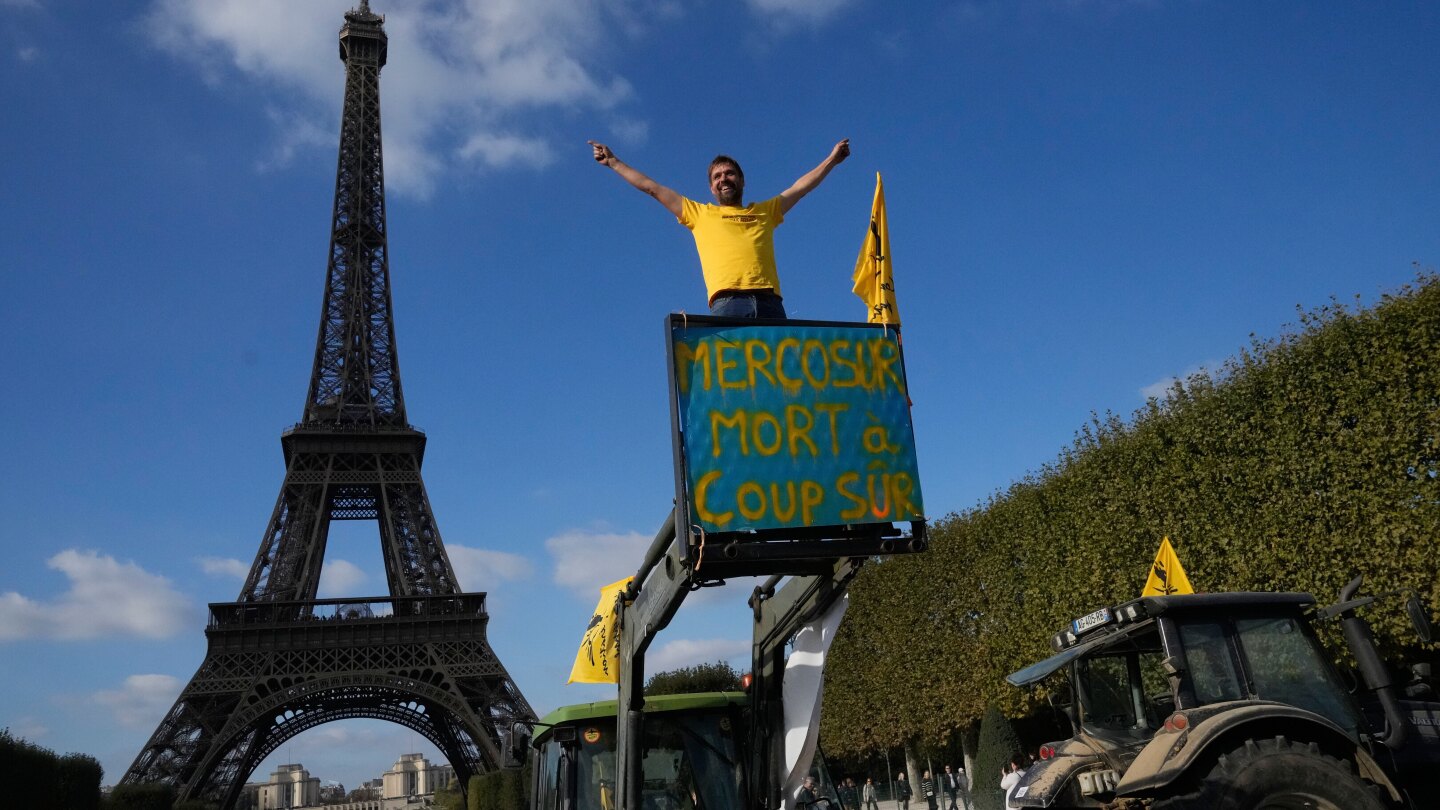
    BRUSSELS — A landmark trade agreement between the European Union and Mercosur nations, representing nearly two decades of negotiation, now confronts formidable opposition from France just days before its anticipated ratification. The comprehensive pact linking the 27-member EU with Brazil, Argentina, Uruguay, Paraguay, and Bolivia would establish one of the world’s largest free trade zones, encompassing 780 million consumers and accounting for a quarter of global GDP.

    The agreement, which would progressively eliminate tariffs on most goods over a 15-year implementation period, has encountered vehement resistance from European agricultural sectors. French Prime Minister Sébastien Lecornu declared the current terms “unacceptable” and formally requested postponement of Thursday’s critical vote until 2026 or beyond. This eleventh-hour intervention threatens to derail plans for European Commission President Ursula von der Leyen and European Council President António Costa to formally sign the agreement in Brazil on December 20.

    Agricultural concerns form the core of the opposition, with France, Poland, Austria, and the Netherlands expressing apprehension that Mercosur producers might undercut European farmers through less stringent labor, environmental, and pesticide regulations. Despite recent European Commission proposals to strengthen import inspections and implement safeguard mechanisms for agricultural products, French officials maintain these measures remain insufficient.

    The political dimension has intensified as disgruntled farmers, whose tractor protests previously paralyzed European capitals, prepare renewed demonstrations in Brussels. Their mobilization, which gained traction with far-right parties during the 2024 EU elections, adds pressure on leaders already grappling with geopolitical considerations.

    European Commission spokesperson Olof Gill emphasized the agreement’s strategic importance, stating it would create “a platform based on trust, based on rules” during times of rising global uncertainty. Proponents argue the pact would save businesses approximately €4.26 billion annually in duties while facilitating trade across diverse sectors including French wines, German pharmaceuticals, and Brazilian rare earth minerals.

    The standoff highlights broader challenges in EU trade policy as the bloc seeks to counter aggressive trade tactics from both the United States and China. As Alicia Gracia-Herrero of the Bruegel Institute noted, the impasse raises questions about the EU’s geopolitical credibility regarding ongoing negotiations with other major economies including India and Indonesia.

  • Iran hosts regional talks on Afghanistan but Kabul stays away

    Iran hosts regional talks on Afghanistan but Kabul stays away

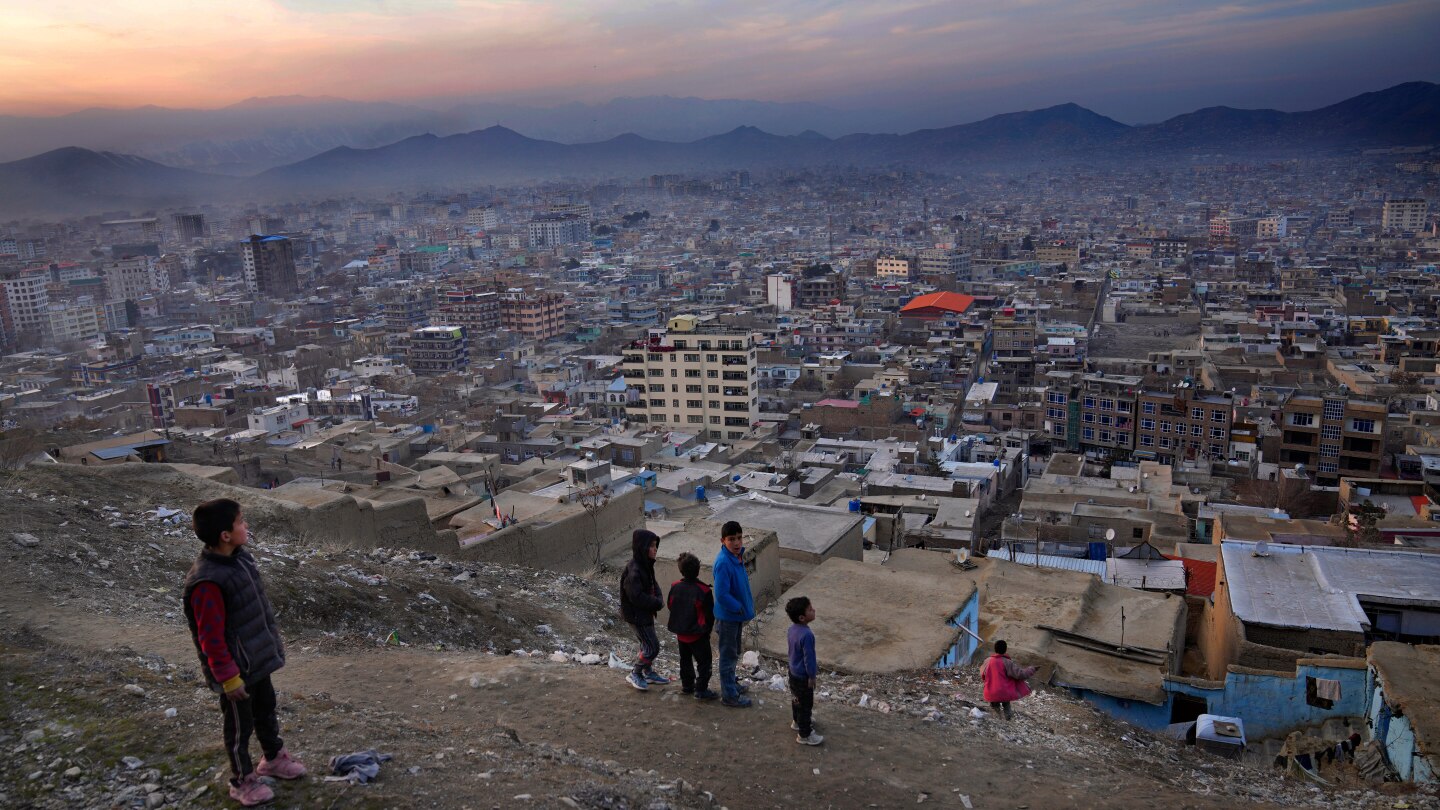
    TEHRAN, Iran — In a significant diplomatic gathering that notably excluded its central subject, Afghanistan’s neighboring nations convened in Tehran to strengthen regional cooperation addressing the multifaceted challenges facing the war-torn country. The meeting, orchestrated by Iran and attended by China, Pakistan, Tajikistan, Uzbekistan, Turkmenistan, and Russia, produced a consensus on enhancing coordination across political, economic, and security domains while advocating for the removal of international sanctions against Afghanistan.

    The Taliban-led government, though invited, opted against participation, offering limited explanation through its foreign ministry. Officials indicated that Kabul prefers to maintain its existing regional engagement channels through established organizations, claiming substantial progress through these formats.

    Despite Afghanistan’s conspicuous absence, participating nations emphasized the critical importance of sustaining economic and trade relationships with Kabul to alleviate deteriorating living conditions. The collective statement urged Afghanistan’s integration into regional political and economic frameworks while addressing shared security concerns including terrorism, narcotics trafficking, and human smuggling. Participants unanimously opposed any foreign military presence in Afghan territory.

    The conference particularly highlighted the international community’s responsibility to lift crippling sanctions and release frozen Afghan assets, with additional calls for humanitarian organizations to support the dignified repatriation of refugees from neighboring countries. Attention also turned to reducing tensions between Afghanistan and Pakistan, where recent border clashes have resulted in numerous casualties among civilians, soldiers, and suspected militants.

    While the Taliban government has developed diplomatic relationships since retaking power in August 2021 and now generates billions in annual tax revenues, Afghanistan’s economy remains in critical condition. Millions depend on international aid for survival, with natural disasters and refugee flows exacerbating humanitarian needs. The country’s economic struggles are compounded by the international community’s refusal to formally recognize the Taliban regime following the chaotic withdrawal of U.S.-led forces.

    Pakistani representatives expressed disappointment with Kabul’s absence, with former special representative Asif Durrani characterizing the decision as demonstrating ‘lack of political maturity’ and reinforcing concerns about the Taliban’s unwillingness to negotiate regional solutions. Participants agreed to convene foreign ministers in Ashgabat, Turkmenistan, and hold special envoys’ talks in Islamabad this March, continuing efforts to engage Afghanistan despite its current reluctance.

  • Fear of crime and migration fuels Chile’s swing to the right

    Fear of crime and migration fuels Chile’s swing to the right

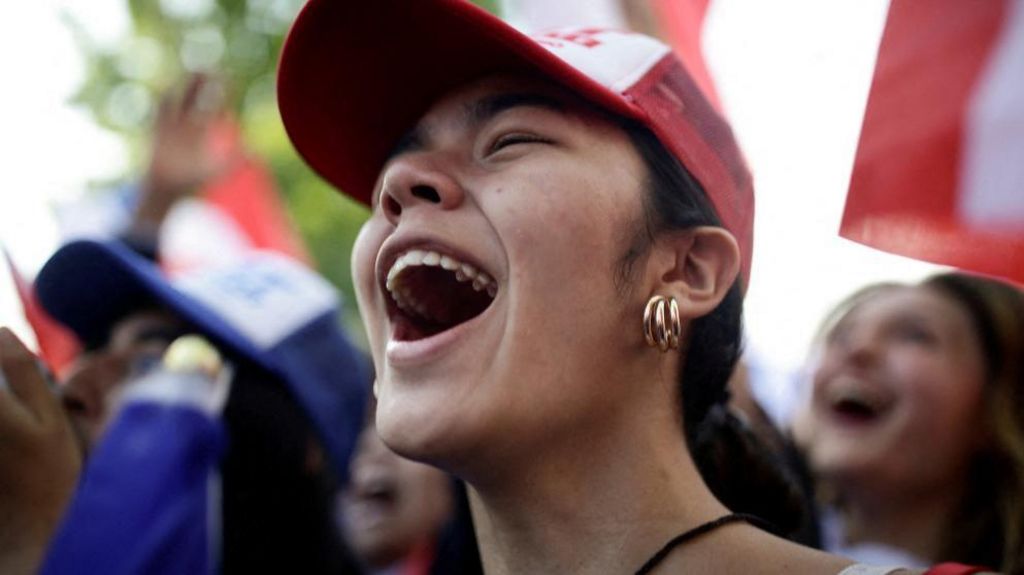
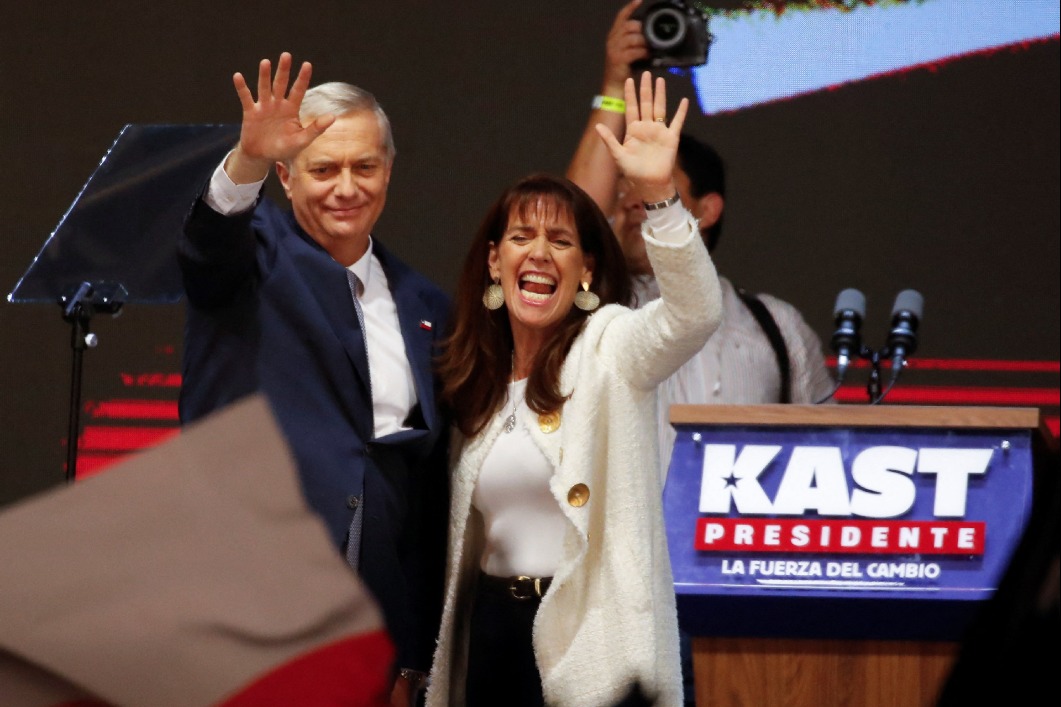
    Chile has elected hardline conservative José Antonio Kast as its next president, marking a dramatic political shift that aligns the nation with a growing bloc of right-wing governments across Latin America. The election outcome reflects profound voter anxieties over security, immigration, and crime that have unraveled Chile’s traditional image as a regional bastion of stability.

    Kast, a 59-year-old conservative who has drawn both criticism and support for his family’s connections to Chile’s authoritarian past, secured victory by promising an “emergency government” approach to the nation’s challenges. His campaign rhetoric emphasized strict immigration controls, including proposed border walls and mass deportations of undocumented migrants, while simultaneously pledging to avoid authoritarianism despite his admiration for former dictator Augusto Pinochet.

    The president-elect’s victory places Chile alongside Argentina, Bolivia, Costa Rica, Ecuador, El Salvador, and Panama in a continental trend that has seen nations swing decisively from left to right governance. This political realignment is largely driven by widespread concerns over economic instability, corruption within previous leftist administrations, and escalating security issues.

    Kast’s messaging particularly resonated with voters concerned about Chile’s rapidly changing demographic landscape. Government statistics reveal a 46% increase in the foreign-born population since 2018, with approximately 336,000 undocumented migrants now residing in the country—many fleeing Venezuela’s economic collapse. This rapid transformation has created social tensions and fears about crime, despite data showing murder rates have actually declined since 2022.

    While Kast promises to implement Trump-style “iron fist” policies, including military deployment to borders and aggressive social media promotion of his crackdowns, practical implementation faces significant hurdles. Venezuela currently refuses to accept deportees from Chile, and the nation’s economy relies heavily on migrant labor in sectors ranging from agriculture to hospitality.

    Business owners like Carlos Alberto Cossio, a Bolivian national operating in Chile for 35 years, warn that mass deportations would severely impact economic productivity and increase costs. Meanwhile, migrants like Venezuelan waiter Gabriel Funez describe living in legal limbo, fearing both deportation and rising xenophobia validated by Kast’s rhetoric.

    The new president will also face political challenges, as his party lacks a congressional majority, requiring compromise on proposals for tougher sentencing and maximum-security prisons. Ultimately, Kast’s victory represents how perceptions of control may matter as much as actual policy results for voters across a continent grappling with interconnected crises of security, migration, and economic uncertainty.

  • Ukraine ceasefire talks continue as US says ‘progress was made’

    Ukraine ceasefire talks continue as US says ‘progress was made’

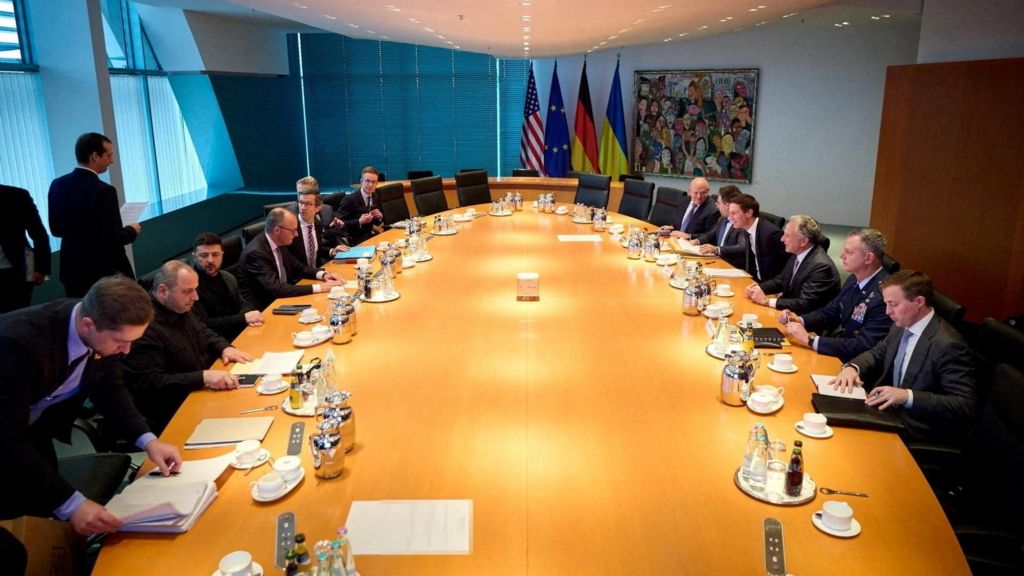
    BERLIN – Critical peace negotiations between Ukrainian and American delegations extended into a second day in Germany’s capital on Monday, following intensive five-hour discussions on Sunday that included German Chancellor Friedrich Merz and notable U.S. figures.

    The high-stakes diplomatic engagement marked the first face-to-face meeting between President Volodymyr Zelensky and U.S. envoy Steve Witkoff, who has previously engaged with Russian President Vladimir Putin in Moscow. The American delegation also included Jared Kushner, son-in-law of former President Donald Trump, while military representation came from NATO Supreme Allied Commander Europe General Alexus Grynkewich.

    In a significant strategic shift, Zelensky indicated readiness to abandon Ukraine’s NATO membership aspirations in exchange for robust security guarantees modeled after NATO’s Article 5 mutual protection clause. ‘This is already a compromise on our part,’ Zelensky stated, acknowledging opposition from ‘some partners from the US and Europe’ regarding NATO accession.

    The talks center on a 20-point peace proposal submitted by Ukraine to counter an initial American plan perceived as disproportionately favoring Russian interests. While details remain confidential, Zelensky characterized the points as a ‘foundation’ for reconstruction and security arrangements.

    The Donbas region’s status emerged as another critical negotiation point, with Zelensky expressing openness to freezing conflict along current frontlines but insisting any withdrawal arrangement must be symmetrical. ‘For it to be fair, Russia would have to withdraw the same distance,’ he emphasized, describing the matter as ‘extremely sensitive and heated.’

    The negotiations occur amid deteriorating humanitarian conditions in Ukraine, where over one million households suffered power outages following Russian attacks on energy infrastructure. Meanwhile, EU members prepare to vote on transferring €90 billion in frozen Russian assets to support Ukraine’s economy, though legal and diplomatic challenges persist with countries like Belgium and Italy expressing reservations.

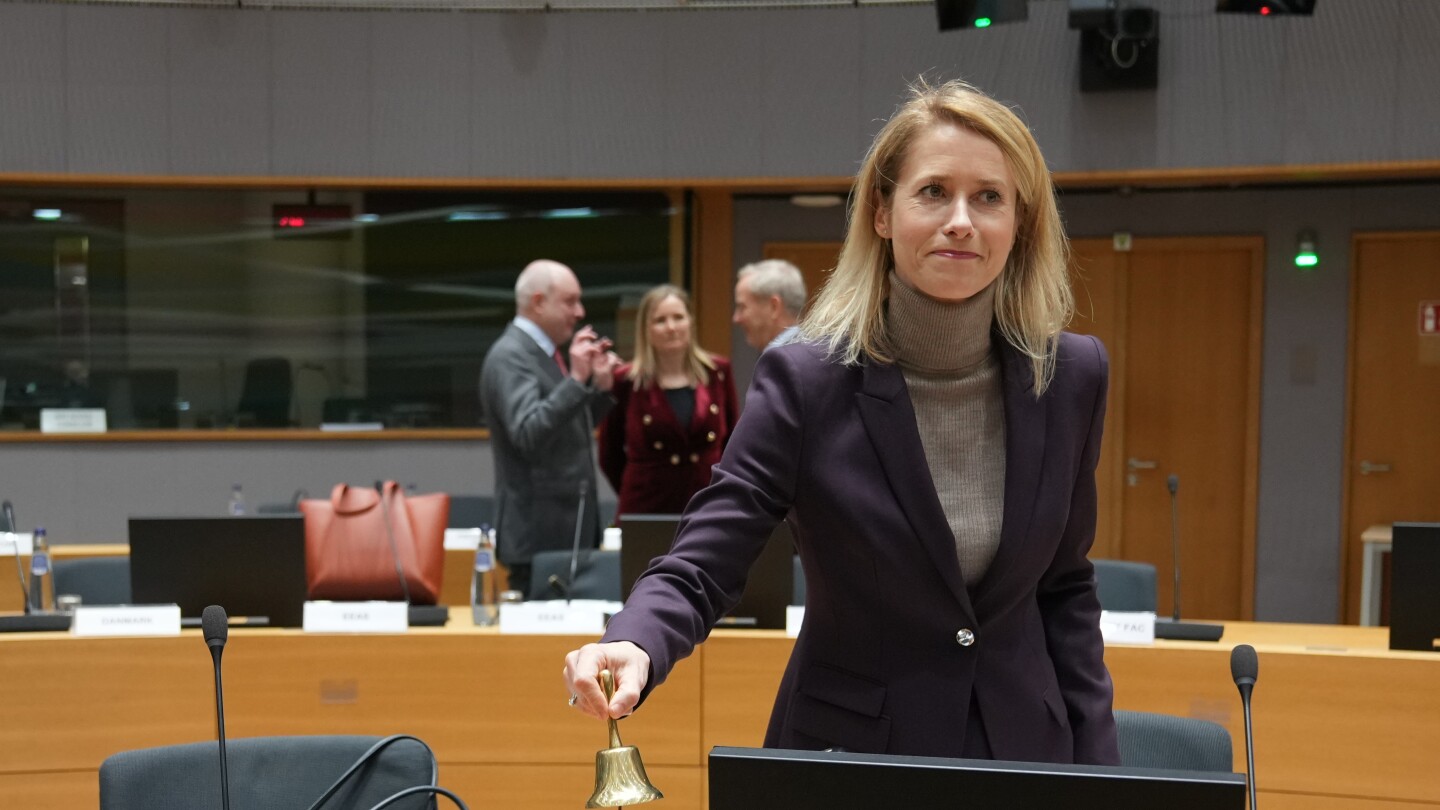
    EU foreign policy chief Kaja Kallas acknowledged the ‘increasingly difficult’ discussions but affirmed continued efforts toward resolution. The Kremlin stated it expects to receive the negotiated concept from U.S. officials, maintaining that Ukraine’s NATO membership remains an absolute ‘red line.’

  • Serbia organized crime prosecutors charge minister, others in connection with Kushner-linked project

    Serbia organized crime prosecutors charge minister, others in connection with Kushner-linked project

    Serbia’s Organized Crime Prosecutor has formally indicted Culture Minister Nikola Selaković and three other officials for abuse of power and document falsification related to a controversial real estate development connected to Jared Kushner, former senior advisor to U.S. President Donald Trump.

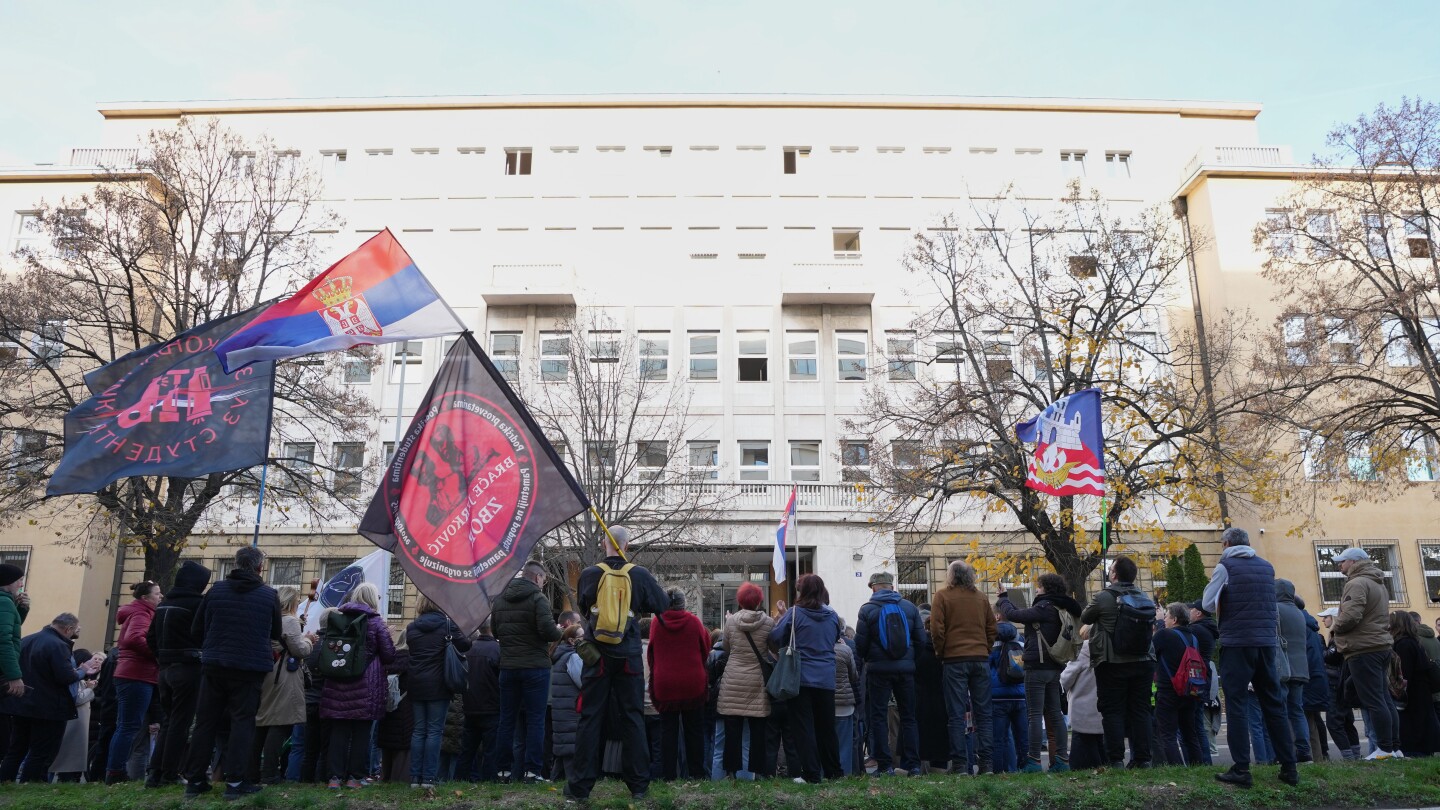
    The charges center on the alleged illegal removal of protected cultural status from a historic military complex in central Belgrade that was heavily damaged during NATO’s 1999 bombing campaign. The site, considered an architectural monument and symbol of Serbian resistance, had been designated as protected cultural heritage until the defendants allegedly forged documentation to enable its commercial redevelopment.

    Last year, the Serbian government signed a 99-year lease agreement with Affinity Global Development, a U.S. firm associated with Kushner, who confirmed his company’s involvement in the $500 million luxury complex project. The development plans include a high-rise hotel, luxury apartments, office spaces, and retail establishments.

    Despite ongoing investigations, Serbia’s parliament passed special legislation last month to authorize the construction. President Aleksandar Vučić, a close ally of Minister Selaković, has openly endorsed the project, stating it would benefit Serbia’s relations with the United States. In a remarkable statement, Vučić declared he would pardon any officials convicted in the case, claiming personal responsibility for wanting to “modernize Serbia” and attract major foreign investment.

    The project has generated significant domestic and international opposition from preservationists and cultural experts who view the military complex as an important example of mid-20th century Yugoslav architecture. The development is particularly sensitive given the site’s symbolic association with NATO’s 78-day bombing campaign, which remains a deeply contentious chapter in Serbian-American relations.

    The case unfolds amid ongoing trade tensions between the two countries, with the U.S. maintaining 35% tariffs on Serbian imports and imposing sanctions on Serbia’s Russian-controlled oil monopoly.

  • Pro-democracy Hong Kong tycoon Jimmy Lai convicted in high-profile national security trial

    Pro-democracy Hong Kong tycoon Jimmy Lai convicted in high-profile national security trial

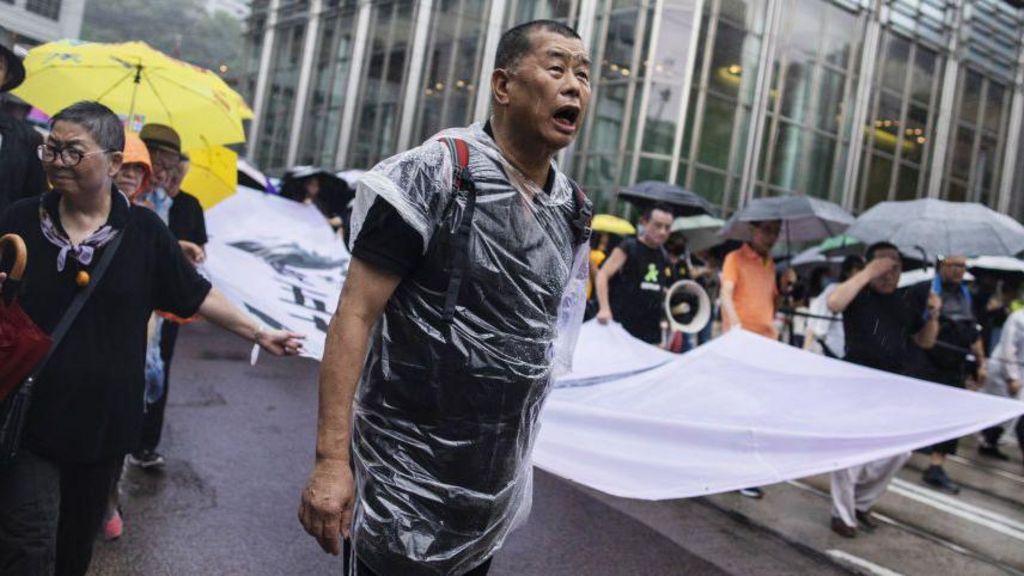
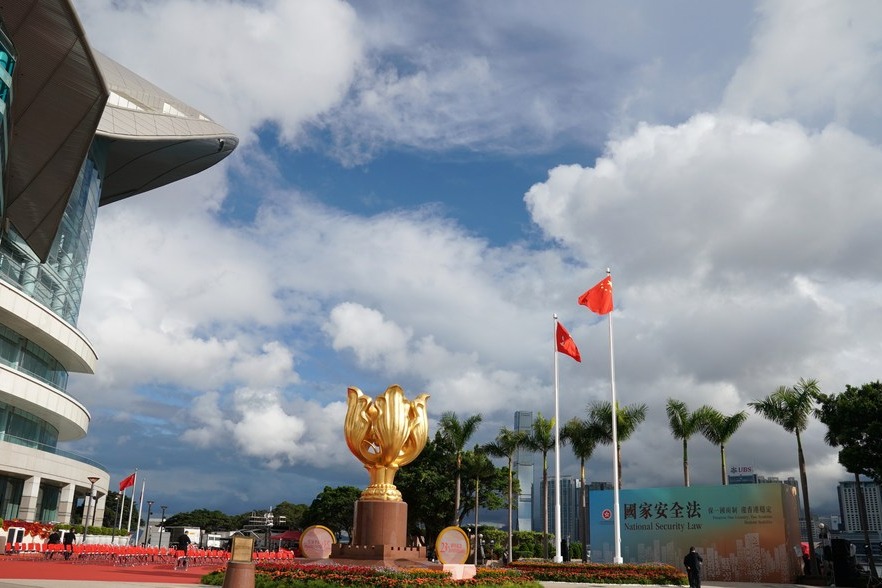
    Hong Kong’s High Court has delivered a landmark verdict against pro-democracy activist and media magnate Jimmy Lai, finding the 78-year-old guilty of colluding with foreign forces under the city’s National Security Law. The ruling concludes a highly scrutinized trial that has drawn international condemnation and raised fundamental questions about judicial independence in the former British colony.

    Presiding Judge Esther Toh stated there was “no doubt” Lai harbored animosity toward the People’s Republic of China, citing his “constant invitation to the US to help bring down the government of the PRC with the excuse of helping the people of Hong Kong.” The court determined that Lai utilized his now-defunct Apple Daily newspaper as an instrument to lobby foreign governments for sanctions against both Hong Kong and China.

    Lai, who has been detained since December 2020, maintained his innocence throughout proceedings. His testimony in November included denials of all charges, asserting he had “never” employed his international connections to influence foreign policy regarding Hong Kong. When questioned about meetings with former US officials Mike Pence and Mike Pompeo, Lai characterized the interactions as informational exchanges rather than policy requests.

    Hong Kong Chief Executive John Lee welcomed the verdict, stating Lai’s actions “damaged the country’s interests and the welfare of Hong Kongers.” Conversely, human rights organizations condemned the outcome as “a cruel judicial farce” and part of a broader pattern of using the security legislation to suppress dissent.

    The case has ignited diplomatic tensions, with the United Kingdom condemning what it termed “politically motivated persecution” of its citizen. Lai’s son Sebastien appealed for stronger British intervention, urging that his father’s release become a precondition for improved Sino-UK relations. Chinese authorities rebuffed international criticism, with Foreign Ministry spokesman Guo Jiakun expressing “strong dissatisfaction and firm opposition to the brazen defamation and smearing of the judicial system in Hong Kong.”

    Beyond the national security charges, Lai was concurrently convicted under colonial-era legislation for publishing seditious material through Apple Daily. The publication had evolved into a symbolic voice for Hong Kong’s pro-democracy movement prior to its forced closure.

    The trial’s proceedings faced scrutiny over procedural matters, including the denial of Lai’s preferred UK-based legal representation and restrictions on foreign lawyers working national security cases. Concerns about Lai’s health during detention—reportedly including solitary confinement and deteriorating physical condition—were raised repeatedly by his family and advocacy groups.

    As Lai awaits sentencing scheduled for early next year, his case joins hundreds of prosecutions under the National Security Law, which boasts a conviction rate approaching 100% according to recent statistics. The legislation, implemented directly by Beijing in 2020 without local legislative consultation, grants authorities expansive powers to address perceived threats to stability and order.

  • Jimmy Lai found guilty of violating national security law

    Jimmy Lai found guilty of violating national security law

    Hong Kong’s judiciary has reached a landmark verdict in the high-profile case against media tycoon Jimmy Lai, finding the prominent pro-democracy figure guilty of violating the territory’s national security law. The ruling delivered on December 15, 2025, represents a significant enforcement of the controversial legislation imposed by Beijing in 2020.

    The court proceedings, which attracted international attention, concluded after extensive deliberation regarding Lai’s activities that prosecutors argued threatened national security. The verdict underscores Hong Kong’s rigorous implementation of legal measures designed to protect China’s sovereignty and security interests following the 2019 pro-democracy protests.

    Legal experts note this case establishes important precedents for interpreting the national security law’s provisions regarding what constitutes endangering national security. The judgment demonstrates Hong Kong’s judicial system operating within the framework of the “one country, two systems” principle while addressing activities perceived as challenging central government authority.

    The conviction occurs amid ongoing developments in Hong Kong’s political landscape, where authorities continue to balance legal enforcement with maintaining the region’s distinctive characteristics. International observers have closely monitored the case for its implications on freedom of expression and judicial independence in the semi-autonomous territory.

    This judicial outcome follows similar cases under the national security legislation and signals the continued application of legal measures that Beijing describes as essential for maintaining stability while critics argue may affect civil liberties.

  • Ugandan army admits holding priest who’d been missing for days

    Ugandan army admits holding priest who’d been missing for days

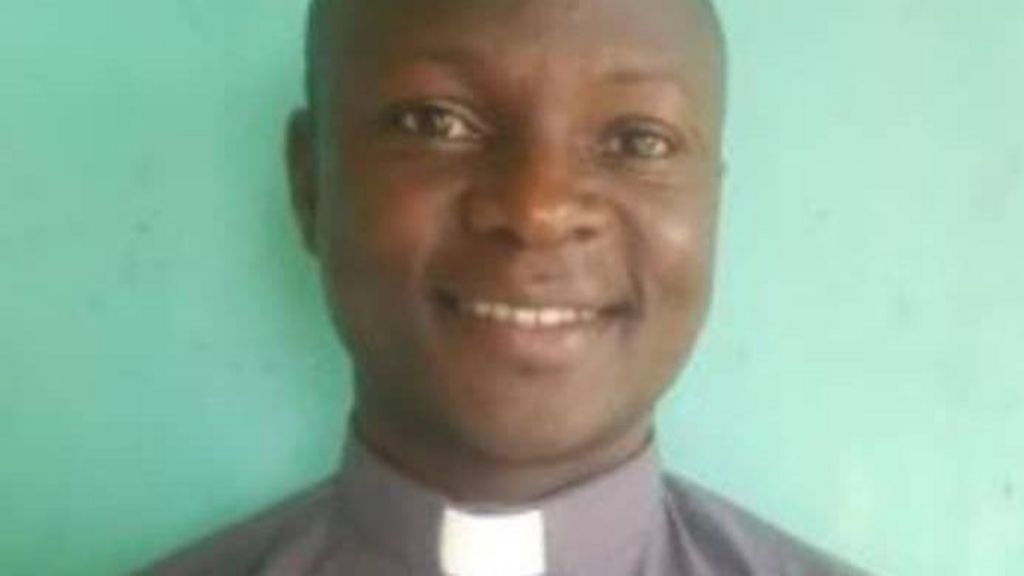
    The Ugandan military has officially acknowledged holding Catholic priest Father Deusdedit Ssekabira, who had been missing since December 3rd, alleging his participation in “violent subversive activities.” In a concise statement, military authorities confirmed the clergyman’s arrest, stating he remains in “lawful custody” and will face formal court charges.

    This declaration follows urgent appeals from the Masaka Catholic Diocese, which previously reported Father Ssekabira’s alleged abduction by individuals wearing Uganda Army uniforms. The church institution has yet to respond to the military’s specific accusations against the priest.

    The incident occurs as Uganda approaches next month’s elections amidst increasing international scrutiny regarding human rights violations, including enforced disappearances and extended detention without trial.

    Masaka Bishop Serverus Jjumba characterized the priest’s disappearance as a “grievous wound inflicted on Masaka Diocese, the entire Catholic Church and Father Ssekabira’s family,” confirming ongoing efforts through legal channels to secure his safe return.

    Opposition leader Bobi Wine promptly condemned the military’s detention of civilians, alleging systematic abductions of his supporters by state security forces. The presidential candidate, whose legal name is Robert Kyagulanyi, asserted this incident reflects the current governance reality under President Yoweri Museveni.

    This case echoes previous incidents involving opposition figures and human rights activists. Last year, opposition politician Kizza Besigye mysteriously disappeared in Nairobi before reappearing in Ugandan military court, while two Kenyan activists were detained for five weeks after attending Wine’s campaign event before being released.

    President Museveni previously described detained activists as “experts in riots” who had been placed “in the fridge for some days,” employing terminology that has drawn criticism from human rights organizations.

    Ugandan security agencies continue facing allegations of detaining opposition supporters while out of uniform, with some detainees eventually surfacing in court facing criminal charges.

  • Far-right candidate Jose Antonio Kast elected Chile’s new president

    Far-right candidate Jose Antonio Kast elected Chile’s new president

    Chile has elected José Antonio Kast of the far-right Republican Party as its new president following a decisive runoff election. The country’s Electoral Service confirmed Kast’s victory on Sunday, with near-complete results showing he secured 58.18% of the vote against left-wing coalition candidate Jeannette Jara’s 41.82%.

    The outcome represents a significant political shift for Chile, marking a departure from the current left-leaning administration of President Gabriel Boric. Both Jara and President Boric publicly conceded defeat and extended congratulations to Kast via social media platforms shortly after the results became evident.

    The 59-year-old president-elect, who will assume office on March 11, 2026, centered his campaign primarily on law and order issues. His policy proposals include constructing high-security prisons, implementing stricter penalties for criminal organizations, and conducting large-scale deportations of undocumented immigrants. Kast has additionally advocated for enhanced border control measures to address immigration concerns.

    The runoff election commenced at 8:00 AM local time (1100 GMT) and concluded at 6:00 PM (2100 GMT), engaging over 15 million registered voters across the nation. This second round became necessary after the November 16 first-round election failed to produce a candidate with an outright majority, with Kast and Jara receiving 26.85% and 23.92% of votes respectively.

    This electoral result signals a notable conservative turn in Chilean politics, potentially heralding substantial policy changes in public security and immigration enforcement in the coming years.