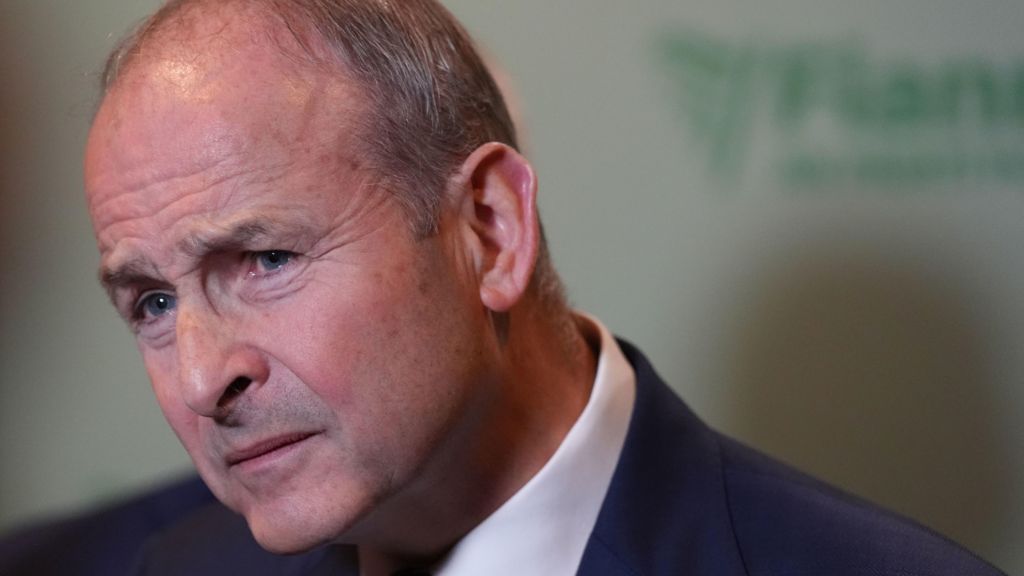
Irish Taoiseach Micheál Martin faces mounting internal pressure within his Fianna Fáil party regarding the handling of a presidential election review, while simultaneously denouncing media coverage as “extremely disappointing, selective and inaccurate.” The political turmoil stems from the withdrawal of the party’s presidential candidate, Jim Gavin, who abandoned his campaign in October after revelations emerged concerning an accidental overpayment to a former tenant. Although Gavin subsequently repaid the funds, his name remained on the ballot and secured 7.18% of first preference votes. The controversy prompted Fianna Fáil to commission an independent review led by senior counsel, yet the unpublished report has become a source of significant internal strife. Three prominent party TDs—Willie O’Dea, Pat Gallagher, and Seán Ó Fearghaíl—have publicly demanded the “immediate release” of the report, condemning media leaks as damaging to the party’s reputation and public trust. They emphasized that “accountability is now essential if we are to restore trust and credibility.” In response, Martin issued a formal statement clarifying that he has not yet received the report and defending his approach to allow the review committee “to do its work independently.” A special parliamentary party meeting is anticipated to discuss the findings, though no date has been confirmed, prolonging the internal dissent within Ireland’s governing party.
分类: politics
-
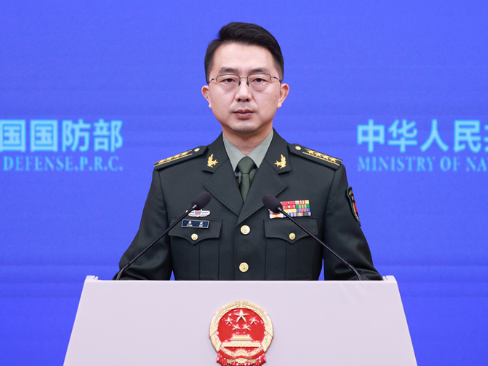
Beijing: Japanese fighter jets harassed pre-notified exercise zone
In a significant escalation of tensions between the two Asian powers, China’s Defense Ministry has presented detailed evidence countering Japan’s claims regarding recent military encounters in the East China Sea. Defense Ministry spokesman Jiang Bin disclosed that Chinese naval vessels had provided explicit prior notification to Japanese counterparts about scheduled carrier-based aircraft training exercises.
The confrontation centers around allegations made earlier this month by Japan’s defense ministry that Chinese military aircraft had engaged in radar locking maneuvers against Japanese fighter jets during training operations conducted by the CNS Liaoning aircraft carrier and its accompanying task group. Jiang characterized these accusations as baseless and politically motivated.
According to the Chinese account, on December 6th, Chinese warship 101 formally notified Japanese warship 116 about planned flight training operations, with the Japanese vessel acknowledging receipt of the communication. A subsequent message specified that training would commence at 3:00 PM local time, continue for approximately six hours, and occur primarily south of the Chinese aircraft carrier—again with Japanese confirmation of understanding.
Despite these explicit notifications, Jiang stated that Japanese fighter jets repeatedly intruded into the designated training zone, creating hazardous conditions and engaging in what China considers deliberate harassment. The spokesman asserted that Japan bears complete responsibility for any safety compromises resulting from these incursions.
Jiang further accused Japan of systematic deception, claiming Tokyo has ‘repeatedly misled its own public and the international community’ by portraying routine Chinese military exercises as security threats while casting itself as the victim rather than the instigator. The spokesman suggested these actions might represent a calculated diversion from recent controversial statements about Taiwan made by Japanese Prime Minister Sanae Takaichi.
The Chinese defense spokesman raised concerns about Japan’s broader strategic intentions, questioning whether the incidents reflect attempts to ‘create excuses to break away from the post-war system, to loosen restrictions on its military development, and to revive the specter of its militarist past.’
China has called on Japan to address fundamental issues in bilateral relations and ‘earnestly reflect on and rectify its wrongdoings,’ warning that political manipulations aimed at evading responsibility would prove unsuccessful.
-

Japanese scholar condemns Japan’s risky defense spending
A prominent Japanese academic has issued a stern warning about his country’s rapidly expanding military ambitions, citing alarming defense expenditure increases and provocative political rhetoric. Professor Emeritus Atsushi Koketsu of Yamaguchi University recently revealed in an exclusive China Daily interview that Japan’s military budget for fiscal year 2025 will surpass 10 trillion yen (approximately $64.14 billion) – a historic threshold that signals a dramatic shift in the nation’s security posture.
This substantial financial commitment, Koketsu argues, will primarily facilitate the acquisition of advanced offensive weapon systems rather than defensive capabilities. The professor contends that Japan is dangerously reviving pre-war militaristic tendencies by persistently fabricating external threats from neighboring nations. This approach, he warns, demonstrates a concerning disregard for historical lessons and represents a potential return to past errors that previously led to regional conflict.
The academic’s critique extends to Prime Minister Sanae Takaichi’s recent controversial statements regarding Taiwan, which Koketsu interprets as evidence of Japan’s increasingly confrontational stance toward China. These developments, according to the scholar, collectively pose a genuine threat to stability and security throughout the Asia-Pacific region. The combination of heightened military spending, offensive weapons procurement, and inflammatory political rhetoric creates a volatile mix that could undermine decades of relative peace and cooperation.
Koketsu’s analysis suggests that Japan is systematically abandoning its post-war pacifist constitution principles in favor of a more assertive military doctrine. This strategic pivot occurs amid ongoing regional tensions and reflects broader geopolitical realignments that could have far-reaching consequences for international relations and security architectures in East Asia.
-
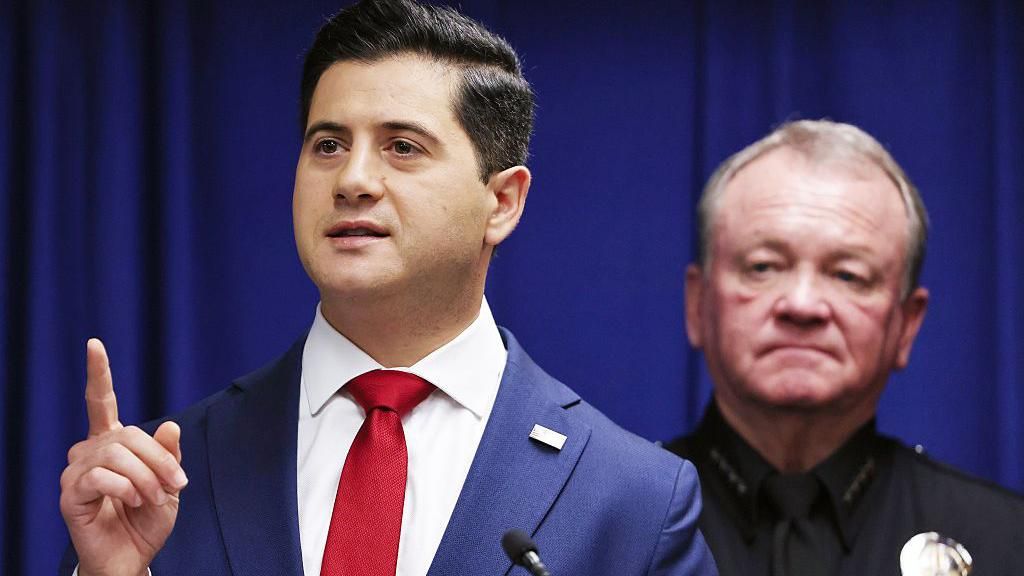
New Year’s Eve terror plot across southern California foiled by FBI
Federal law enforcement agencies have successfully disrupted a sophisticated terror plot planned for New Year’s Eve in Southern California, according to official statements released Monday. The FBI, in coordination with Los Angeles Police Department, apprehended four individuals allegedly belonging to the Turtle Island Liberation Front—an offshoot of a pro-Palestinian anti-government organization—while they were en route to test improvised explosive devices in desert areas east of Los Angeles.
The suspects, identified as Audrey Illeene Carroll (30), Zachary Aaron Page (32), Dante Gaffield (24), and Tina Lai (41), now face multiple federal charges including conspiracy and possession of unregistered destructive devices. Court documents reveal the group had transported precursor chemicals to remote locations with the alleged intention of constructing explosive ordnance.
Advanced surveillance operations captured the group’s movements, enabling FBI SWAT teams to execute flawless apprehensions without incident. The planned attacks targeted logistical centers operated by two American corporations at midnight on December 31st across the Los Angeles metropolitan area. Additional intelligence suggests the group had discussed subsequent operations against Immigration and Customs Enforcement personnel and vehicles using pipe bombs in early 2025.
U.S. Attorney General Pam Bondi characterized the prevented attack as ‘a massive and horrific terror plot’ orchestrated by far-left extremists. LAPD Chief Jim McDonnell emphasized that interagency collaboration proved instrumental in averting potential catastrophe: ‘The successful disruption of this plot is a powerful testament to the strength of our unified response.’
The FBI confirms that while the immediate threat has been neutralized, investigations continue to identify any additional individuals potentially connected to the planning.
-
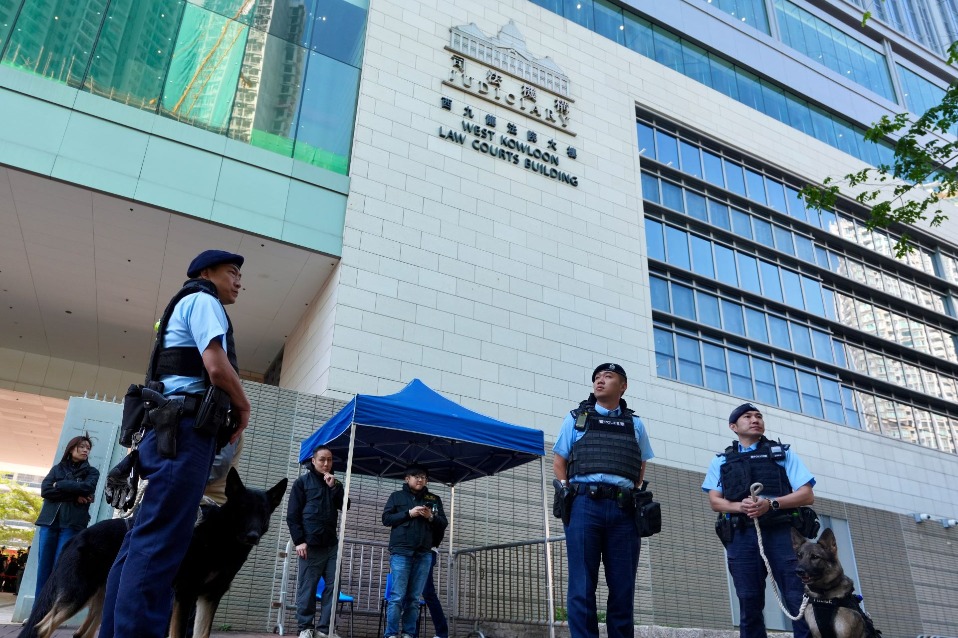
Verdict on Jimmy Lai is reached strictly in accordance with law and evidence: HKSAR govt
The Hong Kong Special Administrative Region (HKSAR) government has formally affirmed that the judicial verdict in the national security case against media proprietor Jimmy Lai was determined exclusively through strict legal procedures and evidentiary standards. In an official statement released Monday, a government spokesperson emphasized that the court’s decision demonstrates rigorous adherence to judicial independence, completely free from external interference or political considerations.
Lai, identified by authorities as a key instigator of anti-China disturbances in Hong Kong, was convicted on three distinct charges: two counts of conspiring to collude with external forces and one count of conspiracy to publish seditious materials. The court specifically clarified that the conviction was not influenced by Lai’s political perspectives or beliefs, but rather by his unlawful actions.
HKSAR Chief Executive John Lee characterized the verdict as a clear manifestation of legal justice and the reinforcement of Hong Kong’s core values. He asserted that national security laws cannot be violated under the pretext of human rights, democracy, or freedom, emphasizing that the government remains steadfast in its constitutional duty to combat all activities that endanger national security.
The government statement addressed what it described as deliberate misinformation campaigns from Western powers, particularly the United States, regarding Lai’s case. Officials specifically rejected attempts to frame the prosecution as an attack on press freedom, noting that Hong Kong’s legal framework—including the Basic Law and Hong Kong Bill of Rights Ordinance—continues to protect journalistic and speech freedoms. The spokesperson clarified that Lai’s activities involved using media operations as camouflage for actions damaging to both national and Hong Kong interests.
Regarding Lai’s treatment during detention, authorities confirmed he received comprehensive medical care and appropriate religious accommodations. The government concluded by acknowledging persistent national security risks and reaffirming its commitment to safeguarding national sovereignty through the continued implementation of Hong Kong’s national security legal framework.
-
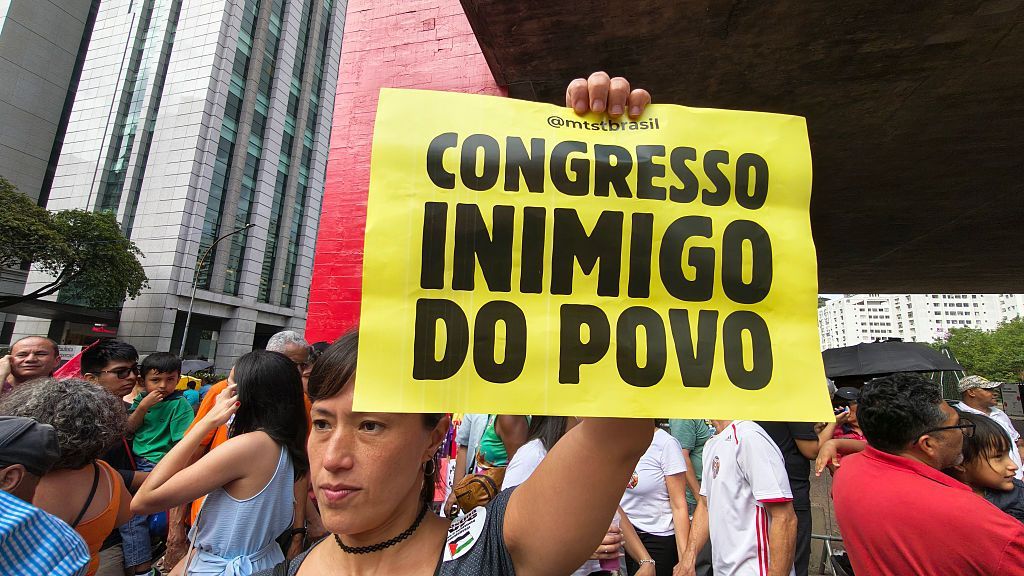
Brazilians protest against bill to reduce Bolsonaro’s jail time
Major Brazilian cities witnessed massive demonstrations on Sunday as tens of thousands of citizens mobilized against legislative efforts to substantially reduce former President Jair Bolsonaro’s prison term. The controversial bill, which cleared the lower house of Congress last week amid chaotic proceedings, would potentially slash Bolsonaro’s 27-year sentence for coup plotting to just over two years.
The protests spanned multiple urban centers including Rio de Janeiro, Brasília, and Salvador, with particularly significant gatherings at Rio’s iconic Copacabana Beach. The demonstration there attracted approximately 19,000 participants, including prominent cultural figures such as Oscar-winning actress Fernanda Torres and legendary 83-year-old singer Caetano Veloso, who performed at the rally. São Paulo saw around 13,700 protesters marching through its streets.
Protesters displayed signs with strong political messages, including some that labeled members of Congress as ‘enemies of the people,’ reflecting the deep polarization surrounding the legislation. This represents the latest in a series of anti-Bolsonaro demonstrations, following similar gatherings in September that opposed calls for his official pardon.
The legislative proposal has ignited intense debate as it would not only affect Bolsonaro’s sentence but could also reduce penalties for thousands detained for their involvement in the January 2023 assault on government buildings in Brasília. The violent attack occurred after Bolsonaro’s electoral defeat to left-wing rival Luiz Inácio Lula da Silva, whom the former president was convicted of plotting to assassinate.
The bill now advances to the Senate, where its fate remains uncertain. Even if approved by both legislative chambers, President Lula is expected to exercise his veto power, though Congress could potentially override such a veto given the conservative majority in the Chamber of Deputies.
-
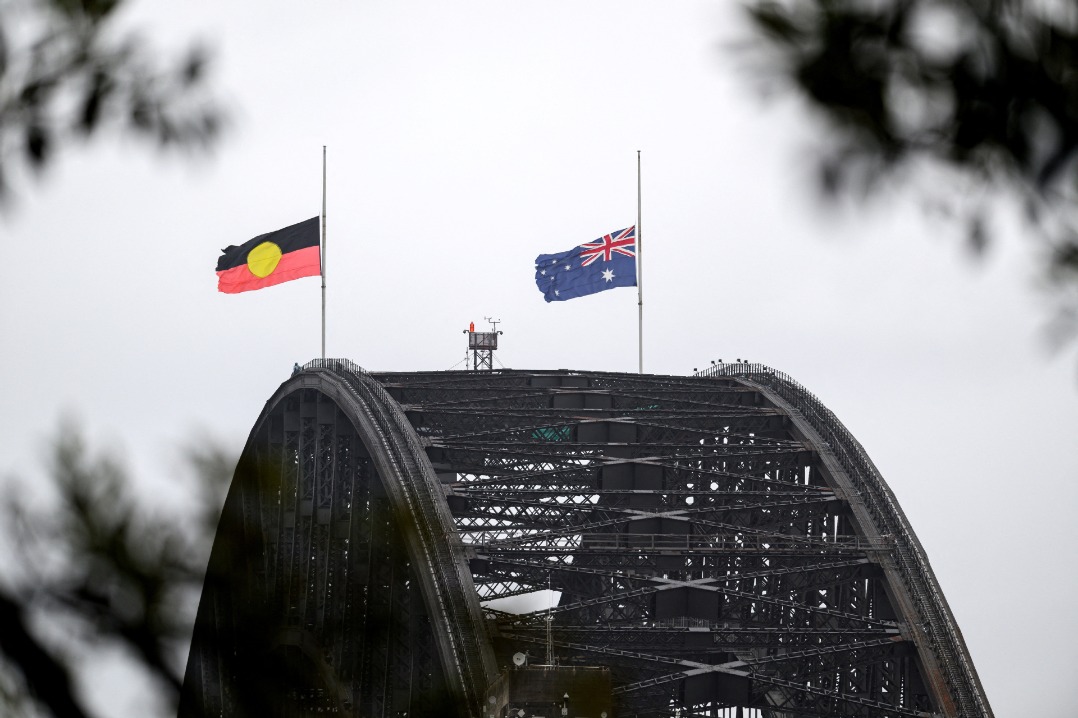
Australia set for biggest overhaul of gun laws in decades
In the wake of the devastating Sydney Bondi Beach massacre that claimed 15 lives, Australian Prime Minister Anthony Albanese has announced the most significant firearms law overhaul in decades. The federal cabinet convened Monday afternoon to initiate immediate reforms following Sunday’s horrific shooting during Hanukkah celebrations.
Prime Minister Albanese declared that “strong, decisive and focused action was needed on gun law reform as an immediate action” in response to the tragedy. The national government has mobilized a coordinated effort with state and territory leaders, tasking police ministers and attorneys-general with developing comprehensive policy options.
The proposed measures include implementing strict limits on the number of firearms any individual may possess, eliminating open-ended firearms licensing, restricting legal firearm categories, and enhancing the use of criminal intelligence in administrative licensing decisions. These reforms aim to address critical gaps in the existing system, which failed to prevent the Bondi Beach attack despite Australia’s established National Firearms Register created after the 1996 Port Arthur massacre that killed 35 people.
The urgency of these reforms is underscored by the revelation that the Bondi Beach shooter, Sajid Akram, had been deemed “fit and proper” to hold an A/B category gun license a decade earlier. Akram and his son subsequently used six legally owned firearms to carry out Sunday’s attack on beachgoers, exposing fatal flaws in the current regulatory framework.
-
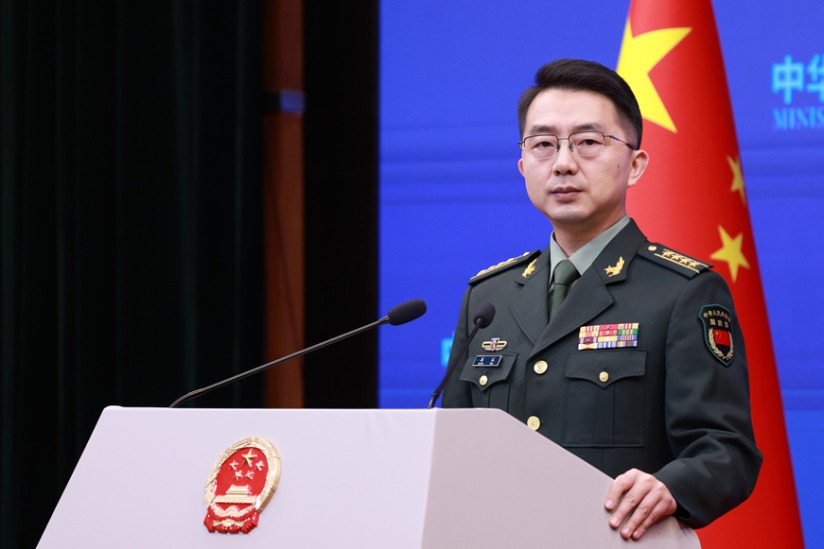
China denounces Japan for hyping up regular military training
BEIJING — China’s Ministry of National Defense has issued a firm rebuttal to Japanese officials regarding their portrayal of Chinese military exercises as threatening regional security. Defense Spokesperson Jiang Bin addressed the matter on Monday, December 15, 2025, characterizing Japan’s comments as a deliberate diversion tactic.
The diplomatic response came following Japanese statements concerning recent flight operations conducted by Chinese carrier-based aircraft. Jiang emphasized that these activities represent standard military training procedures that fall entirely within China’s sovereign rights. The spokesperson further asserted that such routine exercises should not be misrepresented as provocative actions.
Jiang Bin explicitly stated that attempts to redirect attention from substantive issues through what he termed ‘baseless allegations’ would prove unsuccessful. The defense official’s remarks underscore growing tensions between the two Asian powers regarding military transparency and regional security perceptions.
This exchange occurs amid ongoing regional discussions about military modernization and operational patterns in East Asian waters. China maintains that its military activities serve purely defensive purposes and conform to international norms governing naval operations.
-
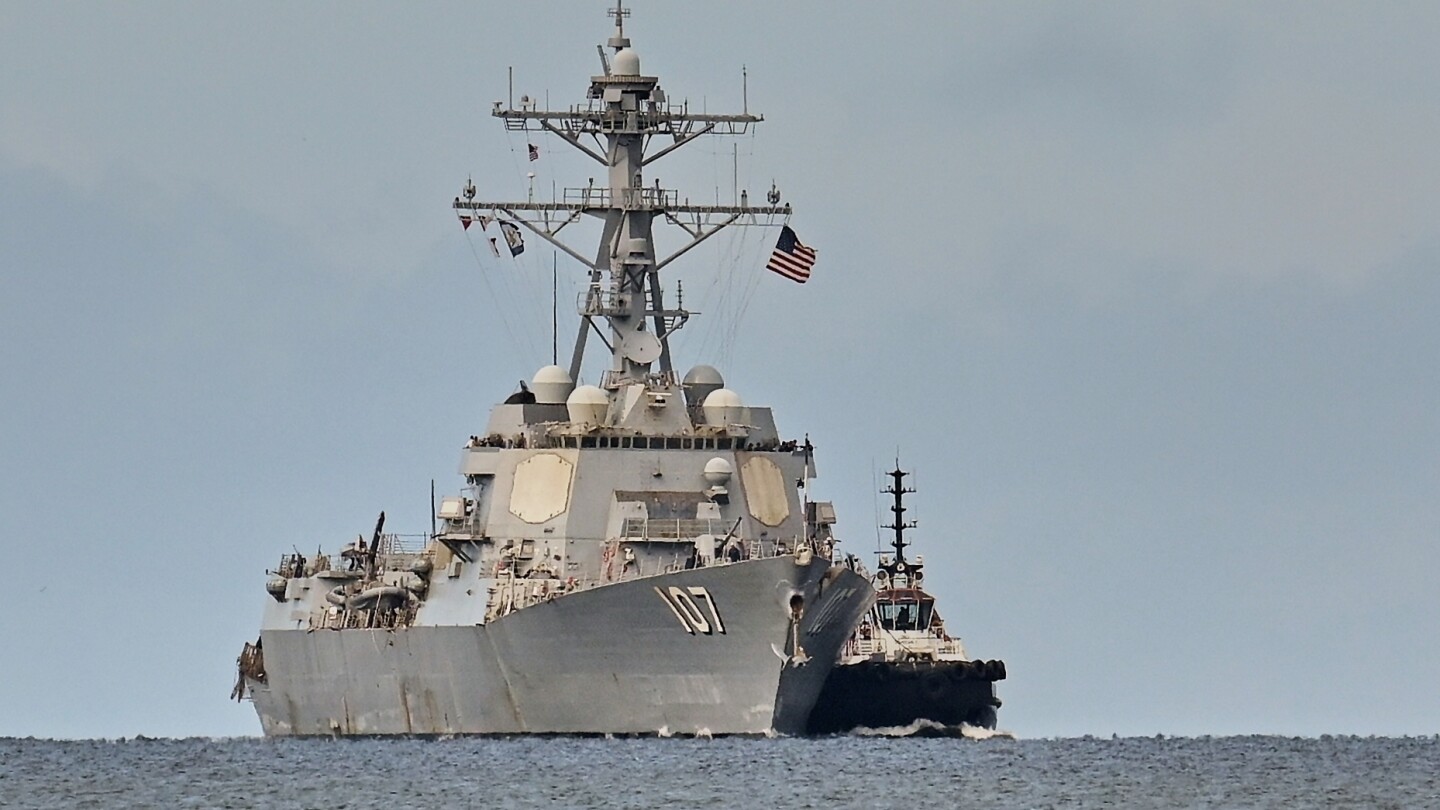
Trinidad and Tobago to open its airports to US military as tensions with Venezuela escalate
The government of Trinidad and Tobago has officially authorized United States military forces to utilize its national airports for logistical operations in the coming weeks, a decision announced Monday amid escalating geopolitical tensions between the U.S. and neighboring Venezuela. The Caribbean nation’s Ministry of Foreign Affairs characterized the arrangement as supporting routine logistical functions including supply replenishment and personnel rotations, while explicitly denying any offensive military purposes.
This development follows the recent installation of advanced radar systems at Tobago’s ANR Robinson International Airport by U.S. military personnel. Trinidad and Tobago officials maintain these systems are solely intended for combating domestic criminal activities, asserting the twin-island nation will not serve as a strategic launch point for attacks against any sovereign state.
The decision has sparked significant political controversy within the country. Opposition Senator Amery Browne, who previously served as foreign minister, condemned the agreement as transforming Trinidad and Tobago into “complicit facilitators of extrajudicial killings” and advancing a “might is right philosophy.” Browne argued this represents a dangerous departure from decades of balanced regional cooperation.
The authorization occurs against the backdrop of intensified U.S. naval operations in the Caribbean, where American warships have conducted strikes against alleged drug trafficking vessels since September, resulting in over 80 casualties. The U.S. Navy has significantly expanded its presence near Venezuelan waters, deploying its largest aircraft carrier alongside additional warships. In October, a U.S. vessel docked in Port-of-Spain, Trinidad’s capital, demonstrating increased military coordination.
U.S. lawmakers have raised constitutional concerns regarding the legality of maritime strikes in Caribbean and eastern Pacific waters, prompting announced congressional reviews of these operations. The proximity of Trinidad and Tobago to Venezuela—separated by merely seven miles at their closest point—adds strategic significance to these military developments.
-
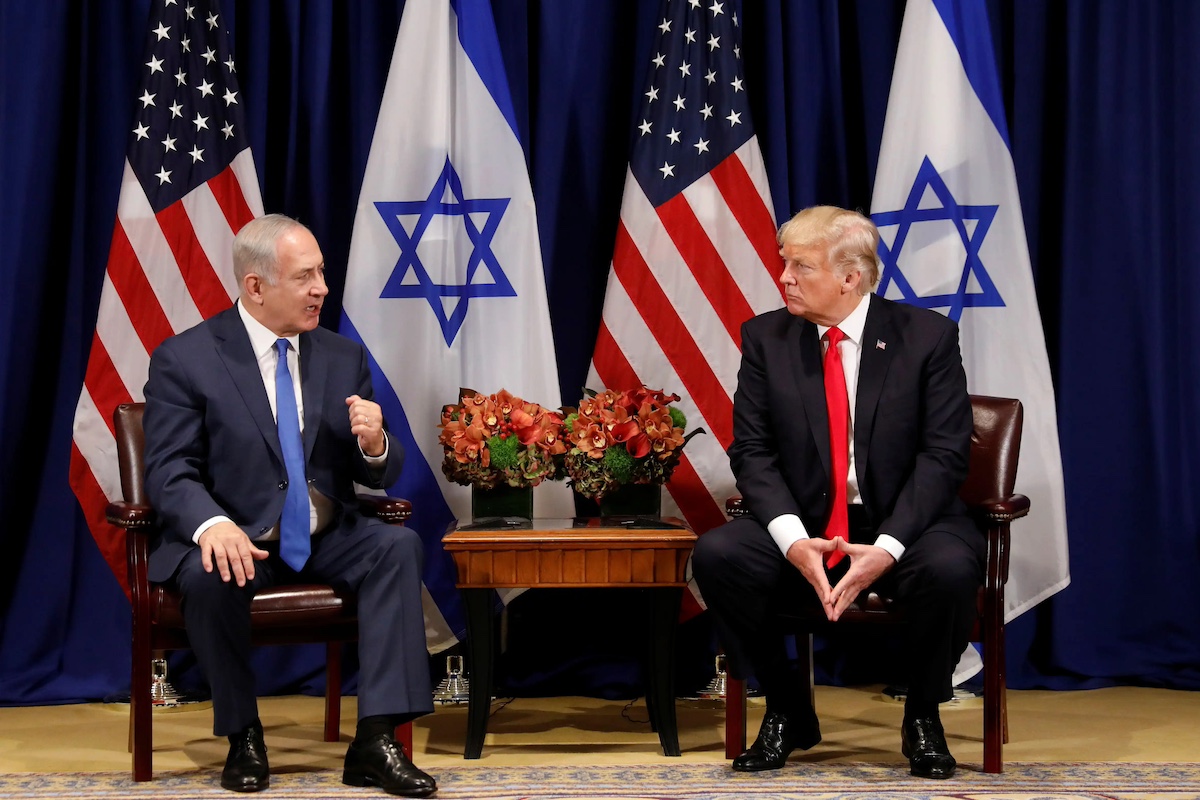
What Trump’s National Security Strategy means for Israel
The Trump administration’s 2025 National Security Strategy marks a transformative recalibration of American engagement in the Middle East, creating both challenges and opportunities for Israel that extend far beyond the document’s limited direct references to the nation.
While Israeli media has focused on the strategy’s mere six mentions of Israel, the substantial implications lie in its broader philosophical framework. The document explicitly prioritizes disengagement from “forever wars” while maintaining core security commitments—a delicate balancing act that signals reduced day-to-day regional involvement without abandoning fundamental alliances.
This strategic reorientation presents Israel with a dual reality: continued American security guarantees coupled with expectations of greater self-sufficiency. The strategy rationalizes this reduced footprint by asserting that Iranian capabilities have been significantly degraded through both Israeli military actions since October 2023 and the controversial “Operation Midnight Hammer” in June 2025, though these claims remain unverified by independent sources.
The administration’s approach embraces “transactional realism,” accepting regional governments as they exist without demanding democratic reforms while pursuing mutual interests. For Israel, this means expanded Abraham Accords remain a priority, with Saudi-Israeli normalization apparently high on the agenda. A proposed “Core 5” forum including the US, China, Russia, India, and Japan would initially focus on Middle East security and normalization efforts.
However, this transactional approach also suggests American support may become more conditional, requiring Israel to demonstrate concrete benefits for US interests. The strategy emphasizes burden-sharing with allies, expecting wealthier nations to assume greater regional responsibility—likely translating to expectations of increased Israeli defense spending despite already substantial military expenditures.
Perhaps most significantly, the strategy establishes a high threshold for American intervention, rooted in narrowly defined national interests rather than expansive commitments. This creates new constraints for Israeli military planning, as major operations against Hamas, Hezbollah, or Iran cannot assume automatic US support or protection from international consequences.
The document’s harsh criticism of Europe—claiming the continent faces “civilizational erasure”—adds another layer of complexity, potentially affecting Israel’s relationships with European powers and EU positions on Palestinian issues.
Beneath the surface, personal dynamics between Trump and Netanyahu remain strained, with reported frustration over Netanyahu’s congratulation of Biden after the 2020 election and skepticism about Palestinian negotiations. This suggests Israeli influence in Washington may be less assured than in previous administrations.
The strategy presents Israel with several imperatives: enhancing self-reliance, investing in regional partnerships, emphasizing technological and economic cooperation over aid models, and more effectively articulating how Israeli actions serve American interests. With 69% of Israeli weapons originating from the US, the nation faces limited options if American priorities diverge significantly.
Ultimately, the 2025 strategy maintains Israeli security as a core American interest while fundamentally redefining engagement terms. The transition demands Israeli adaptation to an era of more conditional, transactional support explicitly tied to demonstrable US benefits, marking the end of unconditional commitment—if it ever truly existed.