Hungary’s Prime Minister Viktor Orbán has lauded Budapest’s selection as the host city for upcoming talks between U.S. President Donald Trump and Russian President Vladimir Putin, aimed at addressing the ongoing conflict in Ukraine. The meeting, announced by Trump on Thursday, follows his recent discussions with Ukrainian President Volodymyr Zelenskyy at the White House. While a specific date remains unconfirmed, Trump indicated the talks would occur in Budapest within approximately two weeks. Orbán, a staunch ally of both Trump and Putin, emphasized Hungary’s unique position as a pro-peace nation in Europe, attributing Budapest’s selection to his government’s consistent opposition to Western military and financial aid to Ukraine. Since Russia’s full-scale invasion in February 2022, Hungary has refused to supply weapons to Ukraine or allow their transit across its borders, while also obstructing EU sanctions against Moscow and delaying funding packages to Kyiv. Orbán’s critics argue that Hungary’s stance undermines European unity and favors Russian aggression. The Budapest meeting holds symbolic significance, as the city was the site of the 1994 Budapest Memorandum, where Ukraine relinquished its nuclear weapons in exchange for security assurances—a pact later violated by Russia. Orbán framed the upcoming talks as a diplomatic milestone for Hungary, despite their focus on Ukraine. However, Hungary’s role as host raises questions about its commitment to international law, given its status as a signatory to the International Criminal Court, which has issued an arrest warrant for Putin over alleged war crimes. Orbán previously signaled Hungary’s intent to withdraw from the ICC following a similar controversy involving Israeli Prime Minister Benjamin Netanyahu.
分类: politics
-

Trump says to meet Putin in Hungary
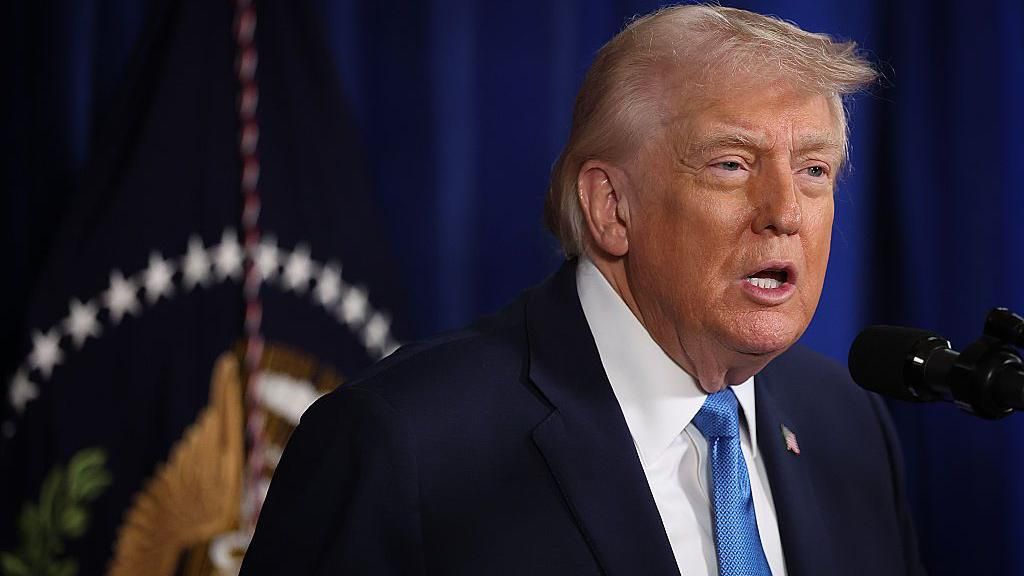
In a significant diplomatic move, former U.S. President Donald Trump announced plans to meet Russian President Vladimir Putin in Budapest, Hungary, to discuss potential resolutions to the ongoing Russia-Ukraine conflict. The announcement followed a ‘productive’ phone conversation between the two leaders, as Trump shared on his Truth Social platform. During the call, the leaders reportedly discussed not only the conflict but also future trade relations between the U.S. and Russia once the war concludes. Trump expressed optimism about the progress made during the conversation, stating, ‘I believe great progress was made with today’s telephone conversation.’
As a precursor to the meeting, high-level advisors from both nations are set to convene next week, with U.S. Secretary of State Marco Rubio leading the American delegation. The location for this preparatory meeting remains undetermined. Trump emphasized the goal of the Budapest summit, saying, ‘President Putin and I will then meet in an agreed upon location, Budapest, Hungary, to see if we can bring this ‘inglorious’ War, between Russia and Ukraine, to an end.’
The phone call occurred just ahead of Ukrainian President Volodymyr Zelensky’s scheduled visit to the White House, adding urgency to the diplomatic efforts. This meeting marks another attempt at dialogue between Trump and Putin, following their inconclusive talks in Alaska in August. In late September, Trump had expressed confidence in Ukraine’s ability to reclaim its territory with support from the European Union and NATO, stating that Ukraine ‘is in a position to fight and WIN all of Ukraine back in its original form.’
The upcoming Budapest meeting underscores the complex geopolitical dynamics at play, as global leaders seek to navigate the protracted conflict and its far-reaching implications.
-

Madagascar’s coup leader is set to be sworn in as president after military takeover
Colonel Michael Randrianirina, the leader of a recent military coup in Madagascar, is poised to be sworn in as the nation’s new president on Friday. The swift power grab, which ousted President Andry Rajoelina and forced him into hiding, marks a dramatic shift in the political landscape of the Indian Ocean island nation. Randrianirina, commander of the elite CAPSAT military unit, announced the military’s takeover just three days prior, following weeks of anti-government protests led primarily by young citizens. The swearing-in ceremony is scheduled to take place at the High Constitutional Court, with soldiers securing the premises and officials gathering for the event. The coup, which unfolded after three weeks of unrest, has drawn condemnation from the United Nations and resulted in Madagascar’s suspension from the African Union. Rajoelina, whose whereabouts remain unknown, was impeached by parliament shortly before Randrianirina declared the military’s assumption of power. The colonel, who emerged from relative obscurity to lead the rebellion, has pledged to govern through a military council for 18 months to two years before holding elections. This timeline suggests a prolonged wait for the young protesters who initially fueled the uprising. The protests, which began last month, were driven by grievances over water and power shortages, rising living costs, and allegations of corruption and nepotism. Randrianirina’s decision to join the anti-government movement last weekend solidified his position, despite a brief clash with security forces loyal to Rajoelina that resulted in one casualty. While the streets have remained largely peaceful, the international community, including U.N. Secretary-General António Guterres, has called for a return to constitutional order. Madagascar, a former French colony with a history of political instability, faces significant challenges, including widespread poverty affecting 75% of its population. The nation’s future remains uncertain as it navigates this latest chapter in its tumultuous political history.
-

After years of socialist rule, Bolivia’s presidential runoff tests how far and fast it veers right
Bolivia, after nearly two decades of dominance by the Movement Toward Socialism (MAS) party, is witnessing a significant political shift to the right. This change comes in the wake of a severe economic crisis, marked by a collapsing currency, fuel shortages, and widespread public discontent. The recent presidential runoff, held on Sunday, features two conservative, business-friendly candidates, signaling a stark departure from the leftist policies of former President Evo Morales. The MAS party, which has ruled since 2005, suffered a dramatic decline in support in the August 17 elections, barely retaining its legal status as Bolivians expressed a strong desire for change. The incoming president faces the immediate challenge of stabilizing the economy by attracting foreign investment, addressing fuel shortages, and implementing fiscal reforms. Jorge ‘Tuto’ Quiroga, a right-wing former president, advocates for an IMF bailout and stringent fiscal adjustments. His rival, centrist senator Rodrigo Paz, proposes legalizing the black market, phasing out subsidies, and encouraging Bolivians to repatriate their dollars. Amid the worst economic crisis in four decades, many voters remain skeptical about the candidates’ ability to deliver meaningful change. The election outcome will determine the pace and extent of Bolivia’s political and economic transformation, with significant implications for its international relations, particularly with the U.S., China, and Russia.
-

Former Japanese prime minister Murayama, known for apology over wartime aggression, dies at 101
TOKYO — Tomiichi Murayama, the former Prime Minister of Japan renowned for his distinctive bushy eyebrows and his landmark 1995 apology to Asian nations for Japan’s wartime aggression, passed away on Friday at the age of 101. Murayama succumbed to old age at a hospital in his hometown of Oita, located in southwestern Japan. The announcement of his death was made by Mizuho Fukushima, the leader of Japan’s Social Democratic Party. Murayama, who headed the Japan Socialist Party (now the Social Democratic Party), served as Prime Minister from June 1994 to January 1996, leading a coalition government during a transformative period in Japanese politics. His 1995 statement, often referred to as the ‘Murayama Statement,’ remains a cornerstone of Japan’s post-war reconciliation efforts, expressing deep remorse for the suffering caused by Japanese imperialism in Asia. Murayama’s legacy is marked by his commitment to peace and his efforts to mend historical wounds.
-

Trade, Covid, rare earths and a real danger of global recession
China has strategically positioned itself for a potential confrontation with the United States, a scenario that could precipitate a global financial collapse. Unlike China, the US appears unprepared, lacking a viable contingency plan beyond diplomatic talks. This imbalance stems from America’s recent upheaval in its alliance networks and growing distrust among its trading partners, a situation not witnessed in over three decades. Capitalizing on this perceived US vulnerability, China has initiated a preemptive counteroffensive, imposing sanctions on rare earth elements—a move that has effectively cornered the US. While the US possesses potential countermeasures, such as disrupting air traffic control services, these actions could escalate tensions to the brink of war. Conversely, other US responses, like restricting the supply of advanced chips, may prove ineffective as alternative, albeit less efficient, solutions exist. China’s rare earth sanctions, however, pose an immediate threat to global markets, potentially triggering a recession. This strategy pits global markets against US President Donald Trump, while Chinese President Xi Jinping maintains firm control over China’s largely detached markets. The COVID-19 pandemic served as a rehearsal for China, demonstrating its populace’s adaptability and trust in government directives during crises. This preparedness contrasts sharply with the US’s initial denial and subsequent struggle to manage the pandemic, which ultimately contributed to Trump’s electoral defeat. China’s strategic foresight, coupled with the US’s lack of readiness, suggests that Beijing holds the upper hand in this high-stakes geopolitical standoff. However, the situation remains fluid, with global developments, such as the Netherlands’ nationalization of a Chinese tech company, potentially complicating China’s position. As tensions escalate, the world watches closely, aware that the outcome of this confrontation could reshape the global order.
-

A US senator claims ‘Christian mass murder’ is occurring in Nigeria. The data disagrees
U.S. Senator Ted Cruz has ignited a contentious debate by urging Congress to designate Nigeria as a violator of religious freedom, alleging ‘Christian mass murder’ without substantiated evidence. The Nigerian government has firmly dismissed these claims as baseless. Cruz, a Republican member of the Senate Foreign Relations Committee, introduced a bill last month seeking to label Nigeria a ‘Country of Particular Concern’ due to alleged ‘severe violations’ of religious freedom. Such a designation could lead to U.S. sanctions. However, the bill’s passage remains uncertain as it awaits Senate action. Cruz’s assertions have been echoed by some U.S. celebrities and commentators, with some even alleging a ‘Christian genocide,’ though no evidence has been provided. Cruz’s office has not responded to inquiries about the motivation behind these allegations. Nigeria, with a population of 220 million, is nearly evenly divided between Christians and Muslims. The country has long grappled with insecurity from various groups, including Boko Haram, which targets both Muslims and Christians. Analysts emphasize that the majority of victims in Nigeria’s Muslim-majority north are Muslims, not Christians. While religiously motivated attacks occur, they are part of a broader spectrum of violence, including farmer-herder conflicts and ethnic clashes. Joseph Hayab, a former chairman of the Christian Association of Nigeria, refuted claims of ‘Christian genocide,’ noting that while thousands of Christians have been killed, the situation has improved compared to previous years. Nigeria’s Information Minister, Idris Muhammed, stated that there is no systematic or intentional targeting of any religious group. Nigeria was previously designated a ‘Country of Particular Concern’ by the U.S. in 2020, but this was lifted in 2023 to improve bilateral relations. The Christian Association of Nigeria has acknowledged the persecution of Christians but emphasized that violence affects both religious groups. Data from the Armed Conflict Location and Event Data program shows that between January 2020 and September 2023, 20,409 deaths resulted from 11,862 attacks on civilians in Nigeria, with 317 Christian deaths and 417 Muslim deaths recorded in religion-targeted attacks. Analysts argue that Nigeria’s complex security dynamics do not meet the legal definition of genocide, which requires intent to destroy a specific group. Instead, they describe the violence as mass killings not targeted at any particular group. Experts warn that framing the crisis as genocide could exacerbate tensions and hinder efforts to address the root causes of violence.
-

Ahead of Zelenskyy meeting, Trump shows signs he might not be ready to send Kyiv Tomahawk missiles
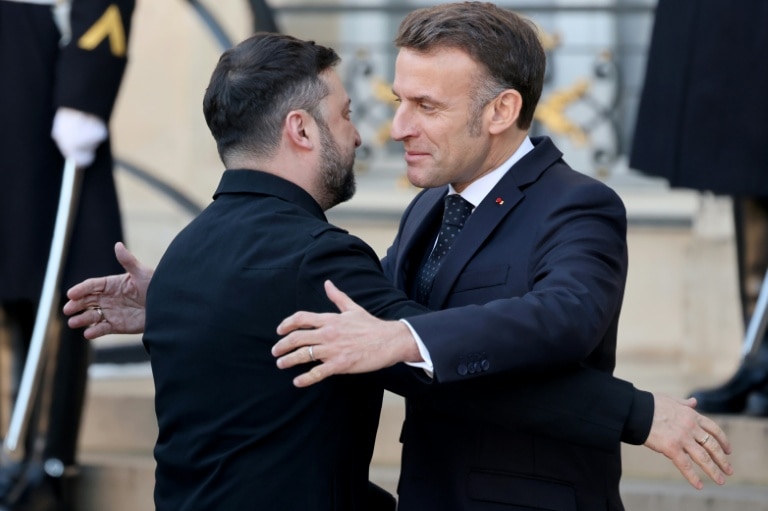
President Donald Trump is scheduled to meet with Ukrainian President Volodymyr Zelenskyy at the White House on Friday, following a lengthy phone call between Trump and Russian President Vladimir Putin. The discussions come amid Ukraine’s urgent request for long-range Tomahawk cruise missiles, which Trump has indicated he is hesitant to provide, citing the need to preserve U.S. military resources. Zelenskyy has argued that these missiles are essential for striking deep into Russian territory and compelling Putin to engage in serious negotiations to end the ongoing conflict. However, Putin has warned that supplying such weapons to Ukraine would severely damage U.S.-Russian relations. This will be the fourth face-to-face meeting between Trump and Zelenskyy since Trump returned to office in January. Trump has also announced plans to meet with Putin in Budapest to discuss potential resolutions to the war, with senior aides from both sides set to convene next week. Despite Trump’s earlier optimism about brokering peace, recent developments suggest that direct talks between Zelenskyy and Putin remain unlikely, as Russia continues its aggressive military actions in Ukraine.
-

A war on drugs or a war on terror? Trump’s military pressure on Venezuela blurs the lines
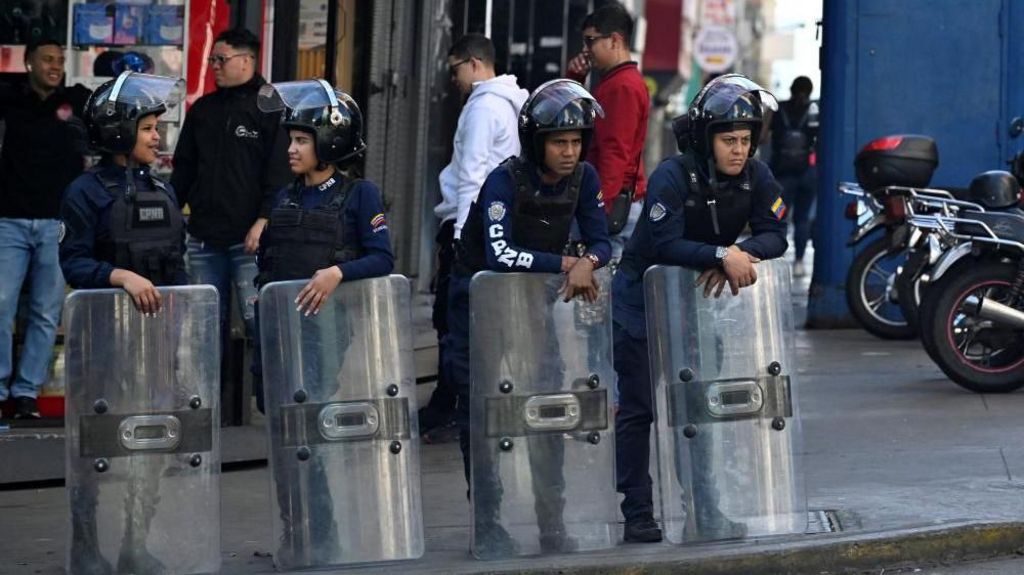
The Trump administration’s approach to combating drug cartels in Latin America is drawing parallels to the post-9/11 war on terror, with legal scholars questioning the expansion of military power and its implications for international law. President Donald Trump has authorized military strikes against Venezuelan drug traffickers, relying on the same legal framework that justified lethal force against al-Qaida after the 2001 attacks. However, critics argue that this strategy stretches the boundaries of international law, particularly as the U.S. military targets groups primarily engaged in drug trafficking rather than terrorism. The administration has conducted at least five strikes, killing 27 people, without congressional approval or traditional legal investigations, raising concerns about the justification for these actions and their impact on U.S.-Latin American relations. Trump has also hinted at potential covert operations to oust Venezuelan President Nicolás Maduro, further escalating tensions. Legal experts, including Claire Finkelstein of the University of Pennsylvania, argue that labeling drug cartels as combatants in an ‘armed conflict’ undermines international law. Meanwhile, the U.S. intelligence community disputes claims that Maduro’s administration is orchestrating drug trafficking and illegal immigration. The administration’s focus on Venezuela overlooks the fact that most fentanyl, responsible for the majority of U.S. overdose deaths, is smuggled from Mexico. Despite calls for transparency, the Trump administration has yet to provide evidence to Congress proving the targeted boats were carrying narcotics. The International Criminal Court could investigate the strikes, but its efforts are hampered by internal issues and U.S. sanctions.
-

Trump gets Gaza ceasefire trophy at beginning of game
The fragile ceasefire in the Gaza Strip, brokered by former US President Donald Trump, is under strain as Israel and Hamas accuse each other of violating the agreement. The dispute threatens both the flow of humanitarian aid and the relative calm in the region. Trump’s 20-point peace plan, hailed as “historic,” aimed to end the conflict in Gaza and the broader region. Key goals included a ceasefire, the exchange of prisoners, and the resumption of aid deliveries to Gaza’s 2.3 million residents. While the first two objectives were partially achieved, aid delivery remains inconsistent, with Israel blocking supplies citing Hamas’s failure to return the bodies of 20 deceased citizens. Critics argue that Trump’s plan lacks concrete measures to disarm Hamas, ensure Israeli withdrawal, or establish a sustainable Palestinian government. Skepticism persists, with The Guardian cautiously praising the initiative while emphasizing the need for sustained pressure on both Israel and Hamas. Trump’s unorthodox diplomacy, including his handling of Israel’s missile attack on Qatar, has further complicated the situation. Despite these challenges, Trump remains committed to his vision of lasting peace, though his focus may shift as global priorities evolve.