分类: politics

  • Chinese Communist Party expels top generals in sweeping military crackdown

    Chinese Communist Party expels top generals in sweeping military crackdown

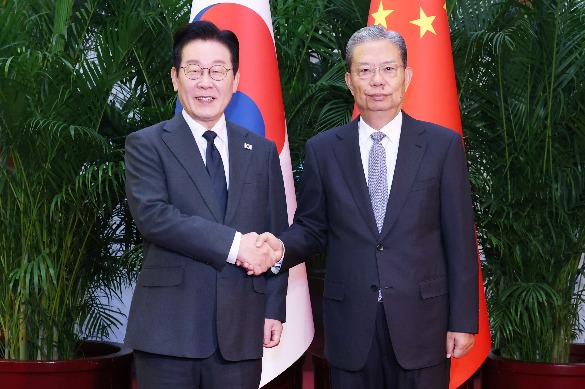
    In a sweeping move, the Chinese Communist Party has expelled nine high-ranking military officials, marking one of the most significant public crackdowns on the military in decades. The expelled generals, including He Weidong, the Vice-Chairman of the Central Military Commission (CMC), were accused of serious financial crimes and violations of party discipline. The announcement, made by China’s defense ministry, described the offenses as involving ‘an extremely large amount of money, of extremely serious nature, and with extremely detrimental consequences.’

    He Weidong, who was also a member of the Politburo, the party’s apex decision-making body, is the first serving Politburo member to be investigated. His prolonged absence from public view since March had fueled speculation about his involvement in the ongoing purge. The other expelled officials include Miao Hua, director of the CMC’s political work department, and Wang Houbin, commander of the Rocket Forces, among others.

    The expulsions come on the eve of the party’s Fourth Plenum, where the Central Committee will discuss economic development plans and vote in new members. Analysts suggest that while the crackdown is framed as part of an anti-corruption campaign, it also serves as a political purge to consolidate power and eliminate dissent within the military. The CMC had previously signaled its intent to root out ‘toxic influence’ and enforce ‘iron rules’ for cadres.

    This purge follows smaller-scale removals of military officials in recent years, including former defense ministers Wei Fenghe and Li Shangfu. The Rocket Forces, in particular, have seen significant leadership changes. The expulsion of civilian officials, such as former foreign minister Qin Gang, further underscores the breadth of the campaign.

    Neil Thomas, a fellow in Chinese politics at the Asia Society Policy Institute, noted that President Xi Jinping’s purges aim to project strength and discipline. However, he cautioned that such measures could stifle initiative and make governance more rigid. The upcoming plenum will be closely watched for signs of the purge’s extent, with attendance levels serving as a key indicator.

  • UAE President awards Order of Zayed II, First Class to Pakistan ambassador

    UAE President awards Order of Zayed II, First Class to Pakistan ambassador

    In a significant diplomatic gesture, UAE President Sheikh Mohamed bin Zayed Al Nahyan has awarded the Order of Zayed II (First Class) to Faisal Niaz Tirmizi, Pakistan’s Ambassador to the UAE. The prestigious honor was bestowed in recognition of Ambassador Tirmizi’s exceptional contributions to enhancing bilateral ties between the UAE and Pakistan during his tenure. The award ceremony, held at the Ministry of Foreign Affairs in Abu Dhabi, was presided over by Khalifa Shaheen Al Marar, UAE Minister of State. During the event, Al Marar emphasized the UAE’s commitment to fostering stronger relations with Pakistan across various sectors, highlighting the ambassador’s pivotal role in advancing mutual cooperation. Ambassador Tirmizi expressed profound gratitude to Sheikh Mohamed, lauding the UAE’s remarkable progress and its leadership’s vision for international engagement. He also extended his appreciation to UAE government entities for their unwavering support, which significantly contributed to the success of his diplomatic mission.

  • What to know about the Madagascar army colonel who was ‘in the shadows’ before launching a coup

    What to know about the Madagascar army colonel who was ‘in the shadows’ before launching a coup

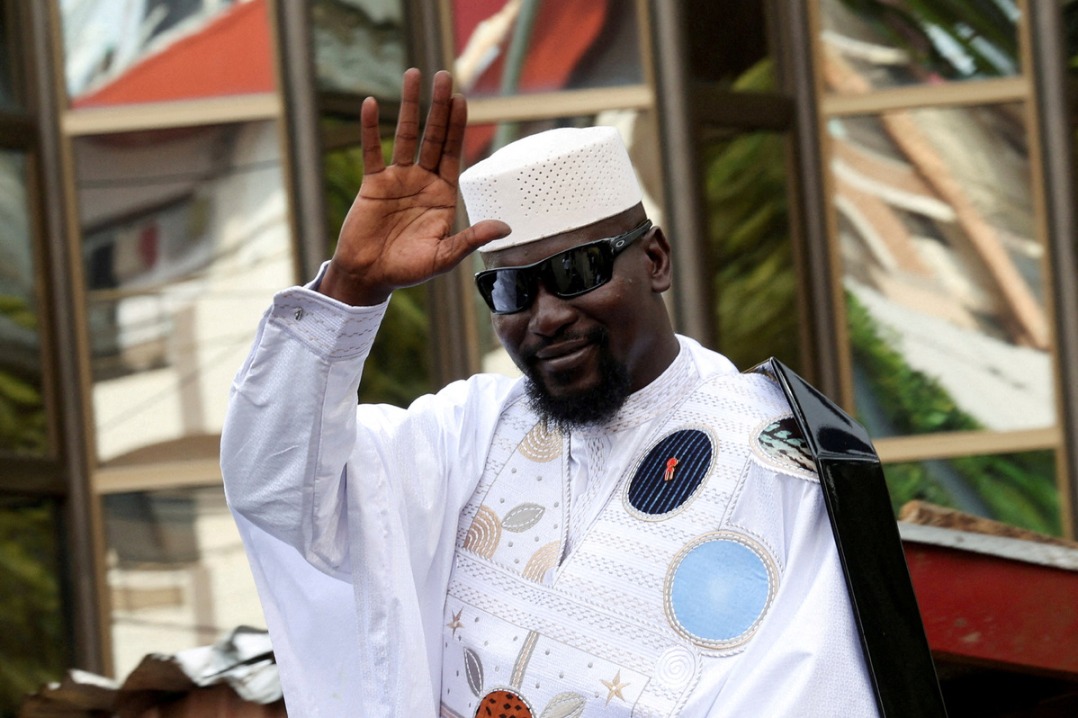
    In a dramatic turn of events, Col. Michael Randrianirina, a relatively unknown military figure, ascended to the presidency of Madagascar on Friday, just six days after orchestrating a military coup. His rapid rise to power followed weeks of widespread anti-government protests, primarily led by the nation’s youth, culminating in the ousting of former President Andry Rajoelina. Randrianirina, a former governor of the impoverished southern region of Androy, has long been a vocal critic of Rajoelina. His political journey has been marked by controversy, including a 2023 arrest for alleged mutiny planning, which led to a brief detention in the notorious Tsiafahy Prison. Despite these challenges, Randrianirina managed to retain his military status and eventually took command of the elite CAPSAT unit, which played a pivotal role in the coup. His leadership emerged during the protests, as he rode an armored vehicle alongside demonstrators, solidifying his position as the uprising’s de facto leader. However, his ascent has drawn international condemnation, with both the United Nations and the African Union suspending Madagascar’s membership in response to the coup.

  • Dutch Supreme Court rejects Russia’s final appeal in $50B Yukos case

    Dutch Supreme Court rejects Russia’s final appeal in $50B Yukos case

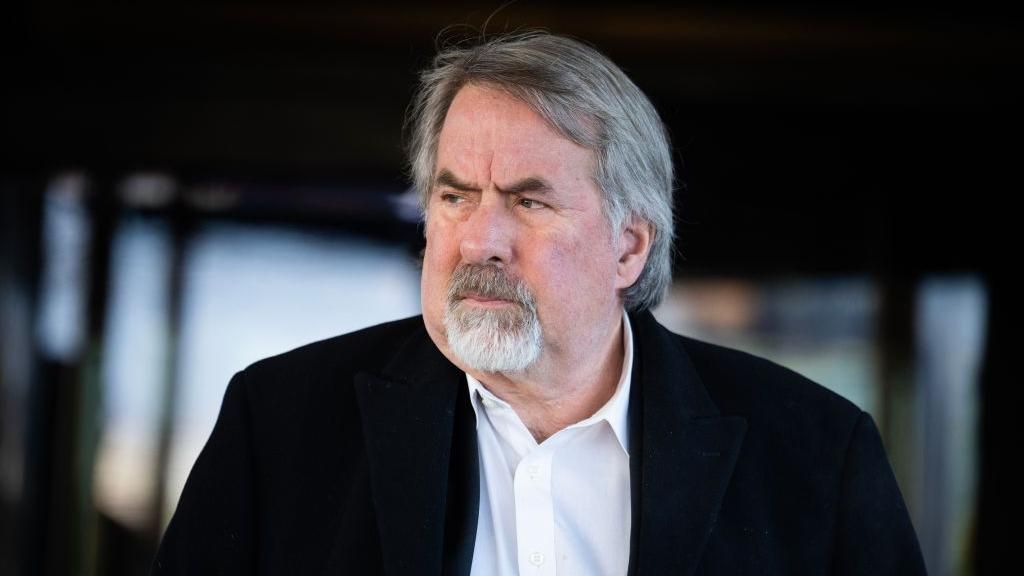
    In a landmark ruling, the Dutch Supreme Court on Friday dismissed Russia’s final appeal against a $50 billion arbitration award to former shareholders of Yukos, the once-mighty Russian oil giant. The court declared the decision as the conclusive end to a protracted legal battle that has spanned over two decades. The former shareholders allege that the Kremlin orchestrated the company’s bankruptcy in 2003 to neutralize its CEO, Mikhail Khodorkovsky, a vocal critic of President Vladimir Putin. The ruling upheld a 2023 decision by Amsterdam judges, which rejected Russia’s last legal argument in a case stemming from a 2014 arbitration panel’s verdict. The panel, based in The Hague, had found that Moscow deliberately crippled Yukos with exorbitant tax claims to seize control of its assets and remove Khodorkovsky from the political arena. Khodorkovsky was arrested in 2003 and spent over a decade in prison while Yukos’s primary assets were sold to a state-owned entity, leading to the company’s eventual bankruptcy. Tim Osborne, CEO of GML, a holding company representing the former majority shareholders, hailed the ruling as a historic victory, emphasizing that it reaffirms the principle that no state is above the law. Osborne vowed to focus on enforcing the award against Russian state assets globally, noting that the total amount, including interest, now exceeds $65 billion.

  • Clashes break out near Bangladesh parliament as major parties sign a roadmap for change

    Clashes break out near Bangladesh parliament as major parties sign a roadmap for change

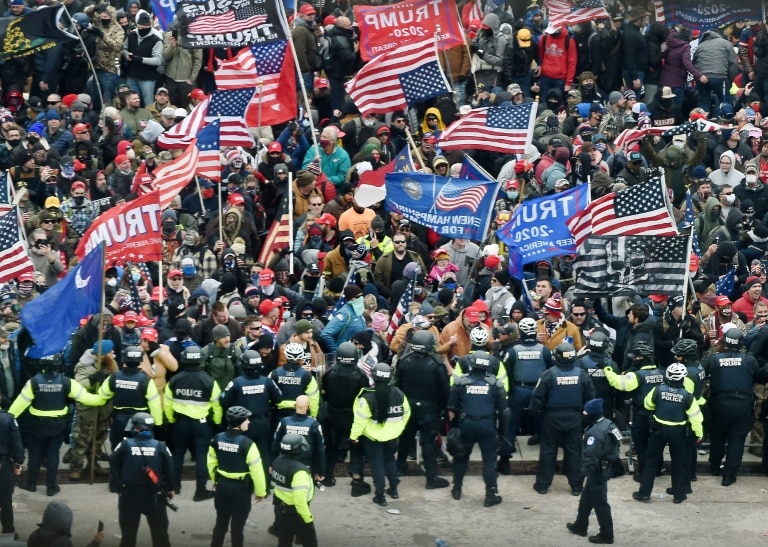
    In a significant development in Bangladesh’s political landscape, major political parties endorsed a roadmap for political reforms proposed by the interim government on Friday. However, the signing ceremony was marred by violent clashes between police and protesters demanding greater recognition for activists who played a pivotal role in ousting former Prime Minister Sheikh Hasina in August 2024. The protests, centered outside the national Parliament building in Dhaka, saw police deploying tear gas, stun grenades, and batons to disperse demonstrators, resulting in injuries and property damage. The protesters, identifying themselves as part of the 2024 movement that ended Hasina’s 15-year autocratic rule, sought additional welfare guarantees and program provisions for movement participants. The interim government, led by Nobel Peace Prize laureate Muhammad Yunus, facilitated the signing of the ‘July National Charter,’ a nonbinding document aimed at introducing constitutional and legal reforms. The charter proposes measures to enhance checks and balances, impose term limits on legislators, and combat corruption and conflicts of interest. Notably, the Awami League, Hasina’s former party, was excluded from the process, raising questions about the inclusivity of the upcoming February elections. While the Bangladesh Nationalist Party and several other parties signed the charter, some left-wing and student-led groups abstained. Yunus hailed the signings as a step toward a ‘civilized society,’ but concerns persist over the exclusion of key political factions and the broader implications for Bangladesh’s democratic transition.

  • Europe’s main center-left political family expels Slovak leader’s party for breaching its values

    Europe’s main center-left political family expels Slovak leader’s party for breaching its values

    In a decisive move, the Party of European Socialists (PES) has expelled Slovak Prime Minister Robert Fico’s Smer party from its ranks. The unanimous decision, made during a congress in Amsterdam, underscores the growing rift between Fico’s pro-Russian policies and the core values of the European center-left political family. PES Secretary-General Giacomo Filibeck emphasized that Smer’s recent political positions “severely and deeply contradict the values and principles our family stands for.” This expulsion sends a clear message: alignment with PES requires adherence to shared democratic principles. Fico, a controversial figure both domestically and internationally, has long been criticized for his pro-Russian stance. In May, he defied EU calls for a boycott by attending Moscow’s 80th anniversary celebrations of Nazi Germany’s defeat in World War II. His return to power in 2003 was marked by a pro-Russia and anti-American platform, and his government has consistently challenged EU policies on Ukraine, even delaying the latest package of sanctions against Russia.

  • Kenyans bid farewell to statesman and democracy activist Raila Odinga at state funeral

    Kenyans bid farewell to statesman and democracy activist Raila Odinga at state funeral

    NAIROBI, Kenya — Thousands of mourners, including African heads of state and dignitaries, gathered in Nairobi on Friday to honor the life and legacy of Raila Odinga, Kenya’s former Prime Minister and a towering figure in the nation’s democratic journey. Odinga, who passed away at the age of 80 in India earlier this week, was celebrated for his unwavering commitment to political reform and national unity. His casket, draped in the Kenyan flag, was the centerpiece of an emotional Anglican Church service held at a packed soccer stadium, where attendees chanted his name and displayed portraits of the revered leader. The ceremony was marked by traditional symbols of peace, such as twigs, and underscored by heavy security following a tragic incident during Thursday’s public viewing, which claimed three lives. Odinga’s body had earlier lain in state at Parliament, a rare honor typically reserved for presidents, reflecting his profound impact on Kenya’s political landscape. Despite never securing the presidency in his five attempts over three decades, Odinga’s activism was instrumental in transforming Kenya into a vibrant multiparty democracy. President William Ruto, who once campaigned for Odinga in 2007 and later became his political rival, praised the late leader for his selflessness and pivotal role in shaping Kenya’s laws. The two leaders had recently reconciled after months of anti-government protests, leading to opposition members being appointed to cabinet positions. Anglican Bishop David Kodia, who presided over the service, urged leaders to emulate Odinga’s integrity and reject corruption. Political analyst Herman Manyora highlighted Odinga’s legacy, stating, “You can’t point at a man more willing to sacrifice everything just for the sake of his people.” Odinga’s family, including his wife Ida and children Winnie, Rosemary, and Raila Junior, were among the mourners. Winnie, who was with him in India, shared that her father passed away “strong, with dignity and pride,” while Junior vowed to uphold the family’s legacy. The ceremony concluded with President Ruto leading the crowd in singing Odinga’s favorite song, “Jamaica Farewell,” a fitting tribute to a man who dedicated his life to Kenya’s progress.

  • President approves CIA action in Venezuela

    President approves CIA action in Venezuela

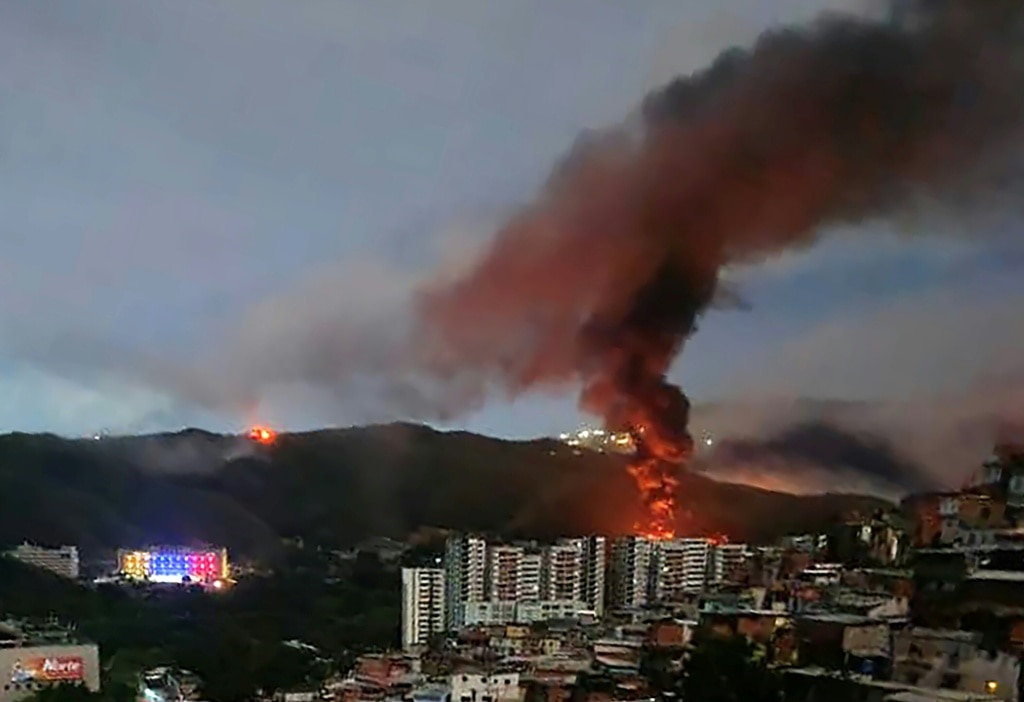
    In a significant escalation of tensions between the United States and Venezuela, President Donald Trump announced on Wednesday that he has authorized the Central Intelligence Agency (CIA) to conduct covert operations in Venezuela. The decision, which has drawn sharp criticism from Venezuelan President Nicolas Maduro, marks a new chapter in the fraught relationship between the two nations. Speaking at the White House, Trump accused Venezuela of releasing prisoners and mental patients to cross into the United States illegally, as well as facilitating large-scale drug smuggling operations. However, he provided no concrete evidence to support these claims. When questioned about whether the CIA had been authorized to target Maduro, Trump evaded a direct response, stating only that ‘Venezuela is feeling the heat.’ He also hinted at potential land-based military strikes, emphasizing that the U.S. already has ‘the sea very well under control.’ Maduro swiftly condemned the move, labeling it a ‘CIA-orchestrated coup d’etat.’ According to The New York Times, the new authorization permits the CIA to carry out lethal missions in Venezuela and the Caribbean, while coordinating with broader U.S. military operations in the region. The Trump administration has reportedly made it clear, albeit privately, that the ultimate objective is to remove Maduro from power. Currently, approximately 10,000 U.S. troops, eight warships, and one submarine are deployed in the Caribbean, primarily based in Puerto Rico. Since September, the U.S. has conducted five strikes targeting alleged drug-trafficking boats near Venezuela, resulting in 27 fatalities. Earlier this month, the White House informed Congress that the U.S. is engaged in a ‘non-international armed conflict’ with drug cartels designated as terrorist groups, though it did not specify which organizations. A 2020 report from the U.S. Drug Enforcement Administration indicated that while some cocaine passes through Venezuela, the country is not a primary source of U.S.-bound drugs. Maduro has repeatedly denounced Washington’s actions, accusing the U.S. of seeking to seize Venezuela’s oil resources. Historically, the CIA has been involved in numerous coups and covert operations across Latin America. Venezuela’s government has condemned Trump’s remarks as a violation of international law and plans to raise the issue with the United Nations Security Council and Secretary-General, demanding accountability from the U.S. government.

  • Russia convicts 15 captured Ukrainian soldiers on terrorism charges

    Russia convicts 15 captured Ukrainian soldiers on terrorism charges

    A military court in Rostov-on-Don, southern Russia, has convicted 15 Ukrainian soldiers from the Aidar battalion on terrorism charges, sentencing them to prison terms ranging from 15 to 21 years. The trial, which concluded on Friday, has been condemned by Kyiv as a sham and a blatant violation of international law. This marks the second mass trial of Ukrainian prisoners of war since March, when 23 members of the elite Azov brigade were similarly convicted. Both the Azov and Aidar battalions have been designated as terrorist organizations by Russia, which accuses them of war crimes. These volunteer units were formed following Russia’s 2014 annexation of Crimea and played a significant role in combating Russia-backed separatists in eastern Ukraine. Ukraine’s human rights envoy, Dmytro Lubinets, denounced the trial as “shameful,” asserting that Russia is criminalizing those who defended their homeland. Memorial, a prominent Russian human rights group, has labeled the defendants as political prisoners, arguing that the trial contravenes international conventions protecting prisoners of war. The group emphasized that the Geneva Convention prohibits prosecuting POWs solely for their participation in armed conflict. The trial, held behind closed doors for the most part, initially involved 18 members of the Aidar battalion. Two nurses were returned to Ukraine in a prisoner swap, while proceedings against a driver are set to be held separately. The verdict has sparked international concern, with critics accusing Russia of using the judicial system to legitimize its actions against Ukrainian defenders.

  • Trump says Modi pledges to stop buying Russian oil

    Trump says Modi pledges to stop buying Russian oil

    In a significant diplomatic development, US President Donald Trump revealed that Indian Prime Minister Narendra Modi has pledged to cease purchasing oil from Russia. This announcement comes as the US intensifies its efforts to curb Moscow’s energy revenues and pressure Russia into negotiating a peace deal in Ukraine. Trump, who has recently imposed tariffs on Indian exports to discourage its Russian oil imports, shared the news during a White House event, stating, ‘I was not happy that India was buying oil, and he (Modi) assured me today that they will not be buying oil from Russia.’ The Indian embassy in Washington has yet to confirm Modi’s commitment, while India’s foreign ministry emphasized its focus on safeguarding consumer interests in a volatile energy market. India, which sources one-third of its oil imports from Russia, has expressed willingness to increase purchases of US oil and gas if prices are competitive. Meanwhile, Kremlin spokesman Dmitry Peskov defended Russia’s ability to supply affordable, high-quality oil, warning that restricting trade would violate free market principles.