分类: politics

  • Around 4,000 cyberattack incidents originating from Taiwan investigated in 2025

    Around 4,000 cyberattack incidents originating from Taiwan investigated in 2025

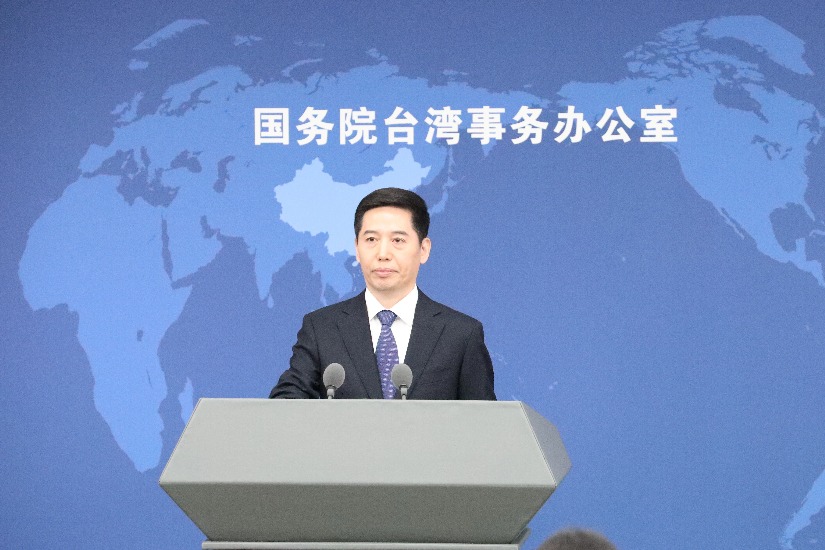
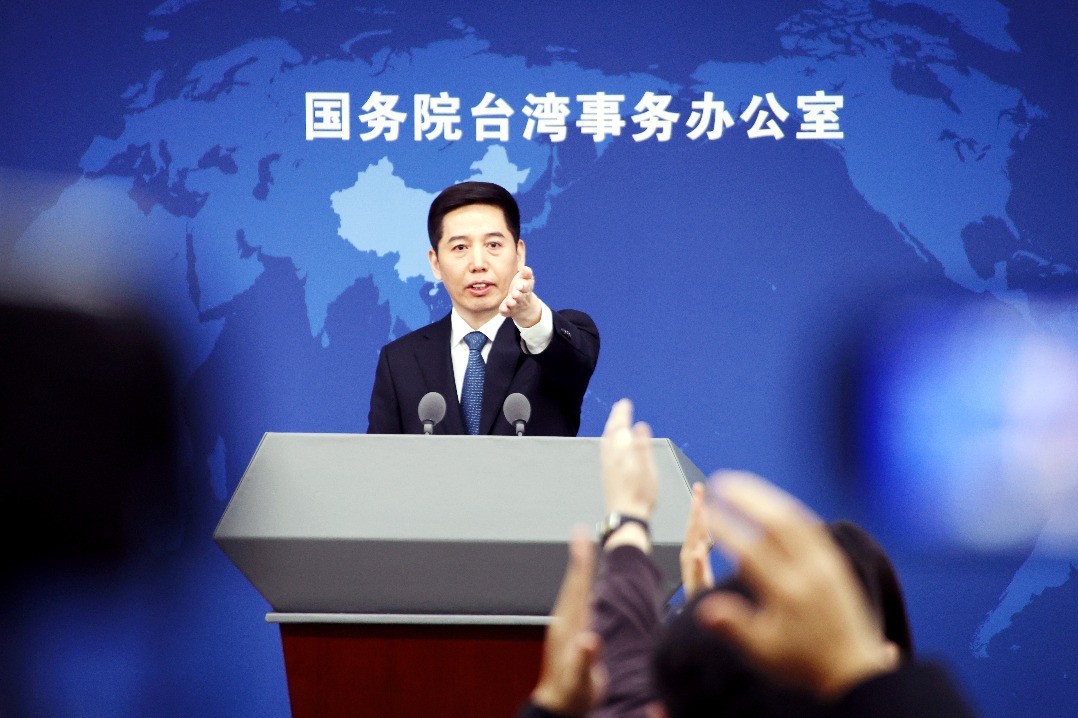
    Chinese authorities disclosed on Wednesday that approximately 4,000 cyberattack incidents originating from Taiwan were investigated throughout 2025, marking a significant 25% increase compared to previous years. The announcement came from State Council Taiwan Affairs Office spokesman Peng Qing’en during a regular press briefing in Beijing.

    According to official statements, these coordinated cyber operations primarily targeted mainland China’s critical infrastructure sectors including transportation networks, financial systems, technological enterprises, and energy facilities. The attacks were allegedly orchestrated by Taiwan’s military intelligence agencies and specialized cyber units operating under the direction of the Democratic Progressive Party administration.

    Peng asserted that these activities were designed to both steal sensitive information and disseminate unlawful content across mainland digital platforms. The spokesman further condemned what he characterized as a pattern of deliberate provocation from Taiwanese authorities, accusing them of fabricating narratives about mainland cyber aggression to divert attention from domestic governance challenges and rising public dissatisfaction.

    These revelations follow previous cybersecurity disclosures involving Taiwanese military organizations, including units identified as ‘psychological warfare’ divisions and the group known as ‘Anonymous 64.’ The mainland’s cybersecurity infrastructure has reportedly been enhanced to detect and neutralize these cross-strait digital threats, though specific technical countermeasures were not detailed in the public announcement.

    The increased cyber hostilities occur amid ongoing political tensions between Beijing and Taipei, with cybersecurity emerging as a new frontier in cross-strait relations. Chinese officials emphasized their commitment to safeguarding national digital sovereignty while calling for peaceful resolution of differences through established diplomatic channels.
  • US Congress targets Clintons in Epstein contempt fight

    US Congress targets Clintons in Epstein contempt fight

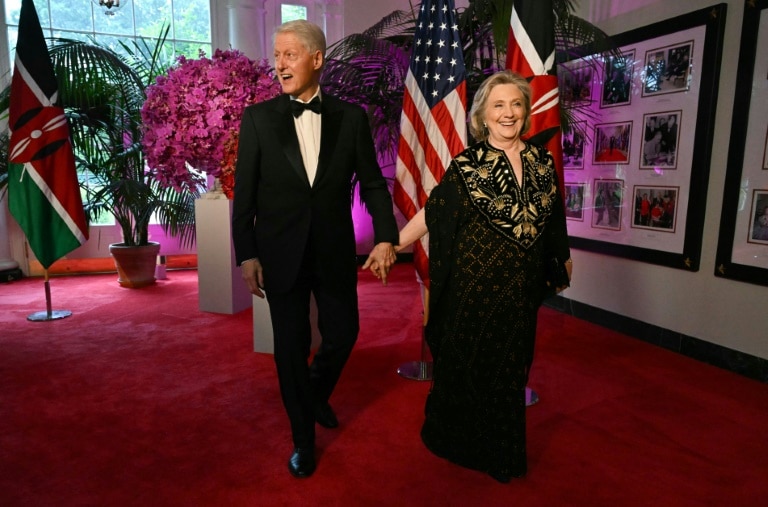
    The U.S. House Oversight Committee has initiated a significant political confrontation by advancing contempt proceedings against former President Bill Clinton and former Secretary of State Hillary Clinton. The Republican-majority committee voted Wednesday to pursue charges after the Clintons declined to comply with subpoenas for in-person testimony regarding their connections to convicted sex offender Jeffrey Epstein.

    The committee’s action represents an escalation in the long-running investigation into how authorities handled previous Epstein investigations. The contempt resolutions now proceed to the full House of Representatives, where Republican leadership must decide whether to formally cite the Clintons for defiance of congressional authority and refer them to the Justice Department for potential criminal prosecution.

    This development highlights how the Epstein scandal continues to reverberate through Washington’s power structures, implicating prominent figures across the political spectrum. The investigation has become intensely polarized, with Democrats characterizing it as a politically motivated effort to target President Trump’s opponents while ignoring Trump’s own documented associations with Epstein.

    Committee Chairman James Comer rejected what he termed a ‘ridiculous offer’ from Bill Clinton’s representatives that would have limited questioning to a single lawmaker in New York without producing an official transcript. The Clintons maintain that the subpoenas lack legitimate legislative purpose and have instead provided sworn written statements detailing their limited interactions with Epstein.

    In their submitted declarations, Bill Clinton acknowledged using Epstein’s aircraft for humanitarian work in the early 2000s but denied visiting his private island. Hillary Clinton stated she had no meaningful interactions with Epstein whatsoever. The controversy has exposed divisions within the Democratic Party regarding how to respond to Republican investigative tactics while maintaining consistency with previous positions on accountability for Epstein’s crimes.

    The proceedings occur against the backdrop of ongoing criticism regarding the Trump administration’s delayed release of Epstein-related case files, which Democrats have characterized as a cover-up. Neither Trump nor the Clintons have been accused of criminal wrongdoing related to Epstein, but the investigation continues to expose the deep political fractures surrounding one of the most notorious criminal cases in recent memory.

  • Israel’s Netanyahu accepts invitation to join Trump’s Board of Peace

    Israel’s Netanyahu accepts invitation to join Trump’s Board of Peace

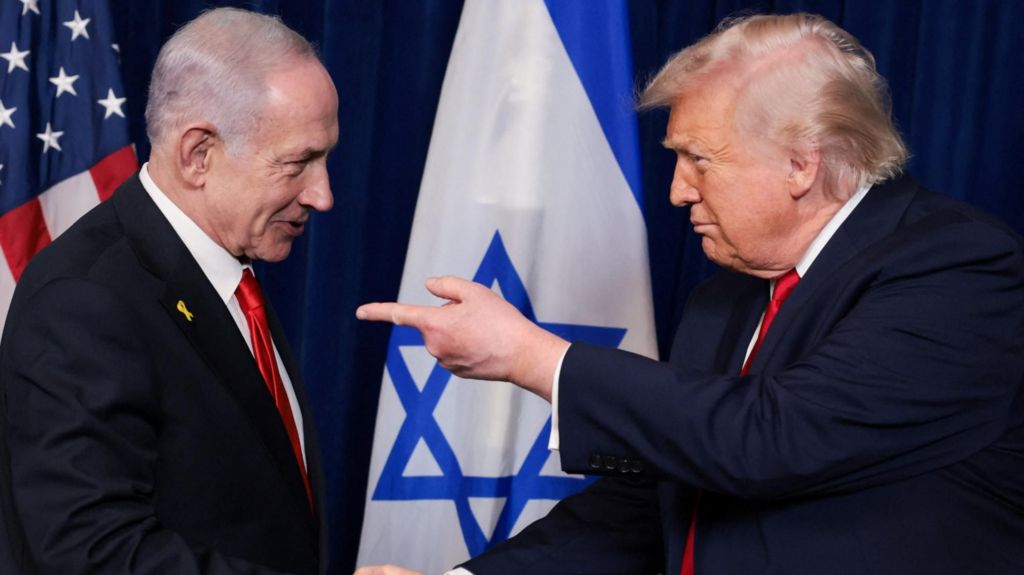
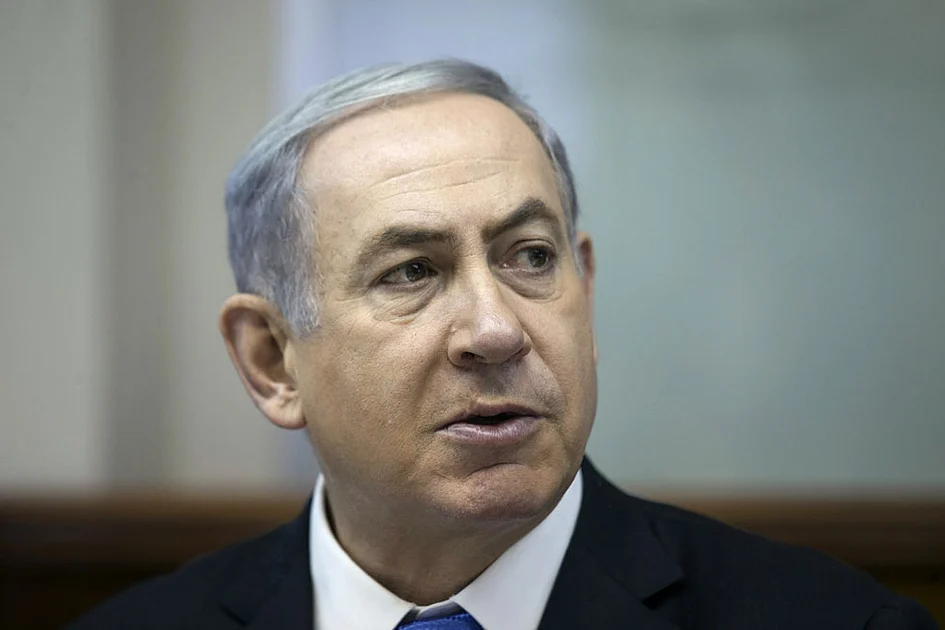
    In a significant diplomatic development, Israeli Prime Minister Benjamin Netanyahu has formally accepted an invitation from former U.S. President Donald Trump to participate in a newly established international mediation body dubbed the “Board of Peace.” The announcement was made through an official statement posted on the Prime Minister’s social media account on Wednesday, January 21, 2026.

    The primary and immediate objective of this initiative is to broker a sustainable cessation of hostilities in the Gaza Strip. The framework, however, is designed with broader ambitions. Should initial efforts in Gaza prove successful, the board intends to expand its mandate to address and mediate other protracted international conflicts around the globe.

    This move marks a notable re-entry of Donald Trump into the arena of international diplomacy and underscores the continuing strategic partnership between the Israeli government and the former U.S. president. The establishment of the board represents an unconventional approach to peacemaking, operating outside traditional diplomatic channels. The involvement of a high-profile leader like Netanyahu lends considerable geopolitical weight to the initiative, though its structure, specific membership, and operational methodology remain to be fully detailed. The international community is observing these developments closely, assessing the potential implications for one of the world’s most enduring and complex conflicts.

  • Marine Le Pen admits ‘mistake’ in EU embezzlement trial as she fights to save political career

    Marine Le Pen admits ‘mistake’ in EU embezzlement trial as she fights to save political career

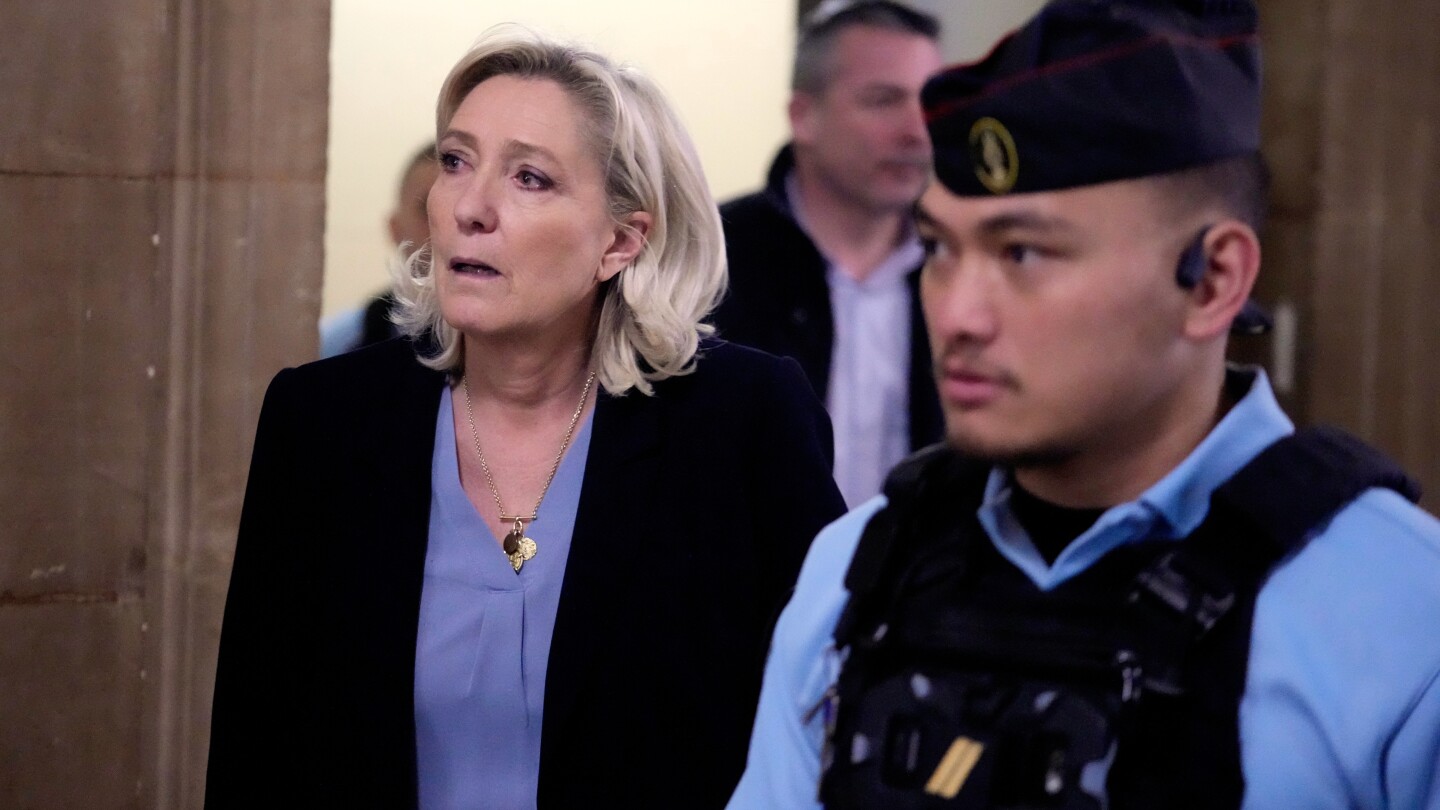
    PARIS — French far-right leader Marine Le Pen confronted potentially career-altering allegations during a high-stakes appeals trial this week, where she admitted to procedural errors while vehemently denying systematic fraud in the European Parliament funds case that threatens her 2027 presidential aspirations.

    The 57-year-old political figure is challenging a March 2025 conviction that found her guilty of misappropriating EU legislative funds between 2004 and 2016. The original ruling imposed a five-year ban from elected office, two years of electronic monitoring house arrest, and an additional two-year suspended sentence for violating the 27-nation bloc’s financial regulations.

    Before a three-judge appellate panel, Le Pen acknowledged that some parliamentary aides compensated through EU channels had occasionally performed work for her National Front party (now renamed National Rally). “The mistake lies here: there were certainly some aides who must have worked either marginally, more substantially, or entirely for the benefit of the party,” she testified, maintaining this represented isolated incidents rather than organized misconduct.

    The Paris court’s initial determination described an elaborate “fraudulent system” that allegedly diverted €2.9 million ($3.4 million) in EU funds, characterizing the scheme as “a democratic bypass” that created unfair competitive advantages. Prosecutors argue Le Pen personally authorized hiring contracts while aware of their improper nature.

    During intense judicial questioning, Le Pen remained composed while rejecting the existence of any coordinated scheme to fund party operations with European money. “I wouldn’t say we did everything perfectly. Some criticism can be made about us,” she conceded, while insisting her party “acted in complete good faith.”

    The five-week appellate proceedings, which commenced last week, could dramatically reshape France’s political landscape. The court’s decision, expected before summer, will determine whether Le Pen can pursue the presidency or must transfer her political ambitions to protégé Jordan Bardella, the 30-year-old she has designated as potential successor.

    Judge Michèle Agi challenged Le Pen’s claims of ignorance regarding contractual obligations, noting her dual roles as European Parliament member and party president made her directly responsible for approvals. “You are a lawyer, you know the law — inevitably, a signature, a contract are notions that have a meaning for you,” Agi asserted.

    Le Pen countered that European Parliament authorities failed to provide adequate guidance about hiring violations, while defending unusual arrangements including her personal bodyguard’s parliamentary aide contract as responding to “exceptional” security needs.

  • EU parliament refers Mercosur trade deal to bloc’s top court

    EU parliament refers Mercosur trade deal to bloc’s top court

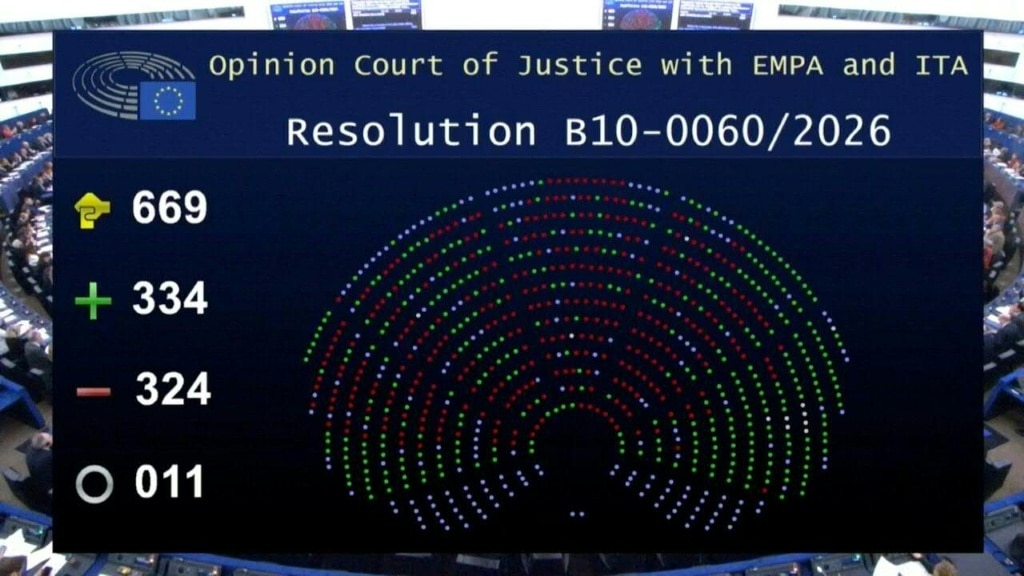
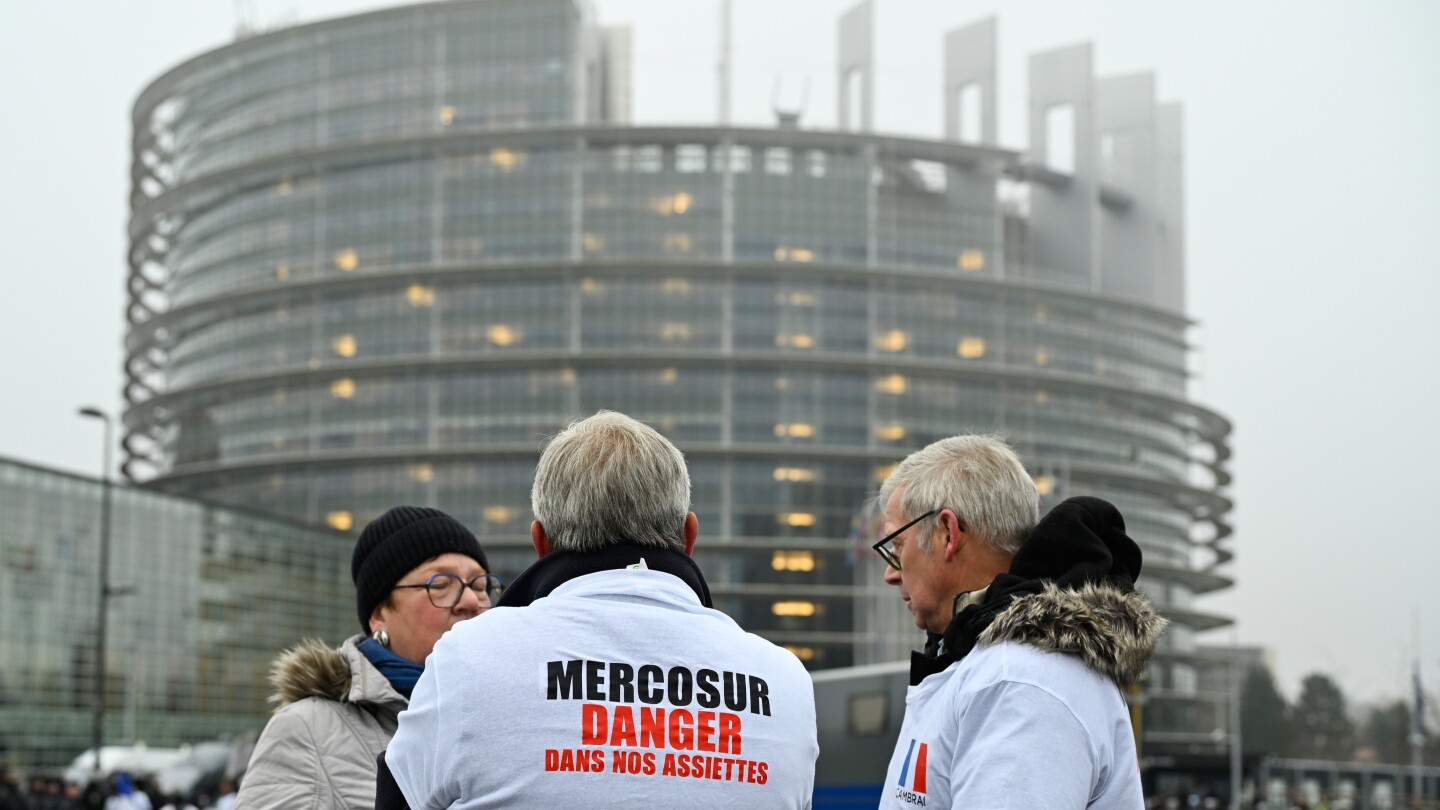
    In a dramatic legislative showdown, the European Parliament has cast the landmark EU-Mercosur trade agreement into legal uncertainty following a contentious vote. Lawmakers in Strasbourg narrowly approved (334-324) referring the freshly inked pact to the Court of Justice of the European Union (CJEU) for constitutional assessment.

    The decision triggered jubilant celebrations among hundreds of farmers who had gathered with tractors outside the parliamentary building. Their prolonged opposition to the deal, particularly from French agricultural groups, found validation in the vote outcome. “We’ve been on this for months and months, for years,” exclaimed Quentin Le Guillous, head of a French young farmers’ group, capturing the emotional triumph felt by protestors.

    This judicial referral represents a significant setback for the European Commission, which had championed the agreement as a historic achievement. Commission President Ursula von der Leyen had vigorously promoted the pact just hours before the vote, emphasizing its strategic importance. The deal, negotiated over 25 years, would create one of the world’s largest free trade areas, eliminating tariffs on over 90% of bilateral trade between the EU and Mercosur nations (Brazil, Argentina, Uruguay, and Paraguay).

    The legal challenge centers on two critical questions: whether partial application before full ratification violates EU procedures, and whether the agreement improperly restricts Brussels’ regulatory powers on environmental and food safety standards. The Commission maintains that parliamentary concerns are “not justified,” with trade spokesman Olof Gill asserting that all raised issues had been comprehensively addressed during negotiations.

    Geopolitical tensions underscore the agreement’s significance, with the EU seeking reliable partnerships amid Trump-era tariff policies and growing Chinese competition. Germany, Spain, and Nordic countries strongly support the pact for its export benefits in automotive, wine, and cheese sectors. Conversely, France, Poland, Austria, Ireland, and Hungary oppose it due to agricultural sector vulnerabilities.

    The judicial process may substantially delay or potentially derail implementation, though the Commission retains authority to provisionally apply the agreement pending the court’s ruling—a move that would likely ignite further political controversy.

  • Mainland denounces Taiwan-US trade deal as ‘sellout pact’

    Mainland denounces Taiwan-US trade deal as ‘sellout pact’

    Chinese officials have issued a stern condemnation of the recently signed trade agreement between Taiwan and the United States, characterizing it as an unequal pact that undermines Taiwan’s economic sovereignty and industrial foundation. During a press briefing on Wednesday, Peng Qing’en, spokesperson for China’s State Council Taiwan Affairs Office, articulated Beijing’s firm opposition to what he termed a “sellout pact” negotiated under duress.

    The controversial agreement, which reduces US tariff rates on Taiwanese imports to 15 percent, requires substantial reciprocal commitments from Taiwan. According to official statements, Taiwan has pledged approximately $500 billion in combined investments and credit guarantees directed toward American semiconductor and artificial intelligence sectors. This arrangement includes the potential transfer of up to 40 percent of Taiwan’s semiconductor production capacity to the United States.

    Peng asserted that negotiations occurred under significant economic pressure from Washington, which allegedly utilized tariff leverage to extract concessions that could fundamentally weaken Taiwan’s industrial competitiveness. The spokesperson criticized Taiwan’s Democratic Progressive Party administration for presenting what he described as “unilateral concessions” as mutually beneficial cooperation, labeling the arrangement a “complete capitulation” to American economic demands.

    The financial scale of Taiwan’s commitment represents approximately 80 percent of the island’s foreign exchange reserves, equivalent to a per capita contribution of NT$680,000 (approximately $21,489) from each Taiwanese citizen. Peng warned that such substantial resource diversion could transform Taiwan from a technological hub into an economically hollowed-out territory, jeopardizing both industrial stability and economic security.

    Beijing’s response emphasized that the agreement demonstrates the inherent risks of pursuing independence policies and relying on external powers rather than embracing cross-strait cooperation. Officials suggested that without the support of mainland China, Taiwan remains vulnerable to economic pressure from foreign interests.

  • Germany arrests woman accused of supplying war-related information to Russian agent

    Germany arrests woman accused of supplying war-related information to Russian agent

    BERLIN — German federal prosecutors have taken into custody a dual German-Ukrainian citizen suspected of conducting espionage operations on behalf of Russian intelligence services. The individual, identified under German privacy regulations as Ilona W., was apprehended in Berlin following an extensive investigation into her activities.

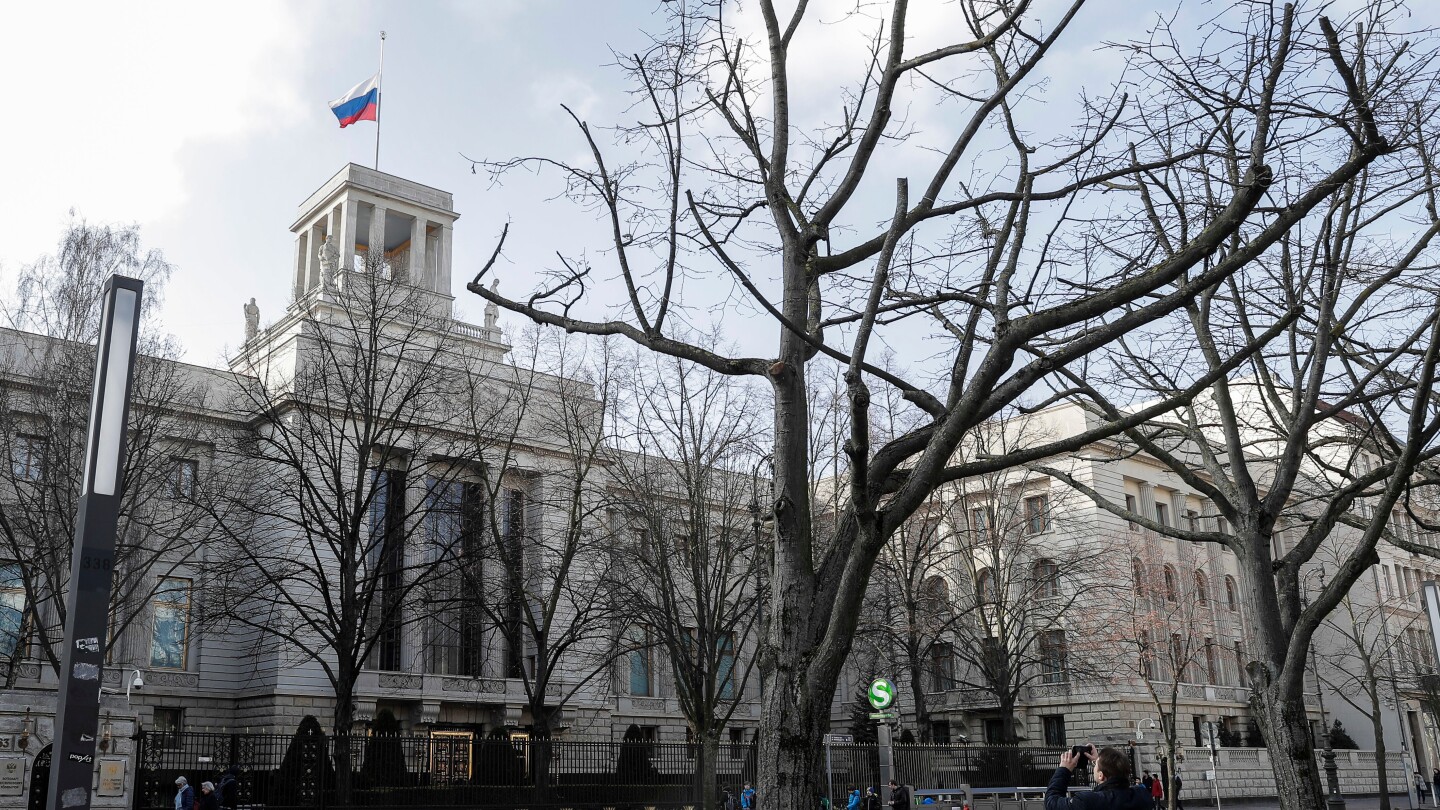
    According to official statements, Ilona W. established contact with a known Russian intelligence operative stationed at the Russian Embassy in Berlin as early as November 2023. Prosecutors allege she systematically provided sensitive information regarding Ukraine’s military capabilities, including detailed intelligence on defense industry locations, experimental drone testing protocols, and scheduled weapon deliveries to Ukrainian forces.

    The suspect reportedly leveraged her personal connections with former German Defense Ministry personnel to acquire classified information. Additionally, she facilitated her Russian contact’s access to high-level political events in Berlin using fabricated identities, enabling the intelligence officer to establish networks and gather information for Russian interests.

    Concurrent with the arrest, German authorities executed search warrants at multiple locations, including the primary suspect’s residence and properties belonging to two additional individuals under investigation. Defense Ministry spokesperson Mitko Müller confirmed the investigation involves two former military employees—one recently retired officer and a civilian employee who departed over fifteen years ago. Both are suspected of unlawfully sharing information with Ilona W., though investigators are determining whether they were aware the intelligence would ultimately reach foreign agents.

    The case emerges amid heightened security concerns across Europe regarding Russian espionage activities, particularly those related to the ongoing conflict in Ukraine. German authorities have intensified counter-intelligence operations to prevent sensitive military information from reaching hostile foreign entities.

  • EU lawmakers vote to hold up Mercosur trade agreement over legal concerns

    EU lawmakers vote to hold up Mercosur trade agreement over legal concerns

    BRUSSELS — In a dramatic legislative move, the European Parliament has suspended ratification of the landmark EU-Mercosur trade agreement, demanding judicial review from Europe’s highest court regarding its treaty compliance. Lawmakers in Strasbourg narrowly passed the resolution with 334 votes in favor versus 324 against, effectively postponing final approval until the European Court of Justice delivers its legal assessment—a process expected to span several months.

    This decision creates significant uncertainty for the comprehensive trade pact signed just days ago following 25 years of negotiations. The agreement, championed by European Commission President Ursula von der Leyen as a strategic response to global protectionism, aimed to establish one of the world’s largest free trade zones covering over 700 million consumers. It proposed eliminating over 90% of tariffs between the economic blocs, benefiting South American agricultural exports and European industrial goods alike.

    The parliamentary vote revealed deep divisions within the EU, with France emerging as a leading opponent. French Foreign Minister Jean-Noel Barrot welcomed the delay, asserting that Parliament had aligned with France’s long-standing position demanding stronger protections for European farmers. Meanwhile, the European Commission expressed strong regret over the decision, while Germany’s Chancellor Friedrich Merz condemned it as “geopolitically misguided” and urged immediate provisional application of the agreement.

    Trade Committee Chair Bernd Lange criticized the move as “absolutely irresponsible” and damaging to European economic interests. Despite the EU’s internal divisions, ratification appears certain within Mercosur nations (Argentina, Brazil, Paraguay, and Uruguay), where the pact enjoys broad support. The development comes ahead of an emergency EU summit focused on transatlantic relations, where trade strategies are expected to dominate discussions.

  • Israeli PM Netanyahu agrees to join Trump’s Board of Peace

    Israeli PM Netanyahu agrees to join Trump’s Board of Peace

    A significant geopolitical development has emerged as Israeli Prime Minister Benjamin Netanyahu confirmed his participation in former U.S. President Donald Trump’s newly established Board of Peace. This international organization, conceptualized to promote stability and lawful governance in conflict zones, has sparked both interest and skepticism within the global community.

    The Board’s charter, obtained by media sources, reveals unconventional membership terms: nations can secure renewable three-year positions or obtain permanent status through a $1 billion financial contribution. While the United Arab Emirates, Bahrain, Albania, Armenia, Azerbaijan, Belarus, Hungary, Kazakhstan, Morocco, and Vietnam have agreed to participate, several key nations including Norway, France, and Sweden have expressed reservations or declined involvement entirely.

    Trump will assume dual roles as permanent chairman and U.S. representative, wielding exclusive authority to create, modify, or dissolve subsidiary entities. The Executive Board features prominent international figures including U.S. Secretary of State Marco Rubio, Middle East special envoy Steve Witkoff, Jared Kushner, and former British Prime Minister Tony Blair.

    A particularly contentious aspect involves the Gaza Executive Board, which includes representatives from Turkey and Qatar—a development that Netanyahu’s office claims was “not coordinated with Israel and runs contrary to its policy.” This board will work alongside a Palestinian technocratic government to oversee reconstruction efforts and stabilization initiatives in Gaza.

    The initiative unfolds against a fragile ceasefire following the devastating 2023-2026 Israel-Hamas conflict that resulted in over 71,550 Palestinian and 1,200 Israeli casualties. While phase one of Trump’s peace plan achieved a temporary ceasefire and prisoner exchange, phase two faces substantial challenges regarding Hamas disarmament and complete Israeli withdrawal from Gaza—issues that remain unresolved amid ongoing violence that has claimed hundreds of lives since the ceasefire began.

  • Trump says ‘brokering peace’ between India, Pakistan ‘key success’ of first year in office

    Trump says ‘brokering peace’ between India, Pakistan ‘key success’ of first year in office

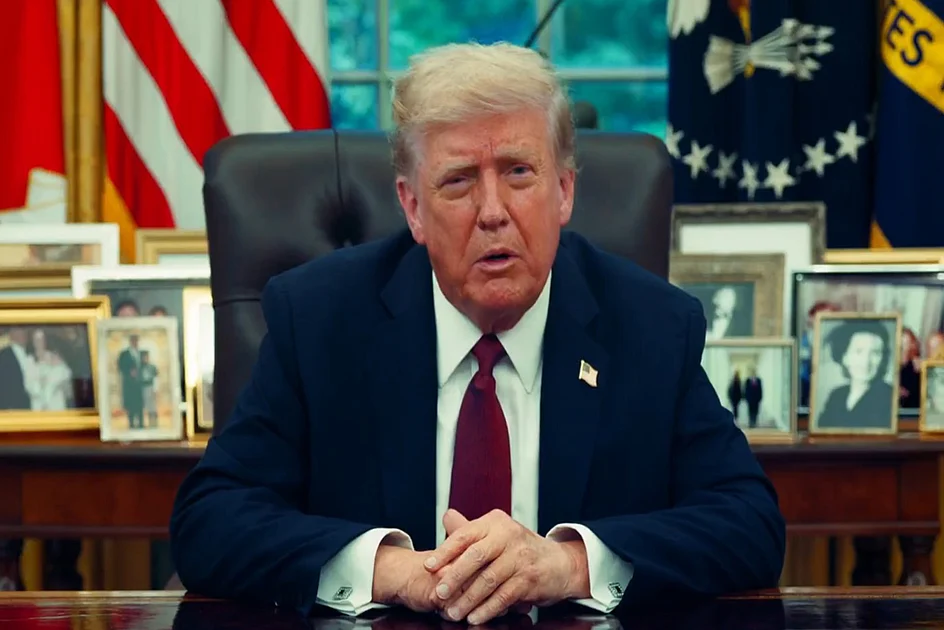
    In a comprehensive review of his administration’s accomplishments, former President Donald Trump has identified his purported mediation between India and Pakistan as a cornerstone achievement during his first year back in office. The White House released a document titled “365 Wins in 365 Days” cataloging these achievements, prominently featuring diplomatic efforts in South Asia under the section “Reasserting American Leadership on the World Stage.”

    During a press briefing commemorating his administration’s anniversary, Trump elaborated on his claims with heightened dramatic effect, notably increasing the number of aircraft he stated were shot down in the conflict from seven to eight. “I ended eight unendable wars in 10 months. Pakistan and India. They were really going at it. Eight planes were shot down,” Trump asserted. “They were going to go nuclear, in my opinion. The Prime Minister of Pakistan was here, and he said ‘President Trump saved 10 million people.’”

    The former president has repeatedly invoked this narrative since May of the previous year, positioning himself as the decisive factor in preventing catastrophic escalation between the nuclear-armed neighbors. These assertions appear strategically linked to his aspirations for the Nobel Peace Prize, an award he has consistently expressed grievance over not receiving.

    However, these claims stand in stark contrast to official positions from New Delhi. Indian authorities have consistently refuted any third-party involvement in conflict resolution, maintaining that peace negotiations were conducted exclusively through bilateral channels between the two nations. The initial military confrontation followed the devastating Pahalgam terror attack in Jammu and Kashmir in April 2025, which resulted in 26 casualties and triggered a significant escalation in cross-border tensions.