分类: politics

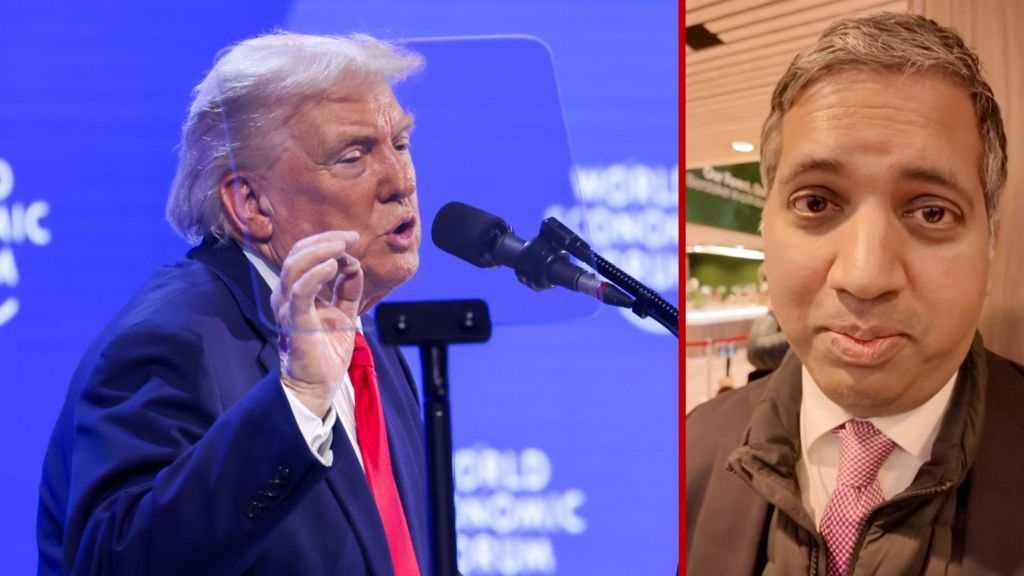
  • Faisal Islam: What it was like inside the room with Donald Trump at Davos

    Faisal Islam: What it was like inside the room with Donald Trump at Davos

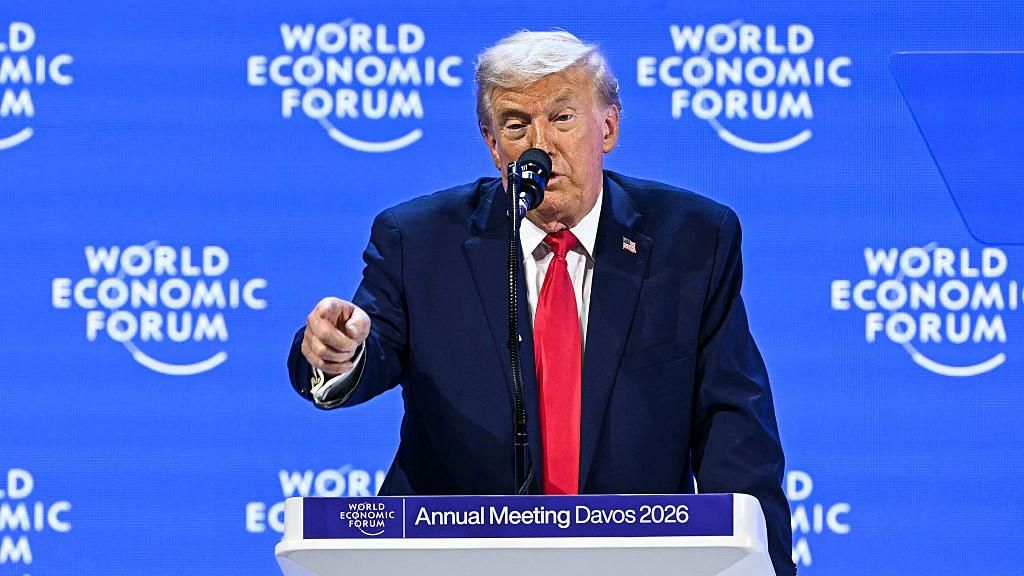
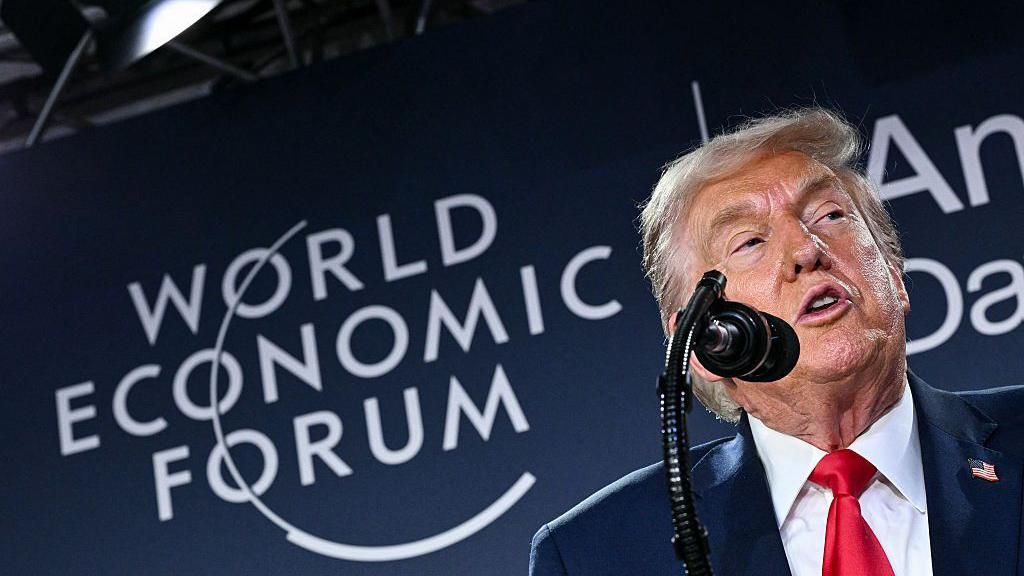
    In a remarkable display of diplomatic duality, President Donald Trump delivered a speech at the Davos summit that oscillated between conciliatory gestures and territorial ambition. The atmosphere was electric as Trump entered the hall, receiving an initial standing ovation from attendees despite unprecedented security measures that even barred some heads of state from entry.

    The president’s address began with unexpectedly diplomatic tones, acknowledging Western allies who had expressed concern over his previous social media provocations. He specifically referenced the Greenland controversy, conceding he ‘probably shouldn’t speak’ about the territory he has repeatedly vowed to acquire. This momentary restraint quickly gave way to more characteristic rhetoric as Trump claimed credit for European security, asserting attendees ‘would be speaking German’ without U.S. intervention.

    The speech reached its dramatic climax when Trump formally announced his intention to pursue ‘immediate negotiations’ for the United States to acquire Greenland. While explicitly ruling out military force, he demanded ‘full title’ to the territory, describing it as ‘a very small ask’ for what he termed ‘a piece of ice.’ The president envisioned building ‘the greatest Golden Dome ever built’ on the territory while simultaneously offering to use it to defend Canada.

    The reaction among attendees revealed deep divisions. Some offered polite applause for Trump’s attempts at charm, while others sat in stunned disbelief. California Governor Gavin Newsom mocked the presentation as ‘TACO Tuesday’—referencing the ‘Trump Always Chickens Out’ catchphrase—suggesting the president had backtracked following pushback from European leaders. Even Republican Senator Thomas Tillis indicated congressional opposition to any annexation attempt.

    The address concluded with Trump maintaining that Greenland would ultimately become part of America while promising not to invade, creating a paradoxical conclusion that left the international community contemplating the president’s true intentions and the future of transatlantic relations.
  • Fact-checking Trump’s Davos speech

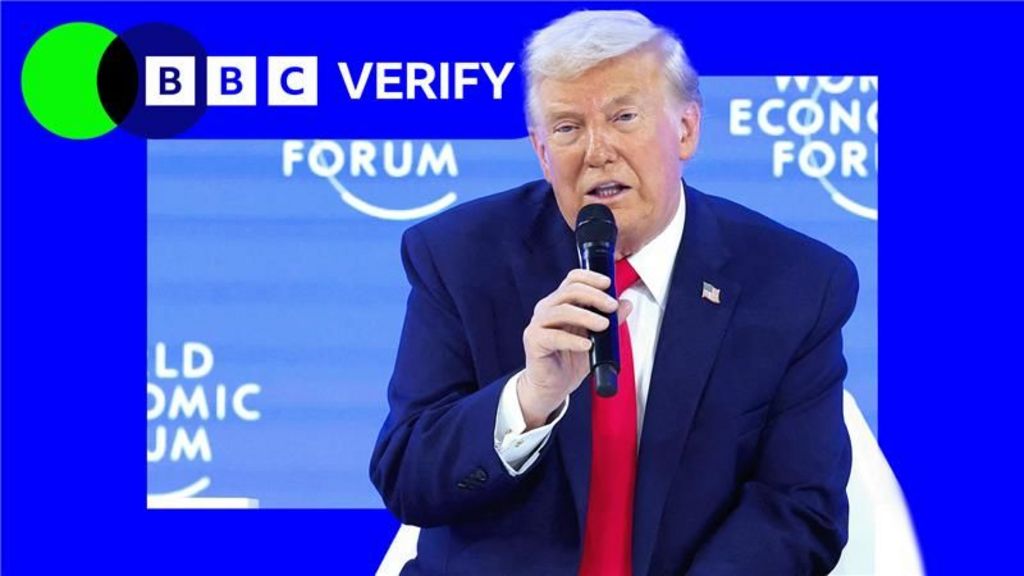
    Fact-checking Trump’s Davos speech

    During a wide-ranging address at the World Economic Forum in Davos, former President Donald Trump presented several controversial assertions that have undergone rigorous verification analysis. The speech, exceeding one hour in duration, covered topics ranging from territorial ambitions to international defense spending and renewable energy policies.

    Regarding Greenland, Trump characterized his desire to acquire the autonomous Danish territory as a “small ask” while questioning America’s historical decision to “give Greenland back to Denmark” after World War II. Historical records indicate this characterization misrepresents actual events. In 1933, an international court precedent to the ICJ formally recognized Danish sovereignty over Greenland. The 1941 agreement between the U.S. and Danish representatives authorized American military presence to prevent Nazi occupation but explicitly did not transfer territorial sovereignty.

    On NATO contributions, Trump asserted the United States funded “virtually 100%” of the alliance while claiming member nations now pay “5%” of GDP. Defense expenditure data reveals different figures: U.S. spending constituted approximately 70% of total NATO defense expenditure in recent years, declining to an estimated 62% in 2025 as all members met the 2% GDP benchmark for the first time. The referenced 5% target represents a long-term objective for 2035, with no nation currently exceeding 4.5%.

    The former president additionally claimed the U.S. “never gotten anything” from NATO, despite the alliance invoking Article 5 collective defense specifically following the 9/11 attacks. Multiple NATO members, including Denmark which suffered high per-capita casualties, contributed substantially to subsequent military operations in Afghanistan.

    Trump’s criticism of wind energy included claims that China, despite manufacturing turbines, lacked operational wind farms. This contradicts documented evidence showing China operates the world’s largest wind farm in Gansu Province (visible from space) and leads global wind energy generation at 997 terawatt-hours in 2024—more than double U.S. output.

    The speech also inaccurately characterized UK North Sea oil taxation, claiming companies surrendered “92% of revenues.” Actual taxation involves a 30% corporation tax plus 10% supplementary charge on profits, with a temporary windfall tax raising the total levy to 78% on profits—not revenues.

    Finally, Trump’s repeated assertion of securing “$18 trillion” in investment commitments lacks publicly verifiable evidence. Official White House tracking data from November 2024 documents $9.6 trillion in pledged investments, including a $1.4 trillion decade-long commitment from the UAE. Experts note these figures represent pledges rather than realized investments, with some already facing complications due to diplomatic tensions over Greenland.

  • Trump’s jibes are wearing thin for many of Europe’s leaders

    Trump’s jibes are wearing thin for many of Europe’s leaders

    At the World Economic Forum in Davos, Switzerland, U.S. President Donald Trump delivered a contentious speech that further strained relations with European allies. His remarks, which combined historical revisionism with territorial ambitions, left European delegates visibly unsettled.

    Trump asserted that without American intervention, Europe ‘would all be speaking German,’ overlooking that German is actually one of Switzerland’s four official languages. He repeatedly criticized European nations for what he characterized as insufficient NATO contributions and misguided policies, delivering these criticisms directly to the faces of the continent’s leaders.

    The speech provided temporary relief on one front—Trump explicitly ruled out military action to acquire Greenland. However, he maintained that purchasing the semi-autonomous Danish territory remained a ‘perfectly reasonable transaction,’ despite Copenhagen’s firm position that the island is not for sale.

    Danish Foreign Minister Lars Løkke Rasmussen acknowledged the military reassurance as ‘positive in isolation’ but noted the president’s broader ambitions remained unchanged. Meanwhile, in Nuuk, Greenlandic officials unveiled a crisis preparedness brochure that Self-Sufficiency Minister Peter Borg described as ‘an insurance policy’ against potential instability.

    The address contained no retreat from Trump’s threat to impose 10% tariffs on eight European countries by February 1st, targeting nations he accused of obstructing his Arctic ambitions. This uncompromising stance dashed European hopes for de-escalation at the summit.

    Trump particularly singled out France’s Emmanuel Macron for ridicule, mocking his appearance in sunglasses (worn due to a medical eye condition) and his stern podium demeanor. The president’s familiar refrain about European nations benefiting disproportionately from U.S. military protection ignored substantial allied sacrifices, including Denmark’s proportionally significant losses in Afghanistan and Iraq.

    The European Union has called an emergency summit in Brussels to formulate a response. European leaders now face a critical decision: whether to activate aggressive counter-tariffs—including the EU’s ‘trade bazooka’—or maintain diplomatic pressure while awaiting the February deadline.

  • Russia watches US-European tensions over Greenland with some glee, gloating and wariness

    Russia watches US-European tensions over Greenland with some glee, gloating and wariness

    Amid escalating transatlantic tensions surrounding former President Donald Trump’s controversial proposition to acquire Greenland, Russian officials and state-aligned media have responded with a complex blend of triumphalism and strategic apprehension. The Kremlin’s reaction reveals a multifaceted geopolitical calculus as Moscow assesses both opportunities and threats arising from Washington’s unexpected territorial ambitions.

    Kremlin spokesman Dmitry Peskov characterized the potential acquisition as potentially historic, suggesting Trump could enter ‘world history’ regardless of legal or ethical considerations. This measured endorsement aligns with Moscow’s broader strategy toward the Trump administration, seeking concessions in ongoing Ukraine negotiations and improved bilateral relations.

    Russian Foreign Minister Sergey Lavrov framed Denmark’s sovereignty over Greenland as a colonial relic, drawing direct parallels to Russia’s annexation of Crimea while asserting equivalent security interests. State media outlets amplified this narrative, with Rossiyskaya Gazeta comparing the potential acquisition to Abraham Lincoln’s abolition of slavery in historical significance.

    The Russian response simultaneously highlighted perceived divisions within NATO, with officials including Lavrov and presidential envoy Kirill Dmitriev declaring a ‘deep crisis’ in Atlantic solidarity. State news agency RIA Novosti mocked European military responses as impotent while celebrating the diversion of Western attention from Russia’s operations in Ukraine.

    Beyond the political maneuvering, Russian analysts expressed significant security concerns regarding Arctic dominance. Prominent military blogger Aleksander Kots interpreted the move as targeting Russia’s Arctic interests, while Moskovsky Komsomolets warned Greenland could become an ‘icy noose around Russia’s throat’ threatening the Northern Fleet and economic projects. These security apprehensions contrast with Putin’s public offers of Arctic cooperation, even as Russia strengthens its military capabilities in response to NATO activities in the region.

  • Supreme Court sceptical of Trump firing of Lisa Cook

    Supreme Court sceptical of Trump firing of Lisa Cook

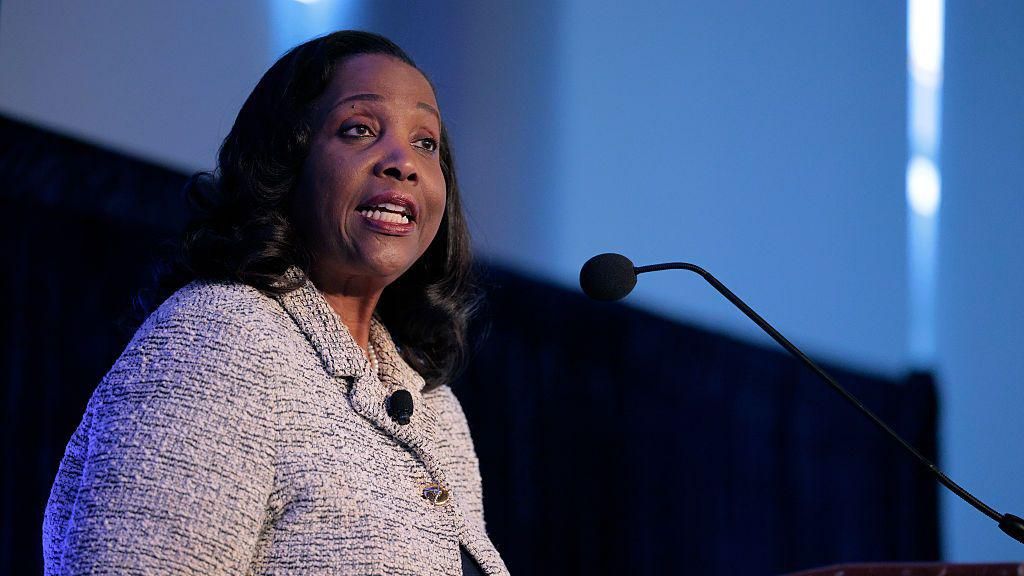
    In a landmark hearing with profound implications for central bank autonomy, U.S. Supreme Court justices across ideological lines expressed significant skepticism toward the Trump administration’s unprecedented dismissal of Federal Reserve Governor Lisa Cook. The case, which questions the boundaries of presidential authority over independent agencies, saw unusual alliances form as conservative and liberal justices alike raised concerns about due process and institutional integrity.

    The legal confrontation stems from President Trump’s August declaration removing Cook from her position over allegations of mortgage fraud—claims she has consistently denied. During oral arguments, Justice Brett Kavanaugh, a Trump appointee, emerged as a pivotal voice questioning the administration’s stance. “What’s the fear of more process here?” he asked, later warning that the administration’s interpretation could “weaken, if not shatter, the independence of the Federal Reserve.”

    Central to the dispute is the statutory requirement that Fed governors may only be removed “for cause,” a provision designed to insulate monetary policy from political pressure. The White House contends Cook’s mortgage filings—which allegedly claimed two different primary residences simultaneously—constitute sufficient cause for dismissal. Solicitor General D. John Sauer argued that even inadvertent errors could undermine confidence in the institution, asserting that courts should defer to presidential judgment on such matters.

    Cook’s legal team presented a starkly different narrative, characterizing the allegations as “cherry-picked, incomplete snippets” taken out of context. In a November letter to the Justice Department, her attorneys explained that a single stray reference in an Alabama mortgage application was accompanied by “truthful and more specific disclosures about the property’s use.” They maintained there was “no fraud, no intent to deceive, nothing whatsoever criminal or remotely a basis to allege mortgage fraud.”

    Justice Samuel Alito questioned the hurried nature of the proceedings, asking why the matter required such expedited treatment. Justice Amy Coney Barrett, another Trump appointee, pressed the administration to explain what harm would come from allowing lower courts to fully examine the evidence first. The court appeared particularly concerned about the economic ramifications of a ruling that might undermine confidence in the Fed’s independence, with Justice Sonia Sotomayor noting that “the independence of the agency is very important and that independence is harmed if we decide these issues too quickly.”

    The case unfolds against a backdrop of ongoing tension between the Trump administration and the Federal Reserve, with the president previously criticizing the institution’s interest rate policies. The outcome could redefine the relationship between the executive branch and independent agencies for generations to come.

  • Guinea-Bissau junta sets election date following last year’s coup

    Guinea-Bissau junta sets election date following last year’s coup

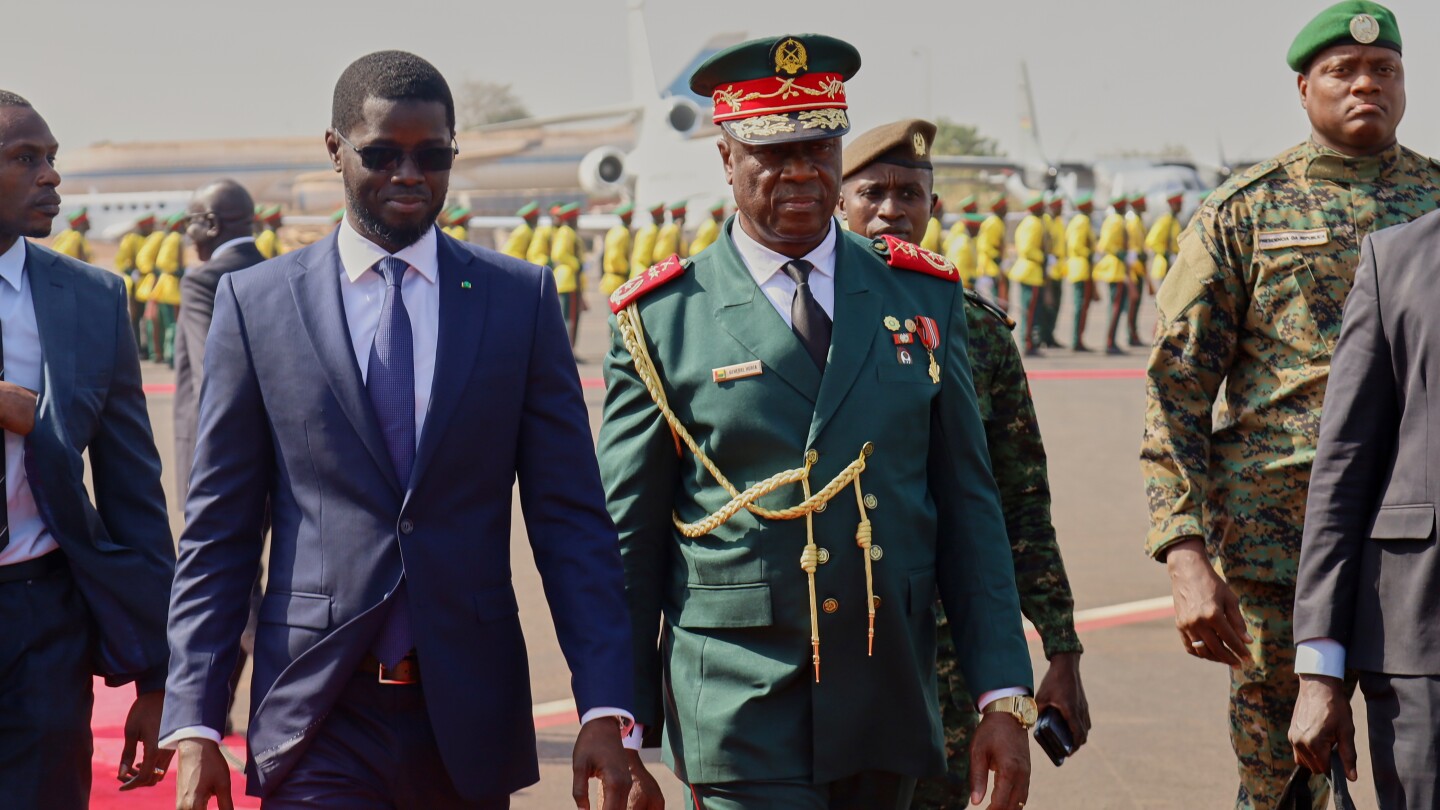
    The military junta currently governing Guinea-Bissau has formally declared December 6th as the date for both legislative and presidential elections, marking a significant development in the country’s political transition. General Horta Inta-a, leader of the military government installed following last November’s coup, issued a presidential decree confirming that all necessary conditions for conducting free, fair, and transparent elections have been established.

    This announcement comes against the backdrop of Guinea-Bissau’s turbulent political history, characterized by persistent instability since gaining independence from Portugal over five decades ago. The West African nation of approximately 2.2 million people, consistently ranked among the world’s poorest countries, has experienced numerous coups and attempted power seizures throughout its existence, including a significant coup attempt as recently as October 2022.

    The military high command had previously appointed Inta-a, former army chief of staff, to lead a transitional government with a mandated one-year oversight period. Meanwhile, regional security analysts note that Guinea-Bissau’s notorious reputation as a narcotics trafficking corridor between Latin America and Europe has substantially contributed to its political dysfunction, with drug trade revenues exacerbating governance challenges.

    This development occurs within the broader context of a regional coup pattern sweeping across West Africa since 2020. Military takeovers in neighboring nations including Mali, Niger, Burkina Faso, and Guinea have typically been justified by promises to enhance national security against extremist threats or combat systemic corruption. General Mamadi Doumbouya’s 2021 overthrow of Guinea’s president exemplified this trend, undertaken with similar commitments to governance reform.

  • US to transfer Islamic State prisoners from Syria to Iraq

    US to transfer Islamic State prisoners from Syria to Iraq

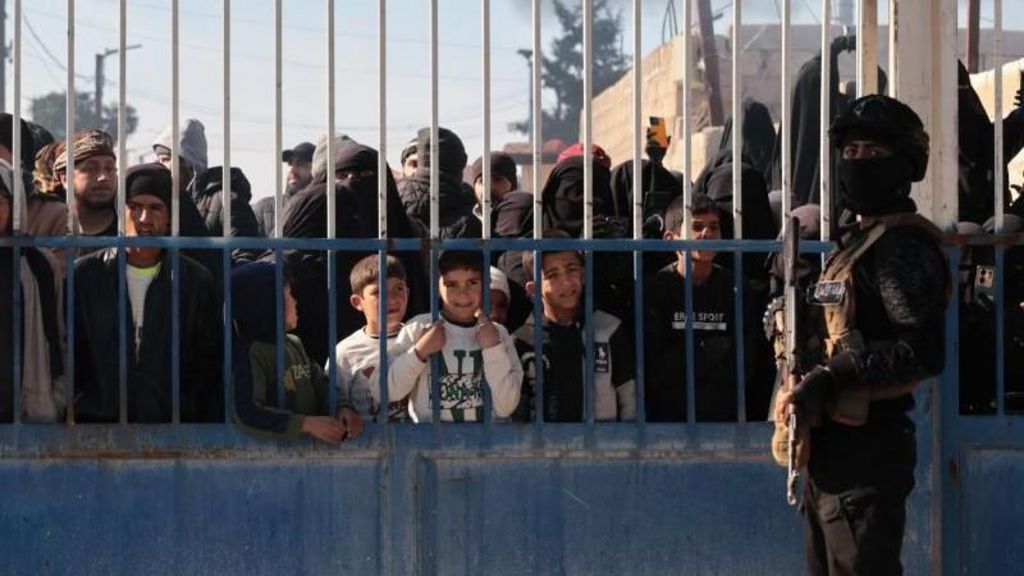
    In a significant strategic shift, the United States military has commenced a large-scale operation to relocate up to 7,000 captured Islamic State (IS) fighters from detention facilities in northeastern Syria to secure locations within Iraq. This decisive action comes as Syrian government forces rapidly expand their control over territories previously held by Kurdish-led militias.

    US Central Command confirmed the transfer of an initial contingent of 150 IS detainees from Syria’s Hassakeh province, citing imperative security concerns. Military officials emphasized that this preemptive measure aims to eliminate potential prison breaks that could ‘pose a direct threat to the United States and regional security interests.’

    The geopolitical landscape shifted dramatically following Tuesday night’s announcement of a new ceasefire agreement between Damascus and the Kurdish-led Syrian Democratic Forces (SDF). This development occurred simultaneously with the SDF’s withdrawal from the contentious al-Hol camp, which houses thousands of IS family members.

    Tensions escalated further on Wednesday when Syria’s defense ministry reported seven soldiers killed in a suspected Kurdish drone attack in Hasakah province. This incident followed mutual accusations between government forces and the SDF regarding a major security breach at Shaddadi prison, where approximately 120 IS militants escaped earlier this week.

    Syrian interior ministry officials disclosed that security operations had successfully recaptured 81 fugitives, while SDF spokesman Farhad Shami claimed through Reuters that nearly 1,500 IS members had escaped during coordinated attacks by ‘Damascus-affiliated factions.’ The SDF additionally alleged government assaults on al-Aqtan prison near Raqqa, which holds high-value IS leadership.

    Despite being militarily weakened, IS remains operationally active in 2025, primarily executing attacks against Kurdish forces in northeastern regions. The United States, previously the SDF’s primary ally, has detained over 300 IS operatives and eliminated more than 20 this year alone.

    US Special Envoy Tom Barrack signaled a fundamental policy reevaluation, stating the rationale for US-SDF cooperation has ‘largely expired.’ Current American efforts focus on securing detention facilities and mediating negotiations between Kurdish forces and President Ahmed Sharaa’s government. Barrack characterized this moment as a potential pathway toward ‘full integration into a unified Syrian state with citizenship rights, cultural protections, and political participation.’

  • Watch: How was Trump’s Davos speech received?

    Watch: How was Trump’s Davos speech received?

    During his keynote address at the World Economic Forum in Davos, President Donald Trump articulated a nuanced position regarding U.S. territorial ambitions while simultaneously assuring a peaceful approach. The BBC’s Chief Economics Editor, Faisal Islam, who was present in the audience, reported that the President explicitly ruled out the use of military force to acquire Greenland. However, Trump proceeded to deliver a comprehensive and lengthy justification for why the vast Arctic territory would be a strategic and valuable asset for the United States. His speech wove together themes of economic opportunity, national security, and historical precedent, arguing that American stewardship could unlock the island’s potential. The delivery, observed firsthand, blended Trump’s characteristic transactional diplomacy with a pledge of non-coercion, creating a complex narrative that left the international audience processing the blend of reassurance and expansionist rhetoric.

  • PLA drone training near China’s Dongsha island lawful: spokesperson

    PLA drone training near China’s Dongsha island lawful: spokesperson

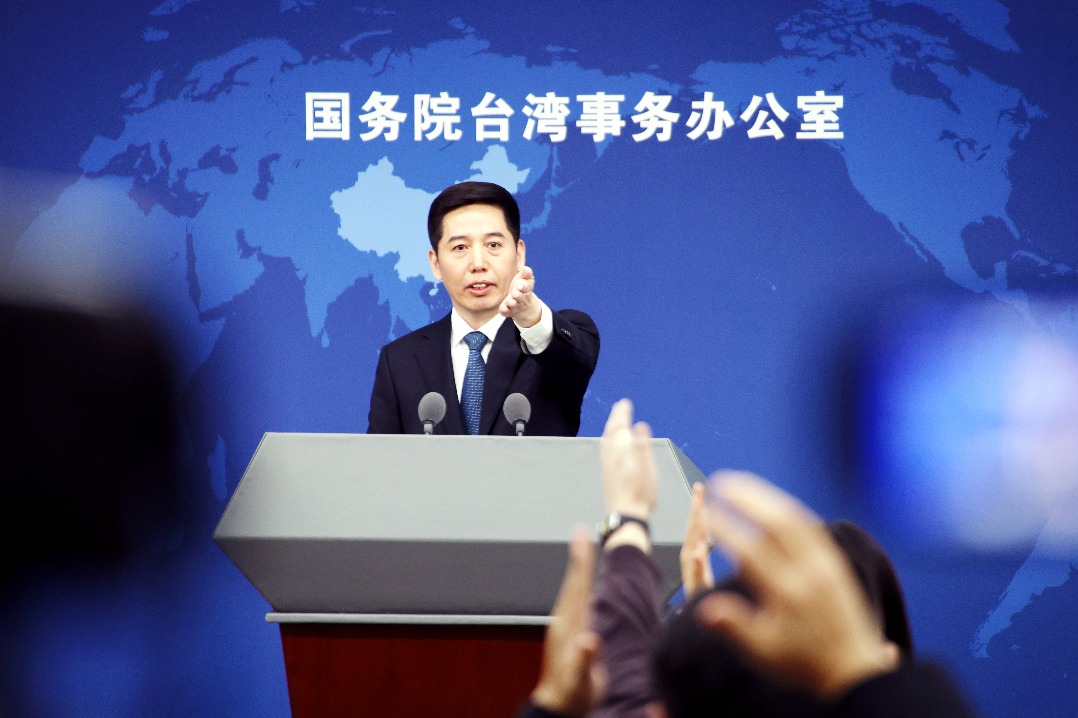
    Chinese authorities have firmly defended recent military drone training exercises conducted near Dongsha Island in the South China Sea, characterizing them as legitimate operations within China’s sovereign territory. The response came through Peng Qing’en, spokesperson for China’s Taiwan Affairs Office, who addressed concerns raised by Taiwan’s defense department regarding the PLA Southern Theater Command’s activities.

    In official statements delivered Wednesday, Peng dismissed Taiwan’s characterization of the drone operations as “highly provocative and irresponsible,” instead asserting China’s unquestionable legal right to conduct military exercises in what he described as indisputably Chinese waters. The spokesperson further escalated rhetoric by labeling Taiwan’s Democratic Progressive Party (DPP) authorities as “absolute troublemakers” for their stance on the matter.

    The diplomatic exchange represents the latest chapter in ongoing tensions across the Taiwan Strait, with Beijing maintaining its consistent position regarding Taiwan’s status as an inalienable part of Chinese territory. Peng emphasized that regardless of statements or actions from DPP authorities, they cannot alter what China views as established historical and legal facts concerning Taiwan’s relationship to mainland China.

    Additionally, the spokesperson addressed recent coast guard patrols in waters near Dongsha Island, defending them as justified measures to maintain navigation order and protect fishermen’s safety from both sides of the strait. Peng issued a stern warning that any provocative actions by Taiwanese authorities in these waters would bear full consequences, underscoring Beijing’s determination to safeguard its territorial claims through both military and law enforcement presence.

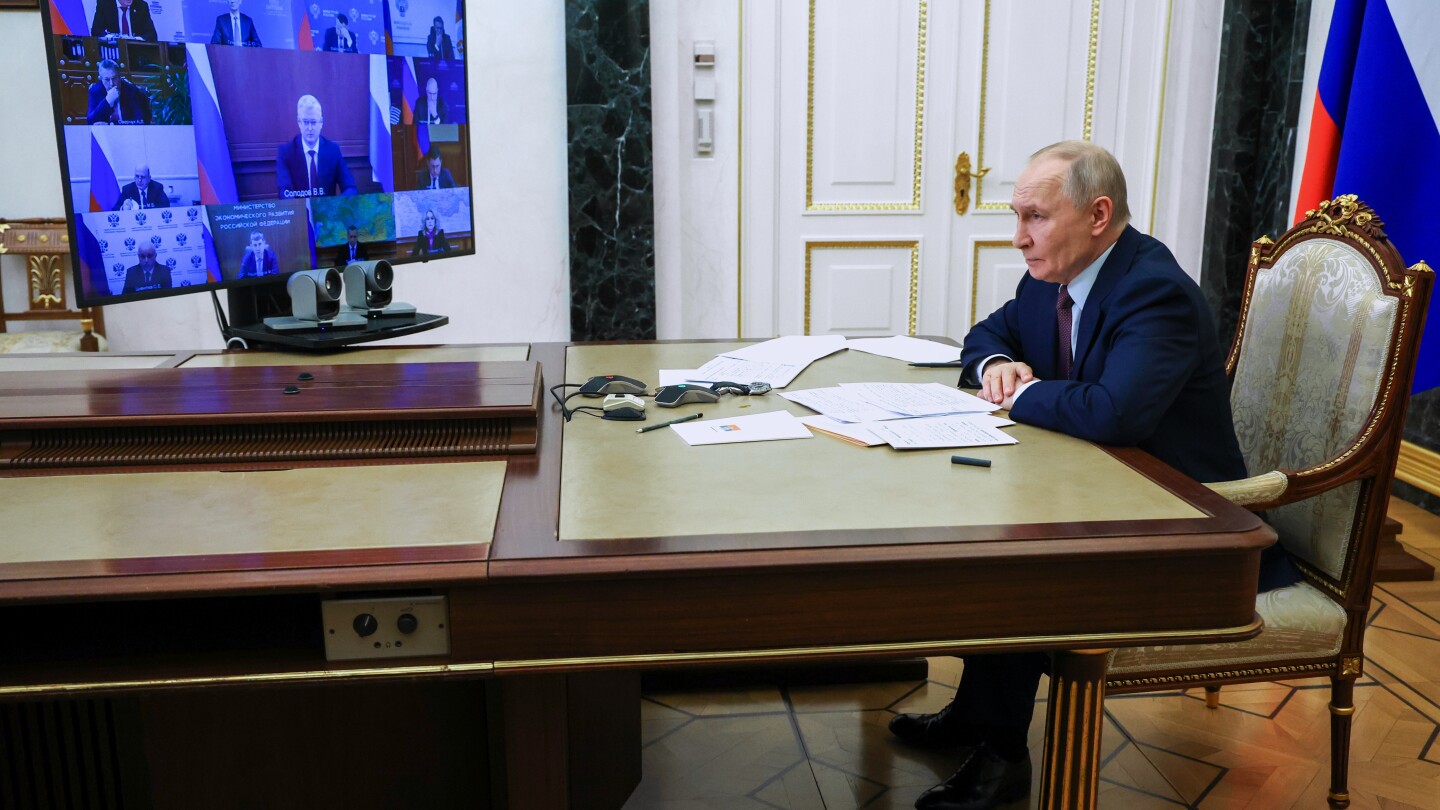
  • China’s top political advisor stresses boosting new five-year plan off to a good start

    China’s top political advisor stresses boosting new five-year plan off to a good start

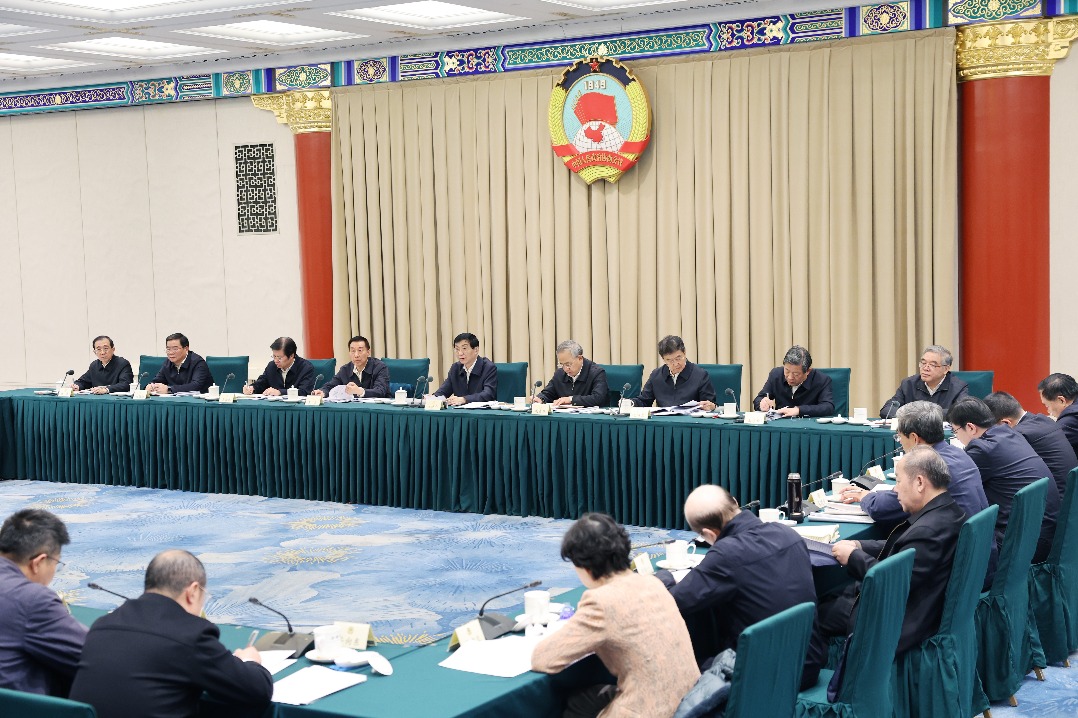
    In a pivotal economic symposium convened in Beijing, China’s senior political leader Wang Huning has issued a comprehensive directive for the nation’s strategic planning apparatus to ensure a robust commencement of the 15th Five-Year Plan (2026-2030). The high-level gathering, attended by numerous national policy advisors and economic specialists, focused on aligning China’s developmental trajectory with the guiding principles established during recent key Party assemblies.

    Wang, who serves on the Standing Committee of the Political Bureau of the Communist Party of China Central Committee and chairs the National Committee of the Chinese People’s Political Consultative Conference (CPPCC), emphasized the critical need for translating theoretical frameworks into practical economic policies. The symposium served as a platform for addressing fundamental theoretical and practical challenges anticipated during the forthcoming five-year developmental cycle.

    Eleven distinguished political consultants and one prominent economic analyst delivered presentations covering multifaceted aspects of China’s economic modernization. Key discussion points included the strategic integration of technological innovation with industrial advancement, synergistic stimulation of consumer markets and investment flows, and the systematic construction of a contemporary industrial ecosystem.

    Vice-Chairman Wang Yong of the CPPCC National Committee presided over the proceedings, which underscored the consultative body’s intensified commitment to conducting field investigations and research missions. These efforts are specifically designed to generate premium policy recommendations that will underpin China’s economic and social development objectives throughout the critical initial phase of the 2026-2030 planning period.