分类: politics

  • China delivers another letter to UN chief over Japan’s remarks on Taiwan

    China delivers another letter to UN chief over Japan’s remarks on Taiwan

    In a significant diplomatic escalation at the United Nations, China’s Permanent Representative Ambassador Fu Cong has delivered a second formal communication to Secretary-General António Guterres, vehemently rejecting Japan’s position regarding Taiwan. This development marks the latest chapter in an ongoing exchange of diplomatic correspondence between the two Asian powers at the international forum.

    The controversy stems from November 7th remarks by Japanese Prime Minister Sanae Takaichi, who suggested during a Diet session that a potential ‘Taiwan contingency’ could constitute a ‘survival-threatening situation’ for Japan, implying possible military involvement. Ambassador Fu characterized these statements as fundamentally challenging the outcomes of World War II, undermining the post-war international order, and violating core principles of the UN Charter.

    In his meticulously argued communication, the Chinese diplomat challenged Japan’s claim of maintaining a ‘consistent position’ on Taiwan, demanding Tokyo provide the international community with a ‘complete and accurate explanation’ of its stated policy. Fu substantiated China’s sovereignty claims by invoking foundational legal instruments including the Cairo Declaration, Potsdam Proclamation, and the Japanese Instrument of Surrender.

    The ambassador further referenced the landmark 1972 Sino-Japanese Joint Statement, wherein Japan explicitly recognized the People’s Republic of China as the sole legitimate government and acknowledged Taiwan as ‘an inalienable part of China’s territory.’ Fu dismissed Japan’s assertion that Prime Minister Takaichi’s remarks aligned with an ‘exclusively defense-oriented’ strategy, noting that linking Japan’s survival to Taiwan scenarios ‘clearly goes beyond passive defense’ and represents ‘self-contradictory arguments intended to mislead the international community.’

    The communication concluded with a stern warning against Japan’s perceived attempts to ‘expand its military capabilities and revive militarism,’ citing increased defense spending, adjusted arms-export principles, and ongoing nuclear policy debates. Ambassador Fu demanded Japan ‘clearly reaffirm the one-China principle,’ uphold bilateral political documents, immediately retract the controversial remarks, and take concrete steps to honor its commitments.

    Adding international perspective, seasoned Pakistani diplomat Munir Akram characterized Prime Minister Takaichi’s comments as ‘not appropriate,’ noting that Japan particularly should have demonstrated greater sensitivity given the historical context between the nations.

  • Putin and Trump’s envoy set for key Ukraine talks in Moscow

    Putin and Trump’s envoy set for key Ukraine talks in Moscow

    A critical diplomatic engagement is set to unfold in Moscow as Russian President Vladimir Putin prepares to meet US Special Envoy Steve Witkoff on Tuesday. This high-stakes meeting follows the White House’s expression of “very optimistic” sentiments regarding a potential agreement to conclude the Ukraine conflict.

    The anticipated summit gains additional significance with the expected participation of Jared Kushner, former President Donald Trump’s son-in-law, who has maintained an advisory role in these diplomatic exchanges. This development comes after intensive negotiations in Florida between Ukrainian and US officials, including both Witkoff and Kushner, focused on refining a US-supported peace proposal initially perceived as advantageous to Russian interests.

    Ukrainian President Volodymyr Zelensky characterized recent discussions as “constructive” while acknowledging persistent challenges. Following his meeting with French President Emmanuel Macron in Paris, Zelensky emphasized Kyiv’s non-negotiable priorities: preserving Ukraine’s territorial sovereignty and obtaining robust security assurances. The territorial question remains particularly contentious, with Moscow continuing to demand concessions in eastern Ukraine—a condition Kyiv has consistently rejected.

    The diplomatic landscape shows increased complexity as Witkoff engaged with multiple European leaders, including UK Prime Minister Sir Keir Starmer and Ukraine’s newly appointed chief negotiator Rustem Umerov. Several key European figures also participated virtually in the Zelensky-Macron discussions.

    White House Press Secretary Karoline Leavitt indicated that the peace draft had undergone substantial refinement, stating: “The administration feels very optimistic… We’re hopeful that this war can finally come to an end.” This optimism echoes Putin’s recent acknowledgment that he had reviewed the US proposal and considered it a potential foundation for agreement.

    However, Kremlin officials subsequently expressed reservations about accepting the proposal after Ukraine and European allies secured modifications to the initial terms. The original draft, circulated in November, had caused significant concern across European capitals for its perceived alignment with Moscow’s demands. The document addressed sensitive matters including the investment of frozen Russian assets held in European institutions and conditions for Ukrainian market access in Europe.

    President Macron clarified that no finalized peace plan currently exists, insisting that any legitimate proposal must incorporate input from both Ukraine and European nations. He stressed that territorial concessions could “only be finalized by President Zelensky” and highlighted the necessity of European involvement in decisions regarding frozen assets, security guarantees, and Ukraine’s EU accession prospects.

    The French leader simultaneously commended the Trump administration’s efforts to resolve a conflict that originated with Russia’s 2014 annexation of Crimea and escalated into full-scale invasion in 2022.

    EU Foreign Policy Chief Kaja Kallas characterized this week as potentially “pivotal” while expressing concerns that Moscow might seek additional concessions beyond current gains. She warned against pressuring Ukraine into surrender, noting such an outcome would serve nobody’s interests.

    As diplomatic efforts intensify, Russian officials claim to have captured strategic eastern towns of Pokrovsk (Krasnoarmeysk) and Vovshansk—assertions contradicted by Ukrainian authorities and open-source intelligence monitoring the conflict. These battlefield developments occur alongside persistent disagreements over security guarantees, with Kyiv seeking NATO membership protection against future aggression—a proposition both Russia and Trump explicitly oppose.

  • Trump warns Israel not to prevent Syria’s ‘evolution’

    Trump warns Israel not to prevent Syria’s ‘evolution’

    In a significant diplomatic development, former U.S. President Donald Trump delivered a subtle caution to Israel regarding its military actions in Syria, emphasizing the importance of preserving Syria’s path toward stability. Through a post on his TruthSocial platform, Trump expressed satisfaction with current developments in Syria while urging Israel to maintain constructive dialogue with its neighbor.

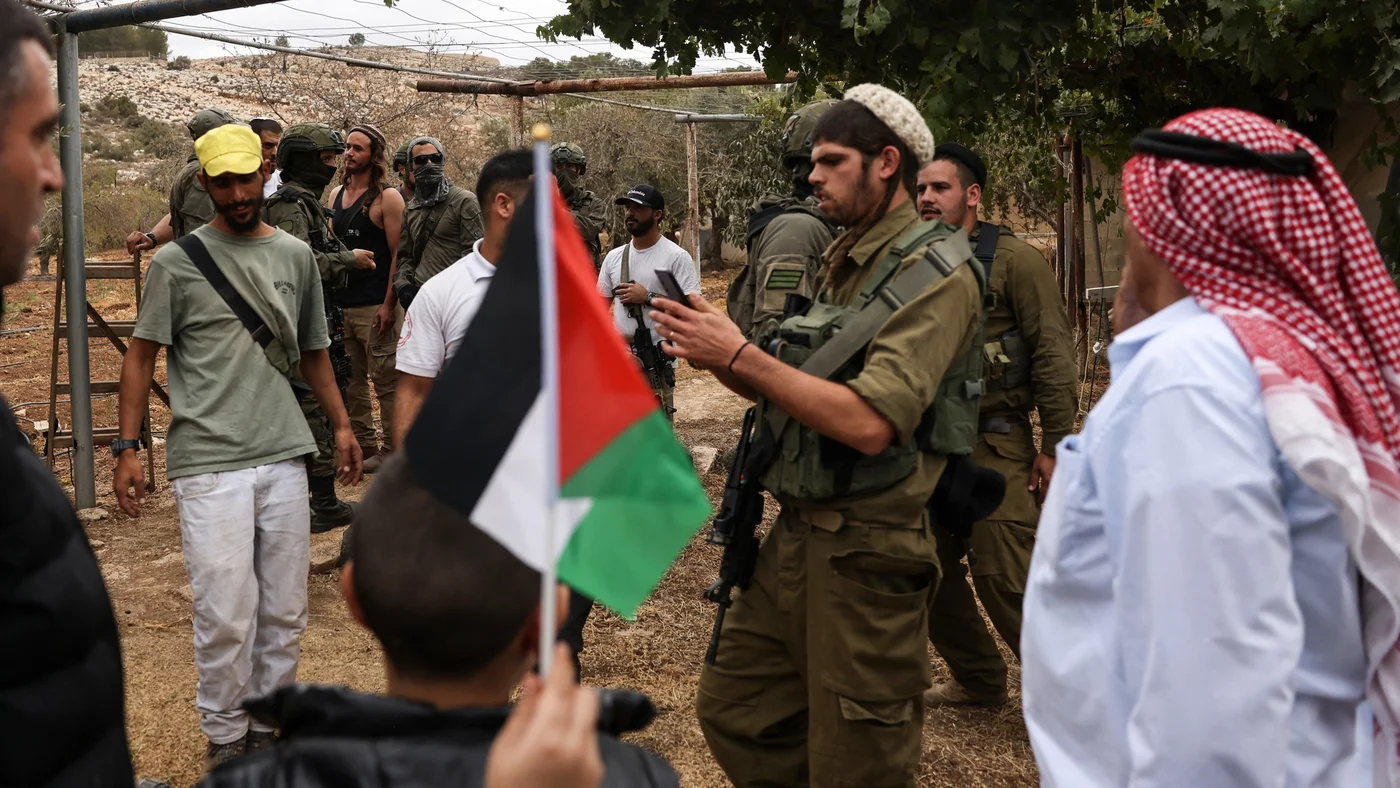
    The comments followed a recent Israeli military operation in southern Syria that resulted in substantial casualties. Syrian media reported that Israeli forces conducted a raid on the village of Beit Jinn, located approximately 50 kilometers from Damascus, killing at least 13 people. The operation triggered defensive actions from local villagers and required Israeli air support to extract ground troops, according to reports. The Israeli military confirmed six soldiers were wounded during the engagement.

    This incident interrupted a period of relative calm in Israeli-Syrian relations that had persisted since the collapse of Bashar al-Assad’s government late last year. Israel has subsequently expanded its military presence, occupying a United Nations buffer zone and establishing positions on strategic high ground including Mount Hermon. Regional experts note Israel has simultaneously attempted to position itself as a protector of Syria’s Druze minority by providing arms to local leaders.

    The geopolitical landscape has grown increasingly complex with the Trump administration hosting Syrian President Ahmed al-Sharaa at the White House in November—a remarkable diplomatic gesture given Sharaa’s former leadership of a U.S.-designated terrorist organization. Sharaa’s participation in counter-Islamic State coalition talks during his visit potentially strengthens his position against the Syrian Democratic Forces (SDF), which continue to guard IS prisoners with U.S. support.

    Regional dynamics further complicate the situation, with Sharaa enjoying support from Turkey, Saudi Arabia, and Qatar. The Gulf states provide financial assistance to Syria’s government while Turkey engages in military training and contemplates a defense agreement with Damascus. The United States has attempted to mediate between Turkey and Israel to prevent clashes in Syrian territory.

    Despite U.S.-mediated talks between Israel and Syria regarding border security arrangements, former U.S. Ambassador to Syria Robert Ford indicated negotiations have stalled due to Israel’s reluctance to withdraw from occupied territories. The fundamental question remains what incentives Syria would have for agreeing to a security arrangement that doesn’t address Israeli occupation concerns.

  • Australia won’t be intimidated by firms over social media ban, minister tells BBC

    Australia won’t be intimidated by firms over social media ban, minister tells BBC

    In a bold move that has drawn global attention, Australia’s Communications Minister Annika Wells has declared her government will not be intimidated by major technology corporations opposing the nation’s groundbreaking social media ban for users under 16. The policy, set to take effect December 10, requires platforms including Meta, TikTok, YouTube, and Snapchat to implement “reasonable steps” preventing underage access to accounts.

    Minister Wells articulated the government’s firm stance in an interview with the BBC, emphasizing that Australia stands “on the side of parents, not the platforms.” She dismissed concerns from tech companies that have criticized the ban as an ineffective solution, noting they’ve had “15 to 20 years” to address documented harms caused by their platforms without sufficient action.

    The Australian official revealed that multiple international leaders have contacted her government seeking guidance on implementing similar measures, positioning Australia as a pioneer in digital child protection. “We’re pleased to be the first, we’re proud to be the first,” Wells stated, adding that her administration stands ready to assist other jurisdictions pursuing comparable legislation.

    The policy faces potential international headwinds, particularly from the United States where former President Donald Trump has pledged to defend tech companies against foreign regulations. Australia’s e-Safety Commissioner has already been summoned to testify before US Congress regarding the controversial measures.

    Despite acknowledging potential implementation challenges, Wells characterized the policy as an evolving “treatment plan rather than a cure” that will be reviewed over the next two years. The minister drew parallels to Australia’s alcohol restrictions for minors, noting that while some underage drinking still occurs, the public health justification for protective legislation remains valid.

    The ban has not been without criticism. Some digital safety experts argue alternative measures like enhanced parental controls and improved digital education might prove more effective. Legal challenges have emerged, including a High Court case brought by two teenagers arguing the policy violates children’s rights. Additionally, concerns have been raised about the exclusion of online gaming platforms like Roblox, which Wells acknowledged as an area of ongoing scrutiny.

    Personalizing the policy’s implications, Wells shared that managing screen time presents challenges in her own household with three young children, a responsibility that primarily falls to her husband due to her demanding travel schedule. She framed the legislation as her contribution to supporting parents nationwide in their digital parenting struggles, noting that “you can’t parent an algorithm.”

  • Leaked wedding video reveals hypocrisy in Islamist Iran’s elite

    Leaked wedding video reveals hypocrisy in Islamist Iran’s elite

    A private wedding ceremony for Fatemeh Shamkhani, daughter of influential Iranian leader Ali Shamkhani, has ignited widespread controversy after video footage circulated widely across Iran in mid-2024. The event, held at Tehran’s luxurious Espinas Palace Hotel, showcased attendees wearing modern Western attire with many women conspicuously absent of the mandatory head coverings required by Iranian law.

    The visual documentation revealed stark contradictions within the Islamic Republic’s power structure. Fatemeh Shamkhani herself wore a strapless, low-cut wedding gown with a Western-style veil, directly contravening the conservative dress codes that her father, as a key adviser to Supreme Leader Ali Khamenei and former Revolutionary Guards commander, has helped enforce through brutal crackdowns on public protests.

    This incident transcends mere scandal, emerging as a potent symbol of systemic crisis within Iran. It highlights three critical ailments: elite privilege, selective morality enforcement, and the rapid erosion of the social contract between rulers and citizens. The Shamkhani family represents a wealthy power circle that maintains prosperity through oil revenues, state contracts, and shadow economic activities that evade international sanctions—contrasting sharply with ordinary Iranians suffering hyperinflation, stagnant wages, and currency devaluation.

    The viral spread of the wedding footage demonstrates the regime’s diminishing control over information in the smartphone era. Public outrage has been particularly acute among the 36% of Iranians living below the poverty line, who perceive the extravagance as offensive disregard for their economic struggles.

    This event gains significance against the backdrop of the ‘Woman, Life, Freedom’ protests sparked by Mahsa Amini’s death in custody. The visible defiance of hijab laws by powerful families undermines the moral authority used to regulate female bodies and enforce religious compliance. Meanwhile, speculation suggests the video’s leakage may reflect internal power struggles, potentially involving former president Hassan Rouhani’s faction targeting Shamkhani amid reported infighting following recent military confrontations with Israel and the United States.

    Ultimately, the wedding scandal exposes fundamental contradictions that threaten the regime’s legitimacy, revealing how elite disregard for officially mandated rules gradually erodes the very foundations of governmental authority.

  • ICC has taken ‘confidential’ measures to protect court from US sanctions, officials say

    ICC has taken ‘confidential’ measures to protect court from US sanctions, officials say

    The International Criminal Court (ICC) is deploying confidential defensive strategies to shield its operations from punitive US sanctions, senior officials revealed during the opening session of the Assembly of States Parties in The Hague. This year’s gathering of representatives from 125 member nations unfolds against a backdrop of severe geopolitical pressure, primarily triggered by the court’s investigation into Israeli officials concerning alleged war crimes in Gaza and Palestinian territories.

    The Trump administration’s sanctions regime, initiated in February against Chief Prosecutor Karim Khan and expanded in August to target two deputy prosecutors and six judges, has created profound operational challenges. These measures have frozen the officials’ international travel capabilities and severed their access to global financial networks, including within European jurisdictions. ICC President Tomoko Akane characterized the situation as unprecedented, noting that elected officials now share designation lists with terrorists and narcotics traffickers.

    President Akane further disclosed that Russian authorities have issued arrest warrants for one-third of the ICC’s judicial bench, including the entire presidency, in retaliation for the court’s probe into alleged Russian war crimes in Ukraine. Despite these coordinated pressures, court leadership maintains that their resolve has strengthened rather than diminished.

    Deputy Prosecutor Nazhat Shameem Khan confirmed the Office of the Prosecutor continues its work unimpeded, implementing protective measures whose specifics remain classified to preserve effectiveness. Notably, the court is pursuing technological sovereignty initiatives, including migrating from US-based cloud services provider Microsoft to ensure operational independence.

    The absence of European Union intervention through its Blocking Statute mechanism has drawn criticism from human rights organizations. Alexis Deswaef of the International Federation for Human Rights urged EU authorities to activate legal protections and establish financial systems independent of US networks to safeguard international justice mechanisms.

  • With Constellation frigates canceled, save Ticonderoga cruisers

    With Constellation frigates canceled, save Ticonderoga cruisers

    In a major strategic reversal, the US Navy has terminated its Constellation-class frigate program, opting to complete only two vessels currently under construction. This decision follows a cascade of program delays totaling 36 months, pushing the first frigate’s completion to 2029 with anticipated fleet deployment not expected until 2032-2034 after extensive testing.

    The Constellation-class was intended to replace the controversial Littoral Combat Ships (LCS), which naval experts previously deemed combat-unsurvivable despite their $500 million per unit cost with mission packages. The Navy maintains 25 LCS vessels despite known deficiencies, with annual operating costs reaching $70 million per ship.

    Compounding the crisis, the Navy has been rapidly decommissioning its capable Ticonderoga-class cruisers while the frigate program faltered. Fifteen cruisers have already been decommissioned, with five scrapped and six more scheduled for removal. This dismantling occurred despite a $3.7 billion modernization program for seven cruisers, four of which were decommissioned before returning to service, resulting in approximately $1.84 billion in wasted investments.

    The Constellation program’s failure stemmed from fundamental design flaws. Despite beginning with an proven Italian FREMM frigate design, numerous modifications reduced commonality to just 15%, while critical components including the power plant remained unfinished and untested—particularly concerning given previous propulsion failures in LCS vessels and British carriers.

    With only six new Arleigh Burke destroyers expected by 2029 at $2.5 billion each, naval analysts suggest reactivating modernized Ticonderoga cruisers as a stopgap solution. These cruisers boast formidable capabilities including AEGIS defense systems, 122-missile vertical launch capacity, and multi-mission versatility that could rapidly augment fleet strength while saving billions by retiring vulnerable LCS vessels.

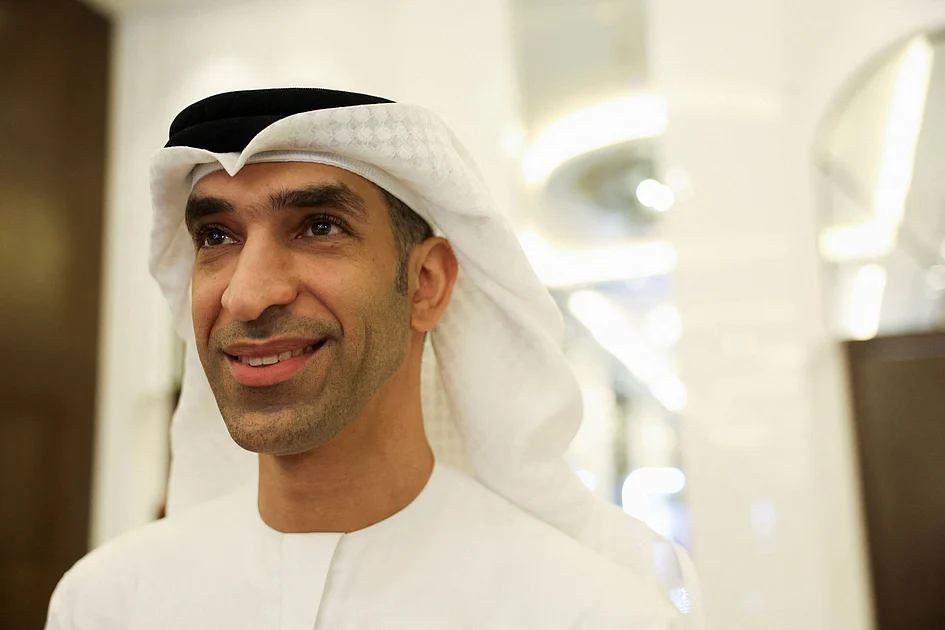
  • Eid Al Etihad 2025: UAE President highlights preserving Arabic language, national identity

    Eid Al Etihad 2025: UAE President highlights preserving Arabic language, national identity

    In a landmark address commemorating the UAE’s 54th National Day, President Sheikh Mohamed bin Zayed Al Nahyan articulated a compelling vision balancing technological advancement with cultural preservation. Speaking during the Eid Al Etihad celebrations, the leader emphasized that safeguarding national identity, values, and the Arabic language constitutes a fundamental national priority requiring collective societal effort.

    The President underscored the critical role of educational and cultural institutions in fostering moral development among youth. “While we want our youth to be fully engaged in the global march of scientific progress,” he stated, “we also want them to remain firmly grounded in their values, ethics, and national identity. A nation without identity has neither present nor future.”

    Sheikh Mohamed positioned citizens as both the foundation and ultimate beneficiaries of development, highlighting enhanced public participation as essential to national progress. The address marked December 2nd as a historic milestone representing unity and intergenerational inspiration across the Emirates.

    The leadership announced significant policy directions, with 2025 designated as the Year of the Community and 2026 as the Year of the Family. The President characterized family strengthening and fertility rate enhancement as national security priorities, describing families as “the first school of life and cornerstone of social development.”

    Educational advancement received particular emphasis, with the UAE committed to refining human capital development through global-standard education systems, scientific research, and lifelong learning initiatives. The President encouraged youth to responsibly leverage artificial intelligence and modern technologies while maintaining focus on nationally aligned academic disciplines.

    Environmental sustainability emerged as another key pillar, with reaffirmed commitment to achieving climate neutrality by 2050 through international cooperation and renewable energy investment. The address concluded with reaffirmations of the UAE’s global peacebuilding efforts and inclusive vision welcoming all contributors to national development within frameworks of tolerance and rule of law.

  • Netanyahu corruption trials: What are the charges and will he be pardoned?

    Netanyahu corruption trials: What are the charges and will he be pardoned?

    Israeli Prime Minister Benjamin Netanyahu has formally petitioned President Isaac Herzog for a comprehensive pardon that would terminate all ongoing corruption proceedings against him. This extraordinary legal maneuver comes as Netanyahu faces the most severe criminal charges ever brought against a sitting Israeli leader, with potential implications for both his political future and the nation’s judicial integrity.

    The Prime Minister confronts three distinct cases—designated as Case 1000, Case 2000, and Case 4000—each containing allegations of bribery, fraud, and breach of trust. These cases, initially filed in 2019, represent the culmination of multiple corruption investigations that have shadowed Netanyahu’s lengthy political career. The most serious charge of bribery carries a maximum prison sentence of ten years, while even a single conviction would likely result in his permanent exclusion from public office.

    Case 1000, frequently termed the “gifts affair,” alleges that Netanyahu received luxury items valued at approximately $200,000 from Hollywood producer Arnon Milchan and Australian billionaire James Packer. Prosecutors contend these gifts were exchanged for political favors, including tax legislation beneficial to Milchan and intervention regarding his U.S. visa status. Both donors have acknowledged providing gifts but deny any illicit arrangements.

    Case 2000 involves allegations of a quid pro quo arrangement with Arnon Mozes, publisher of Yedioth Ahronoth, where Netanyahu supposedly promised to limit circulation of a competing newspaper in exchange for favorable coverage. Recordings presented as evidence capture discussions about mutual benefits, though Netanyahu maintains these conversations were insignificant.

    Case 4000 represents the most severe allegations, accusing Netanyahu of granting regulatory favors to telecommunications giant Bezeq in exchange for positive coverage on the Walla news platform. This case involves bribery charges requiring heightened evidentiary standards but carries the most substantial potential penalties.

    The timing of Netanyahu’s pardon request intersects critically with Israel’s ongoing military operations in Gaza and approaching elections scheduled for October 2026. Critics have accused the Prime Minister of prolonging conflict to divert attention from his legal troubles, while supporters characterize the prosecutions as politically motivated “witch hunts.”

    The judicial process has experienced numerous delays, complicated by security concerns, Netanyahu’s surgical procedures, and allegations of improper evidence collection. Most notably, prosecutors documented 1,778 instances during interrogation where the Prime Minister claimed inability to recall relevant information.

    President Herzog’s office has acknowledged the unprecedented nature of the pardon request, stating it will be evaluated with appropriate seriousness. The decision carries profound implications for Israel’s rule of law, particularly given that former Prime Minister Ehud Olmert previously served prison time for corruption offenses.

    Political reactions have been sharply divided. Opposition leader Yair Lapid insists any pardon must require admission of guilt and retirement from public life, while Netanyahu’s coalition allies maintain the proceedings constitute judicial persecution. Recent polling indicates approximately 38% of Israelis support clemency, reflecting the deeply polarized nature of the issue.

  • ‘Scapegoating’: Thousands of Afghans thrust into uncertainty after DC shooting

    ‘Scapegoating’: Thousands of Afghans thrust into uncertainty after DC shooting

    The case of Rahmanullah Lakanwal, an Afghan national currently detained for shooting two National Guard members, has revealed complex layers of U.S. military involvement and subsequent immigration challenges. Lakanwal served as a critical CIA asset in Afghanistan’s Zero Unit, specifically within the elite Kandahar Strike Force (Unit 03), undergoing thorough intelligence vetting during America’s twenty-year conflict.

    Despite his approved asylum status through Operation Allies Welcome in April 2024, Lakanwal struggled significantly with resettlement challenges. Documentation indicates severe culture shock, isolation from family networks, and difficulties adapting from his previously well-compensated, high-ranking position to starting anew in the United States. In January 2024, resettlement agencies attempted behavioral health interventions which he reportedly declined.

    The incident has triggered immediate political repercussions. President Donald Trump utilized the tragedy to reinforce stricter immigration policies, declaring from Mar-a-Lago that immigrants unwelcoming to American values would face exclusion. His administration has moved to reinterview thousands of Afghan refugees admitted under Biden’s presidency while eliminating key resettlement infrastructures including Operation Enduring Welcome and the Office of the Coordinator for Afghan Relocation Efforts.

    These policy shifts have created substantial legal uncertainties for approximately 70,000 Afghans already in the U.S. and another 180,000 awaiting Special Immigrant Visas. The termination of Temporary Protected Status has left over 11,000 individuals in legal limbo, while USCIS backlogs intensify due to enhanced re-screening requirements encompassing social media scrutiny.

    Advocacy groups and Democratic lawmakers condemn the administration’s response as political weaponization of tragedy. Senators Mark Kelly and Chris Van Hollen emphasize that blanket targeting of Afghan communities contradicts evidence-based security approaches, noting that recent vetting occurred under the current administration. Legal organizations like Project ANAR are mobilizing against what they term ‘collective punishment,’ warning of decreased community engagement and increased fear among immigrant populations.

    The situation underscores broader questions about America’s responsibility toward wartime allies who risked their lives supporting democratic ideals. As former Afghan diplomat Omar Samad notes, the nation must reconcile its longest war’s legacy with its humanitarian obligations to those who partnered with U.S. forces.