分类: politics

  • Sister of former Pakistani leader Imran Khan says he is in good health, quelling rumors

    Sister of former Pakistani leader Imran Khan says he is in good health, quelling rumors

    ISLAMABAD — In a highly anticipated family visit to Rawalpindi’s Adiala Prison, Uzma Khan, sister of incarcerated former Pakistani Prime Minister Imran Khan, reported Tuesday that the opposition leader remains in good physical health but is experiencing extreme distress due to prolonged solitary detention conditions.

    The visitation marked the first familial access granted to Khan since November 4, ending weeks of speculation about the politician’s wellbeing that had prompted concerns among his supporters nationwide. During her brief meeting, Uzma Khan characterized her brother’s condition as “perfectly in good health” but noted he expressed profound anger regarding his isolation, which he described as “mental torture worse than physical abuse.”

    Khan’s political party, Pakistan Tehreek-e-Insaf (PTI), had mobilized hundreds of supporters outside the prison facility throughout the day, awaiting confirmation about their leader’s status. Security forces responded with significant deployments around the complex and implemented rally bans in both Rawalpindi and the capital Islamabad to prevent large gatherings.

    The 73-year-old former cricket icon has been serving multiple concurrent prison sentences since 2023 following convictions on corruption and other charges that his supporters allege are politically motivated attempts to dismantle his political career. His wife, Bushra Bibi, remains incarcerated in the same facility on graft convictions, though prison authorities prohibit direct contact between the couple except during court appearances.

    Khan’s spokesperson, Zulfiquar Bukhari, condemned the restrictive visitation policies as inadequate, demanding regular access for both family members and legal representatives while characterizing the isolation measures as psychological torture.

    The political context remains intensely charged, with Khan’s party maintaining that their electoral mandate was illegitimately overturned in the 2024 parliamentary elections through systematic rigging favoring current Prime Minister Shehbaz Sharif—allegations the sitting government consistently denies. Khan was originally removed from power through a parliamentary no-confidence vote in April 2022 and now leads the opposition movement from his prison cell.

  • Venezuela to continue accepting deported migrants despite Trump’s airspace closure suggestion

    Venezuela to continue accepting deported migrants despite Trump’s airspace closure suggestion

    In a significant diplomatic development, Venezuela has authorized the continuation of U.S.-operated deportation flights despite escalating tensions between the two nations. The administration of President Nicolás Maduro reversed its earlier position on Tuesday, confirming that twice-weekly flights transporting deported migrants would proceed following an official request from the Trump administration.

    This reversal comes just days after Venezuelan authorities had indicated that U.S. immigration officials had unilaterally suspended the deportation program. Documentation revealed that U.S.-based Eastern Airlines submitted formal overflight and landing applications on Monday, seeking permission for arrivals commencing Wednesday. Venezuelan Foreign Affairs Minister made these applications publicly available.

    The continuation of deportation operations occurs against a backdrop of heightened military activity. Recent U.S. military strikes targeting vessels suspected of drug trafficking in the eastern Pacific and near Venezuela’s Caribbean coast have not disrupted the migration program. The Trump administration maintains these operations target drug cartels allegedly connected to Maduro’s government, while simultaneously considering potential strikes on the Venezuelan mainland.

    This year has witnessed a substantial increase in deportations, with over 13,000 migrants returned to Venezuela via dozens of chartered flights. The policy shift represents a significant departure from Maduro’s long-standing refusal to accept deportees from the United States, a position abandoned under substantial White House pressure. Regular arrivals now occur at Caracas’ international airport through flights operated by both U.S. government contractors and Venezuela’s state-owned airline.

  • Nigeria’s president nominates ex-military chief for defense minister weeks after he was forced out

    Nigeria’s president nominates ex-military chief for defense minister weeks after he was forced out

    LAGOS, Nigeria — In a significant political reversal, President Bola Tinubu has nominated General Christopher Musa, the recently retired military chief, as Nigeria’s new defense minister. This appointment comes merely weeks after General Musa’s forced retirement during a comprehensive military reshuffle.

    The nomination, pending parliamentary confirmation, follows the abrupt resignation of former Defense Minister Badaru Abubakar on Monday, who cited health reasons for his departure. No official explanation has been provided regarding the sudden reinstatement of General Musa, who commanded Nigeria’s armed forces from 2023 until October.

    This leadership shakeup occurs against the backdrop of escalating security challenges in Nigeria’s northern regions, where bandit groups and militants continue to perpetrate mass abductions and deadly violence. The United States has intensified pressure on Nigerian authorities to enhance their counterinsurgency efforts, though President Tinubu has publicly disputed American assertions that Christian communities are disproportionately targeted by the violence.

    In response to the deteriorating security situation, Tinubu’s administration recently dispatched a diplomatic delegation to Washington, resulting in newly established security cooperation agreements. Additionally, the president declared a state of emergency last week and authorized large-scale police recruitment to strengthen domestic security forces.

  • Zambian-American influencer sentenced to 18 months for hate speech

    Zambian-American influencer sentenced to 18 months for hate speech

    A Zambian-American social media influencer has been handed an 18-month prison sentence after pleading guilty to hate speech charges against Zambian President Hakainde Hichilema. Ethel Chisono Edwards, a 42-year-old real estate agent from New York who maintains dual citizenship, was convicted under Zambia’s recently enacted Cyber Security and Cyber Crimes Acts for her persistent online criticisms of the head of state.

    Known to her substantial following as ‘One Boss Lady,’ Edwards built her digital reputation through two years of vehement commentary targeting President Hichilema’s administration. Her case reached its climax when authorities detained her at Zambia’s primary airport three months ago during a visit to attend her grandmother’s funeral proceedings.

    During proceedings at Lusaka’s magistrate court, Edwards admitted to unlawfully publishing content motivated by hatred toward the presidency. Magistrate Webster Milumbe emphasized the court’s obligation to issue a strong deterrent against the growing trend of hate speech, despite the defendant’s expression of remorse and direct apology to the president, his family, and the Zambian nation.

    Defense attorney Joseph Katati portrayed his client as a contrite first-time offender with significant philanthropic contributions, including sponsorship of a girls’ football team that would suffer from her incarceration. The magistrate acknowledged these mitigating factors by backdating the sentence to her arrest date.

    The sentencing has sparked vigorous debate within Zambia regarding free speech boundaries. While some citizens support the judicial outcome as necessary for maintaining respect for leadership, others perceive the punishment as disproportionately limiting expressive freedoms. This case emerges despite President Hichilema’s 2021 elimination of criminal defamation laws specifically targeting the presidency, indicating that other legislation remains applicable to criticism of government figures.

    This prosecution follows another unusual case from September, where two individuals received two-year prison terms for allegedly attempting to use witchcraft against the president, demonstrating the ongoing legal complexities surrounding presidential protection in Zambia.

  • ROK president proposes restoring communication channels with DPRK

    ROK president proposes restoring communication channels with DPRK

    In a significant diplomatic overture, South Korean President Lee Jae-myung has formally proposed the restoration of direct communication channels with North Korea. The announcement, reported by multiple South Korean media outlets on Tuesday, December 2nd, 2025, represents a potential breakthrough in inter-Korean relations that have remained largely frozen in recent years.

    The proposal comes amid ongoing regional tensions and follows a period of minimal diplomatic engagement between the two neighboring nations. President Lee’s initiative suggests a willingness to reestablish basic communication infrastructure that had previously been maintained between Seoul and Pyongyang. These channels, which include military hotlines and diplomatic liaison offices, had been largely suspended during periods of heightened military and political tensions on the Korean Peninsula.

    Analysts suggest this move could serve as a foundational step toward more substantial diplomatic engagements, potentially paving the way for future talks on denuclearization, economic cooperation, and confidence-building measures. The restoration of communication channels would enable direct dialogue between government officials, potentially reducing miscalculations and providing a mechanism for crisis management.

    The international community, particularly neighboring powers including China and the United States, has consistently encouraged renewed dialogue between the two Koreas. President Lee’s proposal aligns with these broader regional stability interests while demonstrating South Korea’s proactive approach to reducing tensions on the peninsula.

  • Lithuania accuses Belarus of ‘cynical hybrid attack’ as balloons disrupt airport

    Lithuania accuses Belarus of ‘cynical hybrid attack’ as balloons disrupt airport

    VILNIUS, Lithuania — A sophisticated aerial confrontation has emerged between Lithuania and Belarus, with Vilnius accusing its neighbor of orchestrating deliberate disruptions to aviation security through coordinated meteorological balloon launches. The ongoing incidents have forced repeated shutdowns of Vilnius International Airport, creating travel chaos and stranding thousands of passengers in what Lithuanian officials characterize as a calculated hybrid warfare campaign.

    The situation reached critical levels when operations at Lithuania’s primary airport were suspended for eleven consecutive hours last Saturday night. Aviation authorities documented at least sixty balloons originating from Belarusian territory, with approximately forty penetrating restricted airspace crucial for flight safety. The systematic timing and precise trajectory of these incursions suggest intentional targeting of aviation infrastructure rather than random meteorological activity.

    Deputy Foreign Minister Taurimas Valys condemned the actions as “a cynical hybrid attack against our economy, aviation security, and the entire nation.” The balloons, ostensibly used for cigarette smuggling operations, have become instruments of geopolitical tension between the neighboring states.

    Belarusian President Alexander Lukashenko previously offered conditional apologies if Minsk’s involvement could be definitively established. However, the Belarusian government has simultaneously accused Lithuania of dispatching surveillance drones into its airspace for espionage purposes and distributing “extremist materials.” These allegations prompted Minsk to summon Lithuanian diplomat Erikas Vilkanecas this week, demanding formal explanations and investigations while reserving “the right to take all necessary measures to protect its sovereignty.”

    The border region has become an arena for reciprocal measures, with Lithuania initially closing frontier crossings in October following repeated aerial incursions. Belarus retaliated by blocking over 1,000 Lithuanian commercial trucks from exiting its territory. Although Vilnius subsequently reopened borders under pressure from logistics companies, balloon incursions have continued escalating.

    Prime Minister Inga Ruginienė acknowledged the government’s delicate balancing act, stating, “If necessary, we will close the border, but please understand that we must coordinate every action with our strategic partners.” This reference to NATO allies underscores the broader security implications as the alliance remains vigilant following unprecedented drone intrusions in September.

    Lithuania is developing technological countermeasures, including a €1 million investment in an Intelligent Airspace Security System (IOEAS) that incorporates artificial intelligence for target recognition and trajectory prediction. IT Logika, a project beneficiary, is developing a high-power laser system capable of neutralizing multiple balloons during single operations. Additional proposals include relocating night flights to secondary airports like Kaunas and implementing stricter penalties for cigarette smuggling networks.

    The escalating tensions occur against the backdrop of Belarus’s alignment with Russia and the ongoing conflict in Ukraine, now approaching its fourth year. This aerial provocation represents a new dimension in the complex security challenges facing NATO’s eastern flank.

  • Venezuelan president rejects ‘slave’s peace’ under US threat

    Venezuelan president rejects ‘slave’s peace’ under US threat

    Venezuelan President Nicolás Maduro has forcefully rejected what he characterizes as American attempts to impose a ‘slave’s peace’ upon his nation, delivering a defiant address to supporters amid escalating military tensions with the United States.

    Speaking on Monday, Maduro articulated Venezuela’s position regarding the ongoing geopolitical standoff, stating: ‘We seek peace, but peace with sovereignty, peace with equality, peace with freedom. We will never accept the peace of slaves or the peace of colonies.’ The Venezuelan leader condemned the 22-week US military presence near Venezuelan territory as a form of ‘psychological terrorism’ designed to destabilize his government.

    Maduro emphasized that Venezuela’s national resilience stems from robust citizen participation, institutional strength, and the determined will of its people to defend their homeland against external pressure. He framed this social cohesion as an ‘invincible, eternal and perpetual’ foundation of national power that would ensure political autonomy.

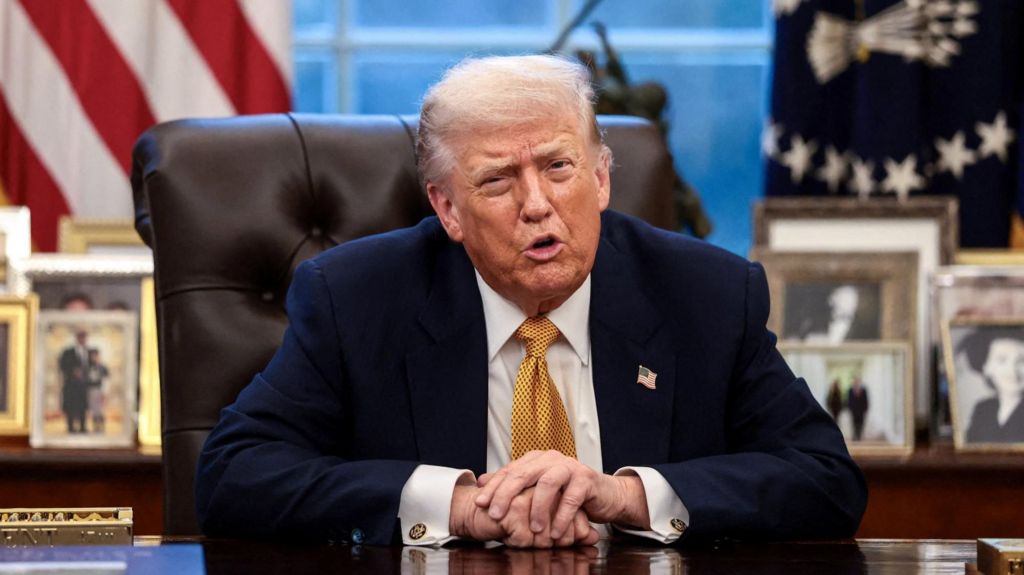
    The speech comes amid significant US naval mobilization in the Caribbean region. Since September, American forces have conducted at least 21 strikes on vessels suspected of drug trafficking operations, resulting in numerous casualties. These operations intensified following President Donald Trump’s alleged ultimatum to Maduro during a November 21st phone conversation, where Trump reportedly demanded the Venezuelan leader relinquish power.

    In response to US pressure, Venezuela revoked operating rights for six international airlines that had suspended services following advisories from the US Federal Aviation Administration. Maduro’s administration maintains that Washington’s actions represent a transparent attempt to orchestrate regime change aimed at controlling Venezuela’s substantial natural resources, including its extensive oil reserves.

  • Guinea-Bissau electoral commission unable to finalize results after armed men steal vote tally

    Guinea-Bissau electoral commission unable to finalize results after armed men steal vote tally

    GUINEA-BISSAU’S electoral commission declared Tuesday it cannot finalize results from the disputed presidential election after armed intruders stormed its offices and confiscated critical vote tally sheets. This development coincides with the military’s seizure of governmental control, plunging the West African nation into renewed political turmoil.

    The commission’s statement confirmed the November 26th breach occurred three days following presidential and legislative elections where both incumbent President Umaro Sissoco Embaló and opposition candidate Fernando Dias da Costa declared victory. The unidentified armed men’s raid effectively paralyzed the electoral certification process.

    In parallel developments, the military establishment installed former army chief of staff General Horta Inta-a as head of a transitional military government. The new regime announced plans to oversee a twelve-month transition period. On Saturday, Inta-a appointed a 28-member cabinet predominantly composed of political allies to the deposed president.

    President Embaló has sought refuge in Brazzaville, capital of the Republic of Congo, while Nigeria’s President Bola Tinubu granted protective asylum to opposition leader da Costa citing “imminent threats to his personal safety.”

    This crisis continues Guinea-Bissau’s troubled legacy of political instability since gaining independence from Portugal five decades ago. The nation of 2.2 million people, ranking among the world’s poorest countries, has experienced multiple coups and attempted power grabs, including a failed October putsch. International analysts note the country’s role as a strategic narcotics trafficking corridor between Latin America and Europe has significantly exacerbated its chronic governance challenges.

  • UK government plans to scrap some jury trials in an attempt to clear a court backlog

    UK government plans to scrap some jury trials in an attempt to clear a court backlog

    The British government has unveiled sweeping reforms to the nation’s justice system, significantly scaling back the right to trial by jury in an effort to address a critical backlog of cases that has accumulated since the COVID-19 pandemic. Justice Secretary David Lammy declared the situation “an emergency in our courts” that threatens to undermine public confidence in British justice.

    The reforms represent the most substantial changes to jury trials in decades. Under the new measures, cases with expected sentences of three years or less—increased from the current two-year threshold—will be heard by judges alone without juries. Additionally, judges will gain authority to preside over certain complex fraud and financial cases without jury participation. Magistrates, who handle less serious offenses, will see their sentencing powers expanded from 12 to 18 months, enabling them to process more cases independently.

    These changes come as the justice system confronts nearly 80,000 pending criminal cases in England and Wales—more than double the pre-pandemic volume—with some trials delayed for several years. The government estimates these reforms will reduce jury trials by approximately 25%, while maintaining jury proceedings for the most serious offenses including murder, manslaughter, rape, serious assault, and robbery.

    Lammy invoked the Magna Carta’s principles during his announcement to Parliament, emphasizing that justice delayed effectively constitutes justice denied for victims. However, legal professionals have raised significant concerns about the erosion of fundamental rights. Riel Karmy-Jones, chairwoman of the Criminal Bar Association, criticized the move as “eviscerating protection by eroding the public’s right to trial by jury,” attributing court delays to systemic underfunding rather than jury proceedings.

    The reforms apply specifically to England and Wales, as Scotland and Northern Ireland maintain separate judicial systems.

  • UAE President shares heartfelt message marking 54th National Day

    UAE President shares heartfelt message marking 54th National Day

    In a powerful display of national unity, UAE President Sheikh Mohamed bin Zayed Al Nahyan delivered an emotionally resonant message commemorating the nation’s 54th National Day, known as Eid Al Etihad. The presidential address, shared on December 2nd, 2025, extended heartfelt congratulations to both citizens and residents while acknowledging their collective contributions to the nation’s continuous development.

    President Sheikh Mohamed emphasized that the UAE’s remarkable journey of progress stems from unified family structures and a cohesive society working toward common goals. His message contained a spiritual benediction, invoking divine protection for the nation’s enduring prosperity and the wellbeing of its people, referring to the UAE as ‘the blessed land of Zayed.’

    Concurrently, Sheikh Mohammed bin Rashid Al Maktoum, Ruler of Dubai and Vice-President, echoed these sentiments in his own National Day communication. He paid tribute to the nation’s founding fathers, particularly the late Sheikh Zayed bin Sultan Al Nahyan and Sheikh Rashid bin Saeed Al Maktoum, recognizing their visionary leadership in establishing what he described as ‘a unique model of unity’ back in 1971.

    The presidential address notably highlighted the critical importance of preserving national identity, cultural values, and the Arabic language as fundamental priorities. Sheikh Mohamed specifically called upon educational, cultural, and social development institutions to prioritize the moral and ethical development of youth, describing this preservation as a shared responsibility across all societal sectors.

    Reflecting on the historical significance of December 2nd, the President characterized Eid Al Etihad as both a celebration of national foundation and an opportunity for collective reflection and renewed commitment to nation-building. He reaffirmed the leadership’s dedication to maintaining the UAE as a nation exemplifying excellence, progress, and purposeful development, thus honoring the original vision established by the country’s founders.