分类: politics

  • Belgian police make 3 arrests after raids on college and EU diplomatic headquarters

    Belgian police make 3 arrests after raids on college and EU diplomatic headquarters

    BRUSSELS — Belgian law enforcement officials executed coordinated raids on Tuesday targeting key European Union institutions, resulting in three arrests amid a widening fraud investigation. The operation, authorized by the European Public Prosecutor’s Office (EPPO), targeted both the European External Action Service headquarters in Brussels and multiple facilities at the prestigious College of Europe in Bruges.

    The investigation centers on alleged misconduct in the awarding of a training program contract for the EU Diplomatic Academy during the 2021-2022 academic cycle. Prosecutors have identified multiple potential violations including procurement fraud, corruption breaches, conflict of interest infringements, and unauthorized disclosure of protected information.

    EPPO, the EU’s independent judicial body, issued a statement revealing ‘substantial evidence’ suggesting systematic irregularities in the tender process for junior diplomat training. The office has formally requested the waiver of diplomatic immunity for several individuals connected to the case, indicating the investigation may reach high-level officials.

    European Commission representative Anitta Hipper acknowledged the search operation at the EU’s diplomatic service headquarters while maintaining procedural discretion during her press briefing. Both federal police authorities and the prosecutor’s office have maintained strict confidentiality regarding ongoing investigative details and suspect identities.

    The raids represent one of the most significant anti-corruption operations targeting EU institutions recently, highlighting the increasing vigilance of European judicial authorities in maintaining institutional integrity within the bloc’s diplomatic training mechanisms.

  • Bulgaria ditches budget plan after tens of thousands join protests

    Bulgaria ditches budget plan after tens of thousands join protests

    Bulgaria’s government has capitulated to public pressure by withdrawing its controversial 2026 budget proposal following the largest anti-government demonstrations the country has witnessed in decades. The decision comes after tens of thousands of citizens flooded streets across multiple cities on Monday night, with the capital Sofia witnessing particularly massive gatherings in front of parliament buildings.

    The now-abandoned fiscal plan faced vehement opposition for its proposed tax increases and social security contribution hikes, which protesters argued served to mask systemic government corruption rather than address genuine economic needs. The demonstrations turned confrontational in Sofia where masked individuals clashed with riot police, damaged political party offices, and set fires, resulting in over 70 arrests according to local authorities.

    President Rumen Radev condemned the violence as ‘mafia provocations’ while simultaneously acknowledging the legitimacy of public discontent. Through social media, Radev demanded governmental resignation and early elections, stating that Bulgarians had unequivocally rejected the current administration.

    The political context underscores deeper tensions as Bulgaria prepares for its inaugural eurozone budget on January 1, 2026. Public opinion remains sharply divided on euro adoption, with many citizens in one of the EU’s poorest nations fearing potential inflationary consequences. The current minority coalition government under Prime Minister Rosen Zhelyazkov, formed after inconclusive 2024 elections, now faces intensified opposition calls for complete resignation rather than mere policy adjustments.

    This episode continues Bulgaria’s pattern of political instability that has persisted since 2020, when previous anti-corruption protests toppled another GERB-led coalition government. The government has committed to initiating a new budget consultation process involving opposition parties, trade unions, and employer representatives.

  • Nigeria’s defence minister resigns amid kidnapping crisis

    Nigeria’s defence minister resigns amid kidnapping crisis

    In a significant development for Nigeria’s security apparatus, Defense Minister Mohammed Badaru Abubakar has abruptly resigned from his cabinet position citing health concerns. The 63-year-old’s departure comes at a critical juncture as the nation grapples with worsening security challenges, particularly a surge in mass abductions targeting civilians.

    The timing of Abubakar’s exit coincides with alarming reports from the UN Human Rights Office indicating at least 402 kidnappings since mid-November, predominantly affecting schoolchildren. Recent incidents include the abduction of 20 individuals during separate raids in northern Nigeria, capturing a Christian pastor alongside a Muslim bride and her bridal party. Approximately 250 students and 12 educators from a Catholic school in Niger state remain missing following what represents one of the largest kidnapping events in recent weeks.

    While analysts predominantly attribute these crimes to criminal syndicates seeking ransom payments, presidential representatives have suggested jihadist involvement. The minister, who previously served two terms as governor of Jigawa state from 2015 to 2023, played a pivotal role in President Bola Tinubu’s 2023 electoral victory by delivering his home state.

    President Tinubu has accepted the resignation with acknowledgments for Abubakar’s national service. Concurrently, the administration has declared a national security emergency, unveiling plans to expand police capabilities by recruiting 20,000 additional officers to reach a force strength of approximately 50,000.

    Nigeria currently confronts multiple security threats including criminal kidnappings, Islamist insurgencies in northern territories, separatist violence in southeastern regions, and resource conflicts between herders and farmers in central areas. Presidential spokespersons indicate Tinubu will present Abubakar’s successor to the Senate for confirmation within days.

  • US Homeland Security secretary calls for more travel bans

    US Homeland Security secretary calls for more travel bans

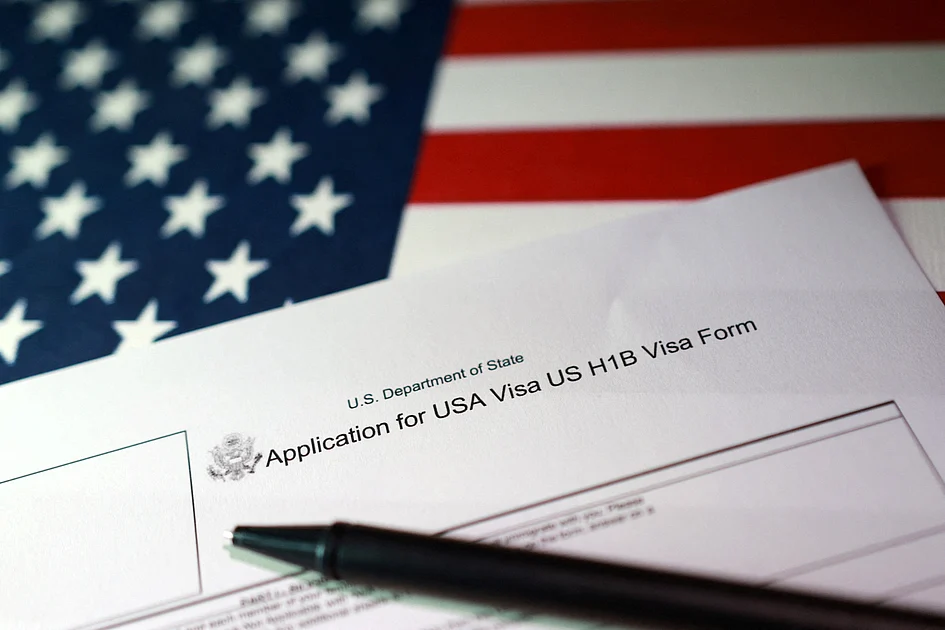
    In a significant escalation of immigration enforcement measures, Homeland Security Secretary Kristi Noem announced plans to recommend a comprehensive travel ban targeting nations allegedly responsible for importing criminal elements into the United States. The proposal emerged following Noem’s Monday meeting with President Donald Trump, after which she declared intentions to implement “a full travel ban on every damn country that’s been flooding our nation with killers, leeches, and entitlement junkies” via social media.

    The administration’s hardened stance comes in direct response to last Wednesday’s shooting incident in Washington DC that claimed the life of 20-year-old National Guard member Sarah Beckstrom and left 24-year-old Andrew Wolfe seriously injured. Federal officials identified the primary suspect as an Afghan national who entered the United States in 2021 through Operation Allies Welcome—a Biden-era program designed to evacuate Afghan civilians who assisted American forces during the two-decade military engagement.

    White House Press Secretary Karoline Leavitt clarified that Noem’s recommendation would substantially “widen” existing travel restrictions that already target 19 nations predominantly located in Africa, the Middle East, and Caribbean regions. The Trump administration has simultaneously implemented an immediate suspension of all asylum processing indefinitely, with US Citizenship and Immigration Services Director Joseph Edlow stating the pause will remain until “we can ensure that every alien is vetted and screened to the maximum degree possible.”

    President Trump has further directed a comprehensive review of green cards issued to migrants from the previously identified 19 countries while threatening to “permanently pause migration” from all developing nations. In his Thanksgiving address, the president attributed “social dysfunction in America” to refugee populations and vowed to remove “anyone who is not a net asset” to the nation.

    The Afghan Community Coalition of the United States issued a statement expressing profound sympathy for the shooting victims while cautioning against collective punishment, emphasizing that the incident represented “the act of one person” rather than reflecting broader immigrant communities. The United Nations has concurrently urged American authorities to maintain compliance with international agreements governing asylum seeker protections.

  • Nigeria grants asylum to Guinea-Bissau presidential candidate after coup

    Nigeria grants asylum to Guinea-Bissau presidential candidate after coup

    In a significant diplomatic move, Nigeria has provided political asylum to Fernando Dias, a presidential contender from Guinea-Bissau, following a military takeover that disrupted the electoral process. The 47-year-old candidate from the Party for Social Renewal sought refuge at the Nigerian embassy in Bissau after reporting direct threats to his safety.

    The political crisis erupted when military forces suspended the electoral proceedings three days after the November 23 presidential vote, blocking the release of election results that both Dias and incumbent President Umaro Sissoco Embaló had claimed to win. The junta justified its intervention as necessary to prevent what it described as a plot to destabilize the politically volatile nation.

    Nigerian Foreign Minister Yusuf Tuggar confirmed the protective measures, stating President Bola Tinubu authorized Dias’s sanctuary at the embassy compound. “This decision demonstrates our unwavering commitment to protecting democratic aspirations and the sovereign will of Guinea-Bissau’s people,” Tuggar communicated to the ECOWAS Commission.

    The military regime has implemented stringent measures including a ban on public demonstrations and installed General Horta N’Tam as transitional leader for a one-year period. Meanwhile, ECOWAS mediators led by Sierra Leone’s Foreign Minister Alhaji Musa Timothy Kabba have engaged in tense negotiations with the junta, described as “productive” yet contentious.

    International scrutiny intensifies as Senegal’s Prime Minister Ousmane Sonko and former Nigerian leader Goodluck Jonathan have suggested the coup might be fabricated, though without presenting substantiating evidence. Local civil society organizations have accused Embaló of orchestrating a “simulated coup” to manipulate electoral outcomes—allegations the president has not addressed.

    Embaló, who departed for Senegal before reportedly continuing to Congo-Brazzaville, has historically faced accusations of exploiting crises to suppress opposition. The current turmoil adds to Guinea-Bissau’s extensive history of political instability, with at least nine coups or attempted takeovers since gaining independence from Portugal in 1974.

    ECOWAS has suspended Guinea-Bissau from all decision-making bodies pending restoration of constitutional order, while deploying security personnel to protect the Nigerian embassy where Dias remains under protection.

  • US envoy Witkoff will meet Putin in Moscow while Zelenskyy tours Europe as peace efforts press ahead

    US envoy Witkoff will meet Putin in Moscow while Zelenskyy tours Europe as peace efforts press ahead

    In a significant diplomatic development, U.S. Special Envoy Steve Witkoff convened with Russian President Vladimir Putin in Moscow on Tuesday, presenting preliminary peace proposals aimed at resolving the protracted conflict in Ukraine. The Kremlin meeting represents Washington’s latest effort to advance negotiations after months of stalled diplomatic initiatives.

    Concurrently, Ukrainian President Volodymyr Zelenskyy traveled to Ireland as part of his ongoing European tour to secure continued support from nations backing Ukraine’s defense against Russian aggression. This diplomatic parallelism underscores the complex multilateral nature of the peace process.

    The Trump administration has intensified its diplomatic outreach following previous frustrations, deploying officials on dual tracks: Secretary of State Marco Rubio engaging with Ukrainian leadership while Witkoff pursues dialogue with Russian officials. Despite these efforts, substantive details remain closely guarded, particularly regarding territorial disputes and security arrangements that constitute the core disagreements between the warring parties.

    European leaders, concerned about Russia’s expansionist ambitions and contemplating long-term funding for Ukraine’s military efforts, are actively seeking involvement in peace discussions after perceiving marginalization by Washington. French President Emmanuel Macron revealed that he and Zelenskyy conducted multilateral consultations with Witkoff and numerous European counterparts, including EU officials and NATO Secretary-General Mark Rutte, characterizing the upcoming days as critical for diplomatic engagement.

    The challenges facing negotiators remain formidable. Fundamental issues including territorial concessions and security guarantees for Ukraine appear unresolved, while Zelenskyy confronts mounting pressures including financial constraints, corruption scandals within his administration, and deteriorating battlefield conditions. The Kremlin’s claim of capturing Pokrovsk in Donetsk region—contested by Ukrainian authorities—further complicates the diplomatic landscape.

  • Bulgaria’s government withdraws controversial budget after major protests

    Bulgaria’s government withdraws controversial budget after major protests

    SOFIA, Bulgaria — In a significant reversal, Bulgaria’s government has officially withdrawn its contentious budget proposal following days of widespread demonstrations that culminated in violent clashes between protesters and police forces. The decision comes after tens of thousands of citizens took to the streets across major cities, expressing vehement opposition to fiscal measures they believe would adversely impact economic stability.

    The proposed budget, which included elevated tax rates, increased social security contributions, and substantial spending hikes, faced fierce criticism from both opposition parties and business associations. Critics argued these measures would deter foreign investment, encourage growth of the shadow economy, and potentially trigger inflation without corresponding improvements in public service efficiency. These concerns are particularly acute as Bulgaria prepares for its anticipated entry into the eurozone at the beginning of next year.

    Initially, the administration pledged to retract the draft for comprehensive revision after earlier protests but subsequently reaffirmed its commitment to the proposal, sparking renewed public outrage. Monday night witnessed one of the largest gatherings in the capital, with organizers estimating approximately 50,000 participants in Sofia alone.

    The demonstrations, predominantly led by younger citizens, began peacefully with participants chanting slogans such as ‘We will not allow ourselves to be lied to; we will not allow ourselves to be robbed’ and demanding either substantial revisions or the government’s resignation. Signs reading ‘Generation Z is Coming’ and ‘Young Bulgaria Without the Mafia’ highlighted the intergenerational discontent with current policies.

    However, tensions escalated dramatically when splinter groups of protesters targeted the headquarters of major ruling parties. These individuals, many clad in black hoodies and masks, engaged in violent acts including throwing projectiles, setting fire to garbage containers, and vandalizing police vehicles. Riot police responded with pepper spray and other crowd control measures, resulting in multiple injuries and at least 10 arrests according to official statements.

    The government maintained that its original budget draft was essential for complying with eurozone membership requirements, particularly the mandate to maintain budget deficits below 3% of GDP. Nevertheless, the scale of public opposition has forced a strategic retreat, signaling the growing influence of civic mobilization in shaping national economic policy.

  • Japan’s vague and evasive stance on Taiwan slammed

    Japan’s vague and evasive stance on Taiwan slammed

    China has issued a forceful condemnation of Japan’s deliberately ambiguous diplomatic stance regarding the Taiwan question, characterizing Tokyo’s position as both evasive and historically revisionist. The criticism emerged through statements from Foreign Ministry spokesman Lin Jian, who articulated Beijing’s profound dissatisfaction with Japan’s refusal to acknowledge foundational historical documents that cement China’s sovereignty over Taiwan.

    Lin specifically challenged recent comments by Japanese Prime Minister Sanae Takaichi, who invoked the 1951 Treaty of San Francisco to suggest Japan had renounced all claims to Taiwan without explicitly affirming Chinese sovereignty. This position was subsequently echoed by Japanese Foreign Minister Toshimitsu Motegi, who maintained that Japan’s stance remains precisely as articulated in the 1972 Sino-Japanese Joint Statement.

    The Chinese spokesperson highlighted Japan’s conspicuous omission of critical historical records including the Cairo Declaration, Potsdam Proclamation, and Japanese Instrument of Surrender—all documents that explicitly mandated Taiwan’s return to Chinese territory. Lin further noted Japan’s avoidance of referencing the four political documents that underpin Sino-Japanese relations, alongside Tokyo’s political commitment to the One-China principle.

    Lin characterized Japan’s selective historical narrative as particularly offensive given its deliberate exclusion of China—the primary victim of Japanese colonial aggression—from the San Francisco Treaty. This approach, according to Lin, demonstrates disregard for the painful legacy of Japanese militarism while challenging the established historical truth of the global anti-fascist struggle.

    The Foreign Ministry spokesman emphasized that Japan’s attempts to obscure its position constitute a direct challenge to United Nations authority and the postwar international order. Lin warned against historical revisionism, stating that turning back the wheel of history remains unacceptable and that peace must not be compromised.

    In parallel developments, China reaffirmed its sovereignty over the Diaoyu Islands, dismissing Japan’s recent exhibition of so-called historical documents at Tokyo’s National Museum of Territory and Sovereignty as selective and unconvincing attempts to justify illegal territorial claims.

  • Russia and the US threatened to resume nuclear testing after several decades. Here is why it matters

    Russia and the US threatened to resume nuclear testing after several decades. Here is why it matters

    VIENNA — The fragile international consensus against nuclear weapons testing faces unprecedented strain as both the United States and Russia have issued reciprocal threats to resume atomic experiments, triggering widespread alarm among nonproliferation experts and global security analysts.

    In late October, U.S. President Donald Trump declared via his Truth Social platform that he had instructed the Department of War to initiate nuclear weapons testing “on an equal basis” with other nations’ programs, asserting this process would “begin immediately.” This pronouncement prompted a swift response from Moscow, where Russian President Vladimir Putin informed his Security Council that Russia would be “under obligation to take reciprocal measures” should the U.S. or any Comprehensive Nuclear-Test-Ban Treaty (CTBT) signatory conduct nuclear tests.

    The current crisis unfolds against the backdrop of the CTBT, adopted by the U.N. General Assembly in 1996 following decades of escalating concerns about atmospheric testing. Although the treaty has achieved near-universal acceptance with 187 signatories and 178 ratifications, it has never formally entered into force due to the requirement that 44 specific nuclear technology-capable states must ratify it. Nine nations remain outside the ratification framework: China, Egypt, Iran, Israel and the U.S. have signed but not ratified; India, North Korea and Pakistan neither signed nor ratified; while Russia recently revoked its ratification in 2023, citing “unacceptable” imbalance with the U.S. position.

    Vienna-based Comprehensive Nuclear-Test-Ban Treaty Organization (CTBTO) maintains an extensive global monitoring network comprising 307 stations utilizing seismic, hydroacoustic, infrasound and radionuclide technologies to detect nuclear explosions. With a 2025 budget exceeding $139 million, the organization has successfully detected all six North Korean tests between 2006-2017.

    Arms control experts warn that resumed testing would particularly benefit nations with less nuclear testing experience. Daryl Kimball of the Arms Control Association cautioned that U.S. testing would “open the door for states with less nuclear testing experience to conduct full-scale tests that could help them perfect smaller, lighter warhead designs,” ultimately decreasing both U.S. and international security. Joseph Rodgers of the Center for Strategic and International Studies noted that countries like China and India “stand to profit from a resumption of nuclear tests” more than the U.S. or Russia, who have conducted the vast majority of the approximately 2,000 tests occurring mostly before 1996.

    The nature of potential testing remains unclear. U.S. Energy Secretary Chris Wright indicated new tests would exclude nuclear explosions, referencing subcritical experiments that produce no self-sustaining chain reaction and thus don’t violate the CTBT. The treaty specifically bans supercritical tests creating nuclear yield—the energy release defining destructive power—under a zero yield standard.

    Detection challenges persist for extremely low-yield hydronuclear tests conducted underground in metal chambers, which Kimball describes as creating a “verification gap.” While the monitoring system was designed to detect 1 kiloton explosions (compared to Hiroshima’s 15 kilotons), CTBTO Executive Secretary Robert Floyd noted it actually performs at approximately 500 tons TNT sensitivity.

    In the current climate of uncertainty, Floyd emphasizes his organization’s role in providing “confidence to states” that they would detect any nuclear explosion “anywhere, anytime,” even as diplomatic tensions escalate between the world’s nuclear superpowers.

  • Chinese and Japanese boats face off near disputed islands as feud worsens

    Chinese and Japanese boats face off near disputed islands as feud worsens

    A maritime confrontation near the disputed Senkaku/Diaoyu Islands has intensified diplomatic friction between China and Japan, with both nations offering conflicting accounts of the incident. The uninhabited islands, administered by Japan but claimed by China under the name Diaoyu Islands, have long represented a geopolitical flashpoint in East Asia.

    According to China’s Coast Guard spokesperson Liu Dejun, Chinese vessels intercepted and issued warnings to a Japanese fishing boat that had ‘illegally entered Chinese territorial waters’ on Tuesday. The CCG stated it implemented ‘necessary law enforcement measures’ to protect what it considers sovereign territory, demanding Japan cease ‘all acts of infringement and provocation.’

    Contradicting this narrative, Japan’s Coast Guard reported that it had actually expelled two Chinese vessels that approached a Japanese fishing boat in the early hours of Tuesday. Japanese authorities stated their patrol ships monitored the situation until the Chinese vessels departed several hours later, ensuring the safety of their fishing vessel.

    This maritime incident occurs against a backdrop of rapidly deteriorating bilateral relations. The diplomatic downturn follows controversial remarks last month by Japanese Prime Minister Sanae Takaichi, a known China critic, who suggested Tokyo might consider military action should China attack Taiwan. Beijing considers Taiwan part of its territory and maintains a policy of potential reunification by force.

    The East China Sea tensions have been escalating for over fifteen years despite a 2008 principle agreement for joint resource exploitation. China has increasingly tested Japanese resolve through frequent coast guard deployments, with last year marking the third consecutive record for Chinese government vessel sightings in the contested waters. The previous patrol occurred on November 16, when Chinese vessels conducted what they described as ‘lawful patrol operations to uphold rights and interests.’

    The growing rift between Asia’s two largest economies has extended beyond diplomatic channels, affecting daily life and economic relations between the two nations while raising concerns about regional stability.