分类: politics

  • Hegseth cites ‘fog of war’ in defending follow-on strike in scrutinized attack on alleged drug boat

    Hegseth cites ‘fog of war’ in defending follow-on strike in scrutinized attack on alleged drug boat

    U.S. Defense Secretary Pete Hegseth has invoked the ‘fog of war’ doctrine to justify a controversial secondary military strike in the Caribbean Sea that resulted in casualties among survivors from an initial engagement. The incident, which targeted a vessel suspected of narcotics trafficking earlier this September, has prompted congressional scrutiny and raised questions about military protocol.

    During Tuesday’s White House cabinet meeting, Secretary Hegseth defended the decision-making process, stating he observed no survivors in the water before authorizing the follow-up attack. ‘The vessel was actively engulfed in flames at the time of the secondary engagement,’ Hegseth testified, emphasizing the chaotic nature of combat operations. The Defense Secretary acknowledged he departed the operational theater following the initial strike, delegating full authority to Navy Vice Admiral Frank ‘Mitch’ Bradley who executed the subsequent action.

    The Washington Post’s initial reporting revealed Hegseth issued verbal orders for the secondary strike that eliminated survivors from the first engagement. White House officials confirmed Monday that Admiral Bradley operated ‘within established legal parameters and his conferred authority’ when initiating the follow-up attack.

    Congressional committees have announced formal reviews into U.S. military protocols regarding drug interdiction operations. Admiral Bradley is scheduled to deliver a classified briefing to military oversight legislators this Thursday. When questioned about the controversial strike, President Donald Trump expressed limited familiarity with the incident, noting he ‘relies on Secretary Hegseth’s assessment’ and had not received comprehensive briefing materials.

  • Israel-Turkey rift dampens Gaza force plans as allies get cold feet

    Israel-Turkey rift dampens Gaza force plans as allies get cold feet

    Diplomatic efforts to establish a United Nations-mandated international stabilization force for Gaza have reached an impasse due to escalating tensions between Israel and Turkey, according to sources familiar with the negotiations. The United States, tasked with coordinating the multinational effort, faces significant challenges in bridging the divide between these key regional powers.

    The UN Security Council previously approved the creation of a peacekeeping contingent with preliminary support from several nations including Turkey, Qatar, Egypt, the UAE, Saudi Arabia, Indonesia, Pakistan and Jordan. However, implementation has stalled as Israel maintains its firm opposition to Turkish military presence in Gaza, despite Ankara’s readiness to deploy approximately 2,000 experienced peacekeeping personnel.

    The diplomatic deadlock has created a domino effect, with multiple nations reconsidering their participation. Saudi Arabia, Azerbaijan, Pakistan and Indonesia have indicated reluctance to contribute troops without Turkish involvement, while the UAE has formally declined participation citing insufficient operational framework. Emirati officials expressed concerns that Qatari and Turkish involvement could potentially empower groups affiliated with the Muslim Brotherhood and Hamas in reconstruction efforts.

    Complicating matters further, Turkey’s recent issuance of an arrest warrant for Israeli Prime Minister Benjamin Netanyahu on charges of crimes against humanity has exacerbated tensions during sensitive negotiations. This development follows Israel’s previous blockage of Turkish search and rescue teams from entering Gaza and ongoing trade restrictions imposed since spring 2024.

    The proposed stabilization force, envisioned to comprise between 15,000-20,000 troops organized into three brigades, now faces an uncertain timeline. While some US officials target deployment by early 2026, others suggest operations might commence as early as January, though participation arrangements remain highly fluid. The UAE has indicated it will instead focus on humanitarian aid and supporting local governance structures in Gaza.

  • Key negotiators in the talks to end the war in Ukraine

    Key negotiators in the talks to end the war in Ukraine

    The Trump administration is accelerating diplomatic efforts to broker a resolution to the Ukraine conflict, deploying an unconventional team of negotiators who have engaged in intensive shuttle diplomacy across global capitals. This diplomatic offensive has brought together a unique combination of government officials and private citizens working through both formal and backchannel communications.

    Leading this unconventional diplomatic corps is Steve Witkoff, a real estate billionaire and longtime Trump confidant who has emerged as a key foreign policy facilitator. Despite lacking Senate confirmation, the 68-year-old businessman has made multiple trips to Moscow while coordinating efforts to resolve both the Ukraine and Gaza conflicts. His personal relationship with the President has provided unusual access to high-stakes negotiations.

    Secretary of State Marco Rubio has spearheaded official diplomatic channels, recently leading the U.S. delegation in Geneva where significant amendments were proposed to the U.S.-Russia mediated peace framework. These modifications have drawn attention for their perceived alignment with Russian interests.

    Jared Kushner, the President’s son-in-law and former White House adviser, has continued his diplomatic involvement following his earlier ceasefire achievement between Israel and Hamas. His recent meetings with Ukrainian representatives in Florida and Russian officials in Moscow demonstrate his ongoing role in the administration’s peace efforts.

    The negotiation team includes unexpected participants such as Army Secretary Dan Driscoll, a 38-year-old Iraq War veteran and friend of Vice President JD Vance. Driscoll personally presented Trump’s peace proposal to Ukrainian President Zelenskyy in Kyiv before engaging Russian officials in the United Arab Emirates.

    Ukraine’s representation has shifted with the appointment of Rustem Umerov to lead their delegation following the resignation of Zelenskyy’s chief of staff. Umerov brings substantial experience from his tenure as defense minister and involvement in previous negotiation rounds.

    The Russian delegation features seasoned diplomats including Yuri Ushakov, a presidential aide and former ambassador to the United States, who has received coaching from Witkoff on presenting proposals to the Trump administration. Kirill Dmitriev, head of Russia’s sovereign wealth fund despite being on the U.S. sanctions list, has emerged as an important backchannel communicator. Veteran Foreign Minister Sergey Lavrov continues to represent Russian interests with his characteristic determination and linguistic fluency.

    This multifaceted diplomatic push represents one of the most significant efforts to end the conflict, characterized by its blend of formal government channels and unconventional personal diplomacy.

  • What is Honduras ex-president accused of and why has Trump pardoned him?

    What is Honduras ex-president accused of and why has Trump pardoned him?

    In a stunning reversal of justice, former Honduran President Juan Orlando Hernández has been released from prison following a presidential pardon from Donald Trump, despite being convicted for orchestrating one of the most extensive drug trafficking operations in hemispheric history.

    The convicted leader, sentenced to 45 years imprisonment by a U.S. federal court in 2024 for masterminding a scheme that funneled over 400 tons of cocaine into the United States, walked free after Trump declared him a victim of “political persecution” and “over-prosecution” by the Biden administration’s Justice Department.

    Hernández’s dramatic fall from power culminated a remarkable political trajectory that saw the conservative National Party leader maintain cordial relationships with consecutive U.S. administrations. Initially courted by Barack Obama during the migrant children crisis and subsequently endorsed by Trump following his controversial 2017 re-election victory, Hernández’s fortunes reversed when federal prosecutors uncovered his intricate partnership with notorious drug cartels.

    Evidence presented during his three-week trial revealed Hernández accepted million-dollar bribes from infamous drug lord Joaquín “El Chapo” Guzmán during his initial presidential campaign, exchanging political protection for secured narcotics routes through Honduras. Prosecutors demonstrated how multiple state institutions, including the Honduran National Police, actively facilitated cocaine shipments while Hernández allegedly used campaign funds derived from drug profits to consolidate power.

    The former president’s legal troubles intensified following the 2019 conviction of his brother, Juan Antonio “Tony” Hernández, who received a life sentence for cocaine smuggling. Shortly after leaving office in 2022, Hernández faced extradition to the United States, where he eventually received what prosecutors termed a “historic” sentence for narcotics trafficking and weapons charges.

    Trump’s pardon announcement coincided with his endorsement of National Party candidate Tito Asfura in Honduras’ ongoing presidential election, a move analysts suggest reflects strategic alignment with right-leaning hemispheric allies. The decision has bewildered legal experts and policy analysts, who note the stark contradiction between Trump’s vehement anti-drug trafficking rhetoric and his liberation of a convicted narcotics kingpin.

    White House Press Secretary Karoline Leavitt defended the pardon as necessary to “correct the wrongs” of the Biden Justice Department, while acknowledging Trump’s simultaneous commitment to combating “narco-terrorists” throughout the Americas. U.S. media reports indicate Hernández personally appealed to Trump in a four-page October letter, characterizing his prosecution as politically motivated and praising the former president’s leadership.

    The unprecedented pardon has ignited intense scrutiny regarding the intersection of diplomatic relations, drug enforcement policy, and the application of presidential clemency powers in cases involving international narcotics trafficking and corruption.

  • Sabrina Carpenter and Franklin the Turtle in tiff with Trump administration over use of work

    Sabrina Carpenter and Franklin the Turtle in tiff with Trump administration over use of work

    The U.S. Defense Department has triggered a significant cultural and diplomatic controversy by appropriating Franklin the Turtle, a cherished Canadian children’s book character, for propagandistic military content. Defense Secretary Pete Hegseth posted a doctored image on social media depicting the anthropomorphic turtle operating heavy weaponry from a military helicopter to attack alleged drug traffickers. The manipulated artwork, styled as a mock book cover titled “Franklin Targets Narco Terrorists,” represents an aggressive psychological operation amid ongoing U.S. strikes against Venezuelan drug trafficking vessels.

    Kids Can Press, the Toronto-based publisher of the Franklin series, issued a forceful condemnation of what it termed “denigrating, violent, and unauthorized use” of their intellectual property. The company emphasized that Franklin represents values of “kindness, empathy, and inclusivity” that are fundamentally incompatible with violent militaristic messaging. The character, known for navigating childhood challenges like learning to ride a bike, has been a cultural icon for generations of Canadian children.

    This incident forms part of a broader pattern of the U.S. administration co-opting popular culture for political messaging. Simultaneously, pop artist Sabrina Carpenter vehemently protested the White House’s use of her music in deportation promotion videos, labeling the practice “evil and disgusting.” These controversies follow previous instances involving Pokémon theme music and British singer Jess Glynne’s work being used without permission in government deportation content.

    The Pentagon responded defensively through spokesperson Sean Parnell, questioning whether Franklin should demonstrate “inclusivity of drug cartels” or express “kindness and empathy of narco-terrorists.” The administration maintains its military actions constitute self-defense against narcotics trafficking networks. The original creators of Franklin have remained silent amid the growing international dispute, while the incident continues to generate diplomatic friction between neighboring nations.

  • US President Trump warns Israel against ‘interfering’ in Syria

    US President Trump warns Israel against ‘interfering’ in Syria

    In a significant diplomatic intervention, U.S. President Donald Trump has publicly cautioned Israel against actions that could destabilize Syria’s political transition. The warning follows a recent Israeli military operation in southern Syria that resulted in thirteen casualties, marking one of the deadliest incidents in the ongoing conflict between the two nations.

    President Trump utilized his Truth Social platform to emphasize the importance of maintaining constructive dialogue between Israel and Syria’s new leadership under President Ahmed al-Sharaa. ‘It is very important that Israel maintain a strong and true dialogue with Syria and that nothing takes place that will interfere with Syria’s evolution into a prosperous State,’ Trump stated in his public message.

    The White House has been actively pursuing a security arrangement between the longtime adversaries since Sharaa’s Islamist coalition assumed power following the overthrow of Bashar al-Assad one year ago. Trump expressed particular satisfaction with Syria’s current trajectory under Sharaa, who recently made a historic visit to Washington, noting that the Syrian leader ‘is working diligently to ensure positive developments’ toward bilateral cooperation.

    The presidential admonition came shortly after a telephone discussion between Trump and Israeli Prime Minister Benjamin Netanyahu, during which the American leader extended an invitation for another White House meeting. According to statements from Netanyahu’s office, the two leaders addressed regional security concerns, including the imperative of disarming Hamas and demilitarizing the Gaza Strip, while exploring opportunities to broaden existing peace agreements.

    This diplomatic exchange occurs against the backdrop of heightened tensions stemming from hundreds of Israeli strikes on Syrian territory. Friday’s operation in the village of Beit Jin, which Syria has condemned as a ‘war crime,’ targeted what Israel identified as members of Jamaa Islamiya—an Islamist organization allied with Hamas and based in Lebanon.

    The Trump administration has taken concrete steps to support Syria’s new government, including the lifting of certain sanctions and facilitating Damascus’s integration into the global coalition against the Islamic State. Administration officials view improved Israeli-Syrian relations as a crucial component of broader Middle East peace efforts, building upon the fragile Gaza ceasefire established in October.

    Netanyahu’s frequent visits to the Trump White House—more than any other foreign leader since Trump’s return to office—highlight the special relationship between the two administrations, even as they navigate complex regional dynamics involving Syria’s political transformation and ongoing security challenges.

  • The ICC removed Karim Khan from his own investigation in Venezuela. Now Israel wants it to do the same over Gaza

    The ICC removed Karim Khan from his own investigation in Venezuela. Now Israel wants it to do the same over Gaza

    A Washington-based advocacy group that previously secured the recusal of International Criminal Court (ICC) Chief Prosecutor Karim Khan from a Venezuela investigation has now accused him of ‘acting in unprecedented haste’ in pursuing arrest warrants against Israeli leadership. The Arcadia Foundation, recognized by the ICC as representing Venezuelan victims, successfully challenged Khan’s impartiality in August based on familial connections to Venezuela’s legal team, creating a precedent that Israel now seeks to leverage in its own case against the prosecutor.

    The ICC’s appeals chamber, comprising the same five judges who ordered Khan’s recusal in the Venezuela matter, is currently reviewing Israel’s November complaint seeking his removal from investigations into Israeli officials. Israel’s submission argues that Khan’s impartiality might ‘reasonably be doubted’ due to allegations that his pursuit of warrants against Prime Minister Benjamin Netanyahu and Defense Minister Yoav Gallant was motivated by a desire to deflect attention from sexual misconduct allegations—claims Khan vehemently denies.

    Robert Carmona-Borjas, Arcadia’s CEO, told Middle East Eye that their challenge was ‘strictly juridical and institutional’ rather than a personal campaign or geopolitically motivated action. He emphasized demands for ‘consistency in the application of its own law and ethical standards’ from the court.

    The Prosecutor’s Office, in its response signed by Deputy Prosecutor Nazhat Shameem Khan, dismissed Israel’s complaint as without standing and argued the Venezuela and Israel cases were ‘incomparable.’ The office maintained that the decision to seek warrants followed ‘a robust review process and analysis of the evidence’ and was independently assessed by ICC judges.

    This legal battle unfolds against a backdrop of intense external pressure on the ICC, including U.S. sanctions against Khan and other court officials. The Trump administration has imposed measures against ICC personnel, accusing the court of ‘illegitimate actions’ targeting Israel and the United States. During the ICC’s annual meeting in The Hague, numerous countries condemned such external pressure without explicitly naming the U.S., while some urged serious consideration of the misconduct allegations against Khan.

    Legal experts familiar with the case have characterized Israel’s complaint as ‘frivolous,’ noting that Khan actually delayed the warrant process rather than accelerated it. An investigation revealed that Khan’s decision to apply for warrants predated the misconduct allegations by six weeks, undermining claims of ulterior motives.

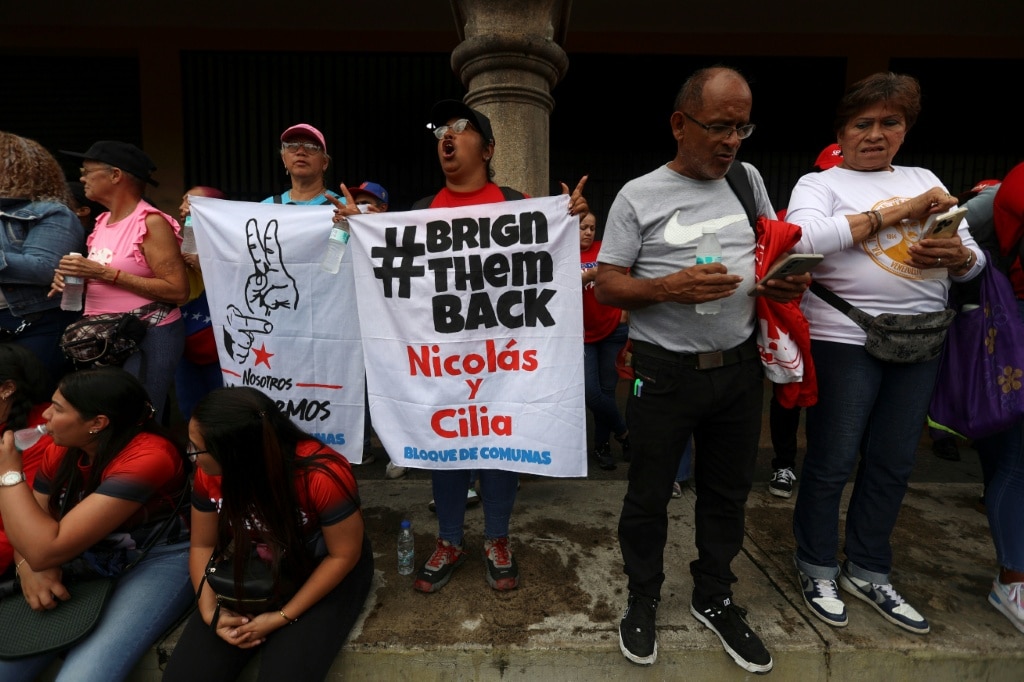
  • Trump weighs options on Venezuela after Maduro reportedly refuses to step down

    Trump weighs options on Venezuela after Maduro reportedly refuses to step down

    The White House is evaluating potential military options against Venezuela following President Nicolás Maduro’s refusal to comply with a U.S. ultimatum demanding his resignation. President Donald Trump convened with senior national security advisors Monday evening to deliberate next steps, including the possibility of ground operations.

    According to multiple media reports, Trump issued a direct deadline during a November 21st phone conversation, requiring Maduro to relinquish power and depart the oil-rich nation with his family by last Friday. The Venezuelan leader reportedly rejected these demands, instead requesting comprehensive global amnesty for himself and associates, alongside maintained control of military forces.

    Trump confirmed the unprecedented diplomatic exchange occurred, offering limited commentary: “I wouldn’t say it went well or badly, it was a phone call.” The Miami Herald reported Trump delivered a “blunt message” emphasizing immediate resignation as Maduro’s sole pathway to safety for himself and his inner circle.

    This diplomatic confrontation unfolds alongside significant U.S. military mobilization in the Caribbean region. Approximately 15,000 troops and a dozen warships have deployed to waters bordering Venezuela—the largest such buildup in over three decades. Since September, U.S. forces have conducted at least 21 documented strikes against vessels suspected of narcotics trafficking, resulting in numerous casualties.

    Defense Secretary Pete Hegseth has defended these operations as “lawful,” despite allegations regarding excessive force, including a September incident where military personnel reportedly received orders to “kill everyone” aboard a targeted vessel.

    While Trump hinted during Thanksgiving addresses that land-based anti-trafficking operations could commence “very soon,” analysts remain skeptical about actual invasion prospects. Michael O’Hanlon of the Brookings Institution noted presidential temptation toward regime change in nearby nations but expressed doubt regarding genuine invasion intentions. Saint Anselm College professor Christopher Galdieri highlighted the administration’s failure to build public consensus for intervention, contrasting it with the extensive campaigning preceding the 2003 Iraq invasion. Galdieri further questioned the credibility of using narcotics enforcement as primary justification, noting the contradiction with Trump’s previous non-interventionist foreign policy rhetoric.

  • Why is Trump threatening Venezuela’s Maduro?

    Why is Trump threatening Venezuela’s Maduro?

    The Trump administration has significantly intensified its campaign against Venezuelan President Nicolás Maduro through military, diplomatic, and economic measures. In recent developments, the United States has doubled the monetary reward for information leading to Maduro’s capture while deploying substantial naval assets to the Caribbean region.

    This strategic military mobilization represents the largest U.S. force presence in the area since the 1989 invasion of Panama. The deployment includes 15,000 troops, aircraft carriers, guided-missile destroyers, and amphibious assault ships. Officially designated as a counter-narcotics operation, the mission has already conducted more than 20 strikes on vessels suspected of drug trafficking in international waters, resulting in over 80 casualties.

    The administration has characterized these actions as part of a ‘non-international armed conflict’ with drug traffickers, labeling targeted individuals as ‘narco-terrorists.’ However, international legal experts have questioned the legality of these strikes, with a former International Criminal Court prosecutor describing the campaign as ‘a planned, systematic attack against civilians during peacetime.’

    President Trump has personally engaged with the situation, confirming a November 21st phone conversation with Maduro. While Trump has not disclosed specific details, reports indicate he delivered an ultimatum for Maduro to leave Venezuela within one week. Following the expiration of this deadline, Trump declared the airspace around Venezuela closed to all traffic.

    The administration justifies its aggressive stance by citing Venezuela’s role in drug trafficking and migration patterns. Trump has accused Maduro of ’emptying his prisons and insane asylums’ to force migrants toward the U.S., though these claims remain unsubstantiated. Additionally, the U.S. has designated two Venezuelan criminal groups—Tren de Aragua and Cartel de los Soles—as Foreign Terrorist Organizations, with Trump alleging Maduro personally leads the latter.

    Maduro has vehemently denied these accusations, countering that the U.S. is using the ‘war on drugs’ as a pretext to orchestrate regime change and gain access to Venezuela’s substantial oil reserves. Meanwhile, regional analysts note that Venezuela primarily serves as a transit country for drugs produced elsewhere, with most cocaine reaching the U.S. via Pacific routes rather than Caribbean channels.

    The White House has not ruled out ground operations in Venezuela, with Trump’s press secretary acknowledging that ‘there’s options at the president’s disposal that are on the table.’ Military analysts observe that the current deployment far exceeds what would be necessary for purely counter-narcotics operations, suggesting broader strategic objectives may be underway.

  • NATO chief dismisses concerns about US commitment to the alliance ahead of Ukraine meeting

    NATO chief dismisses concerns about US commitment to the alliance ahead of Ukraine meeting

    BRUSSELS — NATO Secretary-General Mark Rutte addressed mounting concerns regarding U.S. dedication to the military alliance during a press briefing Tuesday, preceding a crucial meeting of allied foreign ministers centered on Russia’s ongoing aggression against Ukraine.

    The absence of U.S. Secretary of State Marco Rubio from Wednesday’s high-stakes negotiations has raised eyebrows among European partners, particularly following the Trump administration’s controversial 28-point peace proposal that alarmed NATO members last month. The draft plan, which suggested halting NATO expansion and denying Ukrainian membership—direct concessions to Russian demands—also proposed U.S.-mediated security talks between Russia and NATO.

    Rutte defended Rubio’s non-attendance, stating: ‘He maintains an extraordinarily demanding schedule addressing not only the Ukraine situation but numerous other pressing matters. I fully understand his inability to participate tomorrow and would caution against reading deeper implications into his absence.’

    A senior State Department official, speaking anonymously, emphasized that Rubio has participated in dozens of NATO meetings and cannot reasonably attend every gathering. Deputy Secretary of State Christopher Landau will represent U.S. interests instead, urging allies to fulfill their commitment to allocate 5% of GDP to defense spending.

    Regarding Trump’s contentious peace framework, Rutte indicated significant revisions have addressed European concerns. ‘All peace processes require starting points and concrete proposals,’ he noted, adding that NATO-related aspects would be handled separately through alliance channels.

    The former Dutch prime minister reaffirmed Ukraine’s ‘irreversible path’ to NATO membership despite the proposal’s exclusionary language, acknowledging however that political consensus remains unattainable currently. The Trump administration has explicitly opposed Ukrainian membership, with Hungary and Slovakia similarly positioned.

    Rutte referenced Trump’s reaffirmation of Article 5 commitments during The Hague summit, though recent presidential remarks have seemingly distanced the U.S. from its traditional leadership role. Concerns intensify regarding potential troop reductions in Europe, with Romania announcing a planned withdrawal of up to 3,000 U.S. personnel as Washington shifts focus to Asian security threats. Formal troop movement announcements are anticipated in early 2026.