分类: politics

  • UAE urges Yemenis to exercise restraint, calls for de-escalation

    UAE urges Yemenis to exercise restraint, calls for de-escalation

    The United Arab Emirates has formally urged all Yemeni factions to demonstrate maximum restraint and pursue de-escalation measures amid growing regional instability. In an official statement released through WAM news agency on January 3, 2026, Emirati authorities expressed profound concern regarding recent destabilizing developments within Yemen’s borders.

    The Gulf nation emphasized its regret over the deteriorating security situation and called for immediate dialogue between conflicting parties. The UAE government stressed that rational, responsible approaches must prevail over confrontation, with national interests and civilian welfare taking precedence over political differences.

    Citing the critical need for lasting stability, the statement outlined that constructive diplomatic engagement represents the most viable pathway to address current challenges. The Emirates specifically highlighted the importance of prioritizing nation-building, economic prosperity, and regional security coordination.

    This diplomatic intervention occurs against a backdrop of heightened regional tensions, with the UAE advocating for peaceful resolution mechanisms that align with Yemeni citizens’ aspirations for security and development. The statement concluded by reaffirming the Emirates’ commitment to supporting dialogue-driven solutions that benefit both Yemen and the broader Middle East region.

  • I woke to a huge bang in Caracas – nothing has been normal since

    I woke to a huge bang in Caracas – nothing has been normal since

    CARACAS – The Venezuelan capital awoke to a state of profound uncertainty Saturday following a dramatic overnight military intervention by the United States. President Donald Trump announced a large-scale offensive that resulted in the capture of Venezuelan leader Nicolás Maduro and his wife, an operation witnessed by residents near a key military airbase.

    Local resident Vanessa Silva described being jolted awake around 2 a.m. by a massive explosion that shook her home in southeastern Caracas. From her window, she observed flames erupting across the runway at the adjacent military installation, though no personnel were visible in the immediate aftermath. The night sky was subsequently illuminated by repeated orange flashes and the resonant roar of aircraft circling the valley.

    The morning brought an eerie calm to the streets of Baruta Municipality, where Silva resides. While queues formed outside petrol stations and supermarkets—a familiar sight in economically strained Venezuela—public transportation remained conspicuously absent. A pharmacy served customers through closed doors, potentially rationing supplies, while many residents opted to remain indoors, urgently contacting relatives abroad amid the crisis.

    Information blackouts compounded the tension, with residents in parts of the city reporting electricity failures since the nighttime explosions, leaving them isolated from developments. For those with power, state television featured government loyalists decrying Maduro’s capture as an illegal kidnapping and demanding his immediate release.

    The government has invoked a “state of external commotion,” declaring a national emergency that potentially suspends constitutional guarantees and freedom of movement—reminiscent of measures taken during the Caracazo riots of the 1980s. Venezuelan law imposes severe penalties, including 30-year prison sentences, for those supporting foreign military aggression.

    The strike represents an unprecedented escalation in the long-standing tensions between Washington and Caracas. Despite recent incidents in the Caribbean and weeks of speculation about potential U.S. action, Maduro had maintained a visible public presence, including Christmas visits to slums and public demonstrations, creating an illusion of normalcy that was shattered by Friday night’s events.

  • Nicolas Maduro: From bus driver to iron-fisted leader

    Nicolas Maduro: From bus driver to iron-fisted leader

    Nicolas Maduro’s political trajectory represents one of Latin America’s most dramatic rises to power, beginning as a bus driver before ascending to Venezuela’s presidency where he established an authoritarian regime. His leadership, marked by economic collapse and human rights violations, culminated in a stunning capture by U.S. special forces in Caracas.

    Maduro cultivated a paradoxical public persona, presenting himself simultaneously as a man of the people through televised dance performances and baseball enthusiasm while ruling with increasingly authoritarian measures. This carefully constructed image included regular appearances as a cartoon superhero named ‘Super-Bigote’ (Super-Mustache), creating an unusual contrast to his repressive governance.

    The economic consequences of his administration proved catastrophic, with Venezuela experiencing four consecutive years of hyperinflation and an 80% GDP contraction over a decade. This economic freefall triggered a massive exodus of approximately seven million Venezuelans fleeing economic hardship and political repression.

    Maduro maintained power through strategic alliances with China, Cuba, and Russia while relying heavily on military and paramilitary support. His government faced international condemnation for systematic human rights abuses including arbitrary detentions, torture, censorship, and violent crackdowns on dissent. More than 2,400 arrests occurred during protests following his disputed 2024 election victory, resulting in 28 fatalities and 200 injuries.

    The political opposition faced consistent suppression throughout Maduro’s tenure. Despite international recognition of Juan Guaido as interim president in 2018 and later endorsement of opposition candidate Edmundo Gonzalez Urrutia in 2024, Maduro retained control through questionable electoral processes widely denounced as fraudulent.

    His wife, Cilia Flores, played a crucial role as his political partner and behind-the-scenes power broker. Referred to as ‘First Combatant’ and ‘Cilita,’ Flores accompanied Maduro during his capture and faces federal charges alongside him in New York.

    Maduro’s ideological foundation blended Marxism with Christianity, creating a unique political identity that included anti-American conspiracy theories inherited from his predecessor Hugo Chavez. Despite occasionally engaging in diplomatic negotiations that temporarily eased international sanctions, Maduro consistently reneged on democratic commitments, leading to renewed economic pressure.

    His capture by U.S. forces marks a potentially transformative moment for Venezuelan politics, ending an era characterized by economic devastation, political repression, and the mass emigration of citizens seeking refuge from his authoritarian rule.

  • With capture of Maduro, Trump claims successful operation as he treads into uncharted territory

    With capture of Maduro, Trump claims successful operation as he treads into uncharted territory

    WASHINGTON — The successful military operation resulting in the capture of Venezuelan leader Nicolás Maduro has been hailed by President Donald Trump and his administration as a significant foreign policy achievement. The action demonstrates Trump’s continued willingness to deploy U.S. military forces for high-risk missions with potentially substantial geopolitical returns.

    The operation removed from power a South American leader repeatedly characterized by the Trump administration as an ‘illegitimate dictator’ and ‘narco-terrorist’ responsible for fueling drug trafficking networks affecting both the United States and Europe. President Trump described the mission as ‘a brilliant operation’ in remarks to The New York Times, later confirming on Fox & Friends that while some U.S. personnel sustained injuries, there were no fatalities.

    However, the victory presents immediate challenges for the White House, including navigating the complex power vacuum in a nation already ravaged by hyperinflation, severe shortages of food and medicine, and massive brain drain despite its considerable oil reserves. The operation also raises strategic questions about how U.S. adversaries including China’s Xi Jinping and Russia’s Vladimir Putin might interpret this demonstration of American military intervention within its sphere of influence.

    This action represents another consequential moment in Trump’s second-term foreign policy, following June’s strikes on Iranian nuclear facilities. The Venezuela operation fulfills commitments outlined in last month’s National Security Strategy to assert U.S. dominance in the Western Hemisphere, but has generated fresh anxiety among international partners adjusting to Trump’s unilateral approach to foreign interventions.

    Retired Navy Rear Adm. Mark Montgomery of the Foundation for Defense of Democracies warned that the post-operation phase in Venezuela presents more complex challenges than previous strikes: ‘Unlike the Iran strikes where Trump did the action and then said ‘fight’s over,’ he will not have that luxury here in Venezuela.’

    International reaction has been mixed. While European Commission President António Costa expressed ‘great concern,’ EU foreign policy chief Kaja Kallas emphasized that ‘principles of international law and the UN Charter must be respected.’ France’s Foreign Minister Jean-Noël Barrot directly criticized the operation as infringing ‘the principle of non-use of force that underpins international law.’

    Russia condemned the action as ‘armed aggression,’ while China denounced it as a violation of international law and Venezuelan sovereignty. Domestic criticism emerged immediately, with Senator Ruben Gallego calling the operation ‘illegal’ and declaring ‘we went from world cop to world bully.’

    The operation culminated months of pressure within the administration led by Secretary of State Marco Rubio and other Maduro opponents. In South Florida—home to significant Venezuelan opposition communities—the operation was celebrated as a democratic breakthrough, with Representative Carlos Gimenez comparing Maduro’s ouster to the fall of the Berlin Wall.

    With Maduro’s capture, the administration now faces critical decisions regarding Venezuela’s political future, including whether to support exiled opposition figure Edmundo González or engage with potential transitional arrangements. President Trump pledged his administration would be ‘very involved’ in ensuring Venezuela’s future leadership, stating ‘We can’t take a chance of letting somebody else run it—just take over where Maduro left off.’

  • ‘Like a television show’: Trump revels in Maduro capture

    ‘Like a television show’: Trump revels in Maduro capture

    In a stunning development that has sent shockwaves through international relations, former U.S. President Donald Trump has publicly celebrated the capture of Venezuelan leader Nicolás Maduro by American forces. Speaking from his Mar-a-Lago residence in Florida, Trump described watching the operation unfold in real-time, comparing the dramatic events to a high-stakes television spectacle.

    The Republican leader revealed intricate details of the mission, explaining how U.S. forces successfully extracted Maduro from what he characterized as a heavily fortified compound. ‘I’ve never witnessed anything comparable. The precision and intensity were extraordinary—literally reminiscent of a cinematic production,’ Trump remarked during a Fox News telephone interview. He emphasized that despite the operation’s violent nature, no American troops lost their lives, though several sustained injuries.

    According to Trump’s account, the Venezuelan president and his wife, Cilia Flores, have been transported to a U.S. naval vessel and will subsequently face trial in New York on serious charges including narco-terrorism conspiracy and cocaine importation allegations. Trump disclosed that he had personally communicated with Maduro approximately one week prior to the operation, explicitly demanding his surrender.

    The operation represents the culmination of a prolonged pressure campaign against the Venezuelan government, which included airstrikes preceding the ground assault. Trump indicated that weather conditions had delayed the mission for four days before ultimately proceeding on Saturday. He described Maduro’s compound as a ‘fortress’ equipped with reinforced steel security systems, though U.S. forces reportedly overwhelmed these defenses without requiring specialized equipment.

    Administration officials joined in the triumphant rhetoric, with Vice President JD Vance declaring on social media that ‘justice cannot be evaded through palace walls in Caracas.’ U.S. Attorney General Pam Bondi confirmed that both Maduro and Flores face multiple indictments in the Southern District of New York, with the charges against Flores previously undisclosed.

    This aggressive action against a foreign leader presents significant legal and diplomatic implications, particularly given Trump’s simultaneous portrayal of himself as a ‘peace president’ deserving of Nobel recognition. The administration has previously accused Maduro of leading the ‘Cartel of the Suns’ drug trafficking organization and offered a $50 million reward for information leading to his capture.

    The operation also serves as a warning to other nations, with Trump specifically mentioning Mexico regarding drug trafficking enforcement. Secretary of State Marco Rubio reinforced the administration’s position that Maduro lacks legitimate presidential authority following internationally criticized elections.

  • Trump’s move to topple Maduro is fraught with risk – what happens next is unclear

    Trump’s move to topple Maduro is fraught with risk – what happens next is unclear

    Venezuela experienced a seismic shift in its political landscape as US military forces executed a dramatic intervention in Caracas, culminating in the capture and extradition of President Nicolás Maduro. The operation, authorized by President Donald Trump, represents the most significant direct military action in Latin America since the 1989 invasion of Panama.

    In the pre-dawn hours, residents of Venezuela’s capital were jolted awake by thunderous explosions as US strikes targeted key military installations, including Fuerte Tiuna, one of the nation’s largest military bases. The coordinated attacks disabled critical defense infrastructure before special operations units moved to apprehend Maduro, who now faces serious weapons and drug trafficking charges in US jurisdiction.

    This intervention follows months of escalating US military presence in the region, comprising warplanes, thousands of troops, helicopters, and the world’s largest warship. The Trump administration has consistently characterized Maduro’s government as a criminal trafficking organization, designating the ‘Cartel de los Soles’ – a network of Venezuelan elites allegedly orchestrating illegal activities – as a foreign terrorist group.

    The operation validates long-standing assertions by Caracas that Washington ultimately sought regime change, particularly after the US refused to recognize Maduro’s victory in the widely criticized 2024 elections. Venezuelan officials have additionally accused the United States of attempting to appropriate the nation’s vast oil reserves, the largest globally, citing recent seizures of Venezuelan oil tankers.

    While hawkish elements within the US administration celebrate Maduro’s removal as a major victory, the intervention raises complex questions about Venezuela’s political future. The country remains deeply divided, with Maduro’s government maintaining control over the judiciary, Supreme Court, military, and powerful paramilitary groups known as ‘colectivos.’

    Potential succession scenarios involve opposition figures Maria Corina Machado, a Nobel Peace Prize winner, or Edmundo Gonzalez, the opposition candidate from the 2024 elections. However, analysts warn that transition may trigger violent fragmentation and prolonged power struggles, reminiscent of historical US-backed coups in Latin America during the 20th century.

    The operation also creates diplomatic tensions with regional powers including Brazil and Colombia, which have expressed opposition to military intervention, while testing the loyalty of Trump’s domestic base that previously advocated ‘America First’ non-interventionism.

  • What we know about a US strike that captured Venezuela’s Maduro

    What we know about a US strike that captured Venezuela’s Maduro

    In a dramatic pre-dawn operation on Saturday, United States forces executed a targeted military strike in Venezuela resulting in the capture of President Nicolás Maduro and First Lady Cilia Flores. The detained leaders were subsequently transported out of the country to face formal narcoterrorism charges in United States federal courts, according to official American statements.

    The rapid military intervention has plunged Venezuela into a state of political uncertainty, with preliminary reports indicating casualties though specific numbers remain unconfirmed. Explosions reverberated through Caracas as low-flying aircraft targeted military installations during the approximately 30-minute operation, leaving several areas without power and visible smoke rising from strategic locations.

    This escalation follows months of intensified pressure from the Trump administration, which had previously deployed additional naval assets to South American waters and conducted strikes against alleged drug-smuggling operations. The operation represents the most direct confrontation in the ongoing tensions between Washington and Caracas.

    U.S. Attorney General Pam Bondi confirmed via social media that both Maduro and Flores face multiple indictments in the Southern District of New York, including charges of narco-terrorism conspiracy, cocaine importation conspiracy, and weapons violations. While Maduro’s indictment dates to March 2020, Flores’s charges were previously undisclosed.

    The legal justification for the operation remains subject to international scrutiny, with the Trump administration maintaining that Maduro lacks legitimate leadership status and has transformed Venezuela into a criminal enterprise. Senator Mike Lee suggested the action might fall within presidential authority to protect U.S. personnel from imminent threat.

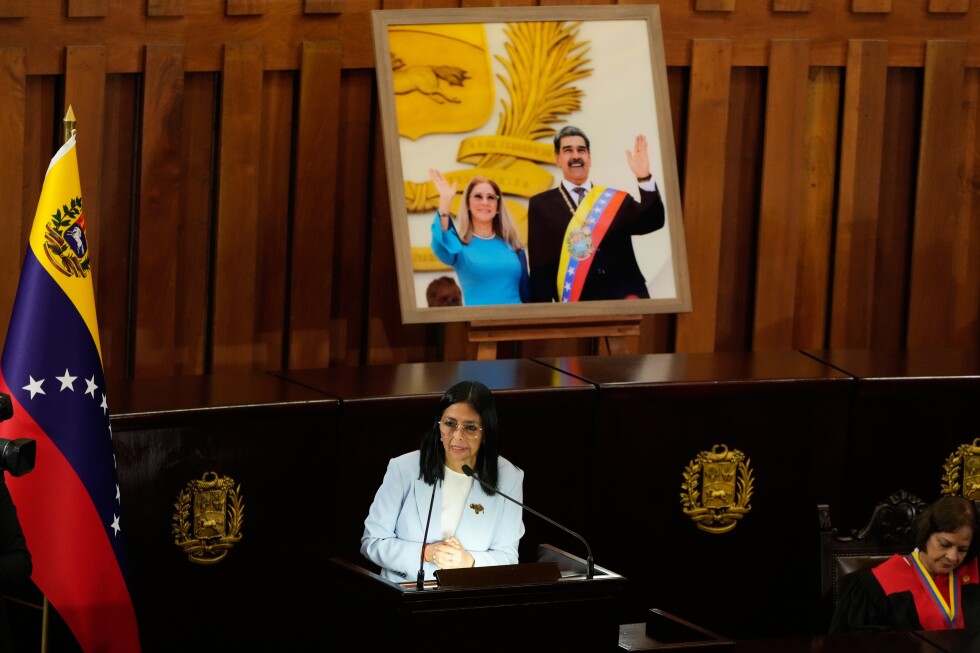
    Venezuela’s government condemned the operation as an ‘imperialist attack,’ urging citizens to mobilize in response. The constitutional succession process remains unclear, with Vice President Delcy Rodríguez theoretically positioned to assume power though no confirmation has emerged.

    International reactions reflect deep divisions, with Russia condemning the action as ‘unacceptable infringement on sovereignty’ and Cuba urging global response to the ‘criminal attack.’ European allies expressed cautious concern, emphasizing respect for international law while acknowledging Maduro’s contested legitimacy. The European Union called for restraint and adherence to UN Charter principles, while British and Spanish leaders emphasized their non-involvement and urged de-escalation.

  • From bus driver to president: Venezuela’s Maduro never escaped his predecessor’s shadow

    From bus driver to president: Venezuela’s Maduro never escaped his predecessor’s shadow

    In a seismic geopolitical development, Venezuelan President Nicolás Maduro was apprehended by U.S. military forces during a targeted operation in Caracas on Saturday. The capture marks a stunning conclusion to months of escalating pressure from the United States against the socialist leader’s regime.

    U.S. President Donald Trump confirmed the operation through an early morning social media announcement, while Venezuelan Vice President Delcy Rodríguez subsequently disclosed that Maduro’s current whereabouts, along with those of his wife Cilia Flores, remain unverified. U.S. Attorney General Pam Bondi indicated that both Maduro and Flores will face charges stemming from a New York indictment.

    Maduro’s extraordinary journey from Caracas bus driver to presidential palace spanned four decades, beginning with ideological training in Cuba in 1986—his only formal education after high school. His political ascent accelerated through his association with the late Hugo Chávez, who personally anointed Maduro as his successor during his final public address in 2013.

    Maduro’s presidency became synonymous with catastrophic economic collapse and democratic backsliding. Under his administration, Venezuela experienced a 71% economic contraction between 2012-2020, hyperinflation exceeding 130,000%, and the mass exodus of over 7.7 million citizens. His rule was characterized by systematic repression, including the imprisonment and torture of political opponents.

    The 2018 presidential election, widely criticized as illegitimate, saw Maduro declared winner amid widespread international condemnation. Subsequent negotiations facilitated by Norwegian diplomats failed to resolve fundamental political divisions, culminating in the 2024 election where opposition candidate Edmundo González allegedly secured a decisive victory according to independent tallies.

    Trump’s return to the White House in January 2025 dramatically altered the strategic calculus, leading to increased military presence in the Caribbean and renewed focus on addressing narco-terrorism concerns. These developments ultimately precipitated the operation that ended Maduro’s controversial twelve-year presidency.

  • European security advisors discuss peace proposals in Kyiv ahead of leaders’ summit

    European security advisors discuss peace proposals in Kyiv ahead of leaders’ summit

    KYIV, Ukraine — In a significant diplomatic development, high-level European national security advisors convened in the Ukrainian capital on Saturday to deliberate on emerging peace initiatives. This gathering represents a crucial phase in the escalating U.S.-orchestrated diplomatic campaign aimed at resolving the protracted four-year conflict in Ukraine.

    The high-stakes discussions preceded an anticipated summit between Ukrainian President Volodymyr Zelenskyy and European leadership scheduled for the coming week. Ukraine’s chief negotiator, Rustem Umerov, characterized the agenda as encompassing “security and economic issues, work on framework documents, coordination of further steps with partners” in a social media statement. The meeting included representation from Canada, NATO, and multiple European nations and institutions.

    According to Ukrainian negotiator Oleksandr Bevz, the security guarantee proposals under discussion involve a sophisticated multilateral framework. This structure would position Ukrainian armed forces as the primary defense line, supplemented by European-deployed troops within Ukraine, with American forces providing strategic “backstop” support.

    President Zelenskyy previously announced comprehensive meetings with officials from approximately thirty nations—collectively termed the Coalition of the Willing—that endorse Kyiv’s objective to conclude hostilities with Russia under conditions favorable to Ukrainian sovereignty.

    The security advisors’ meeting on Saturday will be followed by a leaders’ summit in Paris on Tuesday. These diplomatic efforts coincide with Zelenskyy’s Friday appointment of General Kyrylo Budanov, head of Ukraine’s military intelligence, as his new chief of staff. The president described this strategic personnel change as enhancing focus on security priorities, defense development, and diplomatic channels.

    Meanwhile, regional officials reported escalating violence, with the Kharkiv regional governor confirming the death toll from Friday’s Russian missile attack had risen to two, including a three-year-old child. Separately, an overnight drone assault on the Mykolaiv region targeted critical infrastructure, causing electricity disruptions that engineers worked through the night to restore, though no casualties were reported from this incident.

  • US bombs Venezuela and captures Maduro, according to Trump

    US bombs Venezuela and captures Maduro, according to Trump

    In a stunning escalation of geopolitical tensions, the United States has conducted a large-scale military operation against Venezuela, resulting in the capture of President Nicolás Maduro and his wife. The pre-dawn offensive targeted key military installations in Caracas, including Fort Tiuna—the nation’s largest military complex—and Carlota airbase, with additional strikes reported in the port city of La Guaira.

    Former President Donald Trump announced the operation’s success via Truth Social, declaring that Maduro had been ‘flown out of the country’ to face American justice. U.S. officials, including Attorney General Pamela Bondi, confirmed that the Venezuelan leader would stand trial on drug trafficking and terrorism charges in United States courts.

    The Venezuelan government condemned the action as ‘extremely serious military aggression,’ with Vice President Delcy Rodriguez demanding proof of life for Maduro and calling for an emergency UN Security Council session. Russia, a key Venezuelan ally, joined in condemning the operation and requested immediate clarification regarding Maduro’s status.

    International reactions varied significantly, with Iran and Cuba joining Venezuela in condemnation, while Spain offered mediation services. Colombia’s leftist president announced troop deployments to the Venezuelan border following the attacks.

    The operation represents the culmination of months of escalating tensions between the two nations, during which Trump deployed naval assets to the Caribbean and imposed severe economic sanctions. The U.S. administration has consistently accused Maduro of leading a narcoterrorist state and orchestrating fraudulent elections.

    Residents of Caracas reported hearing explosions and aircraft for nearly an hour, with many civilians taking shelter or preparing emergency supplies. No official casualty figures have been released following the strikes.