分类: politics

  • Trump withdraws Canada’s invite to join Board of Peace

    Trump withdraws Canada’s invite to join Board of Peace

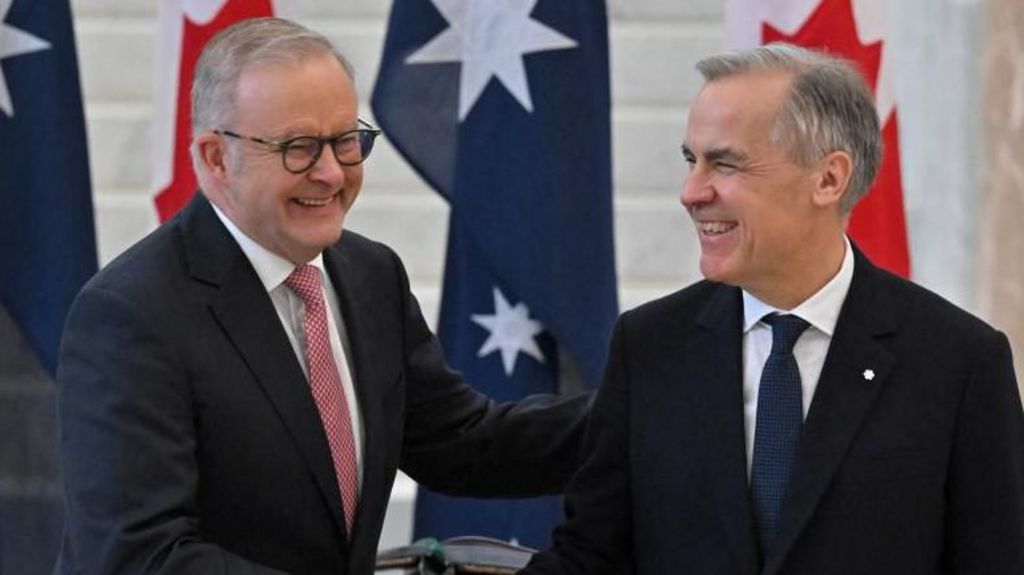
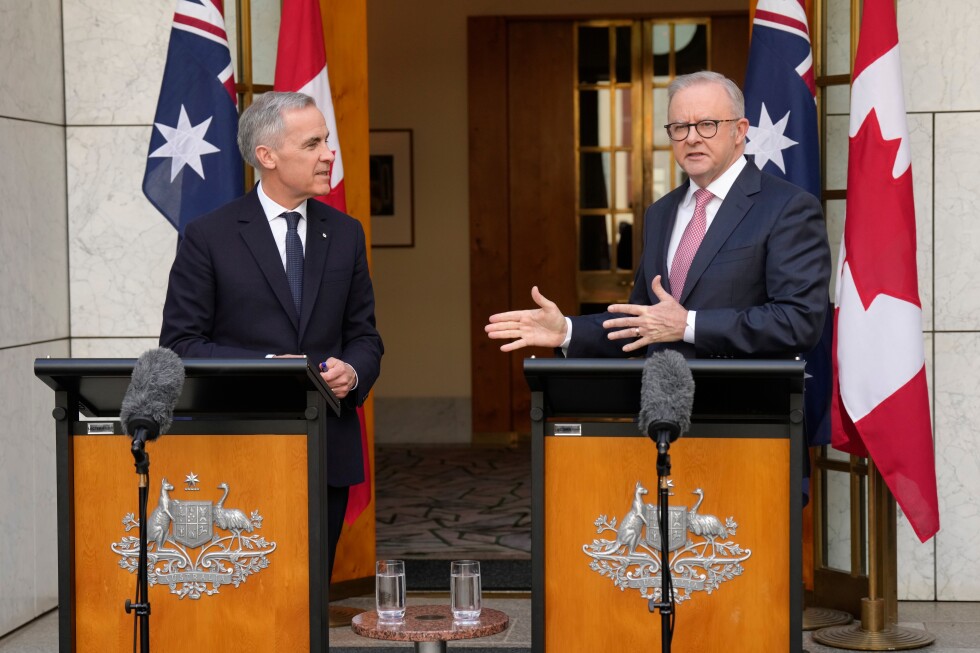
    In a significant diplomatic escalation, former U.S. President Donald Trump has formally withdrawn Canada’s invitation to join his newly established Board of Peace. The decision was announced via Trump’s Truth Social platform in a direct address to Canadian Prime Minister Mark Carney, marking the latest deterioration in relations between the North American neighbors.

    The conflict stems from Prime Minister Carney’s recent address at the World Economic Forum in Davos, where he warned of a potential ‘rupture’ in the U.S.-led global order without explicitly naming Trump. The Canadian leader’s comments, which received a rare standing ovation, apparently provoked Trump’s ire, leading to the invitation’s revocation.

    Financial considerations further complicated the situation. Ottawa had previously indicated it would refuse to pay the substantial $1 billion membership fee that Trump has mandated for permanent members of the board. This financial commitment was intended to fund the operations of the new international organization, which Trump envisions as an alternative conflict-resolution body to the United Nations.

    The Board of Peace, conceived by Trump, grants him extensive decision-making authority as lifetime chairman. While initially perceived as focused on resolving the Israel-Hamas conflict in Gaza, the proposed charter notably omits specific mention of Palestinian territories and appears designed to assume functions traditionally handled by the UN.

    Despite Canada’s exclusion, approximately 35 nations have already committed to joining from the 60 invited countries. Participants include Argentina, Hungary, Egypt, Turkey, Qatar, Saudi Arabia, Pakistan, and several Central Asian nations. Notably absent are all other permanent UN Security Council members—China, France, Russia, and the United Kingdom—who have thus far declined participation.

    The diplomatic friction intensified through exchanged remarks between the two leaders. Following Carney’s Davos address, Trump retorted that Canada ‘lives because of the United States’ and should demonstrate gratitude for numerous ‘freebies.’ Carney responded defiantly during a speech in Quebec, asserting that ‘Canada thrives because we are Canadians,’ underscoring the deepening diplomatic rift.

  • Palestinian NGO files criminal complaint against Israeli minister visiting Davos

    Palestinian NGO files criminal complaint against Israeli minister visiting Davos

    In a significant legal maneuver at the World Economic Forum in Davos, the Palestinian legal advocacy organization Al-Haq has initiated criminal proceedings against Israeli Economy Minister Nir Barkat. The complaint, formally submitted to Swiss authorities on Thursday, demands an investigation into Barkat’s alleged involvement in international crimes related to Israeli settlement activities and actions in Gaza.

    Al-Haq’s allegations assert that Minister Barkat bears individual responsibility for unlawful colonization of Occupied Palestinian Territory, citing his tenure as Jerusalem mayor where he allegedly oversaw illegal settlement expansion, permit enforcement, and demolitions constituting apartheid practices. The organization contends these actions represent systematic international crimes requiring judicial scrutiny.

    Switzerland’s legal framework enables prosecution of international crimes when alleged perpetrators are physically present within its jurisdiction, prompting Al-Haq to declare that “Davos cannot be a safe haven for war criminals.” The complaint emerges amid heightened tensions following Israel’s military operations in Gaza, which have resulted in substantial Palestinian casualties according to health authorities.

    Minister Barkat responded defiantly on social media platform X, stating: “No terrorist organization will deter me. I will continue to develop the Israeli economy and represent the country without fear anywhere in the world.” His remarks came alongside controversial statements in Foreign Policy Magazine where he justified Gaza’s extensive demolition as necessary to eliminate tunnel networks allegedly designed to attack Israel.

    The legal action occurs within a broader context of Israel’s longstanding campaign against Al-Haq, which was designated a terrorist organization by Israel in 2021 and subsequently sanctioned by the Trump administration alongside other Palestinian rights groups. These sanctions froze US assets and prohibited dollar transactions, measures condemned by the organizations as attempts to suppress documentation of alleged Israeli human rights violations.

    Al-Haq, established in 1979 as one of Palestine’s oldest human rights monitors, has consistently faced Israeli opposition including office raids and intelligence campaigns alleging ties to the Popular Front for the Liberation of Palestine—claims for which Israel has never publicly produced evidence according to the organization.

  • Iran warns ‘finger on trigger’ as Trump says Tehran wants talks

    Iran warns ‘finger on trigger’ as Trump says Tehran wants talks

    A dangerous escalation in rhetoric between the United States and Iran has intensified as military leaders from both nations issued stark warnings, while President Donald Trump suggested Tehran might still be open to diplomatic engagement. The exchange occurs against the backdrop of a severe crackdown on domestic protests within Iran, which activists claim has resulted in thousands of fatalities.

    General Mohammad Pakpour, Commander of Iran’s Revolutionary Guards, declared in a written statement broadcast on state television that his forces were more prepared than ever, with their “finger on the trigger,” to respond to any external threats. The statement, released during a national day celebrating the Guards, emphasized that Iran had learned from historical confrontations and warned the U.S. and Israel to avoid miscalculations.

    This warning followed President Trump’s remarks to reporters aboard Air Force One, where he announced a “massive fleet” was being directed toward the Gulf region, stating, “We’re watching Iran.” Trump reiterated that he would prefer to avoid conflict but left open the possibility of military action, continuing a pattern of volatile diplomacy that has characterized his administration’s approach to Iran.

    The heightened tensions are set against the aftermath of widespread protests that began in late December, shaking the foundations of Iran’s clerical leadership. Iranian authorities provided their first official death toll, claiming 3,117 individuals were killed—a figure immediately disputed by international human rights organizations. The government sought to differentiate between “martyrs,” including security forces and bystanders, and what it labeled U.S.-backed “rioters.”

    However, organizations such as Iran Human Rights (IHR) and the U.S.-based Human Rights Activists News Agency (HRANA) have documented significantly higher numbers, with verified counts of 3,428 and 4,902 deaths, respectively. These groups attribute the majority of casualties to security forces firing directly on demonstrators. An unprecedented internet blackout, lasting over two weeks according to monitor Netblocks, has severely hampered independent verification of the actual scale of violence and arrests, which HRANA estimates exceed 26,000.

    In parallel, General Ali Abdollahi Aliabadi of the Iranian joint command headquarters warned that any American attack would make all U.S. interests, bases, and centers of influence “legitimate targets” for retaliation. Meanwhile, Iranian President Masoud Pezeshkian accused the U.S. and Israel of instigating the protests as an act of “cowardly revenge” for their perceived defeat in June’s 12-day war, which targeted Iran’s nuclear and ballistic missile programs.

    The international community continues to watch closely as both nations balance aggressive posturing with assertions of diplomatic openness, all while grave concerns over human rights violations and regional stability persist.

  • ‘Colonial engineering’: Kushner’s Gaza vision seen as alien to indigenous culture

    ‘Colonial engineering’: Kushner’s Gaza vision seen as alien to indigenous culture

    Jared Kushner’s ambitious proposal for Gaza’s reconstruction, presented at the World Economic Forum in Davos, has ignited intense international backlash. The former White House advisor unveiled a comprehensive vision featuring AI-integrated skyscrapers, luxury coastal resorts, and modern data centers, framing it as an economic revitalization plan guided by free market principles.

    Kushner, speaking as part of former President Trump’s newly announced “Board of Peace” initiative, described Gaza’s current state following what he termed “a two-year war” with 90,000 tons of munitions dropped, resulting in over 60 million tons of rubble and tens of thousands of fatalities. His solution involves complete territorial redesign that would shift control of the Rafah crossing to Israel and create buffer zones.

    The proposal immediately faced severe criticism across multiple fronts. Legal scholar Ramy Abdu warned the plan represents “a scheme to eliminate Palestinian presence through domestication, subjugation, and control.” UK House of Lords member Meral Hussein-Ece characterized it as “land theft & profits above human beings.”

    Social media reactions highlighted concerns about surveillance infrastructure, cultural erasure, and economic exploitation. Critics noted parallels to Saudi Arabia’s controversial NEOM project, with NYU Abu Dhabi scholar Monica Marks suggesting similar consulting firms might be involved. Many Arabic-language commentators expressed fears that seized property would be resold to Palestinians at inflated prices while transforming Gaza’s population into an exploited labor force.

    The proposal revisits Trump’s earlier controversial suggestion to transform Gaza into a Mediterranean “Riviera,” previously rejected by Arab allies. European Council on Foreign Relations analyst Hugh Lovatt dismissed the plan as unrealistic, describing it as “bulldozing whole neighbourhoods to create a new ersatz social, political and economic entity” that could set precedents for West Bank refugee camps.

    Journalist Barry Malone expressed visceral dismay, stating “I can’t believe this is really happening,” while novelist Susan Abulhawa warned of complete obliteration of “indigenous traditions and social fabric.” Lebanese diplomat Mohamad Safa summarized the sentiment with his viral comment: “They are selling Gaza in Davos.”

  • Jared Kushner unveils ‘free market Gaza’ with coastal towers and data centres

    Jared Kushner unveils ‘free market Gaza’ with coastal towers and data centres

    At the World Economic Forum in Davos, Jared Kushner, former senior advisor to President Donald Trump, presented a comprehensive blueprint for the economic transformation of Gaza based on free market principles. The detailed proposal, estimated at $25 billion, outlines a six-phase development plan starting in southern Gaza and progressing northward.

    The reconstruction initiative envisions creating modern urban infrastructure including high-rise coastal towers, business districts, industrial zones with advanced manufacturing facilities, and extensive transportation networks featuring new airports, ports, and logistics corridors. The plan specifically designates areas for coastal tourism along Gaza’s coastline with proposals for 180 mixed-use towers, alongside residential neighborhoods and industrial zones containing data centers.

    A significant $3 billion investment fund would be allocated for commercial zones, business districts, and grants to stimulate local enterprise. The ‘New Rafah’ component alone proposes constructing 100,000 housing units, over 200 educational centers, 75 medical facilities, and 180 cultural, religious, and vocational centers.

    Kushner emphasized that implementation would only commence following complete demilitarization of Hamas, with provisions for amnesty and reintegration of some members into a new Palestinian police force after rigorous vetting. The proposal projects Gaza’s GDP could reach $10 billion by 2035, with average household income exceeding $13,000 annually.

    The plan was introduced during the charter signing for Trump’s ‘Board of Peace,’ which requires member nations to contribute $1 billion for permanent membership. The board, which would be chaired for life by Trump, has extended invitations to approximately 50 countries, though several nations including France, Norway, and Ukraine have expressed reservations or declined participation, particularly concerning Russia’s potential involvement.

    Palestinian-American writer Susan Abulhawa criticized the proposal on social media, arguing it would ‘erase Gaza’s indigenous character’ and transform residents into ‘a cheap labor force.’ Notably, no Palestinian representatives are included in the proposed governance structure.

  • Japan PM Takaichi set to dissolve parliament for snap election

    Japan PM Takaichi set to dissolve parliament for snap election

    Japanese Prime Minister Sanae Takaichi has initiated a strategic political maneuver by announcing the dissolution of parliament on Friday, setting the stage for a snap national election scheduled for February 8. The country’s first female leader is banking on her cabinet’s substantial public approval ratings to overcome her ruling party’s declining popularity and secure a stronger governing mandate.

    The decision comes amid mounting economic challenges, with the government facing intense public pressure to address soaring living costs. Prime Minister Takaichi emphasized that the election would seek public endorsement for her administration’s measures to cushion households from inflation spikes and bolster national defense spending. Her Liberal Democratic Party (LDP), in coalition with the Japan Innovation Party (JIP), currently maintains a fragile majority in the powerful lower chamber.

    Recent economic indicators reveal a complex financial landscape. December data showed Japan’s core inflation rate moderating to 2.4 percent year-on-year, down from November’s 3 percent, primarily due to government subsidies on utilities. However, this figure remains above the central bank’s 2 percent target, with specific commodities like rice experiencing dramatic price surges—rising over 34 percent in December compared to the previous year.

    The Takaichi administration has responded with ambitious fiscal measures, approving a record ¥122.3 trillion ($770 billion) budget for the 2026 fiscal year. The centerpiece of her economic platform involves a proposed two-year sales tax reduction on food items, a policy that opposition parties have also embraced. Yet this approach has raised concerns about exacerbating Japan’s substantial public debt, which is projected to exceed 230 percent of GDP by 2026.

    Financial markets have reacted nervously to the proposed stimulus, with government bond yields climbing significantly this week amid investor anxiety about fiscal discipline. The Bank of Japan’s upcoming policy announcement is being closely monitored for signals about how monetary authorities will navigate these turbulent economic conditions.

    Politically, the opposition Constitutional Democratic Party has formed a new Centrist Reform Alliance with Komeito, hoping to capitalize on voter discontent. Despite this development, political analysts suggest the opposition faces steep challenges in unseating the long-dominant LDP, particularly given Takaichi’s remarkable 90 percent approval rating among voters under 30, according to recent polling data.

  • How Australian politics descended into ugliness after Bondi shooting

    How Australian politics descended into ugliness after Bondi shooting

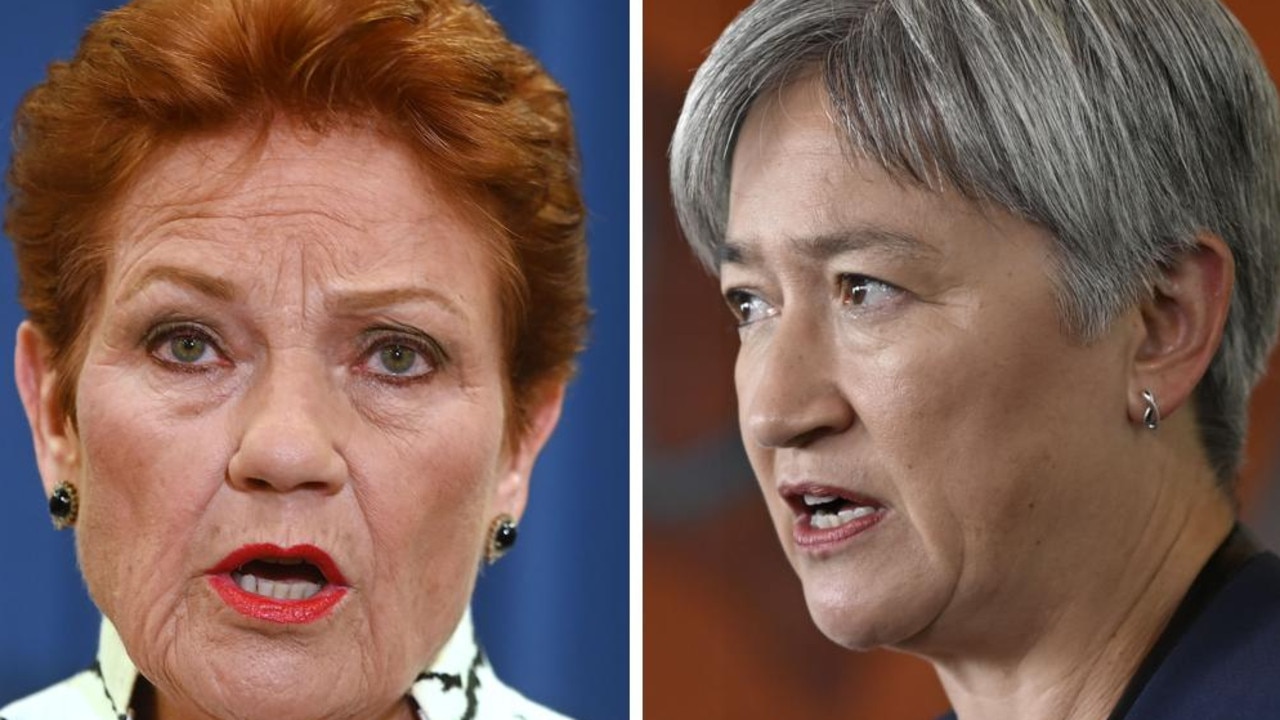
    Australia’s political landscape has fractured dramatically as the national day of mourning for the Bondi shooting victims became overshadowed by the collapse of the opposition coalition. The political crisis emerged from deeply divisive debates surrounding gun reform and antisemitism legislation following last month’s antisemitic attack that claimed 15 lives at Bondi Beach.

    The Liberal-National coalition disintegrated on Thursday when the National Party refused to support hate speech laws that opposition leader Sussan Ley had previously demanded from Prime Minister Anthony Albanese. Nationals leader David Littleproud issued an ultimatum that his party would only consider returning to the coalition if Ley was removed from leadership, throwing the opposition into complete disarray.

    This political implosion contrasts starkly with Australia’s unified response to the 1996 Port Arthur massacre, when then-Prime Minister John Howard worked collaboratively with opposition leaders to implement landmark gun control reforms. Political analysts note that contemporary Australian society has become significantly more polarized, with the Bondi tragedy immediately becoming politicized amid existing tensions over Israel-Gaza conflicts and antisemitism debates.

    Prime Minister Albanese faced substantial criticism throughout the crisis, being heckled at memorial events and accused by Jewish communities of insufficient action against antisemitism. His initial resistance to calls for a royal commission into antisemitism ultimately backfired, forcing a reversal that further weakened his position. Meanwhile, opposition leader Ley’s temporary political gains evaporated when she failed to maintain coalition unity on the very legislation she had championed.

    The political fallout has been severe, with Albanese’s approval ratings plummeting to -11 and Ley’s remaining at -28. Veteran political commentator Malcolm Farr noted that the timing of the political crisis during a national day of mourning demonstrated ‘unfortunate timing and shows a certain amount of self-indulgence’ that has reinforced public cynicism toward politicians of all parties.

  • Trump says US wants ‘total access’ to Greenland

    Trump says US wants ‘total access’ to Greenland

    WASHINGTON – In a significant geopolitical development, former President Donald Trump has revealed ongoing negotiations for the United States to secure “total access” to Greenland without any temporal restrictions. The announcement came during a Thursday interview with Fox Business, where Trump characterized the discussions as actively progressing toward a comprehensive agreement.

    “We’re currently negotiating the specific details, but the fundamental principle is complete and perpetual access – no expiration date, no limitations,” Trump stated, emphasizing the unprecedented nature of the proposed arrangement.

    The disclosure follows Trump’s Wednesday announcement regarding a preliminary framework agreement reached with NATO Secretary General Mark Rutte concerning Greenland and broader Arctic regional strategy. This diplomatic progress prompted Trump to suspend previously threatened tariffs against eight European nations, which were scheduled to implement on February 1.

    However, Danish Prime Minister Mette Frederiksen swiftly countered Trump’s assertions, clarifying that Rutte lacks authorization to negotiate on behalf of Denmark or its autonomous territory. “Greenland’s future must be determined by Greenlanders themselves,” Frederiksen asserted on Thursday. “Our sovereignty is not subject to negotiation under any circumstances.”

    The emerging conflict highlights escalating great-power competition in the strategically vital Arctic region, where melting ice caps are opening new shipping routes and resource extraction opportunities. Greenland possesses substantial deposits of rare earth minerals and geopolitical significance due to its northern positioning.

    This development represents the latest chapter in Trump’s persistent interest in Greenland, which previously included a 2019 proposal to purchase the territory – an offer Denmark promptly dismissed as “absurd.” The current negotiations appear to pursue alternative arrangements that would grant the US extensive rights without formal territorial transfer.

    Diplomatic analysts suggest the proposal faces substantial obstacles given Denmark’s firm stance on Greenlandic self-determination and the complex trilateral relationship between the US, Denmark, and Greenland’s autonomous government.

  • Trump sparks anger over claim Nato troops avoided Afghanistan front line

    Trump sparks anger over claim Nato troops avoided Afghanistan front line

    Former US President Donald Trump has ignited a diplomatic firestorm with controversial comments questioning NATO allies’ military contributions during the Afghanistan conflict. In a Fox News interview, Trump asserted that NATO forces remained “a little off the front lines” while American troops bore the brunt of combat operations.

    The remarks prompted immediate condemnation from across the British political spectrum. Labour MP Emily Thornberry, chair of the foreign affairs committee, denounced the statements as an “absolute insult” to the 457 British service personnel who lost their lives in Afghanistan. “How dare he say we weren’t on the front line?” Thornberry challenged during BBC’s Question Time, emphasizing that British forces had consistently supported American military objectives.

    Conservative MP Ben Obese-Jecty, an Afghanistan veteran, expressed dismay at seeing “our nation’s sacrifice, and that of our NATO partners, held so cheaply.” Liberal Democrat leader Sir Ed Davey similarly condemned Trump’s commentary, noting the former president’s own avoidance of military service while questioning others’ sacrifices.

    The controversy emerges against the backdrop of NATO’s collective security response to the 9/11 attacks, which marked the only invocation of Article 5 in the alliance’s history. The UK contributed the second-largest contingent to the Afghanistan mission, suffering the highest casualties among NATO partners after the United States.

    Defence Secretary John Healey, speaking before Trump’s latest comments, had emphasized the shared sacrifice: “In Afghanistan, our forces trained together, they fought together, and on some occasions, they died together.” Military veterans including former RAF officer Calvin Bailey challenged Trump’s characterization, stating it bore “no resemblance to the reality experienced by those of us who served there.”

    The episode further complicates the already delicate transatlantic relationship as Trump positions himself for a potential return to the White House, with implications for NATO cohesion and future security cooperation.

  • Trump ‘engaged in criminal activity’, Jack Smith says in Capitol Hill testimony

    Trump ‘engaged in criminal activity’, Jack Smith says in Capitol Hill testimony

    In a landmark congressional hearing, former Special Counsel Jack Smith delivered his first public testimony regarding his criminal investigations of former President Donald Trump, asserting unequivocal responsibility for the January 6th Capitol riot. Appearing before lawmakers for five hours, Smith detailed the extensive evidence gathered against Trump in two major cases: alleged efforts to overturn the 2020 election results and the unlawful retention of classified documents after leaving office.

    Smith testified that his team had compiled “overwhelming evidence” and possessed “proof beyond a reasonable doubt” that would have secured convictions in both cases before they were dropped following Trump’s return to the White House. The former special counsel characterized Trump as “the most culpable and most responsible person” in the conspiracy to interfere with the election certification process.

    “The attack that happened at the Capitol, part of this case, does not happen without him,” Smith stated. “The other co-conspirators were doing this for his benefit.”

    The hearing revealed sharp partisan divisions, with Republicans accusing Smith of conducting partisan investigations and allegedly spying on GOP lawmakers through subpoenas for phone records. Democrats, meanwhile, focused on Trump’s alleged wrongdoing and praised Smith’s investigative work.

    Smith addressed potential retaliation from the Trump administration, noting that the former president’s repeated statements were “meant to intimidate me” and served as “a warning to others.” He revealed that federal officials had opened an investigation into his conduct, though the specific focus remains unclear.

    Notably, Smith expressed bewilderment at Trump’s mass pardon of over 1,000 individuals convicted or accused of crimes related to the January 6th riot, many of whom had been charged with assaulting law enforcement officers. “I do not understand why you would mass pardon people who assaulted police officers,” he said. “I don’t get it. I never will.”

    The hearing was punctuated by emotional moments, particularly when four former Capitol Police officers seated behind Smith reacted visibly to lawmakers’ comments. Texas Republican Troy Nehls directly addressed the officers, blaming Capitol Police leadership rather than Trump for the riot, which prompted outbursts from the audience.

    While Smith testified, Trump posted extensively on social media from Switzerland, calling Smith a “deranged animal” who should be prosecuted and have his law license revoked. The former president accused Smith of destroying “many lives under the guise of legitimacy” and suggested Democrats should pay “a big price” for their actions.