分类: politics

  • Trump says Greenland framework includes mineral rights. What minerals does the island have?

    Trump says Greenland framework includes mineral rights. What minerals does the island have?

    Former President Donald Trump has reignited geopolitical interest in Greenland by claiming to have established a preliminary framework for future agreements concerning the island’s defense infrastructure and mineral rights. This development underscores Greenland’s growing strategic value due to its vast deposits of rare earth elements essential for electronics, green energy, and military technologies.

    Geological surveys indicate Greenland possesses 25 of the 34 minerals classified as critical raw materials by the European Commission, including graphite, niobium, and titanium. While Trump publicly emphasizes security concerns regarding Russian and Chinese Arctic expansion, analysts suggest resource acquisition remains a primary motivator. “This is fundamentally about securing those resources and preventing Chinese dominance,” stated Professor Steven Lamy of the University of Southern California.

    The U.S. has intensified engagement with Greenland since reopening its Nuuk consulate in 2020. Recent actions include approving $120 million in financing through the Export-Import Bank for a American mining project there, aligning with broader efforts to diversify rare earth supplies away from China. Allies like UN Ambassador Mike Waltz emphasize Greenland’s multidimensional value: “This concerns shipping lanes, energy resources, fisheries, and ultimately national security.”

    However, significant challenges persist. Greenland’s mining industry faces extreme operational hurdles including harsh weather, insufficient infrastructure, and limited labor. Although climate change is gradually exposing new mineral-rich areas and potential hydroelectric sources, only two active mines currently operate despite 100 exploration permits being issued. Researchers like Mikkel Runge Olesen note that while mineral quantities are substantial, extraction costs remain prohibitively high.

    Critics question whether U.S. control is necessary for resource access, while experts characterize current mining prospects as largely theoretical. Dr. Patrick Schröder of Chatham House acknowledged Greenland’s potential to “shift the dial” in global mineral supply chains, though Jennifer Spence of Harvard’s Arctic Initiative noted operations remain “all still about potential” despite the evident economic and strategic interests driving Trump’s approach.

  • White House X account alters protester photo to add tears

    White House X account alters protester photo to add tears

    The White House has ignited controversy after its official X account disseminated a digitally manipulated photograph depicting arrested protester Nekima Levy Armstrong in tears, without disclosing the image had been altered. The incident occurred on Thursday when the administration shared the modified image showing Armstrong sobbing with visible tears and distorted facial features, contrasting sharply with the original photograph posted by Homeland Security Secretary Kristi Noem that showed her calm and expressionless during arrest.

    The altered image carried a superimposed caption labeling Armstrong as a ‘far-left agitator’ following her arrest for allegedly disrupting a church service during protests against immigration policies. This episode highlights the Trump administration’s increasing utilization of artificial intelligence and deepfake technology to advance political narratives through official government channels.

    White House Deputy Communications Director Kaelan Dorr indirectly acknowledged the modification through a social media post that defended the administration’s approach, stating ‘Enforcement of the law will continue. The memes will continue.’ The alteration prompted immediate criticism from social media users who expressed concern about government entities using manipulated imagery presented as factual content.

    According to Walter Scheirer of the University of Notre Dame, such digitally altered images have become ‘commonplace in partisan politics’ and are frequently employed to humiliate opposition figures or make exaggerated political statements. Scheirer noted that while similar to traditional political cartoons, the use of such tactics through official government communication channels represents ‘a notable lack of decorum.’

    This incident occurs during the first year of President Trump’s second term, which has seen increased deployment of hyper-realistic fabricated visuals across Truth Social and other platforms. The administration has previously shared AI-generated imagery depicting the president in various scenarios including dressed as the pope, alongside lions, and conducting orchestras at prestigious venues.

  • ‘The ultimate insult’: Trump downplaying NATO’s Afghanistan involvement causes distress in UK

    ‘The ultimate insult’: Trump downplaying NATO’s Afghanistan involvement causes distress in UK

    LONDON — Former U.S. President Donald Trump has ignited fierce condemnation from British officials and military families following controversial remarks questioning NATO allies’ combat commitment during the Afghanistan conflict. Speaking during a Fox News interview in Davos on Thursday, Trump cast doubt on NATO’s reliability while suggesting non-American troops deliberately avoided front-line engagement.

    The comments struck a particularly raw nerve in the United Kingdom, which deployed over 150,000 personnel to Afghanistan—the largest contingent after the United States—with 456 ultimately sacrificing their lives. British Defense Secretary John Healey emphasized that UK forces ‘answered the U.S. call’ following the 9/11 attacks, stating fallen troops should be ‘remembered as heroes who gave their lives in service of our nation.’

    Lawmaker Ben Obese-Jecty, a former captain in the Royal Yorkshire Regiment who served in Afghanistan, expressed dismay at seeing ‘our nation’s sacrifice, and that of our NATO partners, held so cheaply.’ The criticism extended to Trump’s personal military service record, with author Stephen Stewart highlighting the ‘huge irony’ of draft deferment recipient Trump questioning others’ combat commitment.

    The controversy emerges amid escalating transatlantic tensions following Trump’s threats to seize Greenland—a semi-autonomous Danish territory—and impose tariffs on European nations. Historical context further contradicts Trump’s assertions: Article 5 of NATO’s founding treaty, the mutual defense clause, was invoked only once—in response to the 9/11 attacks on the United States.

    Denmark, which suffered the highest per capita casualties among coalition forces in Afghanistan, exemplified this commitment through former platoon commander Martin Tamm Andersen’s reminder: ‘When America needed us after 9/11 we were there.’

    The remarks have prompted calls for diplomatic pushback, with Diane Dernie—mother of a severely injured British soldier—describing Trump’s comments as ‘the ultimate insult’ and urging Prime Minister Keir Starmer to ‘make a stand for those who fought for this country.’

  • Japan’s lower house formally dissolved

    Japan’s lower house formally dissolved

    Japan’s political arena entered a period of significant transition on January 23, 2026, as the nation’s lower legislative chamber was formally dissolved, setting the stage for an unexpected snap election. This constitutional procedure marks a pivotal moment in Japan’s democratic processes, effectively terminating the current parliamentary session and compelling all 465 sitting representatives to seek renewed electoral mandates.

    The dissolution ceremony, presided over by Speaker Hiroyuki Hosoda in a solemn proceeding, saw legislators receive their official notices of termination amid the traditional shouts of ‘Banzai’ that characterize Japanese parliamentary conclusions. This procedural dissolution paves the way for what political analysts anticipate will be a fiercely contested electoral battle, with campaigning expected to commence immediately ahead of the projected polling date.

    This political development occurs against a complex backdrop of both domestic and international challenges, including economic pressures, regional security concerns, and ongoing global supply chain disruptions. The election outcome will determine the composition of Japan’s legislative body at a particularly consequential juncture in East Asian geopolitics, with implications for everything from trade policy to national security strategy.

    The dissolution mechanism, embedded in Japan’s post-war constitution, represents a fundamental aspect of the country’s parliamentary democracy, allowing for fresh electoral mandates and potential shifts in governmental direction. As candidates prepare to hit the campaign trail, observers worldwide will be monitoring how Japan’s electorate responds to the competing policy visions presented by the various political factions vying for parliamentary dominance.

  • Trump withdraws invite for Canada’s Carney to join ‘Board of Peace’

    Trump withdraws invite for Canada’s Carney to join ‘Board of Peace’

    A notable diplomatic confrontation has emerged between the United States and Canada following contentious exchanges between President Donald Trump and Canadian Prime Minister Mark Carney. The dispute originated at the World Economic Forum in Davos, Switzerland, where Trump asserted that “Canada lives because of the United States.” Carney delivered a robust response during a national address in Quebec City, declaring: “Canada doesn’t live because of the United States. Canada thrives because we are Canadian,” while simultaneously acknowledging the longstanding partnership between the neighboring nations.

    In retaliation, Trump utilized his Truth Social platform to withdraw Canada’s invitation to join his proposed ‘Board of Peace’—a billion-dollar conflict resolution initiative. Government sources revealed that Canada had previously indicated it would not financially contribute to participate in this board, despite Carney’s willingness to accept membership.

    This diplomatic friction occurs against the backdrop of Carney’s widely acclaimed Davos address, where he received a standing ovation for his candid assessment of a ‘rupture’ in the US-led global order. Although not explicitly naming Trump, the speech was broadly interpreted as commentary on the former president’s disruptive influence on international affairs. Carney emphasized that middle powers like Canada must recognize that compliance alone cannot shield nations from major power aggression in the current geopolitical climate.

    The escalating tensions carry substantial economic implications, as Canada remains heavily dependent on trade with the United States, which receives over three-quarters of Canadian exports. Key industries including automotive, aluminum, and steel have already been affected by Trump’s global sectoral tariffs. With negotiations to revise the North American free trade agreement scheduled to commence this year, Trump’s repeated assertions that the United States doesn’t require access to Canadian products suggest potential sweeping consequences for Canada’s economy.

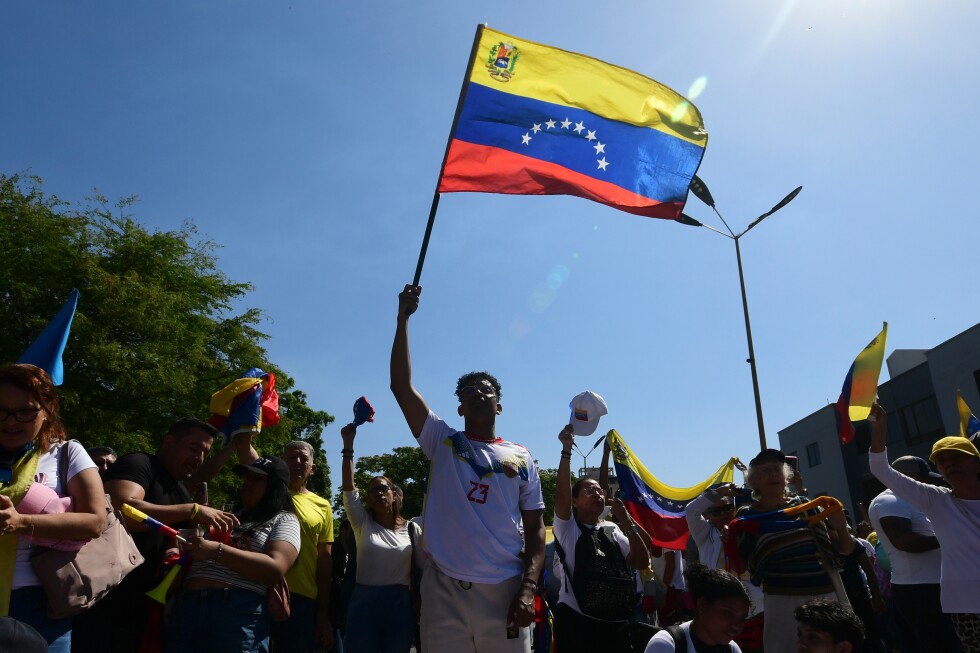
    Adding to the diplomatic strain, Trump has previously threatened annexation of Canadian territory and recently circulated a social media image depicting Canada, Greenland, and Venezuela covered by the American flag. In response, Carney emphasized Canada’s commitment to defending its sovereignty and securing its borders, while positioning the nation as a democratic beacon during an era of global uncertainty.

  • US ‘America First’ reshapes transatlantic ties

    US ‘America First’ reshapes transatlantic ties

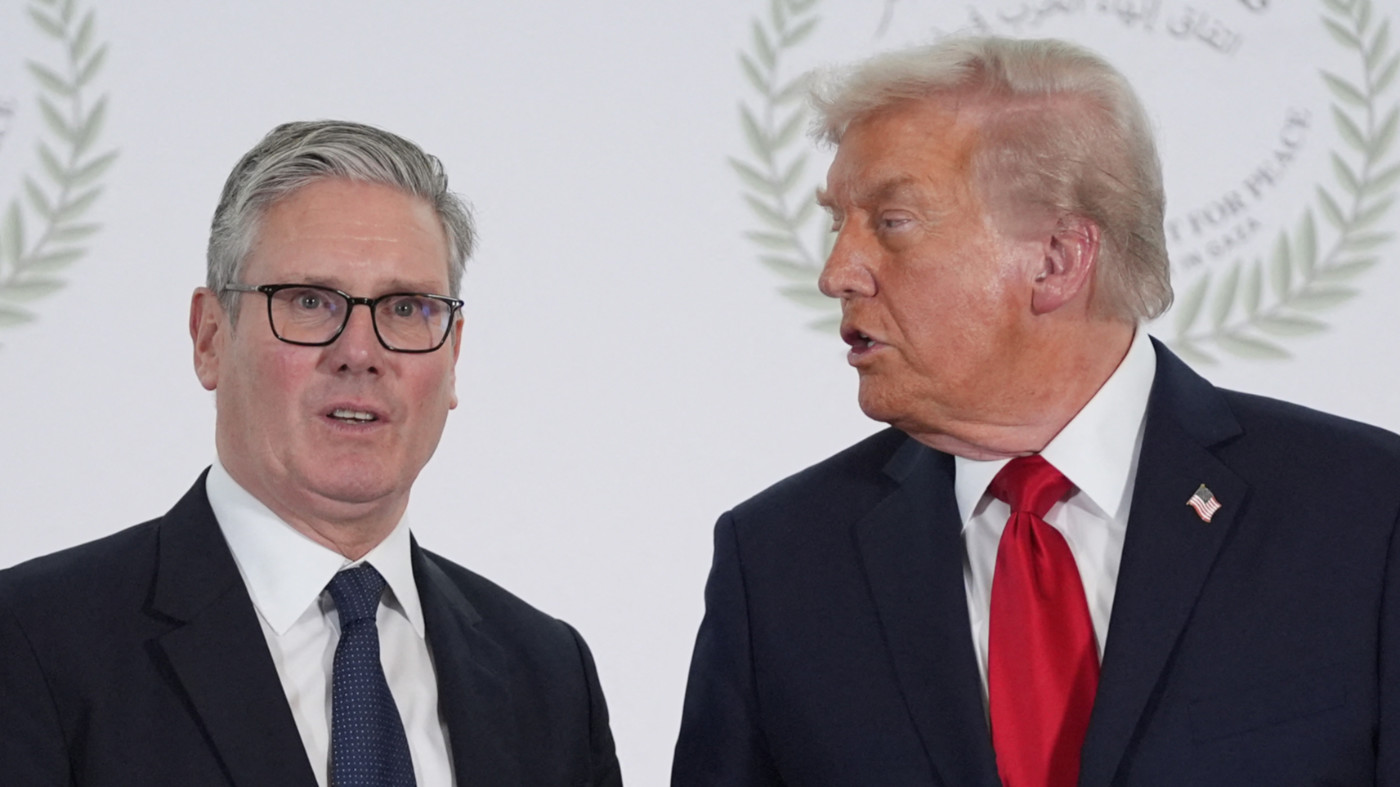
    DAVOS, Switzerland – President Donald Trump’s appearance at the World Economic Forum has underscored a fundamental realignment of international relationships driven by his ‘America First’ doctrine. The inauguration of his Board of Peace initiative, focused initially on Gaza reconstruction, drew participation from fewer than 20 nations, with conspicuous absences from traditional allies including France, the United Kingdom, and Israel.

    The diplomatic developments occurred alongside Trump’s announcement of a framework agreement with NATO concerning Greenland, further illustrating how domestic political priorities are recalibrating longstanding transatlantic partnerships. This strategic pivot has created unexpected opportunities for expanded international cooperation, particularly with China.

    Policy experts from prominent think tanks have analyzed the profound implications of these shifts. Matthew Kroenig of the Atlantic Council warned that Trump’s confrontational approach has ‘destroyed much of the domestic political space in Europe’ for those advocating accommodation with the United States, potentially causing enduring damage to transatlantic relations.

    Chatham House analysts examining the Greenland situation emphasized that European nations must accelerate ‘strategic autonomy to stop a hemorrhage of sovereignty,’ suggesting the Anti-Coercion Instrument could emerge as a significant tool in this new geopolitical landscape.

    Forum participants noted China’s increasingly central role amid these transformations. Kimberley Botwright of the WEF highlighted China’s ‘systemic relevance’ in global value chains and clean technology sectors, observing that Chinese perspectives on shared priorities are receiving substantial international attention.

    Academic Tom Harper from the University of East London characterized China as a ‘stabilizing force’ during this period of American institutional withdrawal, advocating for strengthened European-Chinese relations. WEF Managing Director Gim Huay Neo pointed to China’s 5% economic growth and its 15th Five-Year Plan as generators of ‘new opportunities for global businesses and cooperation.’

    Chinese Vice-Premier He Lifeng reiterated China’s commitment to World Trade Organization reforms that enhance inclusivity for Global South nations, while cautioning against ‘rising unilateralism and protectionism’ in international affairs.

  • Survey finds bipartisan support for China cooperation

    Survey finds bipartisan support for China cooperation

    A comprehensive national survey has uncovered significant bipartisan support among American citizens for enhanced cooperation between the United States and China, alongside growing apprehension that escalating geopolitical tensions are adversely affecting Chinese American communities.

    The groundbreaking research, jointly conducted by the Committee of 100 and the University of Chicago’s National Opinion Research Center (NORC), represents one of the most extensive independent social studies in the United States. According to Alex Chew, NORC AmeriSpeak director and head of Amplify AAPI, this third iteration of the State of Chinese Americans research provides unprecedented breadth in understanding public perception regarding issues impacting the Chinese American population.

    The data reveals that 59% of Americans advocate for closer governmental collaboration between Washington and Beijing on diplomatic matters and mutually relevant policies. This position transcends political divisions, with 65% of Democrats and 63% of Republicans expressing support for strengthened bilateral cooperation.

    The cooperative sentiment extends into scientific and technological domains, where only 23% of respondents supported prohibiting Chinese researchers from working at U.S. institutions. This perspective demonstrated notable partisan variation, with 16% of Democrats and 34% of Republicans endorsing such restrictions.

    Sam Collitt, research lead at Committee 100 and co-author of the survey report, emphasized that these findings indicate minimal public support for policies that would strain international relations. The research was conducted amid numerous federal and state initiatives seeking to prosecute, restrict, or ban Chinese researchers from collaborating with American institutions.

    The survey aligns with recent studies by Pew Research and the Chicago Council suggesting that negative attitudes toward China among the American public may have reached their zenith. However, researchers caution that it remains uncertain whether this represents a temporary fluctuation or the beginning of a sustained trend toward improved perceptions.

    Historical context provided by University of Maryland Professor Madeline Hsu suggests that Americans often overlook China’s historical position as an elite civilization and economic powerhouse prior to 1800, before its decline under Western imperial exploitation. This historical amnesia, according to Hsu, complicates America’s ability to contextualize China’s reemergence as a global power as a restoration rather than an unprecedented development.

    The human cost of bilateral tensions was highlighted through examples including the China Initiatives program, which resulted in numerous Chinese American scientists facing false espionage allegations. The tragic case of Northwestern University’s Dr. Jane Wu, who committed suicide after being abruptly accused of wrongdoing and stripped of her position, exemplifies the devastating personal consequences that can result from sweeping geopolitical measures.

  • Trump pushes ‘America First’ at Davos

    Trump pushes ‘America First’ at Davos

    At the 2026 World Economic Forum in Davos, the United States delegation led by President Donald Trump delivered a stark departure from traditional globalist consensus with an uncompromising ‘America First’ agenda. The record-sized US contingent focused programming around aggressive trade protectionism, artificial intelligence dominance, and sovereign expansion ambitions.

    President Trump’s 70-minute special address defended tariff policies as essential tools for national growth, claiming a 77 percent reduction in monthly trade deficits while positioning the US as the planet’s primary economic engine. The administration’s trade representative, Jamieson Greer, framed tariffs as legitimate geopolitical instruments, explicitly repudiating twenty-five years of trade policy by declaring the US market would not remain “permanently available to everyone.”

    The delegation’s confrontational stance extended to artificial intelligence, where officials promoted deregulation and infrastructure ownership. Trump announced an extraordinary offer to Silicon Valley: nuclear power plant approvals within three weeks to fuel AI development. Administration officials criticized the European Union’s AI Act as “an absolute disaster” while advocating a “light-touch” regulatory approach.

    Commerce Secretary Howard Lutnick explicitly declared that “globalization has failed the West and the United States of America” in both panel discussions and a Financial Times op-ed. The administration’s position emphasized economic security and sovereign control, particularly regarding Trump’s renewed pursuit of Greenland acquisition for its strategic resources and shipping lanes.

    The delegation’s statements generated significant geopolitical concern, with experts warning that the administration’s denial strategy risks further fragmenting the international system and eroding consensus on global rules and norms. The proceedings highlighted a fundamental shift in how the United States engages with multilateral institutions and international partners.

  • Xi holds phone talks with Lula

    Xi holds phone talks with Lula

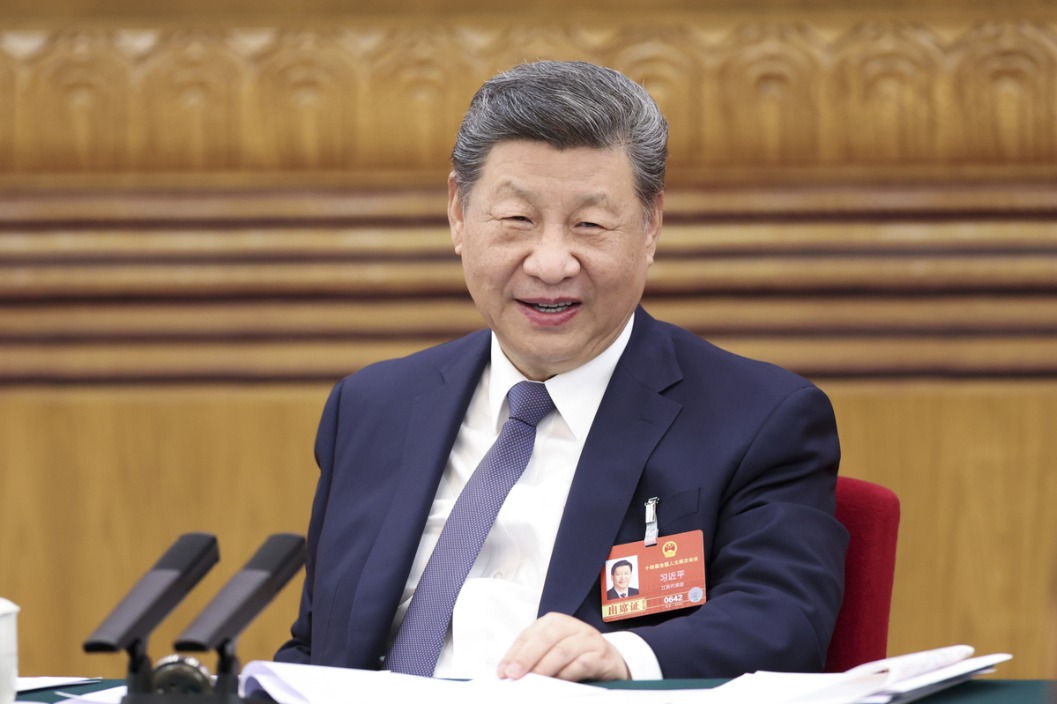
    In a significant diplomatic engagement, Chinese President Xi Jinping and Brazilian President Luiz Inácio Lula da Silva conducted comprehensive phone talks on Friday, reinforcing the strategic partnership between their nations. President Xi emphasized that China’s commitment to high-quality development through extensive opening-up policies would generate substantial cooperative opportunities for both countries.

    During their conversation, President Xi highlighted the crucial role China and Brazil play as constructive forces in maintaining global peace and enhancing international governance systems. He urged both nations to align with historical trends and strengthen their collaboration in safeguarding the collective interests of the Global South.

    The leaders affirmed their joint commitment to preserving the United Nations’ central role in global affairs and promoting international fairness and justice. This dialogue occurs amid growing South-South cooperation and increasing coordination between major emerging economies on the world stage. The discussion covered broad aspects of bilateral relations, with both leaders expressing satisfaction with the current trajectory of Sino-Brazilian cooperation across trade, investment, and strategic areas.

    The phone conversation represents the continuation of longstanding diplomatic exchanges between the two BRICS nations, underscoring their mutual dedication to multipolar world order and sustainable development principles.

  • South Korea imposes travel bans on 3 civilians over alleged drone flights into North Korea

    South Korea imposes travel bans on 3 civilians over alleged drone flights into North Korea

    South Korean authorities have implemented overseas travel restrictions on three civilians as part of an ongoing investigation into unauthorized drone operations over North Korean territory, escalating tensions between the neighboring nations. The joint military-police investigative unit announced the measures Friday amid North Korea’s threats of retaliation against alleged surveillance drone incursions in September and January.

    The primary individual under investigation, identified only by his surname Oh, reportedly admitted to South Korean media that he deployed drones to monitor radiation levels at a North Korean uranium facility. While the investigation team confirmed Oh’s inclusion among those banned from international travel, they declined to provide identifying details about the two other civilians under scrutiny, confirming only that one had been summoned for questioning within the past week.

    According to domestic media reports, the three individuals previously collaborated at a drone manufacturing company, with Oh and another suspect having served as contract employees within former conservative President Yoon Suk Yeol’s administration in 2022. The investigation team has not verified these employment connections.

    The escalating situation threatens diplomatic efforts by South Korea’s current liberal government to revive stalled negotiations with North Korea. President Lee Jae Myung, who assumed office in June following Yoon’s dismissal over controversial martial law impositions, has called for comprehensive investigation, warning that unnecessary tensions could adversely affect the national economy.

    Analysts suggest North Korea’s drone allegations may represent a strategic effort to intensify anti-South Korean sentiment ahead of an anticipated Workers’ Party congress in late January or February. This gathering, the first in five years, could potentially see leader Kim Jong Un formally declare a hostile “two-state” system on the Korean Peninsula.

    The Korean neighbors have maintained no public dialogue since 2019, with drone incursions representing a persistent source of conflict. North Korea previously accused South Korea of deploying propaganda-dropping drones over Pyongyang in October 2024, while South Korea has documented numerous North Korean drone crossings throughout the past decade. In December 2022, South Korea responded to alleged North Korean drone incursions with warning shots, fighter jet deployments, and surveillance drone flights over border areas.