分类: politics

  • Trump’s Iran tariff threat risks reigniting US-China trade war

    Trump’s Iran tariff threat risks reigniting US-China trade war

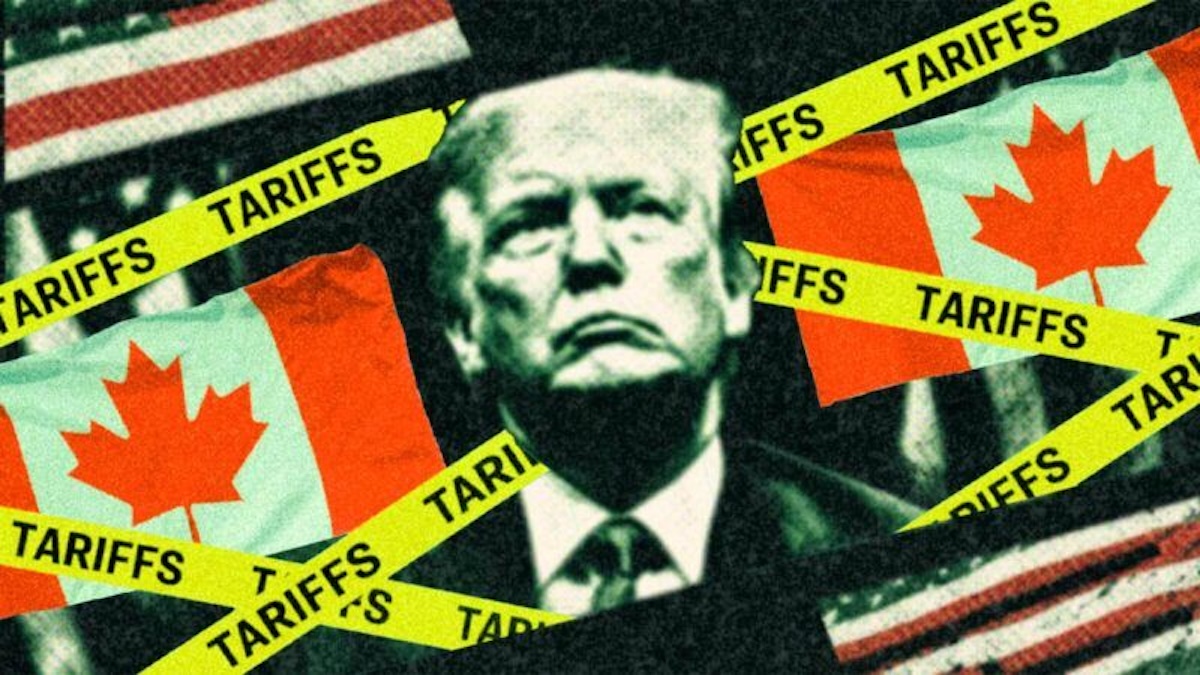
    Former President Donald Trump’s proposal to impose 25% tariffs on nations trading with Iran has triggered concerns about renewed economic confrontation between the United States and China. This policy initiative, while ostensibly targeting Tehran, directly challenges Beijing as China remains Iran’s largest trading partner.

    The emerging situation threatens to undermine the fragile diplomatic truce established between the two economic superpowers in late 2023. That interim understanding had temporarily halted years of escalating tariffs, export controls, and retaliatory measures, providing businesses with cautious optimism about stabilizing trade relations.

    Analysts suggest that a 25% tariff represents more than a technical adjustment—it signals a fundamental shift toward using trade policy as an instrument of confrontation rather than negotiation. Market observers recognize the pattern that typically follows such moves: initial warnings hardening into retaliation, ultimately reshaping the entire economic relationship landscape.

    Agricultural sectors would face immediate impact, with American soybean exports to China particularly vulnerable. Previous trade conflicts demonstrated how quickly market access evaporates when politics infiltrates supply chains. However, the implications extend far beyond agriculture, affecting technology, energy, manufacturing, and logistics—all industries dependent on predictable trade flows and stable policy frameworks.

    The maximum pressure strategy behind the tariff threat creates impossible choices for companies forced to balance commercial survival against compliance with shifting political demands. Such conditions discourage long-term investment, accelerate supply chain fragmentation, and weaken global growth foundations.

    Energy markets already reflect mounting tension, as Iran’s role in global oil supply amplifies every policy signal. Layering tariff threats atop existing sanctions raises risk premiums across commodities, potentially driving higher energy costs that filter into inflation and tighten financial conditions worldwide.

    Diplomacy historically provided buffers against such cycles, with trade agreements creating off-ramps and negotiations allowing cooling periods before disputes hardened into prolonged standoffs. Recent signals suggest movement in the opposite direction, with tariffs transitioning from bargaining chips to default responses.

    Both nations face difficult calculations: China must balance resisting external pressure against avoiding domestic perceptions of weakness, while Washington weighs appearing indecisive against reopening trade conflicts that previously inflicted deep damage on global growth.

    Investors recognize familiar patterns in these developments, recalling how earlier tariff escalation cycles began with measures framed as limited before yielding to retaliation rounds that raised barriers and deepened mistrust. The outcomes consistently delivered higher prices, fractured supply chains, and lasting erosion of confidence between major economies.

    Asia stands particularly exposed, with regional supply chains threading through Chinese factories, Southeast Asian ports, and energy corridors dependent on stable global trade rules. Any renewed confrontation sends immediate shockwaves through regional growth, currencies, and capital flows, with consequences extending far beyond the two primary nations involved.

    Political leaders often underestimate how rapidly confidence evaporates under such conditions. Markets move faster than diplomacy, and companies freeze investment plans long before negotiations resume, tightening financial conditions ahead of formal policy changes.

    The world learned painful lessons from earlier tariff escalation cycles. Those lessons now face a fresh decisive test as trade policy increasingly generates instability rather than leverage, potentially reopening wounds that global commerce spent years trying to heal.

  • Canada rethinks US reliance as PM looks to China

    Canada rethinks US reliance as PM looks to China

    In a significant foreign policy shift, Canada is actively recalibrating its decades-long economic and security alignment with the United States. Prime Minister Mark Carney’s upcoming four-day diplomatic mission to China—marking the first Canadian prime ministerial visit since 2017—signals Ottawa’s determination to forge stronger international partnerships beyond its southern neighbor.

    Recent trade data from Statistics Canada reveals a notable decline in Canadian exports to the US, hitting their lowest non-pandemic levels in decades. This downturn reflects growing bilateral tensions stemming from tariffs affecting key sectors including steel, aluminum, and automotive industries.

    Professor Ronald Stagg of Toronto Metropolitan University contextualizes this development within historical patterns: “Since the economic integration accelerated during World War II and solidified through free trade agreements in the 1980s, Canadian trade with the United States has consistently expanded. The current reversal represents a fundamental break from this tradition.”

    The reassessment extends beyond commerce into defense strategy. Professor Stagg highlights Washington’s “increasingly unpredictable posture toward traditional allies” and its assertion of hemispheric dominance as driving factors behind Canada’s European defense industry pact negotiations and Asian trade diversification efforts.

    Former Global Affairs Canada official Jeff Mahon emphasizes that Carney’s China visit should establish “high-level consensus on the relationship’s direction,” noting that subsequent progress will require moving beyond symbolism to “tangible actions.” Mahon advocates for identifying key principles that acknowledge mutual sensitivities while pursuing “reasonable and plausible objectives.”

    Concurrently, Canada is pursuing economic agreements in Southeast Asia, including ongoing regional free trade negotiations and a recently concluded bilateral pact with Indonesia, further illustrating its multilateral approach to reducing US-centric dependencies.

  • Military push tests postwar pacifist stance

    Military push tests postwar pacifist stance

    Japan’s postwar pacifist identity, meticulously crafted over eight decades, faces unprecedented challenges under Prime Minister Sanae Takaichi’s administration. Since assuming office in October 2025, the government has initiated a comprehensive military transformation that experts warn fundamentally contradicts constitutional principles of exclusively defense-oriented posture.

    The acceleration began with November’s supplementary budget approval for fiscal 2025, catapulting defense spending to approximately 11 trillion yen ($70 billion). This achievement marks a significant milestone—reaching the NATO-inspired 2% of GDP defense expenditure target two years ahead of schedule. According to Shimbun Akahata calculations, this translates to an annual defense burden exceeding 90,000 yen ($570) per citizen.

    Prime Minister Takaichi’s autumn policy speech outlined ambitious security revisions scheduled for 2026, including modernization of Japan’s three key security documents. These revisions aim to institutionalize controversial counterstrike capabilities—frequently criticized as unconstitutional—while elevating total defense expenditure for the 2023-2027 period to approximately 43 trillion yen. The Yomiuri Shimbun additionally reports planned incorporation of ‘strengthening Pacific defense’ initiatives within these revised frameworks.

    Beyond budgetary expansions, the administration pursues substantive policy shifts including complete elimination of restrictions on lethal weapons exports, reexamination of the Three Non-Nuclear Principles, and substantial relaxation of arms export controls. Government plans indicate submission of related motions next month with implementation guidelines for the ‘Three Principles on Transfer of Defense Equipment and Technology’ scheduled for revision in April.

    Current guidelines restrict defense exports to five noncombat categories including rescue and transport operations. Their removal would authorize export of combat-capable systems including fighter aircraft and main battle tanks.

    Hiroshi Shiratori, Professor at Tokyo’s Hosei University, emphasizes the fundamental incompatibility of these policies with Japan’s constitutional pacifist principles. ‘If Japan manufactures and exports weapons, causes harm abroad and profits from it,’ Shiratori notes, ‘such thinking fundamentally conflicts with the country’s postwar national identity. It would mean that Japan is no longer a peaceful nation.’

    Regional security experts caution that these developments could revive historical memories of Japanese military actions during the Pacific War, potentially undermining international trust and triggering regional arms races. The easing of defense equipment restrictions signals Japan’s deliberate expansion of its military-industrial sector, potentially encouraging neighboring nations to pursue similar capabilities.

    Former senior Foreign Ministry official Ukeru Magosaki, now Director of the East Asian Community Institute, suggests these policy shifts respond primarily to United States strategic requirements rather than domestic needs. With American defense production struggling to meet global demand, Washington increasingly relies on allies to supply weapons to supported governments. Recent Reuters reports confirm Lockheed Martin’s seven-year Defense Department agreement to increase PAC-3 Patriot missile interceptor production from 600 to 2,000 units annually.

    Concurrently, Japan’s major manufacturers including Mitsubishi Heavy Industries report substantial increases in defense-related contracts, with military revenue comprising growing portions of corporate earnings. Toyo Keizai Online documents how expanding defense budgets positively impact medium-term sales projections across Japan’s defense industrial base.

    Magosaki concludes that unrestricted arms exports regardless of destination would heighten regional instability and be perceived as Japan’s strategic alignment with American interests, potentially further straining diplomatic relations with neighboring states.

  • The UK is watering down plans for mandatory digital ID cards after a backlash

    The UK is watering down plans for mandatory digital ID cards after a backlash

    LONDON — In a significant policy reversal, Britain’s Labour government has abandoned its controversial plan to mandate digital identification cards for employment purposes. The proposed scheme, initially championed by Prime Minister Keir Starmer as a mechanism to combat unauthorized immigration, has been substantially diluted following substantial political opposition and public skepticism.

    Transport Secretary Heidi Alexander confirmed the policy shift on Wednesday, clarifying that digital ID cards would now represent merely one option among several documentation methods for employment verification. Biometric passports will remain equally valid for proving work eligibility, fundamentally altering the compulsory nature of the original proposal.

    This development marks the latest in a series of policy reversals for Starmer’s administration, which faces mounting criticism from both opposition parties and within its own parliamentary ranks. The Prime Minister had previously asserted in September that “you will not be able to work in the United Kingdom if you do not have digital ID,” positioning the initiative as a cornerstone of immigration control and public service accessibility.

    The concept of mandatory identification documents has historically proven contentious in British politics. The nation hasn’t required compulsory ID cards for ordinary citizens since the post-World War II era, with civil liberties advocates consistently warning about potential infringements on personal freedom and data security risks.

    The government now plans to initiate a comprehensive public consultation before formulating detailed proposals for the voluntary digital identification system. This approach contrasts sharply with previous Labour administrations’ attempts to introduce similar measures, notably former Prime Minister Tony Blair’s unsuccessful effort to implement biometric ID cards two decades ago amid substantial public and parliamentary resistance.

  • Political-biz collusive graft worrying

    Political-biz collusive graft worrying

    A recent anti-corruption documentary has revealed extensive political-business collusion through the case of Luo Baoming, former Hainan Province Party Secretary, demonstrating how this form of corruption has become increasingly sophisticated and widespread. The four-episode series, which premiered this week, details how Luo established an elaborate network of associates spanning decades, exploiting his authority for personal gain through sophisticated bribery schemes.

    Luo, who served as deputy Party chief, governor, and ultimately Party chief of Hainan before retiring from the National People’s Congress in 2023, constructed what investigators describe as a ‘distorted clique’ comprising fellow townsmen, business associates, government officials, and relatives. His corruption network utilized complex methods including entrusted shareholding arrangements, property exchanges, and deferred payments to conceal illicit transactions.

    In a televised confession, Luo expressed remorse: ‘I let the Party down and failed Hainan’s people. Having worked there 16 years, I now see the countless wrongdoings and crimes I committed, which inflicted irreparable losses.’

    The Central Commission for Discipline Inspection and National Commission of Supervision identified political-business collusion as a particularly concerning evolution in corruption patterns. Luo’s descent into corruption began in the 1990s in Tianjin, where he accepted a 500,000 yuan bribe (equivalent to approximately $71,700) to approve an auction house project—an enormous sum when China’s urban per capita disposable income measured only a few thousand yuan.

    When Luo transferred to Hainan in 2001, he maintained his Tianjin business connections, exemplifying what anti-corruption authorities term ‘bringing businessmen to new posts’—a hallmark of modern collusion. The documentary details how Luo intervened to legalize unauthorized construction by a Tianjin businessman, who then arranged a property swap that provided Luo’s family with superior apartments in exchange for their older, smaller homes.

    Another scheme involved a different Tianjin businessman who purchased a Luo family property at millions of yuan above market value to disguise bribery payments. Luo also manipulated personnel appointments, installing loyalists like Dong Xianzeng—who followed him from Tianjin and rose to head Hainan’s transportation department before receiving a 14.5-year prison sentence for bribery.

    The network extended to Hainan Airlines Group, where Luo accepted luxury services including private jet travel, overseas trips for family members, and a wedding venue for his daughter—all under the guise of supporting private enterprise. Family members participated extensively, with Luo’s former son-in-law and daughter’s father-in-law allegedly receiving and facilitating millions in corrupt payments.

    In December 2025, Luo received a 15-year prison sentence, with numerous associates facing disciplinary and legal consequences. The case exemplifies the Communist Party’s ongoing campaign against sophisticated corruption networks that undermine governance and economic development.

  • Ugandan voters face soldiers in the street and an internet shutdown before presidential election

    Ugandan voters face soldiers in the street and an internet shutdown before presidential election

    KAMPALA, Uganda — Ugandans head to the polls Thursday in a high-stakes presidential election marked by unprecedented digital censorship and military mobilization. President Yoweri Museveni, Africa’s second-longest serving leader who seized power in 1986, seeks a seventh term that would extend his nearly four-decade rule. His primary challenger is 43-year-old musician-turned-legislator Bobi Wine (born Robert Kyagulanyi), who embodies a generational shift and widespread yearning for political change.

    The electoral landscape has been dominated by three critical developments: a nationwide internet shutdown implemented Tuesday by the Uganda Communications Commission, massive military deployments across the capital Kampala, and an opposition strategy urging voters to physically protect polling stations against alleged tampering. The internet suspension, justified by authorities as necessary to combat ‘misinformation and electoral fraud,’ has severely hampered pro-democracy activists’ ability to document alleged irregularities.

    Security forces have transformed Kampala into a fortified zone, with armored vehicles and patrolling soldiers becoming ubiquitous. Military spokesman Colonel Chris Magezi maintains these measures aim to deter violence, rejecting characterization of the mobilization as anti-democratic. Meanwhile, Wine’s National Unity Platform party has instructed supporters to remain near polling stations after voting—a tactic that has created tension with electoral officials who urge voters to return home.

    The election also highlights concerns about hereditary succession. Museveni’s son, General Muhoozi Kainerugaba, commands Uganda’s military and has openly expressed presidential ambitions. The four-star general has previously made inflammatory social media statements about opposition figures, including threats against Wine and former presidential candidate Kizza Besigye.

    With 21.6 million registered voters choosing among eight presidential candidates, analysts predict Museveni will likely extend his rule despite growing discontent over economic challenges and democratic backsliding. The United Nations Human Rights Office has documented ‘widespread repression’ including abductions and disappearances of opposition supporters during the campaign period.

  • Former Cyprus President George Vassiliou, who put the country on the path to EU membership, has died

    Former Cyprus President George Vassiliou, who put the country on the path to EU membership, has died

    NICOSIA, Cyprus — The nation of Cyprus is in mourning following the passing of former President George Vassiliou at age 94. The transformative leader, who served from 1988 to 1993, died Wednesday after battling a respiratory infection that had required hospitalization since January 6.

    President Nikos Christodoulides led tributes to his predecessor, describing Vassiliou as embodying Cyprus’s economic prosperity, social advancement, and modernization efforts. In an official statement, Christodoulides noted that Cyprus had lost ‘a universal citizen who broadened our homeland’s international imprint.’

    Vassiliou’s presidency marked a period of significant economic transformation. Leveraging his background as a successful entrepreneur—he founded the Middle East Market Research Bureau with offices across 30 countries—Vassiliou implemented sweeping reforms that doubled the nation’s per capita GDP during his tenure. His administration introduced groundbreaking policies including sales tax implementation alongside income tax reductions, civil service streamlining, establishment of Cyprus’s first university, and dismantling state media monopolies.

    Perhaps his most enduring legacy was initiating Cyprus’s application for European Union membership, a strategic move that culminated in the island’s accession thirteen years later in 2004.

    In the contentious arena of reunification, Vassiliou reinvigorated stalled negotiations with Turkish Cypriot leader Rauf Denktash shortly after assuming office. Despite his efforts, the talks reached an impasse that persists to this day, maintaining the division that began with Turkey’s 1974 invasion and the subsequent 1983 declaration of independence by Turkish Cypriots recognized only by Ankara.

    Born in 1931 to physician parents who were communist activists, Vassiliou’s early life reflected the region’s turbulent politics. His family relocated to Hungary and later Uzbekistan following communist defeats in Greece’s civil war. Initially pursuing medical studies in Geneva and Vienna, he ultimately earned a doctorate in economics from the University of Economics in Budapest.

    Vassiliou’s unconventional presidency broke with traditional political protocols. He maintained unprecedented public accessibility, frequently visiting government offices and educational institutions—a practice critics dismissed as ‘marketing’ but which he defended as essential presidential engagement.

    Following his presidential term, Vassiliou remained politically active, serving as Cyprus’s chief EU negotiator, founding his own political party, winning legislative election in 1996, and authoring several works on European and Cypriot political affairs. His international recognition included honors from France, Italy, Austria, Portugal, and Egypt, along with membership in prestigious organizations including the Shimon Peres Institute of Peace.

    Vassiliou is survived by his wife Androulla, a lawyer and former European Commissioner, their two daughters, and a son.

  • Social media a key factor for both sides in Iran domestic unrest

    Social media a key factor for both sides in Iran domestic unrest

    Iran’s latest wave of civil unrest has entered a critical phase as authorities implement unprecedented internet restrictions to suppress widespread demonstrations. The protests, which originated from economic grievances over the plummeting value of the Iranian rial, have evolved into a broader movement challenging the Islamic Republic’s governance structure.

    According to digital media expert Shirvin Zeinalzadeh from Arizona State University, the current protests represent a significant evolution in digital activism within Iran. While initial demonstrations were extensively documented through social media platforms, the government’s January 8 internet blackout has fundamentally altered the digital landscape. This shutdown represents the most comprehensive internet restriction in Iran’s history, affecting both mobile networks and landline communications.

    The blackout has unexpectedly galvanized global attention, with Iranian diaspora communities and international observers using social media to express concerns about the situation within Iran. Platforms like Instagram and Twitter have become hubs for this international response, generating more visible engagement than during the 2022 ‘Woman, Life, Freedom’ protests following Mahsa Amini’s death.

    Despite the digital blockade, protesters have demonstrated remarkable resilience. Some have reportedly turned to Elon Musk’s satellite-based Starlink service to maintain communication, though authorities are allegedly attempting to interfere with this alternative channel. Meanwhile, exiled figures like Reza Pahlavi, son of Iran’s last Shah, have actively used social media to sustain pressure on the government from abroad.

    Iranian state media has maintained a consistent narrative, focusing on property damage and casualties among security forces while labeling protesters as ‘terrorist actors.’ This coordinated messaging reflects the government’s sophisticated approach to information control, with research suggesting such propaganda can reduce protest likelihood by approximately 15% for 10-15 days.

    Notably, analysis of online discourse reveals that despite the escalating situation, social media sentiment lacks the explicit calls for violence seen in other global protest movements. Instead, the focus remains on raising awareness about the internet blackout and expressing nonviolent opposition to Supreme Leader Ali Khamenei.

    The protests particularly resonate with Iran’s substantial youth population (approximately 60% under age 30), who rely heavily on digital technology for communication and organization. This demographic pattern mirrors youth-led movements in other countries, where internet access serves as both catalyst and essential tool for mobilization.

    The persistence of protests despite the digital crackdown suggests external influences—including diaspora communities and dissident media—continue to shape narratives and reinforce collective action. As the situation develops, the eventual restoration of internet access may trigger a new wave of international scrutiny and domestic response, presenting additional challenges for Iranian authorities.

  • K-pop drum duet between Japan and South Korea’s leaders caps off summit talks

    K-pop drum duet between Japan and South Korea’s leaders caps off summit talks

    In an unprecedented display of cultural diplomacy, South Korean President Lee Jae Myung and Japanese Prime Minister Sanae Takaichi captivated global attention with an impromptu drumming performance following their bilateral summit. The two leaders, adorned in coordinated blue jackets, showcased their rhythmic talents to the beats of popular K-pop tracks including BTS’s “Dynamite” and the soundtrack from the film “KPop Demon Hunters.

    The musical interlude, which leveraged Takaichi’s background as a former heavy metal band drummer, served as the concluding highlight of President Lee’s official state visit to Japan. This unconventional diplomatic approach forms part of Lee’s broader strategy to strengthen regional alliances, particularly with nations with which South Korea maintains complex historical relationships.

    The viral video footage of the drumming session, which Lee self-deprecatingly described as “a little clumsy,” has generated significant positive engagement across social media platforms. During his visit to Nara—Prime Minister Takaichi’s hometown—Lee presented his Japanese counterpart with a custom drum set, followed by an exchange of autographed drumsticks after their performance.

    Prime Minister Takaichi revealed on social media platform X that the musical surprise was orchestrated in response to Lee’s expressed aspiration to play drums during their previous meeting at the APEC summit last year.

    The diplomatic significance of this cultural exchange extends beyond symbolic gestures. Both nations, despite historical tensions stemming from Japan’s colonial rule and ongoing territorial disputes, remain crucial U.S. allies in counterbalancing China’s growing regional influence. During the summit, Takaichi emphasized the increasing importance of trilateral cooperation among Japan, South Korea, and the United States amid evolving strategic challenges.

    The leaders concurrently committed to enhancing economic collaboration, particularly relevant given China’s recent restrictions on rare earth and dual-use goods exports to Japan. This agreement signals a pragmatic approach to regional economic security concerns.

    President Lee’s diplomatic methodology has yielded domestic political benefits, boosting his approval ratings through a series of carefully orchestrated engagements with world leaders. Prior to his Japanese visit, Lee met with Chinese President Xi Jinping in Beijing, where they captured selfies using a Chinese smartphone. In October, he presented former U.S. President Donald Trump with an elaborate golden crown during their meeting.

    However, Lee’s diplomatic outreach has encountered limitations with North Korea, where Kim Jong Un’s administration has rejected peace overtures and recently demanded apologies regarding alleged surveillance drone incursions.

    Lee’s political ascent initially raised concerns in Tokyo and Washington due to his perceived socialist economic leanings and relative international obscurity. These apprehensions have been partially alleviated through his balanced diplomatic approach among major regional powers, demonstrating a capacity for pragmatic statesmanship despite historical controversies, including the unresolved matter of wartime forced labor compensation.

    In a reflective social media post, Lee drew parallels between their musical collaboration and diplomatic efforts: “Even if our timing was slightly different, our intention to find the same rhythm was shared. In that same spirit, we will continue to build a future-oriented Korea–Japan relationship together, with one heart.”

  • Ugandan opposition leader campaigns in flak jacket

    Ugandan opposition leader campaigns in flak jacket

    MUKONO, Uganda — Opposition presidential candidate Bobi Wine conducted campaign activities in Mukono while clad in protective military gear, illustrating the volatile political climate preceding Uganda’s January 15th elections. The musician-turned-politician, legally named Kyagulanyi Ssentamu, appeared in public wearing both flak jacket and helmet as government forces maintained heavy visibility throughout the capital city of Kampala.

    Despite these visible security measures, the protective equipment provides no defense against the recurrent deployment of tear gas that has characterized Wine’s campaign events. Security personnel maintain constant surveillance at opposition rallies, creating an atmosphere of tension throughout the election cycle.

    Wine represents the primary electoral challenge to incumbent President Yoweri Museveni, who is pursuing an unprecedented seventh term in office. Museveni has maintained continuous political control since 1986 through systematic constitutional modifications that have eliminated presidential term limits and age restrictions. The longstanding leader has consistently neutralized political rivals through imprisonment and marginalization tactics.

    In his December 31st national address, President Museveni explicitly endorsed security forces’ use of tear gas against opposition gatherings, referring to Wine’s supporters as “criminal elements.” This rhetoric echoes the treatment Wine experienced during his initial presidential campaign in 2021, when he faced physical assault by police officers, had his clothing torn, and witnessed the imprisonment of dozens of his supporters.