分类: politics

  • World’s rules-based order ‘no longer exists’, Germany’s Merz warns

    World’s rules-based order ‘no longer exists’, Germany’s Merz warns

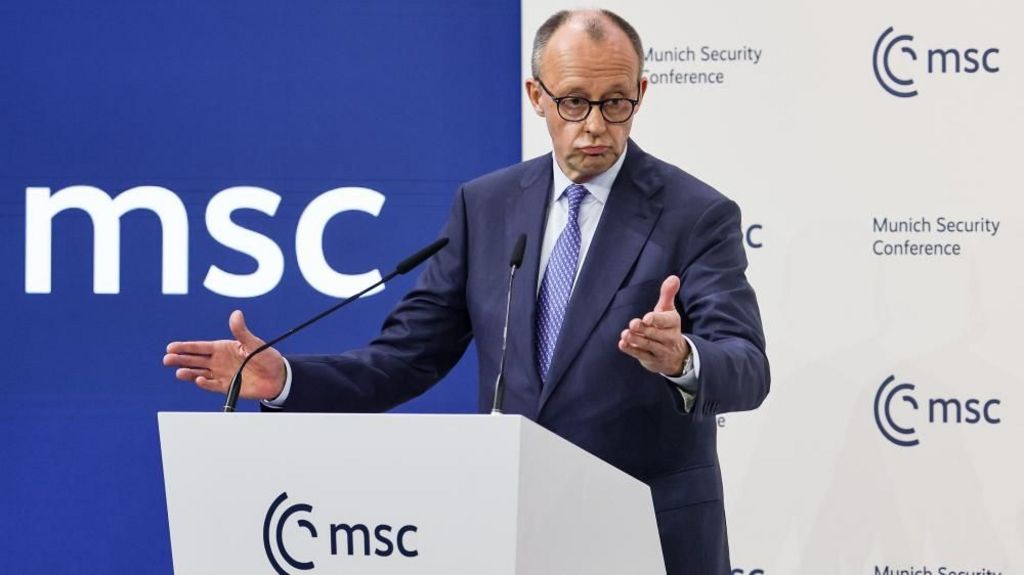
    German Chancellor Friedrich Merz delivered a sobering assessment of global stability during his opening address at the Munich Security Conference, declaring that the rules-based international order has effectively ceased to exist. Speaking before an assembly of approximately 50 world leaders, Merz warned that fundamental freedoms can no longer be taken for granted in an era defined by great power competition, emphasizing that Europeans must prepare to make significant sacrifices to safeguard their security interests.

    The Chancellor openly acknowledged a profound deterioration in transatlantic relations, stating that ‘a deep divide has opened between Europe and the United States.’ This candid assessment comes amid heightened tensions following former President Donald Trump’s repeated threats to annex Greenland from Denmark and implement tariffs on European imports. The controversial statements have been viewed by many European leaders as a watershed moment that has fundamentally eroded trust within the NATO alliance.

    Merz specifically referenced comments made by Vice President JD Vance at last year’s conference, acknowledging the accuracy of his assessment regarding the transatlantic rift while simultaneously rejecting the protectionist and cultural policies of the ‘Make America Great Again’ movement. ‘Freedom of speech ends here with us when that speech goes against human dignity and the constitution,’ Merz stated, drawing a clear ideological distinction between European and American approaches to governance.

    Despite these challenges, the German leader refused to abandon the transatlantic partnership, instead issuing a direct appeal to the United States to ‘repair and revive transatlantic trust.’ In a significant revelation, Merz disclosed that confidential discussions are underway with French President Emmanuel Macron regarding the establishment of a joint European nuclear deterrent, though he provided no specific details about these negotiations.

    French President Macron later addressed the conference, reinforcing his call for Europe to evolve into a genuine geopolitical power. He characterized the conflict in Ukraine as Europe’s ‘existential challenge’ and urged continued resistance against Russian demands while advocating for increased collective pressure on Moscow.

    US Secretary of State Marco Rubio, who is scheduled to deliver his own address on Saturday, previously characterized the current global situation as a ‘new era in geopolitics’ that requires all nations to reexamine their international roles. The conference agenda also includes critical discussions on West-China tensions and potential developments regarding the Iran-US nuclear deal, reflecting the multifaceted challenges facing the international community.


  • Partial US government shutdown could mean airport delays, travel groups say

    Partial US government shutdown could mean airport delays, travel groups say

    Major aviation and travel sector representatives are urgently appealing to U.S. legislators to resolve a critical government funding deadlock, warning that failure to reach an agreement could trigger significant travel disruptions during the upcoming spring break season. Industry collective Airlines for America, alongside other key travel organizations, has issued a joint statement emphasizing that a partial shutdown would jeopardize transportation security operations through unscheduled absences of TSA personnel, potentially causing extensive flight delays and prolonged airport security wait times.

    The funding crisis stems from an ongoing political stalemate between Democratic lawmakers and the administration regarding immigration enforcement policies. Democrats have conditioned their support for Department of Homeland Security funding on implementing substantial reforms within U.S. Immigration and Customs Enforcement (ICE). These demanded changes include prohibiting immigration agents from wearing face masks during operations, enhancing officer identification protocols, and establishing stricter warrant acquisition procedures. The push for reform gained momentum following January incidents where federal agents fatally shot two Minneapolis residents during protests against immigration enforcement actions in Minnesota.

    Senate Democrats recently blocked two proposed funding measures that excluded these immigration policy changes. The previous temporary funding extension, enacted in late January, provided only a two-week reprieve for DHS operations while negotiations continued. President Trump remained noncommittal when questioned about potential compromises, stating only that administration officials would ‘see what happens’ while emphasizing the need to ‘protect our law enforcement’.

    Unlike the comprehensive 43-day government shutdown in 2018—which centered on healthcare funding debates and caused widespread federal worker furloughs and aviation chaos—this partial shutdown primarily affects DHS components including the Transportation Security Administration and Coast Guard. Critical aviation safety operations remain funded through the Federal Aviation Administration, which received full-year appropriations previously. However, approximately 56,000 Coast Guard personnel face potential pay suspension, possibly forcing the agency to curtail non-essential missions if the funding impasse persists.

    The Department of Homeland Security retains access to $165 billion allocated through previous legislation, including $75 billion specifically designated for ICE operations, which may mitigate some financial shortfalls during the shutdown. Congress is scheduled to remain in recess until February 23, potentially extending the shutdown until President Trump’s scheduled State of the Union address on February 24, though legislators could reconvene earlier if negotiations show promise.

  • French foreign minister faces criminal complaint over misquoting Francesca Albanese

    French foreign minister faces criminal complaint over misquoting Francesca Albanese

    A significant legal confrontation has emerged in Paris as the Association of Lawyers for the Respect of International Law (Jurdi) submitted a formal complaint to the public prosecutor against France’s Foreign Minister Jean-Noel Barrot. The legal group alleges the minister deliberately disseminated false information regarding UN Special Rapporteur on Palestine Francesca Albanese’s statements about Israel.

    The controversy originated when Minister Barrot, responding to a parliamentary inquiry from Renaissance MP Caroline Yadan on February 11, demanded Albanese’s resignation based on misrepresented excerpts of her Doha speeches. Yadan had incorrectly claimed the UN expert described Israel as the “common enemy of humanity” during her virtual address at the Al Jazeera Forum on February 7.

    Jurdi’s comprehensive analysis of Albanese’s complete remarks reveals she consistently used the phrase “common enemy” in a broader geopolitical context. In both her February and December addresses in Doha, Albanese referenced systemic forces that enable violations of international law, specifically criticizing “political, military and economic forces that have enabled and sustained Israel’s genocidal war on Gaza” and describing a system “where politics serves economic interests.”

    The legal association contends that Minister Barrot’s characterization before the National Assembly constituted a “clear misrepresentation” that may violate French laws against disseminating false information that could disturb public order. Jurdi emphasized that UN special rapporteurs operate under international protections that guarantee their independence, and that calls for resignation from member states represent inappropriate political pressure.

    This incident forms part of a broader pattern of European criticism toward Albanese, with German and Italian foreign ministers similarly demanding her resignation based on the same misquoted statements. The UN expert responded on social media, noting that three European governments had accused her “based on statements I never made” while demonstrating less conviction against those responsible for killing over 20,000 Palestinian children.

    Jurdi identified that the misrepresentation originated with partial excerpts circulated by pro-Israel advocacy group UN Watch, which were then amplified by public figures without proper context. The legal group warned that falsely labeling Albanese’s remarks as hate speech could endanger her personal security as an independent expert.

    Albanese has faced previous sanctions from the Trump administration in July, which barred her from entering the United States and froze her assets, effectively cutting her off from the global financial system. Despite these challenges, she has continued her mandate, producing three reports since October 2023 that characterize Israel’s actions in Gaza as genocide and criticize European powers for providing diplomatic, military and political cover for Israel.

  • Italy pledges deeper cooperation at second Italy-Africa Summit

    Italy pledges deeper cooperation at second Italy-Africa Summit

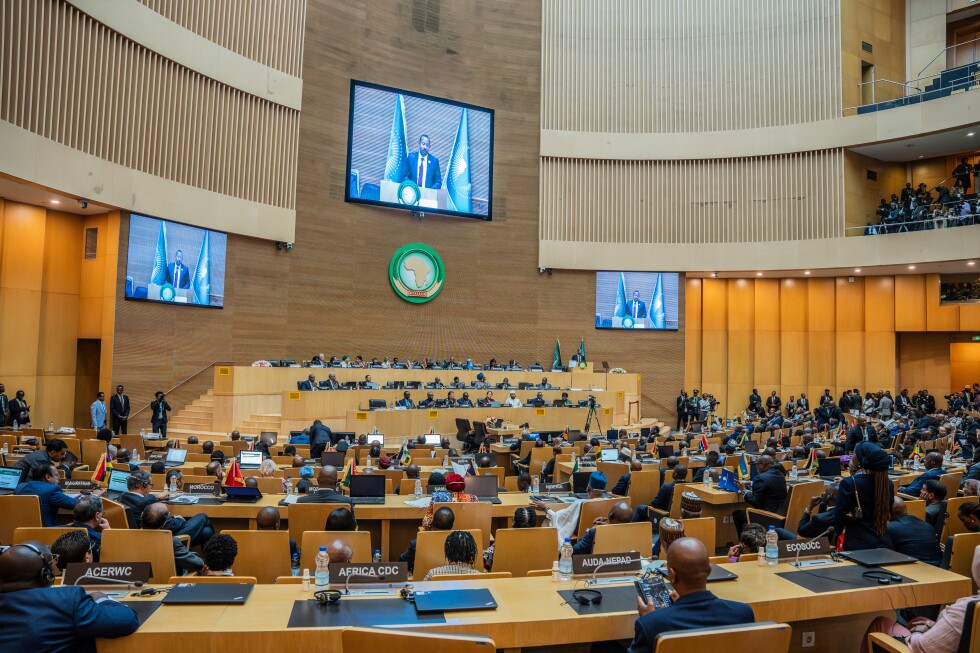
    ADDIS ABABA, Ethiopia — In a landmark gathering on African soil, Italy convened its second Italy-Africa summit on Friday, marking a significant shift from dialogue to actionable partnership under the Mattei Plan for Africa. Italian Prime Minister Giorgia Meloni addressed dozens of African leaders in Ethiopia’s capital, emphasizing investment-driven cooperation over traditional aid models.

    The summit served as a strategic platform to review approximately 100 projects initiated across 14 African nations since the plan’s 2024 launch. Critical sectors including energy infrastructure, climate transition, digital connectivity, agriculture, healthcare, and artificial intelligence development dominated the discussions.

    Prime Minister Meloni articulated Italy’s commitment to drawing from “African wisdom” to ensure relevance to local needs. “We want to build things together,” she declared, underscoring the philosophy of mutual construction rather than unilateral assistance.

    Ethiopian Prime Minister Abiy Ahmed characterized the partnership as Africa’s gateway to Europe, highlighting the complementary potential of Africa’s youthful demographic and Europe’s technological capital. “By combining Africa’s energetic and creative population with Europe’s experience, technology and capital,” he noted, “we can build solutions that deliver prosperity to our continents and beyond.”

    The gathering coincided with the upcoming African Union Summit, allowing for continued high-level engagement. However, Kenyan political analyst Nanjala Nyabola injected cautionary perspective, noting that African governments often prioritize “optics instead of actually making summits a meaningful engagement.” She advocated for more rigorous preparatory work, suggesting nations should present comprehensive needs assessments rather than reacting to external agendas.

    The Mattei Plan represents Italy’s strategic recalibration of Africa relations, focusing on sustainable development partnerships that address both continental priorities and Europe’s economic and migration interests.

  • UK: High Court finds Palestine Action ban unlawful and should be ‘quashed’

    UK: High Court finds Palestine Action ban unlawful and should be ‘quashed’

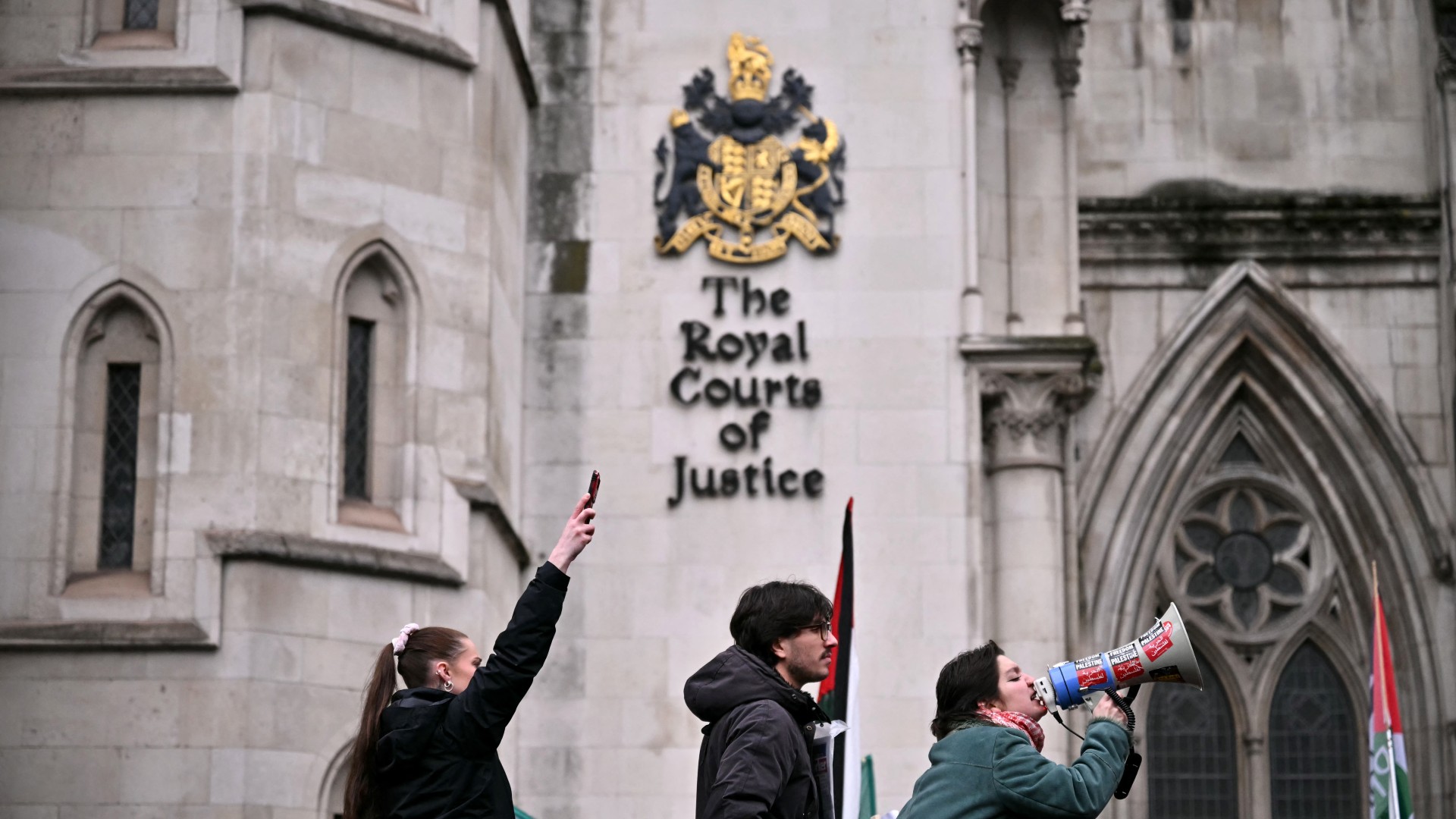
    In a landmark judicial decision with profound implications for civil liberties, England’s High Court has declared the British government’s proscription of Palestine Action unlawful. The ruling, delivered by Justice Victoria Sharp following an extensive legal battle, determined that the ban constituted a “very significant interference” with fundamental rights to free speech and assembly.

    The court found the government’s decision to designate the group under terrorism legislation was discriminatory in nature. While acknowledging that a “very small number” of Palestine Action’s activities could be classified as terrorism under statutory definitions, the court emphasized the disproportionate impact of the blanket prohibition. The ban remains technically in effect pending further court order.

    The case originated from a judicial review petition filed by Huda Ammori, co-founder of Palestine Action, challenging the July 2025 proscription that criminalized membership, expressions of support, or display of the group’s symbols—offenses punishable by up to 14 years imprisonment. Ammori hailed the verdict as a “monumental victory” for both British civil liberties and Palestinian solidarity movements.

    Human rights organizations welcomed the decision, with Human Rights Watch UK director Yasmine Ahmed characterizing it as “a shot in the arm for British democracy” amid growing concerns about governmental overreach. The ruling specifically addressed the government’s application of counter-terrorism measures to suppress legitimate political expression, particularly criticism of Israel’s actions in Gaza.

    The controversial ban followed an incident at a Royal Air Force base where activists allegedly caused approximately £7 million in property damage to aircraft purportedly destined for use in the Gaza conflict. Government lawyers contended that serious property damage alone could constitute terrorism under UK law, arguing that proscription deprives organizations of “the oxygen of publicity.”

    Since the initial ban, nearly 3,000 individuals—including clergy, former magistrates, and medical professionals—faced arrest under terrorism laws for displaying support for the organization. The court’s decision establishes a critical precedent regarding the appropriate limits of state power in balancing security concerns with fundamental democratic freedoms.

  • Six possible effects of Trump’s climate policy change

    Six possible effects of Trump’s climate policy change

    In a sweeping environmental policy reversal, the Trump administration has formally rescinded the Obama-era “endangerment finding,” a foundational scientific determination that has guided U.S. climate regulation for over a decade. This pivotal 2009 ruling, mandated by a Supreme Court decision, classified six greenhouse gases—including carbon dioxide and methane—as pollutants threatening public health, thereby compelling the Environmental Protection Agency (EPA) to regulate them under the Clean Air Act.

    The immediate consequence of this repeal dismantles the legal framework that has restricted industrial greenhouse gas emissions, particularly targeting the automotive sector. The White House projects significant economic benefits, asserting that eliminating these regulations will reduce manufacturing costs by approximately $2,400 per vehicle. Industry representatives, including Ford and the Alliance for Automotive Innovation, have welcomed the change, citing improved alignment between regulatory standards and consumer preferences.

    However, environmental organizations warn of severe repercussions. The Environmental Defense Fund estimates this policy shift could result in 7.5-18 billion additional tonnes of greenhouse emissions by 2055—equivalent to three times America’s current annual output—potentially causing tens of thousands of premature deaths and millions of asthma attacks. Legal experts anticipate a resurgence of “public nuisance” lawsuits against polluting corporations, as the repeal invalidates a 2011 Supreme Court ruling that centralized emissions regulation with the EPA.

    The decision has ignited concerns about America’s competitive standing in renewable technology. Former EPA official Margo Oge cautioned that while global markets accelerate toward electric vehicles, U.S. automakers risk isolation with obsolete technology. This perspective echoes former Secretary of State John Kerry’s observations regarding China’s dominance in renewable energy deployment.

    EPA Administrator Lee Zeldin defended the reversal as “the single largest deregulatory action in U.S. history,” claiming $1.3 trillion in taxpayer savings. The administration maintains that previous regulations drove manufacturing overseas to countries with weaker environmental standards, ultimately increasing global emissions. The policy is expected to face immediate legal challenges from environmental groups.

  • France concerned about the risk of foreign interference ahead of elections

    France concerned about the risk of foreign interference ahead of elections

    President Emmanuel Macron has issued a resolute pledge to protect the integrity of France’s 2027 presidential election from foreign manipulation. In his New Year’s address, Macron identified Russia as the primary antagonist in an ongoing information war designed to destabilize both France and the broader European landscape. This declaration amplifies concerns he voiced two months prior about underestimating Russian disinformation campaigns.

    The French defense ministry’s digital vigilance unit, Viginum, has documented an alarming escalation in foreign interference, cataloging 25 distinct operations targeting recent legislative and European elections. These efforts, predominantly orchestrated by Russian and Chinese actors, have employed sophisticated tactics including social media manipulation and cyber intrusions. One notable case involved left-wing candidate Raphael Glucksmann, who was subjected to a pro-Chinese operation branding him as a CIA operative within Europe.

    Socialist Senator Rachid Temal, who authored a parliamentary inquiry into foreign meddling, warns that municipal elections present particularly vulnerable targets due to minimal oversight in smaller constituencies. “With sufficient funding,” Temal notes, “incumbent candidates can be systematically undermined through fear-based social media strategies that distort their political platforms.”

    Beyond the acknowledged threats from Moscow and Beijing, experts identify more covert dangers. Digital diplomacy specialist Rayna Stamboliyska highlights potential U.S. interference, particularly concerning the Trump administration’s alleged consideration of sanctions against French judiciary members overseeing Marine Le Pen’s corruption case. Such actions could compromise judicial independence and electoral integrity, potentially altering the 2027 political landscape by affecting Le Pen’s eligibility.

    The interference ecosystem extends to Middle Eastern powers pursuing their geopolitical agendas. The United Arab Emirates has emerged as a significant influence operator, allegedly providing financial lifelines to the National Rally party and orchestrating campaigns against the Muslim Brotherhood. CNRS researcher Vincent Geisser observes that the UAE and Israel appear to be collaborating to promote narratives about the ‘Islamisation of France,’ leveraging Islamophobia to influence political discourse.

    Israel’s involvement manifests through official endorsements of the National Rally and organized visits for French politicians. Sciences Po professor emeritus Bertrand Badie identifies Israel as one of three nations (alongside Russia and the U.S.) that most explicitly impact French sovereignty, employing multiple channels to shape public opinion and reward political alignment.

    The complex web of foreign influence has prompted legislative responses, including proposed resolutions to investigate lobbying groups like Elnet, which organizes trips for French parliamentarians to Israel and hosts conferences aligned with far-right perspectives. Despite these measures, the pervasive nature of contemporary foreign interference continues to challenge France’s democratic institutions as the nation prepares for crucial electoral contests.

  • BBC at memorial for Gen Z protesters after landmark election in Bangladesh

    BBC at memorial for Gen Z protesters after landmark election in Bangladesh

    In the wake of Bangladesh’s landmark general election, a poignant memorial has emerged at the former residence of Prime Minister Sheikh Hasina, now serving as a tribute to the Generation Z activists who lost their lives during the 2024 pro-democracy uprising. BBC South Asia correspondent Azadeh Moshiri recently documented the site, which has transformed into a powerful symbol of youth resistance and political sacrifice.

    The memorial stands as testament to the extraordinary protest movement that saw Bangladesh’s digitally-native youth challenge established political structures through both digital activism and street demonstrations. These demonstrations, characterized by their organic organization and social media coordination, represented one of the most significant challenges to the ruling government in recent years.

    Historical context reveals that the 2024 uprising marked a watershed moment in Bangladesh’s political landscape, with students and young professionals demanding electoral reforms, government transparency, and greater political freedoms. The conversion of the former prime ministerial residence into a memorial carries profound symbolic weight, representing both acknowledgment of past struggles and the enduring spirit of democratic aspiration.

    The creation of this memorial site following the recent election suggests a complex political reconciliation process, potentially indicating official recognition of the protest movement’s significance despite previous government opposition. International observers note that such memorialization could represent an important step in national healing while acknowledging the substantial role youth activism plays in shaping Bangladesh’s democratic future.

  • Orban rival accuses opponents of planning blackmail ahead of election

    Orban rival accuses opponents of planning blackmail ahead of election

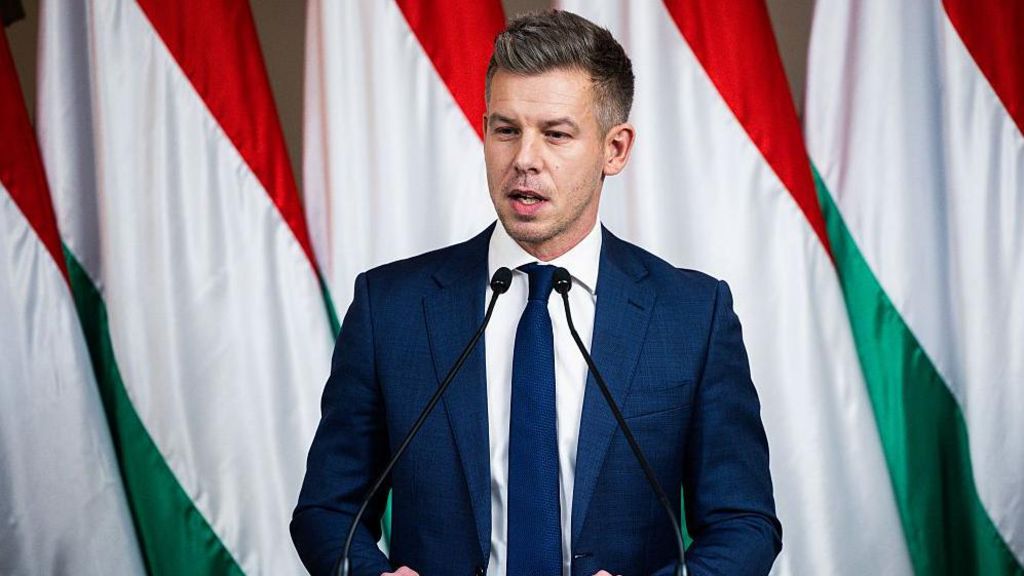
    With less than two months remaining before Hungary’s pivotal parliamentary elections, opposition leader Peter Magyar has publicly accused the ruling Fidesz party of orchestrating a blackmail scheme involving a secretly recorded sex tape. Magyar, whose Tisza party currently leads Prime Minister Viktor Orban’s Fidesz in opinion polls, announced he is filing formal complaints with authorities regarding what he describes as a politically motivated smear campaign.

    The allegations center on a purported video from August 2024, which Magyar claims was recorded using secret service equipment and potentially manipulated. He acknowledges engaging in consensual sexual activity with a former girlfriend during that period but maintains any recording was made without consent and possibly altered for political purposes.

    The controversy emerged following the online appearance of a bedroom photograph from the apartment where the alleged incident occurred. Magyar suggested the timing coincides strategically with the launch of his nationwide campaign next week and represents a deliberate attempt to disrupt his final week with his three children before the April election.

    Fidesz officials have uniformly denied knowledge of the allegations. Party communications director Tamas Menczer accused Magyar of dishonesty, while Prime Minister Orban’s chief of staff Gergely Gulyas stated he could not comment on matters about which he had no information.

    The former girlfriend involved has reportedly told Hungarian media that both she and Magyar are victims regarding the alleged illicit recording and expressed willingness to pursue joint legal action.

    This political scandal unfolds against the backdrop of a significant shift in Hungary’s political landscape. The latest poll by Hungary’s Idea Institute shows Magyar’s center-right Tisza party leading Orban’s Fidesz by at least eight percentage points, potentially ending Orban’s 16-year tenure as Hungary’s nationalist leader.

    The election campaign officially begins February 21, but these early allegations suggest an unusually contentious pre-election period. Orban’s campaign has primarily focused on criticizing the European Union, accusing Brussels of attempting to undermine his government, while Magyar has built substantial support by promising to reset Hungary’s relationships with European partners.

  • Bangladesh nationalists claim big election win, opposition cries foul

    Bangladesh nationalists claim big election win, opposition cries foul

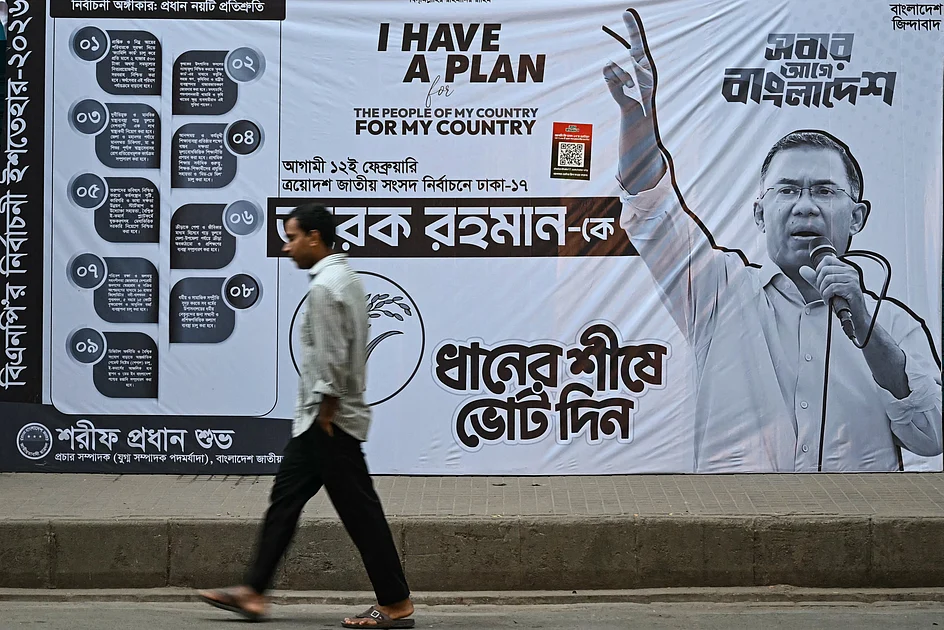
    In a pivotal moment for Bangladeshi democracy, the Bangladesh Nationalist Party (BNP) has declared a resounding triumph in the nation’s first general elections since the violent 2024 uprising. Projections from major broadcasters indicate the BNP has comfortably surpassed the 150-seat threshold required for parliamentary control, with Jamuna television forecasting 212 seats for the party.

    Tarique Rahman, the BNP leader, stands poised to assume the role of prime minister following what his party describes as a sweeping mandate. However, the electoral process faces vehement challenges from Jamaat-e-Islami, the principal Islamist opposition party leading a broader coalition. Jamaat officials have raised profound concerns regarding result integrity, citing “repeated inconsistencies and fabrications in unofficial result announcements,” though specific evidence remains undisclosed.

    The Election Commission has maintained that official results for 299 contested constituencies will not be finalized until later Friday, with an additional 50 parliamentary seats reserved for women to be allocated from party lists.

    International responses emerged rapidly, with the U.S. Embassy extending congratulations for a “historic victory” and neighboring India acknowledging Rahman’s “decisive win” despite recent diplomatic tensions. Pakistan’s prime minister commended the Bangladeshi populace for the “successful conduct of elections.”

    Interim leader Muhammad Yunus, the Nobel Peace Prize laureate who assumed power following the ouster of longtime premier Sheikh Hasina in August 2024, appealed for national unity and calm. His administration had barred Hasina’s Awami League from participation in the polls. Hasina, currently in hiding in India after receiving an in-absentia death sentence for crimes against humanity, condemned the election as “illegal and unconstitutional.

    The electoral process occurred alongside a landmark constitutional referendum proposing sweeping governmental reforms, including prime ministerial term limits, establishment of an upper parliamentary chamber, enhanced presidential authority, and strengthened judicial independence. Preliminary indications suggest voter endorsement of these measures.

    Despite reported campaign violence that resulted in five fatalities and over 600 injuries according to police records, election day proceeded with relative tranquility, characterized by only “a few minor disruptions” per electoral authorities.