分类: politics

  • US Secret Service kills man trying to access Trump Florida estate

    US Secret Service kills man trying to access Trump Florida estate

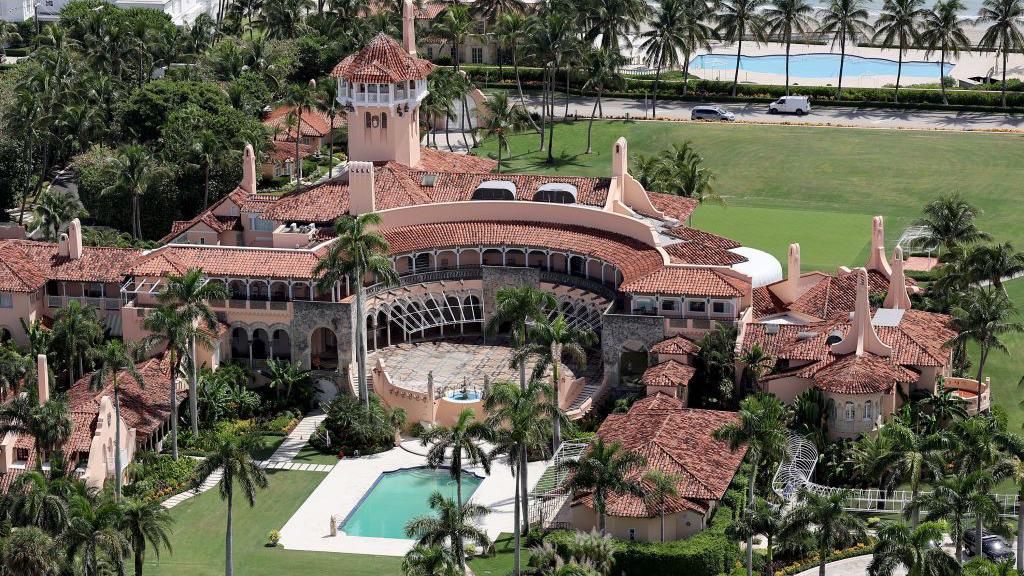
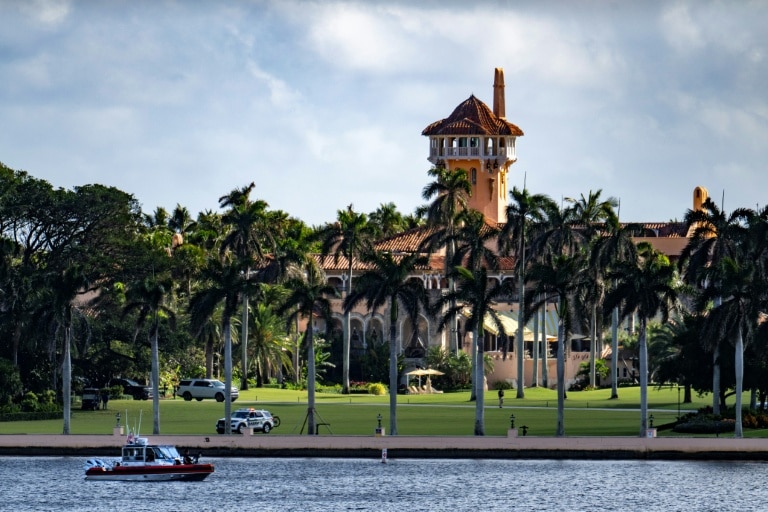
    In a pre-dawn security incident on Sunday, U.S. Secret Service agents and local law enforcement fatally shot an armed intruder attempting to breach the perimeter of former President Donald Trump’s Mar-a-Lago estate in Palm Beach, Florida. The confrontation occurred approximately at 1:30 AM local time (0630 GMT) while Trump was absent from the property, currently residing in Washington.

    According to official statements from the Secret Service and Palm Beach County Sheriff Ric Bradshaw, the male suspect—believed to be in his early twenties—was detected near the north gate of the compound armed with a shotgun and a fuel container. Security personnel immediately issued commands for the individual to disarm. Although the suspect complied by placing the fuel canister on the ground, he subsequently raised the shotgun into a firing position, prompting lethal response from two Secret Service agents and one sheriff’s deputy.

    The individual was pronounced deceased at the scene. No law enforcement officers or protected persons were harmed during the exchange. The identity of the suspect remains undisclosed pending notification of next of kin.

    This event marks the latest in a concerning pattern of security threats against Trump, who has been the target of multiple assassination attempts and plots. Notably, in September 2024, Ryan Routh received a life sentence for orchestrating an assassination attempt at a Florida golf course. That incident followed the July 2024 Pennsylvania rally shooting where attacker Matthew Crooks grazed Trump’s ear before being neutralized by security.

    The Secret Service, tasked with protecting current and former presidents, their families, and major political figures, has initiated a full investigation into the breach. The White House has not yet issued an official statement regarding the incident, which occurs against a backdrop of heightened political tensions and violence across the United States.

  • ‘Affront to humanity’: Sudan slams Uganda for hosting RSF paramilitary boss

    ‘Affront to humanity’: Sudan slams Uganda for hosting RSF paramilitary boss

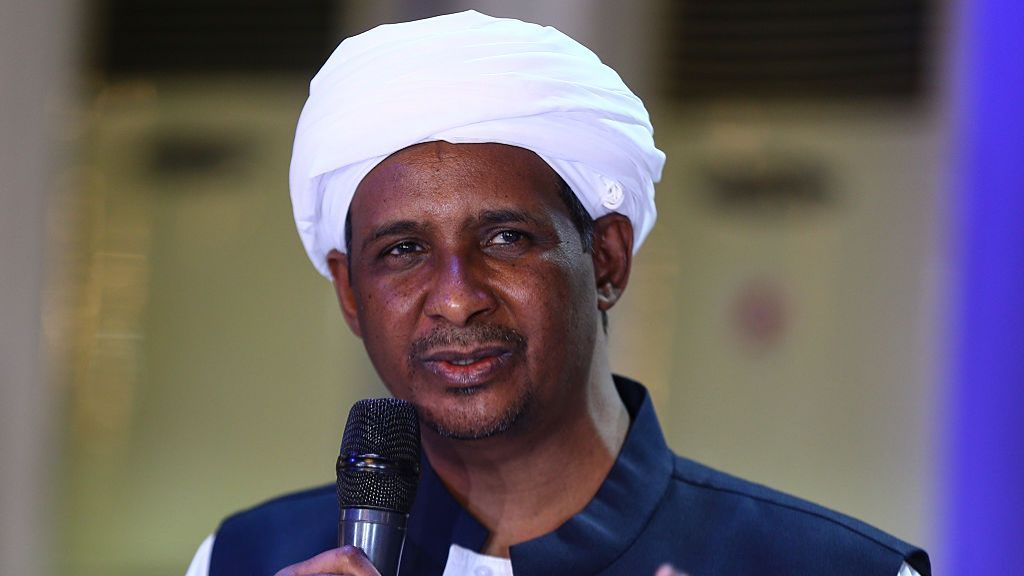
    Sudan’s government has issued a formal condemnation against Uganda for hosting paramilitary leader Mohamed Hamdan Dagalo, commander of the Rapid Support Forces (RSF), labeling the diplomatic engagement an “affront to humanity.” The Sudanese foreign ministry, representing the nation’s armed forces, accused Uganda of violating international law by welcoming Dagalo, whose forces stand accused of perpetrating extensive atrocities throughout Sudan’s ongoing civil conflict.

    The diplomatic confrontation emerged after Ugandan President Yoweri Museveni met with Dagalo—commonly known as Hemedti—at his presidential residence in Entebbe last Friday. Museveni, who serves as an African Union-appointed mediator between Sudan’s military and the RSF, stated that he emphasized the necessity of a “peaceful political solution” to end the conflict.

    In a strongly-worded statement released on Sunday, Sudan’s foreign ministry denounced the reception of the “rebel leader” and described the meeting as an “unprecedented move” that insults not only the Sudanese people but humanity as a whole. While acknowledging Uganda’s sovereign right to host foreign visitors, Khartoum insisted that welcoming Dagalo constitutes a breach of international legal standards.

    The RSF and Sudan’s national armed forces have been embroiled in a devastating power struggle for nearly three years, resulting in hundreds of thousands of casualties and displacing over 13 million people. Both factions face allegations of committing atrocities, with recent UN reports suggesting that RSF actions during the siege of el-Fasher may amount to genocide.

    This incident echoes previous regional tensions, including Sudan’s suspension of imports from Kenya last year after Nairobi hosted RSF representatives. African nations continue to grapple with diplomatic balancing acts as they attempt to mediate a conflict that shows no signs of abatement, with the RSF recently announcing the capture of al-Tina in North Darfur following intense fighting.

  • France will summon US Ambassador Charles Kushner after US comments on activist’s death

    France will summon US Ambassador Charles Kushner after US comments on activist’s death

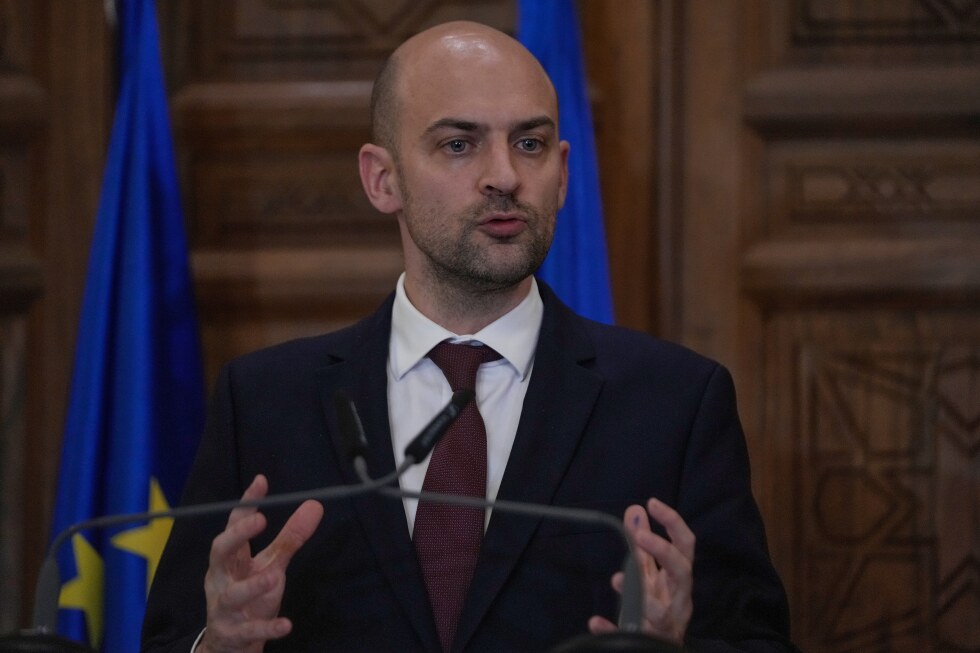
    The French government has announced it will formally summon U.S. Ambassador Charles Kushner to express strong disapproval of the Trump administration’s commentary regarding the fatal assault of far-right activist Quentin Deranque. Foreign Minister Jean-Noel Barrot’s decision comes in direct response to statements issued by the State Department’s Counterterrorism Bureau, which utilized social media platform X to voice concerns about the killing allegedly perpetrated by left-wing militants—claims reportedly supported by France’s Interior Minister.

    Deranque succumbed to severe brain injuries sustained during violent clashes in Lyon, where he was assaulted alongside disturbances at a student gathering featuring far-left legislator Rima Hassan as keynote speaker. This incident has intensified existing political fractures as France approaches next year’s presidential election, prompting President Emmanuel Macron to appeal for national calm following a 3,000-strong memorial march organized by right-wing groups.

    Barrot vehemently rejected what he characterized as political exploitation of the tragedy, stating France requires no instruction from international reactionary movements regarding violence prevention. Meanwhile, the State Department maintained its position that radical leftist violence represents a growing threat to public safety, emphasizing the need for judicial accountability.

    Judicial proceedings have advanced with seven individuals facing preliminary charges including intentional homicide, aggravated violence, and criminal conspiracy. Six defendants received full charges across all counts while the seventh faces complicity allegations.

    Beyond this diplomatic friction, Barrot indicated additional concerns regarding recent U.S. sanctions imposed on Thierry Breton—former EU commissioner overseeing social media regulations—and International Criminal Court judge Nicolas Guillou, both deemed by France as targets of unjustifiable measures.

  • Hungary threatens to block fresh EU sanctions against Russia over oil deliveries

    Hungary threatens to block fresh EU sanctions against Russia over oil deliveries

    Hungary has declared it will block the European Union’s proposed 20th sanctions package against Russia and withhold critical financial support for Ukraine until Russian oil deliveries through the Druzhba pipeline resume. The announcement came from Hungarian Foreign Minister Péter Szijjártó in a social media statement on Sunday, just ahead of Monday’s crucial EU foreign ministers meeting in Brussels.

    The diplomatic confrontation stems from the January 27 interruption of Russian oil shipments to Hungary and Slovakia, which Ukrainian authorities attribute to damage caused by Russian drone attacks on the Druzhba pipeline. Szijjártó accused Ukraine of intentionally withholding oil shipments and stated Hungary would prevent any EU decisions favorable to Kyiv until the matter is resolved.

    This stance creates significant complications for EU unity, as sanctions require unanimous approval from all 27 member states. The proposed measures were intended to coincide with the fourth anniversary of Russia’s full-scale invasion of Ukraine on Tuesday.

    In a further escalation, Hungary revealed plans to block a substantial €90 billion EU loan package designed to support Ukraine’s military and economic stability over the next two years. Slovakia has joined Hungary in applying pressure, with Prime Minister Robert Fico threatening to cut emergency electricity supplies to Ukraine if oil deliveries aren’t restored by Monday.

    Ukraine’s Foreign Ministry condemned these actions as “ultimatums and blackmail” that effectively assist Russian aggression. The ministry emphasized that these threats come during extreme winter conditions while Russia systematically targets Ukrainian energy infrastructure.

    Hungarian Prime Minister Viktor Orbán, who maintains Europe’s closest relationship with the Kremlin, has consistently argued that Russian energy is essential for Hungary’s economic stability. While most European nations have dramatically reduced Russian energy imports since the invasion began, Hungary and Slovakia secured temporary exemptions from EU bans on Russian oil imports.

  • Trump says sending hospital boat to Greenland to treat ‘many sick people’

    Trump says sending hospital boat to Greenland to treat ‘many sick people’

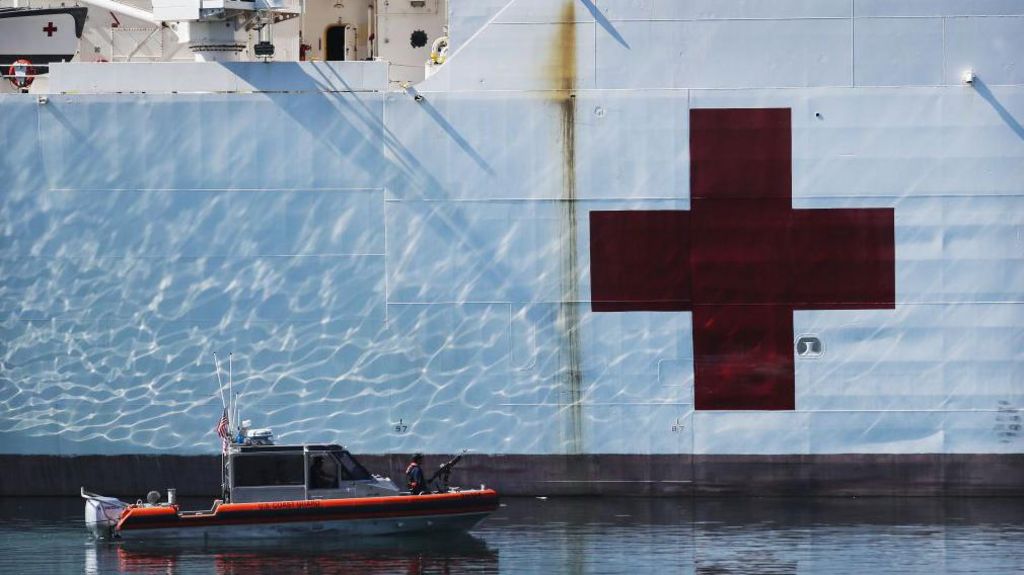
    Former President Donald Trump declared via his Truth Social platform on Saturday that a U.S. naval hospital ship is en route to Greenland, citing a need to provide medical care for “many sick people” in the autonomous Danish territory. The announcement revives attention on Trump’s longstanding strategic interest in the Arctic region.

    The post featured an apparent AI-generated image depicting the USNS Mercy, an 894-foot medical vessel typically stationed off Southern California, approaching Greenland’s distinctive snow-capped mountains. Trump provided no specific details regarding the nature of the medical crisis, the number of affected individuals, or verification that the Mercy is actually the vessel being deployed.

    This development occurs within the context of significantly strained U.S.-Denmark relations following Trump’s repeated expressions of desire to acquire Greenland, at one point threatening forcible seizure. His administration has consistently framed the mineral-rich territory as vital to U.S. and NATO security interests, particularly concerning Russian and Chinese Arctic expansion.

    The initiative is reportedly coordinated with Louisiana Governor Jeff Landry, whom Trump designated as his special envoy to Greenland in December. During recent Mardi Gras festivities in New Orleans, Landry posted a photograph of himself alongside Greenlandic representatives holding the territory’s flag, captioning it, “Great to host some of the wonderful people of Greenland.”

    This announcement follows closely after Danish King Frederik X’s visit to Greenland, a trip that carried heightened significance given the geopolitical tensions surrounding Trump’s overtures. Last month, Trump temporarily stepped back from acquisition threats after negotiating a preliminary framework with NATO Secretary General Mark Rutte to secure increased U.S. influence in the region without formal transfer of sovereignty.

  • Danish military evacuates US submariner who needed urgent medical care off Greenland

    Danish military evacuates US submariner who needed urgent medical care off Greenland

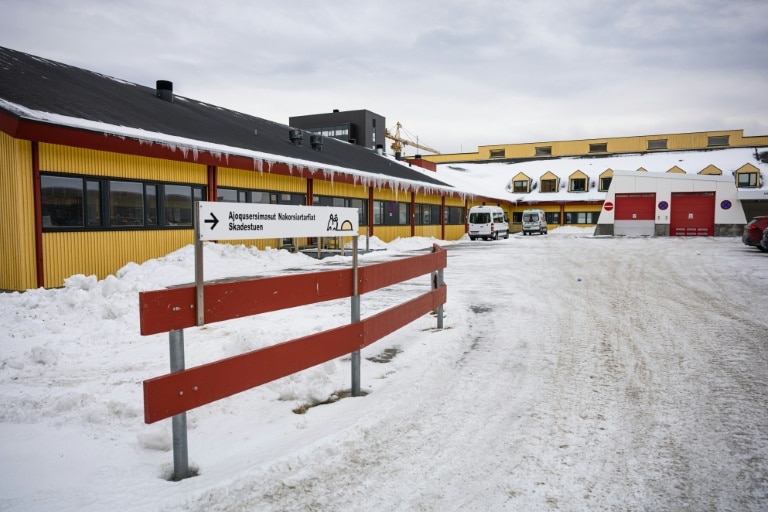
    COPENHAGEN, Denmark — A medical evacuation operation involving a U.S. submarine crew member has unexpectedly intensified diplomatic friction between the United States and Denmark. Denmark’s Joint Arctic Command executed a precision rescue mission Saturday, extracting an American submariner requiring urgent medical attention approximately 7 nautical miles off Nuuk, Greenland’s capital. The evacuation was conducted via a Danish Seahawk helicopter deployed from an inspection vessel, with the patient subsequently transferred to Nuuk’s medical facilities for treatment.

    The routine military cooperation was swiftly overshadowed by provocative statements from U.S. President Donald Trump. Utilizing his Truth Social platform late Saturday, Trump announced intentions to deploy a hospital ship to Greenland, characterizing the autonomous Danish territory as having inadequate healthcare provisions. ‘Working with the fantastic Governor of Louisiana, Jeff Landry, we are going to send a great hospital boat to Greenland to take care of the many people who are sick, and not being taken care of there,’ Trump declared, referencing his special envoy for Greenland affairs.

    Danish Prime Minister Mette Frederiksen issued a firm rebuttal Sunday, defending both Denmark’s and Greenland’s healthcare systems. Through an official Facebook post, Frederiksen emphasized: ‘I am happy to live in a country where there is free and equal access to health for all. Where it’s not insurances and wealth that determine whether you get proper treatment. You have the same approach in Greenland.’ Her statement concluded with a cheerful weekend greeting accompanied by a smiling emoji, contrasting sharply with Trump’s criticisms.

    This exchange represents the latest chapter in increasingly strained relations between the NATO allies. The historically robust bilateral partnership has faced significant challenges following Trump’s repeated expressions of interest in acquiring the mineral-rich, strategically vital Arctic territory, creating diplomatic discomfort in Copenhagen.

  • Andrew’s arrest hands King Charles fresh royal crisis

    Andrew’s arrest hands King Charles fresh royal crisis

    The British monarchy faces one of its most severe constitutional crises in modern history following the unprecedented arrest of Prince Andrew, the younger brother of King Charles III. The Duke of York was taken into police custody on suspicion of transmitting confidential information to convicted sex offender Jeffrey Epstein during his tenure as UK trade envoy from 2001 to 2011.

    This development represents the latest in a series of formidable challenges that have plagued King Charles since his accession to the throne in September 2022 following the death of Queen Elizabeth II. Royal historians note that the current monarch has confronted an extraordinary convergence of personal and institutional crises unprecedented in recent royal history.

    The king’s reign, which began with the elaborate pageantry of his May 2023 coronation designed to project continuity, has instead been marked by continuous turmoil. The initial disruption came with Prince Harry’s explosive memoir ‘Spare’ in January 2023, which revealed damaging internal family conflicts to a global audience. Subsequently, both King Charles and Catherine, Princess of Wales, announced cancer diagnoses in early 2024, creating additional strain on the royal family’s public duties.

    However, experts identify the Andrew situation as potentially the most damaging to the institution’s stability. Royal historian Andrew Lownie characterized this moment as ‘a crunch point for the monarchy,’ suggesting that evidence of institutional protection for Andrew could necessitate the king’s abdication.

    The current investigation revives longstanding embarrassment over Andrew’s association with Epstein, particularly a 2011 photograph showing the prince with his arm around Virginia Giuffre, Epstein’s primary accuser. Although Charles had attempted to distance the monarchy from the scandal by stripping Andrew of all royal titles in October, the recent Justice Department document release has reignited public outrage.

    In a rare personal statement, King Charles acknowledged the gravity of the situation, vowing that ‘the law must take its course’ while expressing his ‘deepest concern.’ Commentators have drawn parallels to other monarchy-shaking events including the 1936 abdication of Edward VIII and the 1997 death of Princess Diana, noting that restoring public confidence typically requires more than a decade.

    Academic Pauline Maclaran suggests that Charles is partially a victim of timing, inheriting an ‘unexploded bomb’ from his mother, who had long protected Andrew. The queen’s seventy-year reign had provided exceptional stability, making the transition particularly challenging. Experts agree that restoring the monarchy’s moral authority will require visible changes, potentially accelerated under the future reign of Prince William.

  • Trump hikes US global tariff rate to 15 percent

    Trump hikes US global tariff rate to 15 percent

    In a decisive move that defies judicial constraints, former President Donald Trump has escalated his aggressive trade agenda by imposing a sweeping 15% tariff on all imports entering the United States. This action comes just one day after the Supreme Court delivered a significant legal setback to his administration’s economic policies.

    The high court’s 6-3 ruling on Friday substantially limited presidential authority to implement tariffs under the 1977 International Emergency Economic Powers Act, declaring much of Trump’s tariff program unconstitutional. In response, Trump utilized an alternative legal mechanism to not only maintain but intensify his trade measures, announcing through his Truth Social platform that the administration was raising import levies to ‘the fully allowed, and legally tested, 15% level.’

    The political confrontation escalated as Trump launched personal attacks against the conservative justices who formed part of the majority opinion, accusing them of ‘disloyalty’ and characterizing them as ‘fools and lap dogs.’ This extraordinary criticism targeted members of a court that has generally supported the president since his return to office.

    International reactions emerged swiftly, with Brazilian President Luiz Inacio Lula da Silva urging equal treatment for all nations and German Chancellor Friedrich Merz announcing plans to coordinate a unified European response ahead of his scheduled March visit to Washington. Domestically, Pennsylvania Governor Josh Shapiro condemned the move as creating ‘havoc on our farmers, small business owners, and families.’

    The newly imposed tariff carries a 150-day limitation under current law, with exemptions remaining for pharmaceuticals and goods traded under the US-Mexico-Canada Agreement. The White House confirmed that even nations with previously negotiated tariff agreements would face the new global levy.

    While sector-specific duties on steel, aluminum, and other goods remain unaffected by the court’s decision, the ruling represents Trump’s most significant judicial defeat since returning to power. Business organizations including the National Retail Federation welcomed the court’s decision as providing ‘much-needed certainty,’ though questions regarding potential tariff refunds remain unresolved and may trigger extensive litigation.

  • More than 1,500 Venezuelan political prisoners apply for amnesty

    More than 1,500 Venezuelan political prisoners apply for amnesty

    Venezuela’s National Assembly President Jorge Rodríguez announced that 1,557 individuals classified as political prisoners have submitted applications for amnesty under new legislation enacted Thursday. The development comes amid ongoing political tensions following the dramatic capture of former President Nicolás Maduro by US forces on January 3rd.

    Rodríguez, who serves as both legislative leader and brother to interim President Delcy Rodríguez, confirmed that ‘hundreds’ of detainees have already been released through the program. The government initially promised significant prisoner releases on January 8th as a goodwill gesture following Maduro’s apprehension.

    The amnesty process prioritizes inmates from Zona Seven of El Helicoide, Caracas’ notorious detention facility, with Rodríguez indicating releases would occur ‘over the next few hours.’ This aligns with US President Donald Trump’s previous commitment to close the infamous prison following Maduro’s capture.

    However, the legislation faces substantial criticism from opposition groups and human rights organizations. A primary concern involves specific exclusions within the law, particularly targeting those who advocated for foreign military intervention in Venezuela. Legal experts note this provision appears directly aimed at political figures like Maria Corina Machado, last year’s Nobel Peace Prize laureate, though her eligibility remains uncertain.

    Additional controversy surrounds the apparent exclusion of military officers who participated in rebellions against Maduro’s administration. Opposition groups maintain that the previous government systematically used political detentions to suppress dissent and silence critics.

    The releases occur while Maduro and his wife Cilia Flores remain in US custody awaiting trial on drug and weapons charges. Maduro has pleaded not guilty, maintaining his status as a ‘prisoner of war.’ Meanwhile, families of El Helicoide detainees have reportedly begun hunger strikes demanding their relatives’ freedom.

  • Trump raises new global tariff from 10 pct to 15 pct

    Trump raises new global tariff from 10 pct to 15 pct

    In a dramatic escalation of trade policy, U.S. President Donald Trump announced Saturday he would impose a sweeping 15% tariff on imports from all nations, defying a Supreme Court ruling that had declared his previous tariff measures unlawful. The decision comes just one day after Trump instituted a 10% worldwide duty in response to the judicial setback.

    Trump made the announcement through social media, declaring: “I, as President of the United States of America, will be, effective immediately, raising the 10% Worldwide Tariff on Countries, many of which have been ‘ripping’ the US off for decades, without retribution (until I came along!), to the fully allowed, and legally tested, 15% level.”

    The move follows Friday’s Supreme Court decision, which ruled 6-3 that Trump’s use of the International Emergency Economic Powers Act to implement tariffs exceeded presidential authority. The ruling represented a significant judicial check on executive power in trade matters.

    Trump’s administration now faces the complex task of developing a new legal framework for these tariffs within coming months. The president promised his team would “determine and issue the new and legally permissible Tariffs,” which he characterized as part of “our extraordinarily successful process of Making America Great Again – GREATER THAN EVER BEFORE!!!”

    The immediate economic implications are substantial, as the increased tariff rate will affect virtually all imported goods entering the United States, potentially triggering retaliatory measures from trading partners and affecting global supply chains already adjusting to the previous day’s announcement.