分类: politics

  • US threatened to block Iraq from its Federal Reserve deposits over Iran-aligned politicians

    US threatened to block Iraq from its Federal Reserve deposits over Iran-aligned politicians

    The United States has issued a stark financial ultimatum to Iraq regarding the formation of its next government, according to confirmation from an Iraqi official to Middle East Eye. Washington has threatened to sever Baghdad’s access to its oil revenue reserves held at the Federal Reserve Bank of New York if Iranian-aligned paramilitary figures are incorporated into the new administration.

    This financial pressure campaign emerges as political negotiations intensify following Iraq’s November parliamentary elections. The Financial Times initially reported the specific threat to cut off Iraq’s dollar deposit supply—a crucial mechanism that has existed since the 2003 U.S. invasion. Under this arrangement, Iraq’s oil export proceeds are stored in the U.S., with monthly shipments of hard currency airlifted to Baghdad, providing Washington with significant economic leverage.

    The Trump administration has previously demonstrated willingness to utilize this financial weapon. During the 2020 crisis following the assassination of Iranian commander Qassem Soleimani, when Baghdad threatened to expel U.S.-led coalition forces, American officials similarly threatened to restrict Iraq’s access to its dollar reserves.

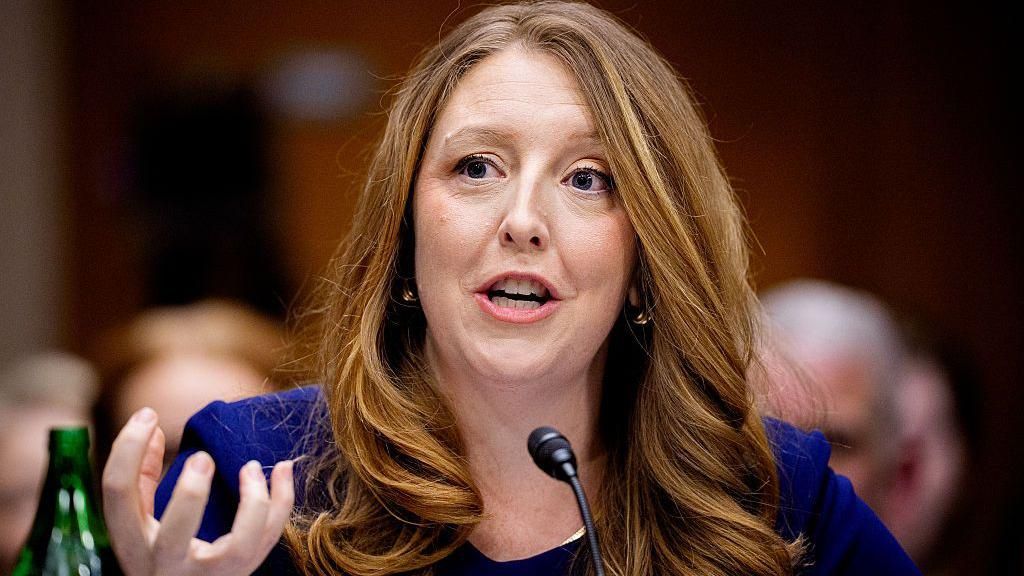
    Joshua Harris, the chargé d’affaires at the U.S. embassy in Baghdad, has personally delivered these warnings to Iraqi officials and influential Shia leaders. The absence of a formal ambassador—with Trump appointing Mark Savaya, a former legal cannabis dealer from Michigan, as special envoy—has placed Harris as the top-ranking State Department official in Iraq.

    The tension escalated particularly after the election of Adnan Fayhan as first deputy speaker of parliament last month. Fayhan, a former member of the Iranian-backed Asaib Ahl al-Haq (AAH) militia, represents the type of political figure Washington seeks to exclude. The U.S. embassy reportedly suspended meetings with officials who supported Fayhan’s election and provided Iraqi counterparts with a list of unacceptable MPs.

    Despite these pressures, Iraq’s political landscape remains complex. Prime Minister Mohammed al-Sudani’s coalition emerged victorious in November’s elections but lacks sufficient seats to independently form a government. Meanwhile, the U.S. military presence has significantly diminished, with recent announcements of “full withdrawal” from Iraq’s military facilities excluding the Kurdish region, where approximately 1,500 troops remain stationed.

  • How Jared Kushner’s Gaza plan would erase Palestinian culture

    How Jared Kushner’s Gaza plan would erase Palestinian culture

    A dystopian cartoon titled “Gaza Beach 2030” by award-winning Dutch artist Peter de Wit portrays parents sunbathing on a Gazan beach while their toddler unearths human skulls from the sand. This haunting imagery now intersects with real-world geopolitical plans as Jared Kushner, former U.S. President Trump’s son-in-law and special envoy, unveiled a controversial vision for Gaza’s future at the World Economic Forum in Davos.

    Kushner’s proposal envisions a transformed Gaza Strip featuring gleaming skyscrapers, coastal tourist attractions, and commercial districts operating under “free market economy principles” modeled after Trump’s America. The presentation included AI-generated renderings depicting a cityscape resembling Gulf Arab states rather than traditional Palestinian architecture, complete with cultural inaccuracies such as Arabic text written in the wrong direction.

    Analysts universally condemned the proposal as colonial capitalism exploiting tragedy. Daniel Levy, a British-Israeli analyst and former peace negotiator, characterized it as continuation of profit-seeking from genocide, noting that over 71,500 Palestinians have been killed in the conflict recognized as genocide by UN experts and human rights organizations.

    Palestinian political analyst Abed Abou Shhadeh invoked Naomi Klein’s “The Shock Doctrine” to explain the phenomenon, stating: “They see the death of people as an opportunity to take their land, to take their apartments, and to take the rights over their land.” He predicted profiteers would include not only American and Israeli interests but also Arab businesspeople and wealthy Palestinians, while excluding the Palestinian people collectively.

    Renowned British-Israeli academic Avi Shlaim called the plan “preposterous and obscene,” noting its “total denial of any Palestinian agency.” Critics highlighted the irony of Kushner promoting this vision while his private equity firm had received substantial investments from Gulf states including UAE, Qatar, and Saudi Arabia after leaving the White House.

    Practical implementation appears unlikely according to most analysts. Annelle Sheline, a former State Department official who resigned over the Gaza war, noted the prerequisite of Hamas’s complete disarmament would be improbable given Israel’s military failure to achieve this despite extensive operations. She warned Trump should remember American failures in Iraq and Afghanistan when considering forced transformations of foreign territories.

  • Watch: ‘It’s just plain incorrect’ – Afghanistan veterans react to Trump Nato remarks

    Watch: ‘It’s just plain incorrect’ – Afghanistan veterans react to Trump Nato remarks

    Military veterans with extensive combat experience in Afghanistan have issued strong rebuttals against recent statements by former President Donald Trump regarding NATO allies’ participation in frontline operations. The veterans’ responses came after Trump suggested that NATO member nations systematically avoided combat engagements during the Afghanistan conflict.

    Multiple decorated veterans have come forward with firsthand accounts contradicting these assertions, providing detailed testimony about international coalition forces’ active combat roles. Their evidence includes documentation of joint operations where NATO partners sustained significant casualties while fighting alongside American troops.

    Military analysts corroborate the veterans’ positions, pointing to official Pentagon records showing that numerous NATO countries suffered combat fatalities throughout the twenty-year campaign. Defense experts emphasize that international forces operated under unified command structures and shared combat responsibilities across various regions of Afghanistan.

    The controversy has sparked broader discussions about international military cooperation and the importance of accurate historical accounting of multinational combat operations. Several veterans organizations have called for greater recognition of allied contributions to counterterrorism efforts in South Asia.

  • UAE President meets heads of delegation at US-Russia-Ukraine trilateral talks

    UAE President meets heads of delegation at US-Russia-Ukraine trilateral talks

    In a significant diplomatic development, Abu Dhabi has become the stage for high-level trilateral negotiations aimed at addressing the prolonged Ukraine conflict. UAE President Sheikh Mohamed bin Zayed Al Nahyan personally met with delegation leaders from the United States, Russia, and Ukraine on Friday, January 23, 2026, demonstrating the Emirates’ commitment to facilitating peaceful conflict resolution.

    The high-stakes discussions brought together prominent figures including US presidential envoys Steve Witkoff and Jared Kushner, alongside Russian military representative Igor Kostyukov and Ukrainian officials Kyrylo Budanov and Rustem Umerov. This gathering represents one of the most direct diplomatic engagements between the conflicting parties in recent years.

    President Sheikh Mohamed articulated his earnest hope that the negotiations would yield successful outcomes capable of contributing to the termination of the years-long hostilities. He emphasized the UAE’s consistent foreign policy approach that prioritizes constructive dialogue and supports all initiatives aimed at advancing diplomatic solutions to international crises.

    The UAE leader further reinforced his nation’s stance by affirming support for all peaceful endeavors seeking to resolve the Ukraine crisis in a manner that respects the interests of all involved parties while promoting global stability. The meeting was attended by senior UAE officials including Abu Dhabi Crown Prince Sheikh Khaled bin Mohamed bin Zayed Al Nahyan and other prominent members of the royal family and government, underscoring the importance the Emirates places on these negotiations.

    This diplomatic initiative positions the UAE as an increasingly influential neutral mediator in complex international disputes, building on its growing reputation as a hub for diplomatic engagement and conflict resolution efforts.

  • Stuck between the US and Russia, Canada must prove it can defend its Arctic territory

    Stuck between the US and Russia, Canada must prove it can defend its Arctic territory

    In a significant strategic shift, Canadian Prime Minister Mark Carney has committed to deploying substantial military resources—including personnel, advanced radar systems, submarines, and aircraft—to secure Canada’s vast Arctic territories. This massive region spans nearly 4 million square kilometers, an area larger than continental Europe, yet is sparsely populated and notoriously treacherous.

    The Arctic has become a focal point of intense geopolitical competition, with Russia and the United States bordering the North Pole, and China aggressively expanding its naval and icebreaker fleets while declaring itself a ‘near Arctic state.’ The security landscape has been further complicated by the Trump administration’s expressed interest in Greenland and its criticism of Canada’s defense capabilities.

    Former Canadian Forces Northern Area Commander Pierre Leblanc emphasized the environmental and strategic challenges, noting that existing infrastructure—aging early warning radars, eight military bases, and approximately 100 Coast Guard personnel monitoring 162,000 km of coastline—is inadequate for modern threats. This assessment is supported by experts who point to the emergence of hypersonic missiles, which travel at least five times the speed of sound and render traditional defense systems obsolete.

    Russia’s operational use of hypersonic weapons in Ukraine, including the nuclear-capable ‘Oreshnik’ missile, has accelerated the need for advanced defense technologies. The Trump administration’s proposed Golden Dome missile defense system, incorporating over-the-horizon radar and space-based sensors, has sparked complex negotiations with Canada. Despite public tensions and provocative statements from Trump—including suggestions that Canada could become the ’51st state’—on-the-ground cooperation between U.S. and Canadian military practitioners remains strong.

    Canada’s defense spending is set to increase from 2% to 5% of GDP by 2035, funding what Col. Leblanc describes as ‘real action’ in Arctic security. However, logistical challenges persist, including limited port facilities and the difficulty of resupplying remote bases. While political rhetoric escalates, experts like Troy Bouffard of the Center for Arctic Security and Resilience affirm that bilateral operational coordination continues effectively, for now.

  • Trump stirs talk of ‘new world order’ as leaders signal shifting global alliances

    Trump stirs talk of ‘new world order’ as leaders signal shifting global alliances

    WASHINGTON — President Donald Trump’s unconventional approach to international relations reached new heights this week as his personal reactions to foreign leaders triggered dramatic policy shifts and diplomatic confrontations. The president’s mercurial temperament has become the central driver of U.S. foreign policy, fundamentally challenging the post-World War II international order.

    In a series of consequential moves, Trump revoked Canadian Prime Minister Mark Carney’s invitation to join his Board of Peace initiative following what he perceived as Canada’s increasingly assertive posture toward the United States. The organization, initially formed to maintain the Israel-Hamas ceasefire, has expanded into a potential rival to the United Nations, drawing skepticism from Western allies.

    During his appearance at the World Economic Forum, Trump demonstrated his transactional approach by threatening tariffs against Switzerland after its leader allegedly “rubbed me the wrong way” during a phone conversation. Although he ultimately lowered the proposed tariffs, the incident highlighted how personal chemistry influences his economic decisions. Similarly, the president pressured Denmark to acquiesce to U.S. ambitions regarding Greenland with a stark ultimatum: “say yes and we will be very appreciative. Or you can say no and we will remember.”

    This pattern of behavior reflects Trump’s deliberate effort to dismantle the rules-based international system that has governed Western diplomacy for decades. His supporters view this approach as a necessary correction to what they consider an inefficient system overly focused on compromise. However, critics argue that replacing established norms with a personality-driven framework creates dangerous instability.

    Republican Senator Lisa Murkowski of Alaska, returning from Davos, reported hearing concerns about a “new world order” among international leaders. She noted that traditional allies now question American reliability, with nations considering alternative partnerships due to uncertainty about U.S. intentions.

    The administration’s maximalist strategy, described by former adviser Steve Bannon as continuing “until you meet resistance,” has encountered little opposition from the Republican-controlled Congress. However, foreign leaders are increasingly vocal in their pushback.

    Prime Minister Carney has emerged as a leading voice for middle powers seeking to counter American unpredictability. Speaking before Trump in Davos, Carney advocated for collective action among secondary nations, stating, “If you are not at the table, you are on the menu.” He proposed creating a “third path” based on legitimacy, integrity, and rules—a vision that drew Trump’s ire and prompted threats against Canada.

    UK Prime Minister Keir Starmer condemned Trump’s recent comments questioning NATO’s mutual defense commitments as “insulting and frankly appalling.” The criticism came despite NATO’s Article 5 being invoked only once—in defense of the United States following the 9/11 attacks.

    Analysts worry that Trump’s tactics may cause lasting damage to American global standing while encouraging nations to strengthen ties with China. Former Biden national security adviser Jake Sullivan observed that Chinese leadership views Trump’s conflicts with allies as beneficial to Beijing’s interests.

    Democratic Senator Chris Coons of Delaware, who participated in a bipartisan delegation to Denmark, noted that Trump appears to respect only those nations that demonstrate toughness and resilience, while treating accommodating partners with disregard.

    The president’s personal diplomacy has created a fundamental shift in how the United States engages with the world, replacing established protocols with a system where flattery, personal animus, and immediate gratification drive international decision-making.

  • UAE to host two-day trilateral peace talks between US, Russia, Ukraine

    UAE to host two-day trilateral peace talks between US, Russia, Ukraine

    The United Arab Emirates is poised to facilitate a critical diplomatic initiative by hosting two-day multilateral peace negotiations among the United States, Russia, and Ukraine. Scheduled for late January 2026, this strategic dialogue represents a significant development in international conflict resolution efforts regarding the ongoing Eastern European tensions.

    According to regional diplomatic sources, the UAE’s selection as neutral territory underscores its growing influence in global affairs and its capacity to mediate between conflicting international powers. The Gulf nation’s established relationships with all involved parties position it uniquely to foster constructive dialogue where previous venues have faced challenges.

    This diplomatic undertaking follows multiple previous attempts to establish sustainable communication channels between the conflicting nations. The extended duration of the talks suggests participants are preparing for substantive discussions beyond preliminary positioning, potentially addressing core security concerns and humanitarian considerations that have previously hindered progress.

    International observers note the timing coincides with increasing global pressure for conflict de-escalation amid evolving geopolitical dynamics. The participation of both US and Russian representatives at the negotiating table, alongside Ukrainian delegates, indicates potential openness to exploring alternative frameworks for stability in the region.

    The international community continues monitoring developments closely, recognizing that successful mediation could establish new precedents for conflict resolution in complex geopolitical environments while potentially reshaping regional power dynamics.

  • Chaos, defeat and repression: How Afcon drama drowned out Morocco’s Gen Z crackdown

    Chaos, defeat and repression: How Afcon drama drowned out Morocco’s Gen Z crackdown

    While Morocco captivated global attention hosting the African Cup of Nations tournament, a potent protest movement dubbed GenZ 212 highlighted the nation’s stark domestic tensions. The demonstrations, which swept across dozens of cities between September and December 2025, were initially sparked by public outrage over the deaths of eight women from botched caesarean sections at a public hospital in Agadir. This tragedy galvanized a youth-led movement demanding urgent reforms to Morocco’s chronically underfunded healthcare and education systems, alongside calls to address systemic corruption and enhance political rights.

    The government response was severe. Security forces shot and killed at least three protesters, while over 2,400 individuals were arrested during the unrest. Hundreds remain in custody, with many reporting brutal beatings and dire detention conditions. Omar, a relative of one detainee who spoke under pseudonym for security reasons, described overcrowded cells designed for ten people holding forty, where diseases spread rapidly.

    The timing of the protests created a striking contrast with Morocco’s ambitious sporting ambitions. As the government prepared to co-host the 2030 World Cup, investing $1.4 billion in new stadiums including plans for the world’s largest arena in Casablanca, protesters adopted a powerful chant: “The stadiums are here, but where are the hospitals?” This slogan encapsulated their critique of the state’s misplaced priorities.

    During the Afcon tournament, authorities implemented overwhelming security measures. Public spaces felt heavily monitored, gatherings were deemed suspicious by default, and political expression became significantly riskier. International attendees encountered stringent checks, including biometric passport registration on an app developed by a relative of the king’s closest aide.

    According to Jonathan Hill, director of the Institute of Middle Eastern Studies at King’s College London, hosting such mega-events forms part of Morocco’s strategy to gain international recognition and demonstrate economic strength. However, GenZ 212 members describe this as more than mere ‘sportswashing’—characterizing it as comprehensive propaganda masking systemic failures.

    Beneath the spectacle of sporting achievement lies a nation of profound inequality. The World Inequality Database indicates Morocco’s top 1 percent earn a similar proportion of national income as the bottom 50 percent. With hundreds still detained and sentences of up to 15 years being handed down for protest-related charges, analysts predict further social unrest is inevitable given the structural limits of Moroccan democracy.

    The movement maintains significant organizational capacity, with over 180,000 users on its Discord server continuing discussions. As one activist noted, the current calm represents not acceptance but ‘enforced calm through violence’—a temporary condition that cannot permanently suppress an educated, connected generation aware of the system’s repressive nature.

  • Spain refuses to join Trump’s Gaza ‘Board of Peace’ over breach of international law

    Spain refuses to join Trump’s Gaza ‘Board of Peace’ over breach of international law

    In a significant diplomatic development, Spanish Prime Minister Pedro Sánchez has formally declined an invitation for his country to participate in former U.S. President Donald Trump’s proposed ‘Board of Peace’ initiative. The decision, announced during a speech at EU headquarters in Brussels, reflects growing international concern about the board’s structure and objectives.

    Prime Minister Sánchez emphasized that Palestinian representation remains fundamental to any legitimate peace process, stating unequivocally that ‘The future of Palestine as a whole should be settled by Palestinians.’ This position aligns Spain with several key U.S. allies including the United Kingdom and France, all of which have expressed reservations about joining the controversial board in its current form.

    The initiative faced additional turbulence as Trump unexpectedly rescinded Canada’s invitation through a Truth Social post directed at Prime Minister Mark Carney. The public disinvitation came shortly after Carney delivered critical remarks about U.S. policy and hegemony at the World Economic Forum in Davos, though the Trump administration provided no explicit justification for the reversal.

    Conceived as an international organization aiming to ‘promote stability, restore dependable and lawful governance, and secure enduring peace in conflict-affected regions,’ the Board of Peace has drawn scrutiny for its vague mandate and potential to undermine existing international institutions. Critics argue the board’s composition—which includes Trump’s son-in-law Jared Kushner, former UK Prime Minister Tony Blair, and U.S. Secretary of State Marco Rubio—lacks appropriate Palestinian representation despite its stated focus on Gaza reconstruction.

    Notably, while the board proposes appointing a 15-member Palestinian technocratic committee to oversee Gaza’s transition, no Palestinians currently sit on its executive board. This omission has raised questions about the initiative’s commitment to genuine Palestinian self-determination.

    Despite European hesitancy, several Middle Eastern nations including Saudi Arabia, the United Arab Emirates, Qatar, Egypt, Turkey, and Jordan have reportedly agreed to participate alongside Israel. The development unfolds against the tragic backdrop of more than 71,500 Palestinian casualties in Gaza since October 2023, highlighting the urgent need for credible peace mechanisms that command broad international legitimacy.

  • Watch: Three things to know about Trump’s Board of Peace

    Watch: Three things to know about Trump’s Board of Peace

    In a comprehensive examination of former President Donald Trump’s proposed Board of Peace initiative, the BBC’s Washington Correspondent Daniel Bush provides critical analysis regarding participating nations and the allocation mechanisms for the charter’s financial resources. This initiative, emerging during a period of complex global diplomacy, represents a significant development in international peacebuilding efforts.

    The Board of Peace concept, championed by the Trump administration, seeks to establish a multilateral framework for conflict resolution through diplomatic and economic channels. Correspondent Bush’s investigation reveals strategic participation from key nations across different geopolitical blocs, indicating broad-based interest in this unconventional approach to international relations.

    Funding architecture for the initiative appears structured around voluntary contributions from member states, with allocations directed toward mediation resources, conflict prevention programs, and diplomatic mission support. The financial transparency mechanisms and oversight procedures remain central to understanding how effectively these resources would be utilized in practice.

    Bush’s analysis further explores how this initiative aligns with or diverges from traditional international peacekeeping frameworks, examining potential implications for global diplomatic norms and the changing landscape of international conflict resolution during the post-Trump presidency era.