分类: politics

  • US Supreme Court allows California to use new voting map favouring Democrats

    US Supreme Court allows California to use new voting map favouring Democrats

    The U.S. Supreme Court has issued a pivotal ruling permitting California to implement a newly redrawn congressional district map that substantially advantages Democratic candidates. This decision, delivered without commentary or published rationale, represents a significant electoral development that could potentially deliver up to five additional House seats to Democrats in the upcoming midterm elections.

    The contested voting boundaries emerged from a statewide referendum approved by California voters last year, explicitly designed to counterbalance Republican gains achieved through similar redistricting efforts in Texas. Each congressional district elects one representative to the U.S. House of Representatives, making control of these boundaries crucial for political dominance.

    This ruling arrives as Republicans struggle to maintain their slender majority in the House during November’s midterm elections, which historically disadvantage the sitting president’s party. California Republicans, joined by Trump administration allies, had petitioned the Supreme Court for an emergency injunction to block the map’s implementation while pursuing parallel legal challenges in lower courts.

    Former Florida Attorney General Pam Bondi, representing the plaintiffs, leveled accusations against California Governor Gavin Newsom—a prominent Democratic figure—claiming he orchestrated a “brazen” power grab through racially motivated gerrymandering. However, the Court’s decision mirrors its December stance on Texas’s redistricting case, where justices similarly allowed a contested map to proceed despite lower court findings of racial gerrymandering.

    The legal landscape surrounding gerrymandering—the deliberate manipulation of electoral boundaries to favor specific political interests—remains complex. While politically motivated redistricting faces minimal restrictions, the practice becomes legally actionable only when demonstrably based on racial discrimination criteria.

    This development underscores the intensifying national battle over electoral maps and their profound implications for partisan control of Congress, setting the stage for a dramatically reconfigured political battlefield in the 2022 elections.

  • Italy averted Russian-linked cyberattacks targeting Winter Olympics websites, foreign minister says

    Italy averted Russian-linked cyberattacks targeting Winter Olympics websites, foreign minister says

    Italian authorities have successfully intercepted and neutralized a sophisticated cyber offensive originating from Russia, targeting critical national infrastructure. Foreign Minister Antonio Tajani, speaking from Washington D.C., confirmed the attacks were directed at multiple foreign ministry offices internationally, with the embassy in Washington specifically identified, alongside digital systems supporting the ongoing Winter Olympics in Cortina d’Ampezzo.

    The attempted breaches, disclosed just two days before the Milano Cortina 2026 Winter Olympics opening ceremony, also aimed at Olympic-related websites and hotel networks in the host mountain resort. Minister Tajani attributed the attacks to Russian sources but declined to elaborate on specific technical details or potential motives behind the operation.

    Concurrently, Interior Minister Matteo Piantedosi addressed the Italian Parliament, outlining extensive security measures for the Games. A force of 6,000 security personnel, comprising bomb disposal specialists, counter-terrorism units, and snipers, is being deployed across venues spanning from Milan to the Dolomites. This robust security deployment is designed to safeguard both physical and digital domains throughout the international event, which commenced with initial curling matches in Cortina.

  • Review into UK protest laws failed to invite Palestine march organisers for consultation

    Review into UK protest laws failed to invite Palestine march organisers for consultation

    A UK government review into contentious new protest legislation has ignited controversy for its apparent exclusion of key stakeholders. The Palestine Coalition, the organizing body behind 33 national pro-Palestine marches, was initially omitted from consultation despite its central role in the demonstrations under scrutiny.

    Home Secretary Shabana Mahmood initiated the independent review in November, tasking Lord Ken Macdonald KC with examining whether recent amendments to public order and hate crime laws were being implemented effectively. The review emerged following government concerns about protest timing after a tragic antisemitic attack on a Manchester synagogue.

    The oversight has raised serious questions about the review’s comprehensiveness and impartiality. The coalition, whose largest member organization (Palestine Solidarity Campaign) represents over 15,000 members across nearly 100 UK branches, had to proactively request participation after discovering their initial exclusion.

    Further concerns emerged regarding transparency, as the review’s terms of reference were not initially made public, and consulted organizations were reportedly given limited time for submissions to meet the February 2026 deadline.

    The controversy deepens when examining Lord Macdonald’s previous public positions. He co-authored a letter to The Times in October 2023 defending Israel’s siege of Gaza as self-defense and later signed a UK Lawyers for Israel letter arguing against weapons sale suspensions to Israel.

    The Palestine Coalition’s submission vigorously challenges the government’s narrative, rejecting attempts to connect the Manchester synagogue attack with peaceful protests and highlighting the demonstrations’ overwhelmingly peaceful character with lower arrest rates than typical football matches or festivals.

    The review occurs alongside broader concerns from 40 civil society organizations, including Amnesty International UK and Liberty, who have denounced the government’s proposed legal changes as a “draconian crackdown” on fundamental democratic rights.

  • How plans for Trump International hotel in Belgrade unravelled

    How plans for Trump International hotel in Belgrade unravelled

    BELGRADE – A controversial plan to construct a Trump International Hotel on the site of Belgrade’s bomb-damaged defense ministry has unraveled amid criminal proceedings against government officials and widespread public opposition, marking a significant setback for Serbia’s attempts to redefine its relationship with the United States.

    The project, championed by President Aleksandar Vucic and negotiated with Jared Kushner’s Affinity Global company, faced immediate obstacles due to the site’s protected cultural heritage status. The Generalstab complex, partially destroyed in NATO’s 1999 bombing campaign, represents both architectural significance as the only completed work in Serbia by renowned Yugoslav architect Nikola Dobrovic and a poignant memorial for victims of the air strikes.

    Culture Minister Nikola Selakovic now faces trial for abuse of office, accused of manipulating documentation to revoke the building’s protected status. Prosecutors have demanded a three-year prison sentence, though President Vucic has pledged to pardon the minister if convicted. The case has triggered constitutional concerns after the governing party pushed through judicial reforms that EU Enlargement Commissioner Marta Kos described as a ‘serious step backwards’ for judicial independence.

    The proposed development sparked unusual alliances in opposition, uniting architects, military veterans, and student-led anti-corruption protesters. Critics highlighted the lack of transparent tender processes and the symbolic implications of replacing a site of national trauma with a luxury hotel branded by a former US president whose administration maintained strong support for Kosovo’s independence.

    Kushner’s company ultimately withdrew from the project, stating they wished to ‘unite rather than divide’ the Serbian people. The retreat represents a diplomatic embarrassment for Vucic, who had framed the development as part of efforts to ‘overcome the burden from 1999’ and build stronger US relations.

    Meanwhile, Kushner has shifted focus to Albania, where Prime Minister Edi Rama has expressed enthusiasm for a planned luxury resort on Sazan Island. The contrast in reception highlights the complex geopolitical landscape of the Balkans, where historical grievances continue to shape economic and diplomatic engagements.

  • Former Japanese PM: Taiwan is China’s ‘internal affair’

    Former Japanese PM: Taiwan is China’s ‘internal affair’

    In a significant diplomatic intervention, former Japanese Prime Minister Yukio Hatoyama has publicly criticized current Premier Sanae Takaichi for remarks that allegedly violate the foundational 1972 Japan-China Joint Statement. The veteran statesman characterized these comments as causing substantial damage to Sino-Japanese relations, creating what he described as a “serious setback” in bilateral diplomacy.

    Hatoyama emphasized that according to the historic joint statement and subsequent international agreements, the Taiwan question unequivocally constitutes China’s internal affair, thereby placing it beyond the scope of legitimate Japanese political interference. This position, he noted, represents a longstanding diplomatic consensus that current leadership appears to be undermining.

    The former prime minister issued a compelling call for national introspection, urging Japanese society to critically evaluate whether a political leader making such diplomatically damaging remarks remains fit to govern. He further advocated for enhanced public education regarding the Taiwan question’s complex historical context and its profound implications for Japan-China relations, stressing that broader awareness is essential for informed democratic decision-making.

    This development occurs amid increasing regional tensions and represents a notable instance of a former Japanese leader directly challenging current foreign policy approaches toward China and Taiwan.

  • Man sentenced to life in prison for 2024 attempt on Trump’s life

    Man sentenced to life in prison for 2024 attempt on Trump’s life

    A federal court has imposed a life imprisonment sentence on Ryan Routh for his attempted assassination of former President Donald Trump at a Florida golf course in September 2024. The 59-year-old North Carolina native, who previously resided in Hawaii, was convicted last year following a trial marked by bizarre behavior and self-representation.

    The incident unfolded at Trump International Golf Club in West Palm Beach when a vigilant Secret Service agent detected a rifle barrel emerging from nearby vegetation. The agent immediately discharged their weapon toward the suspect, prompting Routh to flee the scene before his subsequent apprehension by law enforcement authorities.

    Presiding Judge Aileen Cannon delivered the maximum penalty, emphasizing in her sentencing memorandum that Routh’s meticulously planned actions over several months warranted no lesser punishment. ‘He demonstrated determination to assassinate a major presidential candidate and exhibited willingness to eliminate anyone obstructing his path,’ Judge Cannon noted. ‘His subsequent lack of remorse toward the victims further justifies this sentence.’

    Throughout the judicial proceedings, Routh displayed increasingly erratic conduct, including challenging Trump to a golf match and making obscure references to historical figures like Adolf Hitler and Russian President Vladimir Putin. Following his conviction, Routh attempted self-harm using a writing instrument, requiring immediate intervention by U.S. Marshals.

    Federal investigators presented compelling evidence including a semi-automatic rifle equipped with precision optics and an extended capacity magazine recovered from the concealment location. Additional discoveries included meticulously compiled lists of Trump’s anticipated appearances and a personal communiqué explicitly describing the planned ‘assassination attempt.’

    Lead prosecutor John Shipley characterized the evidence as demonstrating ‘how perilously close the defendant came to executing this plot.’ The Florida incident represented the second attempt on Trump’s life in 2024, following the July campaign rally shooting in Butler, Pennsylvania that resulted in multiple casualties and injuries to the former president.

  • Philippines misses tourism target; officials clash over promotion tactics

    Philippines misses tourism target; officials clash over promotion tactics

    The Philippine tourism sector faces mounting scrutiny as official data reveals significant shortfalls in meeting visitor arrival targets, despite global travel volumes surpassing pre-pandemic benchmarks. While worldwide leisure travel expanded by approximately 4% annually, the archipelago nation recorded merely 6.48 million international arrivals in 2025—marking a marginal 0.76% increase from the previous year’s 5.94 million visitors and falling substantially below the government’s 7.7 million objective.

    This performance gap has ignited intense political friction, culminating in a contentious Congressional hearing where Tourism Secretary Christina Frasco faced sharp criticism from Senator Raffy Tulfo. The legislator accused Frasco of prioritizing self-promotion over destination marketing, presenting evidence of her prominent appearance on magazine covers, promotional posters, and social media content intended to showcase the country’s attractions.

    “The marketing approach is fundamentally flawed,” Tulfo asserted. “Instead of highlighting our pristine beaches, rich culinary heritage, and cultural assets, these materials disproportionately feature the Secretary’s likeness—a strategy that contrasts sharply with successful tourism campaigns in Vietnam, Malaysia, and Thailand.”

    Frasco defended her position, stating she neither authorized nor had prior knowledge of these promotional materials. “The cover photograph was extracted from event coverage without my consent,” she explained, emphasizing that the publications contained repurposed content rather than original interviews.

    The Philippines’ tourism underperformance becomes particularly notable when compared to regional competitors. Neighboring Southeast Asian nations welcomed between 15 to 30 million visitors in 2024, while the Philippines struggled to reach even 7 million. Even with enhanced air connectivity—such as Emirates’ expanded flight schedules and targeted promotion to UAE residents—the country attracted only 40,000 Emirati and expatriate visitors in 2024, indicating deeper structural challenges beyond mere accessibility.

    This political clash over tourism strategy emerges as the country implements new initiatives including visa-free entry programs for Chinese and Indian tourists, alongside digital nomad visas, suggesting that marketing execution rather than policy design may be hampering recovery efforts.

  • German activist jailed in Hungary for attacks at Nazi rally

    German activist jailed in Hungary for attacks at Nazi rally

    A German court has sentenced 25-year-old left-wing activist Maja T. to eight years imprisonment in Hungary for their involvement in assaults on right-wing extremists and membership in the militant far-left organization Antifa Ost. The conviction stems from violent incidents that occurred in Budapest during February 2023, coinciding with an annual commemoration of Nazi soldiers and Hungarian collaborators from World War II.

    Hungarian prosecutors successfully argued that Maja T. participated in two separate attacks and was an active member of a criminal organization. The assaults, which involved approximately 20 alleged left-wing extremists armed with batons, rubber hammers, and pepper spray, resulted in nine injuries including four serious cases. Officials stated the attackers targeted individuals they believed had participated in the far-right commemorative events.

    The case has generated significant international attention due to concerns about judicial fairness. Germany’s Constitutional Court previously expressed apprehension that Maja T., who identifies as non-binary, might face discriminatory treatment in Hungary’s legal system, which only recognizes binary gender classifications and has banned Pride marches. However, this ruling came after German authorities had already extradited Maja T. to Hungary via helicopter in a 2024 overnight operation.

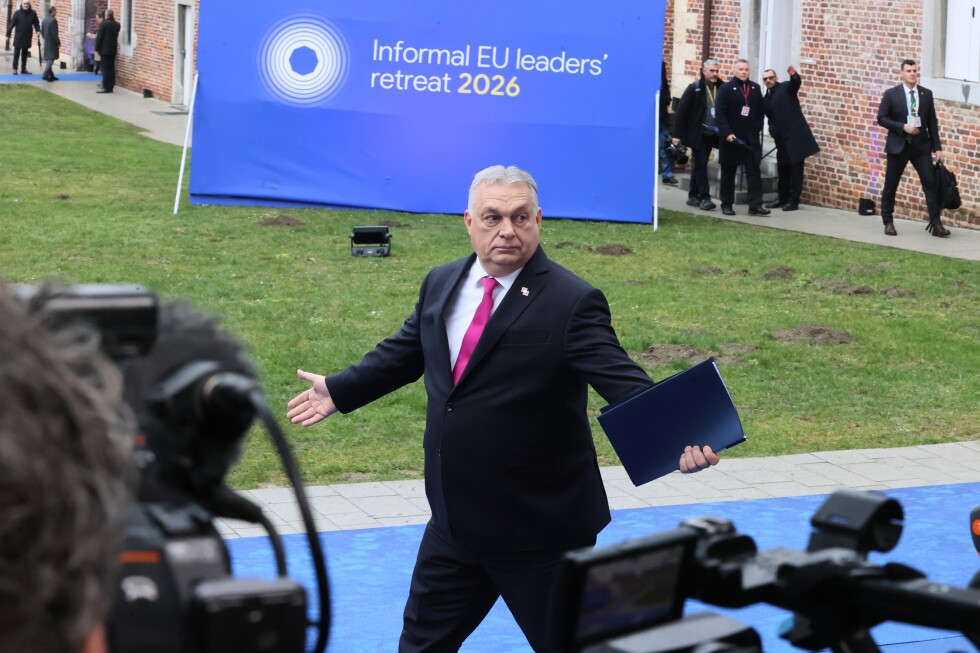
    German Member of Parliament Martin Schirdewan from the socialist Die Linke party characterized the proceedings as a ‘political show trial,’ accusing Hungarian Prime Minister Viktor Orbán of exploiting the case for electoral purposes. ‘Eight years in prison for Maja T. is disproportionate,’ Schirdewan stated. ‘This is not about justice, but about setting a political example.’

    The controversial ‘Day of Honour’ commemoration that triggered the violence marks the 1945 attempt by German Wehrmacht, Waffen-SS, and Hungarian collaborators to break through Soviet forces besieging Budapest. While tolerated by Hungarian authorities, the event annually attracts far-right groups from across Europe.

    Parallel trials against other Antifa Ost members are currently underway in German courts in Düsseldorf and Dresden, examining both the Budapest violence and related incidents in Germany. Hungary classifies Antifa Ost as a terrorist organization, a designation shared by the United States since November 2023 under the Trump administration’s crackdown on Antifa activists. Germany’s far-right Alternative for Germany (AfD) party has similarly advocated for domestic prohibition of the organization.

    Maja T. maintained silence regarding the allegations throughout the trial proceedings. The verdict remains subject to appeal through the Hungarian judicial system.

  • Americans are exceptionally anxious about their political system, new Gallup polling shows

    Americans are exceptionally anxious about their political system, new Gallup polling shows

    A comprehensive Gallup World Poll conducted across 107 nations has identified the United States as exhibiting exceptional levels of public apprehension regarding its political system and economic prospects. The survey, administered from March to October 2025, positions America alongside Taiwan—facing potential Chinese invasion—and European nations like Slovenia and Spain in the percentage of citizens citing governance as their primary national concern.

    According to Gallup analyst Benedict Vigers, the United States demonstrates unique characteristics among wealthy democracies, with citizens expressing profound concerns about both democratic stability and economic mobility. “It’s really unique in that regard,” Vigers noted, highlighting how American anxieties transcend typical patterns observed in other developed nations.

    The research emerges against a backdrop of intensifying partisan polarization, characterized by the January 6 Capitol attack, contentious presidential transitions, and ongoing debates about constitutional safeguards. Dartmouth political scientist Brendan Nyhan emphasized the interconnection between economic pessimism and democratic fragility: “A world where people aren’t optimistic about their economic futures is one in which they’re willing to destabilize institutions even further.”

    A generational divide emerged prominently in the findings. Approximately one-third of Americans under 35 prioritize economic concerns—particularly housing and food affordability—compared to merely 13% of those aged 55 and above. This pattern mirrors affordability crises in other English-speaking nations including Australia, Canada, and Ireland, where 57% of adults cite economic pressures as paramount concerns, placing them alongside developing nations like Nigeria and Zambia.

    Conversely, about 40% of older Americans identify politics and governance as the nation’s most pressing issue, reflecting a sustained elevation of political concern that has persisted near Watergate-era levels since 2016. Gallup’s Frank Newport attributed this trend to deep polarization, noting that political concerns typically surge among opposition party members.

    The study further revealed a significant trust deficit, with 41% of distrustful citizens prioritizing governmental concerns compared to 21% among those maintaining faith in institutions. Nyhan warned that such eroded trust creates fundamental challenges: “Having a stable society and rule of law without social trust is really difficult. Low trust is corrosive under conditions of high polarization.”

  • Trump administration withdrawing 700 federal agents from Minnesota

    Trump administration withdrawing 700 federal agents from Minnesota

    The Trump administration has announced a significant reduction of federal immigration personnel in Minneapolis, withdrawing approximately 700 agents from the controversial “Operation Metro Surge” enforcement initiative. The operation, which began in December, has faced substantial public scrutiny following the fatal shootings of two American citizens and widespread protests across the nation.

    Tom Homan, the administration’s border czar, confirmed Wednesday that the drawdown would commence immediately and affect personnel from both Immigration and Customs Enforcement (ICE) and Border Patrol. While 2,000 agents will remain stationed in the area, Homan stated the ultimate objective is to return the federal immigration presence to pre-operation levels.

    In a notable policy shift, Homan revealed that the government is prioritizing the equipping of all Minneapolis-based officers with body-worn cameras, with plans to eventually expand this equipment deployment to federal agents nationwide. Despite the operational changes, Homan characterized the Minneapolis initiative as successful during his press briefing, acknowledging however that it was “not a perfect operation.”

    The operation has resulted in numerous arrests, including 14 homicide suspects, 139 assault charges, 87 registered sex offenders, and 28 alleged gang members, though these figures remain unverified by independent sources. Homan assumed control of the operation in late January, having previously indicated that agent levels would be adjusted based on the degree of cooperation from state and local authorities. He cited “unprecedented” cooperation from local entities as the rationale behind the current reduction of approximately one-third of federal personnel.