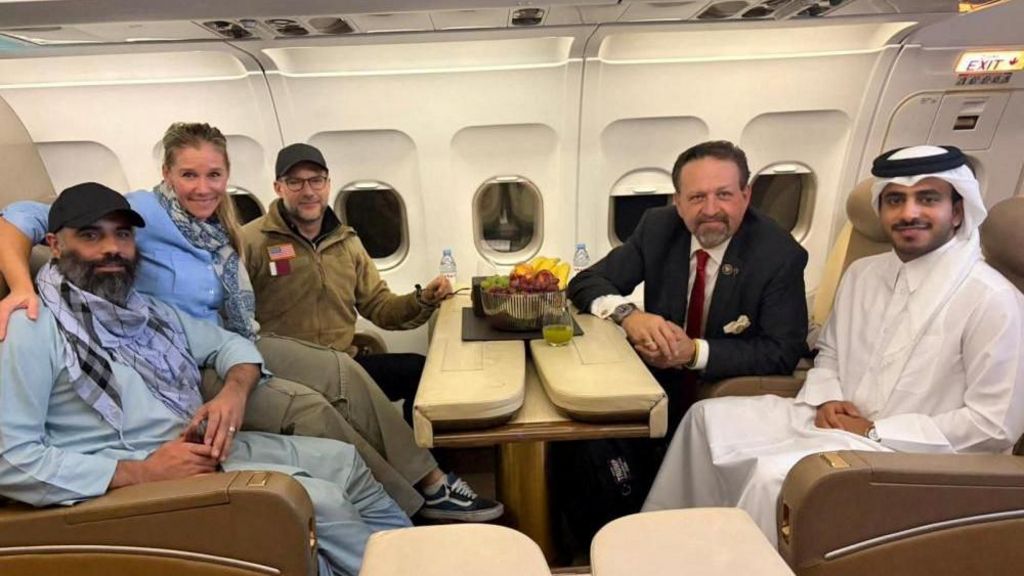
A US citizen detained by the Taliban in Afghanistan for nine months has been released, thanks to diplomatic negotiations facilitated by Qatar. The individual, identified as Amir Amiry, is the fifth American to be freed from captivity in Afghanistan this year. He is currently en route to the United States, as confirmed by officials on Sunday. US Secretary of State Marco Rubio expressed gratitude to Qatar for its ‘tireless diplomatic efforts,’ emphasizing their pivotal role in securing Mr. Amiry’s release. The circumstances surrounding his detention remain unclear, though Rubio described it as a case of ‘wrongful detention.’ The Secretary of State also highlighted that additional US citizens remain ‘unjustly detained’ in Afghanistan, with the Trump administration actively working to secure their freedom. Qatar’s foreign ministry confirmed its role in facilitating Mr. Amiry’s release, stating that he was first transported to Doha before continuing his journey to the US. Sources revealed to CBS News, the BBC’s US partner, that Qatar initiated negotiations in March, arranging a critical meeting between Mr. Amiry and US hostage envoy Adam Boehler. A breakthrough in talks was achieved this weekend, culminating in Mr. Amiry’s release. This development follows the release of two American citizens in January through a prisoner swap with the Taliban, which involved the release of Khan Mohammad, a Taliban figure imprisoned in California on drug trafficking and terrorism charges. Two other Americans were freed in March, including George Glezmann, who was detained during a tourist visit in 2022. Earlier this month, a British couple, Peter and Barbie Reynolds, were also released through Qatari mediation after nearly two decades of living in Afghanistan.
分类: politics
-
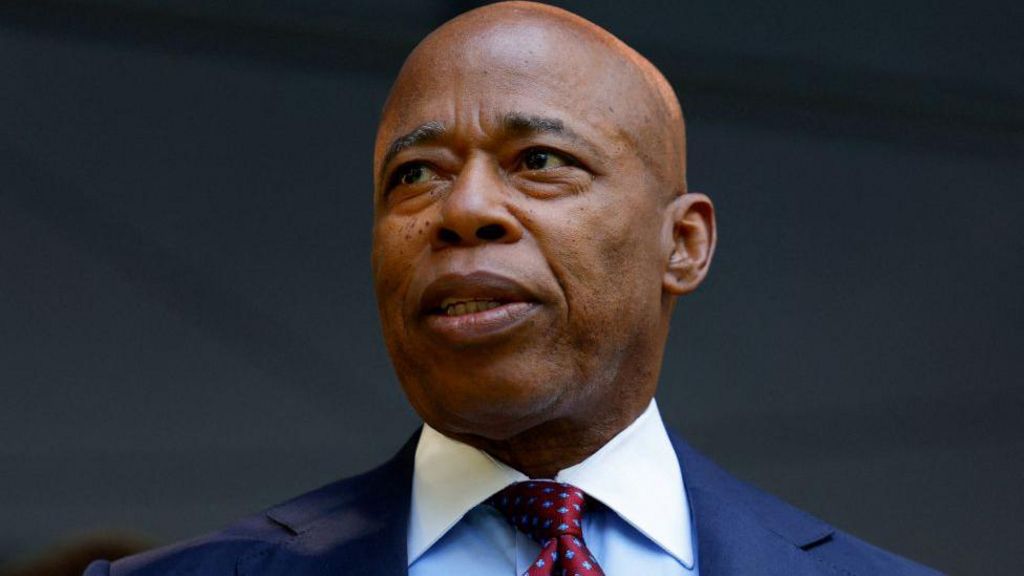
Eric Adams ends re-election bid for New York City mayor
In a surprising turn of events, New York City Mayor Eric Adams has announced the termination of his re-election campaign, merely five weeks before the upcoming election. Adams cited relentless media speculation and the city campaign finance board’s refusal to grant him public matching funds as the primary reasons for his decision. This withdrawal leaves the race to Democrat Zohran Mamdani, former governor Andrew Cuomo, and Republican Curtis Sliwa. Adams, initially elected as a Democrat in 2022, had chosen to run as an independent following his indictment for alleged bribery and fraud, which was later dismissed under the Trump administration’s directive. In a heartfelt video shared on social media, Adams expressed his inability to continue the campaign due to the financial and reputational challenges posed by the media and the finance board’s decisions. He refrained from endorsing any of his rivals but subtly criticized Mamdani, the Democratic front-runner, warning against the dangers of radical change. Adams’ political journey has been marred by corruption allegations, disputes over immigration policies, and public discontent with the city’s escalating living costs. Despite the dismissal of charges against him earlier this year, the shadow of controversy lingered, affecting his re-election prospects. Adams will complete his term, which concludes on January 1, and his name will remain on the ballot as the deadline for changes has passed.
-
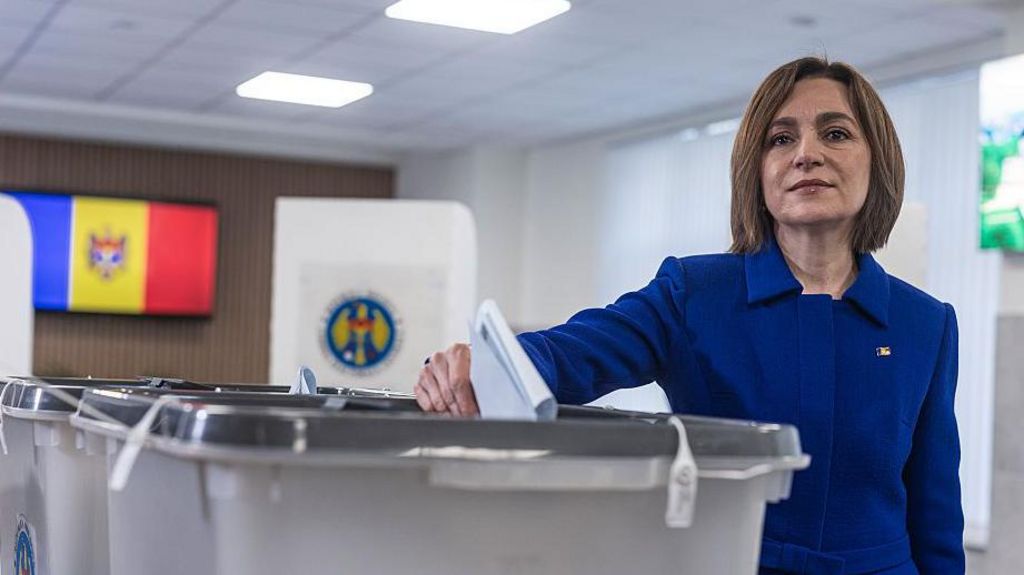
Moldovans await pivotal election result as leader warns of Russian interference
Moldova’s parliamentary elections, held amidst allegations of significant Russian interference, have been described as a pivotal moment for the nation’s democratic future and its aspirations to join the European Union. President Maia Sandu, a staunch advocate for European integration, emphasized the fragility of Moldova’s democracy and the threats posed by external influences, particularly from Russia. Speaking outside a polling station in Chisinau, Sandu urged citizens to safeguard their votes, warning that the nation’s future hangs in the balance.
-
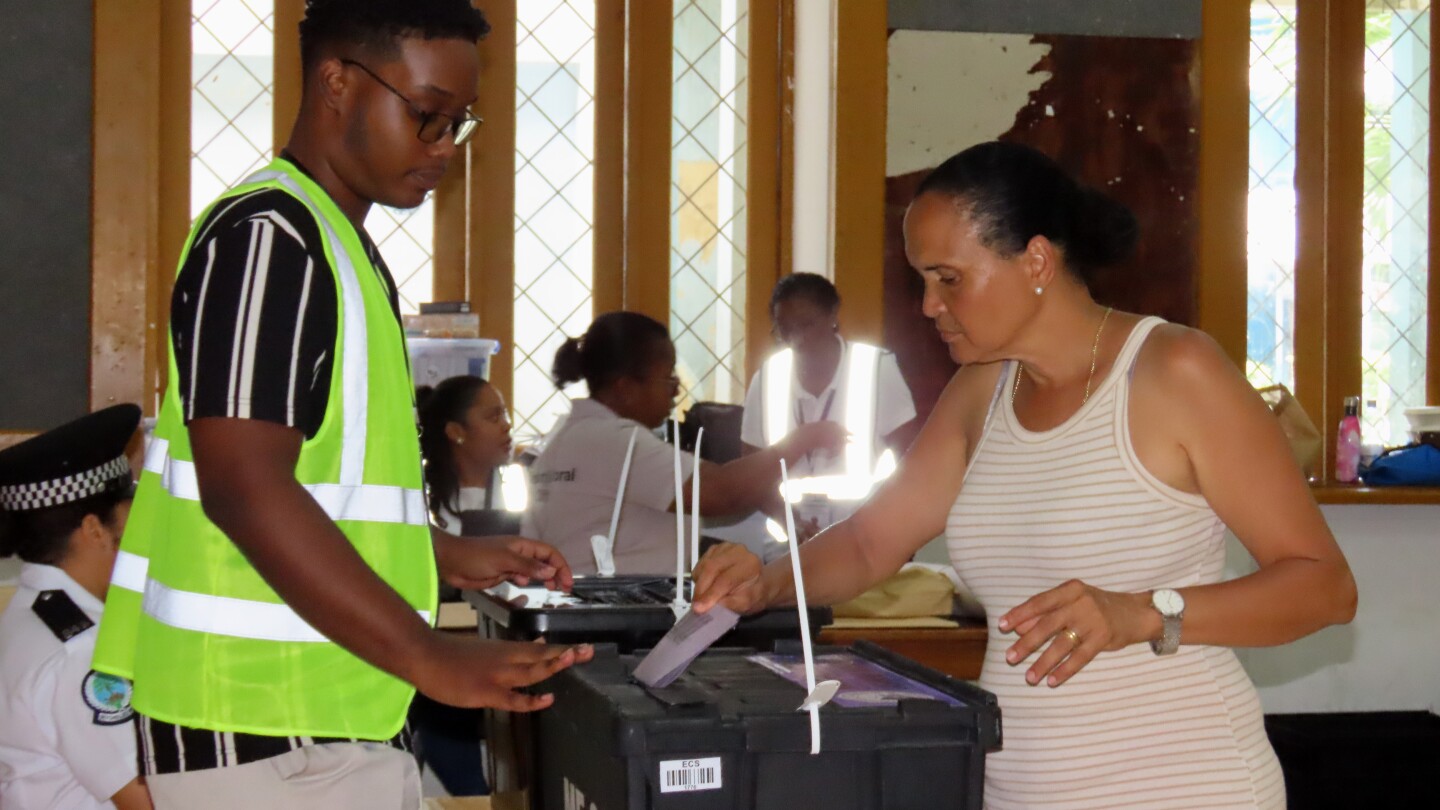
Seychelles to hold rerun presidential election after no outright winner
The Seychelles presidential election has entered a critical phase as no candidate secured a decisive majority in the initial vote, prompting a runoff between the two leading contenders. Official results revealed that opposition leader Patrick Herminie garnered 48.8% of the vote, while incumbent President Wavel Ramkalawan secured 46.4%. To claim victory, a candidate must achieve over 50% of the vote. The runoff is scheduled for October 9-11, as announced by the electoral authority. Ramkalawan, seeking a second term, has called for a public debate with Herminie to assist voters in making an informed decision. He emphasized that the presidency belongs to the people, not to any individual. Herminie, representing the United Seychelles party, expressed confidence in winning the runoff, citing widespread dissatisfaction with the current administration. The United Seychelles party, which governed the country from 1977 to 2020, is attempting to regain power after losing it five years ago. Ramkalawan’s Linyon Demokratik Seselwa party has campaigned on promises of economic recovery, social development, and environmental sustainability. The election unfolds against a backdrop of growing opposition to the government, including a constitutional challenge against a controversial lease of Assomption Island to a Qatari company for luxury hotel development. Critics argue that the deal prioritizes foreign interests over national sovereignty. Additionally, Seychelles faces significant challenges, including vulnerability to climate change and a worsening heroin addiction crisis. With a population of 120,000, an estimated 6,000 people are heroin users, and addiction rates are alarmingly high. The election outcome will shape the future of this Indian Ocean archipelago, known for its luxury tourism and environmental significance.
-

Move over, Murdochs – a new family dynasty is shaking up US media
The Ellison family, led by tech magnate Larry Ellison and his son, Hollywood producer David Ellison, is rapidly expanding its influence in the global media landscape. This year, their strategic maneuvers have positioned them to potentially control some of the world’s largest media companies, including TikTok and CNN. Larry Ellison’s close ties with former US President Donald Trump have been instrumental in facilitating these deals, with Trump publicly praising Ellison as an exceptional business leader.
-
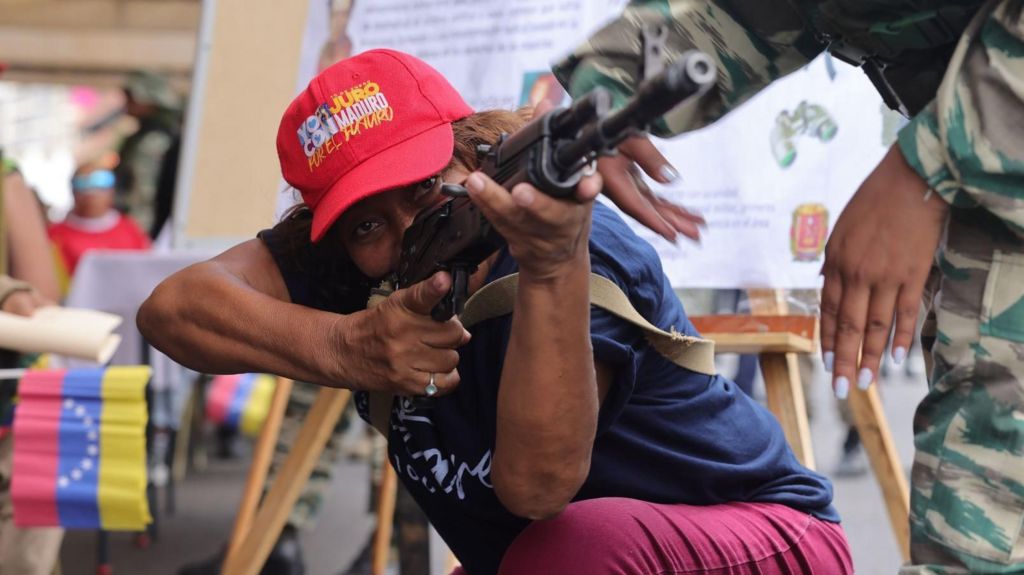
The US navy killed 17 in deadly strikes. Now Venezuela is giving civilians guns
In the face of escalating tensions with the United States, Venezuela’s National Bolivarian Militia, a civilian force established by the late President Hugo Chávez in 2009, is mobilizing to defend the nation. Edith Perales, a 68-year-old militia member, is among thousands preparing for a potential US attack, following the deployment of US Navy ships in the South Caribbean under the guise of counter-narcotics operations. The militia, largely composed of senior citizens and inexperienced volunteers, has been called to active duty by President Nicolás Maduro, who has framed the US actions as a ‘non-declared war.’
The US has recently destroyed at least three boats allegedly carrying drugs from Venezuela, resulting in 17 fatalities. This has further strained the already tense relationship between the two nations, exacerbated by Donald Trump’s return to office and his administration’s accusations of Maduro’s ties to drug cartels. The US has also doubled the reward for information leading to Maduro’s capture to $50 million, while labeling the Venezuelan criminal gang Tren de Aragua as a terrorist group.
Maduro, in response, has ordered the National Bolivarian Armed Forces (FANB) to train local militias, including those in Caracas’ 23 de Enero neighborhood, a traditional stronghold of Chavismo. Despite the militia’s lack of experience, its members, like Francisco Ojeda and Glady Rodríguez, express unwavering enthusiasm to defend their homeland. However, political analyst Benigno Alarcón suggests that Maduro’s strategy is less about combat readiness and more about creating a ‘human shield’ to deter US military action.
While Maduro claims over 8.2 million civilians are enlisted in the militia, this figure remains disputed. For Perales, who has served for decades, the militia represents a duty to protect his community. Despite his age and health, he remains prepared to defend Venezuela’s sovereignty, embodying the spirit of Chávez’s vision for a self-reliant nation.
-
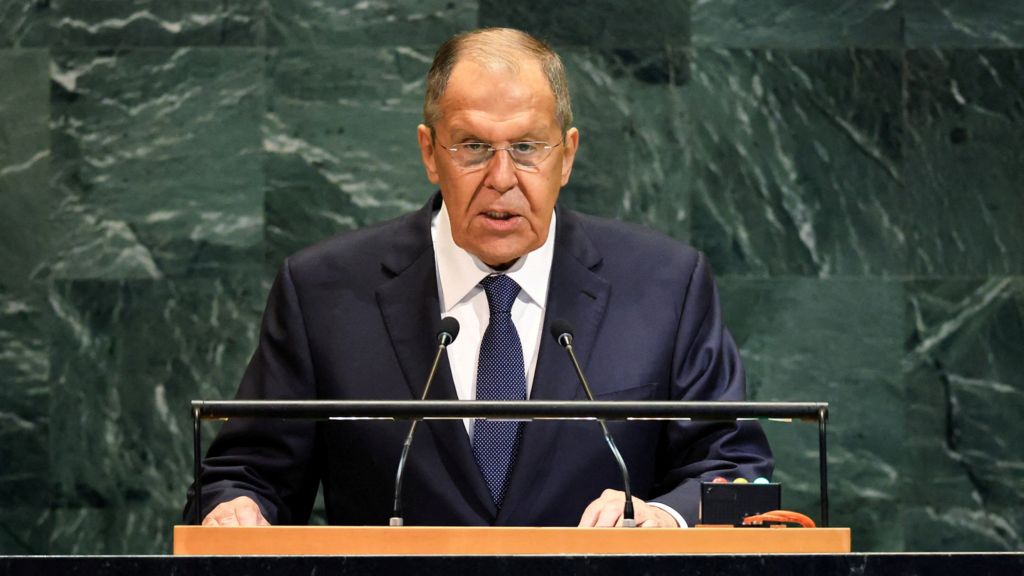
Russia has no intention of attacking EU or Nato states, foreign minister says
Russian Foreign Minister Sergei Lavrov has firmly stated that Russia harbors no intentions of attacking NATO or EU member states. However, he warned that any aggression directed towards Moscow would be met with a ‘decisive response.’ Lavrov made these remarks during a comprehensive address at the UN General Assembly on Saturday, where he highlighted the increasing frequency of threats against Russia by Western nations. Lavrov also criticized Israel, condemning the October 7, 2023, attacks by Hamas but asserting that there is ‘no justification’ for the ‘brutal killings’ of Palestinians in Gaza or for plans to annex the West Bank. He accused Israel of using its mission to eliminate Hamas as a pretext for air strikes on other Middle Eastern countries, including Qatar. On Iran, Lavrov accused Western powers of undermining diplomatic efforts after a last-minute bid by Russia and China to delay the reimposition of sanctions failed on Friday. Lavrov labeled the move as ‘illegal,’ with the sanctions set to take effect at 00:00 GMT on Sunday. Addressing tensions in Europe, Lavrov reiterated that Russia has never planned to attack NATO or the EU and warned that any aggression against Russia would be met with a robust response. He also commented on the US-Russian relationship, noting a desire in the current US administration to develop pragmatic cooperation without adopting an ideological stance. Lavrov further criticized the West for the delayed recognition of a Palestinian state by some countries, suggesting that they waited until there was ‘no one and nothing left to recognise.’
-
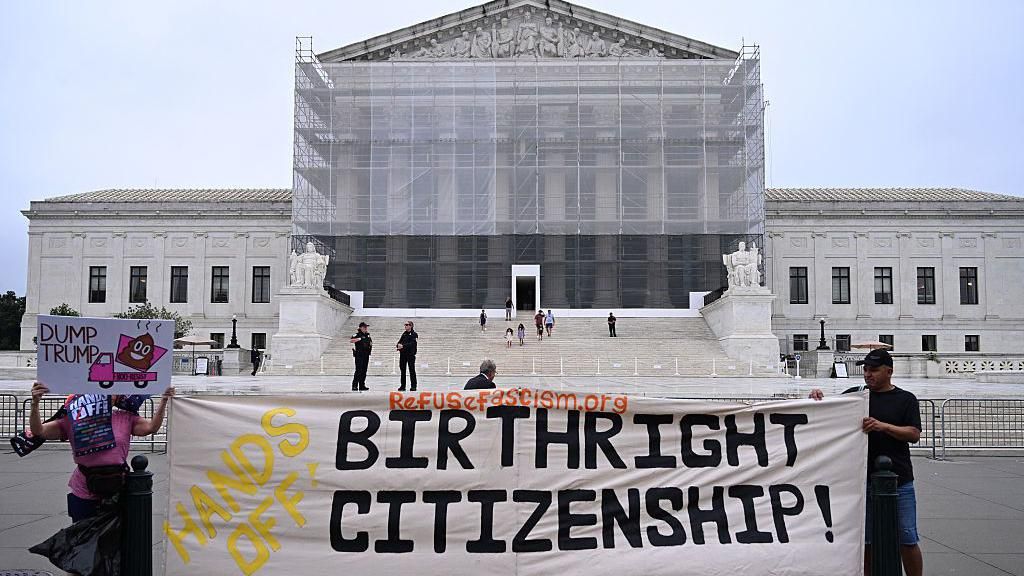
Trump officials ask Supreme Court to uphold ban on birthright citizenship
The Trump administration has escalated its legal battle to end birthright citizenship in the United States, filing an appeal with the Supreme Court to overturn lower court rulings that blocked the controversial executive order. Signed by President Donald Trump on his first day back in office in January, the order aims to deny citizenship to children born to migrants who are either in the U.S. illegally or on temporary visas. Lower courts have consistently deemed the order unconstitutional, halting its implementation. The Justice Department, in its appeal filed on Friday, argued that the lower court decisions ‘invalidated a policy of prime importance’ to the administration and undermined border security. The administration contends that the 14th Amendment’s clause ‘subject to the jurisdiction thereof’ excludes children of non-permanent or unlawful residents. However, opponents argue that the amendment guarantees citizenship to all individuals born on U.S. soil. The Supreme Court, which previously ruled in June that federal judges cannot block presidential orders, is now being asked to resolve the case in its new term starting October 6. The outcome could have far-reaching implications, with estimates suggesting that ending birthright citizenship could increase the number of unauthorized immigrants in the U.S. to 4.7 million by 2050.
-
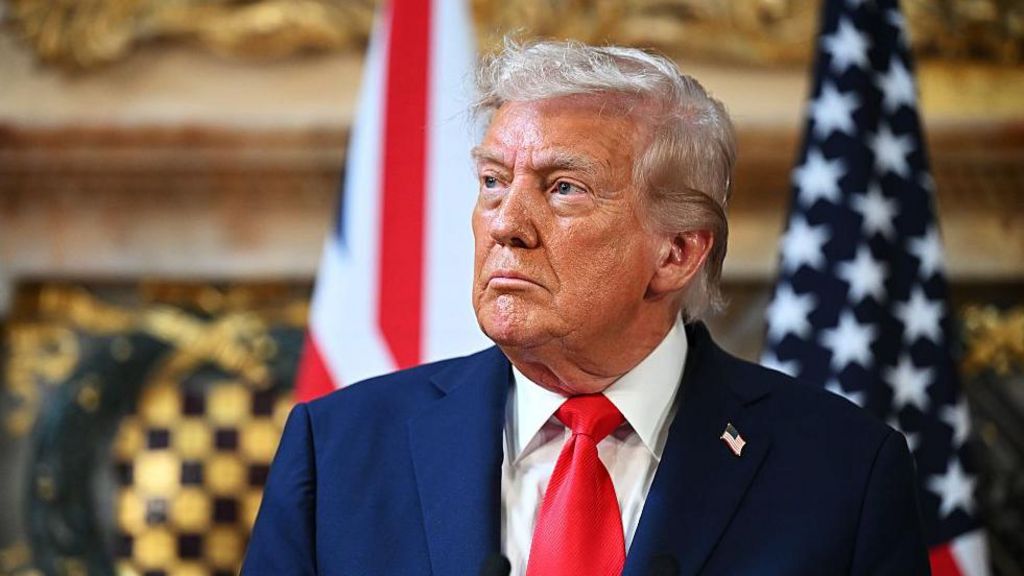
Trump orders deployment of troops to Portland and authorises ‘full force’
In a significant escalation of federal intervention, President Donald Trump announced on Saturday that he has authorized the use of ‘full force’ and ordered the deployment of US troops to Portland, Oregon. The decision comes amid ongoing protests and violent clashes targeting the Immigration and Customs Enforcement (ICE) facility in the city. Trump, in a post on Truth Social, directed Secretary of War Pete Hegseth to mobilize all necessary troops to protect what he described as ‘war-ravaged’ Portland and ICE facilities under siege by Antifa and other ‘domestic terrorists.’ This move further expands the Trump administration’s crackdown on illegal immigration and civil unrest across American cities. Portland’s Democrat lawmakers, including Mayor Keith Wilson, have vehemently opposed federal intervention, asserting that local authorities are capable of handling the situation. The ICE facility has been a focal point of protests, with some federal agents reportedly injured in violent confrontations. Trump’s announcement did not specify whether National Guard or regular military forces would be activated. Earlier in the week, Trump formally designated Antifa as a domestic terrorist organization, a decision that has drawn criticism from Democratic Oregon lawmakers. Representative Suzanne Bonamici accused ICE of misleading the public about their targets for arrest and detainment. Trump’s rhetoric has intensified, with him describing Portland as ‘like living in hell’ and vowing to take decisive action against ‘professional agitators and anarchists.’
-
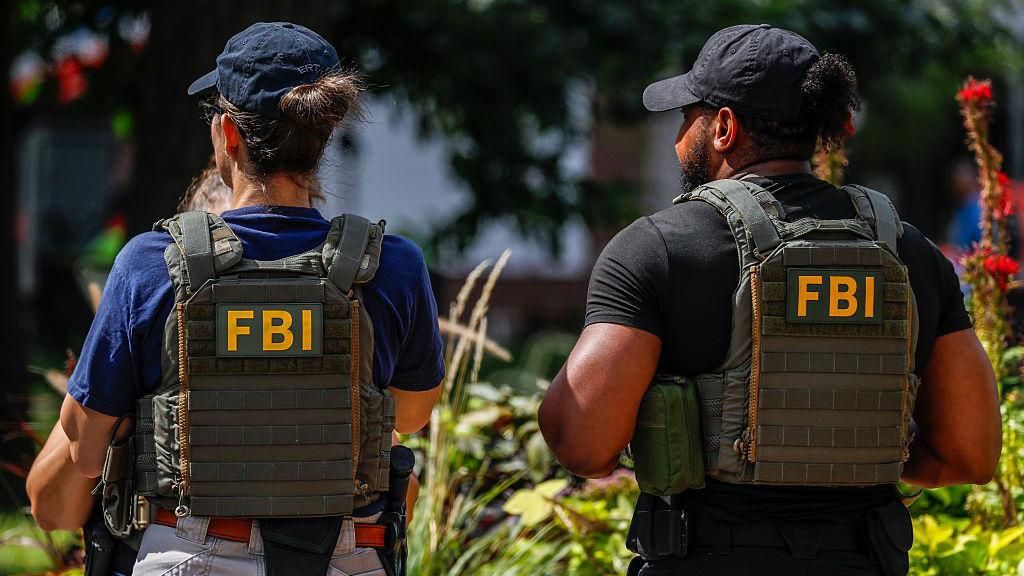
FBI fires agents pictured kneeling at George Floyd protest, US media reports
The FBI has reportedly terminated a group of agents who were photographed kneeling during a racial justice protest in Washington DC in 2020, following the death of George Floyd. According to unnamed sources cited by US media, between 15 to 20 agents were dismissed on Friday, though the exact number remains unconfirmed. The agents had joined demonstrators in taking a knee, a gesture that became a global symbol of dissent against police brutality and racial injustice after Floyd, a Black man, was killed by a white police officer who knelt on his neck for over nine minutes. The FBI Agents Association condemned the dismissals, claiming the agents’ rights were violated. The FBI has declined to comment on the matter. The firings occur amid broader efforts by the Trump administration to eliminate perceived left-wing or ‘woke’ policies and personnel across federal agencies. While critics argue the kneeling was a tactic to de-escalate tensions, others view it as a political statement. This incident follows a series of high-profile dismissals within the FBI, including former acting director Brian Driscoll and other senior officials, some of whom have sued FBI leadership, alleging politically motivated terminations.