分类: politics

  • Khamenei warns of ‘regional war’ if US attacks Iran

    Khamenei warns of ‘regional war’ if US attacks Iran

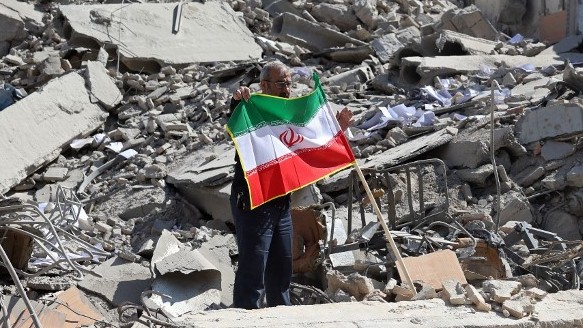
    Iran’s Supreme Leader Ayatollah Ali Khamenei issued a stark warning on Sunday, declaring that any American military action against Iran would trigger a full-scale regional conflict. This statement comes amid significant US naval deployments to the Persian Gulf region.

    The heightened tensions follow President Donald Trump’s repeated threats of military intervention unless Iran accepts nuclear agreement terms and ceases its suppression of domestic protests. Khamenei, speaking through state media channels, emphasized that while Iran does not seek conflict, it would deliver a ‘strong blow’ against any aggressor.

    Current US naval presence in the region includes six destroyers, one aircraft carrier, and three littoral combat ships—a force characterized by Trump as a ‘massive armada.’ Despite this show of force, Khamenei asserted that such displays would neither intimidate Iran nor sway its political resolve.

    The protests referenced by both nations began in late December amid severe economic pressures including rampant inflation and rising living costs. Iranian authorities have characterized the demonstrations as attempted ‘sedition’ aimed at undermining governmental institutions.

    Casualty figures remain disputed, with official Iranian sources reporting 3,117 deaths while independent monitoring groups verify nearly 6,713 fatalities. This crackdown prompted the European Union to designate Iran’s Revolutionary Guard Corps as a terrorist organization, met by reciprocal measures from Iranian lawmakers against European military forces.

    Despite escalating rhetoric, diplomatic channels remain active. Ali Larijani, head of Iran’s Supreme National Security Council, confirmed that negotiation frameworks are progressing, while Trump acknowledged ongoing dialogue without retracting previous threats. Both nations appear to maintain parallel tracks of military posturing and diplomatic engagement.

  • Venezuela releases rights activist Javier Tarazona

    Venezuela releases rights activist Javier Tarazona

    In a significant development within Venezuela’s political landscape, prominent human rights defender Javier Tarazona has been released from detention following increased international pressure for governmental reforms. Tarazona, who leads the non-governmental organization Fundaredes, had been incarcerated since July 2021 in the notorious El Helicoide prison facility located in Caracas.

    The liberation was formally confirmed by Fundaredes on Sunday, marking another instance in a series of prisoner releases initiated by the Venezuelan government. This action aligns with recent announcements from acting President Delcy Rodríguez regarding proposed amnesty legislation intended to benefit hundreds of individuals currently detained for political reasons. The proposed bill additionally mandates the closure of the El Helicoide prison complex.

    According to documentation by Foro Penal, a separate Venezuelan rights monitoring organization, over 300 political prisoners have secured their freedom since early January. Tarazona’s initial arrest stemmed from his allegations regarding connections between Venezuelan officials and Colombian guerrilla factions operating along the shared border. Government authorities had charged him with treason, terrorism, and incitement to hatred in response to these claims.

    While welcoming Tarazona’s release, Fundaredes emphasized that this development does not negate the injustice endured during his detention, characterizing it as merely a preliminary step in addressing systematic issues of criminalization, persecution, and judicial irregularities.

    The timing of these releases follows the dramatic capture of President Nicolás Maduro by United States special forces on January 3rd, which subsequently intensified demands for comprehensive political and economic restructuring within Venezuela. This event has galvanized families of detained opposition figures and human rights advocates to amplify their campaigns for prisoner releases and charge dismissals.

    Although Venezuelan officials have historically denied maintaining political prisoners, the proposed amnesty law represents an acknowledgment of these longstanding concerns. Rodríguez described the legislation as instrumental in ‘healing the wounds of political confrontation, violence, and extremism.’ The National Assembly is anticipated to ratify the bill in the coming days.

    However, Foro Penal notes that many recently freed individuals continue to face unresolved legal charges, creating a state of judicial uncertainty and restricting their ability to participate publicly in political discourse.

  • Tens of thousands of Czechs rally in support of President Pavel over dispute with foreign minister

    Tens of thousands of Czechs rally in support of President Pavel over dispute with foreign minister

    PRAGUE — The Czech Republic witnessed unprecedented political mobilization as tens of thousands of citizens flooded Prague’s historic squares on Sunday, demonstrating firm support for President Petr Pavel amid a escalating constitutional confrontation with Foreign Minister Petr Macinka. The massive gathering, which overflowed from Old Town Square to Wenceslas Square, featured a sea of Czech, Ukrainian, and EU flags alongside banners proclaiming ‘Long Live Pavel’ in a striking show of public solidarity.

    The core of the dispute centers on President Pavel’s refusal to appoint Filip Turek as environment minister, a nominee from the right-wing Motorists for Themselves party. This decision came after media investigations revealed Turek’s Facebook posts containing openly racist, homophobic, and sexist content. While Turek offered partial apologies for some posts, he denied authorship of others, further complicating the nomination.

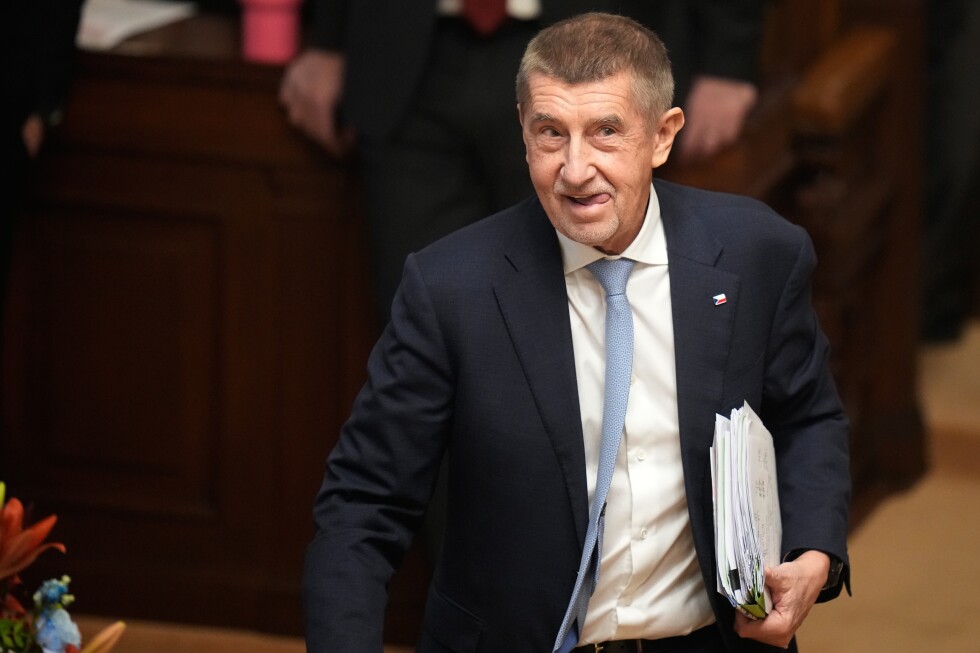
    Foreign Minister Macinka, who leads the Euro-skeptic party, has accused the president of constitutional violations and threatened legal consequences if the appointment isn’t finalized. President Pavel characterized these threats as attempted blackmail and has scheduled a critical meeting with Prime Minister Andrej Babiš for Wednesday to resolve the impasse.

    The current government, sworn in on December 15 after Babiš’s ANO movement formed a coalition with the Freedom and Direct Democracy party and the Motorists, has advocated for shifting away from Ukraine support and rejecting key EU policies. This stands in direct opposition to President Pavel’s staunch pro-Ukraine stance as a retired army general, highlighting the deepening ideological divide within Czech leadership.

    Parallel demonstrations supporting the president emerged in multiple cities across the country, signaling broad public engagement in this constitutional crisis that pits presidential authority against government ambitions.

  • Venezuelan activist Javier Tarazona released from prison as US diplomat assumes post

    Venezuelan activist Javier Tarazona released from prison as US diplomat assumes post

    In a significant development signaling potential political reconciliation, Venezuelan human rights defender Javier Tarazona has been released from imprisonment following the government’s commitment to an amnesty initiative for detained opposition figures. The director of FundaRedes, a nonprofit monitoring human rights violations, regained freedom after 1,675 days in custody.

    Tarazona’s 2021 arrest occurred shortly after he reported intimidation by state intelligence operatives, with two additional activists from his organization facing simultaneous detention. His release coincides with the arrival of US Charge d’Affaires Laura Dogu, who is reestablishing American diplomatic presence in Caracas after a seven-year hiatus in bilateral relations.

    The liberation aligns with Venezuela’s recently announced amnesty legislation, a cornerstone demand from opposition factions. According to monitoring by Foro Penal, an organization tracking politically motivated detentions, approximately 310 individuals have been released while 700 remain incarcerated under similar circumstances.

    Tarazona had faced terrorism allegations—a frequent charge against government critics—particularly regarding his investigations into illegal armed groups along the Colombian border and their alleged connections to high-ranking officials. During his confinement, Amnesty International documented concerning deterioration in his health due to inadequate medical care.

    Opposition leader María Corina Machado hailed Tarazona’s perseverance, declaring on social media: ‘All of Venezuela admires your bravery and commitment. You understand better than anyone that justice will prevail in Venezuela.’ The government maintains its position denying systematic political persecution, asserting instead that accused individuals faced legitimate charges of conspiring against state institutions.

  • 5-year-old Liam Conejo Ramos and father return to Minnesota from ICE facility in Texas

    5-year-old Liam Conejo Ramos and father return to Minnesota from ICE facility in Texas

    A federal judge has mandated the release of five-year-old Liam Conejo Ramos and his father, Adrian Conejo Arias, from Immigration and Customs Enforcement (ICE) custody, concluding a contentious detention case that has ignited national debate. The pair, originally apprehended in a Minneapolis suburb on January 20, were held at a facility in Dilley, Texas, before their return to Minnesota on Sunday, confirmed by Representative Joaquin Castro’s office.

    The case’s origins trace back to the father’s unauthorized entry from Ecuador in December 2024, though his legal representative confirms a pending asylum claim currently permits his stay in the U.S. The detention gained notoriety after images circulated of the young boy, distinguished by his blue bunny hat and Spider-Man backpack, surrounded by federal officers, provoking public outcry against the administration’s enforcement tactics.

    In a scathing judicial order, U.S. District Judge Fred Biery condemned the government’s approach, attributing the case to an “ill-conceived and incompetently-implemented government pursuit of daily deportation quotas, apparently even if it requires traumatizing children.” This sentiment was echoed by local community members and school officials who alleged officers used the preschooler as “bait” to coax his mother to the door—an accusation the Department of Homeland Security (DHS) vehemently denies, labeling it an “abject lie.” DHS maintains the father attempted to flee on foot, leaving the child alone in a running vehicle.

    The government’s stance was articulated by DHS Assistant Secretary Tricia McLaughlin, who stated ICE did not target the child and that his mother refused custody following the father’s apprehension. McLaughlin reaffirmed the administration’s commitment to “restoring the rule of law and common sense to our immigration system,” vowing to continue efforts toward the “arrest, detention, and removal of aliens who have no right to be in this country.”

    The release was met with celebratory responses from Democratic lawmakers. Rep. Castro, who personally escorted the family home, penned an inspirational letter to Liam during their flight, asserting, “America became the most powerful, prosperous nation on earth because of immigrants not in spite of them.” Minnesota Senator Amy Klobuchar and Representative Ilhan Omar also welcomed the pair’s return, with Omar posting a symbolic photo holding Liam’s backpack on social media.

  • Trump says Iran is ‘seriously talking’ with US

    Trump says Iran is ‘seriously talking’ with US

    President Donald Trump indicated on Saturday that Iran has entered into substantive diplomatic discussions with the United States, marking a potential shift in the tense relationship between the two nations. Speaking to reporters aboard Air Force One, Trump acknowledged ongoing communications while maintaining strategic ambiguity regarding military decisions.

    “We do have very big, powerful ships heading in that direction,” Trump stated when questioned about his final decision on Iran, carefully balancing diplomatic overtures with military demonstration. The president expressed hope for a negotiated settlement that would address nuclear concerns, emphasizing that “we could make a negotiated deal that would be satisfactory, with no nuclear weapons.”

    In a separate interview with Fox News, Trump revealed an unusual aspect of his administration’s strategy, noting that the U.S. cannot share military plans with Gulf allies during negotiations with Iran. “If I told them the plan, it would be almost as bad as telling you the plan—it could be worse, actually,” Trump explained, suggesting heightened security measures around diplomatic maneuvers.

    This development follows statements from Iranian President Masoud Pezeshkian, who affirmed on Friday that Tehran consistently pursues engagement and dialogue to resolve disputes. Pezeshkian articulated Iran’s approach as “dignity-based diplomacy” conducted within international law frameworks, emphasizing mutual respect and rejection of threats or coercion.

    The United States has maintained specific conditions for any comprehensive agreement, including a ban on uranium enrichment, removal of already-enriched uranium, caps on long-range missile capabilities, and reduced support for regional proxy forces—all demands previously rejected by Iranian leadership. This diplomatic exchange occurs against a backdrop of continued military preparedness, creating a complex landscape of negotiation and deterrence.

  • Pakistan says it has killed 145 ‘Indian-backed terrorists’ in Balochistan after deadly attacks

    Pakistan says it has killed 145 ‘Indian-backed terrorists’ in Balochistan after deadly attacks

    Pakistani security forces have conducted a sweeping counterterrorism operation in the volatile southwestern province of Balochistan, resulting in the deaths of 145 militants allegedly backed by Indian intelligence. The intensive 40-hour campaign, which concluded on Sunday, represents the most significant single counterinsurgency achievement in decades according to provincial authorities.

    The operation was launched in direct response to coordinated suicide bombings and armed assaults that claimed 33 lives on Saturday, including 18 civilians and 15 security personnel. Among the civilian casualties were five women and three children, highlighting the brutal nature of the attacks that targeted both security infrastructure and residential areas.

    Sarfraz Bugti, Balochistan’s Chief Minister, identified the eliminated fighters as members of the banned Baloch Liberation Army (BLA), which Pakistani officials refer to as ‘Fitna al-Hindustan’ or ‘Indian Mischief.’ Bugti revealed that some of the deceased militants were Afghan nationals, reinforcing Pakistan’s longstanding allegations of cross-border terrorist support.

    The attacks occurred in a region critical to Pakistan’s economic ambitions, where the government has been actively seeking foreign investment in mining and mineral extraction. This security challenge emerges just months after a major U.S. metals corporation finalized a $500 million investment agreement with Pakistan in September 2025.

    Residents described scenes of terror as armed militants roamed freely before security forces intervened. ‘It was a very scary day in the history of Quetta,’ recounted local resident Khan Muhammad, reflecting the panic that gripped the provincial capital.

    Bugti reiterated accusations against both India and Afghanistan, claiming senior BLA leadership operates from Afghan territory despite Taliban commitments under the 2020 Doha agreement to prevent such cross-border operations. These allegations occur against a backdrop of heightened tensions between Pakistan and Afghanistan, including recent Pakistani airstrikes on alleged terrorist hideouts inside Afghan territory.

    The BLA, designated as a foreign terrorist organization by the U.S. State Department in August 2025, has conducted numerous attacks targeting security forces, Chinese interests, and infrastructure projects in the resource-rich province. The group is part of a long-standing separatist insurgency by ethnic Baloch groups seeking greater autonomy or independence from Pakistan’s central government.

  • US judge declines to halt Trump’s Minnesota immigration agent surge

    US judge declines to halt Trump’s Minnesota immigration agent surge

    A Minnesota federal court has declined to intervene in President Donald Trump’s controversial immigration enforcement operation in Minneapolis-St. Paul, allowing the contentious program to continue despite allegations of systemic civil rights violations. U.S. District Judge Kate Menendez, appointed by former President Biden, issued the ruling on Saturday, rejecting the Minnesota Attorney General’s request to halt or restrict the Department of Homeland Security initiative that has deployed thousands of federal agents to the region.

    The judicial decision comes amid escalating tensions in the Twin Cities area, where the operation has sparked sustained protests and resulted in the fatal shootings of two American citizens by federal personnel. The lawsuit filed by Minnesota officials accused immigration agents of engaging in racial profiling, implementing unlawful detainment practices, and employing excessively aggressive tactics that have created widespread fear within communities.

    Judge Menendez justified her ruling by referencing a recent federal appeals court decision that stayed a more limited injunction against Immigration and Customs Enforcement operations in Minnesota. “If that injunction went too far, then the one at issue here—halting the entire operation—certainly would,” she stated in her written opinion.

    The political dimension of the conflict became increasingly apparent as Minnesota Attorney General Keith Ellison, an elected Democrat, accused the Trump administration of targeting the state due to its Democratic political orientation. Meanwhile, administration officials defended the operation as necessary for enforcing federal immigration laws in accordance with presidential policies.

    The situation intensified significantly following two high-profile incidents: the January 7 shooting of Renee Good, who was killed in her car by an immigration agent, and the January 24 fatal shooting of Alex Pretti by a Border Patrol agent. Both incidents were captured on video and circulated widely, contradicting official accounts that the agents acted in self-defense.

    In a notable development, President Trump indicated on Saturday that future federal law enforcement deployments would require explicit requests from local authorities. “If they want help, they have to ask for it,” Trump told reporters aboard Air Force One, adding that unsolicited interventions typically result in complaints rather than appreciation.

    The ruling represents a temporary victory for the administration’s immigration enforcement approach while legal challenges continue to develop. Ellison acknowledged the setback but emphasized that the legal battle remains in its early stages, with additional avenues for challenge still available.

  • Further Russia-Ukraine talks scheduled for next week, says Zelenskyy

    Further Russia-Ukraine talks scheduled for next week, says Zelenskyy

    Ukrainian President Volodymyr Zelenskyy confirmed on Sunday that the next phase of diplomatic negotiations between Ukrainian, Russian, and American delegations will occur on February 4th and 5th in Abu Dhabi. The announcement came via Zelenskyy’s Telegram channel, where he emphasized Ukraine’s readiness for substantive discussions aimed at achieving a “real and dignified end to the war.

    The trilateral meetings represent a continuation of peace efforts that have been ongoing for approximately one year under the Trump administration’s mediation. These talks seek to resolve Moscow’s full-scale invasion of Ukraine, which has persisted for nearly four years with devastating humanitarian and geopolitical consequences.

    While Ukrainian officials have expressed commitment to meaningful dialogue, neither U.S. nor Russian representatives provided immediate commentary following Zelenskyy’s statement. The development follows a recent meeting between top Russian envoy Kirill Dmitriev and American peacemaking delegates in Florida, described by Dmitriev as “constructive.

    Substantial disagreements remain between Moscow and Kyiv regarding the fundamental structure of any potential agreement. The most contentious issue centers on territorial control, particularly in Ukraine’s eastern Donbas region. Disputes persist over whether Russian forces should maintain control of currently occupied territories or withdraw entirely, and whether additional land concessions should be made beyond current frontlines.

    The Abu Dhabi talks occur against a backdrop of severe winter conditions affecting civilian infrastructure across Ukraine and Moldova, with power outages exacerbating the humanitarian situation as temperatures drop.

  • Slovakia PM’s national security adviser resigns over Epstein links

    Slovakia PM’s national security adviser resigns over Epstein links

    Slovakia’s National Security Adviser Miroslav Lajčák has tendered his resignation after newly released court documents revealed his communications with convicted sex offender Jeffrey Epstein. The documents, part of a three-million-page release by the U.S. Department of Justice, show exchanges between Lajčák and Epstein that included discussions about women and diplomatic favors.

    Prime Minister Robert Fico confirmed accepting the resignation in a Saturday video address, praising Lajčák as ‘an incredible source of experience in diplomacy and foreign policy.’ The resignation comes amid growing political pressure in Slovakia regarding Lajčák’s association with Epstein, who died in custody in 2019 while awaiting trial on sex trafficking charges.

    The released correspondence includes a October 2018 text exchange where Epstein and Lajčák engaged in banter about women prior to a scheduled meeting with Russian Foreign Minister Sergei Lavrov. Epstein suggested Lajčák could ‘have them both’ regarding unidentified women, while Lajčák jokingly requested an invitation to ‘these games’ and claimed he would ‘take the MI girl.’ The conversation later shifted to Epstein requesting a t-shirt featuring Lavrov and deceased Russian UN ambassador Vitaly Churkin.

    In a separate November 2017 email, Lajčák asked Epstein to assist a female film producer with Oscar consideration for her movie. While the documents don’t indicate illegal activity by Lajčák, they have raised ethical questions about his judgment while serving as Slovakia’s foreign minister.

    Lajčák initially denied discussing women with Epstein when the files surfaced Friday but subsequently opted to resign to prevent political damage to Prime Minister Fico’s government. Fico characterized the criticism as ‘an attack against me’ and denounced what he called widespread hypocrisy in the response.

    The veteran diplomat had served in four Slovak governments, including three under Fico’s leadership, and most recently acted as EU special representative for the western Balkans. His resignation highlights the continuing ripple effects of the Epstein case, which has implicated numerous high-profile figures globally, including business leaders, politicians, and royalty.