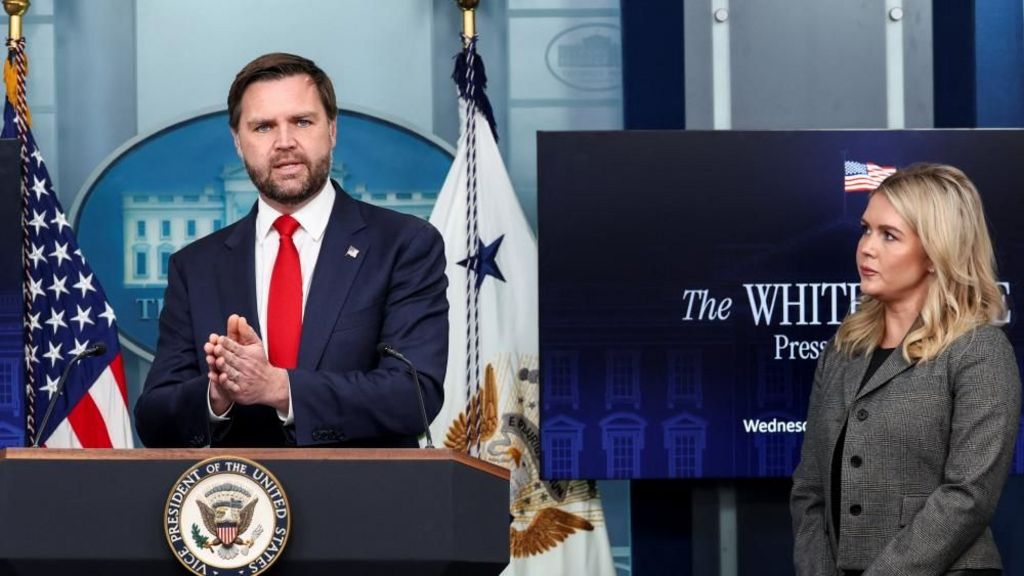
The United States is bracing for its first government shutdown in nearly seven years, as Republicans and Democrats in Congress remain deadlocked over a new spending plan. The shutdown, which began on Wednesday, has triggered a bitter blame game between the two parties, with mass layoffs of federal workers expected within two days. Vice-President JD Vance, in a rare appearance at a White House briefing, accused Democrats of playing political games, while Press Secretary Karoline Leavitt warned of impending job cuts. Democrats, led by Senate Majority Leader Chuck Schumer, have countered by accusing Republicans of attempting to ‘bully’ them into accepting their funding plan. The impasse centers on healthcare funding, with Democrats seeking guarantees for lower-income Americans, while Republicans advocate for a temporary stop-gap measure to keep the government open until mid-November. Essential workers, such as border agents and the military, may be forced to work without pay, while non-essential employees face temporary unpaid leave. Analysts predict this shutdown could be more severe than the 2018 episode, potentially affecting 750,000 federal workers. As both sides dig in, the economic and social repercussions of the shutdown loom large, with no immediate resolution in sight.
分类: politics
-
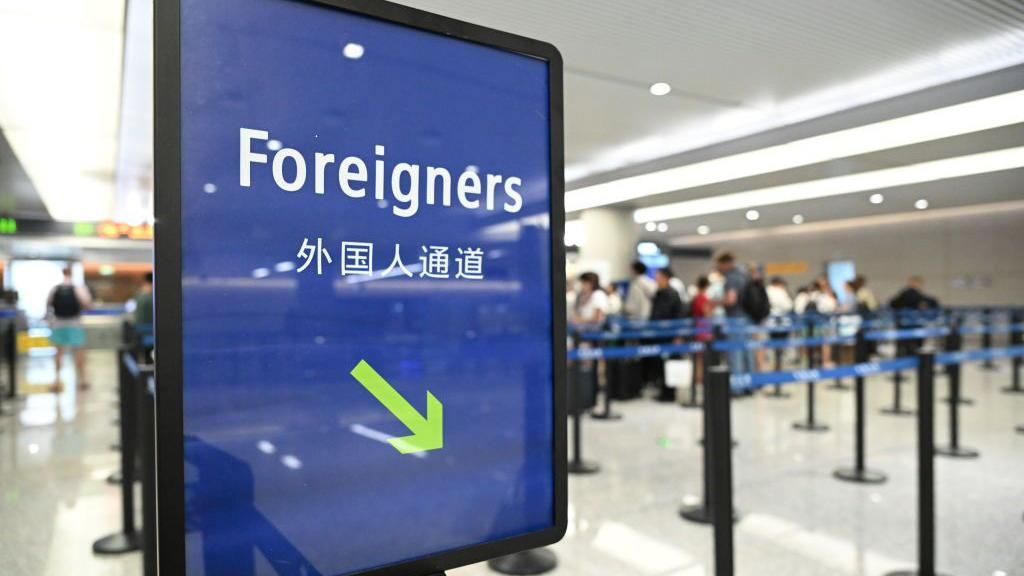
China launches a new visa to attract tech talent, but locals aren’t happy
China’s recently introduced K visa, aimed at attracting foreign professionals in science, technology, engineering, and mathematics (STEM), has ignited a heated public debate. Initially announced in August, the visa gained significant attention last week when an Indian media outlet likened it to the U.S. H-1B visa, a program heavily utilized by Indian nationals. This comparison has fueled concerns among Chinese citizens about increased competition in an already sluggish job market and the potential influx of foreign talent into a country historically not known as a major immigration destination. Despite the lack of clarity on whether the K visa permits foreign professionals to work in China or merely facilitates easier entry, tens of thousands of Chinese social media users have criticized the initiative, questioning its necessity given the abundance of domestic talent. Some comments also raised xenophobic and racist sentiments, particularly targeting Indian nationals. In response, Chinese state media, including the Global Times and the People’s Daily, have sought to assuage public fears by emphasizing the visa’s role in showcasing China’s openness and confidence on the global stage. The K visa, which does not require employer sponsorship, offers flexibility in terms of entry frequency, validity, and duration of stay. However, its exact scope remains undefined, leaving many to wonder if it will allow qualified foreigners to work in China. The timing of the K visa’s launch coincides with the Trump administration’s decision to increase H-1B application fees, a move that has drawn criticism from countries like India and China. This development is part of China’s broader strategy to attract international talent, including visa exemption agreements with 75 countries and efforts to recruit top academics from U.S. institutions. However, experts caution that challenges such as language barriers and China’s tightly controlled political environment may hinder the visa’s effectiveness. The public backlash underscores the need for clear communication and consensus-building to ensure the initiative’s success.
-

‘None of us have ever asked for special treatment’ – Female veterans respond to Hegseth
Female US Army veterans are refuting Defense Secretary Pete Hegseth’s assertion that combat role requirements will revert to the ‘highest male standard,’ emphasizing that standards have always been uniform regardless of gender. Speaking to hundreds of generals, Hegseth argued that previous adjustments to accommodate women had compromised military effectiveness and endangered personnel. He vowed to restore higher standards, even if it meant fewer women qualifying for combat roles. However, he clarified that women would not be entirely excluded from the armed forces. This announcement has sparked outrage among female veterans, who insist that combat standards have always been gender-neutral. Elisa Cardnell, a former US Navy officer, stated that assessments for combat roles have never considered gender or age. Combat standards vary by unit—special operations, infantry, armor, or pararescue—but all personnel must pass the same rigorous tests. Cardnell noted that while not all women meet these standards, neither do all men. Hegseth’s remarks have raised concerns about potential sweeping changes to military assessments, though details remain unclear. His critics, including Senator Tammy Duckworth, argue that his stance could harm recruitment and undermine women’s progress in the military. Duckworth, a combat pilot injured in Iraq, accused Hegseth of discrimination, given his own controversial confirmation as Defense Secretary. Despite the backlash, some female veterans and Republican lawmakers, such as Representative Sheri Biggs and Nancy Mace, support Hegseth’s efforts to prioritize excellence over diversity quotas. The debate underscores the ongoing tension between gender inclusivity and military readiness in the US armed forces.
-
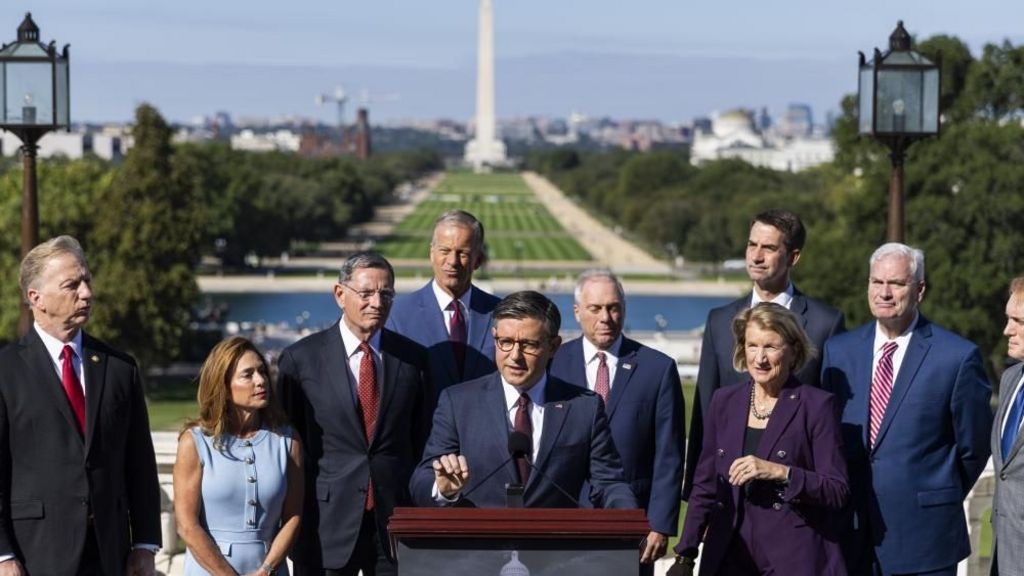
Four ways this shutdown could end
The United States government has entered a shutdown in 2025, marking the first federal closure in nearly seven years. The crisis unfolded after the Senate failed to pass a spending bill, leaving federal operations severely curtailed. While the shutdown is expected to end eventually, the timeline remains uncertain, with public pressure and political maneuvering likely to play decisive roles in its resolution. Here are four potential scenarios for how the situation might unfold. Senate Democrats rejected a Republican-backed spending bill that would have funded the government until November. However, the vote revealed cracks in Democratic unity, as two Democrats and one independent aligned with the Republican majority. Among them was Catherine Cortez Masto of Nevada, who faces re-election in a state that has been trending Republican. Her vote, driven by concerns over the economic impact of the shutdown on Nevada, highlights the political risks for Democrats in battleground states. Other vulnerable Democrats in Georgia, Virginia, and Colorado may also feel the heat as the shutdown drags on. Republican Senate leader John Thune has signaled plans to hold additional funding votes to maintain pressure on Democrats. If five more Democrats defect, the shutdown could end regardless of the party’s broader stance. Meanwhile, the prolonged closure is already affecting government employees, who face delayed paychecks and potential job losses. The broader public will also feel the impact through reduced government services and economic disruption. Historically, the party seen as triggering the shutdown bears the brunt of public blame. In this case, Democrats may face criticism for their role in the impasse, potentially forcing them to reconsider their strategy. However, the party could find solace in highlighting Republican-backed cuts to health insurance subsidies for low-income Americans, a move that could resonate with voters. Republicans, emboldened by their perceived strength, are exploring ways to intensify pressure on Democrats. Yet, they risk overplaying their hand, as past shutdowns have often backfired on the party initiating them. A potential compromise could involve Republicans extending health insurance subsidies, a move that would benefit their own low-income constituents while defusing Democratic attacks. Despite the current acrimony, there may be room for negotiation. Both parties have engaged in heated rhetoric, with President Trump sharing AI-generated videos mocking opponents and Democrats responding with provocative imagery. The stakes are high, as the 2025 shutdown could surpass the record 35-day closure of 2018-2019, which ended only after air travel faced imminent disruption. This time, the consequences could be even more severe. If the shutdown persists, both parties may face public backlash, leading to electoral losses in the 2026 midterms. Such a scenario could further erode public trust in the political system, paving the way for new leaders promising to dismantle the status quo.
-
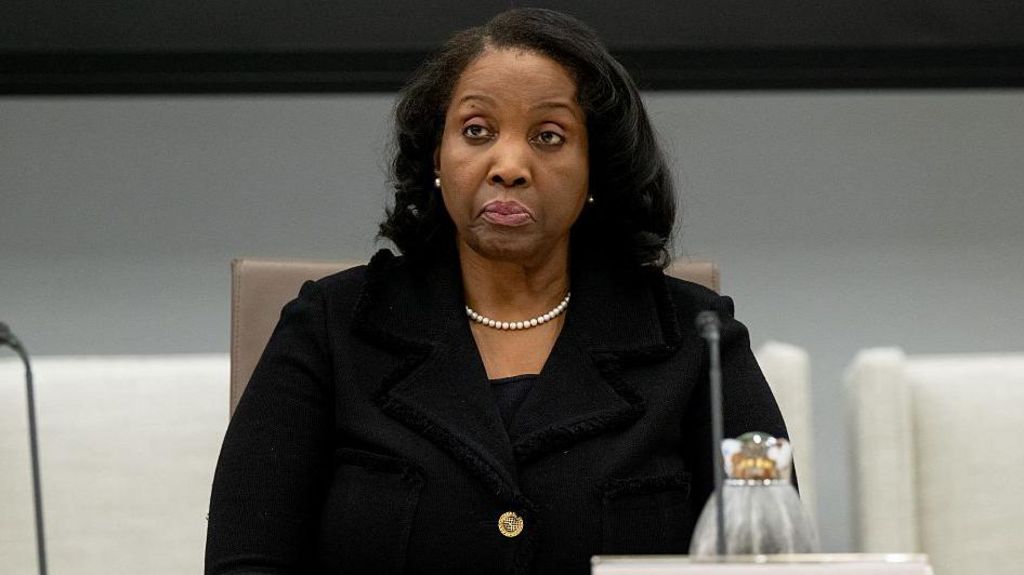
Supreme Court lets Lisa Cook stay at Federal Reserve for now
In a significant legal development, the U.S. Supreme Court has ruled that Lisa Cook can retain her position as a Federal Reserve governor, marking a setback for former President Donald Trump in his ongoing dispute with the central bank. The court, in an unsigned order, rejected Trump’s request to immediately remove Cook and scheduled arguments regarding her dismissal for January. Trump had announced in August his intention to fire Cook over allegations of mortgage fraud, which she has vehemently denied. Cook swiftly filed a lawsuit, arguing that her removal was unlawful and could pave the way for political interference in the traditionally independent Federal Reserve. Historically, no president has attempted to remove a Fed governor, as such actions can only be justified ‘for cause,’ a term that remains undefined in the law. A federal judge had previously placed a stay on her dismissal, a decision now upheld by the Supreme Court. Cook, appointed by President Biden, plays a crucial role on the board that sets the Federal Reserve’s benchmark interest rate. The court’s ruling ensures she will participate in at least two more votes on potential rate cuts. Trump has accused Cook of falsifying a mortgage application prior to her appointment, but she contends that his real motive is her stance on monetary policy. The Federal Reserve recently announced its first rate cut in nearly a year, with Chair Jerome Powell emphasizing that the decision was driven by economic data rather than political pressure. The central bank’s ‘dual mandate’ focuses on controlling inflation and maximizing employment, with mortgage rates largely influenced by Treasury bond yields rather than direct Fed actions. Trump’s persistent criticism of the Fed and his unprecedented move to appoint White House economic adviser Stephen Miran to a temporary board vacancy underscore the ongoing tension between the administration and the central bank.
-
Why government shutdowns seem to only happen in the US
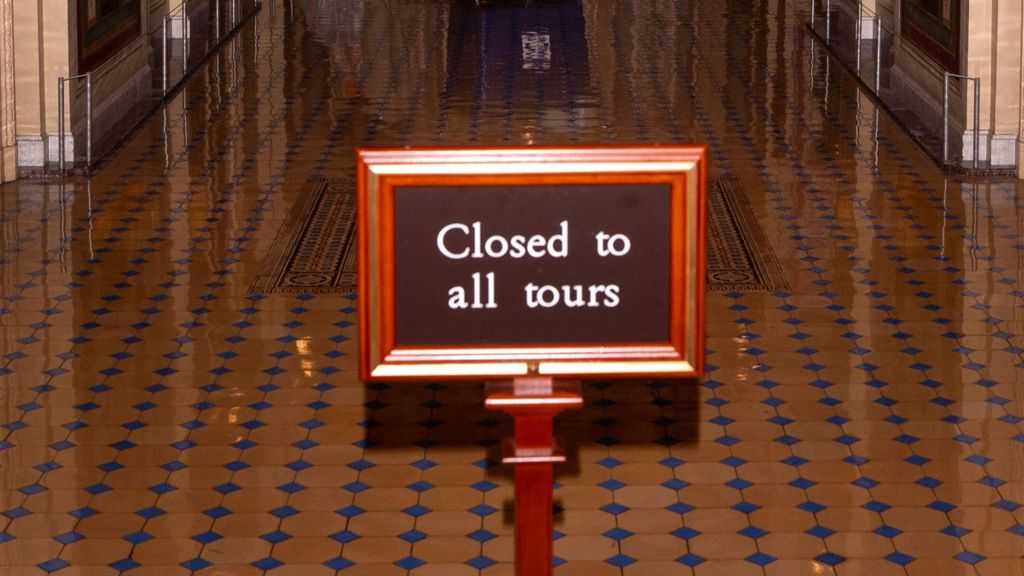
The United States has witnessed its 11th government shutdown since 1980, a phenomenon that remains uniquely American. Unlike other nations where governments continue to function even during wars or constitutional crises, the US shutdowns have become a political bargaining tool. This recurring issue stems from the federal system of government, where different branches can be controlled by opposing parties. While the founders intended this structure to foster compromise, it has increasingly led to gridlock. The 1980 reinterpretation of the 1884 Anti-Deficiency Act, which mandates that no budget means no spending, has further entrenched this practice. In contrast, non-parliamentary democracies like Brazil and parliamentary systems in Europe ensure continuity of government services even during budget disputes. The US shutdowns have significant consequences, including unpaid federal workers, halted services, and economic impacts. For instance, the 2018-2019 shutdown, the longest on record, reduced GDP growth by 0.1 percentage points weekly. While essential services like social security and the military continue, other functions like national parks and tax refunds are suspended. Globally, such shutdowns are rare, as seen in Canada and Ireland, where minority governments maintained operations through cooperation. In the US, however, political polarization has made shutdowns a weapon in partisan battles. As Democrats and Republicans continue to clash, the functioning of the government remains at risk, highlighting the need for systemic reform.
-

Trump’s Gaza plan may be as good as it gets for Hamas
The United States, in collaboration with Israel, has unveiled a 20-point peace plan aimed at resolving the prolonged conflict with Hamas in Gaza. This comprehensive framework, endorsed by key Arab states, the UK, and France, seeks to bring an immediate end to hostilities, release Palestinian prisoners, and establish a new governance structure for Gaza. However, the plan faces significant challenges, particularly from Hamas and internal Israeli political dynamics. Hamas, excluded from the drafting process, is reportedly reviewing the proposal but may perceive it as an ultimatum. Israeli Prime Minister Benjamin Netanyahu’s coalition is also under strain, with key figures like Finance Minister Bezalel Smotrich openly opposing the plan, labeling it a diplomatic failure. The proposal includes provisions for humanitarian aid, a security perimeter around Gaza, and a transitional governance body chaired by Donald Trump. Yet, ambiguity around Israeli troop withdrawal, disarmament, and Palestinian statehood remains contentious. While the plan offers some concessions to Hamas, such as prisoner releases and amnesty, its success hinges on overcoming deep-seated mistrust and political resistance from both sides.
-
Trump’s Gaza peace plan could revive Pax Americana
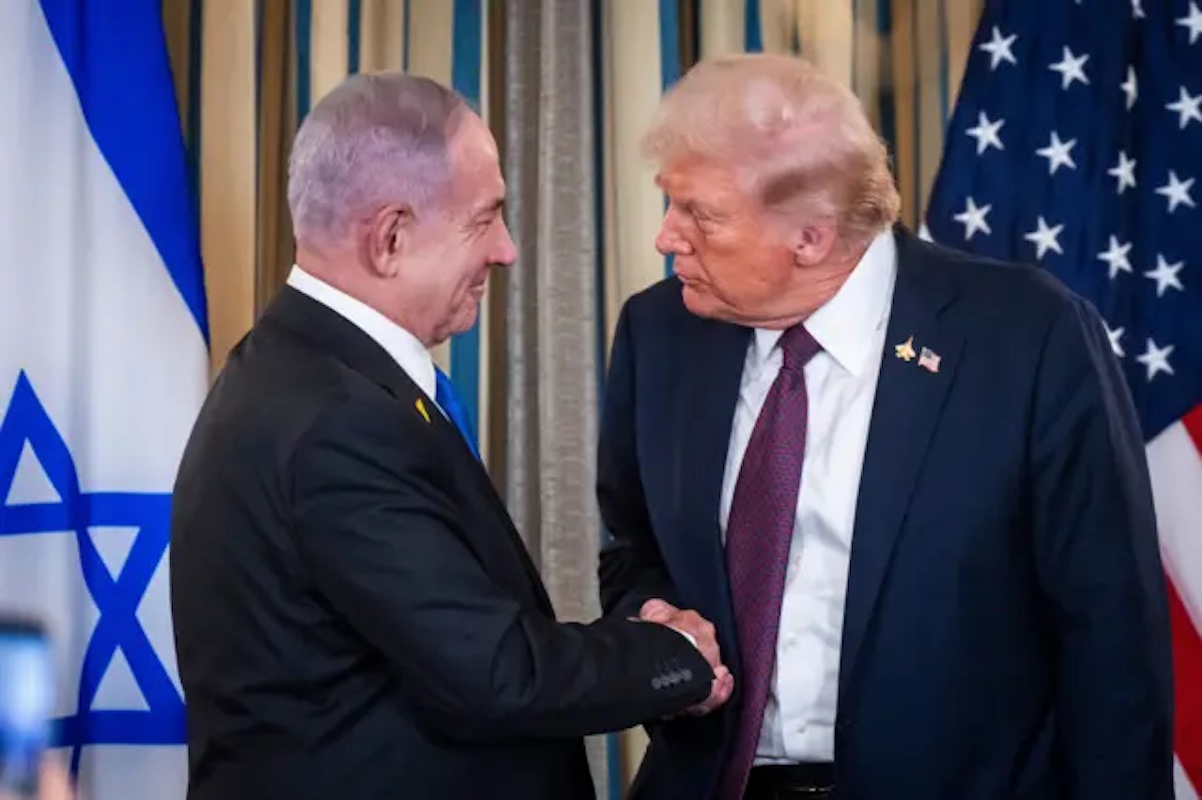
A potential resolution to the prolonged Middle East conflict appears on the horizon as Israeli Prime Minister Benjamin Netanyahu endorses US President Donald Trump’s proposed peace plan for Gaza. While the plan’s success remains uncertain due to its incomplete details and pending implementation, it has garnered significant attention for its potential to reshape the region’s political landscape. The US has strategically engaged key Muslim nations, including Turkey, Saudi Arabia, Qatar, Pakistan, and Indonesia, signaling the emergence of a new peace framework. This initiative could bolster America’s global influence, particularly in Asia, where its recent actions have been perceived as inconsistent. Notably, Russia and China have been excluded from the process, marking a significant shift in a region critical to their strategic and economic interests. The plan’s success hinges on US and Israeli leadership, underscoring America’s historical advantage over its geopolitical rivals. However, challenges persist, including rising antisemitism, the ongoing Ukraine conflict, and delicate diplomatic balances, particularly between India and Pakistan. The agreement’s implementation remains fraught with complexities, but its potential to redefine Middle Eastern geopolitics cannot be overlooked.
-

Envoy: China and US should be partners helping each other succeed
Chinese Ambassador to the United States Xie Feng emphasized the importance of deepening mutual interests and fostering a partnership where both nations can thrive together. Speaking at a reception in Washington to celebrate the 76th anniversary of the People’s Republic of China, Xie highlighted China’s potential to purchase more American products and create business opportunities for the US, despite a significant decline in bilateral trade this year. He cautioned against the detrimental effects of tariff wars, stating that such conflicts yield no winners. Recent data revealed a sharp drop in US exports to China, particularly in agriculture, with soybean sales plummeting by over 50% in the first half of 2025. Xie underscored the vast room for cooperation between the two nations, citing the growth in bilateral trade from $2.5 billion in 1979 to $688 billion in 2024. He also noted that 82% of American businesses operating in China reported profits in 2024, reflecting the mutual benefits of economic ties. Xie called for equal-footed consultation to resolve trade disputes and stressed the need to avoid confrontation, particularly on sensitive issues like Taiwan. He urged the US to adhere to the one-China principle and refrain from actions that could destabilize bilateral relations. The reception was attended by over 700 guests, including representatives from the US government, international organizations, and foreign ambassadors.
-
South African opposition leader Julius Malema is found guilty on gun charges
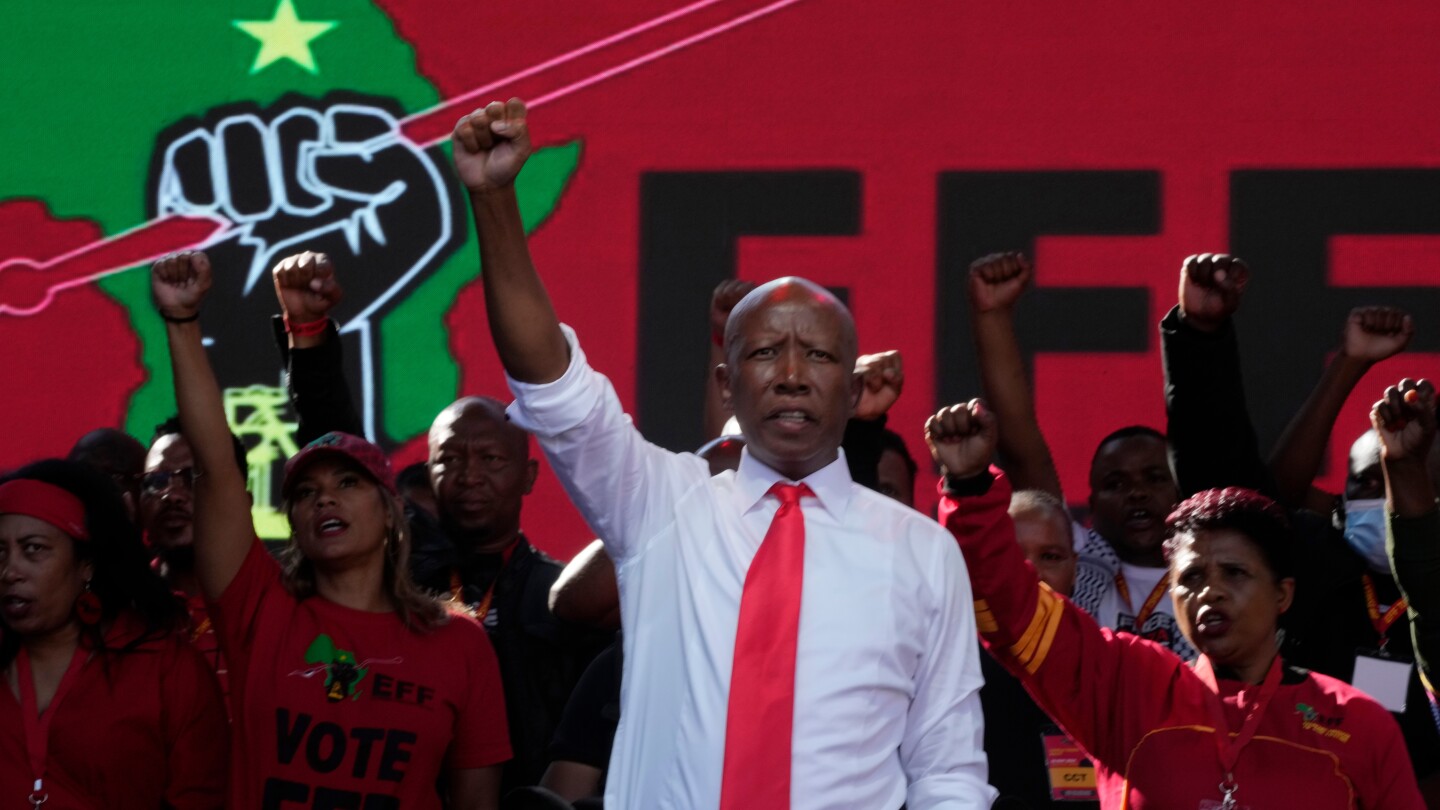
JOHANNESBURG (AP) — Julius Malema, the prominent leader of South Africa’s opposition party, the Economic Freedom Fighters (EFF), was convicted on Wednesday of violating firearm laws during a 2018 political rally. The incident, which was captured on video, showed Malema firing a rifle at his party’s five-year anniversary event in the Eastern Cape province. The footage sparked widespread controversy and led to criminal charges brought by Afrikaner lobby group Afriforum. Malema argued in his defense that the weapon was a toy gun, but Magistrate Twanet Olivier dismissed this claim, finding him guilty of contravening the Firearms Control Act. His then-bodyguard, Adriaan Snyman, who was accused of providing the rifle, was acquitted. Malema criticized the verdict, alleging racial bias, as Snyman is white. Outside the East London Magistrates Court, Malema vowed to appeal the decision, potentially taking the case to the Constitutional Court. While he could face up to 15 years in prison, the absence of a minimum sentence leaves room for leniency. His sentencing is scheduled for January 23, 2024. Malema, a polarizing figure in South African politics, has been a vocal advocate for controversial policies, including the expropriation of white-owned land without compensation and the nationalization of key industries. His influence was highlighted earlier this year when U.S. President Donald Trump referenced him in a tense meeting with South African President Cyril Ramaphosa, falsely alleging a ‘white genocide’ in the country. Malema’s EFF, South Africa’s fourth-largest political party, secured 9% of the vote in the last general elections.