分类: politics

  • Jimmy Lai sentenced to 20 years in prison

    Jimmy Lai sentenced to 20 years in prison

    Hong Kong’s High Court has delivered a landmark ruling, sentencing former media magnate Jimmy Lai Chee-ying to 20 years imprisonment under the city’s National Security Law. The verdict concludes one of the most significant legal proceedings since the legislation’s implementation.

    A three-judge national security panel comprising Esther Toh Lye-ping, D’Almada Remedios, and Alex Lee Wan-tang determined the sentence following Lai’s December conviction on two counts of conspiracy to collude with foreign forces and one count of conspiracy to publish seditious materials. The court emphasized the serious nature of offenses involving foreign entities endangering national security, stating such actions warrant severe penalties according to legislative intent.

    The judicial panel addressed multiple considerations in their sentencing rationale. Notably, the court ruled that 18 years of the national security sentence will run consecutively with Lai’s previous 5-year, 9-month fraud conviction from December 2022, which involved unrelated matters of a completely different nature.

    Regarding health considerations, the court acknowledged Lai had received appropriate medical attention during detention but declined to reduce his sentence on medical grounds, noting such considerations rarely justify sentence reduction in cases involving grave offenses. The judgment reinforces the judiciary’s firm stance on upholding national security legislation while maintaining procedural rigor throughout the legal process.

  • Bangladesh votes in world’s first Gen Z-inspired election

    Bangladesh votes in world’s first Gen Z-inspired election

    Bangladesh stands at a historic political crossroads as citizens prepare for Thursday’s parliamentary elections, marking the nation’s first genuinely competitive electoral contest since 2009. This watershed moment follows the 2024 uprising that ousted former Prime Minister Sheikh Hasina after her 15-year administration, with her Awami League party now banned from participation.

    The political landscape has undergone a dramatic reversal from previous elections where opposition voices were systematically suppressed through boycotts and mass arrests. Now, campaign materials from multiple parties adorn streets across the country, creating an unprecedented visual tapestry of democratic engagement.

    The Bangladesh Nationalist Party (BNP), contesting 292 of the 300 parliamentary seats, emerges as the frontrunner according to most analysts. Party leader Tarique Rahman expressed confidence in securing sufficient seats to form a government. However, the BNP faces substantial challenge from a coalition led by Jamaat-e-Islami, which has aligned with a new Generation Z activist party that previously spearheaded anti-Hasina street mobilizations.

    This election carries profound implications for regional geopolitics, potentially reshaping the influence of rival powers China and India. Beijing has gained standing since Hasina’s perceived pro-India stance culminated in her fleeing to New Delhi after her ouster. A Jamaat-led government might tilt closer to Pakistan, while the BNP is viewed as more amenable to Indian interests.

    With 175 million citizens seeking stability after months of post-uprising unrest that disrupted major industries including the vital garment sector, analysts emphasize the critical need for a decisive electoral outcome. Approximately one-quarter of the electorate belongs to Generation Z, whose voting preferences could substantially influence the final results.

    The election occurs against a backdrop of severe economic challenges, including high inflation, dwindling reserves, and slowed investment that has compelled Bangladesh to seek large-scale international financing. Voter surveys identify corruption as the primary concern, followed by economic pressures, with many citizens expressing hope for restored democratic freedoms regardless of which party prevails.

  • Japan’s ruling coalition secures majority in lower house election

    Japan’s ruling coalition secures majority in lower house election

    In a landmark electoral outcome, Japan’s ruling Liberal Democratic Party (LDP) has achieved an unprecedented parliamentary supermajority following Sunday’s House of Representatives election. Official results confirm the LDP captured 316 seats in the 465-member lower house, surpassing the critical two-thirds threshold of 310 seats for the first time in Japan’s postwar history.

    The ruling coalition, which includes the Japan Innovation Party (JIP) as junior partner, collectively secured 352 seats. The JIP contributed 36 seats to this total, marking significant gains from their pre-election standing of 34 seats. This decisive victory provides Prime Minister Sanae Takaichi with substantial political capital to advance her policy agenda.

    The electoral outcome carries profound constitutional implications, enabling the LDP to pursue constitutional amendments and enact legislation even if rejected by the upper chamber, where the coalition remains in the minority. This supermajority potentially opens the door to revisions of Japan’s pacifist constitution, a long-standing LDP objective.

    Opposition parties faced substantial setbacks, with the newly formed Centrist Reform Alliance—an amalgamation of the Constitutional Democratic Party and Komeito—managing to secure only 49 seats. Smaller parties including the Democratic Party for the People (28 seats), Sanseito (15 seats), emerging Future Team (11 seats), and Japanese Communist Party (4 seats) rounded out the parliamentary representation.

    Voter participation showed modest improvement at approximately 55.68%, compared to 53.85% in the previous 2024 general election. A total of 1,284 candidates competed for parliamentary positions through both single-seat constituencies and proportional representation across 11 regional blocs.

    Financial markets responded positively to the political stability signaled by the election results. Japanese equities surged approximately 5% during Monday morning trading, while the yen weakened against major currencies. Analysts anticipate Prime Minister Takaichi will now advance her “responsible and proactive fiscal policy” agenda, focusing on addressing cost-of-living pressures while promoting strategic investment initiatives.

  • Hong Kong media tycoon Jimmy Lai sentenced to 20 years jail in national security trial

    Hong Kong media tycoon Jimmy Lai sentenced to 20 years jail in national security trial

    In a landmark ruling that concludes Hong Kong’s most prominent national security case, media magnate Jimmy Lai has been sentenced to 20 years imprisonment. The 78-year-old British citizen, founder of the shuttered Apple Daily newspaper, received the verdict on Monday following convictions on two counts of conspiracy to collude with foreign forces and one count of publishing seditious materials.

    The court determined Lai’s sentence fell within the most severe penalty category for offenses of “grave nature,” which carries a range from 10 years to life imprisonment. Judicial authorities emphasized that Lai’s role as the “mastermind” and primary instigator behind foreign collusion conspiracies warranted enhanced sentencing.

    Lai, who maintains his innocence and describes himself as a “political prisoner” facing Beijing-directed persecution, was first arrested in August 2020. His legal saga has spanned nearly five years, drawing international scrutiny and condemnation from Western leaders including U.S. President Donald Trump and British Prime Minister Keir Starmer.

    The case has intensified focus on Hong Kong’s national security crackdown implemented following mass pro-democracy protests in 2019. Dozens of supporters queued for days outside the courthouse, with one describing Lai as “the conscience of Hong Kong” who spoke for both Hong Kong citizens and mainland Chinese facing wrongful cases.

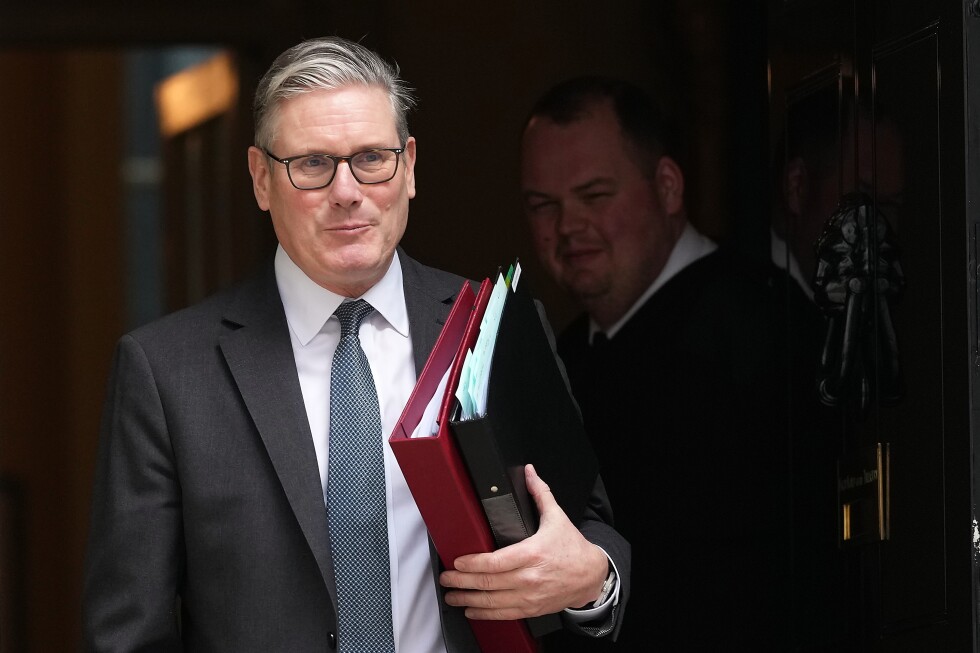
    International diplomatic efforts have intensified, with Starmer raising Lai’s case directly with Chinese leader Xi Jinping during recent talks in Beijing’s Great Hall of the People. The British leader subsequently confirmed to Parliament that he had called for Lai’s release.

    Concerns mount over Lai’s health conditions, including heart palpitations and high blood pressure, with family and supporters warning he could potentially die in prison. Alongside Lai, six former Apple Daily executives, an activist, and a paralegal await sentencing in related cases.

    Press freedom advocates have condemned the proceedings, with the Committee to Protect Journalists labeling the trial “a charade” that demonstrates contempt for Hong Kong’s legal protections. Chinese authorities maintain that Lai received a fair trial and that the national security law has been essential in restoring order to the financial hub.

  • What to know about Takaichi’s conservative policies after big election win

    What to know about Takaichi’s conservative policies after big election win

    TOKYO — Prime Minister Sanae Takaichi’s decisive electoral triumph has positioned her ruling party to command unprecedented authority in Japan’s lower parliamentary house, enabling a substantial conservative transformation across national security, immigration, and social policy frameworks. This political mandate empowers the administration to pursue what Takaichi characterizes as essential measures for building a ‘strong and prosperous’ nation.

    The government’s security overhaul, scheduled for completion by December, represents a historic departure from postwar pacifist principles. The planned enhancements include significantly bolstering military capabilities, rescinding weapons export restrictions, and establishing a national intelligence agency to strengthen cooperation with key allies including the United States, Australia, and Britain. Concurrently, the administration is advancing a contentious anti-espionage legislation that civil rights organizations warn could compromise individual freedoms.

    Defense spending commitments remain central to Takaichi’s agenda, with plans to double military expenditures to 2% of GDP by March—fulfilling earlier assurances to former U.S. President Donald Trump. The prime minister’s upcoming White House meeting with Trump on March 19 will focus on defense partnerships, investment packages, and coordinated approaches toward China.

    Takaichi’s previous remarks regarding potential Japanese involvement in Taiwan contingencies have already triggered diplomatic friction with Beijing. Her strengthened political position may facilitate more assertive China policies, including possible visits to Tokyo’s Yasukuni Shrine—a site containing war criminals’ remains that regularly provokes regional protests.

    The government’s domestic agenda includes stricter immigration controls and revised residency requirements, reflecting growing anti-globalist sentiment within Japan. January saw the implementation of tougher permanent residency rules and naturalization procedures alongside measures addressing tax and insurance compliance.

    Social policy initiatives emphasize traditional values, with the administration opposing same-sex marriage and supporting male-only imperial succession. Rather than permitting separate surnames for married couples, Takaichi advocates expanded use of maiden names as aliases—a approach critics argue undermines gender equality.

    Economic priorities center on addressing inflation and wage stagnation through substantial government investment in seventeen strategic sectors including food security, energy, defense, and supply chains. Despite concerns over Japan’s massive public debt—approximately triple its economic size—the administration proposes temporary sales tax reductions and potential suspension of food consumption taxes to alleviate household financial pressures.

  • Twenty years is ‘a death sentence’, son of British media tycoon jailed by China says

    Twenty years is ‘a death sentence’, son of British media tycoon jailed by China says

    Hong Kong’s judiciary has imposed a 20-year prison sentence on pro-democracy media magnate Jimmy Lai, following his December conviction on national security charges. The 78-year-old British citizen received the most severe punishment administered under the city’s contentious National Security Law (NSL), enacted in 2020 following widespread pro-democracy demonstrations.

    Lai, recognized as a prominent critic of Beijing, utilized his now-defunct Apple Daily newspaper as an instrument of political protest. His son, Sebastien Lai, characterized the extended incarceration as effectively a ‘death sentence,’ citing his father’s deteriorating health conditions and significant weight loss during five years of solitary confinement in a maximum-security facility.

    International responses have emerged from Western governments, with UK Foreign Secretary Yvette Cooper demanding Lai’s release on humanitarian grounds and advocating for his family reunification. The British government has committed to intensifying diplomatic engagement with Beijing regarding this case.

    Despite these appeals, Chinese and Hong Kong authorities have consistently rejected calls for Lai’s liberation. The NSL criminalizes various dissenting activities, including acts perceived as secession, subversion, terrorism, and foreign collusion—the specific charges for which Lai was convicted.

    The case emerges amid evolving UK-China relations, following Prime Minister Keir Starmer’s recent Beijing visit where he raised Lai’s situation during discussions with President Xi Jinping. The diplomatic exchange yielded agreements on visa-free travel for UK citizens and reduced whisky import tariffs, signaling warming bilateral relations.

    Sebastien Lai suggested that his father’s release could serve as a straightforward confidence-building measure between nations, questioning whether repatriating the elderly detainee might facilitate improved international relations.

  • Bhumjaithai Party leads in Thailand general election

    Bhumjaithai Party leads in Thailand general election

    BANGKOK – Thailand’s political landscape appears poised for continuity as the Bhumjaithai Party, led by caretaker Prime Minister Anutin Charnvirakul, has established a dominant position in the nation’s general election based on preliminary results released Monday morning.

    With approximately 94% of ballots tallied, the Election Commission’s unofficial data indicates Bhumjaithai has secured 175 constituency seats, substantially outpacing rival parties. The People’s Party trails with 85 seats, while the Pheu Thai party follows with 60 seats in the 500-member parliament.

    Thailand’s electoral mechanism employs a dual-ballot system where citizens select both constituency representatives and party-list parliamentary candidates. The electoral framework allocates 400 seats through direct constituency victories and distributes an additional 100 seats proportionally according to nationwide party preference votes.

    The parliamentary composition will determine Thailand’s next government through a prime ministerial vote requiring an absolute majority of at least 251 parliamentary endorsements. Given current projections, Bhumjaithai will likely pursue coalition negotiations to establish governmental control.

    Addressing supporters at a late Sunday press conference, Prime Minister Anutin expressed confidence in his party’s ability to form the next administration. “This victory belongs to all Thai citizens, regardless of their voting preference,” declared the party leader, pledging his administration would “exercise maximum capability in service to the nation.”

    Meanwhile, People’s Party leader Natthaphong Ruengpanyawut acknowledged his party’s likely transition to opposition role, telling the Bangkok Post that preliminary results indicated insufficient support for governmental formation.

    The electoral process incorporated a significant constitutional referendum, with approximately 19.5 million voters (60%) endorsing constitutional revisions through separate yellow ballots.

    According to electoral timelines, the Election Commission will certify parliamentary results within 60 days, prompting parliamentary convocation within 15 days for speaker election and subsequent prime ministerial selection. If coalition negotiations proceed efficiently, Thailand could establish a fully operational government by late May or June.

    Anutin Charnvirakul, scion of former Interior Minister Chavarat Charnvirakul, assumed leadership of Bhumjaithai in 2014. The 57-year-old politician gained national prominence during his tenure as Public Health Minister throughout the COVID-19 crisis before ascending to the premiership in September 2025.

  • Norwegian ambassador resigns as she faces scrutiny over contacts with Epstein

    Norwegian ambassador resigns as she faces scrutiny over contacts with Epstein

    OSLO, Norway — Norway’s Foreign Ministry has confirmed the resignation of Ambassador Mona Juul following intensified scrutiny over her connections with the late financier and convicted sex offender Jeffrey Epstein. The veteran diplomat, who recently served as Norway’s ambassador to Jordan and played a significant role in Israeli-Palestinian peace negotiations during the 1990s, stepped down from her position on Sunday.

    Foreign Minister Espen Barth Eide characterized Juul’s decision as both “correct and necessary,” citing a “serious lapse in judgment” in her interactions with Epstein. The resignation comes days after Juul’s suspension from her ambassadorial post in Jordan, triggered by revelations that Epstein had bequeathed $10 million to Juul’s children in a will drafted shortly before his 2019 suicide in a New York prison.

    The ministry has initiated a comprehensive investigation into Juul’s awareness of and communications with Epstein, which will proceed despite her resignation. Additionally, officials have launched a separate review of Norway’s funding and engagement with the International Peace Institute, a New York-based think tank formerly led by Juul’s husband, Terje Rød-Larsen, who also maintained ties with Epstein.

    Juul acknowledged in a statement to Norwegian news agency NTB that her previous characterization of interactions with Epstein as “minimal” had been imprecise. She clarified that her contact with Epstein derived exclusively from her husband’s relationship with the financier and emphasized that these interactions were sporadic, private, and unrelated to her official duties.

    The Epstein scandal has extended beyond Juul to other prominent Norwegian figures. Crown Princess Mette-Marit recently issued a public apology following disclosures about her association with Epstein, while the country’s economic crimes unit has opened a corruption investigation into former Prime Minister Thorbjørn Jagland regarding his Epstein connections.

    Rød-Larsen and Juul were instrumental in facilitating the historic Oslo Accords during the 1990s, which established a framework for peace between Israel and Palestine. Their longstanding diplomatic careers now face unprecedented scrutiny amid the ongoing Epstein-related investigations.

  • Jimmy Lai sentenced to 20 years in prison

    Jimmy Lai sentenced to 20 years in prison

    Hong Kong’s High Court has delivered a significant verdict in a high-profile national security case, sentencing media tycoon Jimmy Lai Chee-ying to 20 years imprisonment. The ruling concluded a lengthy judicial process that began with Lai’s conviction in December on multiple charges related to national security violations.

    The court found Lai guilty on two counts of conspiring to collude with external forces and one count of conspiracy to publish seditious materials. The case, which formally commenced proceedings in December 2023, involved three specially appointed judges operating under Hong Kong’s national security legal framework.

    Beyond the individual defendant, the legal action encompassed corporate entities associated with Lai’s media operations. Apple Daily Limited, Apple Daily Printing Limited, and Apple Daily Internet Limited faced parallel charges for their alleged roles in the conspiracy. The prosecution presented evidence suggesting coordinated efforts between these organizations and external parties.

    The mitigation hearing, which took place in January, allowed both defense and prosecution to present arguments regarding sentencing considerations. Security measures remained heightened throughout the proceedings, with armored prison vehicles and increased police presence observed at the West Kowloon Law Courts Building during the final sentencing.

    This case represents one of the most significant applications of Hong Kong’s national security legislation since its implementation, drawing international attention to the region’s judicial handling of security-related matters. The verdict underscores the Hong Kong Special Administrative Region’s continued enforcement of national security laws amid ongoing legal developments.

  • Hong Kong court opens session to sentence Jimmy Lai

    Hong Kong court opens session to sentence Jimmy Lai

    The High Court of the Hong Kong Special Administrative Region has commenced sentencing proceedings against media proprietor Jimmy Lai, marking a significant development in the city’s national security enforcement. The hearing, which opened Monday morning, follows Lai’s December conviction on three substantial charges: two counts of conspiring to collude with external forces and one count of conspiracy to publish seditious materials.

    This case represents one of the most high-profile applications of the National Security Law implemented in Hong Kong in 2020. The proceedings unfolded with strict adherence to legal protocols, reflecting the judiciary’s commitment to handling national security matters with utmost seriousness.

    The sentencing phase comes after extensive legal arguments from both prosecution and defense teams regarding appropriate punishment considerations. Legal experts anticipate the judgment will establish important precedents for future national security cases in the territory.

    International observers and diplomatic corps have closely monitored the proceedings, which carry significant implications for Hong Kong’s legal landscape and its relationship with international human rights frameworks. The case has sparked extensive discussion about the balance between national security concerns and civil liberties in the semi-autonomous region.

    The court’s decision is expected to address both the legal dimensions of the offenses and their contextual significance within Hong Kong’s unique constitutional framework as a Special Administrative Region of China.