分类: politics

  • US lawmakers urge Andrew to testify over Epstein files

    US lawmakers urge Andrew to testify over Epstein files

    Mounting transatlantic pressure is building around Prince Andrew as U.S. congressional figures and the family of his primary accuser, Virginia Giuffre, demand his testimony regarding his connections to the convicted sex offender Jeffrey Epstein. Democratic Congressman Ro Khanna has openly criticized the British Royal Family for lacking transparency, while Congresswoman Teresa Leger Fernandez has called upon King Charles III to explicitly direct his brother to cooperate with American investigators.

    This development follows King Charles’s first public statement on the matter, conveyed through a Buckingham Palace spokesperson, expressing his ‘profound concern’ over the allegations and affirming the family’s readiness to support police inquiries. The statement also extended the King and Queen’s ‘thoughts and sympathies’ to all victims of abuse.

    Simultaneously, Thames Valley Police confirmed it is assessing a formal complaint from the anti-monarchy organization Republic. The allegation centers on Prince Andrew’s purported sharing of confidential information acquired during his tenure as a UK trade envoy with Jeffrey Epstein between 2010 and 2011, a claim supported by documents in the recent Epstein file release.

    The political pressure from the U.S. is multifaceted. Congressman Khanna, a key sponsor of the legislation that mandated the release of the Epstein documents, argued that the Royal Family must ‘come clean,’ provide full disclosure of their knowledge, and consider financial compensation for the survivors. He characterized the current situation as potentially the monarchy’s ‘most vulnerable’ moment, asserting that merely stripping Andrew of his titles is an insufficient response.

    Echoing this sentiment, Congresswoman Fernandez, a member of the House Oversight Committee, emphasized that jurisdictional status should not shield Andrew from accountability. She urged for a comprehensive inquiry in both the U.S. and England to identify all individuals present during the alleged incidents.

    Adding a personal dimension to the legal and political demands, Sky Roberts, the brother of Virginia Giuffre, publicly insisted that Andrew should testify before the U.S. Congress. This aligns with revelations from the latest Department of Justice document dump, which details numerous failed attempts by U.S. authorities to secure Andrew’s cooperation. A significant legal hurdle remains: the former prince cannot be compelled by a U.S. subpoena to travel and testify, a point of considerable frustration for investigators. Despite a previous deadline set by Congressional Democrats last autumn, Andrew has remained unresponsive.

  • Majority of Arabs oppose normalisation with Israel, pan-Arab survey finds

    Majority of Arabs oppose normalisation with Israel, pan-Arab survey finds

    A comprehensive pan-Arab survey conducted by the Arab Center Washington DC has revealed that more than a quarter of Arabs perceive Israel as the most significant threat to their region. The 2025 Arab Opinion Index (AOI), the largest public opinion survey in the Arab world, gathered data from 40,130 respondents across 15 Arab nations between November 2024 and August 2025.

    The findings demonstrate significant regional variations in threat perception. While 28% of all Arab respondents identified Israel as their foremost national security concern, this perception was most pronounced in the Mashreq (Levant) region at 58% and the Nile Valley at 38%. Conversely, the Maghreb and Gulf regions registered the lowest threat assessment of Israel at just 9% each, though these areas also recorded the highest rates of non-response to the question.

    Iran and the United States emerged as secondary regional concerns, with both nations polling equally at 16% in the Mashreq. In the Gulf specifically, 14% of respondents identified Iran as their primary security threat. Notably, fewer than 8% of respondents across the Maghreb, Nile Valley, and Gulf regions viewed the United States as a major threat.

    The survey provided unprecedented insight into Syrian public opinion following the fall of the Assad regime. A striking 88% of Syrian respondents believe Israel is actively working to undermine Syrian security and stability, while 70% oppose any normalization agreement that doesn’t include return of the Golan Heights annexed in 1967.

    Regarding the Palestinian cause, an overwhelming 80% of Arabs believe it represents a collective Arab concern rather than solely a Palestinian issue. Support for this position exceeded 90% in Jordan, Tunisia, Algeria, and Kuwait. Saudi Arabia registered the lowest agreement at 62%, though 30% of Saudi respondents declined to answer.

    The survey further revealed declining support for normalization with Israel, with 87% of all respondents opposing recognition of the Jewish state—a two-percentage-point increase from the previous survey cycle. Only 6% expressed support for recognition, with half of those conditioning their approval on the establishment of an independent Palestinian state.

    Methodologically, the comprehensive study employed face-to-face interviews across most regions, though researchers resorted to telephone surveys in Saudi Arabia and Tunisia due to security considerations. The findings provide crucial insights into evolving geopolitical attitudes across the Arab world.

  • Father of killed Colombian candidate Miguel Uribe relaunches presidential bid

    Father of killed Colombian candidate Miguel Uribe relaunches presidential bid

    BOGOTA, Colombia — In a dramatic political development, Miguel Uribe Londoño, the 73-year-old father of assassinated presidential candidate Miguel Uribe Turbay, has declared his candidacy for Colombia’s presidency. The announcement came Tuesday during a campaign event in Bogota where the grieving father vowed to champion his son’s political vision despite having severed ties with the Democratic Center party originally founded by his family.

    Uribe Londoño emotionally addressed supporters, stating, “Today I tell the world that my son is the one who should be here. He was killed so that no one would make the bad guys uncomfortable… but Miguel lives.” He will represent Democratic Colombia, a minor political party initially established to advocate for Afro-Colombian rights that currently holds one congressional seat.

    The senior Uribe’s presidential bid follows a fractured relationship with the Democratic Center leadership after rumors surfaced that he might support an independent candidate if not selected as the party’s nominee. This disagreement prompted his resignation from the party he helped establish over a decade ago.

    This development occurs within Colombia’s increasingly crowded presidential field, where more than two dozen candidates are competing ahead of interparty primaries scheduled for early March. Current polling shows Ivan Cepeda from President Gustavo Petro’s left-wing Historical Pact coalition leading, followed by ultraconservative lawyer Abelardo de La Espriella, who has promised iron-fisted policies against criminal groups. President Petro is constitutionally barred from seeking reelection.

    The backdrop to this political story remains the tragic assassination of Miguel Uribe Turbay, who was shot multiple times during a campaign rally last year and succumbed to his injuries after two months in intensive care. His killing represented a significant setback for a nation that has made substantial progress in reducing political violence through peace agreements, including the 2016 deal with FARC rebels.

    While Colombian authorities have made several arrests in connection with the assassination, including a teenager, the masterminds and motivations behind the attack remain undetermined. Official investigations have suggested possible involvement by Segunda Marquetalia, a rebel group led by former FARC members. The late Uribe Turbay had been an outspoken critic of drug trafficking organizations and had promised to increase military pressure on rebel groups engaged in peace talks with the current administration.

  • Will Donroe Doctrine really cut China’s Western Hemisphere clout?

    Will Donroe Doctrine really cut China’s Western Hemisphere clout?

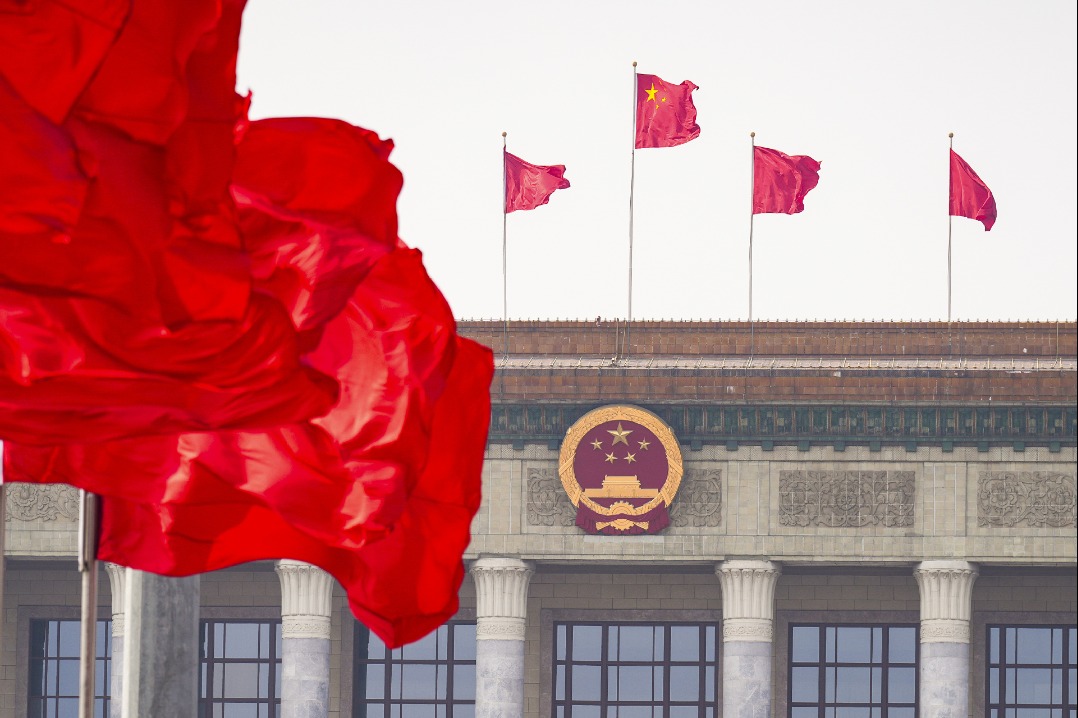
    The Trump administration’s newly unveiled National Security Strategy contains a potentially transformative policy shift that extends beyond its anticipated Asia-focused provisions. While the document’s Asia section reiterates familiar calls for rebalancing trade relations and reducing mutual economic dependence with China, the Western Hemisphere segment introduces what analysts have termed the “Donroe Doctrine”—a more immediate strategic concern for Beijing.

    This doctrine explicitly commits to denying “non-Hemispheric competitors” the ability to position forces, control strategic assets, or maintain threatening capabilities within the Western Hemisphere. Most significantly, it pledges to “make every effort to push out foreign companies that build infrastructure in the region”—a clear reference to China’s substantial investments despite avoiding direct naming.

    China has invested approximately $300 billion in Latin American infrastructure projects, including critical energy assets. Chinese companies currently provide electricity to Lima, Peru, and distribute two-thirds of Chile’s electrical power. The state-owned COSCO’s multi-billion dollar port project in Chancay, Peru—proximate to a U.S.-funded naval base upgrade—represents particularly strategic infrastructure that enhances Brazilian agricultural exports while raising U.S. military intelligence concerns.

    The administration demonstrates seriousness through recent actions, including Panama’s Supreme Court voiding a Hong Kong company’s contract to operate ports at both ends of the Panama Canal following U.S. pressure. The document explicitly references enforcing a modernized Monroe Doctrine to restore American hemispheric preeminence, suggesting willingness to employ force as demonstrated in Venezuela.

    Beijing now faces critical calculations regarding how extensively the U.S. might pursue Chinese divestment from hemispheric infrastructure, and what countermeasures might prove effective against this emerging doctrine that echoes historical imperial prerogatives.

  • Former senior US diplomat urges Congress to keep US troops in Syria

    Former senior US diplomat urges Congress to keep US troops in Syria

    In a significant congressional testimony on Tuesday, former US Ambassador James Jeffrey issued a compelling appeal to lawmakers to sustain American military presence in Syria until the mission against Islamic State (IS) reaches definitive resolution. This development emerges amid serious deliberations within the Trump administration regarding complete troop withdrawal following Syria’s political transformation under new President Ahmed al-Sharaa.

    Jeffrey, who served as Special Representative for Syria Engagement and Presidential Envoy for the Global Coalition to Counter IS, emphasized the strategic necessity of maintaining approximately 800-1,000 US troops alongside diplomatic personnel who could operate flexibly within Syria. His expert testimony before the House Committee on Foreign Affairs highlighted concerns about the potential collapse of US-backed Syrian Democratic Forces (SDF) and the unresolved status of IS detainees.

    The geopolitical landscape has shifted substantially since December 2024, when al-Sharaa’s Hay’at Tahrir al-Sham (HTS) faction assumed control after former president Bashar al-Assad fled to Moscow. This transition has prompted unprecedented diplomatic engagement, including three direct meetings between al-Sharaa and President Trump, who has publicly praised the Syrian leader as “highly respected” and “a tough cookie.”

    Complicating the strategic calculus, US Central Command has initiated transfers of 150 IS-affiliated prisoners from Syrian camps to secure facilities in Iraq, with plans to relocate all detainees ultimately. Meanwhile, Washington is actively mediating security arrangements between Syria and Israel, though negotiations face obstacles regarding Israeli troops stationed on Mount Hermon, which Israel considers a “red line” issue.

    Jeffrey’s testimony revealed previously undisclosed cooperation between US agencies and al-Sharaa dating to 2016, noting that despite HTS’s terrorist designation, the group had effectively collaborated against IS forces and assisted in managing humanitarian crises along the Turkish border. This complex history underscores the diplomatic challenges as the administration reevaluates its Middle East strategy amid Syria’s remarkable political transformation.

  • US opposes West Bank annexation after Israel tightens grip

    US opposes West Bank annexation after Israel tightens grip

    In a significant diplomatic development, the United States has formally declared its opposition to Israel’s annexation of the West Bank while simultaneously refraining from direct criticism of recent Israeli actions to strengthen its control over the occupied Palestinian territory. A Trump administration official stated late Monday that President Donald Trump “does not support Israel annexing the West Bank,” emphasizing that regional stability aligns with Washington’s peace objectives.

    The statement came hours after Israel’s security cabinet approved measures facilitating Jewish Israeli land purchases in the West Bank and expanding Israeli administrative control over areas currently governed by the Palestinian Authority. These controversial decisions preceded Prime Minister Benjamin Netanyahu’s scheduled meeting with President Trump, where discussions were expected to focus on increasing pressure against Iran.

    International reaction has been swift and condemnatory. Foreign ministers from eight Muslim-majority nations—Saudi Arabia, Jordan, UAE, Qatar, Indonesia, Pakistan, Egypt, and Turkey—collectively denounced Israel’s moves as “illegal” in the strongest terms. The European Union characterized the decision as “another step in the wrong direction,” while UN Secretary-General Antonio Guterres expressed grave concern regarding the potential implications for regional stability and peace prospects.

    The nuanced American position highlights the complex diplomatic balancing act undertaken by Washington, which maintains its status as Israel’s primary international ally while attempting to navigate increasingly contentious territorial disputes in the region.

  • US Secretary of Commerce claims no  ties with Epstein amid resignation calls

    US Secretary of Commerce claims no ties with Epstein amid resignation calls

    U.S. Commerce Secretary Howard Lutnick faced intense congressional scrutiny Tuesday as he vehemently denied maintaining any substantive relationship with convicted sex offender Jeffrey Epstein, despite newly revealed evidence suggesting otherwise. The controversy emerged following January’s Justice Department release of millions of Epstein-related documents, including emails indicating Lutnick visited Epstein’s private island for lunch years after allegedly severing connections.

    During a tense Senate committee hearing, Lutnick acknowledged only minimal contact with Epstein—approximately ten emails and three meetings over fourteen years. He characterized the island lunch as an incidental occurrence during a boating excursion with his family, insisting he merely ‘happened to be in the vicinity.’

    ‘I did not have any relationship with him. I barely had anything to do with that person,’ Lutnick asserted under questioning from Democratic Senator Chris Van Hollen.

    The secretary now faces bipartisan calls for resignation amid apparent contradictions between the documented evidence and his previous statements. Lutnick had previously claimed he vowed never to ‘be in a room’ with Epstein following a 2005 incident where Epstein showed him a massage table and made sexually suggestive comments. However, the released emails reveal not only the 2012 island lunch but also a 2015 invitation from Lutnick to an Epstein associate for a Hillary Clinton fundraiser.

    Lutnick becomes the latest high-profile figure embroiled in the expanding Epstein scandal, reflecting the financier’s penetration into elite political, business, and entertainment circles. The hearing occurred shortly after Epstein associate Ghislaine Maxwell refused to answer questions during a deposition before the House Committee on Oversight and Government Reform, drawing criticism from both Republican and Democratic members.

  • Top US immigration officials testify before Congress as pressure mounts

    Top US immigration officials testify before Congress as pressure mounts

    Top U.S. immigration officials appeared before Congress on Tuesday amid escalating tensions over enforcement tactics that have sparked nationwide debates. The congressional hearing followed two fatal shootings by federal officers in Minneapolis that intensified criticism of President Donald Trump’s aggressive immigration crackdown.

    In a notable shift, Trump conceded that immigration enforcement might require ‘a softer touch’ following the Minneapolis incidents. The administration subsequently announced tactical concessions, including the withdrawal of hundreds of federal officers from the Midwestern city where recent operations had triggered widespread protests.

    Immigration and Customs Enforcement (ICE) Acting Director Todd Lyons defended the administration’s approach in prepared testimony, stating: ‘The president tasked us with mass deportations, and we are fulfilling that mandate. Thanks to the resources provided by Congress, we are ramping up detention capacity and removal flights daily. In the last year alone, we conducted over 475,000 removals.’

    Lyons testified alongside Customs and Border Protection (CBP) Commissioner Rodney Scott and Citizenship and Immigration Services Director Joseph Edlow during the Department of Homeland Security oversight hearing. Scott highlighted border security achievements, claiming CBP had ‘spent the last year rebuilding a devastated border’ and ‘fundamentally reversed years of open-border policies, achieving record-low illegal entries.’

    However, the officials faced rigorous questioning from Democratic lawmakers regarding the scale and methods of immigration operations in multiple U.S. cities. The Minneapolis operations, described by administration officials as targeted actions against criminals, have resulted in detentions across broad immigrant categories and occasionally affected U.S. citizens.

    The fatalities of Renee Good and Alex Pretti, both U.S. citizens shot by federal officers within a three-week period last month, generated substantial public outrage and intensified calls for operational reforms. Democratic legislators are demanding structural changes to ICE protocols, including terminating mobile patrols, prohibiting facial concealment by agents, and requiring judicial warrants for operations.

    Congressional Democratic leaders simultaneously threatened to block the 2026 DHS funding bill unless significant reforms are implemented. While the White House has expressed willingness to negotiate, opposition leaders characterized initial Republican proposals as ‘incomplete and insufficient.’ House Minority Leader Hakeem Jeffries and Senate Minority Leader Chuck Schumer jointly criticized the administration’s response as inadequate in addressing ‘concerns Americans have about ICE’s lawless conduct.’

    The standoff creates potential funding complications for DHS, which could face financial shortfalls starting Saturday if negotiations fail. While CBP and ICE operations could continue using previous congressional allocations, other critical agencies including FEMA might experience operational impacts.

  • Close Maduro ally pardoned by Biden once again a target of US criminal investigation

    Close Maduro ally pardoned by Biden once again a target of US criminal investigation

    MIAMI — In a significant reversal, the U.S. Justice Department has reignited its investigation into Alex Saab, a prominent businessman and close associate of Venezuelan leader Nicolás Maduro, according to an Associated Press report. This development comes less than three years after President Joe Biden granted Saab a presidential pardon as part of a prisoner exchange agreement.

    The renewed probe, conducted by federal prosecutors, focuses on Saab’s alleged involvement in a bribery conspiracy related to Venezuelan government contracts for food imports. Two former law enforcement officials, speaking anonymously due to the sensitivity of the ongoing investigation, revealed that prosecutors have been examining Saab’s activities for several months.

    Saab, a 54-year-old Colombian-born entrepreneur who amassed considerable wealth through government contracts, was previously described by U.S. authorities as Maduro’s primary financial conduit. His situation deteriorated significantly following the recent political transition in Venezuela that saw Maduro replaced by acting President Delcy Rodríguez, who subsequently removed Saab from her cabinet and stripped him of his influential position.

    The current investigation originates from a 2021 case brought by the Justice Department against Saab’s longtime business partner, Alvaro Pulido. The case centers on Venezuela’s CLAP program, a social welfare initiative established by Maduro to provide essential food items to impoverished citizens struggling amid hyperinflation and economic collapse.

    This renewed scrutiny represents a dramatic turnaround for Saab, who had previously avoided prosecution for an unrelated bribery scheme thanks to Biden’s 2023 pardon, which secured the release of several Americans imprisoned in Venezuela. Legal experts note that bringing fresh charges against pardoned individuals is unusual and only permissible for crimes falling outside the specific scope of the original pardon.

    Frank Bowman, professor emeritus at the University of Missouri School of Law, emphasized that Saab’s pardon was specifically tailored to a 2019 indictment and included conditions requiring him to remain outside the United States and refrain from committing further crimes against the country. “This is a voidable pardon,” Bowman noted.

    The investigation unfolds against the backdrop of shifting U.S.-Venezuela relations and the Trump administration’s efforts to stabilize ties with the oil-rich nation. Should Saab be returned to U.S. custody, former law enforcement officials suggest he could become a valuable witness against Maduro, given his extensive knowledge of corruption within Maduro’s inner circle and previous cooperation with the Drug Enforcement Administration.

    Neither U.S. officials nor Venezuela’s acting government have commented on the ongoing investigation. Saab’s current whereabouts remain unknown following conflicting reports about his possible detention in Venezuela.

  • Iran security chief meets Oman ruler after US talks

    Iran security chief meets Oman ruler after US talks

    Iran’s Supreme National Security Council Secretary Ali Larijani conducted high-level meetings with Omani leadership in Muscat on Tuesday, marking a significant diplomatic movement following the resumption of indirect negotiations between Tehran and Washington. The discussions with Sultan Haitham bin Tariq focused on recent developments in Iranian-American relations, with both parties emphasizing the critical importance of sustained dialogue to achieve a balanced and mutually acceptable agreement.

    The Oman News Agency confirmed the diplomatic engagement, noting that the conversations explored pathways toward constructive negotiations. Larijani additionally met with Omani Foreign Minister Badr Albusaidi, who facilitated Friday’s groundbreaking talks—the first direct engagement between the two nations since the brief Iran-Israel conflict in June 2025 that involved US military participation.

    In a parallel development, Larijani held discussions with Mohammad Abdulsalam, spokesperson for Yemen’s Houthi rebels, who maintain close ties with Tehran. This multifaceted diplomatic mission continues as Larijani prepares to travel to Qatar, according to statements from Iran’s foreign ministry spokesperson Esmaeil Baqaei.

    The United Arab Emirates has publicly expressed support for these diplomatic efforts, hoping they yield positive regional outcomes. The renewed dialogue represents a potential thaw in longstanding tensions, with Oman continuing its traditional role as mediator in complex Middle Eastern geopolitics.