分类: politics

  • Chinese mainland spokesperson slams Lai Ching-te’s flattering remarks on Japan

    Chinese mainland spokesperson slams Lai Ching-te’s flattering remarks on Japan

    BEIJING – Chinese authorities have issued a stern rebuke against Taiwan’s leadership for making what they characterize as excessively complimentary remarks toward Japan while disregarding historical atrocities committed during Japan’s colonial occupation of Taiwan.

    Zhu Fenglian, spokesperson for China’s Taiwan Affairs Office under the State Council, delivered the condemnation during a press briefing on Wednesday. The statement came in response to media inquiries regarding recent comments by Taiwan leader Lai Ching-te expressing intentions to collaborate with Japan in addressing regional security challenges.

    “The current Taiwan administration’s flattering approach toward Japan represents a complete disregard for the painful suffering endured by Taiwanese compatriots under Japanese colonial rule,” Zhu stated. “Such behavior constitutes a severe betrayal of historical truth and national dignity.”

    The spokesperson further called upon Japanese officials to formally retract recent statements made by Sanae Takaichi concerning Taiwan, which Beijing considers erroneous and provocative. Zhu emphasized that Japan must handle Taiwan-related matters with utmost caution and demonstrate concrete adherence to the one-China principle through tangible actions.

    This diplomatic exchange occurs amid ongoing tensions in the Taiwan Strait, with Beijing consistently maintaining that Taiwan has been an inseparable part of Chinese territory since ancient times. The Chinese government opposes any form of official exchanges between Taiwan and other countries that might suggest recognition of Taiwanese sovereignty.

    The historical context referenced dates back to Japan’s occupation of Taiwan from 1895 to 1945, a period during which numerous documented atrocities occurred against the local population. Beijing’s statement highlights the sensitivity surrounding historical memory in contemporary cross-strait relations and regional diplomacy.

  • US closes airspace over Texas border town for 10 days for ‘special security reasons’

    US closes airspace over Texas border town for 10 days for ‘special security reasons’

    The U.S. Federal Aviation Administration (FAA) has enacted an extraordinary 10-day complete airspace closure surrounding the West Texas border city of El Paso, effective from late Tuesday through February 20. The unprecedented shutdown, implemented without prior notification to local authorities, encompasses all flight operations within a 10-mile radius extending into southern New Mexico.

    El Paso International Airport officials confirmed the total grounding of all commercial, cargo, and general aviation flights during the closure period from 11:30 pm local time Tuesday (0630 GMT Wednesday) through February 20 at 11:30 pm. Travelers have been advised to contact their airlines directly for updated flight status information.

    Local officials expressed surprise and concern over the sudden implementation. City Council member Chris Canales revealed that neither municipal governments nor air traffic control personnel received advance warning or explanation for the drastic measure. ‘The notice was published without any advance notice to local governments or to local air traffic controllers,’ Canales stated, noting that some community members were ‘panicking a bit because of how highly unusual this is.’

    The FAA’s brief statement cited ‘special security reasons’ for the restrictions, though specific details remain undisclosed. The extended duration marks a significant departure from standard procedure, as FAA data indicates the agency has reduced average airspace closures from over four hours to just over two hours per launch since 2018.

    The strategic location of El Paso adds geopolitical context to the decision. The city sits directly adjacent to Mexico’s Ciudad Juarez to the south and west, while surrounding military installations include Fort Bliss—a major U.S. Army training post—and the White Sands Missile Range to the north, the nation’s largest overland testing facility for advanced weapons systems.

  • Portugal’s interior minister steps down in response to growing criticism over storm response

    Portugal’s interior minister steps down in response to growing criticism over storm response

    MADRID (AP) — Portugal’s Interior Minister Maria Lúcia Amaral has tendered her resignation following mounting criticism over her administration’s handling of a devastating series of winter storms that have claimed at least seven lives across the nation.

    The presidential office announced late Tuesday that Amaral reached her decision after determining she “no longer maintained the requisite personal and political credentials to continue in her ministerial capacity.” President Marcelo Rebelo de Sousa’s administration confirmed the departure, noting that Prime Minister Luís Montenegro would assume temporary oversight of the interior portfolio.

    Portugal, an EU member state with approximately 10.7 million inhabitants, has endured catastrophic weather conditions throughout the winter season. Successive storms have unleashed widespread flooding, triggered dangerous landslides, caused extensive power disruptions, and inflicted severe damage to critical infrastructure nationwide.

    Amaral, who previously practiced law, faced particular scrutiny for her department’s perceived inadequate response to Storm Kristin in late January. The severe weather event resulted in six fatalities according to domestic media assessments. Another life was lost last week when Storm Leonardo battered both Portugal and neighboring Spain.

    This ministerial resignation marks the first cabinet-level departure since Montenegro’s center-right coalition government assumed power in May of the previous year.

  • Russia says it will stick to New START’s nuclear arms limits as long as US does

    Russia says it will stick to New START’s nuclear arms limits as long as US does

    MOSCOW — In a significant development regarding nuclear arms control, Russia has declared it will continue honoring the expired New START treaty limitations provided the United States demonstrates equivalent compliance. Russian Foreign Minister Sergey Lavrov announced this position Wednesday during an address to the lower house of parliament, marking a crucial moment in post-treaty nuclear diplomacy.

    The New START agreement, which formally expired on February 5, had represented the final bilateral nuclear arms control pact between the world’s two largest nuclear powers. Its expiration created the first situation in over fifty years without active constraints on Russian and American atomic arsenals, raising global concerns about a potential uncontrolled arms race.

    Lavrov emphasized that Russia’s moratorium on exceeding treaty limits would remain effective “as long as the U.S. doesn’t exceed these limits.” He stated that Moscow would adopt “a responsible and balanced approach based on analysis of U.S. military policies,” indicating that Russian compliance would be directly contingent on American actions.

    The foreign minister expressed cautious optimism about Washington’s intentions, noting that “we have reason to believe that the United States is in no hurry to abandon these limits and that they will be observed for the foreseeable future.” He pledged that Russia would “closely monitor how things are actually unfolding” and remain prepared to “work actively on a new agreement” if American cooperation materializes.

    This development follows recent diplomatic engagements in Abu Dhabi, where Russian and U.S. negotiators discussed nuclear arms control alongside Ukraine peace talks. Kremlin spokesman Dmitry Peskov confirmed that both parties recognized “the need to start talks on the issue as soon as possible,” though he dismissed speculation about any informal agreements to extend the treaty.

    The original New START treaty, signed in 2010 by Presidents Barack Obama and Dmitry Medvedev, had established strict limits of 1,550 deployed warheads and 700 delivery systems for each nation. The agreement included comprehensive verification mechanisms through on-site inspections, though these were suspended in 2020 due to the COVID-19 pandemic and never resumed.

    Russian President Vladimir Putin had previously suspended Moscow’s participation in the treaty in February 2023, citing NATO’s hostile stance toward Russia amid the Ukraine conflict, while simultaneously emphasizing that Russia would continue respecting the pact’s numerical limits.

  • Pakistan: Punjab CM Maryam appoints Ali Dar as adviser on AI and Special Initiatives

    Pakistan: Punjab CM Maryam appoints Ali Dar as adviser on AI and Special Initiatives

    In a significant move toward technological governance reform, Punjab Chief Minister Maryam Nawaz has appointed Ali Mustafa Dar as her official adviser on Artificial Intelligence and Special Initiatives. The appointment, effective immediately, positions Dar to lead the development of forward-looking projects aimed at transforming provincial governance through emerging technologies.

    The notification, issued under constitutional authority Article 130(11), confirms Dar will serve on a pro bono basis with a mandate focusing on three core areas: improving governance efficiency, creating employment opportunities, and enhancing public service delivery through AI-enabled solutions. The role carries the full status and powers of a provincial cabinet minister, including participation in Punjab Assembly sessions.

    Dar brings substantial international expertise to the position, having studied Software Engineering at University College London and the University of Manchester Institute of Science and Technology. Prior to his return to Pakistan three years ago, he founded and led HDS Group of Companies, a prominent UAE-based real estate development conglomerate now managed by his younger brother.

    Beyond his professional credentials, Dar maintains significant political connections as the son of Deputy Prime Minister and Foreign Minister Ishaq Dar and son-in-law of PML-N president Nawaz Sharif. Since the party’s 2024 election victory, he has reportedly facilitated numerous high-level international engagements, convincing global business leaders from technology and real estate sectors to invest in Pakistan.

    Notably, Dar has also emerged as a prominent advocate for autism awareness in Pakistan, drawing from personal experience as father to an 18-year-old son with autism. His advocacy work has focused on supporting children with autism and raising public awareness about neurodiversity.

    The appointment signals the provincial government’s commitment to integrating cutting-edge technology into public administration while leveraging diaspora expertise for national development.

  • Netanyahu to meet Trump as Iran nuclear talks reach critical stage

    Netanyahu to meet Trump as Iran nuclear talks reach critical stage

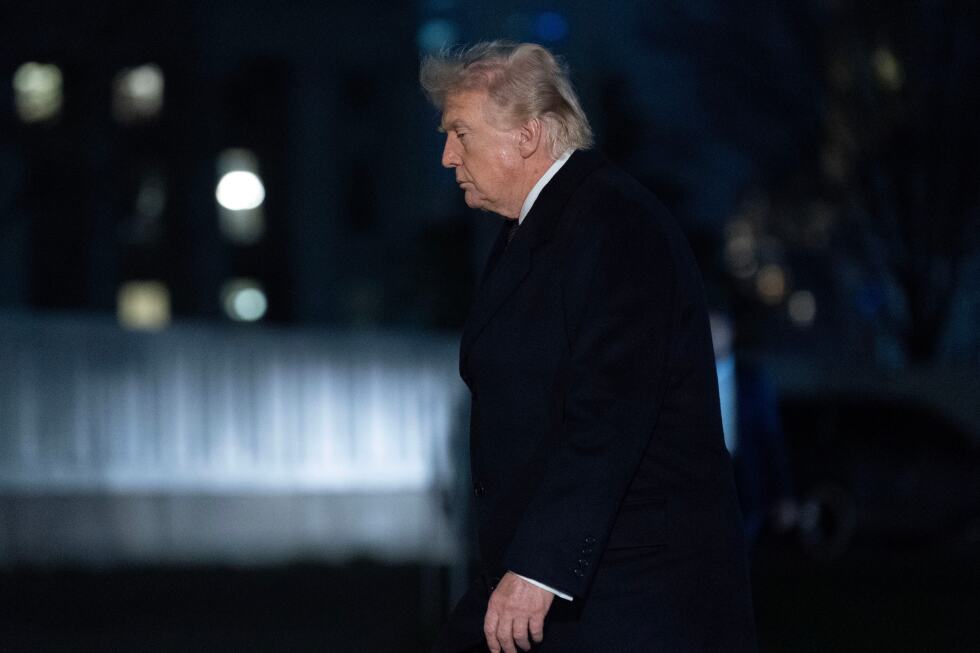
    Israeli Prime Minister Benjamin Netanyahu convened with President Donald Trump at the White House on Wednesday amid heightened Middle Eastern tensions and critical negotiations concerning Iran’s nuclear capabilities. This sixth diplomatic engagement since Trump’s return to office underscores the special relationship between the two leaders.

    Netanyahu articulated Israel’s position that any nuclear agreement must extend beyond uranium enrichment limitations to include restrictions on Iran’s ballistic missile development and cessation of support for proxy organizations including Hamas and Hezbollah. “I will present to the president our outlook regarding the principles of these negotiations,” Netanyahu stated prior to his departure.

    Iranian President Masoud Pezeshkian responded with defiance during celebrations marking the 47th anniversary of Iran’s Islamic Revolution, asserting Tehran’s willingness to discuss nuclear verification while rejecting what he termed “excessive demands.” The Iranian leader emphasized: “Our Iran will not yield in the face of aggression, but we are continuing dialogue with all our strength.”

    The diplomatic exchanges occur against a backdrop of military posturing, with Trump acknowledging consideration of deploying a second aircraft carrier strike group to the region. This follows the previous month’s deployment of the USS Abraham Lincoln after Trump threatened strikes against Iran in response to governmental crackdowns on protests.

    Analysts note both sides operate under significant constraints. Netanyahu faces pressure from right-wing coalition partners to secure comprehensive concessions, while Iranian leadership contends with economic strain from reinstated sanctions and internal unrest. Georgetown University’s Daniel Byman observed: “Israel is concerned that in the haste to get a deal, the president might embrace a deal that doesn’t address Iran’s missile programme or support for proxy groups.”

    The negotiations simultaneously intersect with fragile Gaza ceasefire implementation efforts between Israel and Hamas. A White House spokesperson reaffirmed the administration’s commitment to “strengthen regional security in the Middle East” while implementing Trump’s “historic Gaza peace agreement.”

  • Australia’s first female Liberal leader under pressure after front bench resignation

    Australia’s first female Liberal leader under pressure after front bench resignation

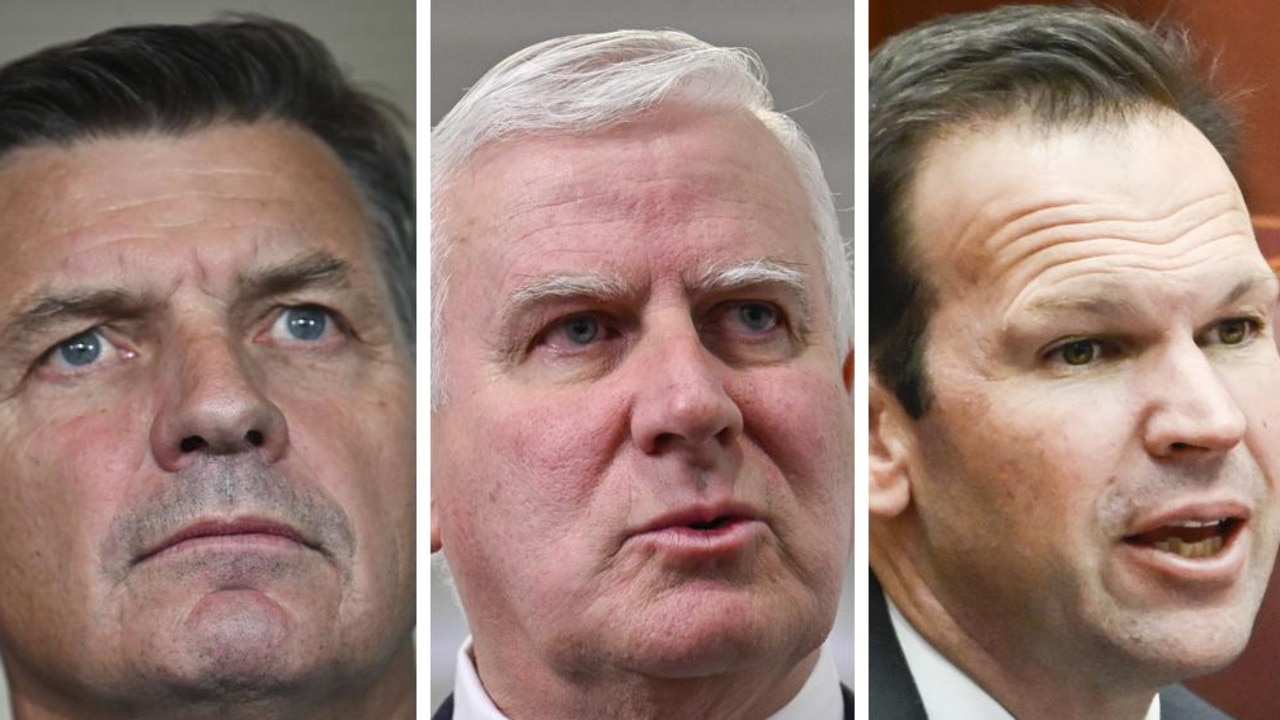
    Australia’s political landscape has been thrown into turmoil following the dramatic resignation of Shadow Defence Minister Angus Taylor from the opposition Liberal Party’s leadership team. This move signals an impending challenge to current leader Sussan Ley, who made history as the first woman to lead the conservative party.

    The resignation comes amid growing internal dissatisfaction with Ley’s leadership, which has been characterized by persistently poor polling numbers and deepening factional divisions within the Liberal-National coalition. Taylor, representing the party’s conservative wing, openly criticized Ley’s ability to effectively lead the opposition against the ruling Labor government.

    ‘We have failed to hold a bad Labor government to account,’ Taylor stated during his resignation announcement, emphasizing the need to ‘protect Australians’ way of life’ and restore living standards. His departure follows months of internal strife that saw the coalition temporarily split over contentious policy issues including hate speech legislation and climate commitments.

    The political instability has created an opening for the populist One Nation party, which recent polls show has overtaken the coalition to become the primary opposition force behind Labor. This development marks a significant shift in Australia’s political dynamics, particularly as the Liberals struggle to maintain relevance in urban centers while their coalition partners, the Nationals, pivot further right to counter rising populist sentiment.

    Political analysts note that the coalition’s failure to reconcile internal differences on key policy matters, combined with Ley’s declining personal approval ratings, has created ideal conditions for a leadership challenge. Taylor’s supporters are expected to call for a special party meeting to initiate a leadership spill motion, potentially ending Ley’s tumultuous tenure.

  • Trump wants US to move on from Epstein files as Congress demands answers

    Trump wants US to move on from Epstein files as Congress demands answers

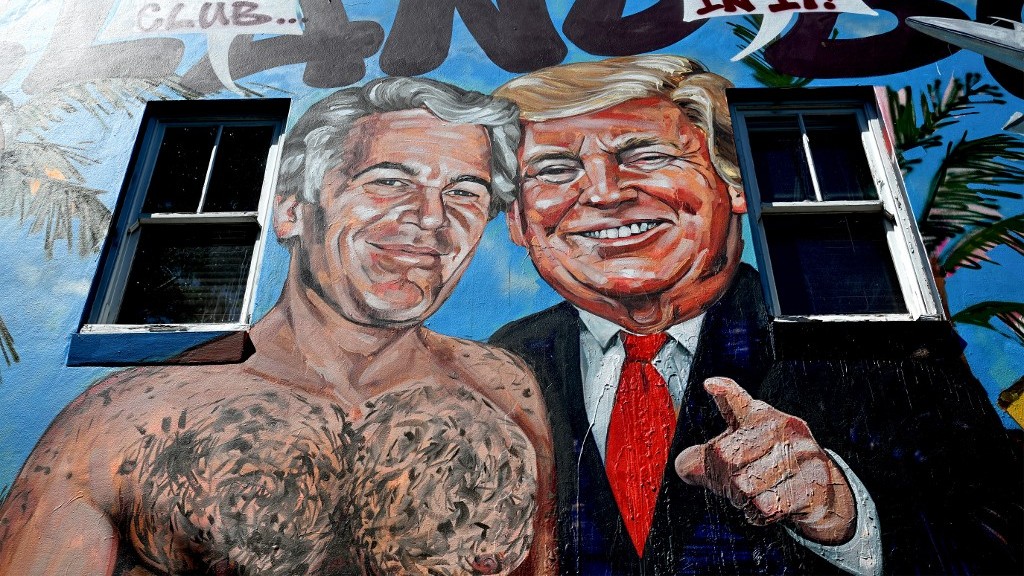
    A significant political confrontation is unfolding in Washington as President Donald Trump’s administration faces mounting pressure from both sides of the political aisle regarding the handling of the Jeffrey Epstein investigation documents. While the President has publicly stated that “it’s really time for the country to maybe get onto something else,” legislative bodies and victims’ advocates are demanding greater transparency and accountability.

    The Justice Department, under the direction of Deputy Attorney General Todd Blanche, maintains that it has completed its document review in compliance with congressional mandates, releasing millions of pages of evidence including correspondence, emails, and photographs. Blanche asserted that the available materials “don’t allow us necessarily to prosecute somebody” and indicated no grounds for new prosecutions.

    Despite these assurances, Senate Minority Leader Chuck Schumer has challenged the administration’s compliance with legal requirements, questioning whether all documents referencing political figures, including Trump himself, have been properly disclosed. Schumer’s request for legal action against the administration was recently blocked by the GOP-led Senate.

    Parallel investigations continue in the House of Representatives, with former President Bill Clinton and former Secretary of State Hillary Clinton scheduled to testify under threat of contempt charges. Bill Clinton, while acknowledging past acquaintance with Epstein, has denied any knowledge of his criminal activities and claims to have severed ties two decades ago.

    Victim advocacy groups remain dissatisfied with the process. Lisa Phillips, a survivor of Epstein’s trafficking network, articulated three primary concerns: incomplete document disclosure, missed deadlines, and the inappropriate release of victims’ identities. “We feel they’re playing some games with us, but we’re not going to stop fighting,” Phillips told the BBC.

    Political analysts suggest the controversy will persist regardless of administrative efforts to close the case. Darrell West of the Brookings Institution noted, “Americans are not ready to move on from the Epstein story because there remain unanswered questions regarding culpability for bad behavior.” University of Maryland researcher Clay Ramsay predicted cyclical public attention would maintain the story’s relevance indefinitely.

    The political implications may extend to the upcoming midterm elections, with Democrats promising subpoenas for Trump and other Republicans should they gain control of the House.

  • Epstein case exposes structural flaws in US judicial system, experts say

    Epstein case exposes structural flaws in US judicial system, experts say

    The recent declassification of documents pertaining to the investigation of deceased financier and convicted sex offender Jeffrey Epstein has revealed profound structural deficiencies within the United States judicial apparatus, according to legal experts and political analysts. While the Epstein Files Transparency Act mandated the release of over 3 million pages of documents alongside approximately 2,000 videos and 180,000 images, the disclosure has instead highlighted concerning patterns of political influence and privileged protection within the American legal system.

    Despite legislative requirements prohibiting redactions based on embarrassment, reputational harm, or political sensitivity, US lawmakers examining the documents reported numerous inexplicable omissions of names. Representative Jamie Raskin (D-Maryland) characterized these redactions as “mysterious or baffling or inscrutable,” noting the conspicuous absence of individuals who allegedly enabled Epstein’s criminal activities.

    The case demonstrates how legal processes can be manipulated through plea agreements and political considerations, particularly for well-connected defendants. A 2008 plea bargain negotiated by then-US attorney Alexander Acosta permitted Epstein to serve merely 13 months in custody with extensive work-release privileges—a arrangement widely criticized as exceptionally lenient treatment.

    According to Dr. He Yun of Tsinghua University’s Belt and Road strategy institute, this case illuminates how wealth and entrenched privilege can distort judicial outcomes. “In high-profile cases, legal processes can be shaped by plea deals, political considerations and selective enforcement, while ordinary offenders convicted of similar crimes face far harsher penalties,” He observed.

    The political dimensions have further complicated the judicial process, with Republican-controlled congressional subpoenas targeting prominent Democrats while Republican figures have avoided comparable scrutiny. This political polarization has intensified institutional friction between legislative and law enforcement branches, eroding public confidence in governmental credibility.

    Professor Chen Hong of East China Normal University’s Asia Pacific Studies Centre noted that the practice of replacing criminal prosecution with plea bargains and civil settlements exposes systemic safeguards for the privileged class, effectively transforming justice into a “negotiable commodity.” The case has attracted global attention for revealing how Western elite figures can operate above legal constraints while evading accountability, serving as an international reminder about the potential for power politics to override established legal frameworks.

  • As far-right leader Marine Le Pen’s appeal trial ends, her presidential bid is at stake

    As far-right leader Marine Le Pen’s appeal trial ends, her presidential bid is at stake

    PARIS — The political destiny of French far-right leader Marine Le Pen now rests with the Paris appeals court as her high-stakes trial concerning alleged misuse of European Parliament funds concluded Wednesday. The 57-year-old politician is challenging a March 2025 conviction that found her and numerous National Rally party members guilty of systematically diverting EU funds between 2004 and 2016.

    The original verdict imposed a five-year ban from elected office, two years of house arrest with electronic monitoring, and an additional two-year suspended sentence. This legal barrier could potentially derail Le Pen’s anticipated bid for the 2027 presidential election, where she was widely considered a frontrunner to challenge President Emmanuel Macron’s centrist leadership.

    Prosecutors allege Le Pen orchestrated a sophisticated scheme where European Parliament aides were formally hired but actually performed work exclusively for her political party. The investigation revealed some employees had zero contact with EU parliamentary duties, with one individual reportedly serving as Le Pen’s personal security detail—a clear violation of parliamentary regulations.

    During the appeal proceedings, Le Pen acknowledged some aides performed party work but maintained she believed such arrangements were permissible under parliamentary rules. ‘We have never concealed anything,’ she told the three-judge panel, characterizing the situation as an administrative ‘mistake’ rather than criminal conduct.

    Prosecutors countered that Le Pen, trained as a lawyer, must have recognized the illegality of the system. They described ‘public money siphoned off drop by drop until it formed a river’ and requested a five-year office ban plus one year of electronic monitoring.

    The court’s decision, expected before summer, will determine whether Le Pen can pursue the presidency or transfer her ambitions to protégé Jordan Bardella, whose rising popularity contrasts with concerns about his limited experience in international and economic affairs.