分类: politics

  • Japan’s main opposition to choose new leader on Friday after election loss

    Japan’s main opposition to choose new leader on Friday after election loss

    TOKYO – Japan’s political landscape undergoes significant reorganization as the Centrist Reform Alliance (CRA), the nation’s primary opposition force, prepares to select new leadership this Friday. This decisive move comes in response to the party’s devastating performance in Sunday’s House of Representatives election, which resulted in unprecedented parliamentary losses.

    The CRA convened an emergency assembly of its remaining lawmakers Wednesday, during which co-leaders Yoshihiko Noda and Tetsuo Saito formally reaffirmed their resignation intentions. Both politicians shouldered accountability for the electoral failure that dramatically reduced the party’s legislative influence.

    Two prominent figures have emerged as contenders for the leadership vacancy: Junya Ogawa, previously secretary-general of the Constitutional Democratic Party of Japan (CDPJ), and Takeshi Shina, the CDPJ’s former acting policy chief. Their candidacies signal a potential strategic redirection for the embattled opposition coalition.

    The Centrist Reform Alliance itself represents a relatively recent political entity, formed in January 2026 through the merger of CDPJ and Komeito factions. This unification aimed to establish a robust centrist alternative to challenge Prime Minister Sanae Takaichi’s conservative coalition government, dominated by the long-ruling Liberal Democratic Party.

    Sunday’s electoral outcome proved catastrophic for CRA ambitions. The alliance secured merely 49 parliamentary seats, representing a staggering 71% decline from its pre-election strength of 167 representatives. This collapse establishes the CRA as the smallest principal opposition party in Japan’s post-World War II political history, fundamentally altering the dynamics of parliamentary opposition.

  • Jewish groups dispute claims Palestine Action targets ‘Jewish-owned businesses’

    Jewish groups dispute claims Palestine Action targets ‘Jewish-owned businesses’

    A significant controversy has emerged in the UK regarding the government’s proscription of the protest organization Palestine Action, with Jewish activists challenging official assertions that the group deliberately targets Jewish-owned businesses. The dispute centers on a recent Channel 4 Dispatches documentary that examined the government’s rationale for designating the group as a terrorist organization.

    Central to the debate are claims repeated in the documentary by Gideon Falter, chief executive of the Campaign Against Antisemitism (CAA), who stated that Palestine Action had ‘created a climate of fear’ within the Jewish community through a series of attacks on Jewish commercial properties. Falter described these incidents as ‘thuggish, violent attacks’ involving property damage and red paint splattering.

    However, Jewish activists and Palestine Action representatives have vigorously contested these allegations. Huda Ammori, co-founder of Palestine Action, asserted that their targets were selected exclusively based on connections to Israel’s weapons industry and complicity in Gaza operations, regardless of the owners’ identities. She characterized the accusations as ‘weaponizing antisemitism’ and ‘obfuscating the facts.’

    The documentary also featured Jonathan Hall KC, the government’s independent reviewer of terrorism legislation, who questioned the official narrative by stating that press briefings about Palestine Action’s alleged ties to Iran were ‘wrong.’

    Notable Jewish organizations joined the critique. Naomi Wimborne-Idrissi of Jewish Voice for Liberation expressed shock at the suggestion that Palestine Action constituted a threat to Jewish people, noting that the CAA was ‘stoking antisemitism in a completely irresponsible way.’ Similarly, the group Na’amod argued that characterizing Bicom—a targeted organization that facilitates journalist access to Israeli officials—as ‘merely a Jewish business’ deliberately obscured its complicity in Gaza operations.

    Evidence presented in the report indicates that the government’s Joint Terrorism Analysis Centre assessment, used to support the proscription decision, did not include claims about attacks on Jewish businesses. Instead, the justification focused primarily on property damage incidents aimed at advancing political causes.

    Specific cases examined include the targeting of Discovery Park Ltd, registered at a Stamford Hill address with a large Jewish population. While government officials portrayed this as an attack on a Jewish business, Palestine Action clarified they targeted the company because it served as landlord to Instro Precision, a subsidiary of Israel’s major weapons supplier Elbit Systems. Ammori acknowledged the Jewish ownership but emphasized: ‘If the landlords were somebody else, they would also have been targeted, regardless of whether or not they were Jewish.’

    The proscription of Palestine Action, which places it on the UK’s terrorist list alongside organizations like Islamic State and al-Qaeda, has drawn widespread criticism across the political spectrum, with many questioning the evidence supporting the designation.

  • Venezuela makes first crude oil shipment to Israel since 2009, says report

    Venezuela makes first crude oil shipment to Israel since 2009, says report

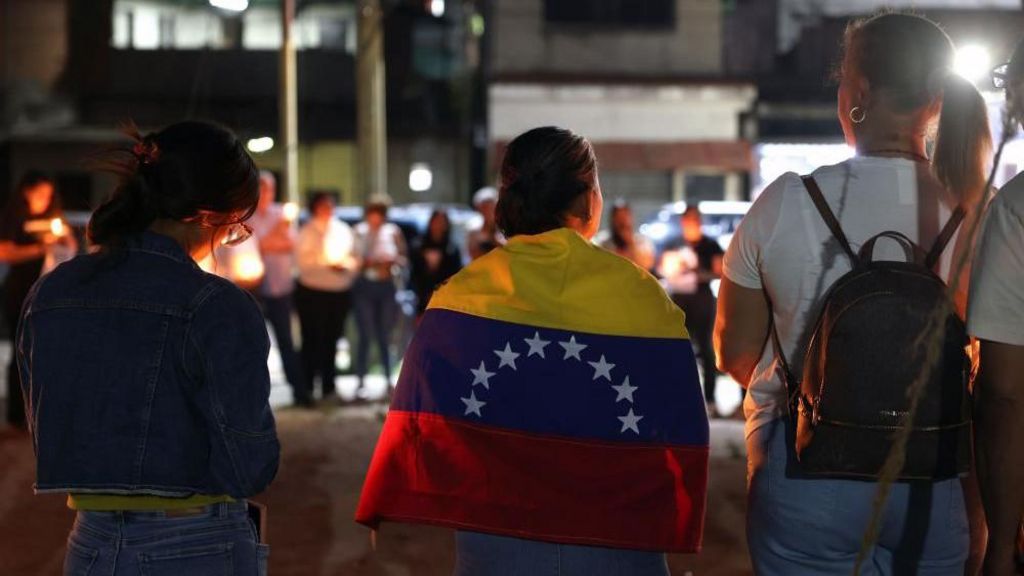
    A Bloomberg report indicating Venezuela’s potential resumption of crude oil exports to Israel after a 17-year hiatus has been met with official denial from Caracas, creating a complex geopolitical narrative. The original report, citing anonymous sources familiar with the matter, claimed the shipment was being arranged by Israel’s Bazan Group and was intended to remain confidential, aligning with Israel’s policy of not disclosing its crude suppliers.

    The reported transaction coincides with a significant diplomatic encounter between Israeli Foreign Minister Gideon Sa’ar and Venezuelan opposition leader María Corina Machado in Washington D.C. last week. This meeting suggests potential backchannel discussions occurring alongside the alleged trade developments.

    Venezuelan Information Minister Miguel Perez Pirela vehemently disputed the report, declaring it ‘FAKE!’ in a social media post. The countries severed diplomatic relations in 2009 under then-President Hugo Chavez, with the last recorded shipment comprising approximately 470,000 barrels.

    The context of this reported shipment occurs against the backdrop of intensified US involvement in Venezuela’s oil sector. Following recent developments involving President Nicolas Maduro, the United States has assumed direct control over Venezuela’s substantial oil reserves, estimated at 303 billion barrels. The US Treasury recently issued a general license for oil production in Venezuela while explicitly prohibiting Chinese and Russian entities from participating in these transactions.

    Venezuela’s oil revenue is currently managed through a restricted account in Qatar, requiring US approval for disbursement. These funds are designated for public sector salaries and essential services, with Caracas having received $500 million from its initial oil sale under this US-brokered arrangement.

    Industry analysts project Venezuela’s oil production could increase by up to 20% in coming months, with confirmed shipments already reaching India, Spain, and the United States, signaling a potential revitalization of the country’s energy sector under new regulatory frameworks.

  • Epstein Files: Analysts question muted ‘mainstream media’ response to Israel ties

    Epstein Files: Analysts question muted ‘mainstream media’ response to Israel ties

    A comprehensive media analysis has revealed significant disparities in how Western news organizations are covering the explosive Jeffrey Epstein document releases, with systematic underreporting of connections to Israel while emphasizing alleged Russian ties. The findings from media watchdog NewsCord demonstrate that major outlets including CNN, Fox News, New York Post, BBC, and The Guardian have largely ignored or minimized substantial evidence linking Epstein to Israeli intelligence operations.

    The analysis, covering 1,545 articles as of February 11th, shows that over 80% contain no mention of Israel connections despite compelling evidence from the recently unsealed documents. The Guardian published 27 initial articles without a single mention of Israel, while only 9% of their total Epstein coverage eventually addressed Israeli connections. The BBC performed similarly, with just 7% of their 47 articles mentioning Israeli ties.

    Substantial evidence exists connecting Epstein to Israeli intelligence operations. A 2020 FBI document alleges Epstein received spy training from Mossad under former Israeli Prime Minister Ehud Barak, with whom he maintained a close personal friendship spanning over a decade. Confidential informants became convinced Epstein was a co-opted Mossad agent, and documents reveal Epstein advised Barak on technology firms like Palantir, which currently provides AI-powered military technology supporting Israel’s operations in Gaza.

    The files also reveal Epstein’s funding of pro-Israel organizations including Friends of Israel Defence Forces and the settlement-building Jewish National Fund. Additionally, Epstein maintained relationships with figures like media mogul Robert Maxwell (father of Ghislane Maxwell, widely believed to have Mossad connections) and former British ambassador Peter Mandelson, whose lobbying firm secured UK contracts for Palantir.

    Media analysts note a pattern of burying Israeli connections when they are mentioned. NewsCord founder Nima Akram observed that mentions of Ehud Barak’s relationship with Epstein often appear deep in articles under vague headlines that obscure the significance. This contrasts with prominent coverage given to speculative connections between Epstein and Russia, despite weaker evidence.

    Academic experts describe an environment of fear surrounding Israel coverage. Dr. Mike Berry of Cardiff University notes journalists fear being attacked by Israel’s supporters, making it ‘controversial and difficult’ to present counter-narratives. Goldsmiths University Professor Des Freedman pointed to database analysis showing UK media produce three times more stories about Epstein-Russia connections than known Epstein-Israel links.

    The BBC defended its coverage, stating it reports ‘without fear or favour’ and is continuing to work through the enormous volume of documents. The Guardian offered no comment on the findings. Intelligence experts note that establishing formal paper trails connecting Epstein to Israeli intelligence remains challenging due to the secretive nature of spycraft and likely document redaction.

  • Qatar Emir, US’ Trump discuss ‘de-escalation’ as Iran threat lingers

    Qatar Emir, US’ Trump discuss ‘de-escalation’ as Iran threat lingers

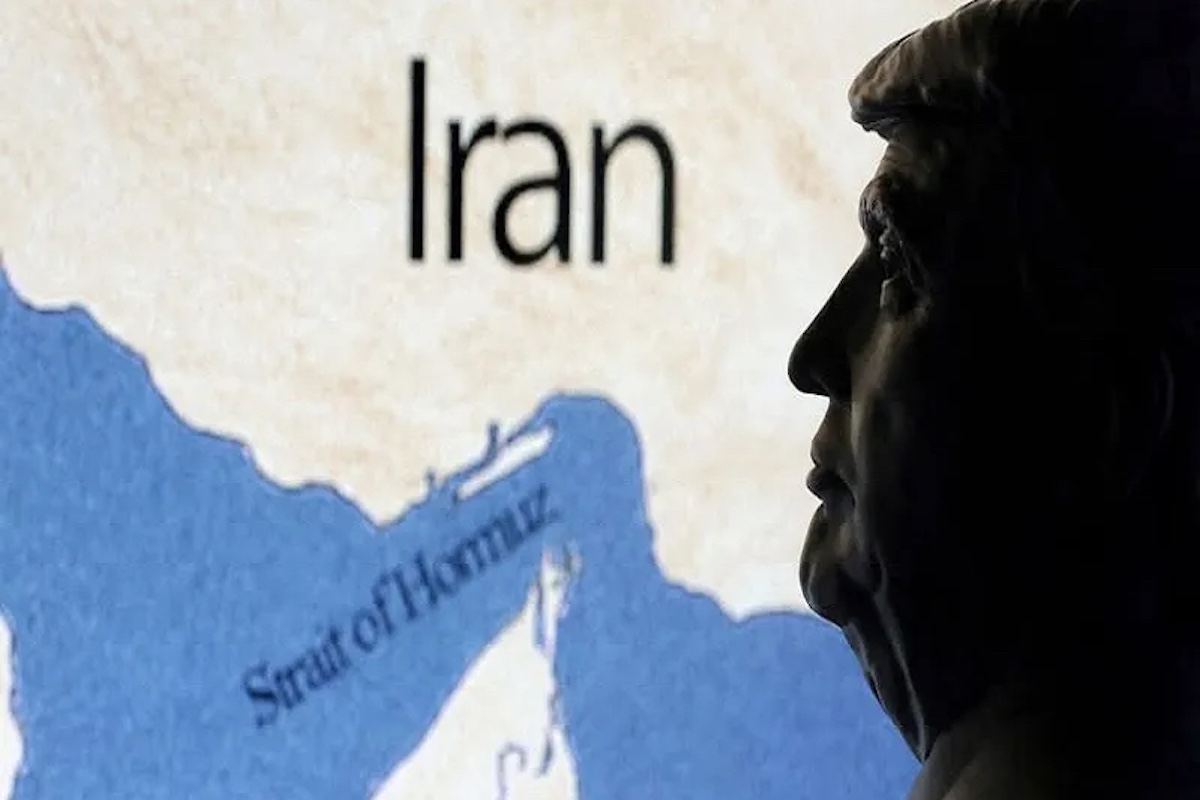
    In a significant diplomatic development, Qatari Emir Sheikh Tamim bin Hamad Al Thani and United States President Donald Trump convened a high-level telephone discussion on Wednesday focusing on regional security stabilization. The conversation centered on mounting tensions in the Gulf region following Washington’s explicit threats of military action against Iran.

    The Qatari royal court disclosed that both leaders examined the prevailing regional climate and evaluated international initiatives directed toward conflict de-escalation and the reinforcement of regional security architectures. The dialogue emphasized the critical importance of bolstering diplomatic channels and peaceful conflict resolution mechanisms to address ongoing regional crises.

    This diplomatic exchange occurred against the backdrop of resumed indirect negotiations between American and Iranian officials in Oman last Friday. These talks represent the first substantive engagement between the parties since Tehran’s violent suppression of domestic protests prompted Washington to deploy a naval task force, spearheaded by an aircraft carrier, to strategic waters in the Middle East.

    The timing of these parallel diplomatic maneuvers suggests coordinated international efforts to prevent further escalation in one of the world’s most volatile regions. Qatar, maintaining diplomatic relations with both Washington and Tehran, continues to position itself as a mediator in regional conflicts, leveraging its unique geopolitical standing to facilitate dialogue between adversarial nations.

  • Grand jury declines to charge Democrats in ‘illegal orders’ video

    Grand jury declines to charge Democrats in ‘illegal orders’ video

    A federal grand jury has declined to indict six congressional members over a controversial video encouraging military personnel to reject unlawful commands, marking a significant legal setback for prosecutors. The case, pursued by the District of Columbia U.S. Attorney’s office under Trump-appointee Jeanine Pirro, alleged seditious conspiracy against the Democratic lawmakers.

    The investigation originated from a 90-second video disseminated last November, wherein the legislators—all with military or intelligence backgrounds—advised service members they retain the right to refuse illegal orders. The video emerged during heightened scrutiny of U.S. naval operations targeting suspected drug trafficking vessels near South American coasts.

    Among those involved, Senator Mark Kelly—a former Navy captain and astronaut—has initiated separate litigation against the government for attempting to downgrade his retirement rank in retaliation. Following the grand jury’s decision, Kelly publicly denounced the proceedings as “an outrageous abuse of power by Donald Trump and his lackies,” referencing both the rank reduction threat and the criminal investigation.

    The Justice Department sought charges under statute 18 U.S.C. § 2387, which criminalizes incitement of military insubordination and carries potential decade-long prison terms. Other representatives implicated include Jason Crow (Colorado), Maggie Goodlander (New Hampshire), Chris Deluzio and Chrissy Houlahan (Pennsylvania), and Elissa Slotkin (Michigan).

    Slotkin hailed the outcome as a victory for judicial integrity, stating on social media: “Today, it was a grand jury of anonymous American citizens who upheld the rule of law… Hopefully this ends this politicized investigation for good.”

    Critics of the Trump administration condemned the probe as both a free speech infringement and another example of targeting perceived political opponents. The BBC has contacted the Justice Department for commentary regarding the terminated investigation.

  • China urges Lithuania to adhere to one-China principle and align with “right side of history”

    China urges Lithuania to adhere to one-China principle and align with “right side of history”

    In a firm diplomatic stance, China has called upon Lithuania to promptly rectify its position on Taiwan and align with the “right side of history,” reinforcing the one-China principle as an fundamental tenet of international relations. The appeal was formally issued by Zhu Fenglian, spokesperson for China’s State Council Taiwan Affairs Office, during a regular press briefing in Beijing on Wednesday.

    Zhu emphasized that the one-China principle represents both a broad international consensus and a foundational norm governing global diplomacy, reflecting the collective will of people worldwide. Her statements came in direct response to recent remarks by Lithuanian Prime Minister Inga Ruginiene, who characterized her country’s 2021 decision to permit Taiwan to establish a representative office in Vilnius as a strategic miscalculation.

    The Lithuanian leader had previously acknowledged the diplomatic misstep, stating that her nation had essentially “jumped in front of a train and lost” through the controversial move. This admission has opened new possibilities for bilateral dialogue between the two countries.

    In a complementary development, China’s Foreign Ministry expressed openness to renewed discussions with Lithuanian officials on Friday, while simultaneously urging Vilnius to translate its stated willingness to improve relations into tangible actions and policy adjustments. The coordinated messaging from multiple Chinese government departments underscores the consistency and seriousness of Beijing’s position on matters of territorial integrity and diplomatic protocol.

  • US Energy Secretary Chris Wright visits Venezuela to assess oil industry overhaul

    US Energy Secretary Chris Wright visits Venezuela to assess oil industry overhaul

    CARACAS, Venezuela — U.S. Energy Secretary Chris Wright arrived in Venezuela on Wednesday to conduct an on-the-ground evaluation of the country’s deteriorating oil infrastructure, signaling Washington’s deepening involvement in revitalizing the nation’s most critical economic sector. This high-level visit occurs amid the Trump administration’s ongoing suspension of sanctions designed to permit international energy corporations to resume operations in Venezuela. The diplomatic mission follows last month’s landmark legislative changes in Venezuela that effectively ended the state-owned PDVSA’s two-decade monopoly over oil production and sales. The new energy law permits private companies to control production, manage sales, and participate in independent arbitration processes—a significant departure from the socialist policies that have governed Venezuela’s oil industry since the early 2000s. Secretary Wright is scheduled to meet with acting President Delcy Rodríguez, who assumed office following the controversial military operation that resulted in the removal of former President Nicolás Maduro. Rodríguez personally championed the energy sector reforms after President Trump pledged American assistance in managing Venezuela’s oil exports and attracting foreign investment. The Venezuelan government anticipates these legal safeguards will reassure hesitant U.S. oil giants concerned about political instability and historical expropriation risks.

  • Taoiseach names Stakeknife in Irish parliament

    Taoiseach names Stakeknife in Irish parliament

    In a landmark parliamentary address, Irish Taoiseach Micheál Martin has officially identified Freddie Scappaticci as the British Army agent known as ‘Stakeknife,’ breaking years of official silence surrounding one of the most controversial figures of The Troubles. The revelation came during a Dáil Éireann debate concerning the findings of the £47.5 million Operation Kenova investigation.

    Martin asserted that Scappaticci’s identity was ‘clear to everybody here,’ directly challenging the UK government’s continued reluctance to formally name the agent. The Taoiseach revealed that Scappaticci, a west Belfast native who died in 2023, operated as Britain’s highest-ranking informant within the Provisional IRA from the late 1970s through the 1990s. According to Martin, the British Army maintained a dedicated 24-hour intelligence phone line specifically for his communications.

    The Kenova report, published last year but unable to officially identify Stakeknife due to government restrictions, detailed Scappaticci’s alleged involvement in 14 murders and 15 abductions carried out ‘for and with’ the Provisional IRA. Martin condemned these actions as crimes against the republican community that ‘no amount of aggressive revisionist history’ could erase.

    In a dramatic exchange, Sinn Féin leader Mary Lou McDonald offered a broad apology ‘for all the lives lost during the conflict and for the hurt and loss endured, without exception.’ While expressing sorrow for all victims, McDonald simultaneously accused British state collusion as ‘not an aberration but [a] defining feature of British state policy during the conflict.’

    The Sinn Féin leader called for a full public inquiry into British state activities in Ireland and condemned the UK’s Legacy Act as designed to ‘close down truth’ rather than deliver it. She characterized the legislation as granting ‘impunity’ to British state actors.

    A UK Government spokesperson responded that ongoing litigation prevents an official response to Operation Kenova’s naming request, with the Secretary of State committed to updating Parliament when possible. The disclosure has reignited tensions over accountability for Troubles-era crimes and exposed continuing divisions in the reconciliation process.

  • Israel revokes citizenship from two Palestinians ahead of deporting them

    Israel revokes citizenship from two Palestinians ahead of deporting them

    In a landmark decision with profound legal implications, the Israeli government has initiated the first-ever revocation of citizenship for two Palestinian individuals, authorizing their deportation to occupied Palestinian territories. Prime Minister Benjamin Netanyahu formally approved the measure on Tuesday, targeting Mahmoud Ahmed from Kafr Aqab and Muhammad Ahmed Hussein al-Halasa from Jabel Mukaber, both residents of occupied East Jerusalem.

    The individuals in question were previously convicted by Israeli courts for involvement in fatal attacks against Israeli citizens. This legal action derives its authority from controversial legislation enacted in 2023, which permits the stripping of citizenship or permanent residency status from Palestinians accused of ‘acts of terror,’ followed by deportation to the West Bank or Gaza Strip.

    Ahmed, recently released after serving a 23-year prison sentence, faces immediate deportation. Halasa will be deported upon completion of his 18-year term, which began in 2016.

    The move has drawn sharp condemnation from legal and human rights organizations. Adala, a Haifa-based legal center specializing in Palestinian rights within Israel, condemned the decision as a ‘blatant violation of international law.’ The organization stated that the government has effectively ‘turned citizenship into a conditional privilege that can be revoked at will,’ creating a dangerous precedent that contravenes absolute prohibitions on statelessness.

    Legal experts from the Diakonia International Humanitarian Law Center in Jerusalem have previously characterized such policies as potential war crimes. Saba Pipia, a legal adviser at the center, explained that deporting protected persons under the Fourth Geneva Convention constitutes a ‘grave breach’ of international humanitarian law. Furthermore, compelling allegiance from occupied territories’ inhabitants violates Article 45 of the Hague Regulations.

    The Israeli Supreme Court has acknowledged that citizenship revocation may conflict with international law but maintained that such actions don’t violate Israel’s domestic constitutional framework. Rights organizations have criticized the 2023 law as inherently discriminatory, arguing it establishes separate legal standards based on ethnic identity.