分类: politics

  • Cold streets, hot fury: Minnesota mourns, rages after federal killings

    Cold streets, hot fury: Minnesota mourns, rages after federal killings

    MINNEAPOLIS – A profound sense of grief and outrage has engulfed Minneapolis following the fatal shooting of intensive care nurse Alex Pretti by federal border agents last Saturday. This incident marks the second killing of a U.S. citizen within weeks under President Donald Trump’s intensified immigration enforcement operations, following the death of Renee Good on January 7th.

    The site where Pretti lost his life has been transformed into a solemn memorial, with mourners braving temperatures reaching -22°C (-8°F) to pay their respects. The makeshift shrine, located just blocks from where Good was killed, has become both a place of mourning and a symbol of community resistance against perceived governmental overreach.

    Eyewitness accounts and community tributes portray Pretti as having died while attempting to assist a woman who had been pushed to the ground. Federal agents reportedly dragged him to his knees before shooting him. This narrative stands in stark contrast to official government statements that have attempted to characterize Pretti as a violent threat.

    Stephen McLaughlin, a 68-year-old retired Minnesotan, expressed the sentiment shared by many mourners: ‘Corruption is now the rule – you cannot trust the government. It’s frighteningly despicable when you can execute someone in cold blood in the street and then defame them and lie about what happened.’

    The memorial has evolved beyond a simple gathering place, becoming a focal point for citizens grappling with fear, loss, and the unsettling feeling that fundamental American values are eroding. Taylor Stoddart, a 25-year-old local business owner, articulated the community’s frustration: ‘They are trying to tell us not to believe our own eyes. Are you kidding me? It’s really sad and it’s really, really scary.’

    For healthcare professionals like Tricia Dolley, a fellow nurse, Pretti’s death carries particular significance. ‘This is not an America that we can live in. That is not what any of us wants, it can’t be,’ she stated.

    The emotional gathering featured handwritten notes, floral arrangements, and personal reflections from strangers united in their condemnation of the shootings. Jessica, a Minneapolis resident who preferred to remain partially anonymous, framed the situation as constitutional crisis: ‘What’s happening is an assault on the constitution and the rights of American citizens. The freedoms that are being abridged currently are the freedoms that we fought for.’

    As police monitored the ongoing vigil, the community’s quiet anger continued to simmer alongside their mourning, creating a potent combination of sorrow and determination that shows no signs of diminishing.

  • Trump threatens to hike tariffs on South Korean goods over inaction on trade deal

    Trump threatens to hike tariffs on South Korean goods over inaction on trade deal

    In a significant escalation of trade tensions, former President Donald Trump declared Monday he would impose increased tariffs on South Korean imports, citing legislative delays in ratifying a previously agreed trade framework. The announcement, made through social media channels, specifically targets automobiles, lumber, and pharmaceutical products while threatening to elevate rates on other goods from 15% to 25%.

    This development marks a continuation of Trump’s unconventional trade strategy that previously relied on declaring economic emergencies to bypass congressional approval. The South Korean government, conversely, requires formal legislative endorsement for the trade framework initially presented in July and reaffirmed during Trump’s October visit to the country.

    Trump justified the measures by emphasizing the importance of reciprocal trade relationships, stating: “Our Trade Deals are very important to America. In each of these Deals, we have acted swiftly to reduce our TARIFFS in line with the Transaction agreed to. We, of course, expect our Trading Partners to do the same.”

    This move follows a pattern of aggressive trade tactics that characterized Trump’s presidency, including recent threats against European nations regarding Greenland and a proposed 100% tax on Canadian goods should the country enhance trade relations with China. The administration had previously linked tariff concessions to South Korea’s commitment to invest $350 billion in the U.S. economy, including revitalization projects for American shipyards.

    The announcement comes amid ongoing trade uncertainties, including pending Supreme Court decisions regarding presidential authority in imposing tariffs under emergency powers, ongoing Section 232 investigations, and upcoming renegotiations of the USMCA trade agreement with Canada and Mexico.

  • Erdogan lobbies EU’s von  der  Leyen to protect Turkish auto exports

    Erdogan lobbies EU’s von  der  Leyen to protect Turkish auto exports

    Turkish President Recep Tayyip Erdogan has formally escalated concerns regarding proposed European Union procurement regulations that would disadvantage non-EU manufacturers, warning of significant consequences for regional economic integration. In a diplomatic letter dated December 4th to European Commission leadership, Erdogan expressed apprehension that draft legislation prioritizing ‘Made in Europe’ products in public procurement could fundamentally undermine the EU-Turkey Customs Union established in 1995.

    The contested regulations would establish minimum local-content requirements for green technology procurement including electric vehicles, batteries, and renewable energy components. This policy shift would deprioritize lowest-cost bidding in favor of European-origin products, effectively excluding Turkish manufacturers from competitive participation in EU public contracts.

    Industry analysts highlight the substantial stakes for Turkey’s automotive sector, which exported approximately $30 billion worth of vehicles and components to EU markets in 2025, representing 72% of Turkey’s total automotive exports. The customs agreement currently covers industrial goods and processed agricultural products but excludes services, agriculture, and digital trade sectors.

    The draft legislation’s definition of ‘Made in Europe’ encompasses EU member states and European Economic Area countries (Iceland, Norway, and Liechtenstein) while explicitly excluding Turkey. Though the proposal acknowledges exemptions for countries with existing free trade agreements, it remains uncertain whether Turkey’s unique customs union status would qualify.

    Diplomatic sources indicate the legislation remains subject to ratification processes that could require several months of negotiation within European parliamentary bodies. Officials familiar with the matter suggest potential flexibility for accommodations given Turkey’s deeply integrated supply chains with European manufacturers.

    Business representatives argue the proposed regulations would effectively terminate customs union benefits for critical Turkish industries, particularly automotive suppliers whose growth has been fundamentally tied to EU market access. Experts urge Turkish companies to enhance direct lobbying efforts in European capitals to protect their commercial interests.

  • Venezuela releases dozens of prisoners in 2 days, hundreds more still detained

    Venezuela releases dozens of prisoners in 2 days, hundreds more still detained

    CARACAS, Venezuela — In a significant development for human rights in Venezuela, the nation’s leading prisoner advocacy organization confirmed the release of dozens of detainees over the weekend. This action comes amid sustained international pressure and follows the recent political upheaval that saw the ouster of former leader Nicolás Maduro.

    Foro Penal, Venezuela’s prominent rights monitoring group, reported through its president Alfredo Romero that 266 individuals classified as political prisoners have gained freedom since January 8. This date marks when Venezuela’s interim government committed to liberating a substantial number of detainees as part of a national reconciliation initiative.

    The prisoner releases occur during a period of dramatic political transition. Maduro was apprehended by United States authorities in a January 3 operation, leading to Vice President Delcy Rodríguez assuming the role of acting president. Rodríguez, a seasoned insider within the ruling party apparatus, now leads the nation through this transitional phase.

    Among those recently released are prominent cases including an opposition activist, a human rights attorney, and a journalism student imprisoned since March. The student’s detention followed his publication of complaints regarding his hometown’s sewage infrastructure, for which he faced charges of “inciting hatred.

    Despite these releases, Foro Penal estimates that at least 600 dissidents remain incarcerated in Venezuelan detention facilities. This number includes several members of the Vente Venezuela party, which operates under the leadership of opposition figure and Nobel Peace Prize laureate María Corina Machado.

    Acting President Rodríguez stated on Friday that her administration has secured the freedom of more than 620 prisoners total. She further announced intentions to request verification of these release figures from the United Nations High Commissioner for Human Rights.

    However, domestic human rights organizations have raised concerns about potential inflation of the government’s release statistics. Outside Venezuelan prisons, family members of those still detained continue to organize regular vigils, maintaining public pressure for the liberation of all remaining political prisoners.

  • Trump abandons attack mode as Minneapolis shooting backlash grows

    Trump abandons attack mode as Minneapolis shooting backlash grows

    The Trump administration has executed a notable strategic pivot in its response to the fatal shooting of Alex Pretti by federal agents in Minneapolis, moving from its characteristic confrontational stance to a more measured approach as political tensions escalate.

    Initially, officials deployed aggressive rhetoric characterizing the 37-year-old nurse as a ‘domestic terrorist’ and ‘would-be assassin.’ Homeland Security Secretary Kristi Noem claimed Pretti intended to ‘inflict harm’ while Border Patrol Commander Gregory Bovino described the incident as an attempt to ‘massacre law enforcement.’

    However, as multiple video recordings surfaced contradicting the official narrative—showing Pretti filming agents with his phone and assisting a knocked-down woman before being pepper-sprayed—the administration’s position became untenable. The footage clearly showed Pretti unarmed when wrestled to the ground, though authorities later confirmed he legally carried a concealed firearm.

    Facing mounting criticism from both political parties and deteriorating public opinion, the White House altered its communication strategy. President Trump labeled the incident ‘tragic’ on Truth Social while blaming ‘Democrat-ensued chaos,’ and dispatched former Obama administration official Tom Homan—considered a more moderate figure—to oversee operations in Minnesota.

    The political ramifications continue to intensify as Senate Democrats now threaten to block Department of Homeland Security funding, potentially triggering a partial government shutdown. Republicans meanwhile express growing unease, with Vermont Governor Phil Scott condemning the federal response as ‘a complete failure of coordination’ at best and ‘deliberate intimidation’ at worst.

    With recent polls indicating 61% of Americans believe ICE operates ‘too tough’ in detainments, and 58% disapproving of Trump’s immigration handling overall, the administration faces mounting pressure to recalibrate its approach while maintaining its enforcement priorities.

  • Nigerian military says officers will be tried after a probe found they carried out a coup plot

    Nigerian military says officers will be tried after a probe found they carried out a coup plot

    ABUJA, Nigeria — The Nigerian Defense Headquarters announced Monday that multiple military officers will face court-martial proceedings for their alleged involvement in a plot to overthrow the democratically elected government of President Bola Tinubu. This development follows the conclusion of a comprehensive investigation into suspicious activities within the armed forces.

    Military spokesperson Samaila Uba revealed in an official statement that the investigative panel uncovered evidence of a coordinated conspiracy against the government that violated fundamental military principles. “The findings have identified a number of the officers with allegations of plotting to overthrow the government which is inconsistent with the ethics, values and professional standards required of members of the Armed Forces of Nigeria,” Uba stated.

    The case originated in October when at least 16 officers were detained on charges of “acts of indiscipline and breaches of service regulations.” While authorities have not disclosed how many of the originally arrested personnel will ultimately face trial, nor provided their identities, they confirmed that those found culpable will be arraigned before a military judicial panel in accordance with established procedures.

    This alleged conspiracy emerges against a troubling backdrop of increasing military interventions across West and Central Africa. The region has witnessed a surge in successful coups and attempted power grabs, with recent incidents reported in Benin and Guinea-Bissau. Political analysts attribute this pattern to multiple factors including contested elections, constitutional instability, security challenges, and widespread youth dissatisfaction.

    Nigeria itself has experienced significant political turbulence throughout its history, with multiple successful coups occurring between 1966 and 1993. Current economic difficulties, exacerbated by government austerity measures, have heightened social tensions and raised concerns about potential instability. The military spokesman emphasized that additional measures are being implemented to maintain order, discipline, and operational effectiveness within the armed forces.

  • Hungary’s Orbán accuses Ukraine of election interference and summons ambassador

    Hungary’s Orbán accuses Ukraine of election interference and summons ambassador

    BUDAPEST, Hungary — Hungarian Prime Minister Viktor Orbán has dramatically escalated diplomatic tensions with Ukraine by accusing Kyiv of attempting to interfere in Hungary’s upcoming parliamentary elections. In a striking move on Monday, Orbán ordered the summoning of Ukraine’s ambassador to the Hungarian foreign ministry following what he characterized as “grossly offensive and threatening statements” from Ukrainian leadership.

    The nationalist leader, who faces his most significant electoral challenge in sixteen years this April, has intensified his longstanding anti-Ukraine campaign strategy. Orbán claims Ukrainian officials, including President Volodymyr Zelenskyy, have launched coordinated efforts to undermine Hungary’s sovereignty and influence the election outcome. Without presenting specific evidence, the prime minister asserted that national security assessments confirmed Ukrainian interference attempts.

    This diplomatic confrontation emerges as Orbán’s right-wing Fidesz party trails opposition parties by double digits in most pre-election polls. The prime minister has centered his campaign on unverified claims that Hungarian citizens could face forced conscription to fight in Ukraine if his government loses power. Orbán has additionally accused his primary political rival, Péter Magyar, of conspiring with Kyiv to install a pro-Western administration in Budapest.

    Hungary has consistently opposed European Union military and financial assistance to Ukraine throughout Russia’s ongoing invasion, maintaining Orbán’s unique position as the EU leader with closest ties to Moscow. The government has vowed to veto Ukraine’s EU membership aspirations and recently launched a national petition campaign against continued European support for Kyiv.

    The diplomatic rift widened last week when President Zelenskyy criticized Orbán at the World Economic Forum in Davos, suggesting the Hungarian leader “lives off European money while trying to sell out European interests” and comfortable relations with Moscow shouldn’t dictate European policy.

  • Nigerian military officers to face trial over 2025 coup plot

    Nigerian military officers to face trial over 2025 coup plot

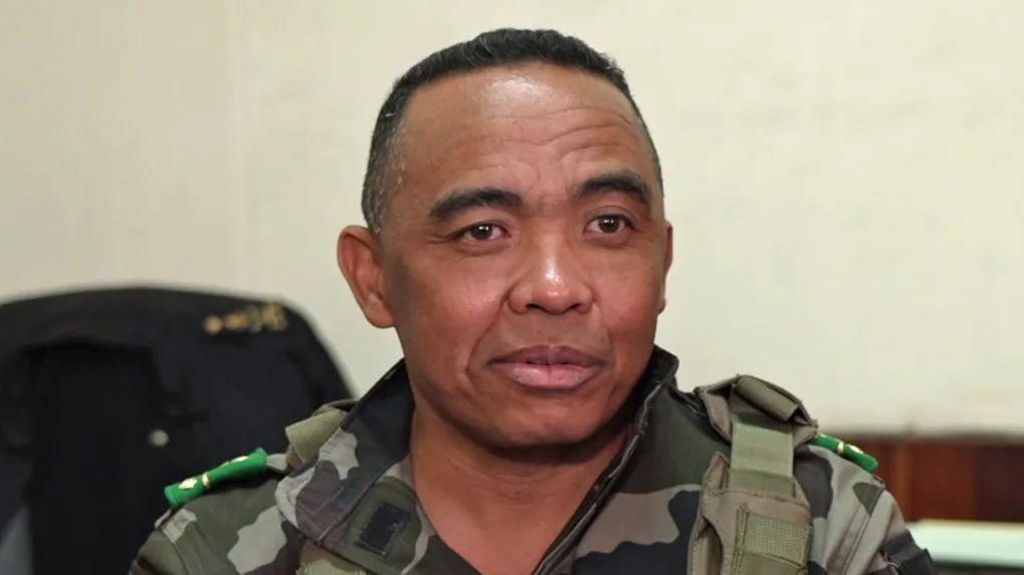
    Nigeria’s military command has announced it will formally prosecute several officers for their alleged involvement in a foiled 2025 plot to overthrow President Bola Tinubu’s government. The Defense Headquarters confirmed the conclusion of investigations on Monday, reversing the administration’s initial denial of the conspiracy. Major General Samaila Uba, speaking for the military, stated that investigators had identified specific officers with connections to the plot and that those with established cases would face a military judicial panel. While no trial date has been set, legal experts indicate the accused could potentially face capital punishment if convicted.

    The affair first surfaced in October when military authorities announced the arrest of 16 personnel for ‘issues of indiscipline,’ though multiple government and military sources independently confirmed to AFP the detentions were coup-related. Despite official statements downplaying the incident, President Tinubu subsequently executed a significant reshuffle of the nation’s top military leadership—a move characterized by a senior administration official as addressing ‘a gap in intelligence.’ Notably, General Christopher Musa was initially removed as chief of defence staff but later reappointed as defence minister.

    This alleged conspiracy threatened to disrupt a quarter-century of uninterrupted democracy in Africa’s most populous nation, which transitioned to civilian rule in 1999 after prolonged periods of military junta governance post-independence from Britain. The initial reports of a thwarted coup emerged in Nigerian media before being overshadowed by diplomatic tensions with the United States regarding religious violence and counterterrorism efforts.

    The development occurs against a backdrop of significant security challenges for Nigeria’s military, which is engaged in multifront conflicts against Boko Haram and Islamic State affiliates in the northeast, rampant banditry in the northwest, and separatist movements in the southeast. These operations have stretched military resources thin, with analysts noting rising violence projections for 2025 and periodic reports of troop grievances over unpaid wages and operational conditions. The United States has recently enhanced security cooperation with Nigeria, conducting joint strikes against insurgents and expanding intelligence sharing to support aerial campaigns in northern regions.

  • Minister claims ‘sabotage’ behind Chagos debate delay

    Minister claims ‘sabotage’ behind Chagos debate delay

    The UK government is vigorously defending its controversial agreement to transfer sovereignty of the Chagos Islands to Mauritius despite mounting criticism from US President Donald Trump and opposition within Parliament. Foreign Office minister Stephen Doughty asserted the government “remains confident” the arrangement represents the “best way forward” while accusing Conservative peers of employing “parliamentary stunts” to sabotage the legislation.

    The diplomatic tension escalated dramatically last week when President Trump denounced the agreement as a “great act of stupidity,” despite his administration having previously accepted the terms. The criticism has injected new complexity into the already contentious parliamentary process, where the Diego Garcia Military Base and British Indian Ocean Territory Bill is currently engaged in legislative ‘ping-pong’ between the House of Commons and Lords.

    Conservative opposition, led by shadow foreign secretary Dame Priti Patel, has seized on Trump’s comments to demand a pause in proceedings, labeling the government’s approach as “Labour’s Chagos surrender humiliation.” The opposition contends that proceeding with the current legislation would violate a 1966 UK-US treaty governing the islands and has demanded renegotiation with American authorities before further parliamentary consideration.

    At the heart of the agreement lies the future of Diego Garcia, which hosts a strategically critical joint US-UK military base. Under the proposed terms, the UK would transfer sovereignty to Mauritius while paying approximately £101 million annually for 99 years to lease back the military installation—a arrangement Prime Minister Sir Keir Starmer estimates will have a net cost of £3.4 billion after accounting for inflation.

    The government maintains that international legal rulings favoring Mauritius’ claim have necessitated the sovereignty transfer, while simultaneously emphasizing the commitment to preserve the military base’s operational security. Doughty confirmed ongoing daily engagement with US officials regarding national security matters and outlined prerequisites for ratification, including updating the 1966 agreement and implementing environmental and security arrangements.

    Parliamentary dissent has emerged from multiple fronts, with Labour MP Dan Carden questioning the abandonment of sovereignty and Liberal Democrats proposing amendments to pause proceedings until US positioning is clarified. The government has postponed further Lords debate following Conservative amendments citing “changing geopolitical circumstances,” setting the stage for continued political confrontation over this strategically significant territory.

  • Morocco and Senegal pledge to stay friends and boost trade after Africa Cup soccer tensions

    Morocco and Senegal pledge to stay friends and boost trade after Africa Cup soccer tensions

    In a significant demonstration of diplomatic resilience, Morocco and Senegal have reaffirmed their bilateral commitment through the signing of seventeen comprehensive agreements, effectively transcending recent tensions arising from a contentious soccer match. The signing ceremony, held in Rabat on Monday, witnessed both nations’ prime ministers formalizing enhanced cooperation across multiple economic sectors including agricultural development, infrastructure projects, fisheries management, and mineral resource extraction.

    This diplomatic initiative follows the turbulent Africa Cup of Nations final that previously strained relations between the two African nations. The match, won by Senegal 1-0, was marred by on-field protests from Senegalese players and attempted field invasions by spectators. Subsequent weeks saw Moroccan rights organizations documenting increased hate speech, which both governments have characterized as emotional reactions rather than substantive political divisions.

    Senegalese Prime Minister Ousmane Sonko emphasized the enduring nature of bilateral relations during the opening of the Moroccan-Senegalese joint commission, stating: ‘These excesses must be understood as emotional outbursts produced by fervor rather than political or cultural rifts. The friendship between Morocco and Senegal transcends temporary emotions.’

    The economic foundation of this relationship remains particularly robust. Senegal, as a heavily indebted West African nation, considers Morocco among its foremost African investors, with substantial Moroccan capital flowing into Senegalese banking institutions, energy infrastructure, and agricultural enterprises. Conversely, Senegal serves as a crucial export market for Moroccan goods, with trade volumes exceeding $200 million in 2024 alone.

    Moroccan Prime Minister Aziz Akhannouch highlighted the relationship’s ‘solid foundations,’ noting both nations remain ‘faithful to the spirit of brotherhood, solidarity and mutual respect.’ The agreements strategically align with Morocco’s broader continental expansion strategy while supporting Senegal’s foreign investment attraction objectives. Additionally, religious connections through the Tijaniyya Sufi order, which maintains significant Senegalese membership in Morocco, further strengthen cultural bonds between the two nations.