分类: politics

  • Starmer says he won’t ‘choose between’ the US or China

    Starmer says he won’t ‘choose between’ the US or China

    In a significant diplomatic move, British Prime Minister Sir Keir Starmer has articulated a foreign policy approach that refuses to prioritize relationships with either the United States or China, marking a departure from binary Cold War-era thinking. The announcement comes as the Prime Minister prepares for the first official visit by a UK leader to Beijing in eight years, with dozens of British business executives joining the delegation.

    Speaking exclusively to Bloomberg News, Sir Keir emphasized that maintaining “close ties” with the United States on business, security, and defense matters remains paramount while simultaneously pursuing economic opportunities with China, the world’s second-largest economy. “I’m often invited to simply choose between countries. I don’t do that,” stated the Prime Minister, drawing parallels to his previous stance during US trade deal negotiations when he similarly rejected choosing between America and Europe.

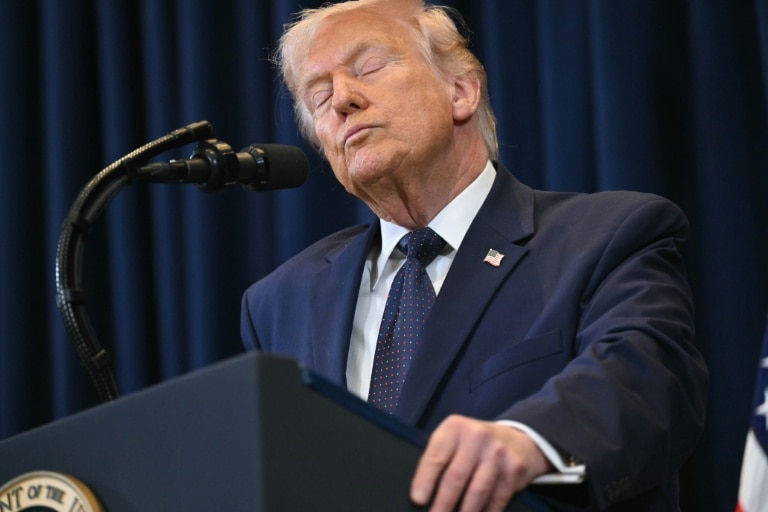
    The timing of this diplomatic mission follows recent transatlantic tensions, including President Donald Trump’s threats to impose tariffs on allies who opposed his Greenland territorial ambitions and his controversial remarks about NATO troop deployments in Afghanistan. Additionally, Trump’s warning of 100% tariffs on Canadian goods if Canada pursued trade agreements with China highlighted the increasingly complex geopolitical landscape.

    Sir Keir addressed national security concerns directly, particularly relevant following the UK’s controversial approval of a massive new Chinese embassy in London despite warnings it could facilitate espionage activities. “They understand the opportunities that there are… That does not mean compromising on national security – quite the opposite,” the Prime Minister noted regarding the business delegation accompanying him.

    The Prime Minister characterized previous UK-China relations as inconsistent, swinging from a “golden age” to an “Ice Age,” and explicitly rejected this polarized approach. However, he indicated that his engagement would not avoid difficult conversations, specifically mentioning intentions to raise human rights concerns including the case of Jimmy Lai, the British citizen and Hong Kong pro-democracy publisher convicted of colluding with foreign forces.

    This position has drawn criticism from prominent China hawks, including Lord Chris Patten, the last British governor of Hong Kong, who described such diplomatic approaches as “pathetic” if human rights discussions were treated as secondary concerns. Patten argued that British policy toward China had historically rested on the “falsehood” that business relations required avoiding uncomfortable topics.

    The Prime Minister’s visit, encompassing both Beijing and Shanghai, represents a strategic effort to stabilize UK-China relations while maintaining critical Western alliances, reflecting what Sir Keir previously described as necessary to avoid a “dereliction of duty” in navigating complex international relationships.

  • US immigration agents face backlash after Minneapolis killings

    US immigration agents face backlash after Minneapolis killings

    Minneapolis has become the focal point of a heated national debate regarding federal immigration enforcement tactics following the fatal shooting of two civilians by federal agents. The deaths of Renee Good and Alex Pretti, both 37-year-old U.S. citizens, have triggered widespread condemnation and intensified scrutiny of agent training protocols and operational procedures.

    Political leaders across party lines have expressed grave concerns. Alaska Republican Senator Lisa Murkowski stated the incident raises serious questions about training adequacy within immigration enforcement. Minnesota’s Democratic Governor Tim Walz demanded the immediate withdrawal of approximately 3,000 federal agents from the state, asserting they lack proper training for urban operations.

    The controversy emerges amid a massive expansion of Immigration and Customs Enforcement (ICE) and Customs and Border Patrol (CBP) forces. Department of Homeland Security figures indicate agent numbers have more than doubled from 10,000 to 22,000, fueled by Congressional funding increases and recruitment incentives including $50,000 signing bonuses.

    This rapid expansion has prompted significant training modifications. The standard preparation course has been reduced from five months to just 42 days through what DHS describes as ‘streamlined training’ eliminating redundancy while incorporating technological advancements. The agency maintains the condensed program covers essential components including arrest techniques, defensive tactics, conflict management, de-escalation methods, firearms proficiency, and use-of-force policies.

    Critics argue the abbreviated training leaves agents unprepared for complex urban environments. A report in The Atlantic suggested many recently hired agents might not have met standards under traditional hiring processes, with some appearing physically unsuited for demanding field operations.

    Despite training concerns, authorities confirmed the agents involved in the Minneapolis shootings were experienced personnel with multiple years of service. This contradiction highlights deeper systemic issues according to former acting ICE director John Sandweg, who served under the Obama administration. Sandweg noted that deploying border patrol agents accustomed to remote desert operations into urban protest environments creates high-risk situations where distinguishing between protected First Amendment activities and illegal obstruction becomes critically challenging.

    The ongoing presence of masked federal agents conducting patrols and raids in Minneapolis continues despite protests from local officials and residents who describe the tactics as constituting occupation rather than effective law enforcement.

  • Exclusive: Syria’s president reaches out to Kobane’s Kurds after SDF leader rattles US envoy

    Exclusive: Syria’s president reaches out to Kobane’s Kurds after SDF leader rattles US envoy

    In a significant diplomatic development, Syrian President Ahmed al-Sharaa conducted a discreet meeting with 15 prominent Kurdish intellectuals and community leaders from the northern city of Kobane, according to Kurdish sources familiar with the matter. The encounter occurred during an unpublicized presidential visit to the recently captured Tabqa Dam, Syria’s largest hydroelectric facility.

    The diverse delegation represented various segments of Kurdish political society, including both supporters and opponents of the Kurdish-led Syrian Democratic Forces (SDF). President Sharaa utilized the forum to emphasize implementation of his recently declared initiative recognizing Kurdish civil and cultural rights, while simultaneously criticizing SDF leadership for what he characterized as territorial ambitions rather than genuine concern for Kurdish welfare.

    “They prioritize territorial control over Kurdish rights,” Sharaa asserted during the meeting, adding, “I will prevent this fragmentation and pursue national unification.” Despite these criticisms, attendees reportedly found reassurance in the president’s commitments to protecting Kurdish rights within a unified Syrian state.

    This diplomatic outreach coincides with a substantial shift in American foreign policy, with Washington redirecting support from the SDF—formerly its primary partner against Islamic State—to President Sharaa’s transitional government. This policy realignment has enabled Syrian government forces to reclaim strategic territories including Aleppo, Raqqa, and Deir Ezzor, along with critical infrastructure such as oil fields, agricultural lands, and detention facilities housing ISIS suspects.

    The geopolitical maneuvering follows a January 18 ceasefire agreement that has faced implementation challenges. Additional reporting reveals that SDF chief Mazloum Abdi met with President Sharaa in Damascus for five hours on January 19, where Sharaa offered significant concessions including nomination rights for deputy defense minister and governor of Hasakah positions. Abdi reportedly retreated from previously agreed terms, demanding full autonomy for Hasakah and integrated military unit status for SDF forces rather than individual incorporation into the Syrian army.

    The negotiations reached a critical juncture when US envoy Tom Barrack departed the meeting in apparent frustration over Abdi’s reversal on the agreement he had personally mediated. This development prompted direct communication between former President Trump and Sharaa, during which Trump emphasized Syrian sovereignty and unity while urging secure management of ISIS detention facilities previously overseen by SDF forces.

  • Refugees in Minnesota sue Trump administration for ‘terrorising’ arrests amid federal crackdown

    Refugees in Minnesota sue Trump administration for ‘terrorising’ arrests amid federal crackdown

    A significant legal battle has emerged in Minnesota as approximately 100 lawfully admitted refugees filed a class action lawsuit against the Trump administration on Friday. The litigation targets what attorneys describe as a systematic “detention dragnet” operation that specifically terrorizes one of the most thoroughly vetted immigrant populations in the United States.

    According to Stephanie Gee, Senior Director of U.S. Legal Services at the International Refugee Assistance Project (IRAP), Immigration and Customs Enforcement (ICE) agents have detained these refugees without formal charges since January 9th, when the federal government initiated “Operation Post-Admission Refugee Reverification and Integrity Strengthening.” The detained individuals originate from various countries, including European nations, with some being children.

    IRAP, in collaboration with the Center for Human Rights and Constitutional Law and class action firm Berger Montague, argues the operation violates multiple constitutional protections and established government procedures for handling refugee cases. “This operation itself is unlawful on many levels,” Gee emphasized, noting that it contradicts existing policies governing refugee applications and treatment within the country.

    The enforcement tactics in Minnesota mirror ICE’s controversial approaches nationwide, featuring violent arrests where immigrants are forcibly removed from homes and vehicles. Detainees face transfer to remote facilities in Texas under conditions critics compare to “concentration camps” due to severe overcrowding, inadequate hygiene, and substandard nutrition.

    Refugees undergo exceptionally rigorous screening—often lasting years—before receiving government-funded relocation to American communities. This population never anticipated vulnerability to detention and removal procedures given their lawful status and extensive pre-admission vetting.

    The situation escalated tragically when ICE agents killed two U.S. citizens in Minnesota who were legally documenting enforcement activities. Despite ongoing investigations, White House Press Secretary Karoline Leavitt defended ICE operations, denouncing comparisons to Nazi Gestapo as “despicable” and “shameful.”

    Minneapolis Mayor Jacob Frey publicly demanded federal agents leave his city, declaring, “A great American city is being invaded by its own federal government.” Homeland Security data reveals most detained immigrants possess no criminal records, contradicting administration claims targeting “the worst of the worst.”

  • US weighs ‘precision strikes’ on Iranian officials as military build-up surges, sources say

    US weighs ‘precision strikes’ on Iranian officials as military build-up surges, sources say

    The United States is actively considering targeted military action against high-ranking Iranian officials believed responsible for the lethal suppression of protesters, according to a Gulf official familiar with ongoing deliberations. These precision strikes, potentially occurring as early as this week, represent a significant escalation in Washington’s response to Tehran’s internal crackdown that has resulted in thousands of civilian casualties.

    Administration discussions have been characterized as chaotic, with intense debate surrounding anticipated Iranian retaliation strategies. The Trump administration has maintained a month-long deliberation period regarding potential military engagement with Iran, initially leveraging the protest crackdown as justification. Despite President Trump’s earlier encouragement for demonstrators to seize state institutions, he subsequently declared the ‘killing has stopped’ and opted for de-escalation—a decision influenced by diplomatic pressure from Gulf states including Saudi Arabia, Qatar, and Oman.

    Current and former officials indicate this de-escalation may represent merely a tactical pause rather than a permanent policy shift. The administration has significantly enhanced its military readiness in the region, deploying additional warplanes, advanced air defense systems, and naval assets including the Abraham Lincoln aircraft carrier group equipped with F-35 and F/A-18 fighter jets. Open-source intelligence confirms the establishment of an F-15 squadron at Jordan’s Muwaffaq Salti Air Base.

    Regional dynamics complicate potential strike operations, as Gulf states have enforced an airspace and facilities ban for US attacks against Iran since April 2025. This restriction has forced alternative basing strategies, with Jordan emerging as a critical operational hub. Tehran has issued stark warnings that US regional partners would face retaliatory strikes if their territories facilitate attacks against Iran.

    The geopolitical landscape remains fractured, with Saudi Arabia, Oman, Qatar, and Turkey opposing military action while Israel supports regime change objectives. The UAE has formally declared it will not permit its territory, airspace, or waters to be used for offensive operations against Iran—a position likely influenced by Iran’s previous retaliation against Qatar’s al-Udeid air base following nuclear facility bombings.

    Experts warn that current circumstances could provoke unprecedented Iranian responses, including potential shutdown of the Strait of Hormuz (transit route for 20% of global oil) or attacks against US bases region-wide. The memory of the recent 12-day Iran-Israel conflict remains fresh, during which Iranian ballistic missiles penetrated Tel Aviv’s defenses despite US-Israeli air superiority, creating critical supply shortages in missile interceptors that required emergency replenishment operations.

  • England’s High Court orders Saudi Arabia to pay £3m to dissident over Pegasus hack

    England’s High Court orders Saudi Arabia to pay £3m to dissident over Pegasus hack

    In a landmark ruling with significant implications for state accountability, the English High Court has mandated the Kingdom of Saudi Arabia to pay over £3 million in damages to a London-based dissident. The court conclusively determined that Saudi authorities were responsible for infecting the activist’s phone with Pegasus spyware and orchestrating a physical assault against him.

    The judgment, delivered by Judge Pushpinder Saini, found Ghanem al-Masarir—a former Saudi citizen and prominent human rights campaigner—entitled to substantial compensation for severe psychiatric injuries. These injuries stemmed from the 2018 hacking of his phone using the notorious Pegasus surveillance tool, acquired from the Israeli cyber-arms firm NSO Group, and a coordinated physical attack outside Harrods department store in London that same year.

    Judge Saini’s ruling emphasized a clear pattern of intimidation against Masarir between 2015 and 2019, directly linking these acts to the Saudi state’s motivation to silence his public criticism. The court rejected Saudi Arabia’s initial claim of state immunity under the 1978 State Immunity Act, a defense that was ultimately dismissed in 2022. A subsequent appeal by the kingdom was struck out in 2024 after it failed to pay court costs.

    The Pegasus software, as detailed in proceedings, grants remote access to an infected device, enabling data extraction, location tracking, and the interception of calls and ambient communications. The court found no legal justification for this invasive surveillance or the physical violence inflicted upon Masarir, who was exercising his fundamental right to free speech.

    Masarir, who has lived in the UK since 2003 and was granted asylum in 2018, expressed that the ruling closes a ‘long and painful chapter.’ His YouTube channel, which has garnered over 300 million views, has been a primary platform for his advocacy. While acknowledging that no financial sum can undo his suffering, he expressed hope that Saudi Arabia would comply with the judgment promptly.

    The case sets a powerful precedent. Yahya Assiri, another UK-based Saudi dissident and founder of the rights group Alqst whose phone was also hacked, hailed the verdict as a victory for all human rights defenders. This ruling occurs against a backdrop of wider concerns, following a 2021 investigation that revealed hundreds of British citizens, including lawyers and academics, had been targeted by Pegasus spyware, with accusations pointing to both the UAE and Saudi Arabian governments.

  • Trump raises US tariffs on South Korea imports to 25%

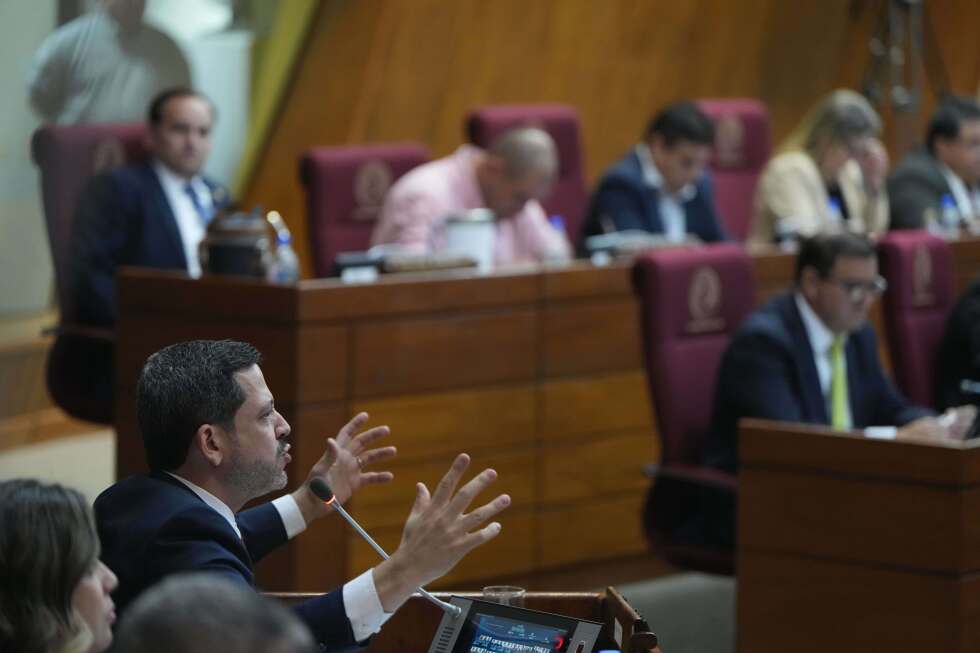
    Trump raises US tariffs on South Korea imports to 25%

    In a significant escalation of trade policy, former US President Donald Trump has declared a substantial increase in tariffs on South Korean imports, raising them to 25%. The announcement was made via social media, where Trump accused Seoul of failing to uphold commitments under a bilateral trade agreement finalized last October.

    The tariff hike affects a broad range of products, including automobiles, lumber, pharmaceuticals, and various other goods subject to reciprocal tariffs. Trump justified the move by stating that South Korean lawmakers had been ‘slow to approve the deal,’ contrasting it with what he described as swift US action to reduce its own tariffs in accordance with the agreement.

    South Korea has responded with concern, indicating it had not received official notification of the tariff decision and is seeking urgent discussions with Washington. The country’s Industry Minister, Kim Jung-kwan, is reportedly cutting short a trip to Canada to arrange immediate talks with US Commerce Secretary Howard Lutnick.

    The contentious trade deal, reached in October, included a significant pledge from South Korea to invest approximately $350 billion in the United States, with portions directed toward the shipbuilding sector. Subsequent negotiations in November established that the US would reduce certain tariffs once South Korea initiated its domestic approval process. The agreement was submitted to South Korea’s National Assembly on November 26 and is currently under review, with local media projecting likely passage in February.

    This development represents another instance of Trump utilizing tariffs as a primary instrument of foreign policy during his second term. The move follows recent threats against Canada, where Trump warned of 100% tariffs if Ottawa pursued a trade agreement with China. Canadian Prime Minister Mark Carney has since clarified that no such deal with China is under consideration, with Canadian officials reportedly communicating this position to their US counterparts.

    The tariff strategy echoes previous confrontational approaches, including Trump’s earlier threats against eight countries, including the UK, regarding their opposition to US interests in Greenland. While those particular tariff threats were eventually withdrawn citing progress toward a ‘future deal,’ the episodes have contributed to strains in US relations with NATO allies and trading partners.

  • Purging of top general raises questions about China’s war readiness

    Purging of top general raises questions about China’s war readiness

    China’s military command structure faces unprecedented turmoil following the dramatic removal of two top generals from the Central Military Commission (CMC), raising serious questions about leadership stability and combat readiness.

    General Zhang Youxia, 75, formerly vice-chairman of the powerful CMC, and General Liu Zhenli have been placed under investigation for “serious violations of discipline and law”—the Communist Party’s standard euphemism for corruption allegations. This development has reduced the CMC’s membership to just two individuals: President Xi Jinping himself and General Zhang Shengmin.

    The sweeping purge represents the most significant shakeup in China’s military leadership in recent history. The CMC, typically comprising approximately seven members, exercises ultimate control over the People’s Liberation Army’s millions of personnel. Its authority is so considerable that former leader Deng Xiaoping maintained his grip on power primarily through his chairmanship of this body.

    Lyle Morris of the Asia Society Policy Institute characterized the situation as unprecedented, stating, “The PLA is in disarray” and facing “a major leadership void.” The removal of Zhang Youxia carries particular significance given his combat experience and longstanding personal connection to Xi—his father fought alongside Xi’s father during China’s revolutionary period.

    While official channels attribute the dismissals to corruption investigations, analysts suggest broader political motivations may be at play. Associate Professor Chong Ja Ian from the National University of Singapore noted widespread speculation ranging from leaked nuclear secrets to coup plotting and even rumors of armed confrontation in Beijing.

    The PLA Daily editorialized strongly on the matter, emphasizing the party’s “zero tolerance” approach to corruption regardless of position or status. Historical precedent suggests that officials once placed under investigation almost invariably face custodial sentences.

    This leadership crisis emerges amid heightened tensions regarding Taiwan, with Beijing increasingly threatening military action against the self-governing island. Analysts diverge on how the purge might affect China’s operational capabilities, though most agree it centralizes decision-making further around Xi personally.

    The ongoing turmoil creates a climate of suspicion within military ranks, potentially affecting operational decision-making and creating reluctance among mid-ranking officers to advance into positions now perceived as dangerously exposed to political scrutiny.

  • Cold streets, hot fury: Minnesota mourns, rages after federal killings

    Cold streets, hot fury: Minnesota mourns, rages after federal killings

    MINNEAPOLIS – A profound sense of grief and outrage has engulfed Minneapolis following the fatal shooting of intensive care nurse Alex Pretti by federal border agents last Saturday. This incident marks the second killing of a U.S. citizen within weeks under President Donald Trump’s intensified immigration enforcement operations, following the death of Renee Good on January 7th.

    The site where Pretti lost his life has been transformed into a solemn memorial, with mourners braving temperatures reaching -22°C (-8°F) to pay their respects. The makeshift shrine, located just blocks from where Good was killed, has become both a place of mourning and a symbol of community resistance against perceived governmental overreach.

    Eyewitness accounts and community tributes portray Pretti as having died while attempting to assist a woman who had been pushed to the ground. Federal agents reportedly dragged him to his knees before shooting him. This narrative stands in stark contrast to official government statements that have attempted to characterize Pretti as a violent threat.

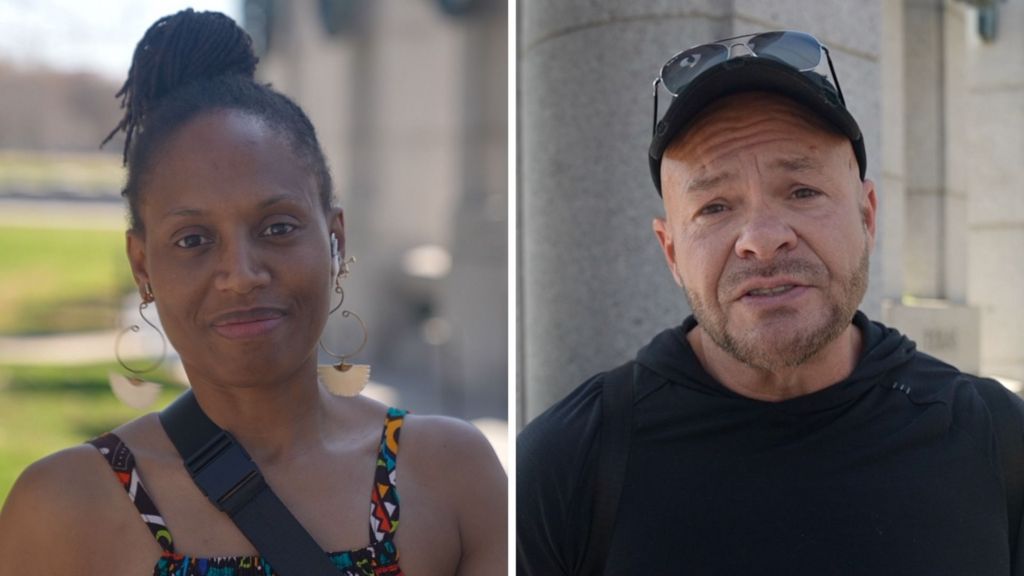
    Stephen McLaughlin, a 68-year-old retired Minnesotan, expressed the sentiment shared by many mourners: ‘Corruption is now the rule – you cannot trust the government. It’s frighteningly despicable when you can execute someone in cold blood in the street and then defame them and lie about what happened.’

    The memorial has evolved beyond a simple gathering place, becoming a focal point for citizens grappling with fear, loss, and the unsettling feeling that fundamental American values are eroding. Taylor Stoddart, a 25-year-old local business owner, articulated the community’s frustration: ‘They are trying to tell us not to believe our own eyes. Are you kidding me? It’s really sad and it’s really, really scary.’

    For healthcare professionals like Tricia Dolley, a fellow nurse, Pretti’s death carries particular significance. ‘This is not an America that we can live in. That is not what any of us wants, it can’t be,’ she stated.

    The emotional gathering featured handwritten notes, floral arrangements, and personal reflections from strangers united in their condemnation of the shootings. Jessica, a Minneapolis resident who preferred to remain partially anonymous, framed the situation as constitutional crisis: ‘What’s happening is an assault on the constitution and the rights of American citizens. The freedoms that are being abridged currently are the freedoms that we fought for.’

    As police monitored the ongoing vigil, the community’s quiet anger continued to simmer alongside their mourning, creating a potent combination of sorrow and determination that shows no signs of diminishing.

  • Trump threatens to hike tariffs on South Korean goods over inaction on trade deal

    Trump threatens to hike tariffs on South Korean goods over inaction on trade deal

    In a significant escalation of trade tensions, former President Donald Trump declared Monday he would impose increased tariffs on South Korean imports, citing legislative delays in ratifying a previously agreed trade framework. The announcement, made through social media channels, specifically targets automobiles, lumber, and pharmaceutical products while threatening to elevate rates on other goods from 15% to 25%.

    This development marks a continuation of Trump’s unconventional trade strategy that previously relied on declaring economic emergencies to bypass congressional approval. The South Korean government, conversely, requires formal legislative endorsement for the trade framework initially presented in July and reaffirmed during Trump’s October visit to the country.

    Trump justified the measures by emphasizing the importance of reciprocal trade relationships, stating: “Our Trade Deals are very important to America. In each of these Deals, we have acted swiftly to reduce our TARIFFS in line with the Transaction agreed to. We, of course, expect our Trading Partners to do the same.”

    This move follows a pattern of aggressive trade tactics that characterized Trump’s presidency, including recent threats against European nations regarding Greenland and a proposed 100% tax on Canadian goods should the country enhance trade relations with China. The administration had previously linked tariff concessions to South Korea’s commitment to invest $350 billion in the U.S. economy, including revitalization projects for American shipyards.

    The announcement comes amid ongoing trade uncertainties, including pending Supreme Court decisions regarding presidential authority in imposing tariffs under emergency powers, ongoing Section 232 investigations, and upcoming renegotiations of the USMCA trade agreement with Canada and Mexico.