分类: politics

  • What to know about the removal of Peru’s president — yet again — and what’s to come

    What to know about the removal of Peru’s president — yet again — and what’s to come

    LIMA, Peru — Peru’s political landscape experienced another seismic shift on Tuesday as legislators voted to remove interim President José Jerí from office, plunging the nation into renewed instability just weeks before scheduled presidential elections.

    The 39-year-old lawyer, who ascended to the presidency in October following the ouster of his predecessor Dina Boluarte, becomes Peru’s seventh presidential departure in under a decade. His removal triggers a constitutional process wherein Congress will select a replacement to steward the nation through April’s electoral process until the newly elected president assumes power on July 28.

    Jerí’s downfall stems from corruption allegations that have rapidly eroded his political standing. Peru’s Attorney General initiated a preliminary investigation earlier this year examining charges of influence peddling connected to undisclosed meetings with Chinese business executives in December. One executive holds active government contracts while another faces separate investigations into illegal logging operations.

    Although maintaining his innocence and characterizing the encounters as planning sessions for cultural festivities, Jerí faced mounting pressure from former congressional allies who cited the allegations as evidence of moral incapacity—a constitutional provision that has become a frequent mechanism for presidential removal in Peru’s volatile political environment.

    This marks another manifestation of Peru’s unique constitutional clause that permits legislators to remove presidents deemed morally unfit for office. The broadly interpreted provision has granted Congress extraordinary leverage over the executive branch, contributing to the nation’s remarkable presidential turnover rate.

    Despite the political chaos, Peru has maintained remarkable economic stability through orthodox fiscal policies. The nation boasts one of Latin America’s lowest public debt-to-GDP ratios at 32% for 2024, alongside sustained foreign investment in key sectors like mining and infrastructure.

    Congress will convene Wednesday to select a new interim leader while presidential candidates including conservative businessman Rafael López Aliaga and former legislator Keiko Fujimori prepare for April’s election. Should no candidate secure majority support, a June runoff will determine Peru’s next democratically elected president.

  • Dual nationals face scramble for UK passports as new rules come into force

    Dual nationals face scramble for UK passports as new rules come into force

    A sweeping overhaul of the United Kingdom’s immigration system has triggered widespread concern among dual nationals who now face the prospect of being denied entry to their own country. Effective February 25th, dramatic changes to documentation requirements will fundamentally alter how British citizens with additional nationalities can return to the UK.

    Under the current framework, dual nationals whose secondary citizenship originates from visa-exempt nations could freely enter Britain using their foreign passport. The new regulations eliminate this provision, mandating instead that all British citizens must present either a valid UK passport or a digital Certificate of Entitlement—costing £589—to gain entry. Neither document is automatically issued upon citizenship acquisition, creating significant hurdles for those who have never applied for them.

    The changes form part of the broader implementation of the Electronic Travel Authorisation (ETA) system, which requires visitors without visas to obtain pre-arrival clearance. While the government maintains these reforms align the UK with international standards practiced by nations like the United States and Australia, affected individuals report receiving insufficient warning about the impending deadline.

    Jelena, a British-Latvian chartered surveyor residing in Glasgow for 16 years, discovered the policy shift while preparing for a South American journey. Having recently obtained citizenship in November, she now faces impossible choices: cancel long-awaited travel plans or risk being barred from returning to her home and career. “The irony is that I’ve chosen to be part of this country but it feels like I’m being deported,” she expressed to BBC News.

    Similar distress echoes among the estimated 1.2 million dual nationals residing in Britain. Petra Gartzen, a UK-German citizen for four decades, is frantically attempting to secure documentation from Spain where she is currently staying. She criticized the communication breakdown: “There was no lead up, no major announcement—I found out about it from a Facebook post.”

    Academic Shaun West, holding British-Swiss citizenship, is considering renouncing his UK status entirely rather than comply with what he perceives as discriminatory measures. Meanwhile, educator Linn Kathenes races against time to arrange documentation for an overseas school trip, calling the situation a “gamble” with professional consequences.

    The Home Office defends its outreach efforts, citing public information campaigns since October 2024. However, advocacy group the3million demands immediate suspension of the rules, urging implementation of low-cost travel authorizations for those caught unaware. With processing times extending weeks and substantial financial burdens, many dual nationals face extended separation from their homes, families, and livelihoods despite their legal status as British citizens.

  • Nine arrested in France over death of far-right student

    Nine arrested in France over death of far-right student

    French authorities have apprehended nine individuals, including a parliamentary aide from the radical left France Unbowed (LFI) party, in connection with the murder of a far-right student in Lyon. The incident has ignited a political firestorm, placing intense scrutiny on one of France’s prominent left-wing parties.

    Quentin Deranque, a 23-year-old mathematics student, succumbed to his injuries last Saturday after being brutally assaulted by a group of masked assailants. The attack occurred on Thursday following a demonstration by far-right feminist groups outside the city’s prestigious Institute of Political Studies (Sciences-Po), where Deranque was reportedly providing security assistance.

    Investigative sources confirm the detained suspects are affiliated with far-left militant groups, particularly the banned organization La Jeune Garde (Young Guard). The most politically significant arrest is Jacques-Elie Favrot, who served as a parliamentary assistant for an LFI deputy in the National Assembly.

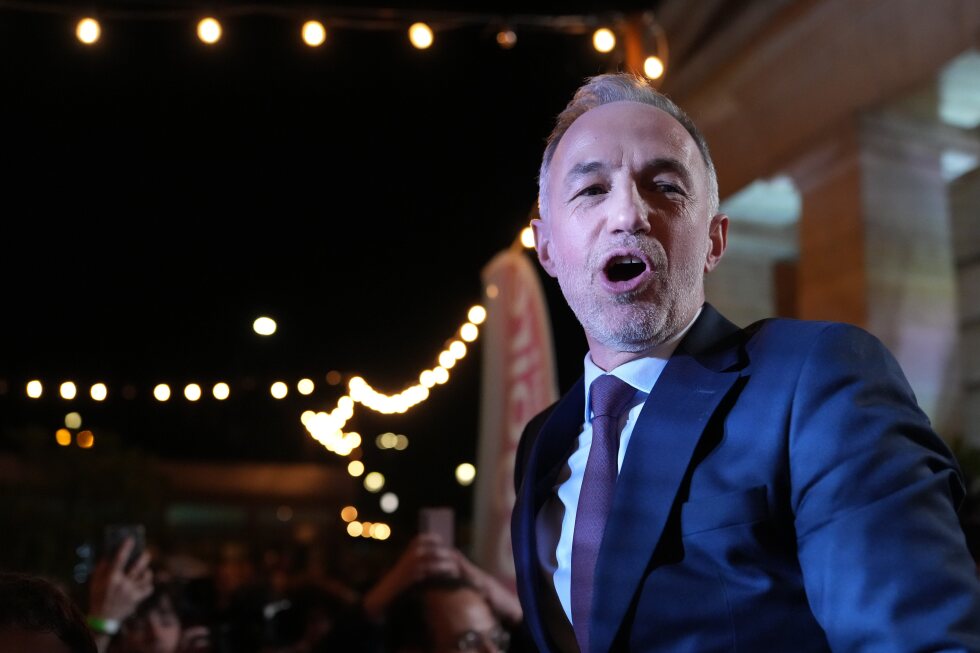
    The case has generated substantial pressure on LFI, its 70 parliamentary representatives, and veteran leader Jean-Luc Mélenchon—a potential contender in next year’s presidential election. Mélenchon has vehemently denied any party involvement, stating: “We have nothing to do with this story. Those who accuse us are committing libel. We oppose all forms of violence.”

    Forensic analysis presented by state prosecutor Thierry Dran revealed Deranque sustained fatal cranial and cerebral damage from being kicked and punched by at least six individuals. The investigation continues as authorities examine the broader implications of political violence in France.

  • UAE scrubbing Hind al-Owais from internet after Epstein emails uncovered

    UAE scrubbing Hind al-Owais from internet after Epstein emails uncovered

    A comprehensive digital scrubbing campaign has targeted references to Emirati official Hind al-Owais across multiple government-affiliated platforms following revelations of her correspondence with convicted sex offender Jeffrey Epstein. Middle East Eye’s investigation reveals systematic removal of her professional presence from official accounts and websites.

    Al-Owais, who served as director of the UAE’s Permanent Committee for Human Rights (PCHR), has seen her mentions systematically erased from the organization’s Instagram, X, and LinkedIn accounts, along with its official website. This includes recent posts identifying her as PCHR director from early February 2025 and references to her participation in the 6th Global Tolerance and Human Fraternity Conference in Dubai.

    The digital purge extends beyond social media to institutional websites. The Anwar Gargash Diplomatic Academy (AGDA) removed a page detailing Owais’ role as moderator of a February 2025 panel discussion on human rights. Her profile page from the World Governments Summit, where she was listed as a past speaker, now redirects to the homepage.

    According to released US Department of Justice files, Owais exchanged numerous emails with Epstein between 2010-2012, following his 2008 conviction for soliciting prostitution from a minor. The correspondence reveals friendly exchanges, meeting arrangements, and career advice requests, including one message where Owais asked Epstein to “teach me how to make money.”

    The emails reference meetings with an unidentified “His Highness” – an honorific typically reserved for senior members of Emirati ruling families. While no evidence suggests Owais participated in criminal activity, the communications indicate they maintained close acquaintanceship.

    This development follows recent scrutiny of UAE-Epstein connections, including last week’s replacement of prominent businessman Sultan Ahmed bin Sulayem from leadership positions after revelations of his decades-long relationship with Epstein.

    Emirati social media personalities have launched a defense campaign, characterizing the interactions as normal professional networking. Ahmed Sharif al-Ameri stated that “professional contact is not criminal participation” and contextualized the informal tone of messages as standard business communication practices.

    Neither PCHR, UAE foreign ministry, AGDA, nor the World Governments Summit responded to requests for comment regarding the digital removals.

  • Macron says French nationals fighting for Israel in Gaza can’t be ‘genociders’

    Macron says French nationals fighting for Israel in Gaza can’t be ‘genociders’

    In a striking declaration on French radio, President Emmanuel Macron asserted that French-Israeli nationals remain “children of France” who should never face accusations of genocide participation. Speaking to Radio J, a station focused on Jewish community affairs, Macron positioned the battle against antisemitism as fundamental to republican values, stating: “We cannot accept, we must never accept that any of our children, that any French person, be accused of being genocidal. That is impossible, and it represents a reversal of values to which we must not yield.”

    The president indirectly criticized pro-Palestinian activists and leftist figures in France, suggesting they had “distorted what is happening internationally to try to dehumanise, essentialise fellow Jewish citizens.” These remarks followed last month’s adoption of a controversial bill by the French National Assembly Law Committee targeting “renewed forms of antisemitism,” which critics argue could criminalize legitimate criticism of Israel.

    Macron’s comments emerge amidst significant legal developments. On February 3rd, French authorities issued judicial warrants for two Franco-Israeli women—Nili Kupfer-Naouri (leader of Israel Is Forever) and Rachel Touitou (affiliated with far-right group Tsav 9)—compelling them to appear before an investigating magistrate on “complicity in genocide” charges related to obstructing humanitarian aid to Gaza. The warrants stop short of ordering arrests.

    United Nations Special Rapporteur on Palestine Francesca Albanese challenged Macron’s stance on social media platform X, asserting: “We do not label someone a criminal or a genocidaire based on their nationality: it is up to the courts to decide. Any person who has served in an army suspected of committing crimes can be subject to an investigation.”

    The case against the two women originated from complaints filed by the Palestinian Centre for Human Rights along with Al-Haq and Al-Mezan rights groups, targeting dual nationals allegedly obstructing aid convoys between 2023-2025. Notably, the U.S. State Department designated Tzav 9 in June 2024 as a “violent extremist Israeli group” blocking humanitarian assistance.

    Further legal actions are underway, with NGOs filing additional complaints against two French-Israeli soldiers (identified as Sasha A and Gabriel B H) for alleged “war crimes, crimes against humanity and genocide” involving dozens of unarmed Palestinian civilian deaths outside combat zones. Despite Israel’s exemption of overseas dual nationals from mandatory service, military data reveals over 6,100 French nationals voluntarily served during the conflict period.

  • Tarique Rahman sworn in as Bangladesh PM

    Tarique Rahman sworn in as Bangladesh PM

    In a significant political transition, Tarique Rahman, Chairman of the Bangladesh Nationalist Party (BNP), officially assumed the role of Prime Minister of Bangladesh on Tuesday, February 17, 2026. The swearing-in ceremony, presided over by Bangladeshi President Mohammed Shahabuddin, marked the culmination of a decisive electoral victory that has reshaped the nation’s political landscape.

    The inauguration ceremony, held in the capital city of Dhaka, witnessed President Shahabuddin administering the constitutional oath of office to Prime Minister Rahman alongside newly appointed cabinet ministers. This formal transfer of power follows the BNP’s substantial triumph in the 13th general election concluded on February 14, 2026.

    Rahman’s ascension to leadership represents a notable shift in Bangladesh’s governance structure, ending the prolonged tenure of the previously ruling Awami League. The BNP’s electoral success emerged from a campaign that emphasized economic reform, anti-corruption measures, and democratic institutional strengthening.

    The new administration faces immediate challenges including economic stabilization, addressing inflationary pressures, and navigating complex international relationships. Regional observers are particularly attentive to how Rahman’s government will balance Bangladesh’s traditionally non-aligned foreign policy while maintaining crucial economic partnerships with major global powers including China, India, and Western nations.

    This political transition occurs against the backdrop of Bangladesh’s strategic importance in South Asian geopolitics and its growing economic influence as a developing nation with significant garment manufacturing exports and emerging digital economy sectors.

  • Iran-US talks restart as Khamenei warns Islamic Republic will not be destroyed

    Iran-US talks restart as Khamenei warns Islamic Republic will not be destroyed

    Discreet diplomatic negotiations between Iranian and United States delegations have initiated near Geneva, facilitated by Omani mediation, in a critical effort to salvage the faltering nuclear accord and avert potential military confrontation. The high-stakes dialogue unfolds against a backdrop of intensified military maneuvers and resolute rhetoric from both capitals.

    Concurrent with the talks, Supreme Leader Ayatollah Ali Khamenei issued a stark rebuke to U.S. President Donald Trump, declaring the Islamic Republic’s resilience against external threats. “In one of his recent speeches, the U.S. president said that for 47 years America has not succeeded in destroying the Islamic Republic… I tell you: you will not succeed either,” Khamenei stated publicly.

    The diplomatic engagement was shadowed by significant U.S. military deployments to the region, including the recent dispatch of the USS Gerald R. Ford aircraft carrier—the world’s largest—which brings substantial additional firepower and thousands of troops to the Middle East. This follows a pattern of previous carrier deployments preceding U.S. actions against Iran.

    Iran demonstrated its own military capabilities through exercises conducted by the Islamic Revolutionary Guard Corps (IRGC) in the strategic Strait of Hormuz, featuring ship deployments, helicopter operations, and tests of drones and missiles.

    The latest escalation follows a meeting between President Trump and Israeli Prime Minister Benjamin Netanyahu, where according to a senior administration official who spoke to the Daily Mail, Netanyahu urged a hardened stance against Iran, warning that “Iran plays games. You don’t want to get played.”

    Despite the tensions, both sides have maintained communication channels, with Iranian Foreign Minister Abbas Araghchi traveling to Switzerland to meet with Omani counterpart Badr bin Hamad al-Busaidi. Araghchi emphasized Iran’s position on X (formerly Twitter), stating he brought “real ideas to achieve a fair and equitable deal” while ruling out “submission before threats.”

    Tehran continues to assert its right to civilian nuclear development under the Nuclear Non-Proliferation Treaty (NPT) while denying weapons ambitions, even as Israel—a nuclear power itself—accuses Iran of seeking nuclear capabilities.

  • Tarique Rahman sworn in as Bangladesh’s PM after landslide election victory

    Tarique Rahman sworn in as Bangladesh’s PM after landslide election victory

    In a ceremony symbolizing profound political transformation, Tarique Rahman was formally inaugurated as Bangladesh’s Prime Minister on Tuesday following his Bangladesh Nationalist Party’s (BNP) overwhelming electoral triumph. The 60-year-old political scion, whose lineage traces back to former Prime Minister Khaleda Zia and the assassinated President Ziaur Rahman, assumes leadership amid pressing national challenges that demand immediate attention.

    The unprecedented open-air inauguration at the South Plaza of Jatiya Sangsad Bhaban—departing from traditional venues—witnessed President Mohammed Shahabuddin administering oaths to Rahman and his cabinet ministers. The ceremony gathered distinguished attendees including senior political figures, diplomatic corps, military officials, and international representatives from neighboring powers China, India, and Pakistan.

    This political restoration marks the BNP’s return to governance after nearly two decades in opposition, securing a commanding two-thirds parliamentary majority. The election also witnessed the remarkable resurgence of Jamaat-e-Islami, which captured 68 legislative seats following the revocation of its 2013 prohibition after Prime Minister Sheikh Hasina’s administration was toppled during the 2024 Gen Z-led uprising.

    The previous government, led by Hasina’s Awami League, faced electoral disqualification after the Election Commission revoked its registration. An interim administration headed by Nobel laureate Muhammad Yunus successfully steered the nation through the complex transitional period preceding these historic elections.

    Rahman’s ascension represents the culmination of an extraordinary political journey that included 17 years of self-imposed exile in London before his return last year. Despite facing persistent criticism from political adversaries regarding corruption allegations—which he consistently denies—Rahman’s homecoming galvanized party loyalists and fundamentally reshaped the BNP’s electoral strategy.

    In his initial post-victory address, the new Prime Minister emphasized national reconciliation, declaring: ‘Peace, law and order must be maintained at any cost.’ He explicitly cautioned supporters against retaliatory actions, asserting that his administration ‘will not tolerate any kind of chaos’ as Bangladesh embarks on this new political chapter.

  • Imran Khan’s sons still waiting for visas to visit ‘ailing’ father in Pakistan

    Imran Khan’s sons still waiting for visas to visit ‘ailing’ father in Pakistan

    The sons of imprisoned former Pakistani Prime Minister Imran Khan remain stranded in London, awaiting visa approvals to visit their ailing father who has suffered significant vision loss while in custody. Sulaiman Khan, 29, and Kasim Khan, 26—both British citizens from Khan’s marriage to Jemima Goldsmith—have been separated from their father since November 2022, following an assassination attempt on the former cricket star turned politician.

    The brothers submitted visa applications last month but have received no response from Pakistani authorities, leading Sulaiman to speculate that ‘the establishment is worried that if we go and see him, it would create more noise, and just more attention to his situation.’

    Medical concerns for the 73-year-old opposition leader have escalated dramatically following reports that he has lost 85% of vision in his right eye. Khan’s legal representative, Salman Safdar, appointed as amicus curiae by the Supreme Court, documented in a formal report that the former premier experienced ‘rapid and substantial vision loss over three months’ despite repeated complaints, with ‘no action taken by the jail authorities.’

    The government maintains that Khan’s eyesight has shown significant improvement under their care, but the family rejects these claims due to the exclusion of Khan’s personal physicians and family representatives during medical examinations. Aleema Khan, the former prime minister’s sister, stated to Al Jazeera that the government’s refusal to allow independent medical oversight was ‘extremely concerning and unacceptable.’

    Kasim Khan emphasized the broader implications, expressing concerns about ‘the government abiding by correct human rights processes and also the rule of law and just ensuring that he’s allowed a proper, fair trial.’ The situation has drawn international attention to Pakistan’s judicial processes and treatment of political prisoners, with Khan’s Pakistan Tehreek-e-Insaf (PTI) party continuing to challenge his incarceration on corruption charges since May 2023.

  • Family of Zambia’s ex-President Lungu dismiss poisoning allegation – lawyers

    Family of Zambia’s ex-President Lungu dismiss poisoning allegation – lawyers

    The protracted legal dispute surrounding the burial of former Zambian President Edgar Lungu has entered a new phase as his family formally denies allegations of poisoning while challenging South African police investigations. Lungu, who passed away in June 2025 at age 68 in a Pretoria clinic, remains in a South African morgue eight months later as competing claims over his final resting place continue unresolved.

    In a significant development, Johannesburg-based Mashele Attorneys, representing the Lungu family, has confirmed compliance with five subpoenas related to criminal investigations while simultaneously dismissing the poisoning claims as “unfounded and unsupported by credible evidence.” The legal team has raised serious concerns about additional police attempts to secure custody of the body, citing existing High Court orders that designate Two Mountains Funeral Services as the legitimate custodian pending resolution of legal proceedings.

    The conflict stems from fundamentally different visions for Lungu’s burial. The Zambian government, which secured a favorable court ruling in August 2025, insists on repatriating the former leader’s remains for a state funeral with full honors. Conversely, Lungu’s family maintains that the former president explicitly did not want his successor, President Hakainde Hichilema, to attend his funeral—a preference rooted in their long-standing political rivalry—and thus prefers a private burial in South Africa.

    South African police have maintained extraordinary discretion regarding the case, with spokesperson Brigadier Athlenda Mathe characterizing it as “a very sensitive matter that cannot be discussed at this stage.” The morgue currently housing Lungu’s remains has implemented around-the-clock security surveillance, underscoring the heightened sensitivity surrounding the former president’s body.

    Mrs. Lungu, who has remained in South Africa since her husband’s death, recently escalated the legal battle by filing an appeal with the Supreme Court of Appeal in Bloemfontein to overturn the previous ruling mandating repatriation to Zambia. This move ensures the complex international legal and diplomatic situation will continue indefinitely, highlighting the unusual circumstances surrounding a former head of state’s prolonged inability to be laid to rest.