分类: politics

  • Watch: Trump claims threat of 200% tariffs pressured India and Pakistan into ceasefire

    Watch: Trump claims threat of 200% tariffs pressured India and Pakistan into ceasefire

    Former President Donald Trump has asserted that the threat of imposing crippling 200% tariffs compelled India and Pakistan to accept a ceasefire during their intense military confrontation in May 2025. Speaking at the inaugural meeting of his newly established Board of Peace on February 19, Trump recounted his personal intervention in the conflict that had escalated dangerously between the nuclear-armed neighbors.

    According to Trump’s account, the situation deteriorated rapidly with both nations engaging in intense aerial combat and artillery exchanges. ‘They were really going at it,’ Trump stated. ‘Then it got worse and worse; many planes were shot down. It was all out.’

    The former president described how he leveraged economic pressure to force de-escalation: ‘I called them, ‘Listen, I’m not doing trade deals with you two guys if you don’t settle this up.” Trump claimed both countries initially resisted but eventually softened their stance when confronted with the prospect of devastating economic consequences. ‘I told them I’m going to put 200% tariffs on each of their countries. It essentially doesn’t allow them to do any business,’ he revealed.

    The confrontation Trump referenced began in May 2025 when India launched ‘Operation Sindoor,’ striking nine locations in Pakistan that New Delhi claimed housed terrorist infrastructure. This operation came in response to a militant attack in Pahalgam, Jammu & Kashmir, that killed 26 people. Pakistan retaliated by targeting multiple Indian military installations, including a missile storage facility.

    After four days of intense conflict that represented the worst military engagement between the two nations since 1999, Trump brokered what became known as the ‘full and immediate ceasefire.’ Both countries subsequently claimed to have achieved their military objectives without acknowledging significant losses.

    The Board of Peace, Trump’s new diplomatic initiative, primarily focuses on progress in Gaza but aims to address conflicts worldwide. During the same meeting, Trump announced that countries had pledged $7 billion to a Gaza reconstruction fund, contingent on Hamas disarming—a condition that remains unmet. The board faces significant challenges including Hamas disarmament, Israeli troop withdrawal, and humanitarian aid delivery to Gaza’s affected population.

    The Washington gathering also occurred amid heightened tensions between the United States and Iran, with Washington threatening military action if Tehran refuses to abandon its nuclear program.

  • Lobbying firm co-founded by former UK ambassador Mandelson stops trading over Epstein fallout

    Lobbying firm co-founded by former UK ambassador Mandelson stops trading over Epstein fallout

    LONDON — Global Counsel, the prominent lobbying consultancy co-established by former UK Ambassador to the United States Peter Mandelson, has entered administration—a form of bankruptcy protection—following a massive client exodus triggered by revelations about Mandelson’s association with convicted sex offender Jeffrey Epstein.

    The firm announced it ceased operations on Friday, resulting in approximately 80 UK staff redundancies. Global Counsel, which employed around 130 people globally, suffered what administrators described as a ‘monumental’ loss of business after clients severed ties en masse. The collapse follows disclosures in recently unsealed US Justice Department documents showing extensive connections between Mandelson and Epstein.

    Mandelson, who founded the consultancy in 2010 after leaving government, resigned from Global Counsel’s board in 2024 and divested his shares earlier this month in an apparent effort to shield the company from the escalating scandal. Consulting firm Interpath has been appointed to assess options for the business and evaluate its remaining assets.

    Will Wright, UK chief executive of Interpath and joint administrator, stated: ‘While Global Counsel had grown over the past 15 years to become one of the UK’s leading public affairs consultancies, the rapid and sudden loss of clients over recent weeks has had a monumental impact on the business.’

    The crisis emerged from documents revealing that Mandelson, during his tenure as a senior member of the Labour government in 2009, transmitted sensitive government information—potentially capable of moving markets—to Epstein, whom he described as his ‘best pal.’ Additional records indicated payments totaling $75,000 in 2003-2004 from Epstein to accounts associated with Mandelson or his husband, though Mandelson has questioned their authenticity.

    UK police have conducted searches at Mandelson’s London residence and another property connected to him as part of an investigation into potential misconduct in public office. Notably, Mandelson faces no allegations of sexual offenses. The probe follows a similar arrest of Andrew Mountbatten-Windsor on Thursday regarding his conduct during his tenure as UK trade envoy.

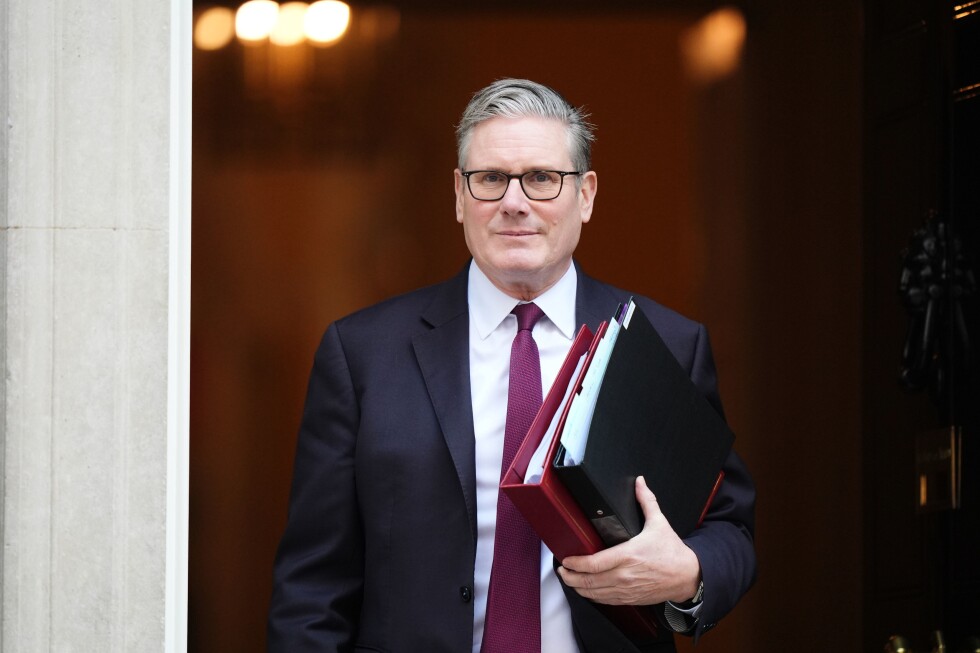
    Prime Minister Keir Starmer’s appointment of Mandelson to the ambassadorial role nearly cost him his leadership position amid scrutiny of his judgment. Starmer ultimately dismissed Mandelson in September after earlier email releases demonstrated Mandelson maintained ties with Epstein following the financier’s 2008 conviction for sex crimes involving a minor. The government intends to release vetting documentation that it believes will exonerate Starmer and demonstrate Mandelson provided false information.

  • 5 European nations pledge millions to use Ukrainian know-how to make cheap drone defenses

    5 European nations pledge millions to use Ukrainian know-how to make cheap drone defenses

    In a significant move to strengthen continental security, five major European powers—France, Poland, Germany, the United Kingdom, and Italy—have established a collaborative defense program leveraging Ukraine’s battle-tested expertise in drone warfare and air defense systems. The initiative, announced Friday in Warsaw, represents a strategic response to evolving security threats along Europe’s eastern flank.

    The newly formed E5 coalition will focus on developing cost-effective air defense solutions and autonomous drone technologies through the Low-Cost Effectors and Autonomous Platforms (LEAP) program. This partnership builds upon existing military cooperation between Poland and Ukraine, which already includes joint training exercises and manufacturing projects focused on drone technology.

    British Minister for Defense Readiness and Industry Luke Pollard emphasized the economic imperative behind the initiative: “We possess some of the world’s most advanced systems for neutralizing aerial threats. However, we must ensure our defensive capabilities are economically proportionate to the relatively inexpensive missiles and drones we face.”

    The program directly addresses recent security challenges, including multiple incidents where European borders and airports experienced unauthorized drone incursions. While Russia has been frequently implicated in these violations, Moscow consistently denies intentional involvement.

    Polish Defense Minister Władysław Kosiniak-Kamysz highlighted the rapid evolution of combat technologies, stating: “We’ve committed to jointly developing drone-based strike capabilities and cost-effective production of AI-enhanced combat payloads. The changing battlefield demands swift and appropriate responses.”

    The urgency was underscored by a September 2025 incident where Russian drones penetrated Polish airspace, requiring NATO allies to deploy multimillion-dollar fighter jets against drones costing mere thousands. The new program aims to develop kinetic or electronic countermeasures that can detect and eliminate drones at a fraction of current costs.

    This European defense mobilization occurs against the backdrop of heightened security concerns following critical remarks about NATO from U.S. President Donald Trump’s administration. The EU has subsequently increased military spending while reevaluating deeper defense integration projects.

    EU Foreign Policy Chief Kaja Kallas noted: “European security faces greater uncertainty than in decades, necess strengthened hard power capabilities. Our record defense investments demonstrate Europe’s commitment to enhancing security within NATO, ultimately strengthening the entire alliance.”

    Despite temporary easing of tensions over Trump’s controversial remarks regarding Greenland and NATO allies’ military contributions, the internal disagreements have significantly undermined the alliance’s deterrent capabilities against potential adversaries.

  • German leader to make his 1st visit to China next week as country seeks ‘right balance’ in ties

    German leader to make his 1st visit to China next week as country seeks ‘right balance’ in ties

    BERLIN — In a significant diplomatic move, German Chancellor Friedrich Merz is scheduled to undertake his inaugural visit to China since assuming leadership of Europe’s largest economy. The high-stakes visit, set for next week, comes as Germany navigates an increasingly complex international landscape dominated by assertive global powers.

    Government spokesperson Sebastian Hille confirmed on Friday that Chancellor Merz will engage in high-level meetings with Chinese Premier Li Qiang and Chinese leader Xi Jinping in Beijing on Wednesday, followed by a visit to Hangzhou in southeastern China. The diplomatic mission carries the thematic focus of ‘competition,’ with officials emphasizing the critical need to strike an appropriate balance in cooperation with the Asian superpower.

    ‘We seek cooperation where it is necessary and aligns with our mutual interests,’ Hille stated during a press briefing in Berlin, outlining Germany’s nuanced approach to Sino-German relations.

    This diplomatic engagement occurs against the backdrop of Germany’s delicate balancing act in recent years—maintaining robust ties with China while expressing concerns over Beijing’s growing assertiveness and its stance regarding Russia’s invasion of Ukraine. Simultaneously, Berlin has pursued strategic diversification of its commercial partnerships and supply chains to avoid excessive reliance on Chinese trade.

    Recent economic data from Germany’s Federal Statistical Office reveals China reclaimed its position as Germany’s primary trading partner in the previous year, with bilateral trade reaching 251.8 billion euros ($297 billion). This development marks a significant shift, as the United States had briefly displaced China from this position in 2024. Trade with China demonstrated growth during this period, while commercial exchanges with the U.S. declined to 240.5 billion euros.

    Addressing his Christian Democratic Union party convention in Stuttgart, Chancellor Merz emphasized the necessity of global business connections, explicitly including China. ‘China remains a crucial trading partner for Germany, which is why I will travel to China next week accompanied by a substantial business delegation,’ he stated. Neither the Chancellor nor his spokesperson disclosed specific delegation members.

    However, Merz maintained a realistic perspective, cautioning against illusions regarding China’s geopolitical ambitions. He noted that China ‘asserts the claim to define a new multilateral order according to its own rules,’ signaling fundamental shifts in the international landscape.

    The Chancellor articulated that the established rules-based order has fundamentally transformed, with ‘a new world order, an order of great powers, taking shape at accelerated pace.’ He stressed Europe’s urgent need to enhance its economic and military capabilities while aggressively pursuing trade agreements with diverse global partners.

    This diplomatic development occurs alongside preparations for U.S. President Donald Trump’s anticipated visit to China in April, highlighting the intricate interplay of major power diplomacy in contemporary global affairs.

  • Venezuelan opposition politician released after amnesty law passed

    Venezuelan opposition politician released after amnesty law passed

    Venezuelan opposition figure Juan Pablo Guanipa has declared his liberation following what he characterized as “nearly nine months of wrongful detention,” marking a significant development in the nation’s ongoing political turmoil. The release coincides with interim President Delcy Rodríguez’s endorsement of a congressional amnesty legislation potentially affecting hundreds of detained government critics.

    The emancipation follows sustained international pressure, particularly from the United States, urging Caracas to accelerate prisoner releases after legislative delays. However, Guanipa—leader of the center-right Justice First party and former National Assembly vice-president—immediately criticized the amnesty as a “deeply flawed instrument” that systematically excludes numerous Venezuelans remaining in “unjust incarceration.”

    Guanipa’s political troubles began when he contested the controversial 2024 election results, leading to terrorism and treason charges that forced him into hiding before his capture by security forces in May 2025. His detention saga included brief release earlier this month followed by re-arrest for alleged violation of release conditions, ultimately culminating in his current freedom.

    This development occurs within the broader context of sweeping prisoner releases following the dramatic seizure of former President Nicolás Maduro by U.S. forces on January 3. While Venezuela’s socialist government has historically denied holding political prisoners, it announced on January 8—days after Maduro’s capture—that “a substantial number” of detainees would be freed as a goodwill measure.

    Human rights organizations and opposition groups have long accused Maduro’s administration of weaponizing judicial detention to suppress dissent and silence critics. Interim President Rodríguez has framed the amnesty legislation as a mechanism for “mutual forgiveness,” though activists domestically have condemned implementation delays and transparency deficits regarding release criteria.

    Guanipa maintains close ties with exiled opposition leader María Corina Machado, the 2025 Nobel Peace Prize laureate who recently presented her medal to U.S. President Donald Trump as symbolic recognition of his dedication to Venezuelan freedom. Machado has pledged to eventually lead the nation “when circumstances permit,” adding another layer to the complex political landscape.

  • Trump sets Iran deadline of 10-15 days, warns Tehran of ‘really bad things’

    Trump sets Iran deadline of 10-15 days, warns Tehran of ‘really bad things’

    In a dramatic escalation of tensions, US President Donald Trump has delivered a stark ultimatum to Iran, demanding a nuclear agreement within 10-15 days or facing severe consequences. Speaking at the inaugural meeting of his ‘Board of Peace’ in Washington, Trump declared negotiations were progressing but insisted Tehran must reach a “meaningful” agreement to avoid catastrophic outcomes.

    The presidential warning came amid substantial US military deployments across the Middle East that have intensified fears of regional conflict. While Trump referenced successful airstrikes against Iranian nuclear facilities in June that allegedly “decimated” capabilities, he explicitly threatened further military action should diplomacy fail.

    Iran responded with measured defiance through an official letter to UN Secretary-General Antonio Guterres. While assuring no initiation of hostilities, Tehran warned that any American aggression would trigger “decisive and proportionate” self-defense measures targeting all US bases and assets throughout the region. The communication emphasized that Washington would bear “full and direct responsibility for any unpredictable and uncontrolled consequences.”

    The geopolitical standoff has already influenced global markets, with oil prices climbing amid the heightened tensions. Adding complexity to the situation, Russian naval forces participated in joint exercises with Iran in the Gulf of Oman, a critical maritime corridor for energy transportation.

    Despite diplomatic engagements between Iranian and US negotiators that reportedly established “guiding principles,” significant divisions persist. The White House acknowledges remaining disagreements on crucial issues. Trump maintains his fundamental position: “They can’t have a nuclear weapon. You can’t have peace in the Middle East if they have a nuclear weapon.”

    Iran continues to resist discussions beyond its nuclear program, specifically identifying missile arsenal limitations as an absolute “red line.” Satellite imagery analysis reveals both reconstruction efforts at damaged nuclear sites and military preparations across US installations in the region.

    International concern continues mounting, with Poland becoming the latest European nation to urgently advise citizen evacuation from Iran. Russian officials concurrently cautioned against “unprecedented escalation” while advocating for restraint from all involved parties.

  • Police continue to search Andrew Mountbatten-Windsor’s former stately home, a day after his arrest

    Police continue to search Andrew Mountbatten-Windsor’s former stately home, a day after his arrest

    LONDON — British authorities have launched an unprecedented criminal investigation targeting Andrew Mountbatten-Windsor, the former Prince Andrew, marking one of the most significant royal scandals in modern history. The investigation centers on allegations of misconduct in public office during his tenure as a UK trade envoy, specifically regarding his controversial association with the late financier Jeffrey Epstein.

    Thames Valley Police conducted a dramatic arrest operation on Thursday, detaining the former royal for approximately 11 hours on his 66th birthday. Simultaneous searches were executed at his current residence within King Charles III’s Sandringham estate and his former 30-room Royal Lodge at Windsor Castle. While police have concluded searching Sandringham, the Windsor property remains under active investigation.

    The case gained substantial momentum following recent disclosures from the U.S. Department of Justice, which revealed allegedly compromised diplomatic communications. Evidence suggests Mountbatten-Windsor forwarded sensitive trade documents to Epstein within minutes of receiving them, including confidential briefs on investment opportunities in Afghanistan’s Helmand Province and reports from official visits to Hong Kong, Vietnam, and Singapore.

    Legal experts emphasize the complexity of proving misconduct in public office cases, noting prosecutors must establish both realistic conviction prospects and public interest justification. The Crown Prosecution Service will apply the rigorous two-stage test known as the ‘Code for Crown Prosecutors’ before determining whether to bring formal charges.

    This investigation represents the first arrest of a royal figure since King Charles I in the 17th century, creating institutional tremors comparable to the 1936 abdication crisis and Princess Diana’s 1997 death. King Charles III has maintained official neutrality, stating ‘the law must take its course’ while continuing royal duties amid the escalating scandal.

    Notably, these allegations are distinct from previous sexual misconduct claims involving Epstein associate Virginia Giuffre, who accused the prince of abuse before her tragic suicide last year. Giuffre’s family expressed mixed emotions, describing simultaneous feelings of vindication and profound grief over her absence during this judicial development.

  • Deportation of Chagos Islanders blocked by judge

    Deportation of Chagos Islanders blocked by judge

    A British judge has issued a temporary injunction blocking the deportation of four Chagossian activists who traveled to the disputed Chagos Islands to protest the UK’s pending transfer of the territory to Mauritius. The ruling represents a significant legal setback for the British government’s diplomatic efforts.

    The activists arrived by boat from Sri Lanka on Monday, establishing a protest settlement on what they consider their ancestral homeland. British authorities promptly served eviction notices threatening fines or imprisonment for unauthorized presence. However, lawyers successfully obtained a seven-day injunction preventing their removal.

    Chief Justice James Lewis KC of the British Indian Ocean Territory ruled that the balance of convenience favored the claimants, noting they posed no national security threat located 193 kilometers from the Diego Garcia military base. The judge cited concerns about unreasonable delays in processing permit applications and questions regarding the lawfulness of the removal orders.

    The Foreign, Commonwealth & Development Office had previously characterized the journey as an “illegal, unsafe stunt” while acknowledging the protesters presented no security risk to the UK-US military installation. A government spokesperson emphasized that BIOT law requires valid permits for entry regardless of citizenship or heritage.

    Activist Misley Mandarin, one of the British-Chagossians involved, stated they had come “peacefully, respectfully, and without threat to anyone” simply to stand on their homeland. He previously told the BBC that British authorities would have to “drag me from my beach” and “kill me” to force his departure.

    The protest receives financial backing from the Great British PAC, a right-wing political pressure group opposing the sovereignty transfer. Legal representatives indicated readiness for extended court proceedings if removal orders aren’t rescinded.

    This legal development complicates the UK’s planned handover of the archipelago to Mauritius, particularly following former US President Donald Trump’s public opposition to relinquishing Diego Garcia. The UK had agreed to pay Mauritius £101 million annually for 99 years to maintain control of the strategic military base under the disputed agreement.

  • Trump says Iran has 10 to 15 days to reach nuclear deal

    Trump says Iran has 10 to 15 days to reach nuclear deal

    President Donald Trump has delivered a stark warning to Iranian officials, establishing a definitive two-week deadline for reaching a comprehensive nuclear agreement. Speaking to journalists aboard Air Force One on Thursday, the American leader declared that Tehran faces severe consequences should diplomatic efforts collapse within this timeframe.

    “We’re either going to get a deal or it’s going to be unfortunate for them,” Trump stated, emphasizing the critical nature of the negotiations. The President characterized Iran as “a hot spot right now” during remarks at the inaugural session of the Board of Peace, acknowledging the historical challenges in securing meaningful agreements with the Islamic Republic.

    While Vice President JD Vance reported “some” encouraging developments emerging from Tuesday’s second-round talks in Geneva, he confirmed that fundamental U.S. security requirements remain unaddressed. The diplomatic pressure coincides with significant military movements, as the aircraft carrier USS Gerald R. Ford transited toward Gibraltar en route to join the USS Abraham Lincoln near Iranian territorial waters.

    According to an Axios report citing White House insiders, administration officials estimate a 90% probability of military strikes occurring within weeks should negotiations fail. This deployment of naval assets underscores the administration’s preparation for multiple scenarios as the diplomatic window rapidly closes.

  • Tunisian MP jailed for eight months over posts mocking president

    Tunisian MP jailed for eight months over posts mocking president

    A Tunisian court has imposed an eight-month prison sentence on parliament member Ahmed Saidani for social media commentary deemed insulting to President Kais Saied. The charges stem from Saidani’s satirical Facebook posts criticizing the president’s response to recent catastrophic flooding that claimed multiple lives.

    Judicial authorities confirmed Saidani was convicted under Article 86 of the telecommunications code, which criminalizes ‘harming others via social media’ with penalties extending to two years imprisonment. The lawmaker’s detention occurred Thursday following his arrest earlier this month.

    Saidani’s legal representative, Houssem Eddine Ben Attia, characterized the prosecution as politically motivated, telling AFP the case represents a concerning application of telecommunications legislation to suppress government criticism.

    The incident has intensified scrutiny of Saied’s governance approach since his 2021 suspension of parliament and assumption of decree powers. Human rights organizations document escalating suppression of dissent, including November’s mass sentencing of opposition figures accused of attempted government overthrow.

    Notably, Saidani previously supported Saied’s power consolidation but recently emerged as a vocal critic. His social media posts sarcastically referred to the president as ‘supreme commander of sanitation and rainwater drainage’ and accused him of photo-opportunism during disaster response while avoiding substantive accountability.

    Fellow legislator Bilel Mechri condemned the imprisonment as institutional sabotage, telling Reuters: ‘How can parliament hold the executive authority to account if it carries out an unlawful arrest over critical views?’

    The case tests Tunisia’s parliamentary immunity provisions, which typically protect lawmakers from detention during official duties except for criminal offenses.

    President Saied, elected in 2019 on promises of stabilizing Tunisia’s post-Arab Spring democracy, maintains his actions uphold legal standards and national cleansing efforts. The 67-year-old leader denies authoritarian tendencies despite mounting international concern over Tunisia’s democratic backsliding.