分类: politics

  • What to know about Argentina’s midterm vote, a pivotal test for Trump ally President Milei

    What to know about Argentina’s midterm vote, a pivotal test for Trump ally President Milei

    BUENOS AIRES, Argentina — The upcoming midterm elections in Argentina have taken on heightened significance, as President Javier Milei faces mounting pressure from both domestic and international fronts. Initially perceived as a routine legislative vote, the election has now become a pivotal moment that could determine the future of Milei’s ambitious free-market reforms. The stakes were further escalated when former U.S. President Donald Trump linked financial aid to Argentina’s electoral outcome, adding a layer of geopolitical tension to the race.

    Milei, a libertarian leader and close ally of Trump, came to power promising to dismantle Argentina’s entrenched political corruption and implement sweeping economic reforms. Early in his tenure, his policies delivered notable successes, including Argentina’s first fiscal surplus in nearly 15 years and a significant reduction in inflation. These achievements bolstered his popularity, allowing him to champion his anti-socialist agenda on the global stage, from Europe to Trump’s Mar-a-Lago club.

    However, Milei’s political fortunes have taken a sharp downturn in recent months. A series of scandals, including allegations of corruption involving his sister and the withdrawal of a key candidate linked to a U.S. drug trafficking case, have tarnished his image as a reformist outsider. Tactical missteps, such as failing to build coalitions and alienating potential allies, have further weakened his position. The opposition-dominated Congress has overturned his vetoes and passed spending measures, complicating his reform agenda.

    As Argentines grapple with the harsh realities of austerity measures, public support for Milei has waned. His party’s recent electoral defeat in Buenos Aires province, home to 40% of the population, underscored this shift. The loss triggered a sell-off of Argentine bonds and the peso, prompting the U.S. to intervene with a $20 billion currency swap and promises of additional financial support. Yet, these measures have failed to stabilize the peso, which hit a record low against the dollar.

    Trump’s conditional aid has sparked backlash both in Argentina and the U.S., with critics questioning the wisdom of propping up a nation with a history of defaults. In Argentina, the opposition Peronist party has seized on Trump’s remarks to rally voters against Milei, framing the election as a referendum on national sovereignty. As the country heads to the polls, the outcome will not only shape Milei’s political future but also test the resilience of his free-market experiment in a nation weary of economic instability.
  • After bashing UN, Trump administration says it will ask for mandate in Gaza

    After bashing UN, Trump administration says it will ask for mandate in Gaza

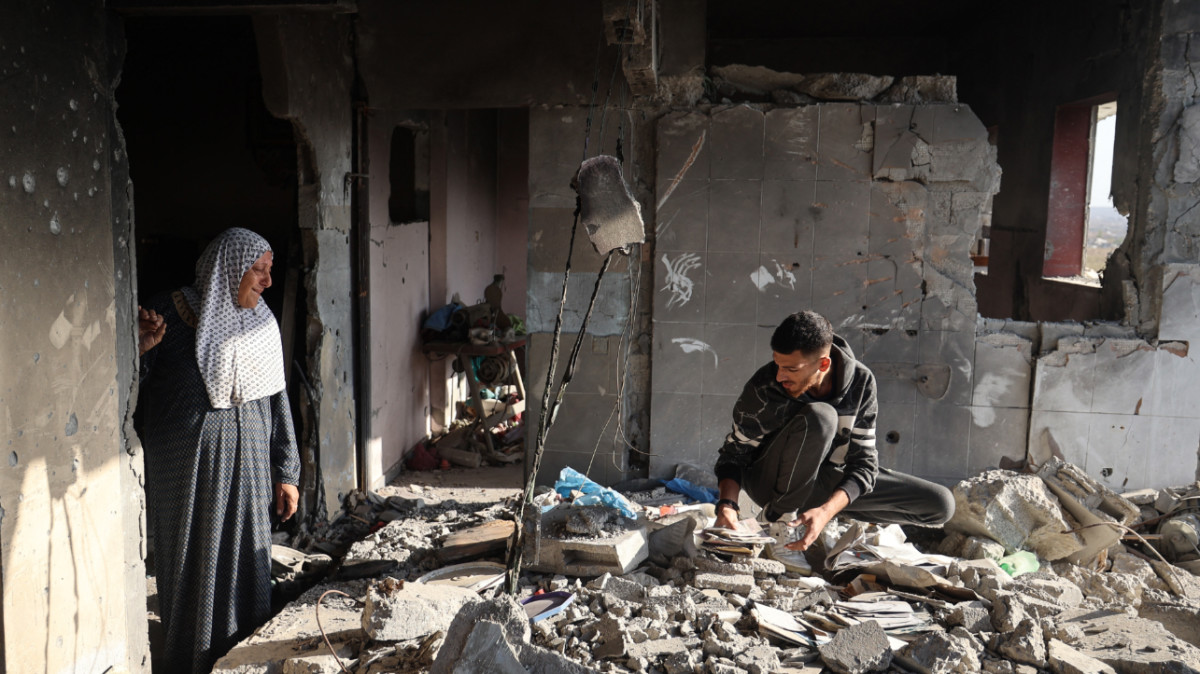
    In a surprising turn of events, the United States has acknowledged the potential necessity of seeking a United Nations mandate to deploy an international stabilization force to Gaza. This development stands in stark contrast to the Trump administration’s historically adversarial stance toward the UN, particularly concerning the Israel-Palestine conflict. US Secretary of State Marco Rubio revealed that the US is establishing a civil-military coordination center to oversee the Gaza ceasefire, after which it may approach the UN for an international mandate to assemble defense and security forces. President Donald Trump’s 20-point ceasefire plan for Gaza envisions an Arab and Muslim-led international force, with discussions underway with Egypt, the UAE, Qatar, Jordan, Indonesia, and Azerbaijan regarding their participation. Egypt has reportedly advocated for a UN mandate and requested US troop deployment to deter Israeli ceasefire violations, a proposal dismissed by US Vice President JD Vance. The Trump administration’s potential reliance on the UN is laden with irony, given its past criticisms of the organization. During a UN General Assembly speech, Trump mocked the UN for its perceived ineffectiveness, and his administration has previously sanctioned UN officials and withdrawn from UN bodies. Despite these tensions, Arab and Muslim states are pushing for a UN mandate to ensure the force’s legitimacy among Palestinians and their own populations. Experts emphasize that the force must not appear to be aligned with Israel to gain acceptance. Historically, UN peacekeeping missions, such as those in Bosnia and Haiti, have played crucial roles in conflict zones. A Gaza stabilization force would likely mirror the Kenyan-led, US-supported mission in Haiti, operating under a UN Security Council mandate but with independent command. Diplomatic sources suggest that securing a UN mandate is feasible, as China and Russia are unlikely to veto the proposal given the broad support from Arab and Muslim nations.

  • What to know about Ireland’s election as the country votes for a new president

    What to know about Ireland’s election as the country votes for a new president

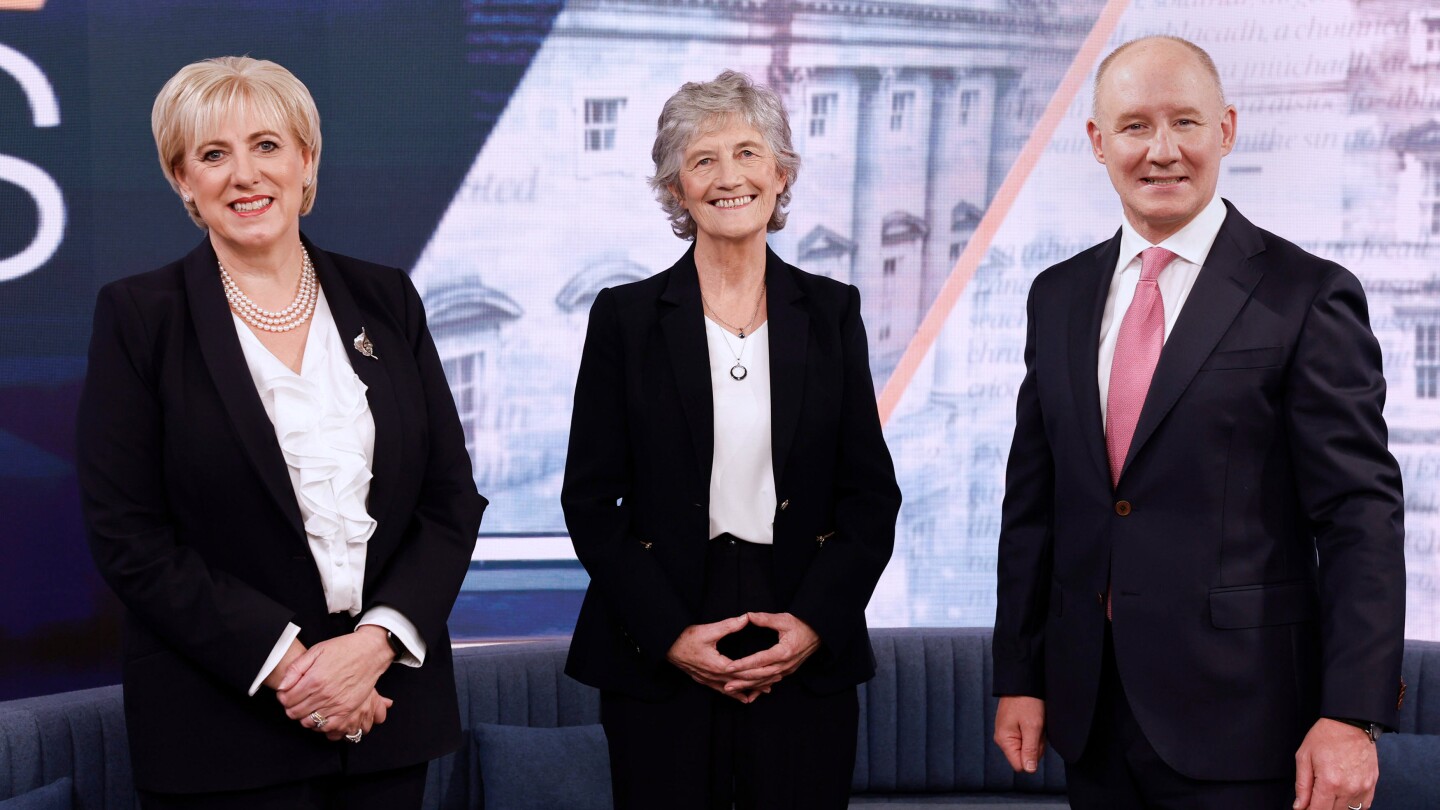
    Ireland is poised to elect its next president in a landmark vote on Friday, with two women vying for the largely ceremonial role. Catherine Connolly, a left-wing independent lawmaker supported by Sinn Féin, is the frontrunner, holding a commanding lead of approximately 40% in recent polls. Her rival, Heather Humphreys of the center-right Fine Gael party, trails with 20% to 25% support. The election marks the end of Michael D. Higgins’s 12-year presidency, as he completes his maximum two terms. The race narrowed after other potential candidates, including musician Bob Geldof and former MMA champion Conor McGregor, failed to secure nominations. Connolly, a former barrister and independent lawmaker since 2016, has faced criticism for her stance on Israel and Hamas, as well as her past legal work for banks involved in home repossessions. Despite this, she has garnered endorsements from left-leaning parties and pledges to be an “independent president for all the people.” Humphreys, a seasoned government official, emphasizes her centrist, pro-business, and pro-EU approach, aiming to foster unity with Northern Ireland. The president’s role, while ceremonial, includes appointing the prime minister, signing laws, and influencing public discourse on key issues. Polls close at 10 p.m. Friday, with results expected by late Saturday, followed by the inauguration at Dublin Castle.

  • Starmer to push allies on long-range missiles for Ukraine at London summit

    Starmer to push allies on long-range missiles for Ukraine at London summit

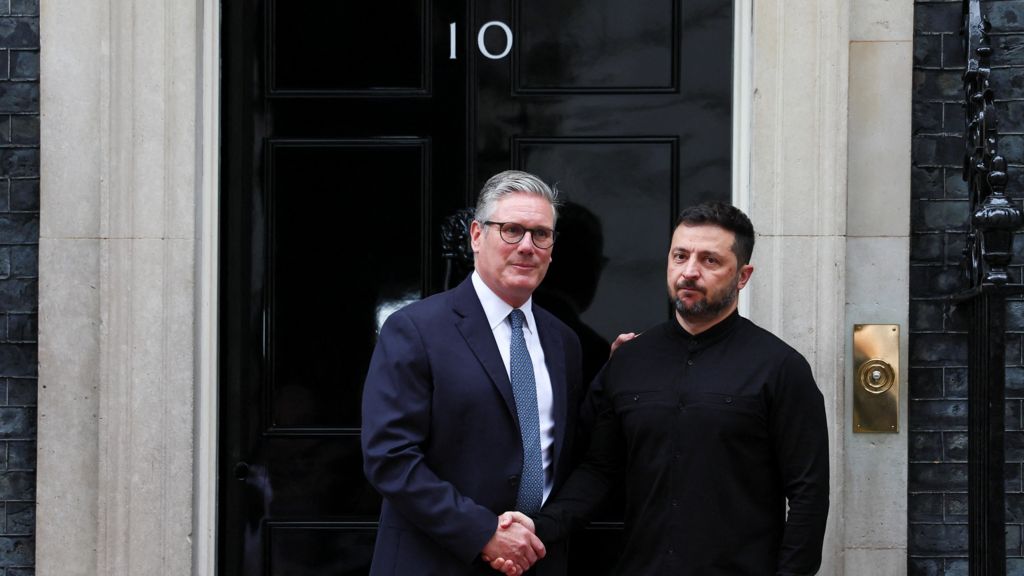
    British Prime Minister Sir Keir Starmer is set to host Ukrainian President Volodymyr Zelensky and a coalition of over 20 allied nations in London on Friday. The meeting, dubbed the ‘coalition of the willing,’ aims to strengthen Ukraine’s military capabilities, particularly by providing long-range missiles to target Russian positions. Zelensky has persistently sought advanced weaponry from Western allies, a move Russia has warned could escalate the conflict. This gathering follows Zelensky’s recent diplomatic successes, including Donald Trump’s decision to impose further sanctions on Russia and the European Union’s agreement to address Ukraine’s budgetary shortfall. Sir Keir emphasized the urgency of pressuring Moscow to negotiate peace, citing recent Russian strikes on civilian targets, including a nursery in Kharkiv that claimed the lives of two children. The UK will also expedite the delivery of 100 air defense missiles as part of a £1.6 billion defense deal signed in March. The summit will include NATO Secretary General Mark Rutte, Danish Prime Minister Mette Frederiksen, and Dutch Prime Minister Dick Schoof, with French President Emmanuel Macron joining virtually. Discussions will also focus on strategies to remove Russian oil and gas from global markets and explore the use of frozen Russian assets to support Ukraine financially. However, a proposal to utilize €140 billion in frozen assets faced political and legal challenges at the recent Brussels summit. The US has also ramped up pressure on Moscow by sanctioning Russia’s largest oil companies, Rosneft and Lukoil. Russia’s invasion, which began in February 2022, continues to occupy approximately 20% of Ukrainian territory, including Crimea.

  • German bid to close migrant boats loophole could face delay

    German bid to close migrant boats loophole could face delay

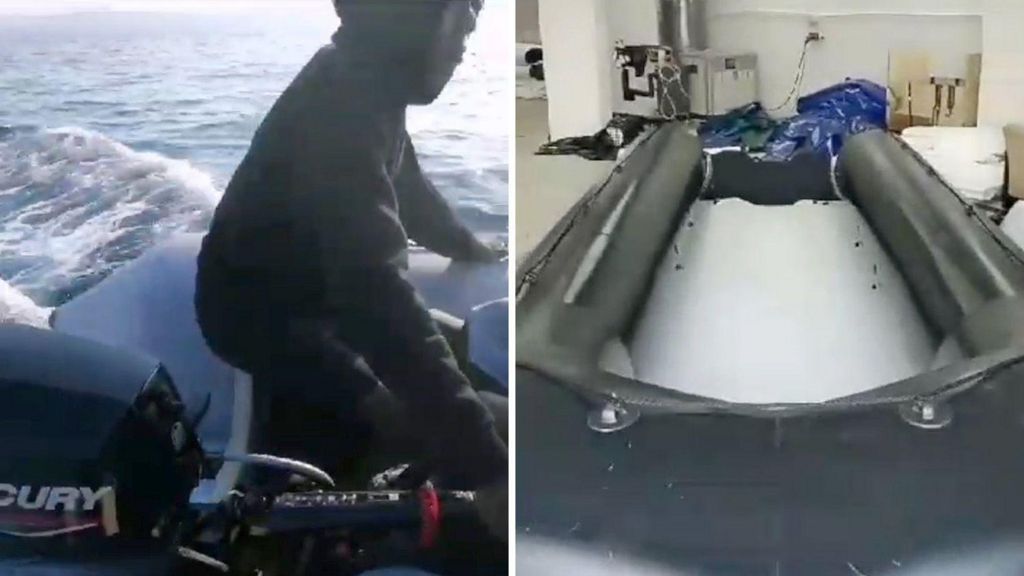
    Germany’s commitment to tighten laws against small-boat smuggling faces growing uncertainty, as delays in legislative processes threaten to derail efforts to combat illegal Channel crossings. A BBC investigation last year revealed that Germany serves as a hub for storing boats and engines used in these crossings, prompting Berlin to pledge legal reforms by the end of 2025. However, the German Interior Ministry has only confirmed its intention to introduce the bill to parliament by the deadline, without guaranteeing its final approval this year. The proposed legislation aims to criminalize the facilitation of human smuggling to the UK, a loophole that currently exists post-Brexit. Despite UK pressure, German officials have not prioritized the bill, with some expressing skepticism about its effectiveness in curbing illegal migration. Meanwhile, France is reportedly retreating from its pledge to intercept migrant boats at sea, further complicating international efforts to address the issue. The UK’s Labour government, which has emphasized closer international collaboration, faces mounting pressure to demonstrate the efficacy of its strategy. Any delay in Germany’s legal reforms is likely to exacerbate UK frustrations, as it has long urged Berlin to strengthen its rules and enforcement mechanisms.

  • Trump says trade talks with Canada ‘terminated’ over anti-tariffs advert

    Trump says trade talks with Canada ‘terminated’ over anti-tariffs advert

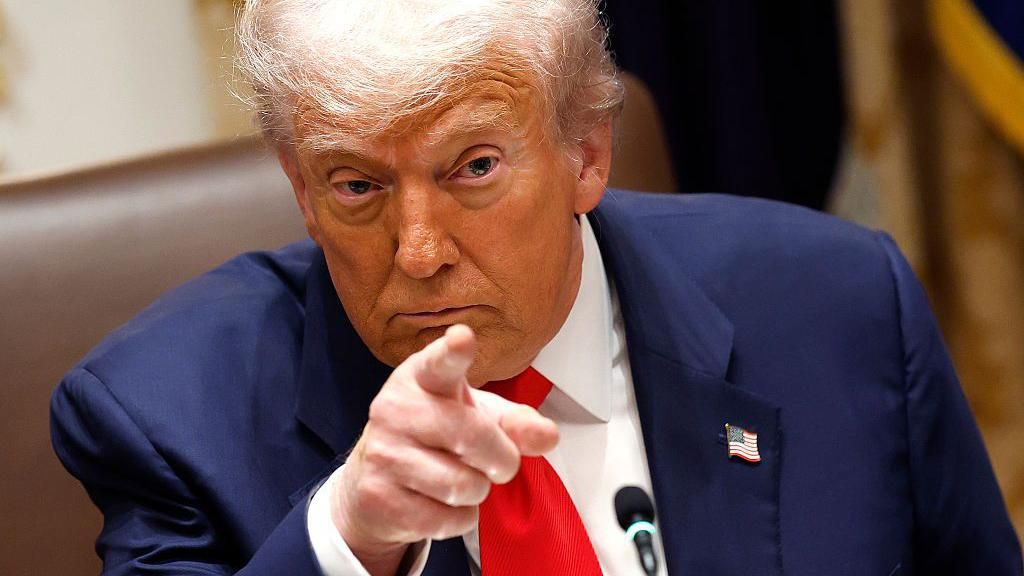
    In a dramatic move, US President Donald Trump announced the immediate termination of all trade negotiations with Canada. The decision, shared via a post on Truth Social late Thursday, was prompted by an advertisement from the Ontario government featuring former US President Ronald Reagan criticizing tariffs. Trump labeled the ad as ‘egregious behavior’ and declared, ‘ALL TRADE NEGOTIATIONS WITH CANADA ARE HEREBY TERMINATED.’ The US president has already imposed a 35% levy on Canadian imports, with exemptions for goods covered under the USMCA, a trade agreement negotiated during his first term. The Ontario ad, part of a $75 million campaign on US mainstream TV channels, included excerpts from Reagan’s 1987 national radio address, where he warned that tariffs harm workers and consumers, provoke trade wars, and lead to job losses. Ontario Premier Doug Ford defended the ad, stating, ‘We’ll never stop making the case against American tariffs on Canada.’ The Ronald Reagan Foundation criticized the ad for using ‘selective audio and video’ without permission and misrepresenting Reagan’s views, adding that it is reviewing legal options. Trump’s tariffs, particularly on steel, aluminum, and automobiles, have significantly impacted Canada, causing job losses and economic strain. Earlier this year, China’s embassy in Washington also used a similar Reagan clip to critique Trump’s global tariffs. This development marks another escalation in US-Canada trade tensions, with further updates expected.

  • UAE billionaire slams ‘racist rhetoric’ of Israeli minister asking Saudi to ‘keep riding camels’

    UAE billionaire slams ‘racist rhetoric’ of Israeli minister asking Saudi to ‘keep riding camels’

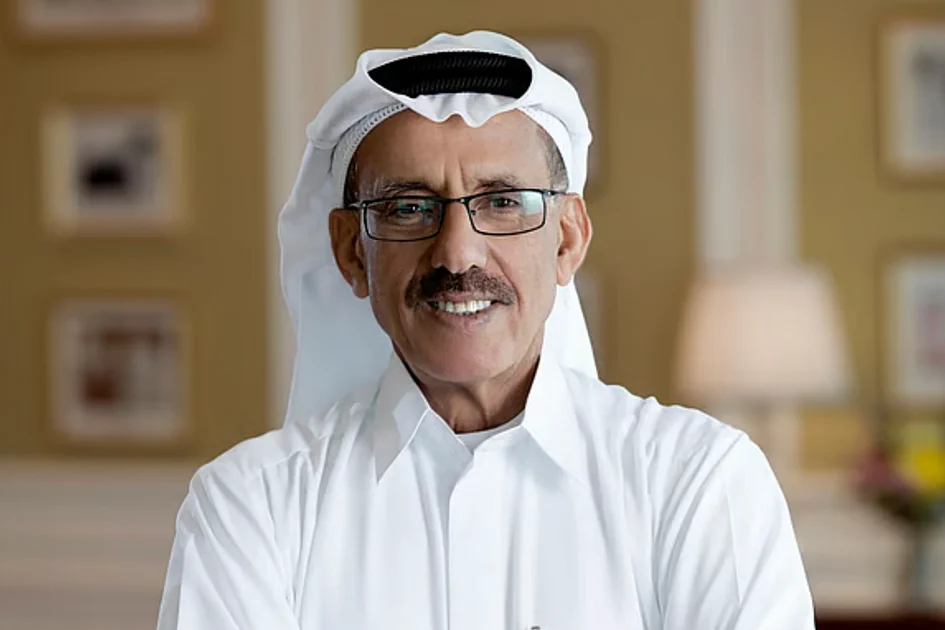
    In a strongly worded statement on Thursday, Emirati billionaire Khalaf Ahmad Al Habtoor, founding chairman of the Al Habtoor Group, criticized Israeli Finance Minister Bezalel Smotrich for his ‘racist and provocative’ remarks about Saudi Arabia. Smotrich, in a viral video, had mockingly suggested that Saudi Arabia should ‘keep riding camels’ if it demands an independent Palestinian state in exchange for normalizing relations with Israel. Although Smotrich later apologized, calling his comments ‘unfortunate,’ Al Habtoor dismissed the apology as insufficient to erase the magnitude of the insult. He emphasized that the Gulf Cooperation Council (GCC) states, including Saudi Arabia, have achieved significant progress in energy, technology, and urban development, becoming global models of prosperity. Al Habtoor argued that Israel, not the Arab world, needs peace with its neighbors to secure its future. He called for a united Arab stance against such rhetoric, stating that dignity is a principle that must be defended through action, not just words. Opposition leaders in Israel, including Yair Lapid and Benny Gantz, also condemned Smotrich’s comments, with Lapid asserting that Smotrich does not represent the State of Israel.

  • UK defence secretary warns Putin: ‘We’re watching you’

    UK defence secretary warns Putin: ‘We’re watching you’

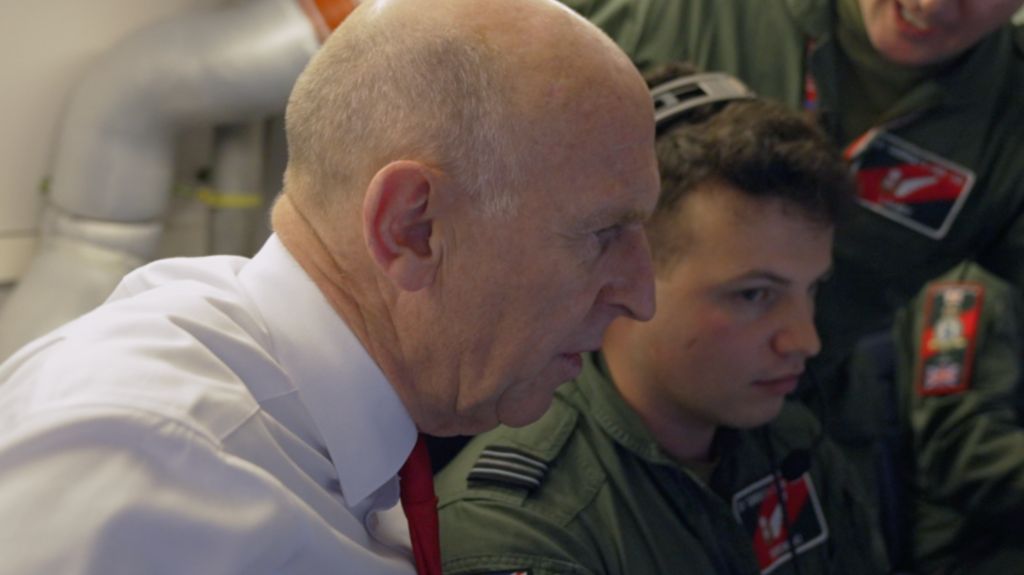
    Defence Secretary John Healey has issued a stark warning to Russian President Vladimir Putin, declaring, ‘We’re hunting your submarines.’ Healey revealed a 30% increase in Russian vessels encroaching on UK waters, signaling a broader pattern of Russian aggression that extends beyond Ukraine to impact Europe as a whole. The Ministry of Defence confirmed that Russian submarine activity in the North Atlantic has surged to levels reminiscent of the Cold War era. In response, the RAF and Royal Navy have intensified their surveillance efforts, with RAF P-8 aircraft conducting frequent missions, often supported by NATO allies. BBC News accompanied Healey on a flight aboard a P-8, a high-tech spy plane equipped with advanced cameras, sensors, and sonar buoys designed to detect and track submarines. The crew, working in a highly classified environment, monitors both surface vessels and underwater threats. Recent incidents, such as the tracking of the Russian spy ship Yantar near undersea cables in the Irish Sea, highlight growing Western concerns over Russia’s potential to disrupt critical infrastructure. Germany, a key ally, has ordered eight P-8 aircraft and is deepening its defense collaboration with the UK under the Trinity House Agreement. German Defence Minister Boris Pistorius, who joined Healey on the flight, emphasized the North Atlantic’s strategic importance and the need for vigilance against Russian hybrid warfare tactics, including disinformation and threats to undersea infrastructure. The two nations are also cooperating on cybersecurity and arms production, further solidifying their partnership in the face of escalating Russian threats.

  • Trump-Kim meeting speculation flares ahead of US president’s visit to South Korea

    Trump-Kim meeting speculation flares ahead of US president’s visit to South Korea

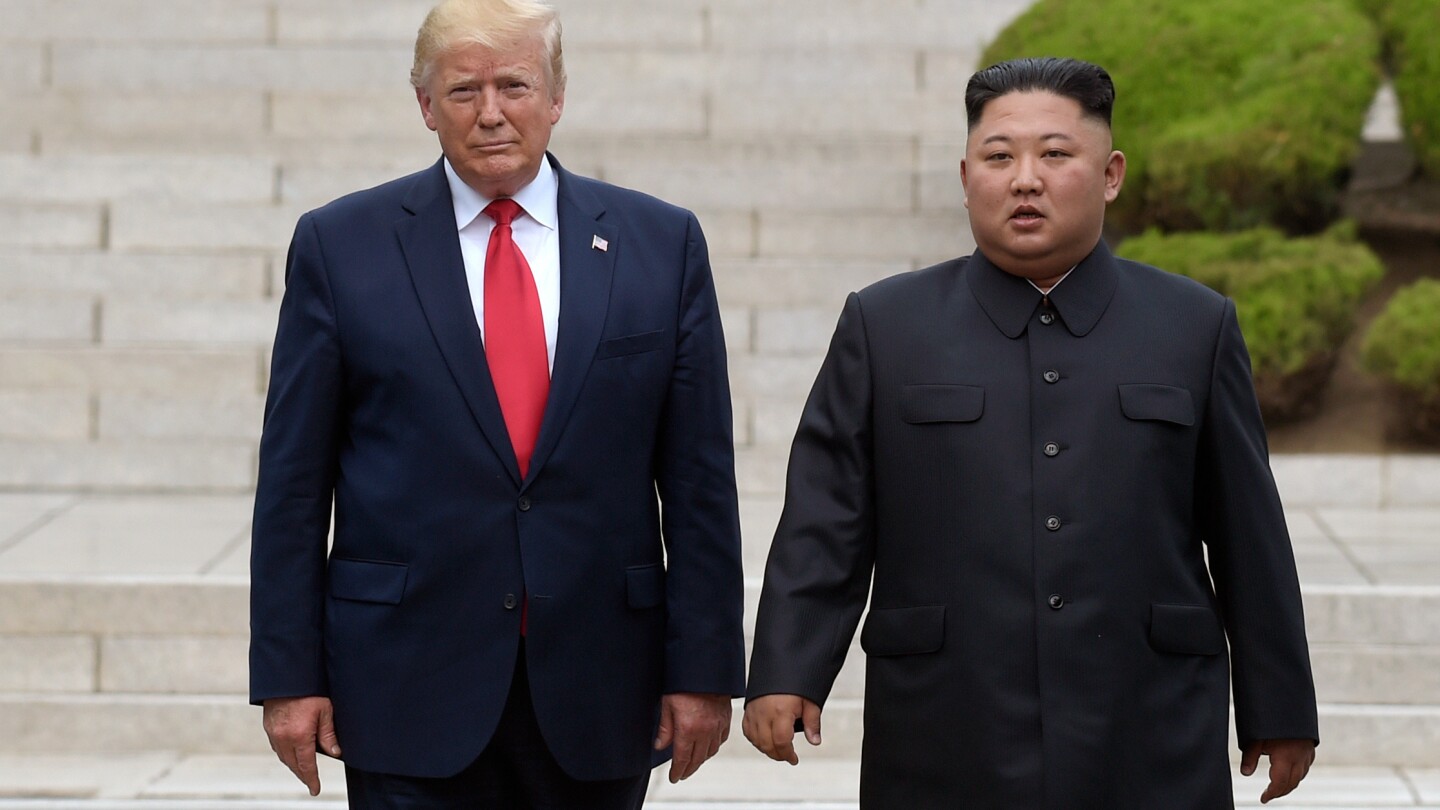
    As U.S. President Donald Trump prepares for his first trip to Asia since returning to office, speculation is growing about a potential meeting with North Korean leader Kim Jong Un during his stop in South Korea. This would mark their first summit since their impromptu meeting at the Korean border village of Panmunjom in June 2019, which was aimed at reviving stalled nuclear talks. While many experts remain skeptical about the likelihood of another spontaneous meeting, some predict that Trump and Kim could eventually resume talks in the coming months. However, others argue that the geopolitical landscape has shifted significantly since 2019, with North Korea expanding its nuclear capabilities and strengthening alliances with Russia and China, making immediate diplomacy less probable. Trump has repeatedly expressed his desire to restore dialogue with Kim, praising their past relationship and calling the North Korean leader “a smart guy.” Kim, in turn, has hinted at a possible return to talks if the U.S. abandons its insistence on denuclearization. Despite these signals, neither Washington nor Pyongyang has indicated any high-profile meetings ahead of the Asia-Pacific Economic Cooperation (APEC) summit in South Korea. Observers note that Kim’s leverage has grown significantly, with an enlarged nuclear arsenal and stronger diplomatic backing, potentially reducing his urgency for talks. While a Trump-Kim meeting could provide a diplomatic boost for both leaders, experts caution that meaningful progress remains uncertain, given the complex dynamics and entrenched positions on both sides.

  • US military flew supersonic B-1 bombers up to the coast of Venezuela

    US military flew supersonic B-1 bombers up to the coast of Venezuela

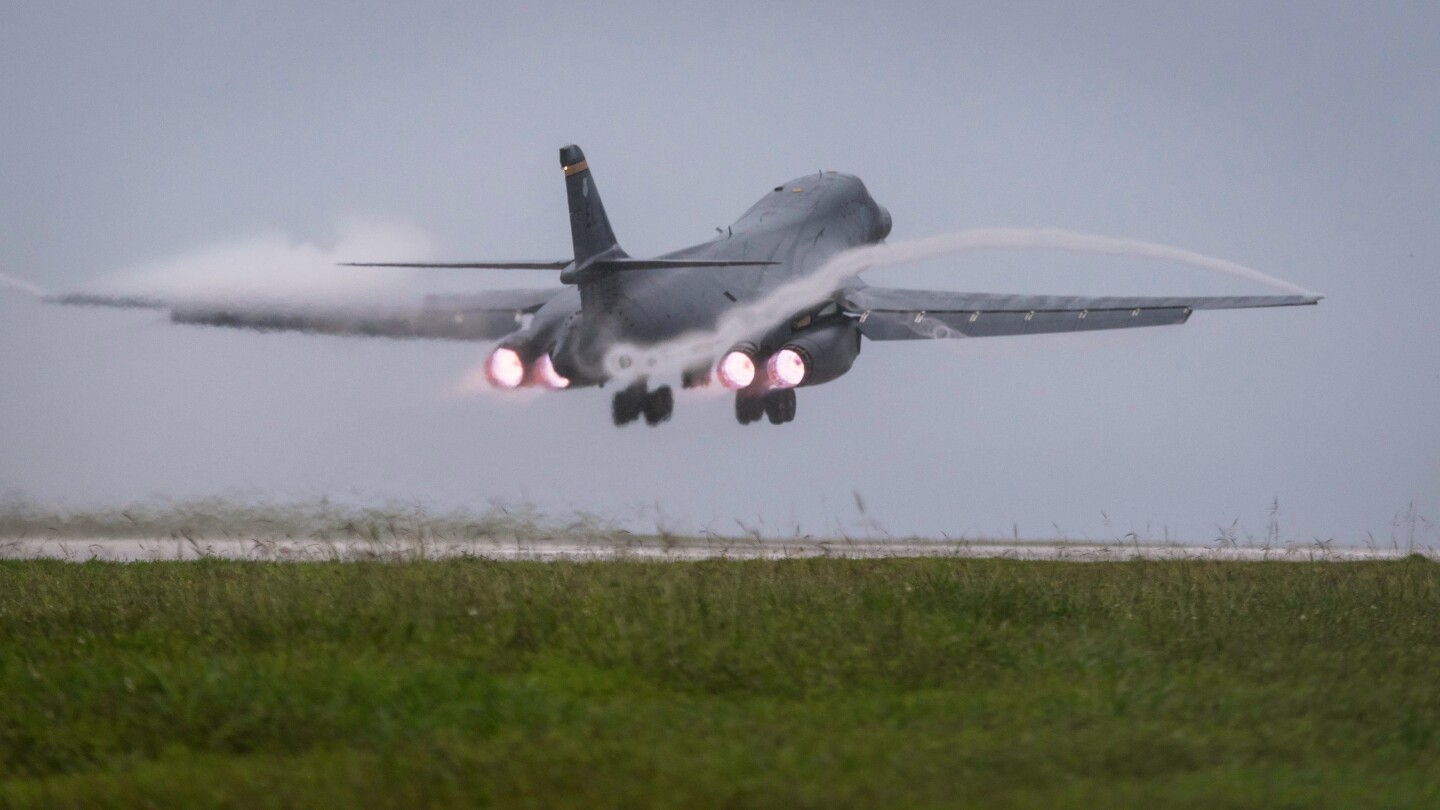
    In a significant escalation of military presence, the U.S. deployed a pair of supersonic B-1 Lancer bombers to the Venezuelan coast on Thursday, marking the second such exercise in just over a week. This maneuver, part of a broader training simulation designed to mimic an attack, has fueled widespread speculation about the Trump administration’s intentions toward Venezuelan President Nicolás Maduro. Maduro, who faces U.S. charges of narcoterrorism, has been under increasing scrutiny as the U.S. military bolsters its forces in the Caribbean Sea and surrounding waters. Since early September, the U.S. has conducted lethal strikes on vessels allegedly involved in drug trafficking off Venezuela’s coast, further intensifying tensions. Flight tracking data revealed that the B-1 bombers, capable of carrying more bombs than any other U.S. aircraft, departed from Dyess Air Force Base in Texas and traversed the Caribbean. A U.S. official, speaking anonymously, confirmed the training exercise. The recent deployment follows a similar mission involving B-52 Stratofortress bombers and F-35B stealth fighter jets last week. President Trump dismissed claims that the flights were intended to increase military pressure on Venezuela, stating, ‘It’s false, but we’re not happy with Venezuela for a lot of reasons. Drugs being one of them.’ The U.S. military presence in the region now includes eight warships, P-8 patrol aircraft, MQ-9 drones, and an F-35 squadron, with a submarine also operating in South American waters. Defense Secretary Pete Hegseth likened the administration’s anti-drug campaign to the post-9/11 war on terrorism, vowing to dismantle drug networks with the same intensity. The latest strikes, which expanded operations to the eastern Pacific, have resulted in at least 37 fatalities. Trump has also hinted at extending these operations to land-based targets, emphasizing readiness to ‘hit them very hard.’