
The U.S. Department of Homeland Security (DHS) revealed on Wednesday that immigration authorities were unaware of a federal court order halting the deportation of Chanthila “Shawn” Souvannarath, a 44-year-old Alabama resident, until after he had already been sent to Laos. Souvannarath, who claims U.S. citizenship, was deported on Friday, a day after U.S. District Judge Shelly Dick issued a temporary restraining order to prevent his removal. The judge had cited a ‘substantial claim of U.S. citizenship’ as the basis for the order. DHS spokesperson Tricia McLaughlin stated that the order ‘was not served’ to U.S. Immigration and Customs Enforcement (ICE) until after the deportation had occurred, dismissing allegations of procedural violations. Souvannarath, born in a Thai refugee camp, has lived most of his life in the U.S. and was granted lawful permanent residency before his first birthday. His father, a naturalized U.S. citizen from Laos, is the basis for his citizenship claim. Souvannarath was taken into ICE custody in June following an annual immigration check-in. McLaughlin emphasized that Souvannarath had lost his green card in 2006 due to convictions for assault and unlawful firearm possession, asserting he ‘had no right to be in this country.’ His wife, Beatrice, described him as a hardworking father who had stayed out of trouble since his legal issues two decades ago. The American Civil Liberties Union (ACLU), representing Souvannarath, has called for his immediate return to the U.S., labeling the deportation ‘unlawful.’ This case highlights ongoing tensions between the Trump administration and the judiciary over immigration enforcement, including previous instances of U.S. citizens being wrongfully deported.
分类: politics
-
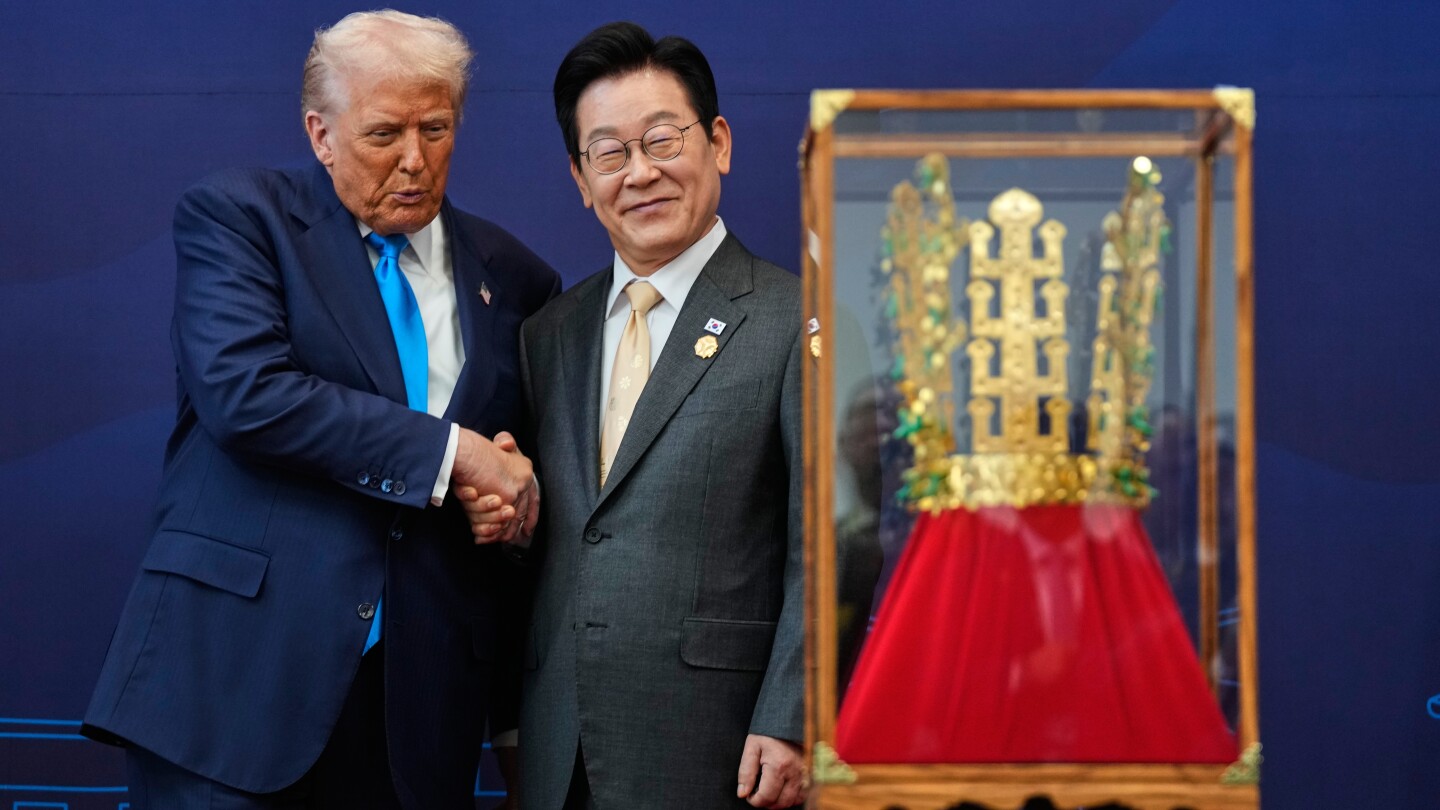
US will share tech to let South Korea build a nuclear-powered submarine, Trump says
In a significant development for regional security, former U.S. President Donald Trump announced on social media that the United States will share its closely guarded nuclear-powered submarine technology with South Korea. This announcement followed a meeting between Trump and South Korean President Lee Jae Myung in Gyeongju, South Korea. During their discussions, President Lee emphasized the importance of modernizing the U.S.-South Korea alliance and highlighted plans to increase South Korea’s military spending to alleviate the financial burden on the U.S. Lee clarified that South Korea’s interest lies in acquiring nuclear fuel for submarines rather than nuclear weapons, addressing a potential misunderstanding from their previous talks in August. He further argued that equipping South Korea with nuclear-powered submarines would bolster U.S. strategic activities in the region. U.S. nuclear submarine technology is considered among the most sensitive and highly protected military assets, with the U.S. historically reluctant to share it even with close allies. Notably, a recent agreement to assist Australia in acquiring nuclear submarine technology did not involve direct knowledge transfer from the U.S. Trump’s announcement comes ahead of his meeting with Chinese President Xi Jinping, whose country already possesses nuclear submarines, and follows North Korea’s March unveiling of a nuclear-powered submarine under construction—a move that poses a significant security threat to both South Korea and the U.S. The Pentagon has yet to comment on Trump’s announcement. Meanwhile, North Korea’s recent successful cruise missile tests underscore its growing military capabilities, adding to the region’s escalating tensions.
-
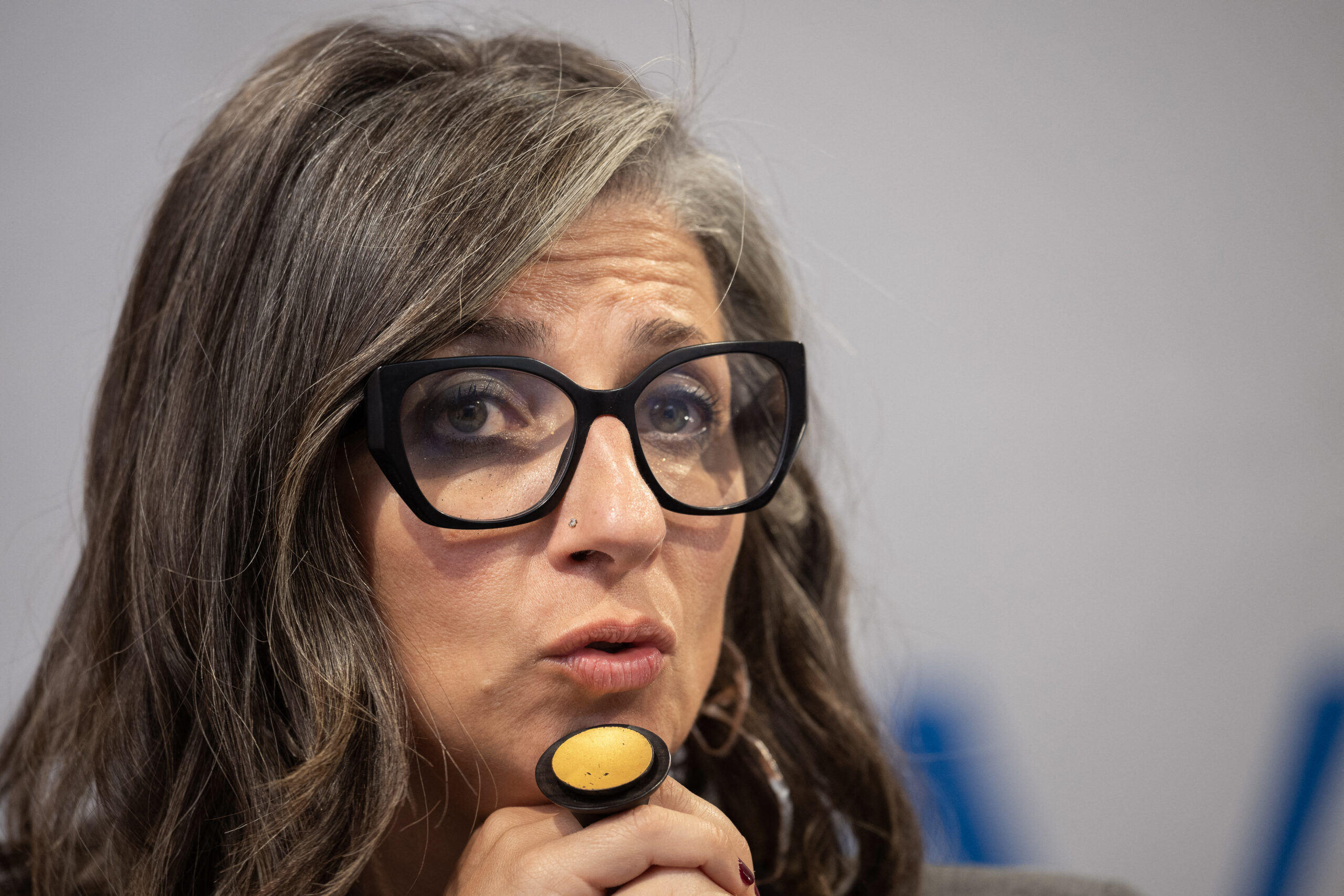
‘Grotesque and delusional’: Francesca Albanese hits back at Israeli envoy after he called her a ‘witch’
In a dramatic confrontation at the United Nations General Assembly on Tuesday, Israel’s ambassador to the UN, Danny Danon, launched a scathing attack on Francesca Albanese, the UN Special Rapporteur on Palestine, labeling her a ‘witch’ following her presentation of a report on third-state complicity in the Gaza genocide. Danon accused Albanese of attempting to ‘curse Israel with lies and hatred,’ dismissing her findings as ’empty spells’ and ‘failed charms.’ Albanese, unfazed by the outburst, countered that Israel’s response was ‘grotesque and delusional,’ emphasizing that her report, titled ‘Gaza Genocide: A Collective Crime,’ scrutinizes the role of over 60 countries in enabling Israel’s actions in Gaza. Speaking from Cape Town, South Africa, due to US sanctions imposed earlier this year, Albanese condemned the international community’s complicity in the crisis, calling for a permanent ceasefire and the suspension of military and diplomatic ties with Israel. She underscored that international law prohibits states from aiding or assisting in the commission of international crimes, framing the issue as a matter of legal obligation rather than choice.
-

Italian court rejects Sicily bridge project, dealing a blow to Meloni government
In a significant setback for Italy’s right-wing government, the Court of Auditors has refused to approve the ambitious 13.5 billion euro Strait of Messina Bridge project, which aims to connect Sicily to the mainland. The court, responsible for financial oversight and public accounting, announced its decision in a concise statement on Wednesday evening, promising to provide detailed reasoning within 30 days. This move has sparked fierce criticism from Prime Minister Giorgia Meloni, who labeled the ruling as an “intolerable intrusion” by magistrates and vowed to push forward with the project despite the setback. Transport Minister Matteo Salvini, a key advocate for the bridge, accused the court of making a “political decision” rather than a technical one and pledged to explore all avenues to advance the plan. While the court’s decision does not outright block the project, it could significantly delay its approval, potentially requiring the government to seek a new vote to override the objections. The Strait of Messina Bridge, first proposed in 1969, has faced repeated approvals and cancellations over the decades. Meloni’s administration revived the project in 2023, marking the most progress it has ever achieved. However, the initiative has been mired in controversy, with debates over its massive scale, earthquake risks, environmental impact, and potential mafia involvement. Preliminary work was slated to begin this fall, with construction expected to start next year and completion targeted between 2032 and 2033. If built, the bridge would span nearly 3.7 kilometers, with a suspended section of 3.3 kilometers, surpassing Turkey’s Canakkale Bridge as the world’s longest.
-

Centrist liberals take shock lead in Dutch election, exit poll says
In a stunning turn of events, Rob Jetten, the 38-year-old leader of the centrist liberal party D66, has emerged as the frontrunner in the Dutch general election, according to the latest exit poll. The Ipsos I&O survey indicates that Jetten’s party has secured 27 seats, narrowly surpassing anti-Islam populist Geert Wilders, who had dominated the polls throughout the campaign. This marks a dramatic shift from the 2023 election, where D66 languished in sixth place. The final outcome remains uncertain, but the exit poll suggests a significant swing in voter sentiment. Wilders, who led the previous government, saw his support wane after his coalition collapsed in June over disputes on asylum and migration policies. Jetten’s polished campaign, bolstered by his strong performances in televised debates and a strategic appearance on a popular game show, resonated with voters seeking unity and progress. The conservative liberals, led by Dilan Yesilgöz, are also poised for a strong showing, potentially securing a role in a future coalition government. Meanwhile, the GreenLeft-Labour party, once a close contender, is projected to finish fourth, signaling a disappointing night for former European Commissioner Frans Timmermans. The election, fought largely on issues of migration, housing shortages, and asylum center overcrowding, has highlighted the electorate’s desire for change. Jetten’s party has pledged to address the housing crisis by building 10 new cities, a policy that has garnered significant attention. As supporters celebrated in Leiden, the atmosphere was electric, with many expressing hope for a brighter future under Jetten’s leadership.
-

The Times of London duped by con artist into publishing an attack on Mamdani
The Times of London, a prestigious British newspaper owned by Rupert Murdoch, has retracted an article falsely attributed to former New York mayor Bill de Blasio, following revelations that the publication was deceived by an impersonator. The article, published on Tuesday, purported to feature de Blasio criticizing Zohran Mamdani, the 33-year-old Democratic nominee and frontrunner in the New York mayoral election. The fabricated quotes included de Blasio allegedly questioning the feasibility of Mamdani’s policy proposals. The story gained traction when a spokesperson for Mamdani’s rival, Andrew Cuomo, shared it on social media. However, de Blasio swiftly denounced the article on X, stating it was ‘entirely false and fabricated.’ He emphasized that he had never spoken to the reporter or made such statements, calling the incident an ‘absolute violation of journalistic ethics.’ The Times issued an apology to de Blasio and removed the article, acknowledging that their reporter had been misled by an individual falsely claiming to be the former mayor. De Blasio reaffirmed his support for Mamdani, praising his vision as ‘necessary and achievable.’ Mamdani’s platform, which includes abolishing bus fares, freezing rent on rent-stabilized apartments, and providing universal childcare, has resonated with New Yorkers, giving him a significant lead over Cuomo in polls. Despite his popularity, Mamdani has faced criticism from US political figures and media outlets, including the Murdoch-owned New York Post, due to his stance on Israel. Mamdani has previously lauded de Blasio as the best mayor of his lifetime.
-
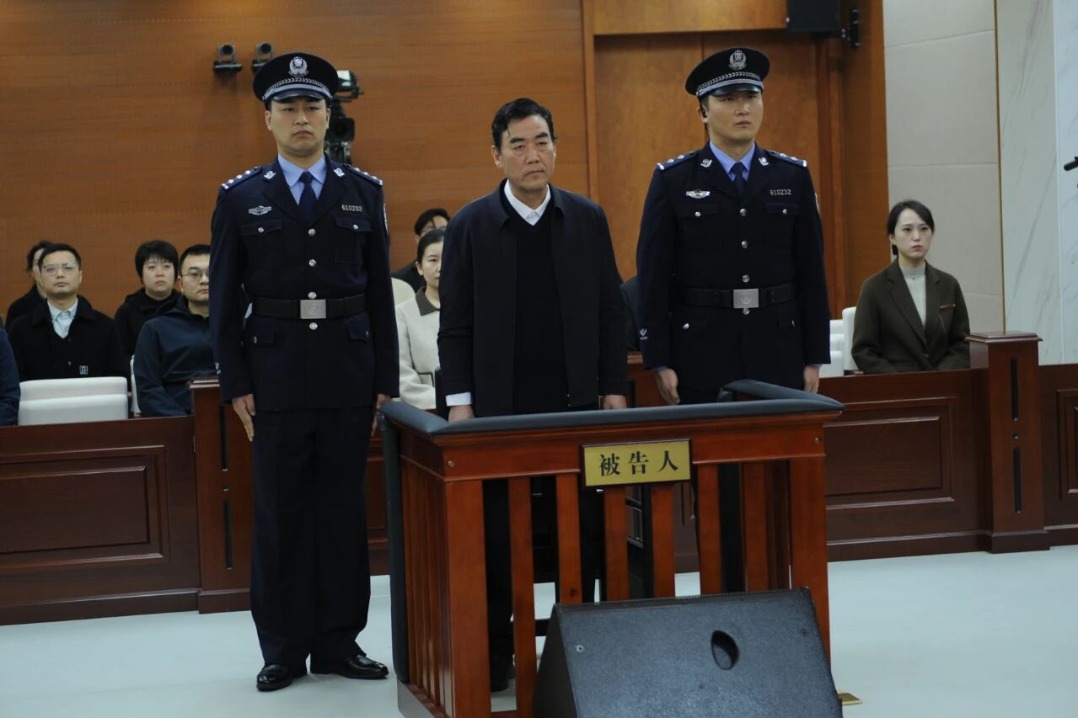
Former Qinghai senior official receives life for bribery
Yang Fasen, a former high-ranking official in Qinghai province, has been sentenced to life imprisonment for accepting bribes exceeding 147 million yuan ($20.7 million). The verdict was announced by the Hanzhong Intermediate People’s Court in Shaanxi province on Wednesday. In addition to the life sentence, Yang has been permanently stripped of his political rights, and all his personal assets have been confiscated. The court has also mandated that his illicit gains and related interests be transferred to the state treasury.
Between March 2005 and July 2024, Yang exploited his positions in the Xinjiang Uygur Autonomous Region and Qinghai to grant favors to individuals and businesses in exchange for bribes. The court emphasized that the scale of his corruption warranted severe punishment, describing the amount involved as ‘extremely large.’ However, the court noted that Yang’s voluntary surrender to anti-corruption authorities, his disclosure of previously unknown bribes, and the full restitution of his illicit gains were factors that led to some leniency in sentencing.
Yang, a 54-year-old native of Gansu province, began his career in 1990 and rose through the ranks, eventually becoming a member of the Standing Committee of the Communist Party of China Qinghai Provincial Committee in 2023. His downfall began in October 2024 when an investigation was launched, culminating in his expulsion from the Party and removal from public office in March. He was formally charged with bribery in June, and his case was publicly heard in September.
-
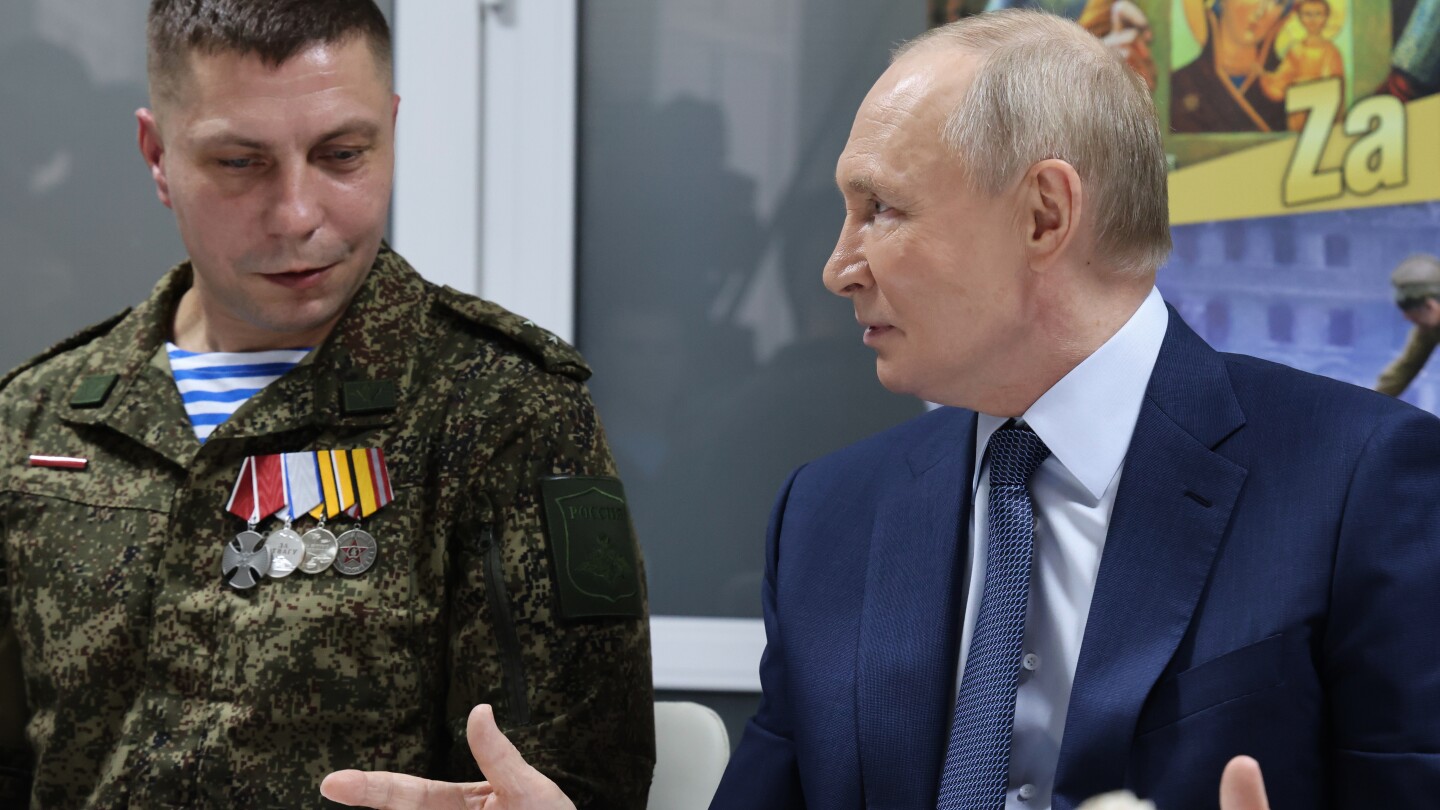
Putin says Russia’s nuclear-armed underwater drone was tested successfully
MOSCOW — Russian President Vladimir Putin announced on Wednesday that Russia has successfully tested a new nuclear-powered underwater drone, named Poseidon, which is capable of carrying nuclear warheads. Putin emphasized that the drone is unmatched in speed and depth, making it virtually impossible to intercept. This development comes just days after Russia tested a nuclear-powered cruise missile, signaling Moscow’s continued focus on advancing its strategic weapons capabilities. Putin described the Poseidon test as a “huge success,” revealing that the drone’s nuclear reactor is significantly smaller than those used in submarines but boasts a more powerful warhead than the Sarmat intercontinental ballistic missile. The Poseidon drone, first introduced in Putin’s 2018 state-of-the-nation address, is designed to explode near coastlines, potentially unleashing a radioactive tsunami. Putin’s announcement appears to be a strategic message to the United States, particularly amid escalating tensions over Ukraine. The Russian president has repeatedly highlighted Moscow’s nuclear readiness since the invasion of Ukraine in February 2022, asserting that Russia will use “all means” to protect its security interests. The test of the Burevestnik cruise missile, which covered 14,000 kilometers in a 15-hour flight, further underscores Russia’s advancements in nuclear technology. These developments come as U.S. President Donald Trump has postponed a planned summit with Putin and imposed new sanctions on Russia, intensifying the geopolitical standoff.
-

Romania says the US is drawing down troops along NATO’s eastern flank
The United States has announced plans to scale back its military presence along Europe’s eastern border with Ukraine, signaling a strategic pivot toward other global security priorities. Romania’s defense ministry confirmed the decision on Wednesday, noting that the rotation of a U.S. brigade with elements stationed across several NATO countries, including Romania, will cease. While approximately 1,000 U.S. troops will remain in Romania, this marks a reduction from the 1,700 personnel deployed there as of April. A brigade typically comprises 1,500 to 3,000 troops. The move reflects Washington’s increasing focus on the Indo-Pacific region, according to Romanian Defense Minister Ionut Mosteanu, who emphasized that allied troop numbers in Europe will still exceed pre-2022 levels, when Russia launched its full-scale invasion of Ukraine. NATO has been strengthening its defensive posture on its eastern flank, deploying additional multinational battle groups to Romania, Hungary, Bulgaria, and Slovakia. A NATO official, speaking anonymously, downplayed concerns, stating that U.S. force adjustments are routine and that the American military presence in Europe remains significantly larger than in previous years. The official added that NATO and U.S. authorities are closely coordinating to maintain robust deterrence and defense capabilities.
-
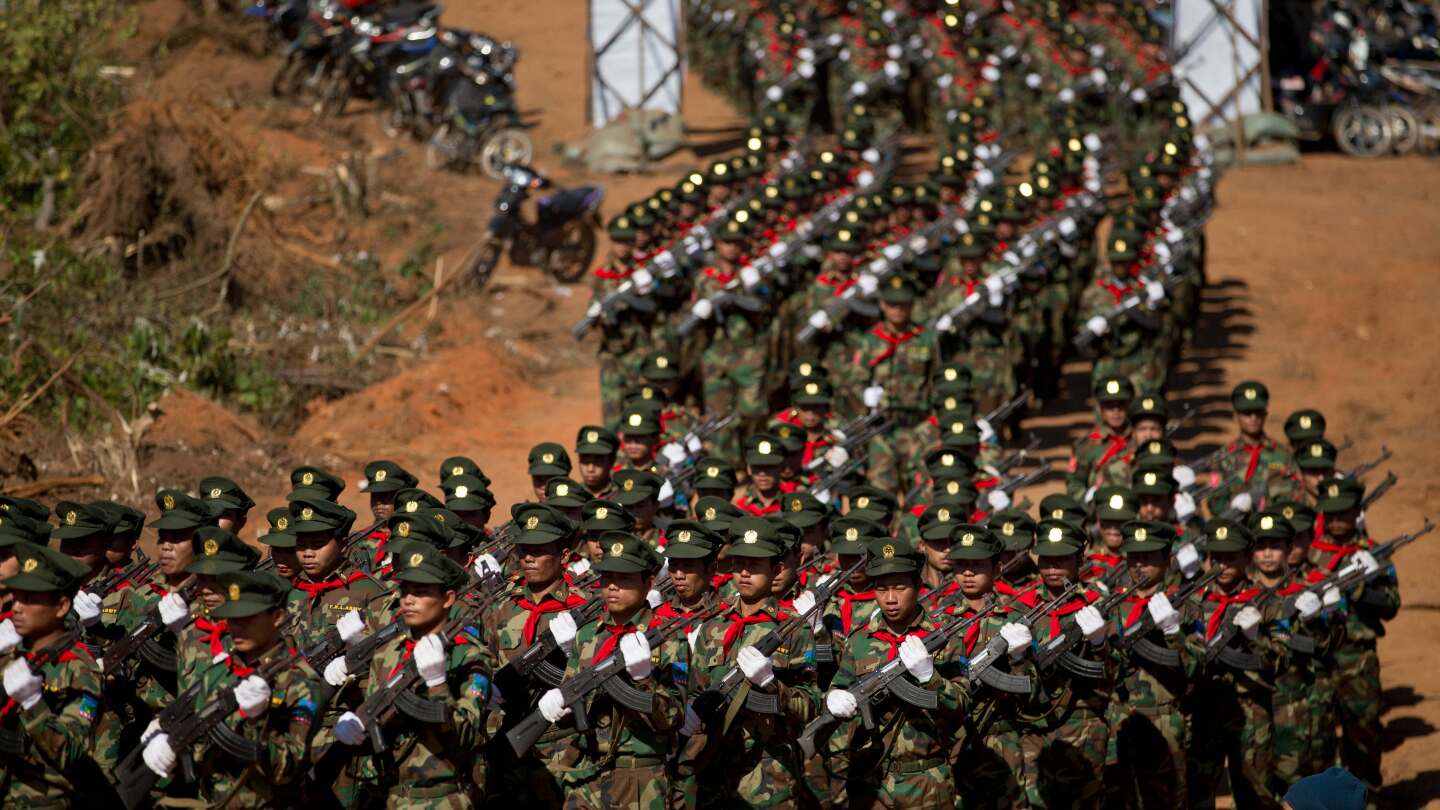
Myanmar rebels sign ceasefire with military after China-mediated talks
In a significant development aimed at reducing hostilities, the Ta’ang National Liberation Army (TNLA), a prominent ethnic rebel group in Myanmar, announced a ceasefire agreement with the country’s military government. The truce, mediated by China, was finalized during talks held in Kunming, a Chinese city near the Myanmar border, on Monday and Tuesday. This marks a pivotal moment in the ongoing conflict in Myanmar’s northeastern region, which has been plagued by intense fighting for months.