In a world increasingly dominated by protectionist policies, the Association of Southeast Asian Nations Plus Three (ASEAN+3) and the Asia-Pacific Economic Cooperation (APEC) forum have emerged as pivotal players in promoting an open and inclusive trading order. Analysts highlight that these regional partnerships have gained significance as Asian economies face threats from rising U.S. protectionism. Enrico Gloria, an assistant professor of international relations at the University of the Philippines, emphasized that these groupings act as economic shock absorbers and normative anchors for a stable trading environment. ASEAN+3, comprising 10 ASEAN members plus China, Japan, and South Korea, and APEC, with its 21 member economies across the Asia-Pacific and the Americas, balance national interests with regional solidarity. The ‘ASEAN Way’ allows countries to progress at different speeds while maintaining unity, and APEC’s voluntary approach reinforces inclusiveness. Both frameworks focus on pragmatic, consensus-driven economic collaboration, with many member economies being signatories to major free trade agreements like the Regional Comprehensive Economic Partnership (RCEP) and the Comprehensive and Progressive Agreement for Trans-Pacific Partnership (CPTPP). Bart Edes, a distinguished fellow at the Asia Pacific Foundation of Canada, noted that these partnerships are well-positioned to advance a counternarrative of inclusive globalization rooted in Asia’s pragmatic economic model. This ‘new Asian regionalism’ emphasizes integration, multipolarity, and regional resilience, contrasting with the U.S. government’s reliance on tariffs and aggressive transactional approaches. Julia Roknifard, a senior lecturer at Taylor’s University in Malaysia, added that ASEAN+3 and APEC members are ‘seeking development, not dominance,’ and are capable of jointly promoting inclusive globalization. Despite economic slowdowns, with APEC’s economy expected to grow at 3.1 percent and ASEAN+3’s GDP easing to 4.1 percent this year, these regional partnerships continue to stand by multilateralism and defend trade openness through collaborative dialogues.
分类: politics
-

Lebanese president calls for diplomacy with Israel amid border tensions
Lebanese President Joseph Aoun has called for diplomatic engagement with Israel amid escalating border tensions, emphasizing that negotiation is the only viable path forward. Speaking at Baabda Palace during a meeting with officials on Monday, Aoun underscored the importance of diplomacy over war, stating, “In politics, there are three tools: diplomacy, economy, and war. When war leads nowhere, what else can we do? Every war in the world eventually ends with negotiations, and negotiation is never with a friend or ally, but with an enemy.” He highlighted the destructive nature of war, praising the diplomatic efforts of Lebanon’s leadership, including Parliament Speaker Nabih Berri and Prime Minister Nawaf Salam. Aoun also stressed the need for national unity, urging politicians to prioritize Lebanon’s interests over sectarian divisions and electoral ambitions. The call for diplomacy comes after a deadly raid on the border village of Blida in late October, which prompted Aoun to order the Lebanese army to respond to any Israeli incursions. While a US- and French-brokered ceasefire has been in place since late November 2024, Israel has continued occasional strikes in Lebanon, claiming to target Hezbollah threats. These actions have been condemned by Lebanon and international organizations as violations of the truce.
-

Shutdown disrupts food aid for millions
The ongoing U.S. government shutdown, now in its fifth week, has severely disrupted critical food assistance programs, leaving millions of low-income Americans in dire straits. House Minority Leader Hakeem Jeffries has accused Republicans of ‘weaponizing hunger’ by failing to reopen the government, which has led to the suspension of the Supplemental Nutrition Assistance Program (SNAP). SNAP, which provides food aid to over 42 million citizens, has seen its funding lapse due to the shutdown, with recipients losing benefits as of last Saturday. Despite a federal judge’s order to use emergency funds to maintain SNAP, officials have stated that restoring benefits could take at least a week. The shutdown’s impact is particularly severe for Black Americans, who constitute 12.6% of the population but more than a quarter of SNAP recipients. Additionally, the $4.1 billion Low-Income Home Energy Assistance Program (LIHEAP) is also facing delays, leaving millions of households without heating and cooling assistance as winter approaches. Mark Wolfe, executive director of the National Energy Assistance Directors Association, warned that the temporary disruption could have profound effects on the nation’s poorest families. The shutdown has also led to a multibillion-dollar hit to the economy, with both political parties exchanging sharp accusations over the crisis.
-
Tanzanian opposition claims security forces are secretly dumping bodies after election violence
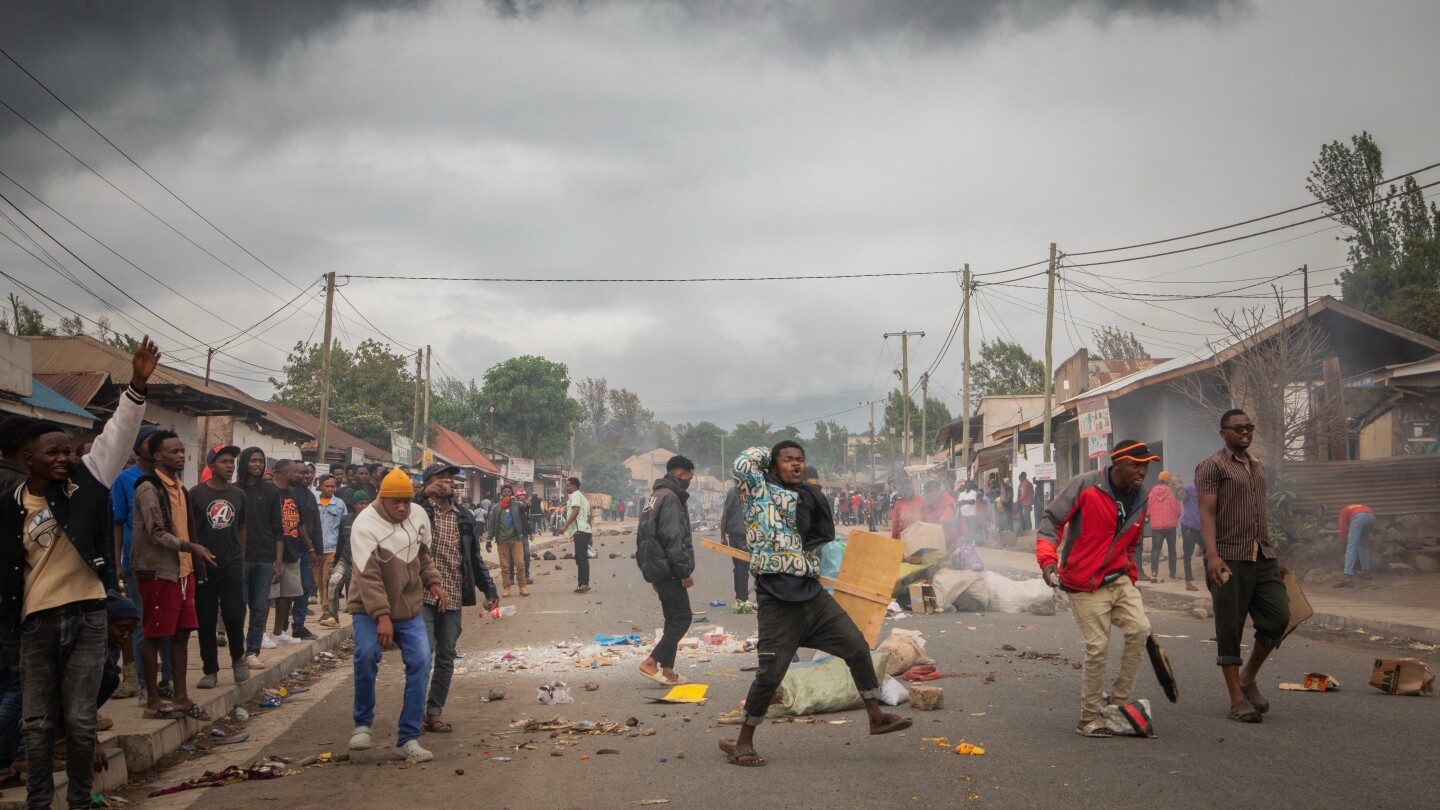
Tanzanian authorities are under intense scrutiny following widespread allegations of violence and killings during and after last week’s contentious election. The largest opposition party, Chadema, accused security forces of secretly disposing of hundreds of bodies to conceal the true scale of the fatalities. Protests erupted across the country after the election, with demonstrators in Dar es Salaam and other cities decrying what they perceived as an unfair electoral process. Security forces responded with live ammunition and tear gas, prompting a nationwide curfew. President Samia Suluhu Hassan was declared the winner with over 97% of the vote, a result critics argue lacks credibility due to the suppression of opposition candidates and low voter turnout. Human Rights Watch condemned the violent crackdown, urging accountability for security forces. International observers, including the U.K., Norway, and Canada, have expressed concern over credible reports of significant casualties. The Catholic Church also reported hundreds of deaths, though exact figures remain unverified. Amid the turmoil, Hassan was inaugurated as Tanzania’s first female president, acknowledging the loss of life and calling for a return to normalcy. Authorities have warned against sharing unverified images of the violence, threatening treason charges for those who spread panic. As the internet was restored after a six-day shutdown, life in Dar es Salaam and Dodoma began to slowly return to normal, with businesses reopening and public transport resuming.
-

Centrist D66 party takes home win in Dutch election
In a dramatic conclusion to the Netherlands’ national election, the centrist D66 party narrowly defeated Geert Wilders’ far-right Party for Freedom (PVV), according to the final tally by national news agency ANP. Both parties secured 26 seats in parliament, with D66’s slim margin of approximately 28,000 votes insufficient to claim an additional seat. The outcome hinged on postal votes from Dutch citizens abroad, making it one of the closest electoral contests in recent Dutch history. Rob Jetten, the 38-year-old leader of D66, hailed the result as “historic” and expressed both pride and a sense of “great responsibility” to the nation. If successful in forming a coalition, Jetten would become the country’s youngest and first openly gay leader. For Wilders, the result marked an 11-seat decline for the PVV, a significant setback following its surge to prominence two years ago. Wilders has since faced criticism for his role in destabilizing a four-party coalition over migration policies. He has also raised unsubstantiated claims of voting irregularities, which were swiftly dismissed by local authorities and the independent Electoral Council. The council is set to formalize the election results on Friday. With the Dutch political landscape deeply fragmented, coalition negotiations are expected to be protracted, potentially lasting weeks or months. As the largest party, D66 will lead the efforts to form a government, with Jetten and his team beginning discussions on Tuesday.
-
Hegseth praises South Korea’s plans to raise its military spending and boost defense capabilities
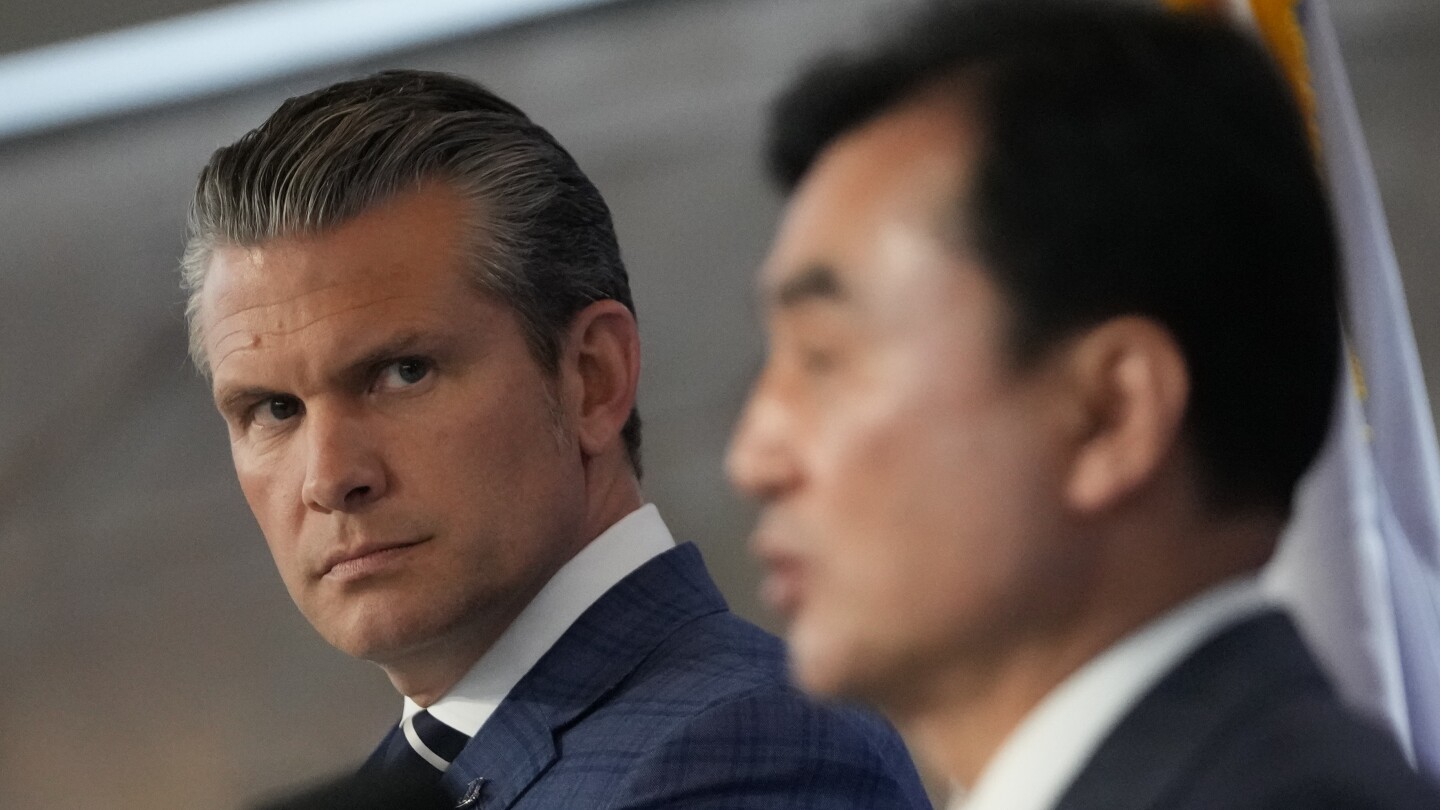
SEOUL, South Korea — U.S. Defense Secretary Pete Hegseth lauded South Korea’s decision to boost its military budget during a press briefing on Tuesday, emphasizing the nation’s growing role in countering North Korean aggression. This move comes as both allies prepare for potential regional crises, with the U.S. urging South Korea to enhance its conventional defense capabilities, allowing Washington to focus more on strategic challenges posed by China.
Following annual security discussions with South Korean Defense Minister Ahn Gyu-back in Seoul, Hegseth expressed strong encouragement regarding Seoul’s pledge to increase defense spending and invest in advanced military capabilities. The two leaders agreed that these investments would significantly bolster South Korea’s ability to lead its own conventional deterrence and defense efforts against North Korea.
Earlier in the day, South Korean President Lee Jae Myung addressed parliament, urging lawmakers to approve an 8.2% hike in defense spending for the upcoming year. This proposed increase aims to modernize the nation’s military weaponry and reduce its dependence on U.S. support.
Hegseth highlighted the enduring strength of the U.S.-South Korea alliance, describing it as more robust than ever despite the volatile security environment. He also noted agreements to utilize South Korea’s world-class shipbuilding industry for the maintenance and repair of U.S. warships, ensuring that critical military assets remain combat-ready.
The alliance’s primary focus remains addressing North Korean provocations, but Hegseth stressed the need to remain vigilant against other regional threats. He reiterated the U.S. commitment to extending nuclear deterrence to South Korea, which lacks its own nuclear arsenal and relies on the U.S. “nuclear umbrella” for security.
Ahn dismissed speculation about South Korea pursuing its own nuclear weapons program or seeking the redeployment of U.S. tactical nuclear weapons, reaffirming Seoul’s commitment to the nuclear non-proliferation treaty. He emphasized the importance of the Conventional-Nuclear Integration (CNI) framework, which combines U.S. nuclear capabilities with South Korea’s conventional forces.
Notably, the meeting concluded without a joint statement, an unusual outcome for such high-level talks. However, Hegseth assured that there were no disagreements between the two nations, attributing the delay to the complexity of the discussions.
Amid these developments, North Korea conducted artillery tests near its western seas, underscoring the ongoing tensions. South Korea’s Joint Chiefs of Staff reported approximately 10 rounds of artillery fire on Monday, coinciding with Hegseth’s visit to the inter-Korean border. This follows similar tests conducted before President Lee’s recent summit with Chinese President Xi Jinping, where Lee urged Beijing to play a more active role in persuading North Korea to resume dialogue with the U.S. and South Korea.
North Korea has dismissed such efforts, mocking Seoul’s hopes for denuclearization as a “pipe dream.”
-

Philosophy has resonance across globe
The governance philosophy of China, particularly as articulated in ‘Xi Jinping: The Governance of China,’ continues to resonate globally, with international leaders highlighting its emphasis on mutual benefit, inclusivity, and sustainable development. Ahmed Sheraz, a member of the Pakistan Tariff Commission, recently reflected on a Chinese proverb from the book, which advocates for the harmonious coexistence of all living things. He noted that this philosophy aligns with the vision of building a community with a shared future for humanity, a cornerstone of China’s governance approach. Sheraz expressed concern over the global retreat from multilateralism and emphasized that the interconnected challenges of today require collective solutions, which China’s philosophy of cooperation effectively addresses. He cited the Belt and Road Initiative (BRI) as a prime example of this approach, highlighting its role in fostering economic growth and infrastructure development in partner countries. Shaymaa Mahmoud Mahmoud Bayoumi, an Egyptian official, echoed these sentiments, praising China’s focus on people-centered development, innovation, and environmental sustainability. She shared her observations of China’s steady progress over the years, likening it to the tortoise in the fable of the rabbit and the tortoise—a metaphor for China’s long-term, determined approach to modernization. Bayoumi also highlighted the benefits of China’s investments in Egypt, particularly in the Suez Canal Economic Zone, which has created jobs and opportunities. Janeth Yovani Villegas Arteaga, an adviser to Peru’s Ministry of Women and Vulnerable Populations, expressed her admiration for China’s governance achievements, attributing its success to strong leadership and the perseverance of its people. She emphasized the importance of mutual understanding fostered by books like ‘Xi Jinping: The Governance of China,’ which serve as bridges between nations. Helio Assa-fay Varela Robalo, president of the Cape Verdean News Agency, praised China’s role as a global model for sustainable growth and social well-being, particularly in Africa, where China has been advancing skills training and technology transfer through educational and institutional partnerships. These global perspectives underscore the widespread influence of China’s governance philosophy and its potential to drive international cooperation and shared prosperity.
-

Decoding China’s five-year plan
As 2025 draws to a close, China is set to complete the implementation of its 14th Five-Year Plan (2021-25), a strategic framework that has guided the nation’s social and economic progress over the past five years. This pivotal moment also marks the beginning of preparations for the next five-year plan, which will outline China’s development trajectory from 2026 to 2030. The Five-Year Plan, a cornerstone of China’s governance model, serves as a comprehensive roadmap for achieving national goals, fostering innovation, and addressing key challenges. It plays a critical role in shaping policies, driving economic growth, and ensuring sustainable development. As China transitions to a new phase of planning, the focus remains on enhancing technological advancement, improving public welfare, and strengthening global competitiveness. This systematic approach underscores China’s commitment to long-term strategic vision and its ability to adapt to evolving global dynamics.
-

We are ready to discuss human rights law changes, top ECHR boss tells BBC
Alain Berset, Secretary General of the Council of Europe, has affirmed the organization’s readiness to engage in discussions about potential reforms to the European Convention on Human Rights (ECHR). In an exclusive interview with the BBC, Berset addressed mounting pressure from the UK and several EU nations, including Denmark and Italy, who are calling for significant changes to the convention, particularly in relation to migration policies. Berset emphasized that while human rights laws may need to adapt, the institutions established post-World War II, largely led by the UK, remain vital for maintaining peace, security, and justice across the continent. He warned that the UK’s potential withdrawal from the ECHR could lead to international isolation, especially in discussions on migration and global human rights. Berset also highlighted the broader implications of such a move, including its impact on Northern Ireland’s power-sharing agreement and the post-Brexit deal with the EU. He stressed the importance of maintaining a collective approach to human rights, particularly in light of the Council of Europe’s role in supporting Ukraine and preparing for war crime tribunals. Berset’s comments come ahead of the ECHR’s 75th anniversary, marking a pivotal moment for the organization as it navigates evolving political landscapes and challenges.
-
Three key races, California’s map and the Trump factor – what to watch in US elections
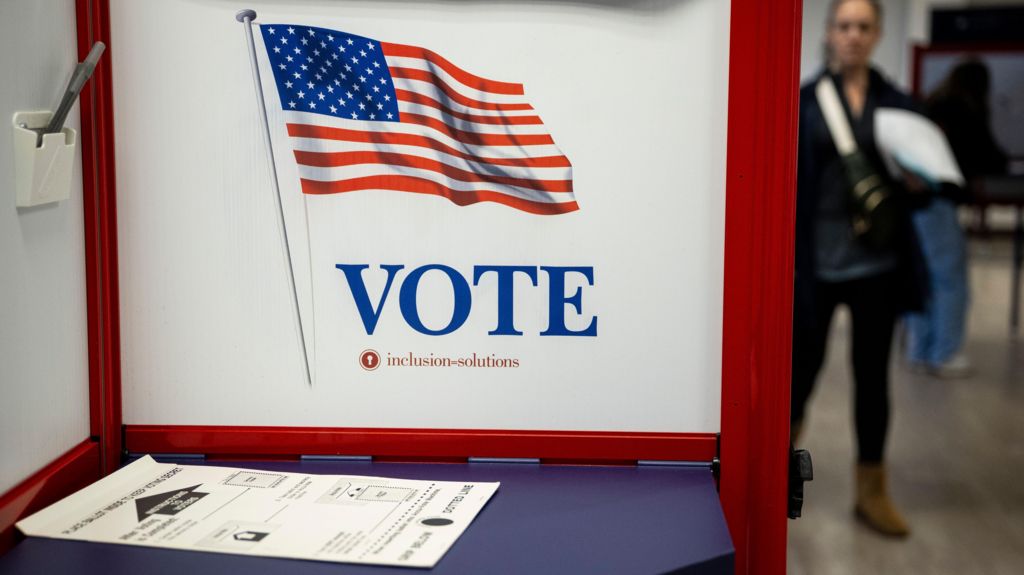
As the United States heads to the polls on Election Day, several critical races and decisions are set to shape the nation’s political future. While this year’s elections lack presidential or congressional contests, they are no less significant, with key mayoral, gubernatorial, and redistricting battles taking center stage.
In New York City, the mayoral race has captured national attention as Zohran Mamdani, a 34-year-old democratic socialist and state assemblyman, challenges the political establishment. Mamdani, who defeated former Governor Andrew Cuomo in the Democratic primary, aims to become the city’s youngest mayor in over a century and its first Muslim leader. Cuomo, running as an independent, has criticized Mamdani’s lack of experience and focused on crime and public safety. Meanwhile, Republican Curtis Sliwa remains in the race, refusing to step aside for Cuomo. A Mamdani victory could signal a shift in Democratic messaging, emphasizing cost-of-living issues like rent, groceries, and wages.
California voters are deciding on Proposition 50, a measure that would allow mid-decade redistricting of the state’s congressional districts. This unusual move, spearheaded by Democratic Governor Gavin Newsom, aims to counter Republican-led redistricting efforts in states like Texas and Missouri. With $158 million raised in campaign donations, the proposition has garnered strong partisan support, with 93% of Democrats favoring it and 91% of Republicans opposing it. If passed, the new maps would remain in effect through 2030.
In New Jersey, the gubernatorial race between Democrat Mikie Sherrill and Republican Jack Ciattarelli is shaping up to be a tight contest. New Jersey, traditionally a blue state, has seen heated rhetoric and high-profile endorsements from both parties. Sherrill, a current congresswoman, has been supported by Democratic heavyweights like Barack Obama and Pete Buttigieg, while Ciattarelli has received backing from former President Donald Trump and conservative activists. The outcome could provide insights into the national political climate ahead of the 2026 midterms.
Virginia’s gubernatorial election is another bellwether race, with voters set to elect the state’s first female governor. Democrat Abigail Spanberger, a U.S. congresswoman, faces Republican Winsome Earle-Sears, the current lieutenant governor. Earle-Sears, if elected, would make history as the first Black woman to lead a U.S. state. The race has highlighted economic and cultural issues, with Spanberger focusing on the impact of federal budget cuts and Earle-Sears emphasizing Virginia’s economy under Republican leadership.
Former President Donald Trump’s influence looms large over these elections. His comments on the New York City mayoral race, where he criticized Mamdani and threatened to withhold federal funding, have added tension to the contest. Trump’s role in the redistricting battle and his endorsement of Ciattarelli in New Jersey further underscore his continued impact on U.S. politics.
These elections, though local in nature, carry national implications, offering a glimpse into the evolving political landscape and the strategies both parties may employ in future races.