分类: politics

  • British leader’s trip to China is a balancing act between trade, national security and Trump

    British leader’s trip to China is a balancing act between trade, national security and Trump

    British Prime Minister Keir Starmer commenced a pivotal four-day diplomatic mission to China on Wednesday, marking the first visit by a UK leader since Theresa May’s 2018 trip. Arriving in Beijing with a delegation exceeding 50 business executives from prominent firms including British Airways, HSBC, and Jaguar Land Rover, Starmer articulated a pragmatic approach to Sino-British relations.

    The Prime Minister emphasized that Britain would not face a binary choice between its transatlantic partnership with the United States and its economic relationship with China. “I’m a pragmatist, a British pragmatist applying common sense,” Starmer stated en route to Beijing, underscoring his intention to balance engagement with national security considerations.

    This diplomatic overture occurs against a backdrop of significantly strained relations following concerns over Chinese espionage activities, Beijing’s support for Russia in the Ukraine conflict, and the crackdown on civil liberties in Hong Kong. Both nations now appear focused on finding common ground while managing differences, as recently advocated by China’s Ambassador to the UK Zheng Zeguang in a Times of London commentary.

    The trade dynamics reveal substantial opportunities: China maintained an $85.1 billion goods trade surplus with Britain in 2025, while the UK held a services surplus. With China’s new policy directives encouraging domestic consumption and further opening its services sector, the China-Britain Business Council identifies significant growth potential for British companies in areas including finance, consulting, healthcare, and elderly care services.

    Global trade uncertainties under the Trump administration have added urgency to diversifying economic partnerships. Both China and Britain have been affected by U.S. tariff policies, prompting similar moves by other nations including Canada’s recent trade mission to Beijing. However, such approaches carry risks, as demonstrated by Trump’s threat of 100% tariffs on Canada should it pursue a trade deal with China.

    National security concerns remain paramount, with the UK having previously barred Chinese investment in sensitive telecommunications infrastructure and nuclear power projects. Notably, the British government recently approved plans for an expanded Chinese Embassy in London, despite concerns about potential espionage capabilities.

    The human rights situation in Hong Kong presents particular complications for UK-China relations given historical ties. The recent conviction of British citizen Jimmy Lai under Hong Kong’s national security law adds diplomatic complexity to Starmer’s visit, with former Hong Kong governor Chris Patten urging firmness on human rights issues during the Prime Minister’s engagements with Chinese leadership.

  • South Korea’s ex-first lady jailed 20 months for bribery

    South Korea’s ex-first lady jailed 20 months for bribery

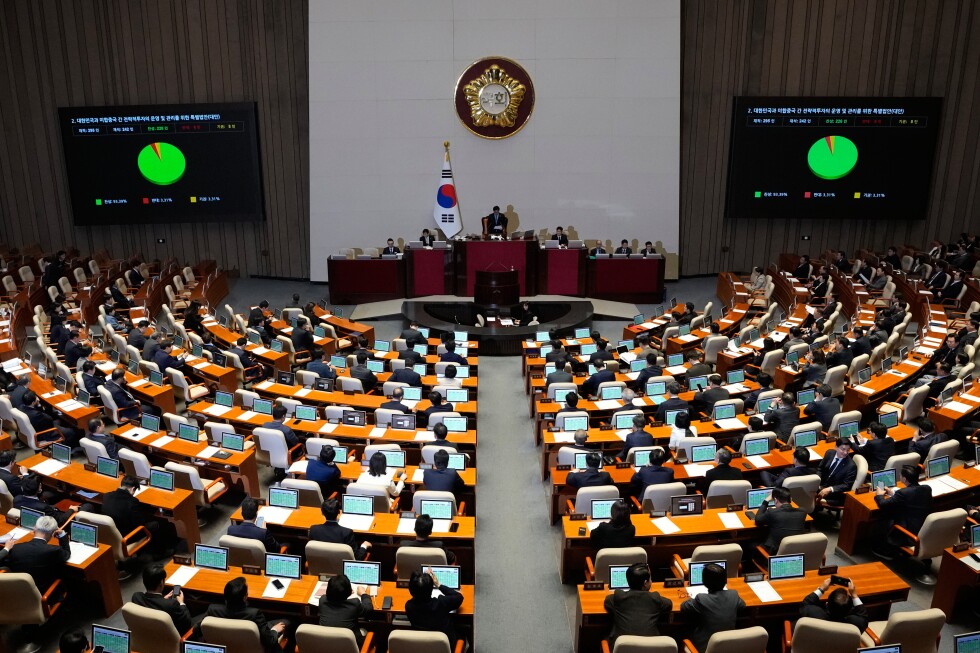
    In an unprecedented judicial ruling that marks a historic moment for South Korea’s political landscape, Kim Keon Hee, wife of imprisoned former President Yoon Suk Yeol, has been convicted on corruption charges and sentenced to 20 months imprisonment. The Seoul Central District Court delivered the landmark verdict on Wednesday, finding the former first lady guilty of accepting substantial bribes from the controversial Unification Church during her husband’s presidency.

    Presiding Judge Woo In-sung declared that Kim had systematically “misused her position as a means of pursuing personal gain,” emphasizing that “the higher one’s position, the more consciously one must guard against such conduct.” The court determined that the defendant had become “preoccupied with self-adornment” and failed to reject improper solicitations during her tenure as first lady.

    The prosecution’s investigation revealed that between April and July 2022, Kim accepted gifts valued at approximately 80 million won ($56,000), including an exquisite Graff diamond necklace and multiple Chanel handbags, from the Unification Church in exchange for political and business favors. While special prosecutors had sought a 15-year prison term and a 2 billion won fine across three charges, the court convicted her on one count, noting she had not actively solicited the bribes and lacked significant prior criminal history.

    In addition to the prison sentence, the court ordered confiscation of the diamond necklace and restitution of 12.85 million won in illicit gains. The verdict creates the extraordinary circumstance where both a former president and first lady are simultaneously serving prison sentences—a first in South Korea’s constitutional history.

    The court however acquitted Kim on separate charges related to stock price manipulation and receiving unauthorized opinion polling services during the 2022 presidential campaign that brought her husband to power. Additional pending cases allege her involvement in recruiting Unification Church members for the conservative People Power Party and trading government appointments for gifts.

    Kim maintained her innocence throughout the proceedings, describing the charges as “deeply unjust,” though she acknowledged receiving—and later returning—Chanel handbags. During August 2023 questioning, she offered a public apology, stating, “I am truly sorry that a nobody like me has caused concern to the people.”

    The investigation has produced wider repercussions, leading to the arrest of Unification Church leader Han Hak-ja. Separately, Kim faces academic integrity allegations after Sookmyung Women’s University revoked her 1999 graduate degree due to thesis plagiarism findings.

    This case represents the latest chapter in South Korea’s ongoing battle against corruption within its highest political circles, demonstrating the judiciary’s continued willingness to hold powerful figures accountable regardless of their status or connections.

  • South Korea’s ex-first lady jailed for 20 months for taking bribes

    South Korea’s ex-first lady jailed for 20 months for taking bribes

    In a landmark ruling that has captured national attention, South Korea’s former first lady Kim Keon Hee received a 20-month prison sentence Wednesday for accepting extravagant bribes from a religious organization. The Seoul Central District Court convicted the 53-year-old wife of impeached president Yoon Suk Yeol on corruption charges while acquitting her of separate allegations involving stock manipulation and campaign finance violations.

    Presiding Judge Woo In-sung delivered the verdict, emphasizing that Kim had exploited her privileged position as presidential spouse for personal enrichment. “One’s position must never become a means of pursuing private gain,” Judge Woo declared during the sentencing hearing, noting her “significant influence” derived from proximity to power.

    The prosecution’s case centered on Kim’s acceptance of luxury items from the Unification Church, including a Chanel handbag and Graff necklace, which prosecutors argued undermined constitutional separations between religion and state. Despite requesting a 15-year sentence, prosecutors saw the court impose a considerably shorter term.

    Kim maintained her innocence throughout the proceedings, characterizing the allegations as “deeply unjust” during her final testimony last month. Nevertheless, she offered a partial apology for “causing trouble despite being a person of no importance” and acknowledged making “many mistakes” regarding her responsibilities.

    The sentencing occurs within a broader political context that has seen both former presidential figures incarcerated. Yoon Suk Yeol currently faces detention related to his controversial imposition of martial law in December 2024 and its turbulent aftermath. This verdict follows recent sentencing of former prime minister Han Duck-soo to 23 years for supporting Yoon’s suspension of civilian rule.

    Kim’s legal troubles have consistently overshadowed her public image as an animal welfare advocate who campaigned against dog meat consumption. The 2023 “Dior bag scandal,” involving hidden camera footage of her accepting a $2,200 luxury handbag, significantly damaged the administration’s popularity and contributed to electoral setbacks for Yoon’s party in April 2024.

    The investigation has extended beyond political figures, resulting in the arrest of Unification Church leader Han Hak-ja and pending sentencing of lawmaker Kweon Seong-dong for similar bribery allegations involving the religious sect.

  • Pauline Hanson lashes progressives after ‘sold out’ film cancelled

    Pauline Hanson lashes progressives after ‘sold out’ film cancelled

    One Nation leader Pauline Hanson has launched a vehement critique against what she terms ‘super progressives,’ following the alleged last-minute cancellation of screenings for her controversial animated film. The M-rated satirical production, ‘A Super Progressive Movie,’ which lampoons cancel culture through slapstick violence and sexual content, faced abrupt cancellations in Melbourne and Hobart despite previously reported sold-out premieres. Senator Hanson characterized the incident as emblematic of Australia’s descent into excessive political correctness, asserting that the nation has grown ‘frightened of giving imaginary offence to imaginary people.’ She countered critics who labeled the film ‘dangerous’ by describing it instead as a ‘love letter to Australia,’ highlighting that its Sydney premiere reportedly received a standing ovation. The Queensland senator framed the cancellations as an assault on free speech, arguing that suppressing expression only exposes ‘bigotry and weakness’ while paradoxically generating greater public interest. This controversy emerges amid surging polling numbers for Hanson’s party, which recent surveys place ahead of the Coalition for the first time, fueling speculation about her political ascendancy. While online ticketing platforms showed certain screenings as sold out with tickets priced between $99-$129, the film remained conspicuously absent from official cinema listings, creating ambiguity about its actual availability.

  • The EU is seeking new trade partnerships. Here’s why

    The EU is seeking new trade partnerships. Here’s why

    BRUSSELS — In a strategic repositioning of global economic partnerships, the European Union has cemented a transformative free trade agreement with India, signaling a fundamental shift in international alliance structures. This development emerges against the backdrop of evolving trans-Atlantic relations and growing concerns over Washington’s reliability under the Trump administration.

    The comprehensive pact, formally endorsed on Tuesday, represents the EU’s most ambitious trade arrangement to date. It will eliminate tariffs on approximately 97% of European exports to India—including automobiles and premium wines—while facilitating 99% of Indian goods entering EU markets, notably pharmaceuticals and textiles. The agreement potentially impacts nearly two billion people across both economies.

    European Commission President Ursula von der Leyen, during her official visit to New Delhi, characterized the arrangement as “the mother of all deals,” emphasizing its significance in strengthening economic and strategic cooperation between the two powers. The timing of this agreement reflects Brussels’ concerted effort to establish diversified global partnerships following heightened uncertainties in traditional alliances.

    Analysts identify multiple geopolitical factors driving this realignment. Garima Mohan, senior fellow at the German Marshall Fund, noted that “Europe and India need each other today like never before,” highlighting mutual concerns regarding China’s economic ascendancy and recent strains in trans-Atlantic relations. This strategic diversification movement, initially prompted by tensions with Beijing, has been accelerated by fractures in traditional Western partnerships.

    The India agreement constitutes just one component of Brussels’ expanded global outreach. Within the past year, the EU has finalized trade arrangements with Japan, Indonesia, Mexico, and the Mercosur nations of South America—creating a combined market exceeding 700 million people. Additionally, the bloc has enhanced diplomatic ties with Pacific nations including South Korea and Australia, all expressing wariness toward Beijing’s strategic ambitions and Washington’s political volatility.

    Concurrently, European leaders are advancing initiatives to bolster continental security autonomy. Russia’s invasion of Ukraine catalyzed the development of financial mechanisms to strengthen EU defense capabilities, while recent statements from the Trump administration regarding security priorities have accelerated these efforts. France has championed the concept of “strategic autonomy,” gaining increased support among member states.

    EU leaders have collectively committed to elevating defense expenditures, designating €150 billion ($162 billion) toward advanced military capabilities including missile defense systems, artillery, drone technology, and cyber warfare infrastructure. This substantial investment reflects growing recognition that meaningful military self-sufficiency requires overcoming decades-long dependence on American security guarantees.

    The geopolitical repositioning extends to energy security as well. While the EU has reduced energy imports from Russia, it has simultaneously increased dependence on American liquefied natural gas—now accounting for 60% of EU imports according to Eurostat. European Commissioner for Energy Dan Jørgensen cautioned against exchanging “one dependency for another,” advocating for diversified energy sources including potential suppliers in the Eastern Mediterranean and Gulf regions.

    As articulated by Nikos Christodoulides, President of Cyprus, during his European Parliament address: “The international order we relied upon for decades is no longer a given. This moment calls for action, decisive, credible and united action. It calls for a union that is more autonomous and open to the world.” This sentiment captures the essential calculus now guiding European foreign policy: in an increasingly multipolar world, strategic diversification provides crucial leverage in engagements with Beijing, Moscow, and Washington alike.

  • A private plane crashes in western India and kills a deputy chief minister and 4 others

    A private plane crashes in western India and kills a deputy chief minister and 4 others

    A private aircraft transporting Maharashtra’s Deputy Chief Minister Ajit Pawar crashed in western India on Wednesday, resulting in the tragic death of all five individuals aboard. The Learjet 45, en route from Mumbai to Baramati, crash-landed approximately 254 kilometers from its departure point and subsequently erupted in flames, with aviation authorities confirming no survivors.

    The fatal incident occurred as Pawar, aged 66, was traveling to his political stronghold of Baramati to participate in local election campaigning. Initial reports from the Directorate General of Civil Aviation indicated that alongside the prominent politician, two personal staff members and two flight crew perished in the catastrophe. The precise cause of the crash remains under investigation, with television broadcasts capturing disturbing imagery of smoke billowing from the wreckage site in an open field.

    Pawar stood as a pivotal figure within Maharashtra’s political landscape, serving as the state’s second-highest elected official while operating within Prime Minister Narendra Modi’s ruling coalition framework. His political influence proved particularly formidable within the state’s agricultural regions, where he demonstrated remarkable capacity for mobilizing rural electoral support. Prime Minister Modi publicly expressed profound shock and sorrow regarding Pawar’s unexpected demise, characterizing the late deputy chief minister as a dedicated public servant whose administrative acumen and commitment to impoverished communities left a significant mark on regional governance.

  • Minnesota congresswoman unbowed after attacked with liquid

    Minnesota congresswoman unbowed after attacked with liquid

    In a display of remarkable composure, US Congresswoman Ilhan Omar confronted an assailant who sprayed her with an unidentified liquid during a constituent meeting in Minneapolis before defiantly completing her remarks. The incident occurred Tuesday as the Somali-born lawmaker addressed immigration enforcement concerns.

    According to eyewitness accounts, 55-year-old Anthony Kazmierczak launched the attack from the front row just as Representative Omar called for the resignation of Homeland Security Secretary Kristjen Nielsen. The assailant employed a syringe-like device that emitted a foul-smelling substance before being swiftly subdued by attendees and removed from the venue amid chants of ‘Nazis out.’

    Minneapolis police confirmed the suspect’s arrest on suspicion of third-degree assault, noting the congresswoman sustained no physical injuries. The attack unfolded against a politically charged backdrop of ongoing tensions between local communities and federal immigration authorities.

    Rather than retreating, Omar advanced toward her attacker with raised fist before calming the agitated audience. ‘We are Minnesota strong and we will stay resilient in the face of whatever they might throw at us,’ she declared to applauding constituents.

    The event highlighted deepening political divisions as Minneapolis becomes a flashpoint in the Trump administration’s immigration enforcement operations. Omar, who has frequently been targeted by presidential criticism, previously accused the administration of turning her district into a ‘war zone’ through aggressive deportation tactics.

    Security protocols at the public forum are under review after journalists observed press members entering without screening while civilians underwent checks. Following the incident, Omar posted on social media platform X: ‘I’m OK. I’m a survivor so this small agitator isn’t going to intimidate me from doing my work.’

  • South Korea’s former first lady sentenced to 20 months in prison for corruption

    South Korea’s former first lady sentenced to 20 months in prison for corruption

    In a landmark judicial decision that has captured national attention, the Seoul Central District Court has imposed a 20-month prison term on Kim Keon Hee, former first lady of South Korea. The sentencing on Wednesday concludes a significant chapter in a corruption case that has dominated the country’s political landscape.

    The court found Kim guilty of accepting illicit gifts from the Unification Church in exchange for providing business advantages. This conviction represents a substantial reduction from the 15-year sentence that independent prosecutors had aggressively pursued. The prosecution’s case had encompassed multiple serious charges including bribery, stock manipulation, and campaign finance violations.

    In a notable judicial determination, the court exonerated Kim on allegations of stock price manipulation and political funding law infractions, citing insufficient evidentiary support. This partial acquittal introduces complex dimensions to the case’s legal narrative.

    Kim’s legal representatives issued a measured response to the verdict, expressing appreciation for the court’s deliberation while indicating they would carefully consider potential appellate options.

    The timing of this sentencing carries particular significance as it precedes by approximately three weeks another anticipated verdict involving former President Yoon Suk Yeol. Yoon faces grave rebellion charges related to his controversial imposition of martial law in December 2024, for which prosecutors have astonishingly sought capital punishment. These parallel proceedings represent one of the most consequential judicial moments in recent South Korean political history, with potential implications for the nation’s democratic institutions and governance standards.

  • Maharashtra deputy chief minister dies in plane crash

    Maharashtra deputy chief minister dies in plane crash

    In a devastating aviation incident that has sent shockwaves through India’s political landscape, Maharashtra Deputy Chief Minister Ajit Pawar perished alongside four others when his aircraft crash-landed at Baramati airport on Monday. The prominent politician was returning to his constituency when the tragedy occurred.

    The Directorate General of Civil Aviation confirmed the aircraft departed Mumbai and encountered fatal complications during its approach to Baramati, located approximately 250 kilometers southeast of the state capital. While official investigation into the precise cause remains ongoing, distressing visuals from the crash site depicted smoldering wreckage consumed by flames and thick smoke.

    Among the deceased were two members of Pawar’s personal staff and both crew members, all of whom perished instantly upon impact. The aviation regulator has initiated a comprehensive probe to determine the technical and operational factors that led to this catastrophic failure.

    Prime Minister Narendra Modi expressed profound grief over the incident, posting on social media platform X: ‘I am deeply saddened by the tragic news from Baramati. My thoughts are with all those who lost their loved ones in the crash. Praying for strength and courage for the bereaved families in this moment of profound grief.’ In a separate tribute, the Prime Minister honored Pawar’s significant contributions to public service.

    Ajit Pawar, nephew of veteran politician Sharad Pawar who founded the Nationalist Congress Party (NCP), was one of Maharashtra’s most influential figures. His political career spanned several decades, during which he held the deputy chief minister position multiple times. In a notable political maneuver several years ago, he fractured his uncle’s party by leading a splinter group of lawmakers to form a new faction that eventually gained official recognition as the NCP from India’s Election Commission. His party maintained an alliance with Modi’s Bharatiya Janata Party within Maharashtra’s governing coalition.

    The sudden demise of this powerful political operator has created immediate uncertainty in Maharashtra’s political equilibrium, with analysts anticipating significant realignments within the state’s power structure.

  • Rubio set to warn of future military action if Venezuela’s new leaders stray from US goals

    Rubio set to warn of future military action if Venezuela’s new leaders stray from US goals

    WASHINGTON — Secretary of State Marco Rubio is poised to deliver a stark warning to Venezuela’s interim leadership during Wednesday’s Senate Foreign Relations Committee hearing: continued U.S. military intervention remains on the table if cooperation wavers. While emphasizing that America is “not at war with Venezuela,” Rubio’s prepared testimony clarifies that the Trump administration would not hesitate to deploy additional force should diplomatic efforts fail, following the recent raid that captured former President Nicolás Maduro.

    According to advance remarks released by the State Department, Rubio will state: “We are prepared to use force to ensure maximum cooperation if other methods fail. It is our hope that this will not prove necessary, but we will never shy away from our duty to the American people and our mission in this hemisphere.”

    The hearing occurs amid growing congressional tension over executive authority, with Democrats condemning Trump’s Venezuela actions as constitutional overreach while most Republicans defend them as legitimate presidential power. Although the House recently defeated a war powers resolution seeking to withdraw U.S. forces, the administration maintains no troops are stationed in Venezuela despite significant regional military buildup.

    Simultaneously, the administration is pursuing normalized relations with Acting President Delcy Rodríguez, though Rubio’s testimony makes clear her compliance with U.S. demands is expected. These demands include opening Venezuela’s energy sector to U.S. companies, redirecting oil revenue toward American goods, and ending subsidized oil exports to Cuba.

    Rodríguez acknowledged “respectful and courteous channels of communication” with the Trump administration and reported collaboration on a “working agenda.” Her government has already released 266 political prisoners—a move Trump praised as a “powerful humanitarian gesture.”

    In a significant diplomatic step, the State Department notified Congress of plans to deploy additional personnel to Caracas, preparing for potential embassy reopening. Full normalization, however, would require rescinding U.S. recognition of Venezuela’s 2015 parliament as the legitimate government.

    Rubio’s appearance also serves to address broader foreign policy concerns within his party, including Trump’s controversial Greenland annexation proposal, as the administration’s attention shifts between hemispheric, European, and Middle Eastern priorities.