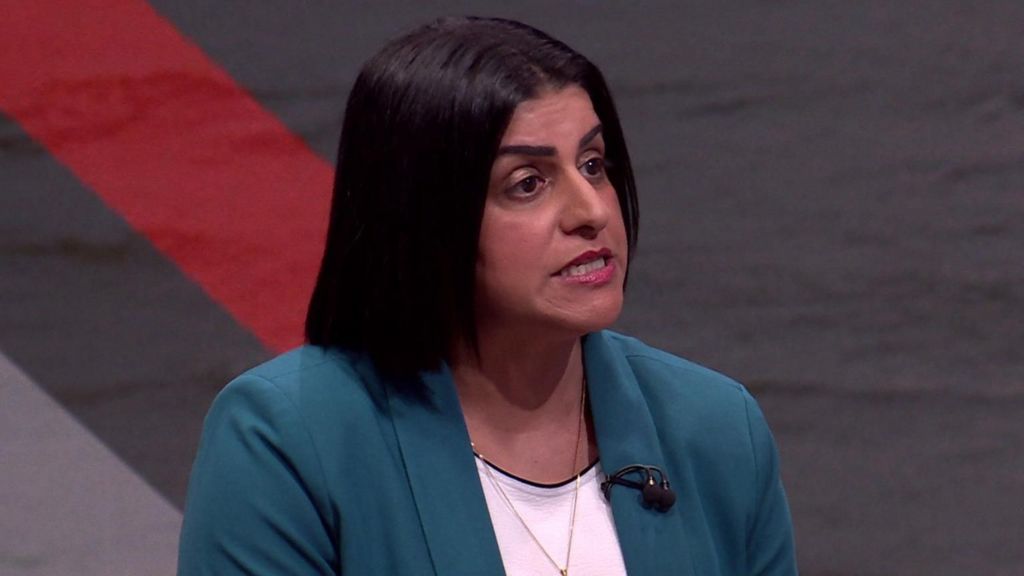
In a bold move to address the growing crisis of illegal migration, UK Home Secretary Shabana Mahmood has announced a comprehensive overhaul of the country’s asylum system. The reforms, set to be unveiled on Monday, include extending the waiting period for permanent settlement from five to 20 years for those granted asylum. Additionally, refugee status will be subject to regular reviews, and individuals from countries deemed safe will be required to return home. Mahmood described her initiative as a ‘moral mission,’ emphasizing the need to restore public trust in the asylum system. The measures aim to deter illegal migration by making the UK a less attractive destination, particularly targeting small boat crossings and asylum claims. As part of the strategy, the UK will also suspend visa issuance to citizens of Angola, Namibia, and the Democratic Republic of Congo unless their governments improve cooperation on removals. Critics, including Shadow Home Secretary Chris Philp and Liberal Democrat leader Sir Ed Davey, have questioned the effectiveness of the reforms, with Philp advocating for immediate deportation of illegal migrants and Davey calling for the right to work for asylum seekers. Mahmood defended her approach, citing the need to address ‘unfair’ conditions that she claims favor asylum seekers over UK citizens. The reforms draw inspiration from Denmark’s stringent asylum policies, which have been praised for their effectiveness in curbing illegal migration. However, the proposals have faced backlash from some Labour MPs and refugee advocacy groups, who argue that the extended waiting period will leave asylum seekers in prolonged uncertainty. Despite the controversy, Mahmood remains steadfast in her commitment to tackling illegal migration, which she believes is ‘tearing the country apart.’
分类: politics
-
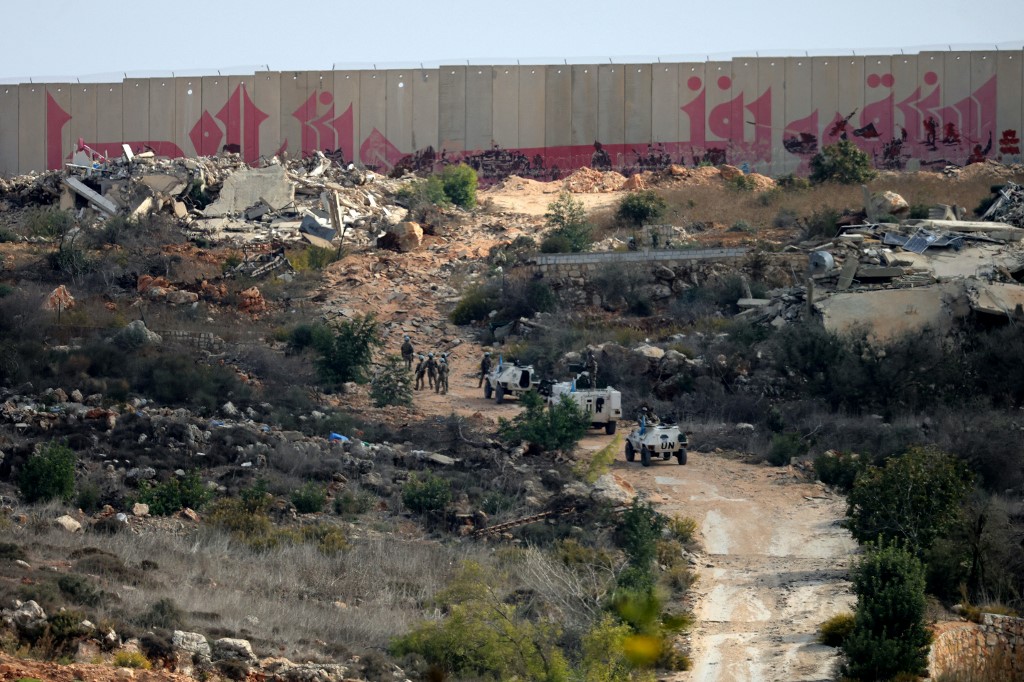
Lebanon to complain to UN over Israel wall-building in south
The Lebanese government is preparing to lodge a formal complaint with the United Nations over allegations that Israel is constructing a wall in occupied territory along the southern border. The United Nations Interim Force in Lebanon (Unifil) reported on Friday that the Israeli army had built walls near the UN-demarcated Blue Line in south Lebanon. While Israel has denied these claims, Lebanese President Joseph Aoun directed officials on Sunday to submit an urgent complaint to the UN Security Council, accusing Israel of building a concrete wall that encroaches on Lebanese territory beyond the Blue Line.
Unifil’s recent investigations revealed that a concrete T-wall erected by the Israeli army southwest of Yaroun crossed the Blue Line, making over 4,000 square meters of Lebanese land inaccessible to its citizens. An Israeli military spokesperson countered these allegations, asserting that the wall does not cross the Blue Line and that its construction began in 2022 as part of measures to strengthen the northern border following the Gaza conflict.
Tensions remain high nearly a year after the ceasefire between Israel and Hezbollah, with Israeli forces continuing near-daily bombardments in southern Lebanon and occupying at least five areas. Since November 27, 2024, over 300 people, including more than 100 civilians, have been killed in Israeli strikes. The situation underscores the ongoing volatility in the region and the challenges of maintaining peace along the contested border.
-
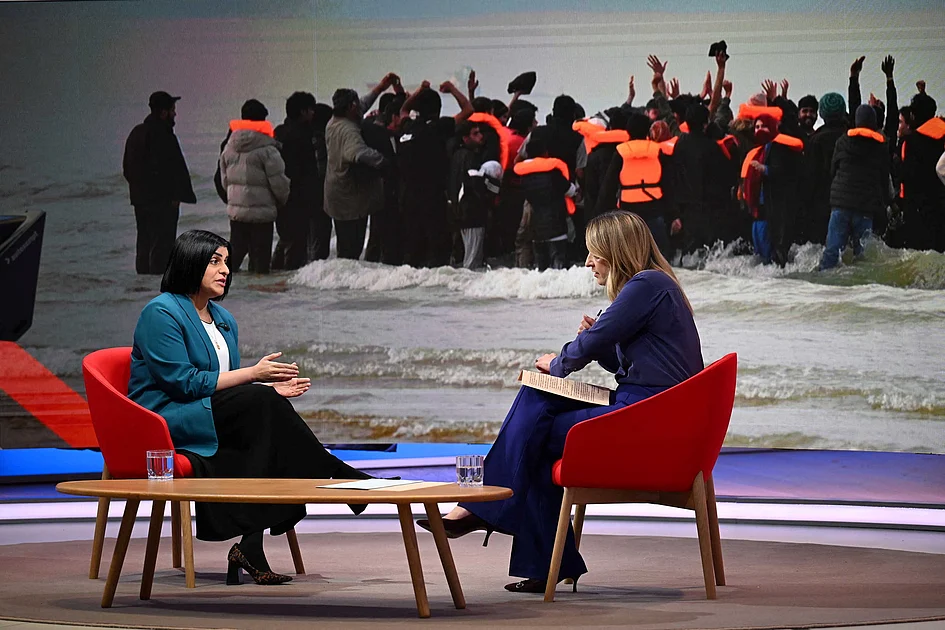
UK to cut protections for refugees under asylum ‘overhaul’
The UK government has unveiled a sweeping overhaul of its asylum system, aiming to drastically reduce protections for refugees and curb irregular immigration. Announced by the Labour government late Saturday, the new measures are modeled on Denmark’s stringent asylum policies and include cutting the length of refugee status from five years to 30 months, subject to regular reviews. Refugees will also face a 20-year wait before applying for long-term residency, up from the current five-year period. Additionally, automatic benefits for asylum seekers will be revoked, with support becoming discretionary and contingent on factors such as employment status and criminal record. Interior Minister Shabana Mahmood described the reforms as the ‘largest overhaul of asylum policy in modern times,’ intended to make the UK less attractive to irregular migrants and facilitate the removal of those already in the country. The move comes amid record-high asylum claims, with 111,000 applications recorded in the year to June 2025. The government is also under pressure to address the surge in Channel crossings, which have fueled the popularity of the anti-immigrant Reform UK party. Critics, including Refugee Council CEO Enver Solomon, argue that the measures will not deter migration and could harm refugees seeking safety and stability in the UK.
-
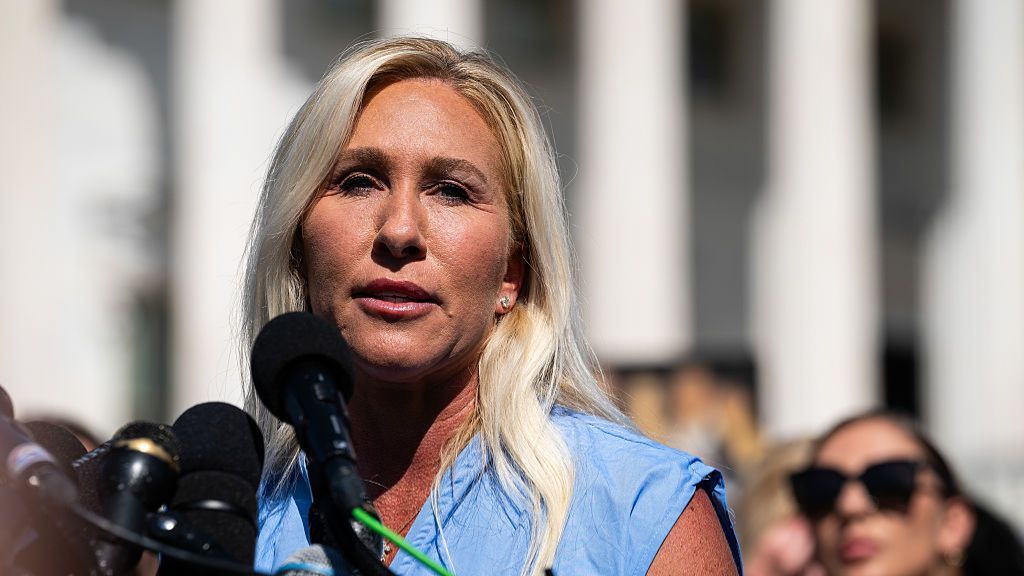
Marjorie Taylor Greene doubles down on Epstein files amid fallout with Trump
Republican Congresswoman Marjorie Taylor Greene has intensified her campaign for the public release of all documents related to Jeffrey Epstein, despite facing sharp criticism from former President Donald Trump. Speaking on CNN’s ‘State of the Union’ on Sunday, Greene expressed her continued support for Trump but voiced strong disagreement with his efforts to suppress the Epstein files. She argued that Trump’s harsh rhetoric, including labeling her a ‘traitor,’ not only fuels political discord but also endangers her safety. ‘Words like that can radicalize people against me and put my life at risk,’ Greene told host Dana Bash. The rift between Greene and Trump has deepened in recent weeks, particularly after Greene urged the Department of Justice to disclose all Epstein-related materials. The tension escalated on Friday when Trump condemned Greene on Truth Social, calling her a ‘wacky’ and ‘ranting lunatic’ who ‘complains’ incessantly. Although Trump’s post did not explicitly mention the Epstein files, Greene asserted that their fallout stems from her push for transparency. The House is set to vote this week on the Epstein Files Transparency Act, which aims to compel the Justice Department to release all unclassified records, documents, and investigative materials tied to Epstein. Republican Representative Thomas Massie revealed that up to 100 GOP members may support the bill. Greene emphasized the need for accountability, stating, ‘The country deserves transparency, and no one should be shielded from justice, regardless of their wealth or power.’ She also called for unity in American politics, urging an end to divisive rhetoric. This marks a notable shift for Greene, who has previously been criticized for promoting conspiracy theories and inflammatory social media posts. When confronted by Bash about her past actions, Greene reiterated her apologies and highlighted her commitment to forgiveness as part of her Christian faith.
-

Ecuadorians vote on whether to allow foreign military bases amid rising crime
QUITO, Ecuador — In a pivotal national referendum held on Sunday, Ecuadorians cast their votes on a series of proposals that could reshape the country’s constitutional framework and security policies. The referendum, comprising four key questions, sought public approval for amending the constitution to permit foreign military bases on Ecuadorian soil and to initiate a process that could lead to the drafting of a new constitution. This comes as Ecuador grapples with escalating violent crime, driven by its role as a major transit hub for cocaine produced in neighboring Colombia and Peru. Drug trafficking gangs have targeted presidential candidates, mayors, and journalists in their struggle for control over ports and coastal cities. President Daniel Noboa, a conservative leader advocating for a tough stance on crime, has been a vocal proponent of the referendum. In recent weeks, Noboa has engaged in discussions with U.S. officials, including Homeland Security Secretary Kristi Noem, to explore regional security and migration cooperation. He also showcased a military base along Ecuador’s coast that could potentially host U.S. troops. ‘International cooperation is the only way to dismantle these transnational criminal networks,’ Noboa stated after casting his vote. The referendum also included proposals to reduce public funding for political parties and to decrease the number of legislators in the National Assembly from 151 to 73. While Noboa argues these measures are essential to curb excessive government spending, critics warn they could undermine political representation, particularly in low-income communities. Additionally, voters were asked whether Ecuador should establish a constituent assembly to rewrite the constitution, a move Noboa believes is necessary to strengthen crime-fighting tools and border control. However, opponents fear a new constitution could weaken legislative and judicial oversight of the executive branch. Voting is compulsory in Ecuador for individuals under 64, with nearly 14 million registered voters participating in this historic decision.
-
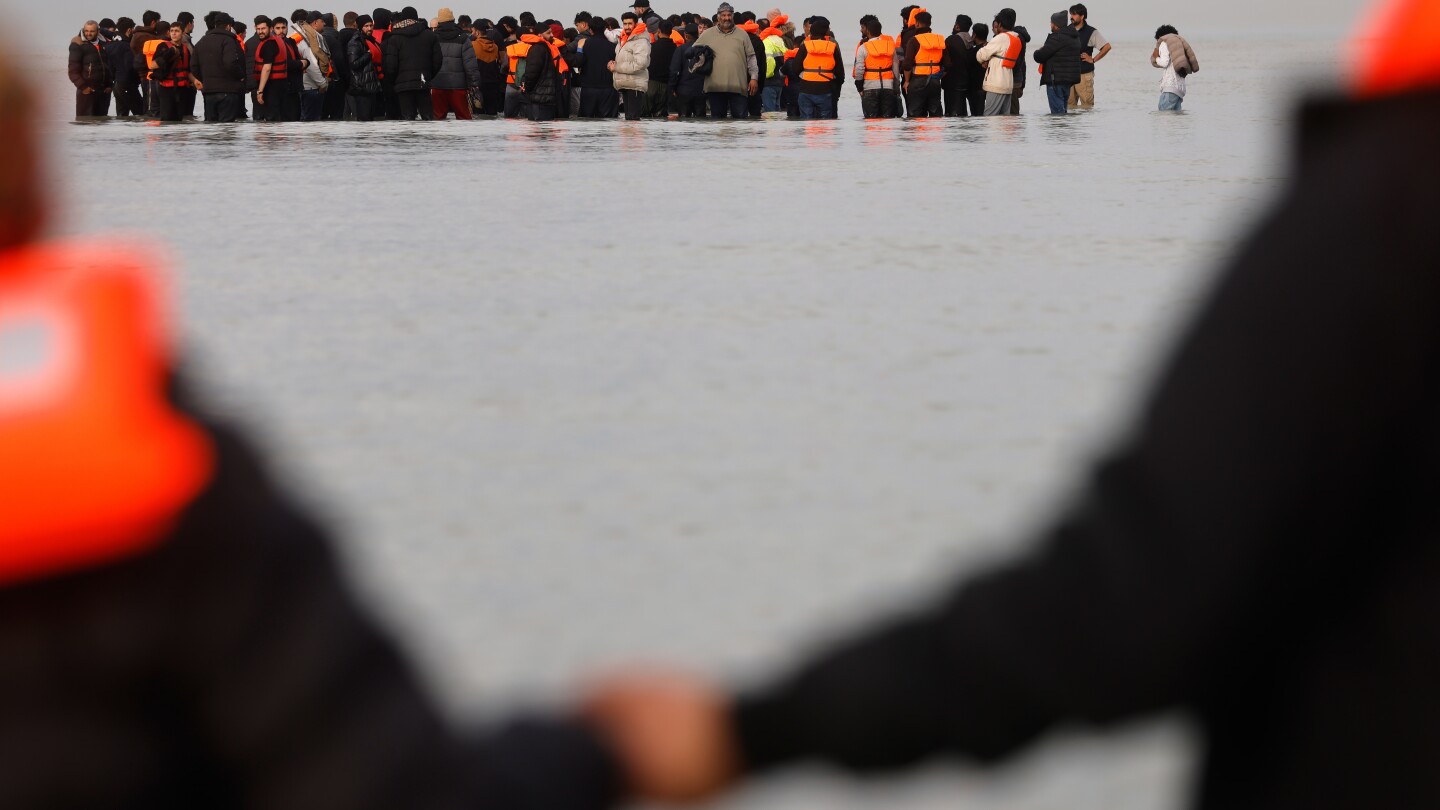
UK government poised to overhaul its asylum system as a political storm brews over migration
The British government is set to introduce a series of stringent asylum reforms, inspired by Denmark’s model, aimed at reducing illegal immigration and addressing the political controversy surrounding unauthorized Channel crossings. Home Secretary Shabana Mahmood will unveil the policy changes in the House of Commons on Monday, marking the latest effort to deter asylum seekers and streamline the removal of those deemed ineligible for refuge. Mahmood described the initiative as a moral imperative to secure borders and heal a nation divided over immigration, a contentious issue that has bolstered the hard-right Reform UK Party. Despite her migrant heritage, Mahmood denied that the Labour Party is adopting far-right rhetoric, emphasizing the need to address systemic flaws and prevent abuse of the asylum system. The reforms include revoking the UK’s legal obligation, established under EU law in 2005, to support asylum seekers, potentially stripping them of housing and financial allowances. Benefits may also be withheld from individuals who fail to work legally or violate laws. Additionally, refugee status will undergo regular reviews to assess the possibility of safe repatriation. The government plans to establish safer pathways for asylum claims, reducing the reliance on perilous Channel crossings. Critics, including Conservative MP Chris Philp, argue that the reforms are insufficient and lack the impact of the previously abandoned Rwanda policy. Philp dismissed the measures as superficial, likening them to ‘rearranging deck chairs on the Titanic.’ The Home Office, however, highlighted Denmark’s success in reducing asylum applications and removing 95% of ineligible applicants as a model for the UK’s new approach. Denmark, once a refuge for migrants, has faced international criticism for its restrictive policies amid Europe’s broader struggle with mass migration driven by conflict, famine, and poverty.
-

Aircraft carrier arrives in the Caribbean in major buildup near Venezuela
The USS Gerald R. Ford, the U.S. Navy’s most advanced aircraft carrier, arrived in the Caribbean Sea on Sunday, marking a significant escalation in the Trump administration’s counterdrug operations in South America. The deployment, part of “Operation Southern Spear,” brings the total number of U.S. troops in the region to approximately 12,000, supported by nearly a dozen Navy ships. The carrier strike group, which includes fighter jets and guided-missile destroyers, transited the Anegada Passage near the British Virgin Islands, according to a Navy statement. While the administration frames the buildup as a mission to combat drug trafficking, critics view it as a pressure tactic against Venezuelan President Nicolás Maduro. Since September, U.S. strikes have killed at least 80 people in 20 attacks on boats allegedly involved in drug transport. Rear Adm. Paul Lanzilotta, commander of the Ford’s strike group, emphasized the mission’s focus on protecting U.S. security against “narco-terrorism” in the Western Hemisphere. However, the administration has yet to provide evidence linking those killed to drug cartels or terrorist organizations. President Trump has hinted at expanding military action beyond maritime strikes, including potential land operations. The deployment has drawn criticism from regional leaders, the U.N. human rights chief, and U.S. lawmakers, who question the legal basis and transparency of the strikes. Meanwhile, Venezuela has mobilized troops and civilians in anticipation of possible U.S. aggression. Experts debate whether the Ford’s presence is a strategic deterrent or a provocative move, with some arguing it is ill-suited for counterdrug efforts but effective as a tool of intimidation. Elizabeth Dickinson of the International Crisis Group noted that the deployment has heightened anxieties across Latin America, with many watching closely to gauge the U.S. willingness to use military force.
-
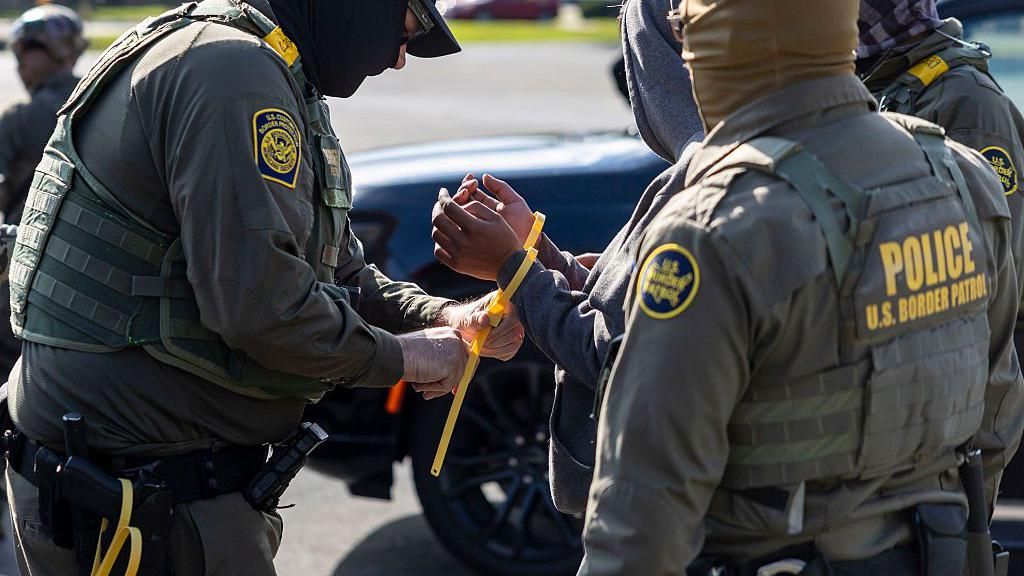
Federal agents launch immigration crackdown in city of Charlotte
The Department of Homeland Security (DHS) has launched ‘Operation Charlotte’s Web,’ a targeted immigration enforcement initiative in Charlotte, North Carolina, as part of President Donald Trump’s broader crackdown on illegal immigration. The operation, announced on Saturday, aims to apprehend ‘criminal illegal aliens’ in the Democratic-led city. However, local officials, including Mayor Li Vyles, have condemned the operation, stating it has instilled ‘unnecessary fear and uncertainty’ among residents. Since Trump’s return to office, his administration has deployed federal agents to major cities like Washington DC, Los Angeles, and Chicago, fulfilling his pledge to implement ‘the largest deportation programme’ in U.S. history. Tricia McLaughlin, DHS Assistant Secretary, emphasized the deployment of law enforcement to Charlotte to ‘ensure Americans are safe and public safety threats are removed.’ Internal government documents obtained by CBS News suggest that armored vehicles and special operations teams may be involved in the operation. Reports from The Charlotte Observer detail harrowing scenes, including church members fleeing into the woods as Border Patrol agents conducted arrests without proper identification or questioning. Inside the church, women and children wept, fearing their loved ones had been taken. A 15-year-old witness expressed disbelief, stating, ‘We thought church was safe and nothing gonna happen.’ Local bakery owner Manolo Betancur told NBC News that ‘a lot of children have lost their parents’ since the raids began. The DHS justified the operation by citing North Carolina’s failure to honor nearly 1,400 Immigration and Customs Enforcement (ICE) detainees, attributing their release to ‘sanctuary policies.’ While Charlotte is not a sanctuary city, it holds a ‘certified welcoming city’ designation, reflecting its commitment to immigration inclusion. The DHS defended the operation, asserting that ‘President Trump and Secretary [Kristi] Noem will step up to protect Americans when sanctuary politicians won’t.’ Charlotte, an ethnically diverse city with approximately 17% of its population born outside the U.S., faces ongoing uncertainty as the DHS has not disclosed the duration of the raids. Similar operations in Chicago and Los Angeles have drawn criticism for alleged excessive use of force. According to CBS, New Orleans is next on Trump’s list, with up to 200 agents potentially deployed to the city.
-
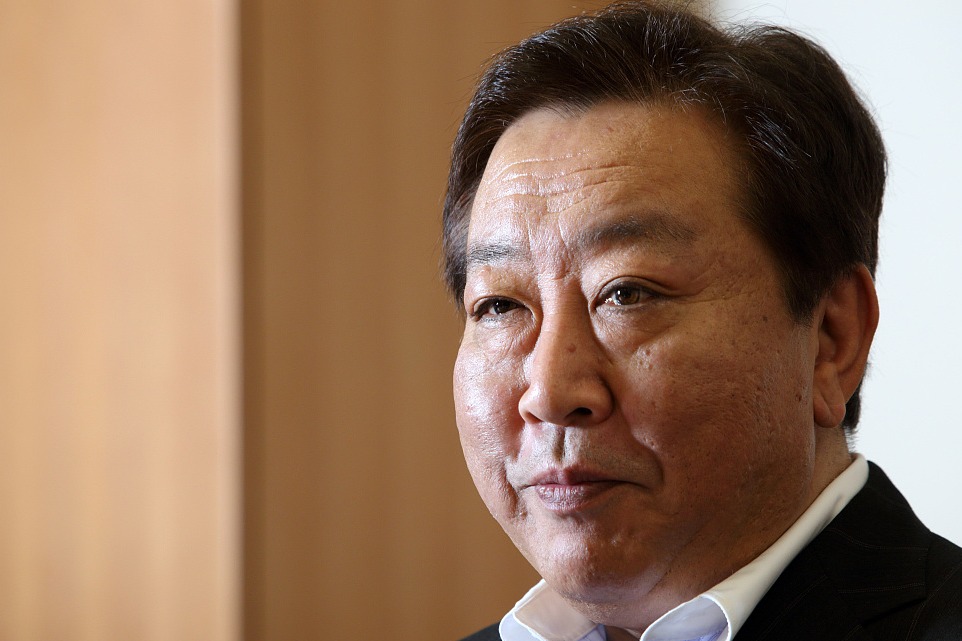
Japan’s main opposition party head urges gov’t to uphold non-nuclear principles
Yoshihiko Noda, leader of Japan’s main opposition party, the Constitutional Democratic Party of Japan (CDPJ), has called on the government to uphold the nation’s long-standing non-nuclear principles. This appeal comes amid reports that Prime Minister Sanae Takaichi is considering revising one of the Three Non-Nuclear Principles, specifically the prohibition on introducing nuclear weapons into Japanese territory. Noda, a former prime minister, emphasized Japan’s role in advocating for global nuclear abolition during a press conference in Kumamoto Prefecture. His comments followed Takaichi’s ambiguous stance on whether her defense policies would align with these principles during a recent Lower House Budget Committee hearing. The Three Non-Nuclear Principles, established in 1967 by then-Prime Minister Eisaku Sato, have been a cornerstone of Japan’s security policy. Any potential revision could mark a significant shift in the country’s defense strategy, likely sparking both domestic and international criticism. Noda has vowed to challenge Takaichi on this issue in upcoming Diet sessions.
-

Japanese protesters demand PM Takaichi’s resignation
In a significant display of public dissent, approximately 100 Japanese citizens gathered outside the Prime Minister’s official residence in Tokyo on Saturday evening, calling for the resignation of Prime Minister Sanae Takaichi. The protestors, armed with banners and chanting slogans such as ‘Takaichi step down’ and ‘Those who cannot conduct diplomacy are unfit to be prime minister,’ voiced their strong disapproval of Takaichi’s recent controversial statements regarding Taiwan. During a Diet meeting on November 7, Takaichi suggested that a potential military conflict involving Taiwan and the Chinese mainland could pose a ‘survival-threatening situation’ for Japan, potentially justifying the use of Japan’s Self-Defense Forces under the right of collective self-defense. Despite widespread criticism, Takaichi has refused to retract her comments, asserting that they align with the government’s longstanding position. In response, Chinese Ambassador to Japan Wu Jianghao met with Japan’s Vice-Minister for Foreign Affairs Takehiro Funakoshi to formally protest Takaichi’s remarks, underscoring the diplomatic tensions they have ignited.