
Texas Governor Greg Abbott has declared the Muslim Brotherhood and the Council on American-Islamic Relations (CAIR) as foreign terrorist organizations and transnational criminal entities. This designation, announced on Tuesday, prohibits these groups from acquiring or purchasing land within Texas. Abbott’s proclamation also empowers the state’s attorney general to initiate legal actions against these organizations.
分类: politics
-
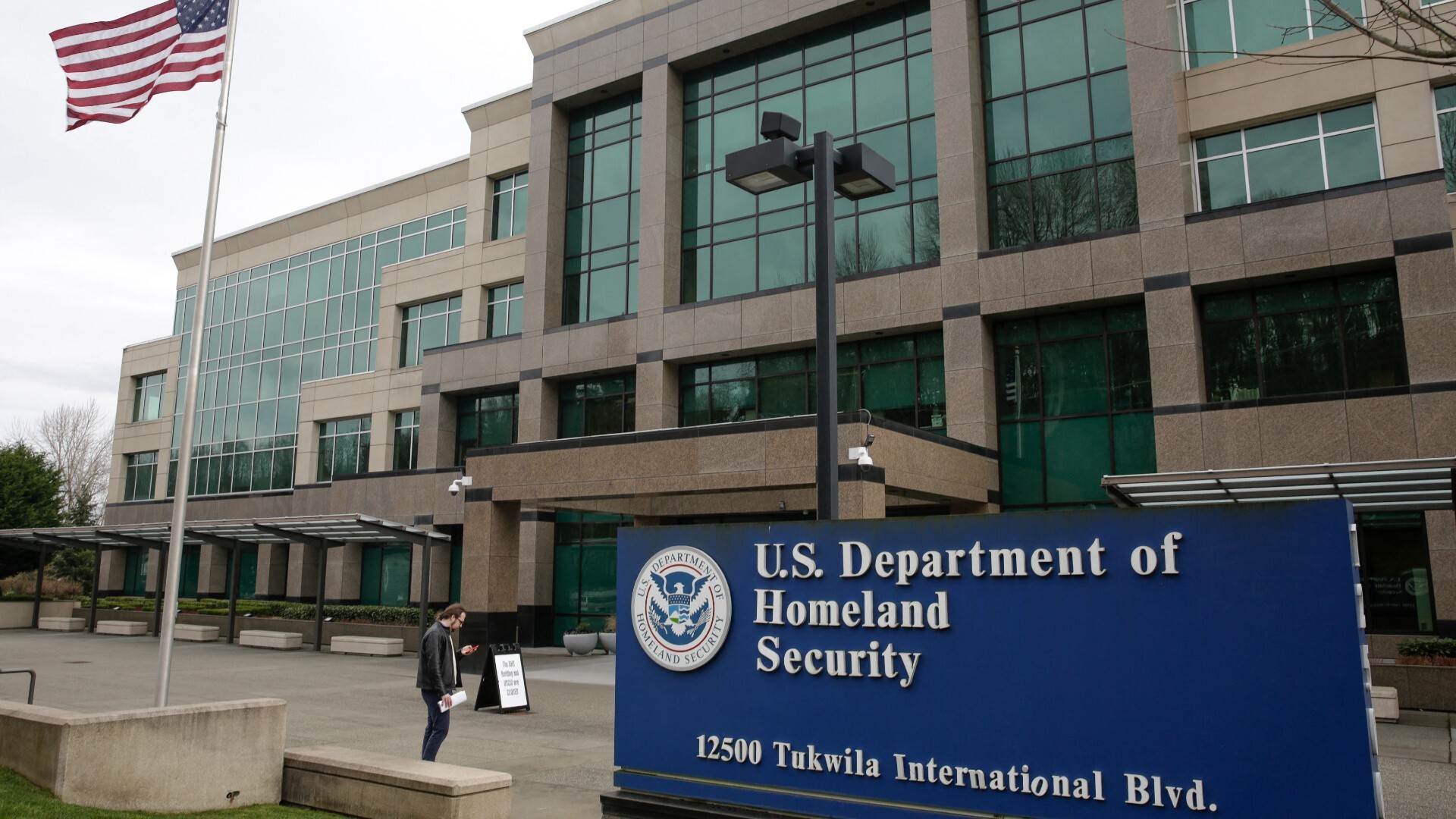
It may get harder to secure US green card if you come from a travel ban-listed country
The Trump administration is reportedly considering a new policy that would make it significantly harder for immigrants from countries listed under the existing travel ban to obtain U.S. permanent residency. This potential shift could impact green card approvals, asylum grants, and higher-tier long-term visas, according to internal documents from the Department of Homeland Security (DHS) obtained by The New York Times. The move aligns with the administration’s broader efforts to curb immigration, which have included crackdowns on undocumented immigrants, visa revocations, and increased application fees. Since President Trump took office in January 2017, these measures have already contributed to a 17 percent decline in foreign student enrollment at U.S. universities, the largest drop in a decade. The travel ban, initially implemented in 2017 and revised in June 2020, targets 12 countries: Afghanistan, Burma, Chad, the Republic of the Congo, Equatorial Guinea, Eritrea, Haiti, Iran, Libya, Somalia, Sudan, and Yemen. Nationals from Burundi, Cuba, Laos, Sierra Leone, Togo, Turkmenistan, and Venezuela face partial restrictions. The proposed policy would treat an applicant’s country of origin as a ‘negative factor’ in their immigration application, even if they are otherwise law-abiding and have undergone rigorous vetting. Critics, including a former staffer from U.S. Citizenship and Immigration Services (USCIS), have labeled the plan a ‘radical change’ and ‘absurd,’ arguing that applicants have already passed national security screenings by the time they apply for permanent residency. Jamal Abdi, president of the National Iranian American Council, has urged DHS to reconsider, citing federal laws that prohibit discrimination based on national origin. The revised travel ban, which has faced less public backlash than its predecessor, is considered more legally robust. While those already in the U.S. are exempt, individuals abroad must meet specific criteria to enter, such as holding a green card, preauthorized visa, or being an immediate family member of a U.S. citizen. Athletes participating in the World Cup or Summer Olympics are also exempt. However, increased scrutiny at ports of entry and directives from Secretary of State Marco Rubio could lead to visa revocations. The administration maintains that the ban and heightened vetting measures are necessary to address visa overstays, which it views as a national security risk. Immigration lawyers note that the current ban is likely to remain in effect, as the Supreme Court upheld the president’s authority to implement such measures in a 2017 ruling. Despite the challenges, some legal experts emphasize the importance of perseverance in navigating the U.S. immigration system.
-
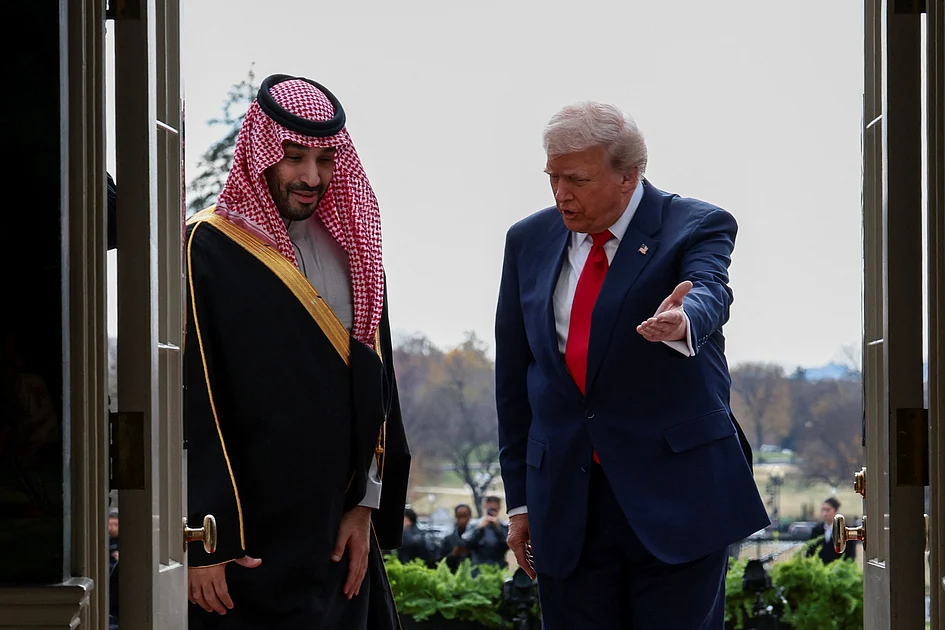
Watch: Trump receives Saudi prince with cannon fire, parade of horses at White House
In a display of diplomatic grandeur, U.S. President Donald Trump welcomed Saudi Crown Prince Mohammed bin Salman to the White House on Tuesday, November 18, 2025. The visit, marked by a ceremonial cannon salute, a military flypast featuring F-35 stealth fighters, and a parade of horses, underscored the deepening alliance between the United States and Saudi Arabia. The event also saw the presence of soccer icon Cristiano Ronaldo, adding a touch of star power to the occasion. Trump emphasized the significance of the bilateral relationship, describing Saudi Arabia as a ‘great ally’ and announcing the sale of F-35 jets to the kingdom, despite concerns from Israel and warnings about potential technological espionage by China. Additionally, the two leaders are expected to sign a framework for civilian nuclear cooperation, further cementing their strategic partnership. The Crown Prince’s visit also focused on securing advanced defense systems and high-tech chips to support Saudi Arabia’s AI ambitions. However, progress on normalizing relations with Israel remains stalled, with Riyadh insisting on progress toward a Palestinian state. The visit marks a pivotal moment in U.S.-Saudi relations, balancing strategic interests with human rights concerns, particularly in light of the 2018 murder of journalist Jamal Khashoggi.
-
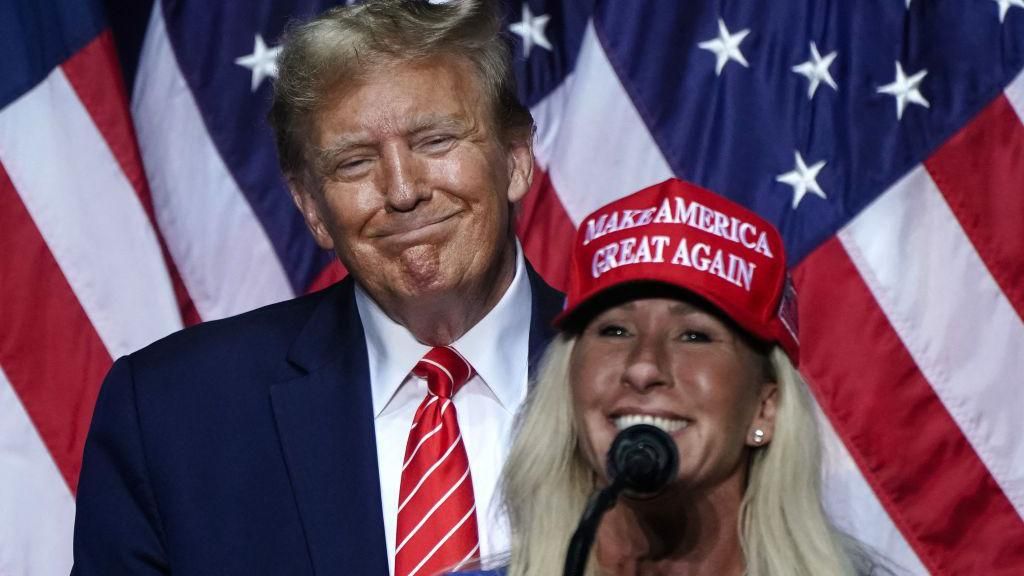
Epstein saga reveals Republican rifts – and the power of Trump’s base
The recent congressional vote to release the Jeffrey Epstein files has unveiled deep fractures within the Republican Party and tested President Donald Trump’s influence over his Make America Great Again (MAGA) base. After months of resistance, Trump reversed his stance, urging Republicans to support the release of the documents. This shift led to an overwhelming 427-1 vote in the House, marking a rare instance of Republican lawmakers pressuring the president into action. The saga has highlighted the growing power of the Republican grassroots, with many voters demanding transparency on the Epstein case. Congresswoman Marjorie Taylor Greene, a vocal critic of Trump’s initial opposition, claimed the issue had ‘ripped MAGA apart,’ signaling internal dissent within the movement. Despite Trump’s efforts to focus on other priorities, such as reducing tariffs on groceries, the Epstein controversy has overshadowed his agenda. The White House defended its actions, emphasizing its cooperation with investigations and support for victims. However, the episode has exposed potential rifts within the party, as seen in Trump’s failed attempt to influence Indiana’s redistricting process. While Trump remains the dominant figure in the GOP, the Epstein saga underscores the challenges he faces in maintaining unity and control.
-
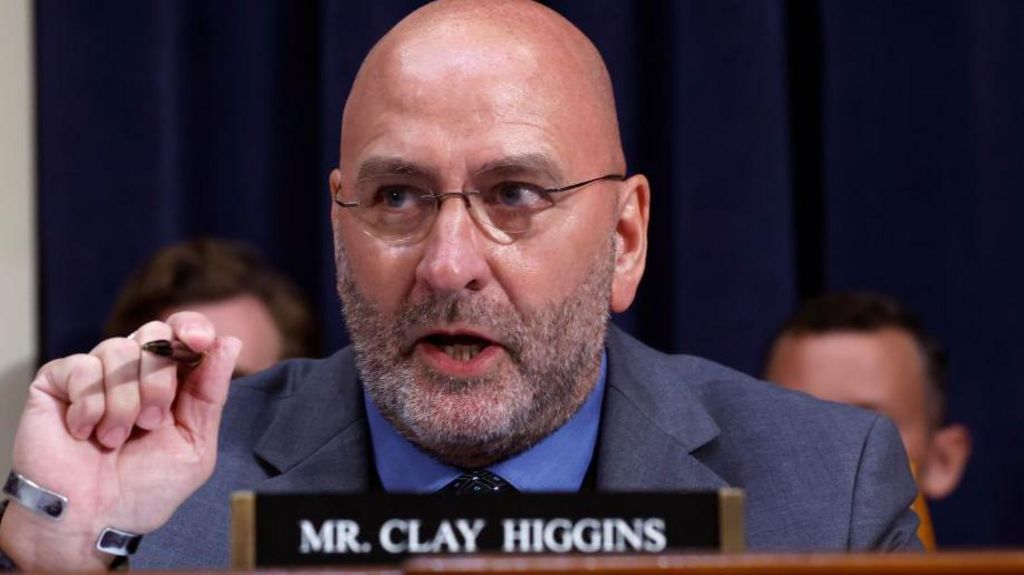
The only ‘no’ vote on releasing Epstein files
In a rare display of bipartisan unity, the US House of Representatives overwhelmingly passed a bill to release documents related to convicted sex offender Jeffrey Epstein. The legislation, which garnered a staggering 427-1 vote, saw nearly every Republican in the House voting in favor, with the sole dissenting vote coming from Louisiana Representative Clay Higgins. Higgins, a staunch conservative, argued that the bill compromised the privacy of Epstein’s victims and witnesses, stating on social media platform X that it ‘abandons 250 years of criminal justice procedure in America.’
The bill, which aims to shed light on the Epstein case, quickly gained momentum after President Donald Trump dropped his opposition to the vote. Hours after the House’s decision, the US Senate unanimously approved the legislation, paving the way for Trump’s signature. Higgins expressed willingness to support the bill if amended, but Senate Majority Leader John Thune indicated that changes were unlikely given the overwhelming support.
Higgins’ dissent is not unprecedented. Known for his controversial remarks and unorthodox stances, he has previously faced censure from his party for offensive comments about Haiti and its people. His career has been marked by controversy, including his resignation from the St. Landry’s Parish Sheriff’s Office in 2016 following backlash over an anti-crime video in which he threatened gang members while holding a rifle.
The passage of the Epstein bill represents a significant step toward transparency in a case that has captivated public attention for years. However, concerns remain about the potential impact on the privacy of individuals involved in the investigation. As the bill moves to the President’s desk, its implications for both justice and privacy continue to spark debate.
-
How the UN Gaza resolution creates new foreign ‘mandate’ over Palestinians
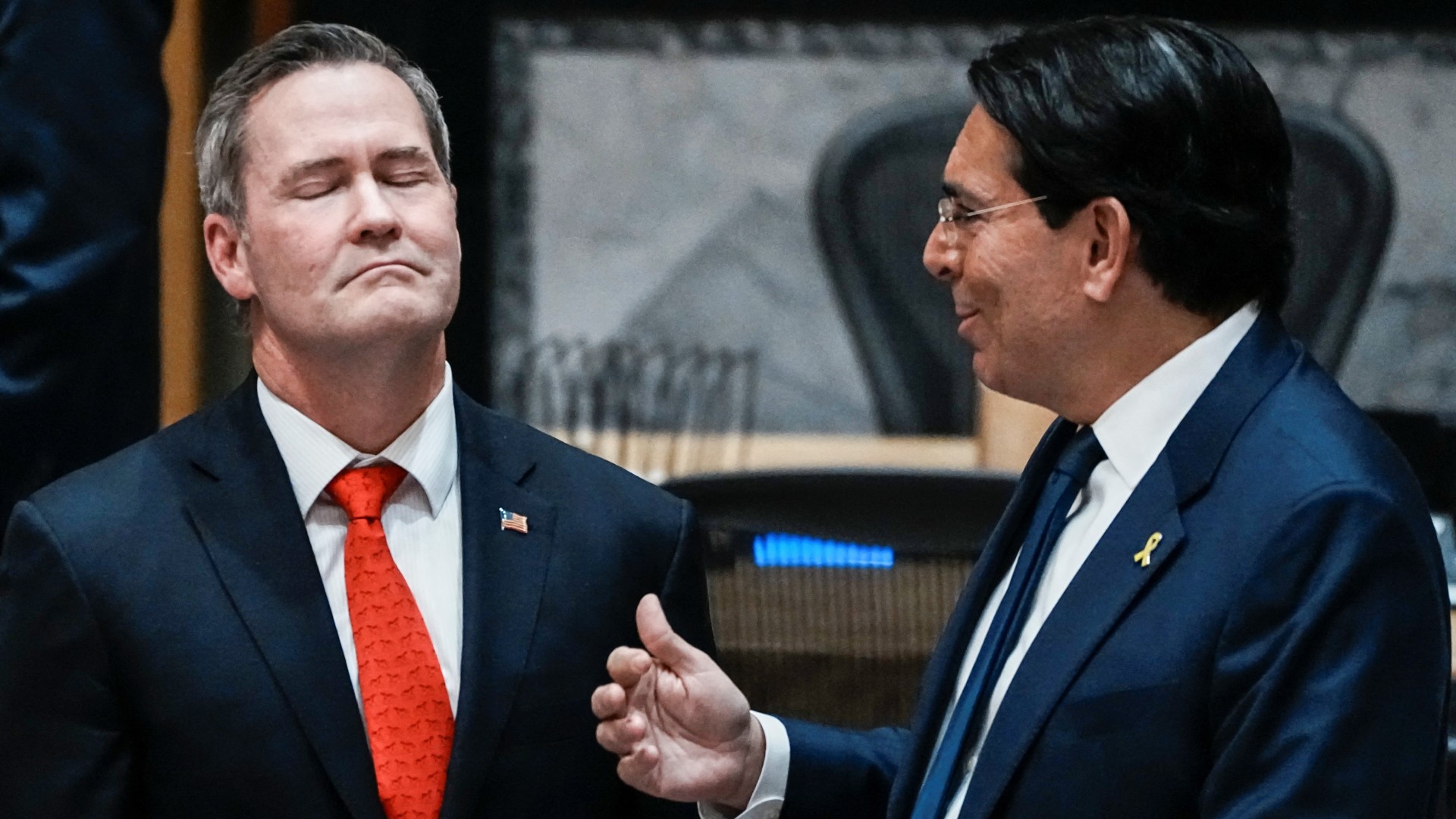
The United Nations Security Council has passed Resolution 2803, authorizing an International Stabilisation Force (ISF) to oversee a transitional period in Gaza. The resolution, approved with 13 votes in favor and two abstentions, places U.S. President Donald Trump at the helm of the Palestinian enclave, implementing his 20-point plan for its future. The term ‘mandate’ has sparked significant controversy, drawing parallels to colonial-era interventions in the region. Critics, including British-Israeli historian Avi Shlaim, argue that the resolution disregards the rights and aspirations of Palestinians, likening it to the British Mandate for Palestine post-World War I. The resolution outlines a two-year plan involving multinational troops, Palestinian technocrats, and a local police force, but has been met with resistance from Hamas and other Palestinian factions, though it is supported by the Palestinian Authority (PA). The resolution vaguely references Palestinian self-determination and statehood, contingent on certain conditions, which has been criticized as undermining international law. The plan has garnered backing from several Muslim-majority and Arab states, including Egypt, the UAE, Qatar, Saudi Arabia, Turkey, and Indonesia, while Russia and China abstained from the vote. The resolution’s implementation remains uncertain, particularly due to Hamas’s refusal to disarm, raising questions about the feasibility of international peacekeeping efforts in the region. Critics argue that the resolution perpetuates Israeli control over Gaza and represents a significant crisis for the United Nations, potentially damaging its credibility and effectiveness.
-
Saudi Crown Prince Mohammad bin Salman arrives at White House after seven-year hiatus
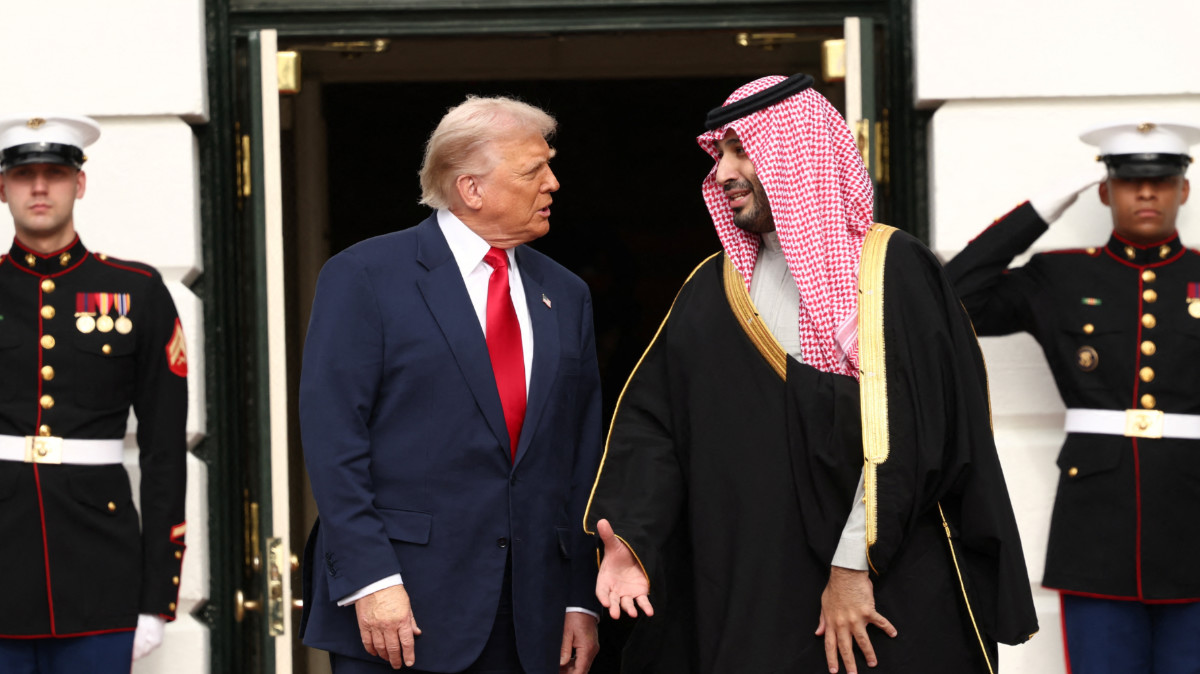
Saudi Arabia’s Crown Prince Mohammed bin Salman made a landmark visit to the White House on Tuesday, his first trip to the United States in seven years. The visit, marked by ceremonial grandeur including a color guard, military band, and fighter jet flyover, underscored the significance of the bilateral relationship. President Trump accompanied the Crown Prince on a televised tour of the newly inaugurated ‘Presidential Walk of Fame,’ highlighting the warmth of their engagement. This visit represents a dramatic shift in US-Saudi relations, particularly following the 2018 Jamal Khashoggi incident, which had strained ties. The Crown Prince’s agenda includes lobbying for US intervention in Sudan’s civil war and advancing Saudi Arabia’s Vision 2030 economic transformation. Key discussions revolve around defense deals, including the potential sale of F-35 fighter jets and AI-supported drones, as well as access to US civilian nuclear technology. Saudi Arabia aims to localize its defense industry with US assistance, moving beyond mere arms procurement. The visit also highlights Saudi Arabia’s ambition to position itself as a hub for AI and renewable energy, leveraging its vast fossil fuel and solar resources. Despite budgetary constraints from mega-projects like Neom, Saudi Arabia remains committed to securing cutting-edge US technology. The Crown Prince’s push for uranium enrichment, however, has raised concerns within the US government. The visit underscores Saudi Arabia’s strategic pivot to diversify its partnerships and assert itself as a regional power, while navigating complex geopolitical dynamics involving Israel, China, and Iran.
-

What to know about the F-35 fighter jet that Trump is selling to Saudi Arabia
In a significant move, President Donald Trump has approved the sale of the United States’ most advanced fighter jet, the F-35, to Saudi Arabia. This decision comes despite concerns that China, Saudi Arabia’s top trading partner, could potentially access the jet’s cutting-edge American technology. The agreement was reaffirmed during Saudi Crown Prince Mohammed bin Salman’s recent visit to Washington.
-
Congress passes bill to release Epstein files, sending to Trump’s desk
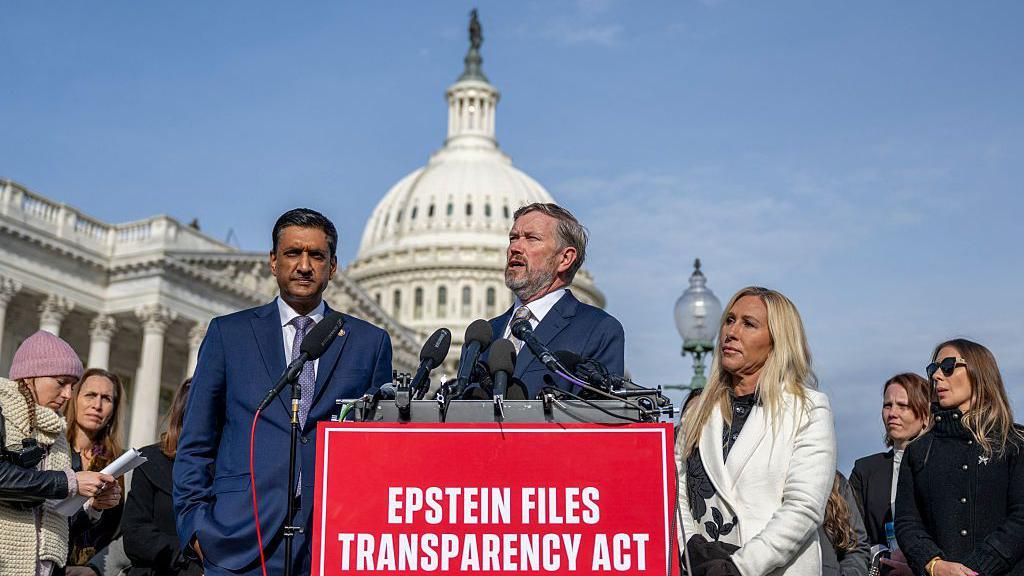
In a rare bipartisan move, both chambers of the U.S. Congress have unanimously agreed to compel the Department of Justice to release its extensive files on Jeffrey Epstein, the disgraced financier and convicted sex offender. The House of Representatives passed the measure with an overwhelming 427-1 vote, while the Senate expedited the process through unanimous consent, bypassing a formal vote. This decision follows President Donald Trump’s unexpected reversal of his stance, urging Congress to disclose the records after facing public pressure from his supporters. Trump’s ties to Epstein resurfaced last week when over 20,000 pages of documents, some referencing the president, were released. The White House has denied any wrongdoing. Republican Clay Higgins of Louisiana was the sole dissenter in the House, expressing concerns about potential harm to innocent individuals. The bill, now headed to Trump’s desk for his expected signature, mandates Attorney General Pam Bondi to release all unclassified materials related to Epstein and his accomplice Ghislaine Maxwell within 30 days. However, Bondi retains the authority to withhold information that could jeopardize ongoing investigations or reveal victims’ identities. Epstein, who died in prison in 2019, was accused of sex trafficking and had previously been convicted of soliciting prostitution from a minor. The push for transparency was spearheaded by Republican Thomas Massie and Democrat Ro Khanna, who introduced the legislation. Massie faced criticism from Trump but remained steadfast, accusing opponents of protecting pedophiles. Marjorie Taylor Greene, another Republican advocate for the release, clashed with Trump, labeling him a ‘traitor’ for his reluctance. Survivors of Epstein’s abuse, including Annie Farmer, have condemned the secrecy, calling it an ‘institutional betrayal’ that allowed further harm. The controversy has sparked significant political fallout, with some viewing it as a threat to Trump’s MAGA movement.
-
Germany’s Merz under fire in Brazil for his comments on Amazon host city of COP30
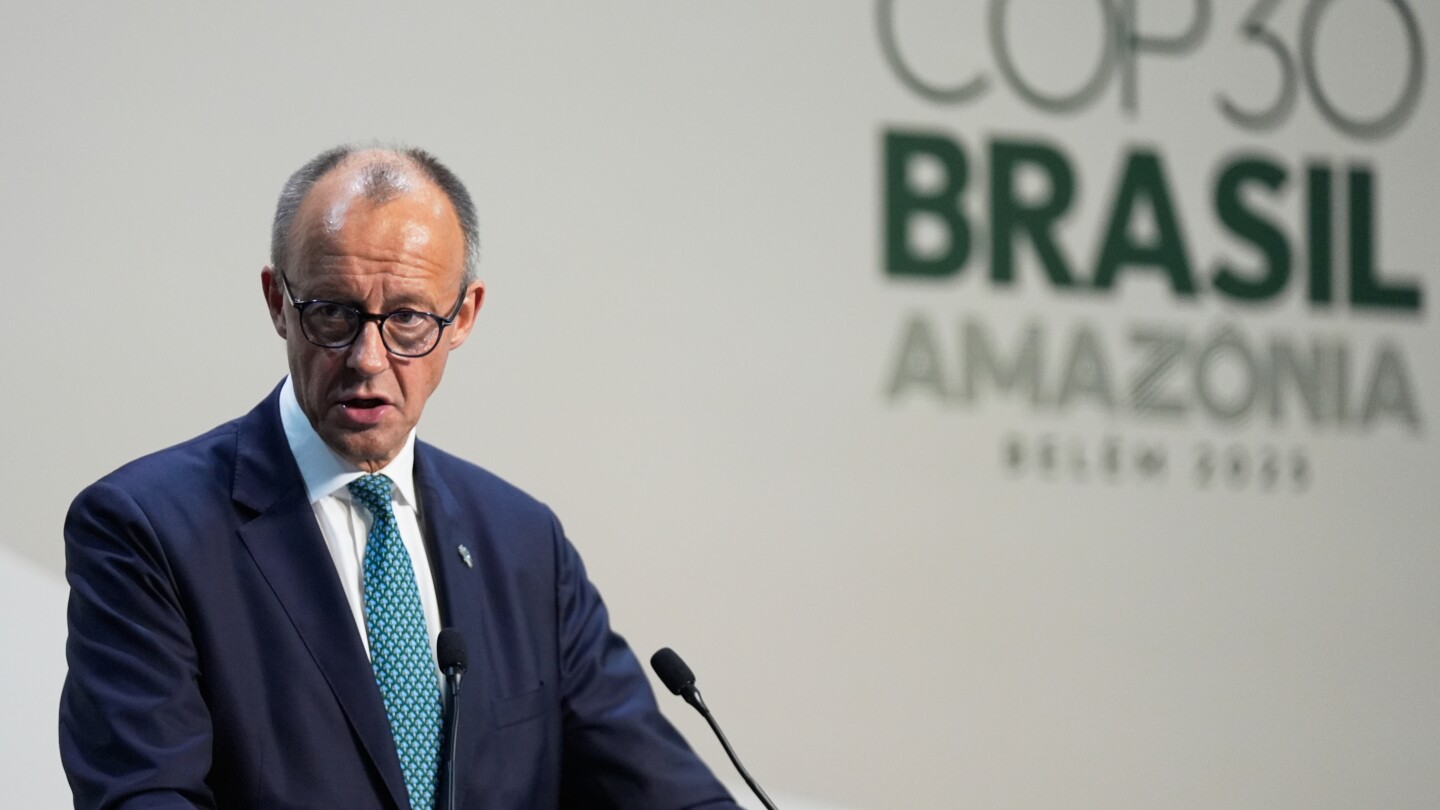
Brazilian authorities have strongly criticized recent comments made by Germany’s Chancellor Friedrich Merz, who appeared to disparage Belem, the host city of the United Nations’ Climate Summit in the Amazon rainforest. President Luiz Inácio Lula da Silva, Para State Governor Helder Barbalho, Belem Mayor Igor Normando, and several lawmakers have publicly rebuked Merz for his remarks, which were made during a trade conference in Berlin after his visit to Brazil in early November. Merz expressed relief at returning to Germany, describing it as one of the world’s most beautiful countries and implying dissatisfaction with his time in Belem. Brazilian leaders responded with a mix of humor and sharp criticism, urging Merz to appreciate the cultural and environmental richness of the region. President Lula suggested that Merz should have explored Belem’s vibrant culture, cuisine, and nightlife to truly understand its value. Meanwhile, Governor Barbalho accused Merz of prejudice, while Mayor Normando emphasized the warmth and respect Belem extends to all visitors. The controversy has sparked broader discussions about international cooperation on climate issues, particularly given Germany’s role as a key donor to the Amazon Fund, which supports deforestation prevention. Despite the diplomatic tensions, Brazilian officials reaffirmed their commitment to fostering positive relations with Germany while defending their nation’s cultural and environmental heritage.