
In a significant development, Italy’s highest appeals court has ruled that Serhiy Kuznetsov, a former Ukrainian military officer suspected of involvement in the 2022 Nord Stream pipeline sabotage, should be extradited to Germany. Kuznetsov faces charges of anti-constitutional sabotage for allegedly coordinating and leading a group that planted explosives on the pipelines beneath the Baltic Sea. Despite the lack of disclosed evidence, the case has strained relations between Ukraine and Germany, the latter being Ukraine’s largest military aid provider in Europe. Kuznetsov’s lawyer, Nicola Canestrini, argued that his client feels like a ‘scapegoat’ and expressed disappointment over the Ukrainian government’s silence on the matter. Kuznetsov was arrested in northern Italy in August 2023 and is set to be transferred to Germany under police escort. Meanwhile, another Ukrainian suspect, Volodymyr Zhuravlyov, was detained in Poland but was not extradited after a court deemed his actions as self-defense against Russia’s invasion. The case continues to spark debate, with many Ukrainians viewing the pipeline’s destruction as a heroic act against Russia, while Germany pursues prosecution, complicating its alliance with Ukraine.
分类: politics
-
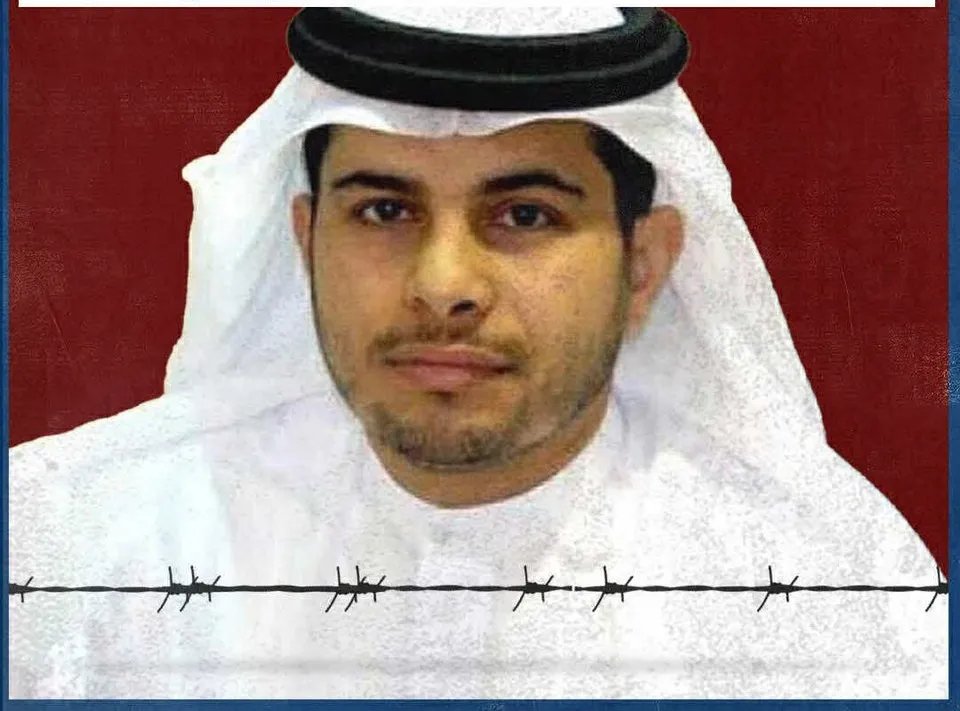
Fears grow Emirati dissident forcibly disappeared in Syria could be extradited to UAE
The recent abduction of Jassem Rashid al-Shamsi, an Emirati dissident and political activist, near Damascus has raised alarm among his family and human rights organizations. Shamsi, a former UAE government official, was seized by Syrian security forces on November 6 while traveling to the Damascus suburb of Ein Tarma. His wife, who was present during the incident, reported that armed men in black took him without presenting a judicial warrant or stating any charges. She has since been denied access to her husband and fears he may be forcibly extradited to the UAE, where he faces a life sentence on terrorism-related charges.
Shamsi was previously imprisoned during the UAE’s notorious ‘UAE 94’ trial in 2013, which targeted activists, lawyers, and academics advocating for democratic reforms. The trial was widely criticized as unfair, with defendants accused of plotting to overthrow the government—a charge they denied. In December 2023, Shamsi was implicated in the ‘UAE 84’ case, leading to a life sentence in July 2024.
Human rights groups, including the Emirates Detainees Advocacy Centre (EDAC) and the Arab Organisation for Human Rights in the UK (AOHR UK), have condemned Shamsi’s disappearance as a violation of international law. AOHR UK accused Syria of acting on behalf of the UAE in a case of ‘transnational repression.’ Alkarama, a Swiss-based NGO, warned that extraditing Shamsi to the UAE would breach Syria’s obligations under the Convention against Torture.
Mohammed bin Saqr Al Zaabi, a former UAE judicial advisor, questioned the legality of Shamsi’s arrest, noting that he had legally resided in Syria for ten months without prior issues. The Syrian government has yet to comment on the case, leaving Shamsi’s fate uncertain and intensifying concerns over his safety and the broader implications for political exiles in the region.
-
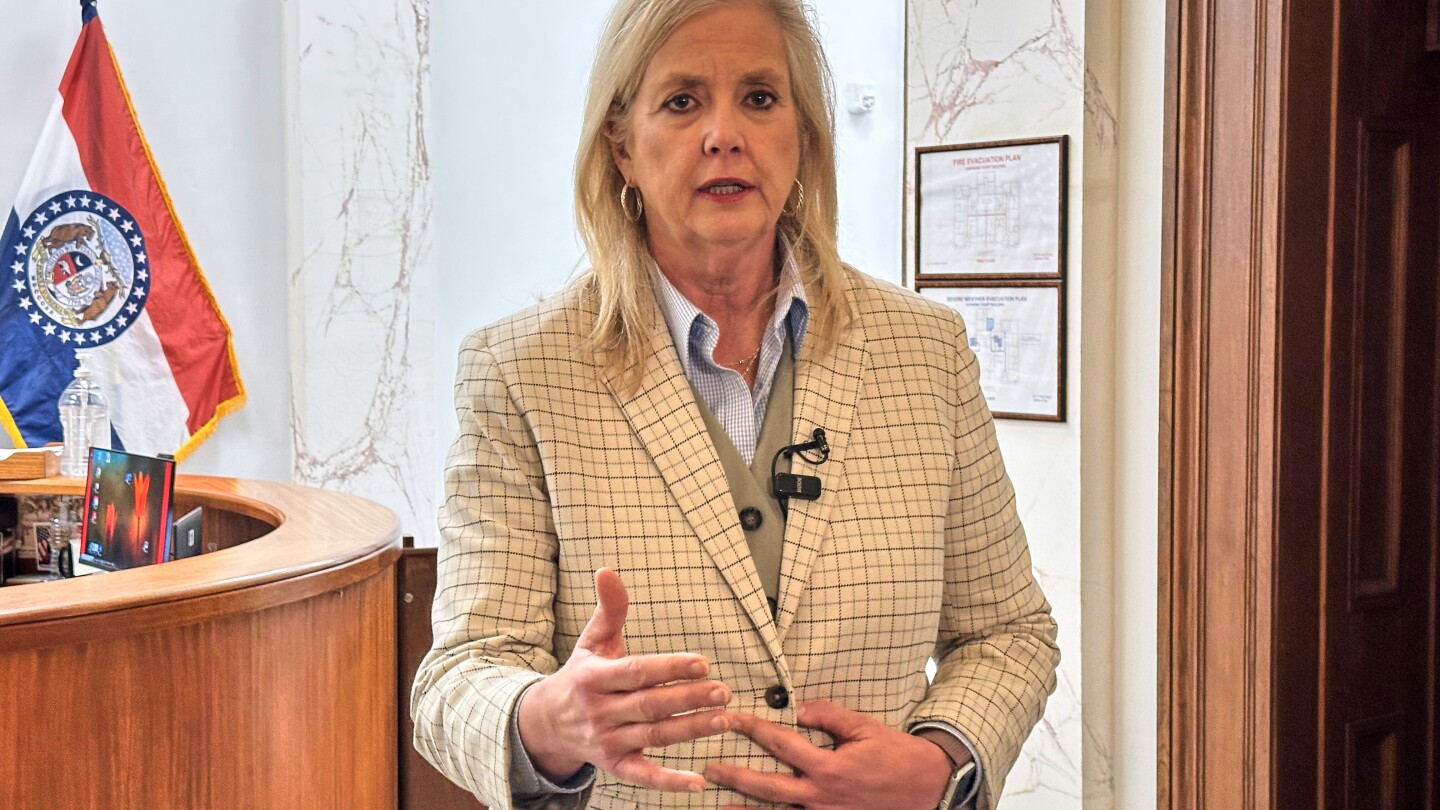
Missouri seeks federal help in pressing China for $25 billion in COVID damages
Missouri has intensified its efforts to seize Chinese government-owned assets in the United States, seeking assistance from the Trump administration to enforce a $25 billion court judgment related to the COVID-19 pandemic. State Attorney General Catherine Hanaway announced on Wednesday that Missouri has requested the U.S. State Department to formally notify China of its intent to pursue assets with full or partial Chinese government ownership to satisfy the judgment. This legal action stems from a lawsuit accusing China of hoarding personal protective equipment (PPE) during the early stages of the pandemic, allegedly causing harm to Missouri and its residents. A federal judge ruled in favor of Missouri earlier this year after China refused to participate in the trial, dismissing the lawsuit as “very absurd” when it was initially filed in 2020. China’s Ministry of Foreign Affairs has consistently rejected the ruling, asserting that its pandemic-related actions are not subject to U.S. jurisdiction. Legal experts have expressed skepticism about Missouri’s ability to collect on the judgment, citing federal laws that generally protect foreign nations from lawsuits in U.S. courts. Hanaway acknowledged the complexity of the process, stating that Missouri is compiling a list of Chinese properties that could be targeted, including those wholly or partially owned by the Chinese government. Liu Pengyu, spokesperson for the Chinese Embassy in Washington, condemned the lawsuit as a politically motivated and baseless legal maneuver, emphasizing China’s opposition to such actions. The State Department has yet to respond to Missouri’s request. The case has followed an unusual legal trajectory, with an appeals court allowing the PPE hoarding allegation to proceed after an initial dismissal in 2022. The judgment includes tripled damages and interest, reflecting Missouri’s estimated losses. The lawsuit was originally filed by former Attorney General Eric Schmitt, a Trump ally, and has since been inherited by Hanaway, who was appointed by Republican Governor Mike Kehoe.
-
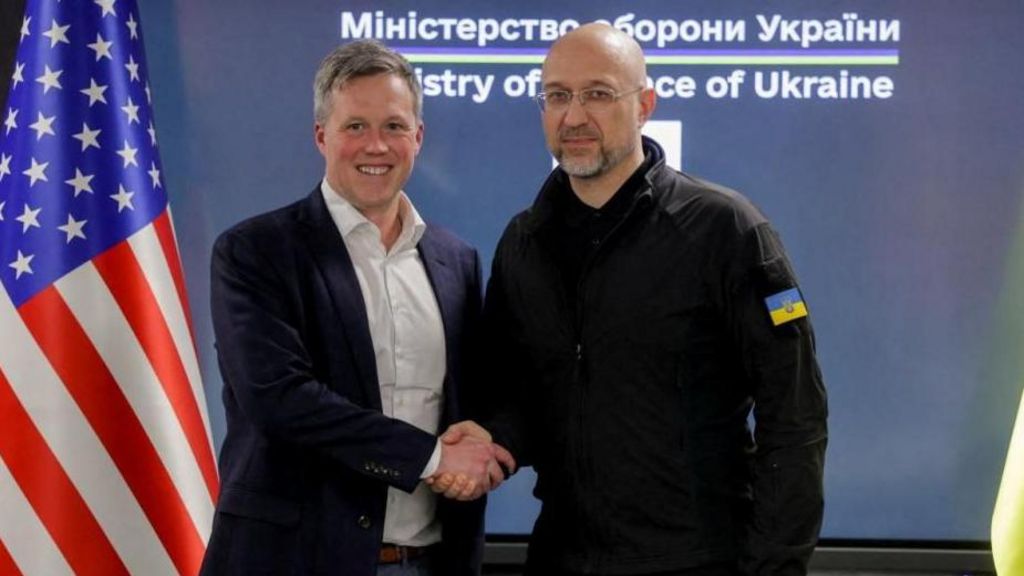
US military officials in Ukraine for talks on ending war
A high-level US military delegation, led by Army Secretary Dan Driscoll, arrived in Kyiv on Wednesday to engage in discussions aimed at ending the ongoing conflict between Ukraine and Russia. The delegation, which includes top US Army officials such as Chief of Staff Gen Randy George and Europe’s top commander Gen Chris Donahue, is set to meet Ukrainian President Volodymyr Zelensky on Thursday following his return from Turkey. The visit underscores the Biden administration’s commitment to exploring avenues for peace amidst escalating violence. Earlier in the day, a Russian missile and drone attack on the western Ukrainian city of Ternopil claimed at least 26 lives, highlighting the urgency of the situation. Army spokesman Col David Butler stated that the delegation’s mission is to gather facts and discuss strategies to bring the war to a close. Reports have emerged suggesting that the US and Russia have privately drafted a 28-point peace plan, which reportedly includes significant concessions from Ukraine, though neither Washington nor Moscow has officially confirmed its existence. Ukrainian Defence Minister Denys Shmyhal, who met with Driscoll, emphasized the focus on implementing defence agreements reached between Presidents Zelensky and Trump. Shmyhal also expressed gratitude for the US approval of a $105 million support package for Ukraine’s PATRIOT air-defence system. While Kremlin spokesman Dmitry Peskov downplayed the reports, citing the ‘spirit of Anchorage’ from the August summit between Putin and Trump, President Zelensky has consistently rejected any territorial concessions. The talks come as Kyiv and its Western allies push for an immediate ceasefire, though Moscow remains steadfast in its demands, which Ukraine views as tantamount to capitulation.
-
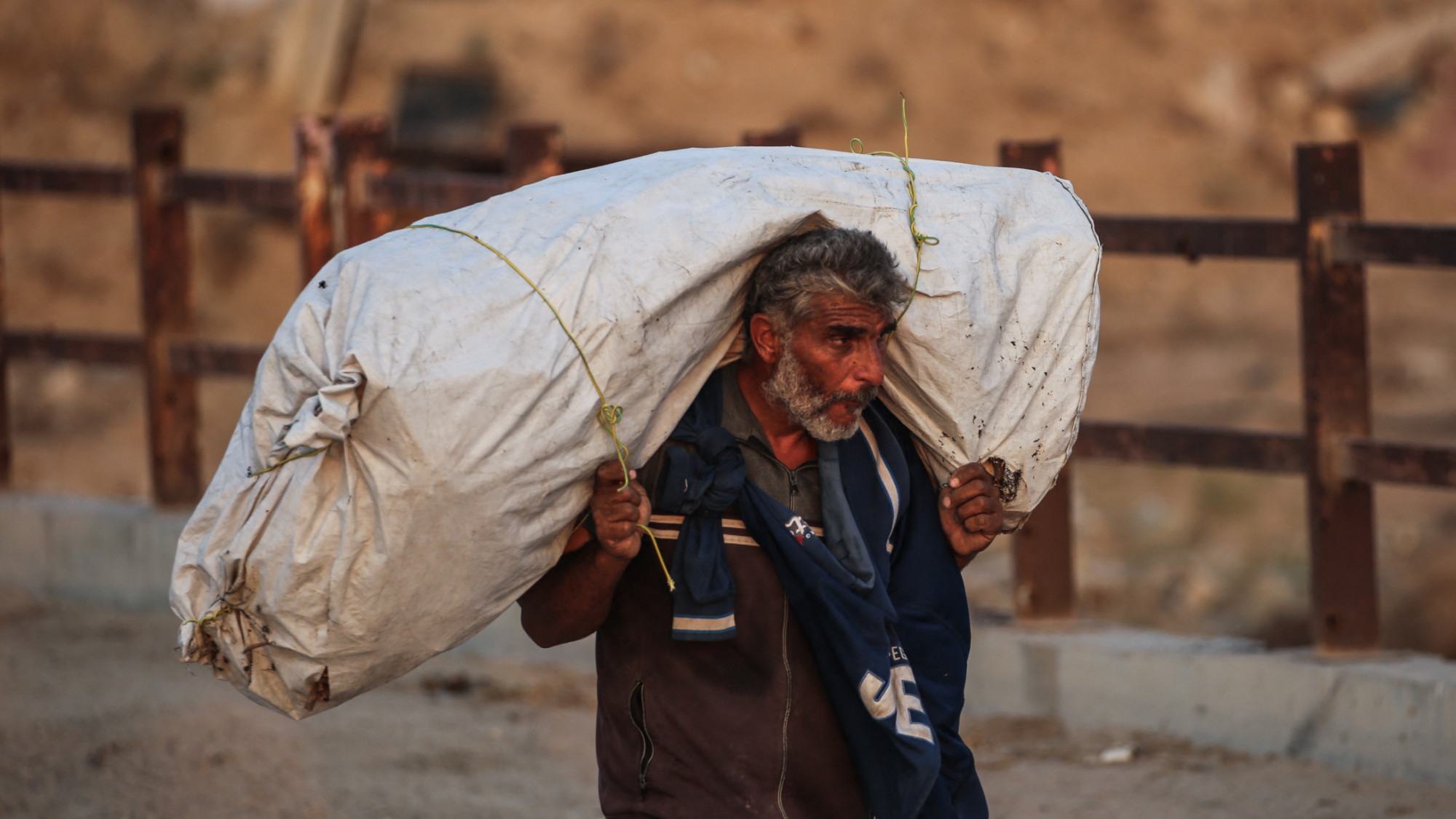
Gaza’s Palestinians sceptical after UN resolution ‘ignored humanitarian needs’
Residents of the Gaza Strip have expressed deep skepticism following the United Nations Security Council’s adoption of a resolution that authorizes foreign governance and an international force in the war-torn territory. The resolution, drafted by the United States and passed on Monday, has been met with criticism from locals who argue that it prioritizes political conditions over urgent humanitarian needs. Abu Malek Jerjawi, a Gaza resident, lamented that the UNSC’s decision ties reconstruction and relief efforts to disarmament, a move he described as ‘deeply disappointing’ and a ‘disaster’ for the population. ‘The Council disregarded all humanitarian needs and tied them to political considerations,’ Jerjawi told Middle East Eye. The resolution, known as UNSC 2803, supports a transnational governing body led by former U.S. President Donald Trump and the establishment of an international force to oversee the demilitarization of Gaza. However, critics fear this approach will exacerbate tensions rather than bring stability. Satellite analysis by the United Nations Satellite Centre (UNOSAT) reveals that over 80% of structures in Gaza have been destroyed or damaged since the conflict began more than two years ago, leaving most of the 2.3 million residents internally displaced and lacking basic necessities. Nermin Basel, a mother of three who fled Gaza during the war, emphasized that any international plan must guarantee the return of displaced Palestinians. ‘Leaving was never our choice, but staying meant certain death,’ she said. ‘Any plan to end the war and improve the situation must ensure we can return.’ The resolution has also been rejected by armed Palestinian factions, including Hamas, which insists that resistance to occupation is a legitimate right under international law. Critics argue that the resolution risks eroding Palestinian claims to the land and fails to address the root causes of the conflict. Jerjawi warned that the mandate granted to the international force could ‘reproduce the war’ rather than end it, further destabilizing the region.
-
Israeli MPs debate ‘lethal injection’ death penalty for Palestinian prisoners
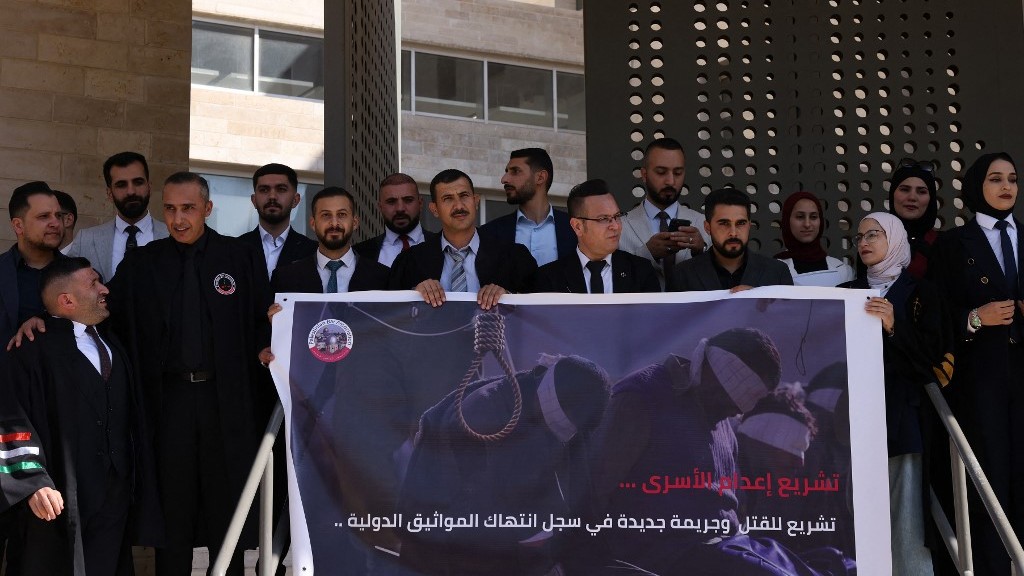
The Israeli parliament’s National Security Committee convened on Wednesday to deliberate a contentious bill proposing the death penalty for Palestinians convicted of terrorism, with lethal injection as the designated method. The legislation, spearheaded by MK Limor Son Har Melech of the far-right Otzma Yehudit (Jewish Power) party, successfully passed its first reading last week and is now advancing toward its second and third readings, the final steps before becoming law. Committee Chair MK Tzvika Foghel, also from Otzma Yehudit, outlined the guiding principles of the bill earlier this week, emphasizing its alignment with what he described as the Israeli public’s demand for justice following the October 7, 2023, Hamas-led attack. Foghel argued that the death penalty would eliminate the possibility of future prisoner exchanges, which he claimed endanger Jewish lives. The bill mandates death sentences for individuals convicted of murdering Jews solely based on their ethnicity, including planners and dispatchers of such acts. It further stipulates that executions must occur within 90 days of sentencing, with no avenues for appeal, commutation, or pardon. The proposal has sparked intense debate in parliament, with heated exchanges between Otzma Yehudit lawmakers, including National Security Minister Itamar Ben Gvir, and left-wing MPs who were forcibly removed from the session. Critics, including MP Gilad Kariv of the center-left Democrats party, condemned the bill as racist and driven by vengeance, arguing that it disproportionately targets Palestinians. The Public Defense’s Office at the Ministry of Justice also criticized the bill, citing global evidence that the death penalty lacks deterrent effects. Despite opposition, the bill garnered support from coalition parties and the right-wing opposition party Yisrael Beiteinu, while centrist parties abstained from voting. Prime Minister Benjamin Netanyahu has publicly endorsed the death penalty, aligning with the bill’s assertion that imprisonment is insufficient to deter terrorism. If enacted, the law would mark a significant shift in Israeli policy, as the country has not carried out an execution since 1962. Human rights organizations, including the Association for Civil Rights in Israel, have vehemently opposed the bill, arguing that it violates fundamental human rights principles and disproportionately targets Palestinians. The debate unfolds amid reports of rising Palestinian detainee deaths in Israeli custody, further intensifying scrutiny of the proposed legislation.
-
UN resolution on Gaza imposes ‘illegal trusteeship’ over Palestinians, says top legal expert
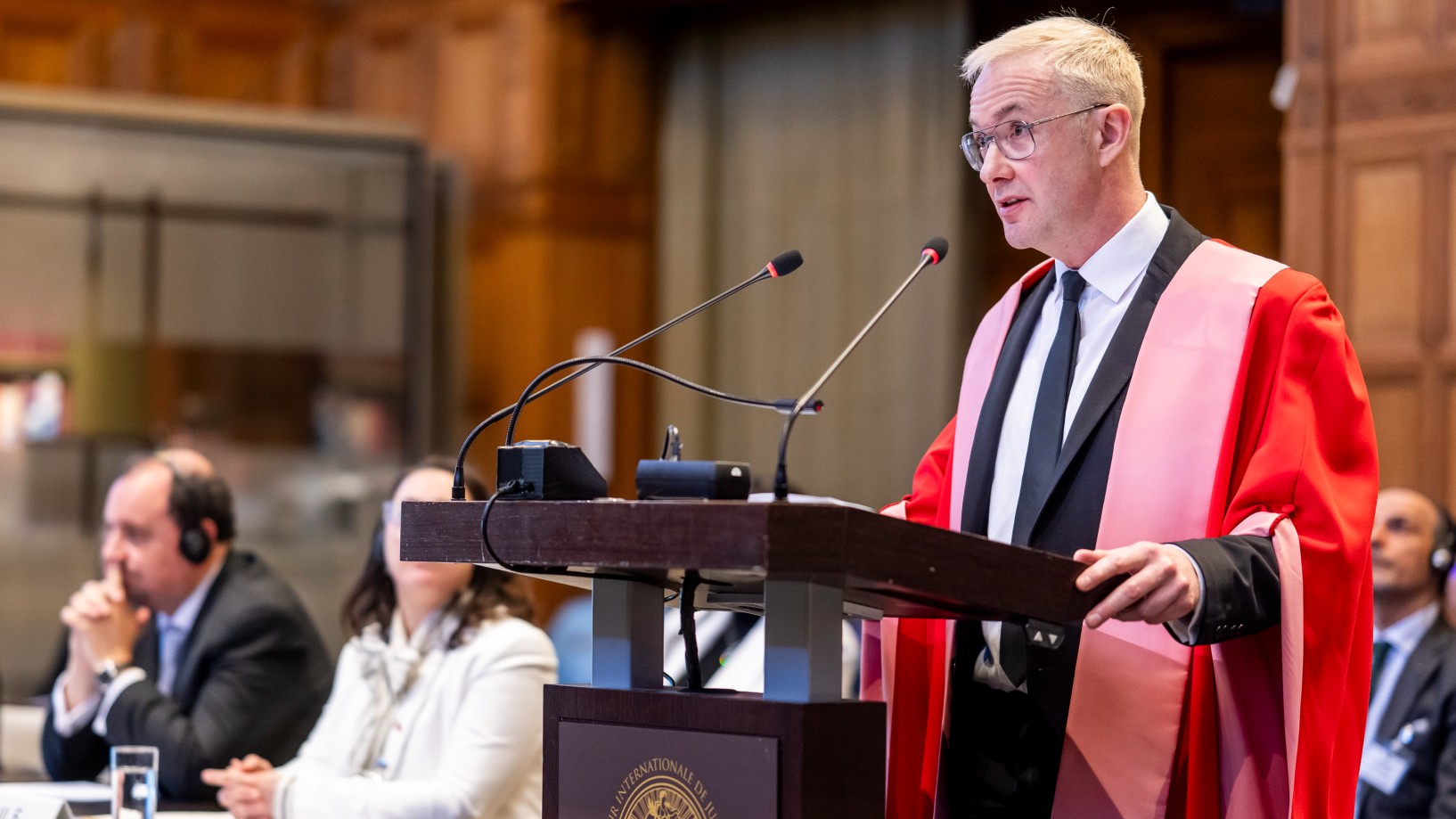
A recent UN Security Council resolution endorsing former US President Donald Trump’s 20-point plan for Gaza has been criticized as a breach of fundamental international law principles, rendering it legally invalid, according to a prominent international law expert. The resolution, approved on Monday, supports the establishment of an international stabilization force and grants Trump supreme control over Gaza, with a ‘board of peace’ overseeing the plan’s implementation for two years. Former UK Prime Minister Tony Blair’s involvement has also drawn significant attention. Ralph Wilde, a leading international law scholar and practitioner, argued that the resolution attempts to impose a ‘trusteeship’ over Gaza, a colonial arrangement that undermines Palestinians’ right to self-determination. Wilde, a professor at UCL and author of an award-winning book on international trusteeship, expressed dismay that his work is being used as a ‘manual’ for this trusteeship. He emphasized that trusteeship, historically used to justify colonial rule, contradicts the post-World War Two adoption of self-determination as a fundamental right in international law. Wilde further argued that replacing one form of trusteeship with another does not constitute self-determination and remains illegal. He noted that even if Palestinian representatives accept the plan, it would still be unlawful, akin to the Oslo Accords’ legitimization of certain aspects of Israel’s occupation. Wilde also highlighted that the UN Security Council’s authority is limited by the principles of justice and international law, and the resolution’s authorization of trusteeship is void as it violates these principles. The resolution passed with 13 votes in favor and abstentions from China and Russia.
-
‘Don’t embarrass our guest’: Trump defends Saudi prince during White House press grilling
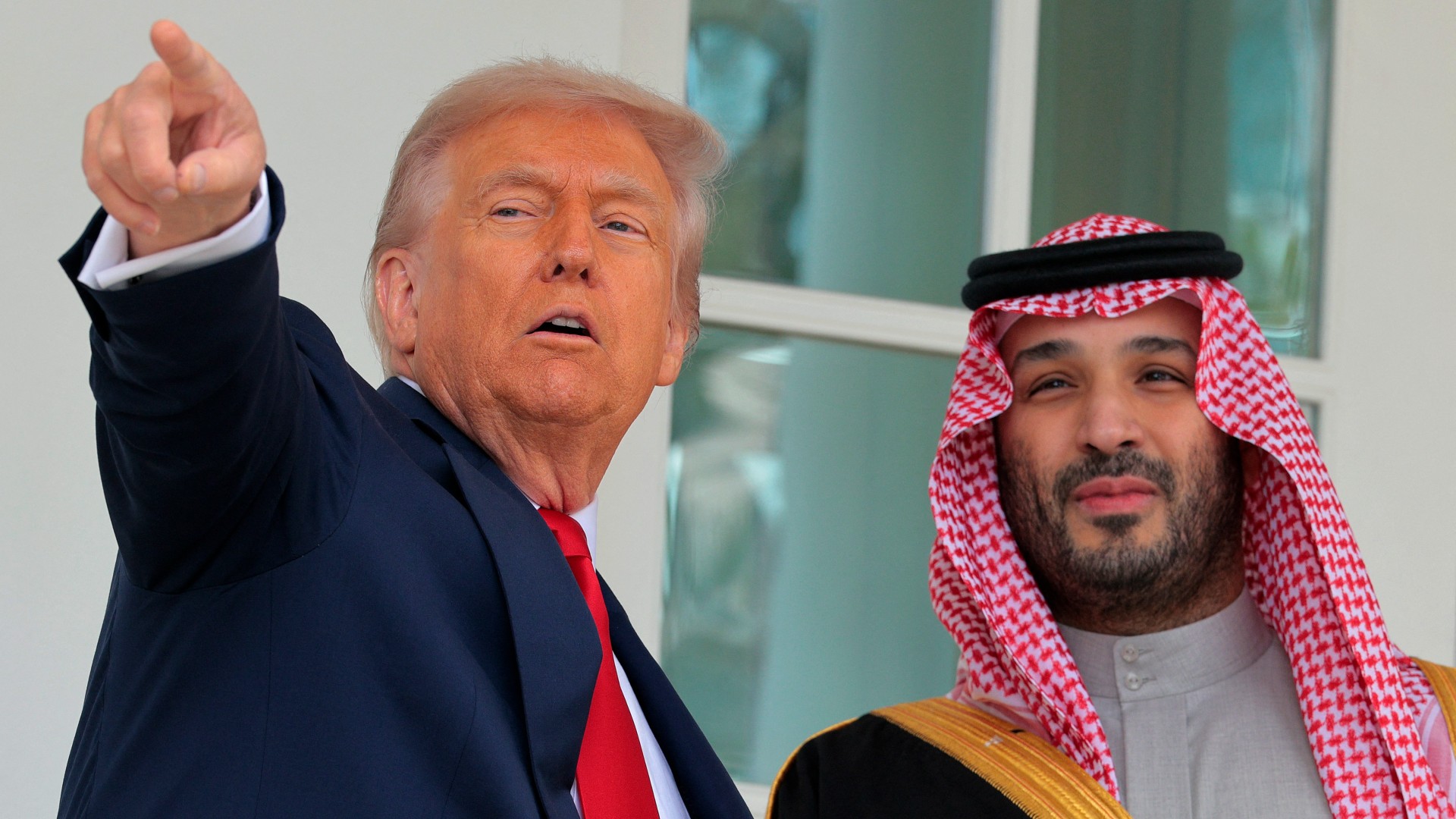
During a high-profile visit to the White House, Saudi Arabia’s Crown Prince Mohammed bin Salman faced intense scrutiny over the 2018 assassination of journalist Jamal Khashoggi. The visit, marked by ceremonial pomp including cannon fire and a U.S. Air Force fly-past, was overshadowed by the unresolved controversy surrounding Khashoggi’s brutal murder. U.S. President Donald Trump, however, came to the defense of the crown prince during a joint press conference, dismissing the issue with a casual remark: “Things happen.”
Khashoggi, a former Middle East Eye journalist, was lured into the Saudi consulate in Istanbul and killed by Saudi agents in an operation that U.S. intelligence believes was approved by the crown prince. When questioned about the incident, Trump downplayed its significance, stating, “A lot of people didn’t like that gentleman that you’re talking about,” and asserting that the crown prince had no knowledge of the event. The crown prince himself described Khashoggi’s death as “painful” and claimed that Saudi Arabia had taken steps to prevent such incidents in the future.
The Biden administration, in a 2021 report, concluded that the crown prince had approved the order to “capture or kill” Khashoggi, a claim vehemently denied by Saudi officials. Middle East Eye had previously reported that seven of the 15 suspects involved in the operation were part of the crown prince’s personal security detail. The assassination, which took just seven minutes, involved horrific details, including Khashoggi being dragged, injected with a substance, and dismembered.
In 2019, a Saudi court sentenced five individuals to death and three others to prison for their roles in the killing, though the trial was widely criticized as a sham. Reports in 2021 revealed that some of the convicted individuals were living in luxury at a government-run security compound in Riyadh, rather than serving time in prison. The killing strained relations between Saudi Arabia and Turkey, though ties were eventually repaired in 2022. Ankara later transferred its own Khashoggi trial to Saudi Arabia, involving 26 suspects.
The Khashoggi case has also shed light on the existence of the “Tiger Squad,” a covert unit allegedly established by the crown prince to target Saudi dissidents both domestically and abroad. Despite the international outcry, the Saudi government has maintained its stance, and the crown prince continues to enjoy diplomatic support from key allies, including the United States.
-
Exclusive: Britain mulls ban on Israeli settlement goods
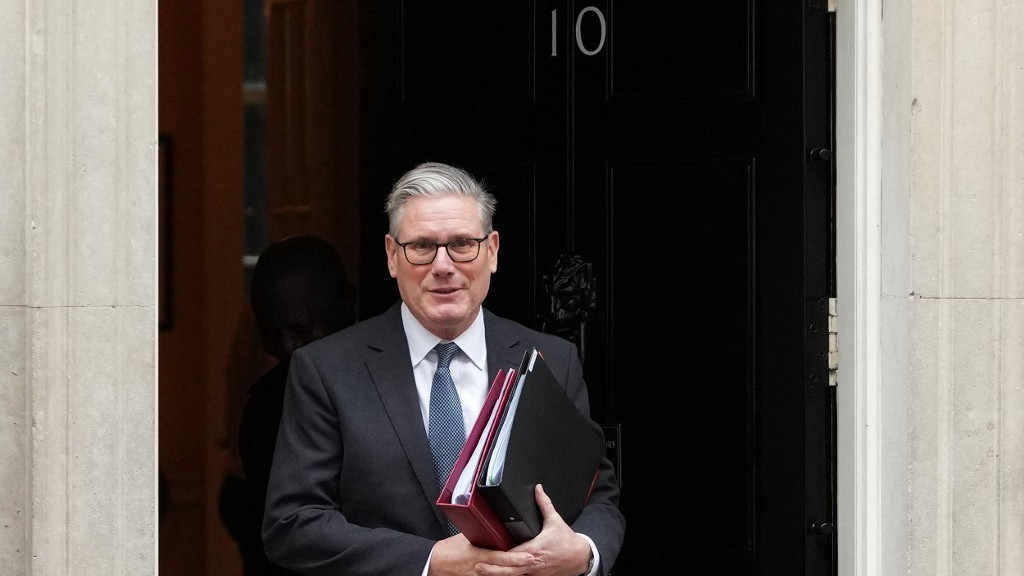
The British government is reportedly contemplating a ban on the import of goods from illegal Israeli settlements in the occupied West Bank, according to sources close to the administration. Middle East Minister Hamish Falconer has indicated to Labour MPs that such a ban is desirable, though the final decision rests with Prime Minister Keir Starmer, who is currently hesitant to implement the measure. However, a ban is deemed likely if there is further expansion of settlements or an escalation in settler violence. This marks a significant shift from Labour’s previous stance, which opposed sanctions or boycotts against Israel. Ministers now acknowledge that a ban aligns with the UK’s position on the occupied territories. Senior Labour MP Emily Thornberry, chair of the Foreign Affairs Select Committee (FASC), has long advocated for such a ban, arguing that permitting the sale of settlement goods undermines sanctions against settlers. A recent FASC report also recommended a ban on imports from illegal settlements. Labour MP Andy McDonald has pressed the government to enforce stricter measures, noting that existing checks and labeling requirements are insufficient. In May, the UK sanctioned several Israeli settlers and organizations supporting violence in the West Bank, followed by sanctions against far-right Israeli ministers in June. While the UK is unlikely to act alone, it may coordinate with allies like France or the Netherlands. Pressure is mounting within Labour, with MPs like Abtisam Mohamed and Bell Ribiero-Addy urging immediate action to comply with international law and support a two-state solution. A parliamentary bill proposing comprehensive sanctions on Israel is also gaining traction, citing the International Court of Justice’s 2024 ruling on Israel’s illegal occupation. Despite these developments, the UK’s trade with Israel has grown, with exports rising by 10.5% to £3.6 billion in the past year. The Labour government has suspended some arms export licenses but continues to supply components for F-35 fighter jets used by Israel.
-
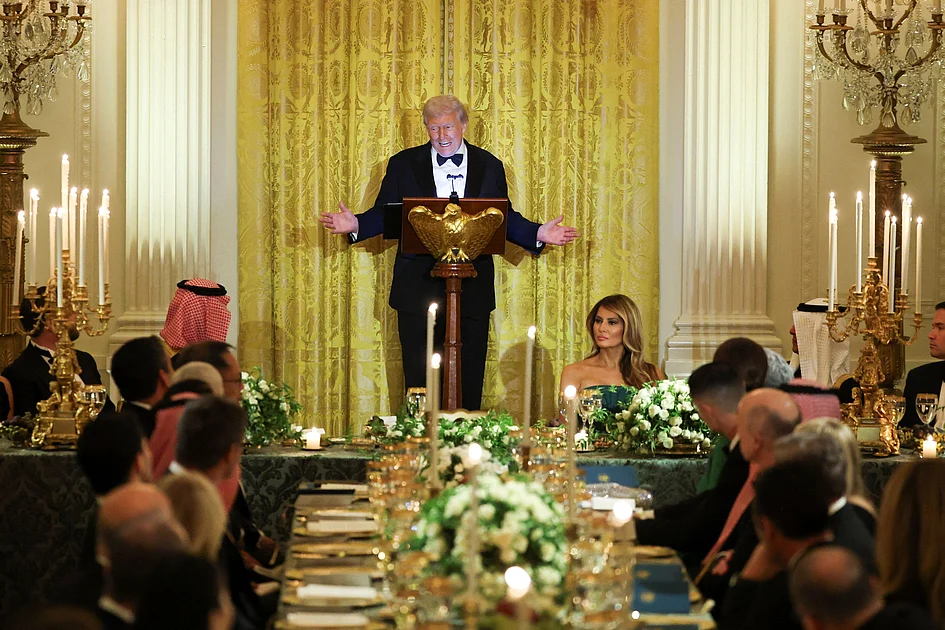
‘Piggy.’ ‘Terrible.’ Trump lashes out at female reporters
In a series of heated exchanges, former U.S. President Donald Trump has come under fire for his aggressive responses to female journalists during high-profile events. The incidents, which have drawn widespread criticism, occurred during a White House visit by Saudi Crown Prince Mohammed bin Salman and aboard Air Force One. Trump’s confrontational behavior began when he referred to Bloomberg reporter Catherine Lucey as ‘piggy’ after she questioned him about the Jeffrey Epstein case. This comment, which surfaced on social media, was labeled ‘disgusting and completely unacceptable’ by CNN’s Jake Tapper. Days later, Trump targeted ABC News reporter Mary Bruce during a press event in the Oval Office. Bruce had raised pointed questions about potential conflicts of interest involving Trump’s family business and the Saudi Crown Prince’s alleged role in the murder of journalist Jamal Khashoggi. Trump dismissed her inquiries as ‘fake news’ and accused her of being a ‘terrible reporter.’ He also threatened ABC’s broadcast license, urging the U.S. broadcast regulator to investigate the network. Trump’s repeated denials of involvement in the Epstein scandal and his defense of Prince Mohammed further fueled the controversy. These incidents highlight ongoing tensions between the former president and the press, raising concerns about press freedom and presidential conduct.