分类: politics

  • Trump hits the road to sell economic message and counter cost of living concerns

    Trump hits the road to sell economic message and counter cost of living concerns

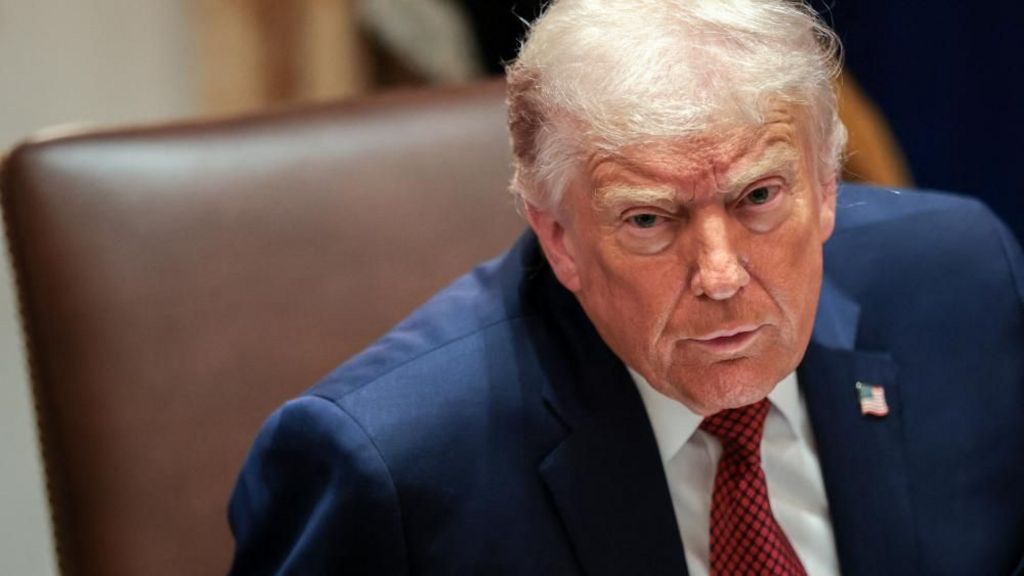
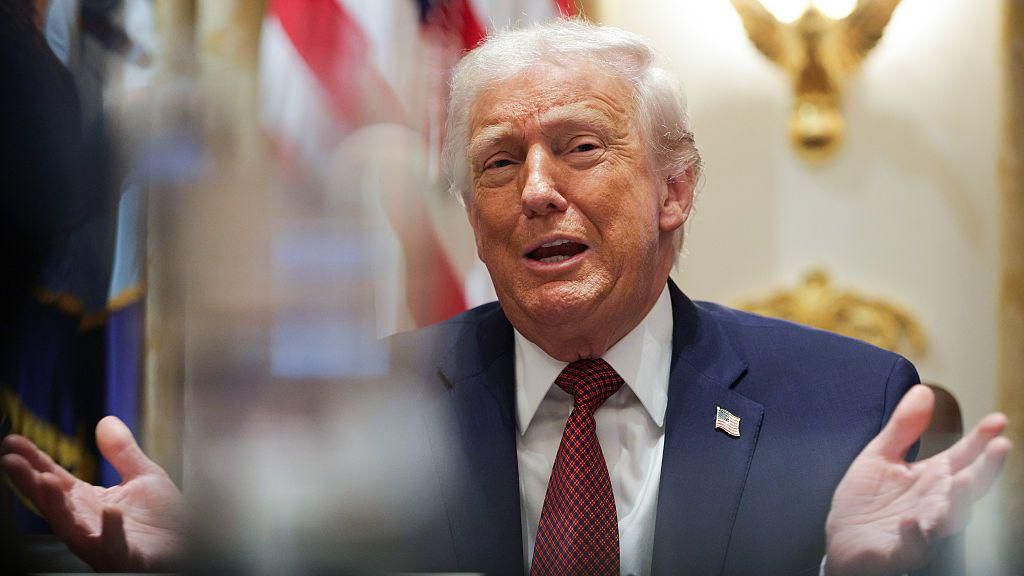
    President Donald Trump is escalating his economic messaging campaign with a Tuesday rally in Mount Pocono, Pennsylvania, as polling indicates declining public trust in his administration’s economic stewardship. The event comes amid Republican anxieties about the 2026 midterm elections following Democratic gains in November contests where affordability concerns proved decisive.

    The President’s Pennsylvania appearance represents a strategic effort to reframe the economic narrative after acknowledging that rising prices contributed to disappointing Republican performances in recent elections. Trump has consistently attributed ongoing economic challenges to his predecessor Joe Biden, asserting at a White House briefing Monday that ‘Democrats caused the affordability problem and we’re the ones that are fixing it.’

    Recent economic indicators present a complex picture. September data revealed U.S. inflation reached 3% for the first time since January, while consumer confidence plummeted to its lowest level since April. Polling from Politico and CBS News/YouGov suggests significant voter unease, with half of all respondents describing the current cost of living as the worst in their lifetimes, and Trump’s economic approval rating dropping 15 points since March.

    The administration is responding with policy measures and rhetorical offensive. A source familiar with Tuesday’s event indicated Trump will highlight efforts to reduce costs for gasoline and groceries, while a White House official previewed messaging that will frame the president’s tariffs and regulatory reductions as part of a comprehensive economic ‘rewiring.’

    This Pennsylvania visit carries particular significance as it occurs in the state’s 8th Congressional District, a Republican-held seat won narrowly in 2024 that has emerged as a key battleground for the upcoming midterms. White House Chief of Staff Susie Wiles, who managed Trump’s presidential campaign, indicated this rally will inaugurate an aggressive campaign schedule reminiscent of the 2024 election cycle.

    The administration points to several policy achievements as evidence of their economic approach, including prescription drug pricing agreements, eased fuel efficiency standards, tax cut extensions, and the recently signed ‘One Big Beautiful Bill.’ Monday also saw the announcement of a $12 billion farm aid package targeting agricultural sectors affected by low crop prices and tariff impacts.

    Democratic leaders are mounting coordinated counter-messaging. Pennsylvania Governor Josh Shapiro told media ahead of Trump’s visit that ‘folks can’t unsee what they see when they go to the grocery store,’ citing specific price increases for beef, orange juice, and bread under Trump’s administration.

    Economic experts note the complexity of presidential influence on food pricing. Food economics professor David Ortega recently noted that ‘the president of the United States has very little control over the price of food, especially in the short term,’ while acknowledging that Trump’s policies—including tariffs on Brazilian coffee and immigration crackdowns affecting farm labor—may be contributing to specific price increases.

  • Canadian senator presses Ottawa on only land disputed between the US and Canada

    Canadian senator presses Ottawa on only land disputed between the US and Canada

    A longstanding territorial dispute between Canada and the United States has been reignited as Canadian Senator Jim Quinn challenges American tourism activities around Machias Seal Island. The uninhabited outcrop, located in the contested ‘Grey Zone’ between Maine and New Brunswick, has been subject to competing sovereignty claims for over a century.

    Senator Quinn from New Brunswick has raised formal objections to Bold Coast Charter Company, a US-based tour operator that promotes visits to what it describes as ‘Machias Seal Island – Largest Puffin Colony on the Maine Coast’ on its website. The senator has urgently called upon Ottawa to review the permitting status granted to this American company and its listing on Canadian government platforms.

    The 20-acre island represents the sole remaining land dispute between the two North American neighbors. Despite the unresolved status, Canada maintains continuous presence through rotating Canadian Coast Guard personnel who staff the historic lighthouse constructed in 1832. The island serves as a vital migratory bird sanctuary, hosting one of the most significant Atlantic puffin nesting colonies in the region.

    Through Senate order papers scheduled for discussion, Quinn has questioned Canada’s Department of Fisheries and Oceans—the designated administrator of the territory—about why permits are issued to a company that ‘actively describes Machias Seal Island as part of the state of Maine.’ He further challenges why the American operator appears on Canadian government websites despite sovereignty claims.

    The dispute extends beyond territorial claims to encompass fishing rights in surrounding waters. An international court ruling in 1984 granted both nations fishing access in the waterways, though subsequent tensions have emerged regarding lobster fishery practices. The current sovereignty debate occurs against a backdrop of broader Canada-US friction, including past trade tariffs and diplomatic comments that Senator Quinn believes necessitate stronger Canadian territorial assertion.

    ‘We’re being pushed in so many ways, and yet here’s a porous point in our border that nobody’s paying attention to,’ Quinn stated to news outlet Global, emphasizing the need for heightened sovereignty awareness in contemporary bilateral relations.

  • Trump said ‘no problem’ to releasing US strike video. Then denied saying it

    Trump said ‘no problem’ to releasing US strike video. Then denied saying it

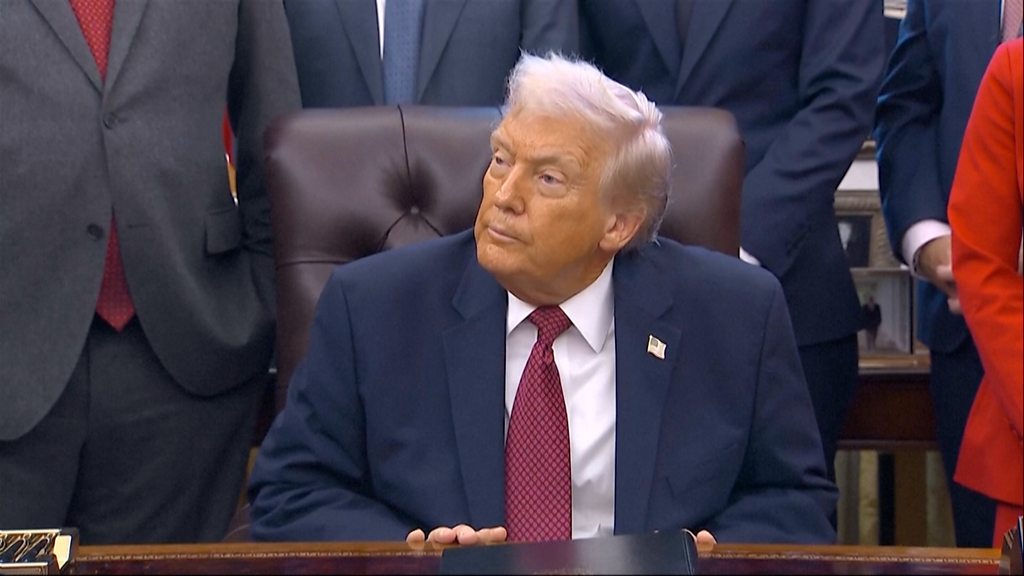
    A significant contradiction has emerged from the White House regarding the potential declassification of military footage. President Donald Trump has publicly denied ever expressing that he had “no problem” with releasing video evidence of a U.S. naval strike on a Venezuelan vessel, which American authorities claim was trafficking narcotics. This denial stands in direct opposition to his own verified statements made just days prior. The incident in question involved the boarding and subsequent sinking of a boat allegedly carrying drugs, an operation that has escalated diplomatic tensions with Venezuela. This discrepancy raises questions about the administration’s transparency and communication consistency on matters of national security and international engagement. The original remarks, captured on camera, showed the President appearing to endorse greater public disclosure of the controversial operation. Analysts suggest this reversal could impact the credibility of official narratives concerning military actions in foreign jurisdictions, particularly in the politically volatile context of U.S.-Venezuela relations and the ongoing war on drugs.

  • European leaders agree to fund Ukraine for 2 years but using Russian assets poses a major test

    European leaders agree to fund Ukraine for 2 years but using Russian assets poses a major test

    BRUSSELS — As Russia’s full-scale invasion of Ukraine approaches its fourth year, European Union leaders are confronting a groundbreaking financial dilemma: whether to utilize approximately €210 billion ($244 billion) in frozen Russian central bank assets to address Ukraine’s critical economic and military needs through 2026.

    The upcoming December 18 summit will see EU leaders weighing two distinct proposals for accessing these immobilized funds. The primary option involves creating a ‘reparations loan’ mechanism that would channel proceeds from Russian assets until Moscow agrees to compensate Ukraine for war damages. The alternative approach would require the EU to borrow directly from financial markets, mirroring the bloc’s pandemic recovery strategy.

    This unprecedented move carries substantial geopolitical and economic implications. The European Central Bank has issued warnings about potential erosion of confidence in the euro currency should member states appear willing to confiscate foreign assets. Belgium, where the majority of Russian assets are held through the Euroclear clearinghouse, has emerged as the plan’s most vocal opponent due to concerns about legal retaliation and security repercussions.

    The political calculus is equally complex. While utilizing frozen Russian assets would require only a qualified majority approval, market borrowing would necessitate unanimous consensus—a challenging prospect given Hungary’s consistent blocking of Ukraine aid measures and emerging resistance from Slovakia and Czech nationalist factions.

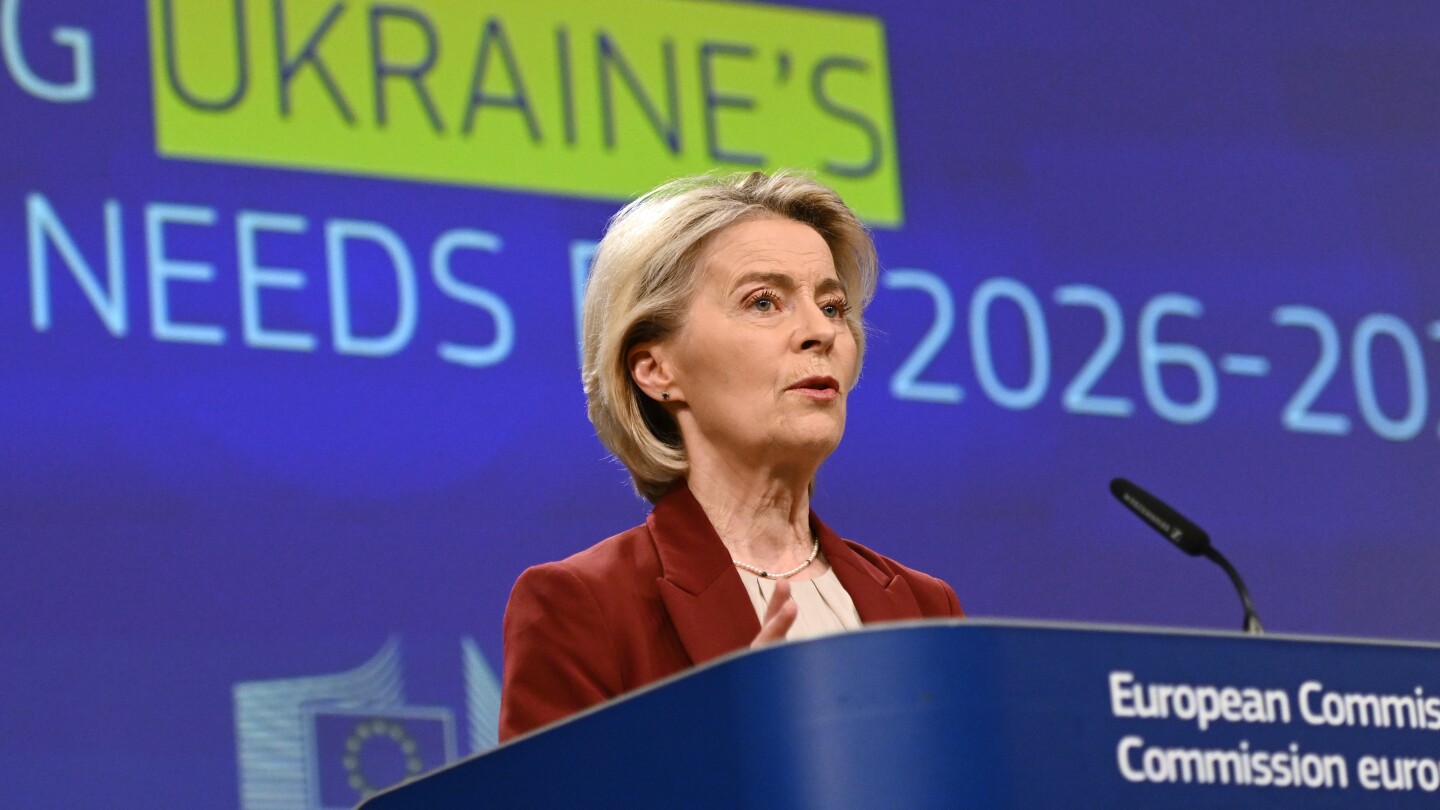
    European Commission President Ursula von der Leyen has proposed that the EU cover two-thirds of Ukraine’s €135 billion requirements for 2026-2027, with international partners filling the remainder. The reparations loan structure would preserve Russia’s theoretical claim to its assets while providing immediate funding to Ukraine, creating a circular repayment mechanism contingent on eventual Russian war reparations.

    Despite risk-sharing guarantees offered by Germany and other member states, Belgian officials maintain that the proposal exposes their nation to disproportionate legal and financial hazards, highlighting tensions within the bloc regarding solidarity burden-sharing.

  • Zelenskyy turns to WhatsApp for a midflight Q&A with reporters on his Europe trip

    Zelenskyy turns to WhatsApp for a midflight Q&A with reporters on his Europe trip

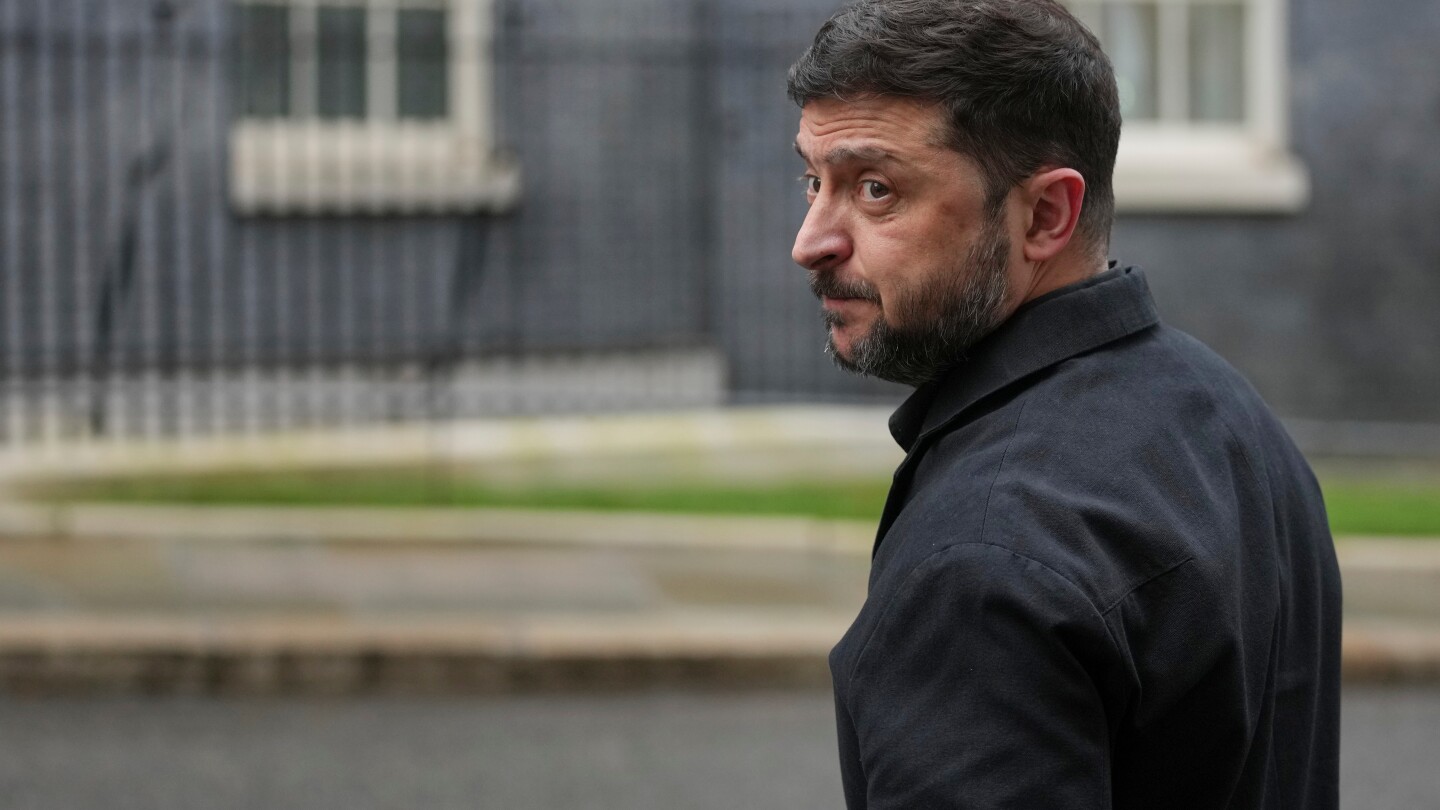
    In an unprecedented move demonstrating the extraordinary circumstances of wartime diplomacy, Ukrainian President Volodymyr Zelenskyy conducted an impromptu press briefing via WhatsApp group chat during his intensive 36-hour European tour this week. The innovative communication approach came as the leader shuttled between critical meetings in London, Brussels, and Rome without time for traditional media engagements.

    While airborne between diplomatic stops, Zelenskyy responded to numerous inquiries from both Ukrainian and international journalists by transmitting audio recordings through the messaging platform. The aircraft’s ambient hum provided backdrop to his noticeably fatigued yet resolute voice as he articulated Ukraine’s unwavering position regarding territorial sovereignty.

    ‘Russia persistently demands that we relinquish our territories,’ Zelenskyy declared in audio messages characterized by occasional digital distortion. ‘Legally, we lack such authority… and frankly, we possess no moral justification either.’

    The diplomatic landscape remains exceptionally fluid as negotiations to resolve the conflict evolve daily. Zelenskyy’s European itinerary included high-stakes discussions with British Prime Minister Rishi Sunak, German Chancellor Olaf Scholz, French President Emmanuel Macron, NATO Secretary-General Jens Stoltenberg, and European Commission President Ursula von der Leyen, followed by consultations with Italian leadership and Pope Francis.

    Central to these deliberations remains the contentious proposition that Ukraine might surrender Russian-occupied territories in exchange for security assurances—a complicated matter further exacerbated by uncertainties regarding American commitment to European security under potential future administrations.

    Zelenskyy’s adoption of digital communication tools continues his pattern of adaptive engagement since Russia’s full-scale invasion commenced in 2022. His iconic cellphone-recorded address alongside government officials from besieged Kyiv—emphatically stating ‘We are all here’—established his commitment to real-time communication despite security challenges.

    The president’s strategic communications now encompass a relentless cycle of video addresses, remote parliamentary speeches, international conference appearances, and meticulously orchestrated public events, often at the expense of sleep.

    As his aircraft descended toward Brussels, Zelenskyy queried journalists about their reception of the novel WhatsApp format, suggesting potential future implementations. True to his word, by Tuesday evening, additional audio messages arrived via the platform, providing updates on ongoing discussions with Western allies regarding conflict resolution.

  • Honduras presidential candidate alleges election has been ‘stolen’

    Honduras presidential candidate alleges election has been ‘stolen’

    Honduras remains engulfed in a deepening electoral crisis nine days after its presidential vote, with no official winner declared amid allegations of manipulation and foreign interference. The National Electoral Council (CNE) continues to grapple with technical issues and thousands of disputed voting records, creating unprecedented delays in the counting process.

    The latest figures from the CNE, with 98.77% of votes tallied, show conservative candidate Nasry ‘Tito’ Asfura maintaining a slender advantage with 40.53% support. Centrist challenger Salvador Nasralla trails closely with 39.16%, while left-wing candidate Rixi Moncada remains distant with 19.32%. The electoral process has been marred by multiple extended pauses in counting, with officials attributing delays to technical complications.

    Salvador Nasralla, who initially led before slipping to second place, has publicly denounced what he terms ‘theft’ by ‘corrupt elements’ manipulating the tally. Meanwhile, Rixi Moncada’s Libre party has demanded complete annulment of the elections, citing ‘interference and coercion’ from former US President Donald Trump.

    The pre-election period was significantly influenced by Trump’s endorsement of Asfura, including his controversial pledge of conditional support and last-minute pardon of imprisoned former Honduran president Juan Orlando Hernández. Hernández, who was serving a 45-year narcotics sentence in the US, now faces an international arrest warrant from Honduran authorities.

    Trump further escalated tensions by accusing the CNE of attempting to manipulate outcomes when Nasralla briefly led, warning of consequences without providing evidence of fraud. Under Honduran law, the electoral authority has until December 30 to declare a final result.

  • Slovakia’s parliament approves plan to dismantle whistleblower protection office

    Slovakia’s parliament approves plan to dismantle whistleblower protection office

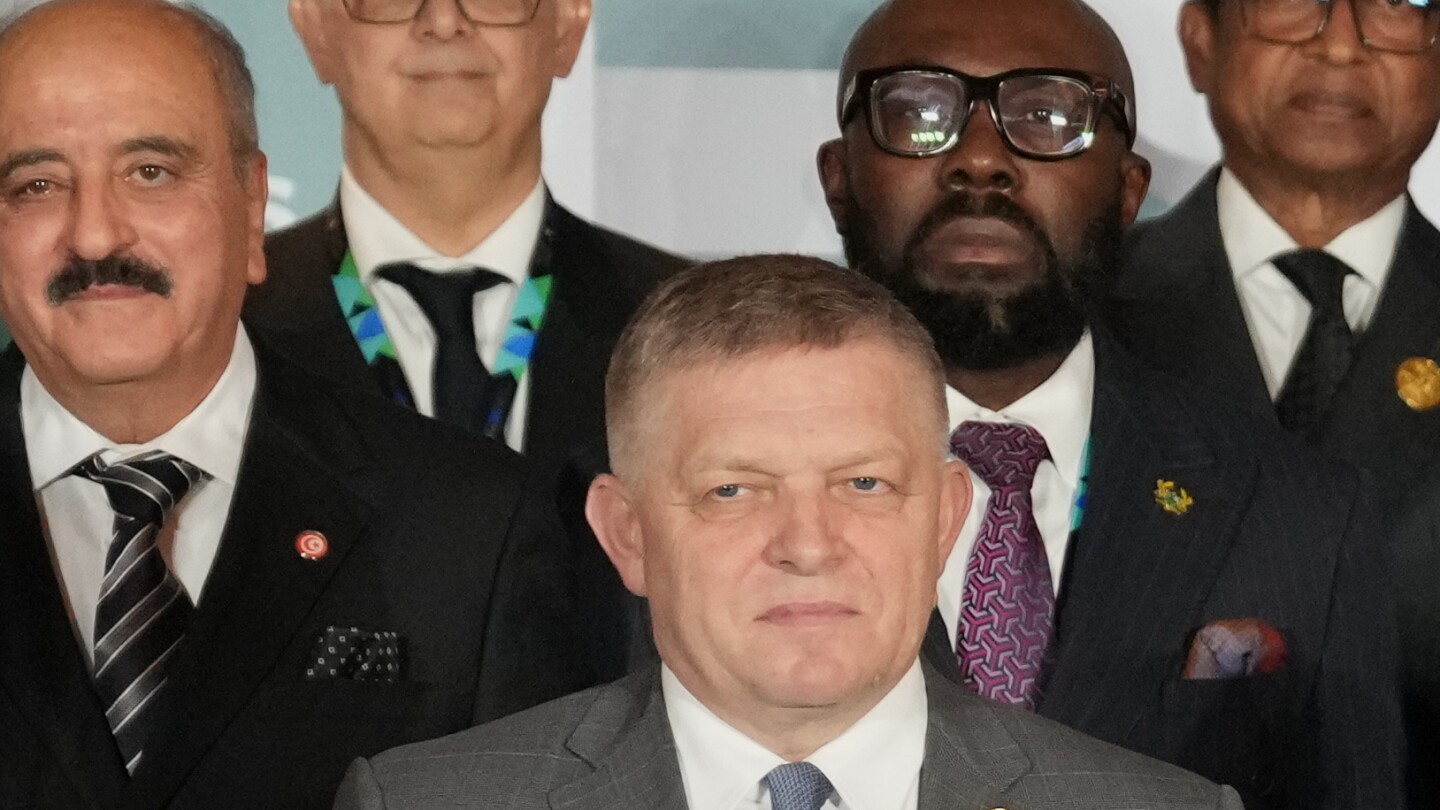
    BRATISLAVA, Slovakia — Slovakia’s parliamentary body has ratified a contentious governmental initiative to dissolve the nation’s autonomous anti-corruption whistleblower protection agency, triggering widespread domestic and international condemnation. The ruling coalition administration under populist Prime Minister Robert Fico secured 78 affirmative votes within the 150-seat legislative chamber to advance the measure, bypassing substantial opposition from multiple sectors.

    The decision has drawn sharp criticism from an unusual coalition of detractors including opposition parties, Slovakia’s Prosecutor-General, European Union authorities, and both international and local anti-corruption organizations. Even President Peter Pellegrini, typically a Fico ally, has expressed reservations about the legislative changes. While Pellegrini retains authority to sign the bill into law, the government maintains sufficient parliamentary strength to override any potential presidential veto.

    In an official statement, the Whistleblower Protection Office warned that “the level of protection, as well as public confidence in the whistleblower protection system meticulously developed over recent years, will be substantially undermined by this legislation.” The office was originally established in 2021 pursuant to European Union regulatory requirements.

    The government justifies its action by proposing to establish a replacement institution that would simultaneously address whistleblower protections and crime victim rights, asserting that previous regulations had been manipulated for political purposes. However, the new framework introduces provisions enabling the revocation of previously granted protections and permits recurrent reassessments of protection status at employer request.

    Notably, the governing coalition employed an accelerated parliamentary procedure to advance the changes, effectively eliminating standard expert review and stakeholder consultation processes. The legislative debate itself was constrained to merely hours before the vote.

    Opposition leader Michal Šimečka of the Progressive Slovakia party condemned the move as “an assault against the rule of law” and indicated plans to challenge the legislation before Slovakia’s Constitutional Court. The political climate remains intensely polarized, with Fico’s critics alleging Slovakia is emulating the authoritarian trajectory of Hungarian Prime Minister Viktor Orbán’s administration. Mass demonstrations have recurrently mobilized thousands across Slovakia protesting Fico’s Russia-friendly orientation and broader policy directions.

  • Trump ban on wind energy permits ‘unlawful’, court rules

    Trump ban on wind energy permits ‘unlawful’, court rules

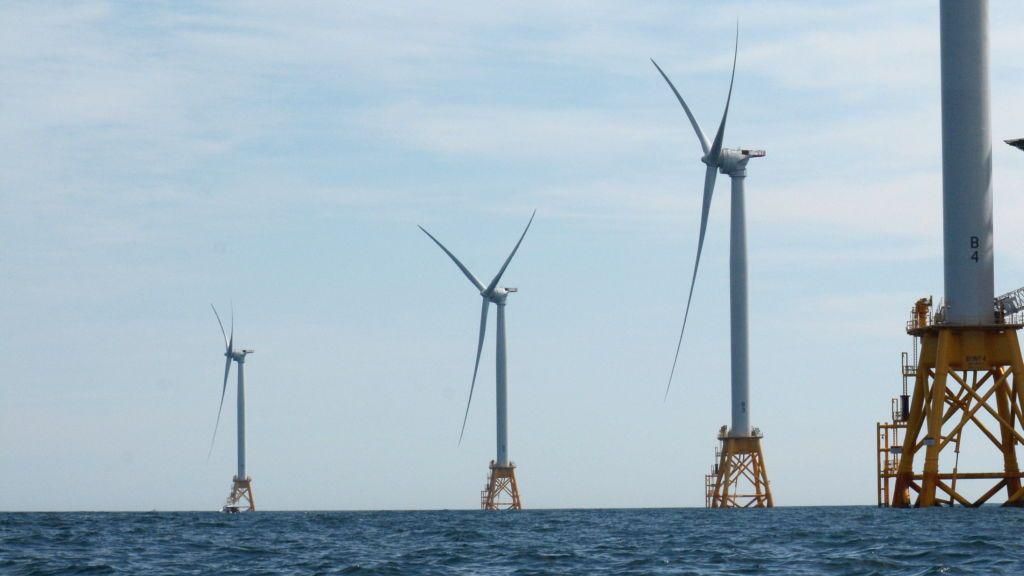
    A Massachusetts federal court has delivered a significant judicial rebuke to the Trump administration’s energy policy, declaring its ban on new wind energy permits “unlawful.” The ruling from District Judge Patti B. Saris vacated an executive order issued in January that had frozen federal approvals for both offshore and onshore wind projects nationwide.

    The legal challenge originated from a coalition of 17 states, led by New York, and a clean energy advocacy group. Their lawsuit was triggered when the Interior Department mandated a work stoppage on the Empire Wind 1 project—a major offshore wind farm designed to power approximately 500,000 New York homes.

    In her decisive ruling, Judge Saris characterized the administration’s policy shift as “arbitrary and capricious and contrary to law.” She noted that federal agencies had failed to provide adequate justification or “a reasoned explanation for the change” in their renewable energy approval process.

    New York Attorney General Letitia James celebrated the decision as “a big victory in our fight to keep tackling the climate crisis” through social media channels. She emphasized that the successful litigation had prevented the administration from obstructing numerous wind energy initiatives across the country.

    The court’s intervention comes amid ongoing tensions between the Trump administration’s pro-fossil fuel agenda and state-level renewable energy ambitions. While construction on the Empire Wind project has since resumed, states argued the broader permitting freeze was causing substantial economic harm nationwide.

    President Trump has consistently expressed hostility toward wind energy, recently stating “we’re not going to do the wind thing” and referring to turbines as “big, ugly windmills” that endanger wildlife. His administration has actively promoted fossil fuel development under the “drill, baby, drill” energy philosophy.

    The Empire Wind project, developed by Norwegian energy company Equinor, remains on track for completion within two years, with full operational capacity expected by late 2027.

  • Trump criticises ‘weak’ European leaders over Ukraine and immigration

    Trump criticises ‘weak’ European leaders over Ukraine and immigration

    In a provocative interview with Politico, former US President Donald Trump launched scathing criticisms against European leadership, characterizing them as “weak” and suggesting a potential reduction in American support for Ukraine. The controversial remarks have ignited fresh transatlantic tensions regarding the ongoing conflict with Russia.

    Trump asserted that “decaying” European nations have demonstrated incompetence in managing migration crises and formulating decisive strategies to resolve the Ukraine-Russia war. He accused European leaders of permitting Kyiv to continue fighting “until they drop” without providing adequate assistance.

    The former president presented a stark assessment of the military situation, claiming Russia maintains the “upper hand” in the conflict. He further urged Ukrainian President Volodymyr Zelensky to “play ball” by considering territorial concessions to Moscow as a potential pathway to peace.

    British authorities swiftly countered Trump’s assertions, with Downing Street highlighting the UK’s leadership in implementing sanctions against Russia and reaffirming commitment to the US-led peace initiative. The official response emphasized Europe’s substantial contributions to supporting Ukraine’s defense efforts.

    These diplomatic exchanges occurred concurrently with the release of a 33-page National Security Strategy document from Trump’s administration, which contained alarming warnings about Europe’s potential “civilisational erasure” and raised questions about the reliability of certain NATO allies. The document outlines a strategic pivot that could significantly alter traditional American foreign policy approaches toward European partnerships.

  • Sacked agents sue FBI, saying they were punished for taking the knee

    Sacked agents sue FBI, saying they were punished for taking the knee

    Twelve former FBI agents have initiated legal proceedings against the bureau, claiming their dismissals constituted unlawful termination directly linked to their decision to kneel during a racial justice demonstration in Washington D.C. in June 2020. The lawsuit, filed in the District of Columbia, names FBI Director Kash Patel as a primary defendant.

    The plaintiffs detail how they were deployed to manage escalating tensions in the capital on June 4, 2020, following the police killing of George Floyd. Confronted by what they describe as a volatile situation for which they were inadequately prepared, the agents made a unanimous tactical decision to adopt the kneeling gesture synonymous with the protests. They contend this action successfully de-escalated potential violence and mirrored community outreach practices used by law enforcement nationwide during that period of civil unrest.

    Despite receiving initial approvals from both FBI and Department of Justice leadership following internal reviews of their conduct, termination notices citing ‘lack of impartiality’ were issued over five years later. The former agents allege this delayed disciplinary action occurred under Director Patel’s administration, which they characterize as conducting a systematic purge of personnel perceived as disloyal to then-President Donald Trump.

    The lawsuit seeks reinstatement to their positions with full back pay and benefits. This case follows similar litigation from other former FBI officials, including ex-acting director Brian Driscoll, who likewise allege politically motivated dismissals. The White House has recently reiterated its support for Director Patel, calling him ‘a critical member of the president’s team’ working to ‘restore integrity to the FBI.’ The bureau has declined to comment on ongoing litigation.