分类: politics

  • Trump expands US travel ban to five more countries

    Trump expands US travel ban to five more countries

    The Trump administration has significantly expanded its controversial travel restrictions, adding five additional countries and Palestinian Authority document holders to the list of those facing entry prohibitions to the United States. Effective January 1st, the enhanced security measure will impose full entry restrictions on nationals from Burkina Faso, Mali, Niger, South Sudan, and Syria, alongside individuals traveling with Palestinian Authority-issued documentation.

    White House officials justified the expansion as a necessary precaution to safeguard national security, citing deficiencies in foreign screening systems, elevated visa overstay rates, unreliable civil documentation, corruption concerns, terrorist activities, and insufficient cooperation regarding deportation procedures. The policy revision follows recent security incidents, including the arrest of an Afghan national suspected of attacking National Guard personnel during the Thanksgiving weekend.

    This represents the third iteration of the travel ban since President Trump initially implemented the policy in 2017, which previously faced widespread protests and legal challenges before ultimately being upheld by the U.S. Supreme Court. The administration has now reclassified Laos and Sierra Leone from partial to full restrictions while implementing limited entry limitations for fifteen additional countries including Nigeria, Tanzania, and Zimbabwe.

    The restrictions will remain indefinitely until affected nations demonstrate measurable improvements in identity management protocols, information-sharing practices, and cooperation with U.S. immigration authorities. Exemptions apply for lawful permanent residents, current visa holders, diplomats, and athletes participating in major international sporting events, with case-by-case waivers available for travel deemed to serve national interests.

    Countries now facing full entry restrictions include Afghanistan, Burkina Faso, Burma, Chad, Equatorial Guinea, Eritrea, Haiti, Iran, Laos, Libya, Mali, Niger, Republic of the Congo, Sierra Leone, Somalia, South Sudan, Sudan, Syria, and Yemen, plus Palestinian Authority document holders. Partial restrictions apply to Angola, Antigua and Barbuda, Benin, Burundi, Côte d’Ivoire, Cuba, Dominica, Gabon, The Gambia, Malawi, Mauritania, Nigeria, Senegal, Tanzania, Togo, Tonga, Venezuela, Zambia, and Zimbabwe. Turkmenistan maintains restrictions for immigrants while having them lifted for non-immigrant visas.
  • Trump signs more orders in one year than his entire first term, a record since World War II

    Trump signs more orders in one year than his entire first term, a record since World War II

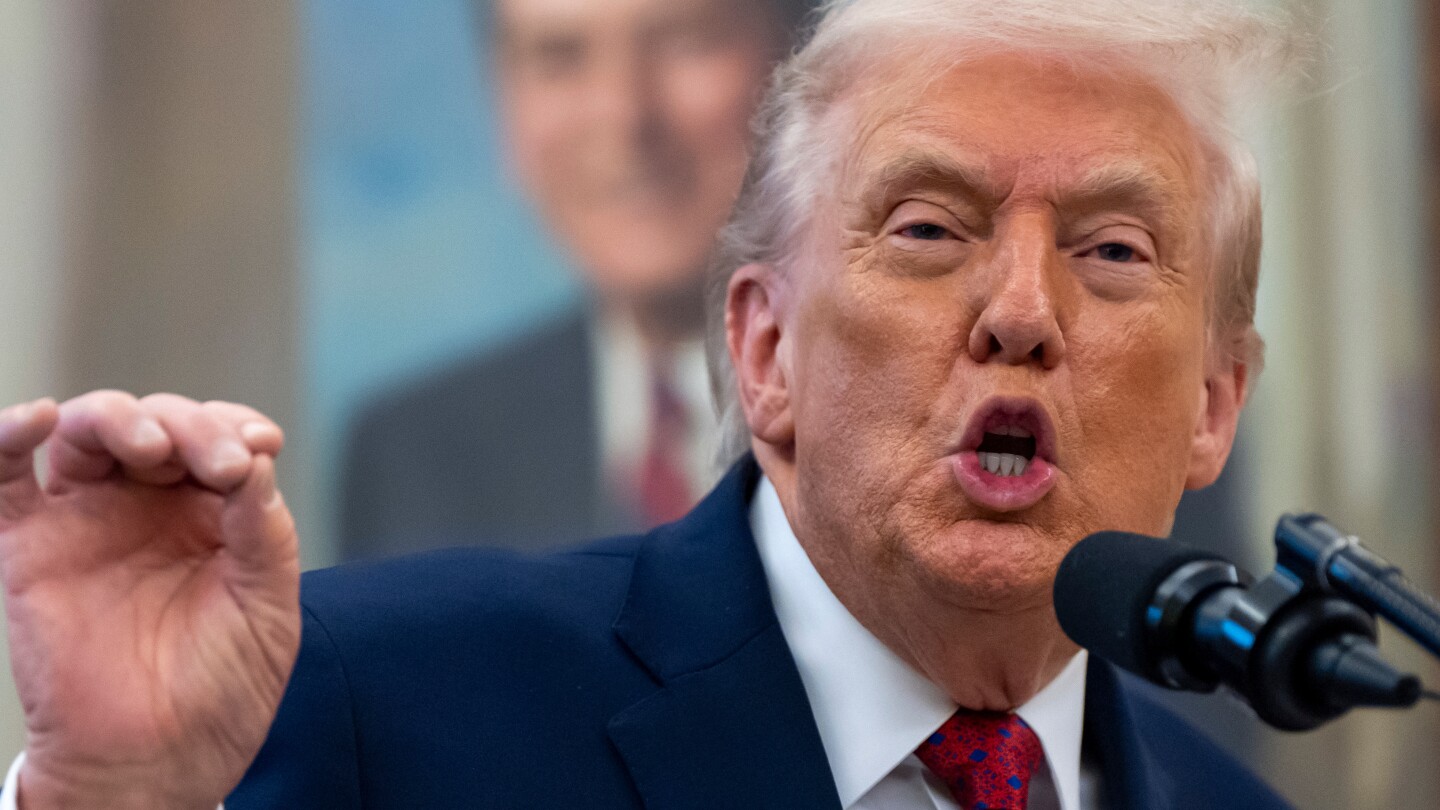
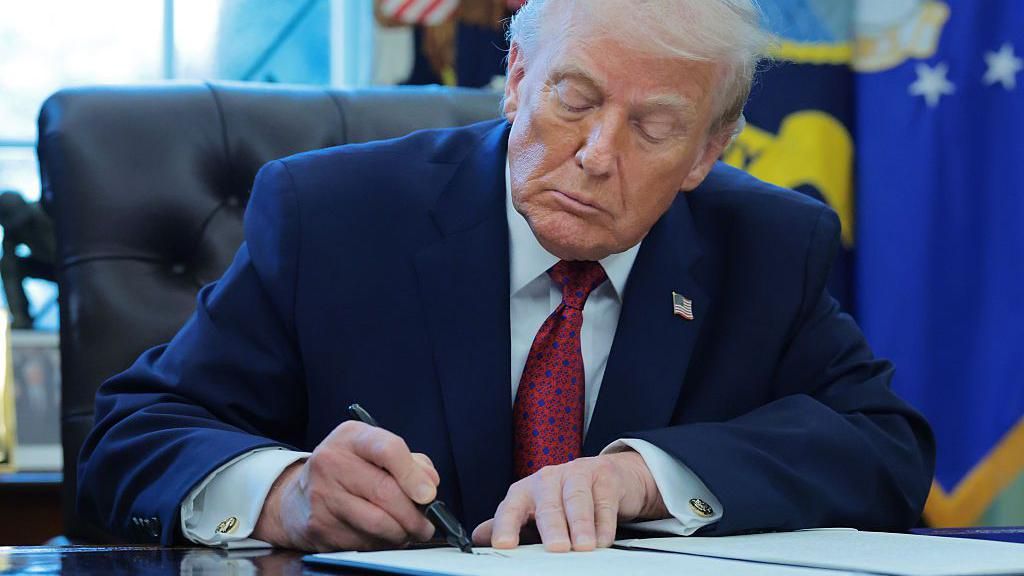
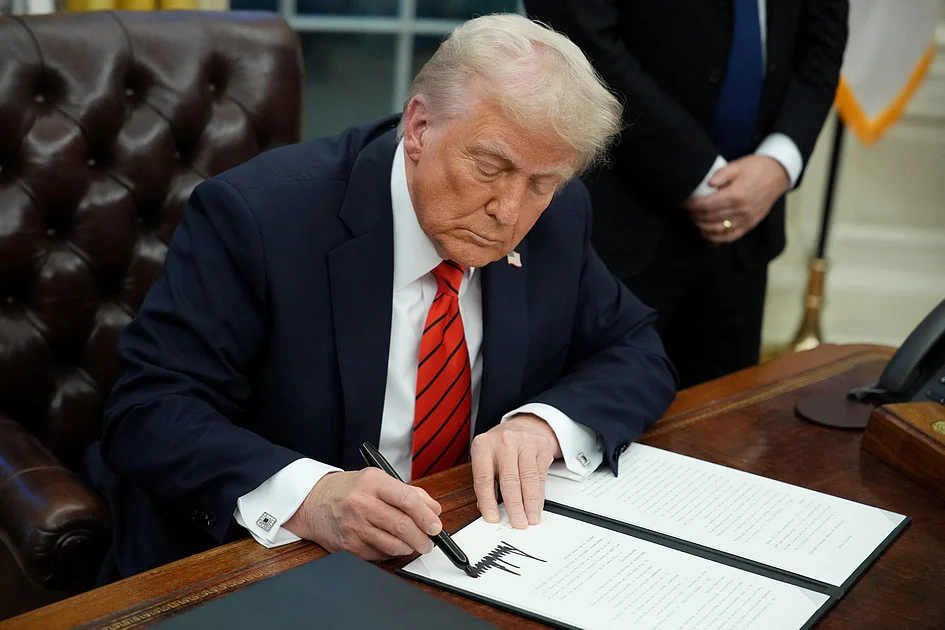
    President Donald Trump has redefined presidential power dynamics during his current term, issuing executive orders at a historical rate unmatched since World War II. Official records from the Federal Register reveal that Trump has signed 221 executive orders since his January 20 inauguration, surpassing the total from his entire previous term in just eleven months.

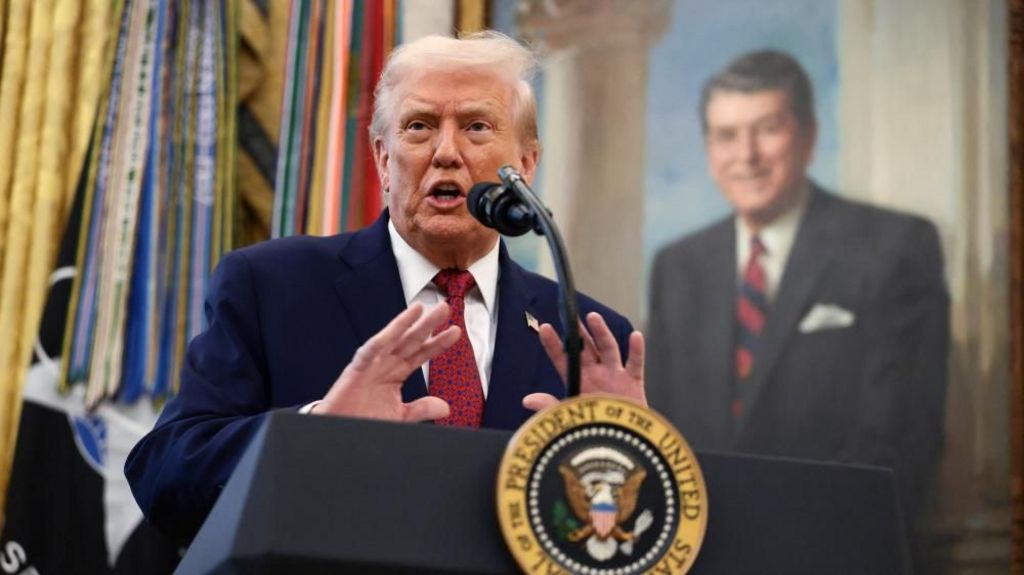
    The most recent order, signed Monday, designates fentanyl as a ‘weapon of mass destruction,’ continuing the administration’s pattern of bypassing Congressional approval mechanisms. This executive action frenzy represents one of the most substantial exercises of presidential authority in modern American history.

    Comparative analysis shows Trump’s three immediate predecessors—Joe Biden, Barack Obama, and George W. Bush—averaged between 30-40 executive orders annually. Only Franklin D. Roosevelt exceeded Trump’s current pace, issuing approximately 4,000 orders across four terms during the extraordinary circumstances of the Great Depression and World War II.

    According to AFP’s comprehensive analysis of official data, the orders span an exceptionally diverse range of policy areas. Domestic policy dominates at nearly 60%, while foreign affairs accounts for fewer than 10%. Social issues including culture, civil rights, education, and health constitute approximately 30% of all orders, outpacing economic and trade matters (20%) and government reform initiatives (18%).

    The administration’s most productive period occurred during the first four months, with over 30 orders issued monthly. However, the pace has notably slowed since early October, with only a dozen new orders appearing in the subsequent two and a half months. The orders have addressed topics ranging from artificial intelligence regulation and customs barriers to cultural policies and federal architecture standards.

  • Trump orders blockade of ‘sanctioned oil tankers’ into Venezuela, ramping up pressure on Maduro

    Trump orders blockade of ‘sanctioned oil tankers’ into Venezuela, ramping up pressure on Maduro

    WASHINGTON — In a significant escalation of economic pressure, President Donald Trump has declared a comprehensive naval blockade targeting all sanctioned oil tankers attempting to reach Venezuela. The announcement signals a dramatic intensification of the administration’s campaign against the government of Nicolás Maduro, aiming to sever Venezuela’s primary economic lifeline.

    The presidential directive follows recent U.S. military operations that included the seizure of an oil tanker near Venezuela’s coastline and the deployment of what Trump characterized as “the largest Armada ever assembled in the History of South America.” Through social media communications, the President asserted that Venezuela utilizes oil revenues to finance narcotics trafficking and other criminal enterprises, demanding the return of unspecified oil, land, and assets to the United States.

    This naval buildup has been accompanied by intensified military operations in international waters of the Caribbean and eastern Pacific regions. According to available data, these operations have resulted in at least 25 documented strikes on vessels, with approximately 95 casualties reported. While the administration defends these actions as necessary anti-narcotics measures, bipartisan congressional scrutiny has raised concerns about the legal boundaries of maritime warfare.

    The strategic implications are particularly severe for Venezuela, which possesses the world’s largest proven oil reserves but produces only about one million barrels daily. Since initial oil sanctions were imposed in 2017, Caracas has increasingly depended on unauthorized tanker fleets operating without national flags to maintain crude exports. The new blockade aims to eliminate this shadow supply chain, potentially crippling Venezuela’s already struggling economy.

  • No vote coming on extending healthcare subsidies, US House Speaker says

    No vote coming on extending healthcare subsidies, US House Speaker says

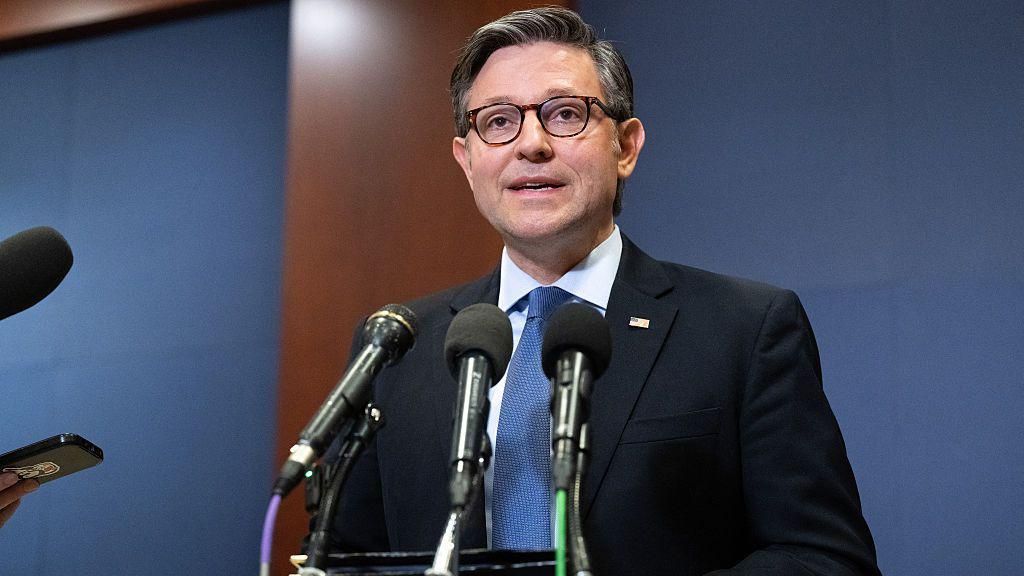
    WASHINGTON — House Speaker Mike Johnson has declared he will not permit a vote to extend pandemic-era healthcare subsidies scheduled to expire December 31st, virtually guaranteeing insurance premium increases for millions of low-income Americans. The decision culminates a protracted legislative battle that previously triggered a 40-day government shutdown this autumn.

    The subsidies, implemented as part of the Affordable Care Act (Obamacare) during the COVID-19 crisis, provide critical premium assistance to approximately 15 million Americans. Their expiration is projected to increase healthcare costs by an average of $1,200 annually per affected household.

    Johnson defended his position by characterizing the $35 billion annual subsidies as a temporary COVID relief measure rather than a permanent entitlement. ‘We looked for a way to try to allow for that pressure release valve, and it just was not to be,’ the Speaker told journalists, emphasizing that any extension would require equivalent spending cuts elsewhere.

    The political confrontation has exposed significant fractures within Republican ranks. Moderate House Republicans—particularly those facing competitive reelection bids in 2024—have voiced vehement opposition to the leadership’s stance. ‘I am pissed for the American people,’ declared Representative Mike Lawler (R-NY), noting that three-quarters of Obamacare recipients reside in states that voted for Donald Trump.

    In a dramatic legislative maneuver, a bipartisan coalition is exploring a discharge petition that would force a floor vote without leadership approval. Democrats require just four Republican signatures to advance a clean three-year extension proposal. However, with Congress preparing to adjourn for the holiday recess, any resolution appears delayed until January at the earliest—well after the subsidies’ expiration date.

    Even if the measure clears the House, it faces substantial obstacles in the Senate, where bipartisan support remains uncertain. The impasse occurs amid widespread public frustration over rising living costs, placing additional pressure on lawmakers to address healthcare affordability before midterm elections.

  • Erasmus scheme to return for UK students, BBC understands

    Erasmus scheme to return for UK students, BBC understands

    The United Kingdom is poised to reenter the European Union’s Erasmus+ exchange program following half a decade of absence, according to BBC reports. This strategic reversal comes after the UK terminated its participation in 2020 as part of its Brexit separation agreement with the EU.

    The Erasmus initiative, named after Dutch Renaissance scholar Desiderius Erasmus, facilitates educational and cultural exchanges by providing EU funding for students, trainees, and volunteers to spend up to one year in European partner nations. The UK had previously replaced this program with its domestically developed Turing scheme in 2021, which supports similar international placements across global destinations.

    Government officials have remained silent regarding ongoing negotiations, but an official announcement is anticipated from ministers this Wednesday. Prime Minister Sir Keir Starmer had previously indicated in May that a youth mobility arrangement could constitute part of a renegotiated relationship with the European Union. If confirmed, British students would regain access to Erasmus+ beginning January 2027.

    Alex Stanley of the National Union of Students welcomed the development, characterizing it as “fantastic that another generation of students will be able to be part of the Erasmus programme” and noting it would represent a “huge win for the student movement.” Student organizations have consistently advocated for reinstatement since the program’s termination.

    The original decision to abandon Erasmus was made by former Prime Minister Boris Johnson, who described it as a “tough decision” necessitated by the program’s “extremely expensive” nature. Historical data reveals that during its final year of participation in 2020, the UK received €144 million (£126 million) in EU funding supporting 55,700 participants in Erasmus projects. That year, Britain sent 9,900 students and trainees abroad while hosting 16,100 incoming participants.

    The Turing scheme, named after renowned British mathematician Alan Turing, has operated with £105 million in funding for the 2024/25 academic year, facilitating 43,200 placements across higher education, further education, and schools. Government ministers had promoted Turing as offering broader accessibility for disadvantaged backgrounds and enhanced travel cost support compared to its European counterpart. The future status of the Turing scheme remains uncertain following the potential reintroduction of Erasmus.

    Liberal Democrat universities spokesman Ian Sollom applauded the anticipated return to Erasmus, describing it as a “moment of real opportunity and a clear step towards repairing the disastrous Conservative Brexit deal.”

  • The US labels another Latin American cartel a terrorist group as the anti-drug war escalates

    The US labels another Latin American cartel a terrorist group as the anti-drug war escalates

    In a significant escalation of its counter-narcotics strategy, the Trump administration has formally designated Colombia’s Clan del Golfo as a foreign terrorist organization. This decisive move, announced by the U.S. State Department on Tuesday, targets one of Latin America’s most formidable drug cartels and represents a substantial shift in hemispheric policy approaches.

    The State Department characterization portrays Clan del Golfo as a ‘violent and powerful criminal organization’ that systematically employs cocaine trafficking revenues to finance its extensive operations. The designation specifically cites the group’s responsibility for ‘terrorist attacks against public officials, law enforcement and military personnel, and civilians in Colombia.’

    This development occurs against a backdrop of deteriorating U.S.-Colombian relations. The Trump administration recently returned Colombia to its list of nations failing to cooperate in anti-drug efforts—the first such designation in nearly three decades. This diplomatic reproach reflects both the documented surge in cocaine production and the increasingly strained relationship between the White House and Colombia’s leftist President Gustavo Petro.

    Further complicating bilateral relations, the United States imposed sanctions on President Petro in October based on allegations that his administration permitted drug cartels to ‘flourish’ and expand cocaine exports to American markets. Petro has vigorously contested these accusations, countering that Colombia has achieved record-level cocaine interceptions while avoiding lethal force against suspected smugglers.

    With approximately 9,000 combatants, Clan del Golfo (alternatively known by its Spanish acronym AGC) maintains a substantial presence across approximately one-third of Colombia’s municipalities according to the nation’s Human Rights Defender’s Office. The organization, which evolved from right-wing paramilitary units that previously combated Marxist guerrillas, stands accused of systematic extortion against local businesses and child recruitment practices.

    This terrorist designation introduces complex implications for ongoing peace negotiations between the Colombian government and AGC. Since September, both parties have engaged in discussions potentially leading to fighter disarmament in exchange for reduced sentences for leadership figures. A recent agreement signed in Qatar established designated zones where AGC members would receive protection from prosecution during peace talks, alongside suspensions of extradition proceedings against leaders.

    Elizabeth Dickinson, Colombia analyst at the International Crisis Group, suggests the designation may represent a symbolic message urging Colombian authorities to adopt a more stringent stance toward the armed group. Dickinson notes that ‘the tensions between Colombia and Washington are at historic levels,’ adding that the move could give ‘pause to Colombian authorities…going forward.’

    While the terrorist designation doesn’t automatically authorize military strikes, it significantly enhances the legal framework for potential offensive operations. The administration previously employed similar designations against Venezuelan criminal organizations Tren de Aragua and Cartel de los Soles before conducting maritime operations against alleged drug smuggling vessels—actions whose legality has been questioned by U.S. lawmakers.

    President Trump’s recent characterization of Petro as ‘fairly hostile’ to American interests, coupled with warnings of ‘big problems’ if policies don’t change, underscores the profound diplomatic challenges currently defining U.S.-Colombian relations.

  • Jim Gavin ‘asked about rental dispute three times before selection’

    Jim Gavin ‘asked about rental dispute three times before selection’

    An internal investigation into Fianna Fáil’s presidential campaign has revealed significant oversights in candidate vetting procedures, culminating in Jim Gavin’s abrupt withdrawal from the race. The review, conducted by senior counsel and obtained by BBC News NI, discloses that party officials received three separate warnings about financial discrepancies involving Gavin and a former tenant prior to his nomination.

    The fact-finding mission established that both media inquiries and internal communications raised concerns about a tenant-related financial matter on September 5 and 8. Irish Independent journalists initially queried the party about the issue, while backbench TD John Lahart simultaneously alerted Deputy Leader Jack Chambers via text message regarding ‘a potential issue with a tenant who was a journalist and the return of a deposit.’

    When confronted with these allegations, Gavin consistently maintained no recollection of any tenant disputes. Despite these red flags, he secured the presidential nomination on September 9 with 41 votes against Billy Kelleher’s 29 in a closely contested selection process.

    The situation escalated on October 4 when the Irish Independent published detailed allegations that Gavin had retained mistakenly overpaid rent from 2009. Although the party initially issued statements claiming Gavin had no records of such disputes, the former tenant subsequently provided documentary evidence to Fianna Fáil headquarters.

    Confronted with substantiated evidence, Gavin acknowledged receiving questionable payments and convened emergency meetings with party leadership on October 5. Following urgent consultations with Taoiseach Micheál Martin and Minister Chambers, Gavin concluded his campaign would create ’10 very difficult days’ for the party and withdrew that evening.

    The controversial campaign consumed approximately €350,000-€400,000 in party resources. The review further notes that many perceived Gavin as the Taoiseach’s preferred candidate, exacerbating internal tensions. Gavin did not participate in the investigation’s preparation, and the report explicitly states its conclusions don’t represent his perspective on events.

    As Fianna Fáil parliamentarians convene for a special meeting at Leinster House, Martin faces intensified scrutiny from backbenchers regarding leadership decisions and candidate validation processes. Despite his withdrawal, Gavin remained on the ballot and received 7.18% of first-preference votes in the October 24 presidential election.

  • Only some US lawmakers to see full video of controversial boat strike, Hegseth says

    Only some US lawmakers to see full video of controversial boat strike, Hegseth says

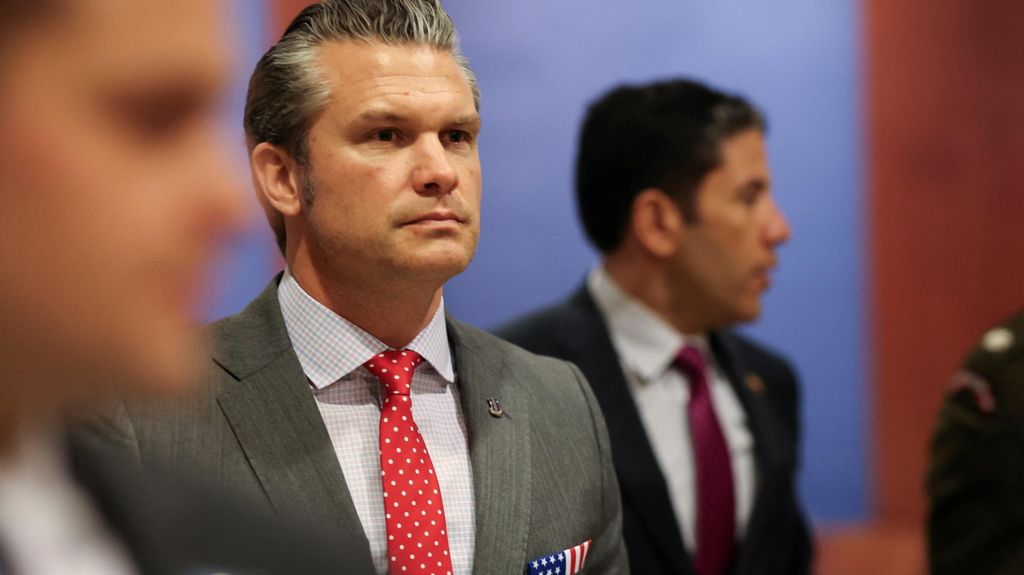
    U.S. Defense Secretary Pete Hegseth confirmed Tuesday that congressional committees will receive exclusive access to unedited footage of September’s contentious boat strike in the Caribbean, while maintaining the video will remain classified from public view. The announcement followed a classified Senate briefing attended by both Hegseth and Secretary of State Marco Rubio regarding the Trump administration’s ongoing military operations targeting alleged Venezuelan drug trafficking operations.

    The briefing revealed sharp partisan divisions, with Republicans largely endorsing the administration’s aggressive stance while Democrats raised substantial legal and ethical concerns. These concerns intensified following recent reports that two survivors of the initial September 2 attack were killed in a subsequent strike while clinging to their burning vessel.

    Hours before the Capitol Hill briefing, the military announced new strikes in the Pacific Ocean resulting in eight fatalities, bringing the total death toll to at least 90 since operations began. Hegseth specified that only members of the House and Senate armed services committees would view the full September footage, citing longstanding Department of Defense protocols regarding top-secret materials.

    This selective disclosure occurs amid legislative pressure through a defense spending bill that would mandate Pentagon transparency with armed services committees regarding strikes in the Southern Command region. The administration’s social media announcements of strikes typically feature grainy video clips without substantive evidence of drug trafficking or detailed vessel inventories.

    Republican lawmakers including Senators Thom Tillis (R-NC), Rick Scott (R-FL), and Lindsey Graham (R-SC) defended the operations as necessary for national security, with Graham explicitly framing them as part of a broader regime change objective against Venezuelan leader Nicolás Maduro.

    Conversely, Democratic leaders including Senate Minority Leader Chuck Schumer (D-NY) and Intelligence Committee Chairman Adam Schiff (D-CA) demanded full transparency, with Schiff preparing a formal request for congressional-wide video release. The operations have drawn diplomatic condemnation from Venezuela, with Maduro accusing the U.S. of regional destabilization and Attorney General Tarek William Saab characterizing Trump’s allegations as resource-driven envy.

    Navy Admiral Frank Bradley, who acknowledged ordering the controversial second strike, is scheduled to brief armed services committees Wednesday as legal questions persist regarding the legality of attacks in international waters.

  • Thousands protest Slovak leader Fico over whistleblower office closure and penal code changes

    Thousands protest Slovak leader Fico over whistleblower office closure and penal code changes

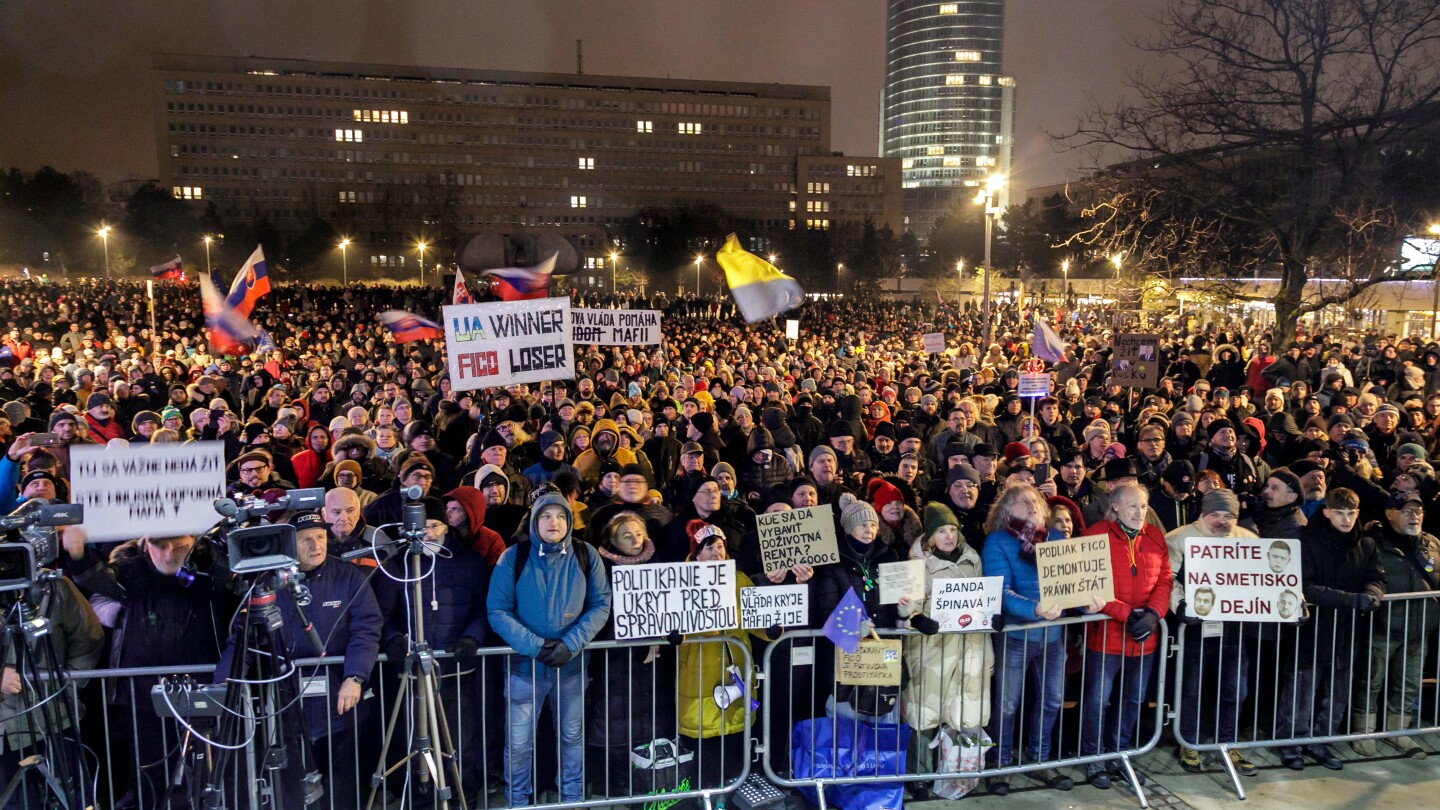
    BRATISLAVA, Slovakia — Massive demonstrations swept across Slovakia on Tuesday as thousands of citizens mobilized against Prime Minister Robert Fico’s controversial governmental measures targeting the nation’s anti-corruption infrastructure. Protesters gathered in ten municipalities including the capital, where crowds at Freedom Square voiced their demands with resounding chants of “Resign, resign” directed at the populist leader.

    The protests erupted following parliamentary approval of legislation that would dismantle the independent Whistleblower Protection Office—a move that has drawn sharp criticism both domestically and internationally. Simultaneously, lawmakers aligned with Fico’s coalition government endorsed penal code revisions that would prohibit evidence obtained through suspect cooperation with law enforcement, effectively eliminating mechanisms for reduced sentences in exchange for criminal intelligence.

    Opposition leader Michal Šimečka of the Progressive Slovakia party addressed the rally, declaring: “Slovakia stands alone as the only nation where governmental authorities enact legislation specifically designed to facilitate criminal and mafia activities.” Protesters displayed banners with the stark message: “Fico’s government helps mafia.”

    The reforms have raised particular concerns regarding their potential benefit to Tibor Gašpar, Deputy Speaker of Parliament and Fico ally, who faces impending trial for alleged establishment of a criminal organization. Demonstrators have appealed to President Peter Pellegrini, typically a government supporter, to exercise his veto power against the legislation.

    Notably, the protest marked the first participation of László Gubík, leader of the Hungarian Alliance representing Slovakia’s 450,000-strong Hungarian minority. Critics increasingly draw parallels between Fico’s policies and the democratic backsliding observed in Viktor Orbán’s Hungary, signaling growing international concern over Slovakia’s political trajectory.

  • US designates Colombian cocaine gang a terrorist group

    US designates Colombian cocaine gang a terrorist group

    In a significant escalation of America’s counter-narcotics campaign, the Trump administration has simultaneously designated fentanyl as a weapon of mass destruction and classified Colombia’s notorious Gulf Clan cartel as a Foreign Terrorist Organization. President Trump’s executive order reframing the synthetic opioid as a WMD represents an unprecedented approach to combating drug trafficking, granting federal agencies expanded authority to target production and distribution networks.

    The Treasury Department’s terrorist designation for the Clan del Golfo (Gulf Clan) marks the fourth Colombian armed group to receive this classification, joining the National Liberation Army (ELN) and two dissident factions of the former FARC rebels. This criminal empire, estimated to command thousands of members, dominates cocaine trafficking from Colombia’s northern Urabá region to markets in the United States and Europe while additionally controlling migrant smuggling routes through the treacherous Darién Gap jungle.

    This strategic move creates immediate diplomatic complications for Colombian President Gustavo Petro, who secured a landmark peace agreement with the Gulf Clan just two weeks prior. The accord, negotiated in Doha, promised steps toward disarmament in exchange for protection from extradition to the United Nations. Secretary of State Marco Rubio justified the terrorist designation by citing the group’s attacks against Colombian officials, security forces, and civilians.

    The administration’s hardened stance extends beyond designations. Over twenty lethal strikes against suspected drug vessels in the Caribbean and Pacific have resulted in approximately ninety fatalities, drawing condemnation from President Petro who characterized these operations as ‘murder.’ The relationship between the two administrations has grown increasingly acrimonious, with Rubio publicly labeling Petro a ‘lunatic’ while the Colombian leader denounces US interventionism.

    Trump has defended the aggressive tactics, asserting that each maritime strike ‘saves 25,000 American lives’ by preventing fentanyl from reaching US shores. This potent synthetic opioid contributed significantly to the nation’s overdose crisis, which claimed over 110,000 lives in 2023 before seeing a 25% reduction in fatalities during 2024. However, counternarcotics experts note that neither Colombia nor Venezuela produce fentanyl, questioning the geographical focus of enforcement efforts.

    The administration appears to be pursuing a dual-track strategy: continuing cocaine interdiction while expanding capabilities against fentanyl trafficking. Trump has hinted at further escalation, suggesting potential ‘strikes on land’ against ‘narco-terrorists’ in both Venezuela and Colombia, specifically mentioning alleged cocaine processing facilities within Colombian territory.

    Mexico’s President Claudia Sheinbaum has criticized the WMD classification, emphasizing the legitimate medical applications of fentanyl in pain management and advocating for addressing root causes of drug abuse rather than militarized responses. This development signals a profound transformation in how the United States conceptualizes and prosecutes its war on drugs, with potentially far-reaching implications for international relations, security policy, and public health approaches to substance abuse crises.