分类: politics

  • Republican Elise Stefanik ends New York governor bid

    Republican Elise Stefanik ends New York governor bid

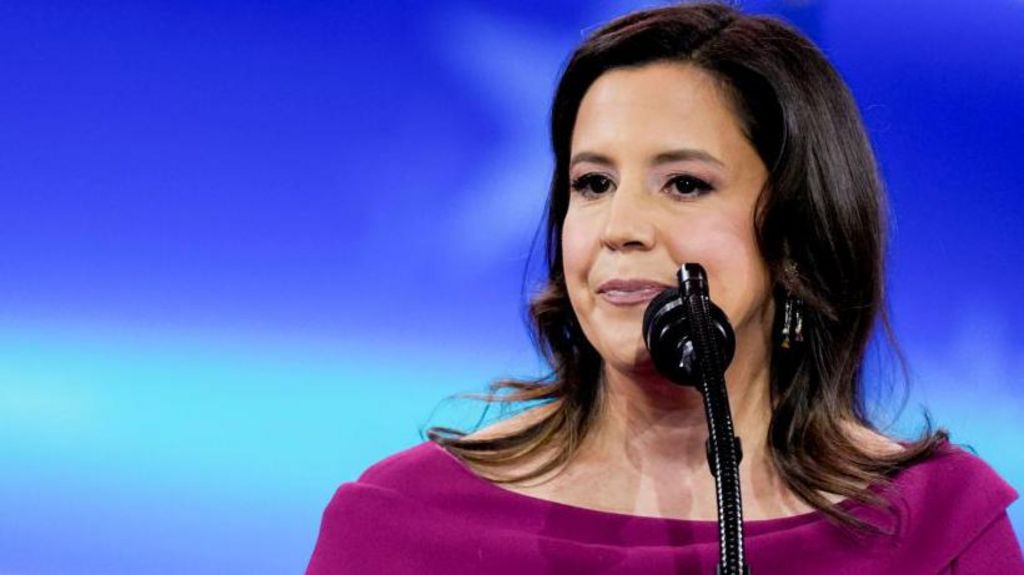
    In a significant political development, Republican Congresswoman Elise Stefanik has abruptly terminated her campaign for New York governor while simultaneously announcing she will not seek re-election to her congressional seat. The decision follows the emergence of primary competition from Bruce Blakeman, a fellow Trump loyalist and two-term Nassau County executive who declared his gubernatorial ambitions earlier this month.

    Stefanik communicated her departure through a comprehensive social media statement on Friday, explaining that while confident in her primary victory prospects, she deemed the extensive campaign effort ‘not an effective use of our time or your generous resources.’ The 41-year-old lawmaker emphasized familial considerations as the paramount factor, noting that ‘being a parent is life’s greatest gift and greatest responsibility.’ She expressed particular concern about her young son’s welfare during his formative years.

    The anticipated primary contest had presented a dilemma for former President Donald Trump, who had refrained from endorsing either candidate despite both being staunch allies. Trump previously characterized both figures as ‘great people’ when questioned about the potential intra-party conflict.

    Stefanik’s political trajectory has been notably aligned with Trump’s orbit since her emergence as one of his most vocal defenders during the 2019 impeachment proceedings. Her political standing was further acknowledged when Trump initially nominated her for UN ambassador during his transition planning for a potential second term, though the nomination was subsequently withdrawn to preserve Republican voting strength in the House.

    Her congressional district, New York’s 21st, encompasses the Adirondack Mountains region north of Albany, which she has represented since 2014. The departure creates open competition for both the gubernatorial nomination and her congressional seat, potentially altering the state’s political landscape. New York has not elected a Republican governor since George Pataki concluded his term in 2007.

  • Bangladesh government urges calm in wake of student leader’s killing, as election looms

    Bangladesh government urges calm in wake of student leader’s killing, as election looms

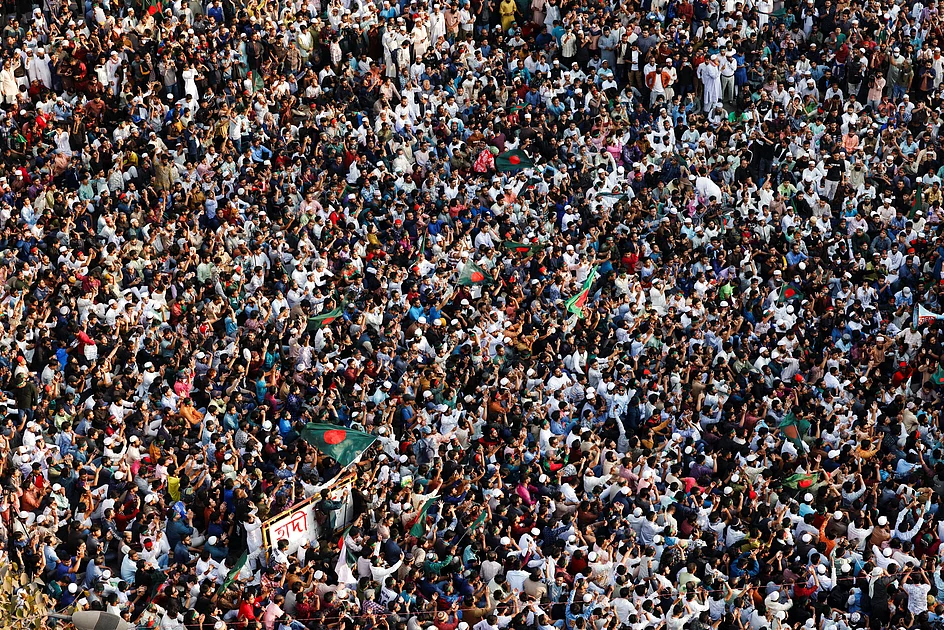
    Bangladesh’s interim administration has issued urgent appeals for national calm amid escalating violence triggered by the assassination of prominent youth leader Sharif Osman Hadi. The 32-year-old revolutionary figure was fatally shot by masked assailants during his electoral campaign launch in Dhaka last Friday, succumbing to injuries after six days on life support in Singapore.

    The killing has ignited widespread demonstrations across major urban centers, with protesters targeting media institutions and diplomatic facilities. The offices of leading newspapers Prothom Alo and Daily Star faced severe vandalism, requiring military intervention to rescue trapped journalists. In Chittagong, demonstrators assaulted the Indian Assistant High Commission, reflecting deteriorating relations with neighboring India since former Prime Minister Sheikh Hasina’s exile to Delhi in August 2024.

    This violence presents the most significant challenge to Nobel laureate Muhammad Yunus’s caretaker government, which oversees the nation during this transitional period. The administration has characterized the unrest as orchestrated by “fringe elements” seeking to destabilize Bangladesh’s democratic transition. With parliamentary elections scheduled within two months, the government emphasizes the critical importance of maintaining stability for the nation’s 175 million citizens.

    The political landscape remains fractured following Hasina’s ouster during student-led protests, with her banned Awami League party threatening further disruptions. Independent human rights organization Ain O Salish Kendra has warned that these coordinated attacks indicate dangerous extremist proliferation, potentially creating permanent crises for democratic institutions and human rights protections unless addressed decisively.

  • ‘Every border lasts until the next war’: Israel’s settlers gather to ‘raise flag’ in Gaza

    ‘Every border lasts until the next war’: Israel’s settlers gather to ‘raise flag’ in Gaza

    Hundreds of Israeli settlers convened at the Sderot lookout point overlooking Gaza on Thursday for a controversial demonstration organized by the Nachala settlement movement. The gathering, titled “Raising the Flag in Gaza,” explicitly advocated for establishing permanent Jewish settlements within the besieged Palestinian territory and called for the expulsion of Gaza’s Palestinian population.

    The event unfolded against a backdrop of widespread destruction in northern Gaza, where Israeli military operations have systematically flattened entire neighborhoods over two years of conflict. The Sderot viewpoint has ironically become a tourist attraction for Israelis observing the devastation in real-time.

    Organizers distributed traditional Hanukkah pastries as supporters arrived from West Bank settlements and within Israel. The gathering featured speeches from right-wing politicians and settler leaders who declared Gaza part of their “ancestral inheritance” that must be permanently reclaimed. The only dissent came from a small group of left-wing activists from the Standing Together movement, who briefly stormed the stage with shirts proclaiming “We are not returning to Gaza.”

    Settler leader Daniella Weiss asserted that raising Israeli flags in Gaza represented a rejection of international dictates, particularly criticizing potential Turkish or Qatari involvement in postwar governance. The event occurred despite the defense ministry denying permission for activists to physically cross into Gaza, though reports indicate dozens of settlers later breached the border fence at other locations to plant flags.

    Multiple speakers employed the term “voluntary migration” to describe the desired removal of Palestinians from Gaza—a euphemism for ethnic cleansing. Knesset member Limor Son Har-Melech stated that achieving this outcome merely required Israeli “will,” while settler Yehoshua Sokol argued international borders remain fluid “until the next war.”

    The demonstration revealed growing tensions within Israel’s right-wing coalition regarding Gaza’s future, with settlers pressuring the government to resist international agreements and pursue permanent territorial control through population transfer.

  • US suspends green card lottery after MIT professor, Brown University killings

    US suspends green card lottery after MIT professor, Brown University killings

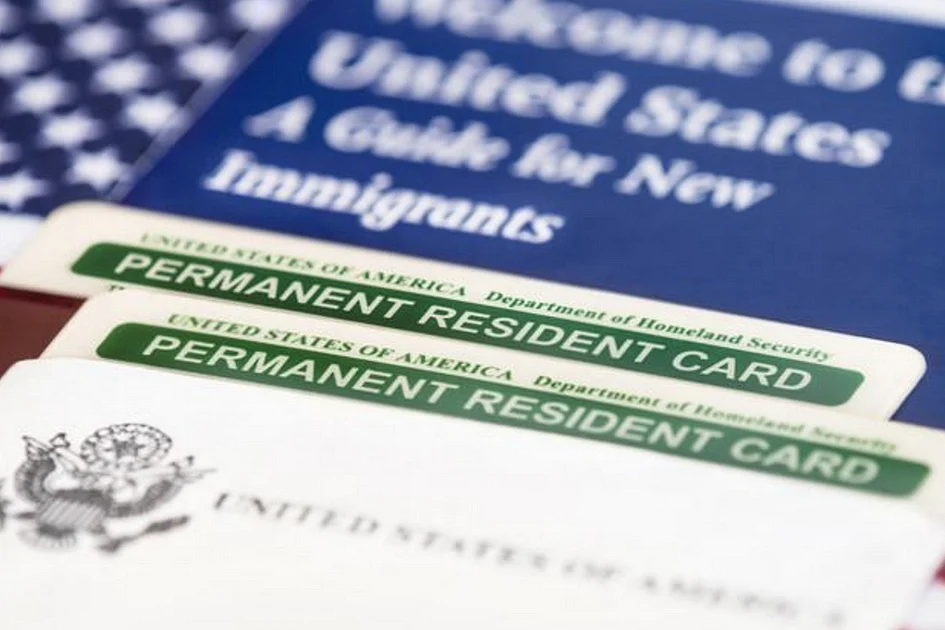
    In response to recent violent campus incidents, the Trump administration has announced the immediate suspension of the Diversity Visa Lottery program. This decisive action follows revelations that Claudio Neves Valente, the primary suspect in both the Brown University shooting and MIT professor’s killing, originally entered the United States through this immigration pathway in 2017.

    The Portuguese national, who was found deceased from an apparent suicide after an extensive manhunt, allegedly committed horrific acts at two prestigious academic institutions. The Brown University incident resulted in two student fatalities and nine injuries, while the subsequent attack claimed the life of Professor Nuno Loureiro at Massachusetts Institute of Technology.

    Homeland Security Chief Kristi Noem confirmed via social media that Valente had obtained legal permanent resident status through the diversity visa program. Characterizing the suspect as a ‘heinous individual,’ Noem asserted that Valente ‘should never have been allowed in our country.’ The suspension directive was issued at President Trump’s instruction to prevent further harm from what administration officials describe as a ‘disastrous program.’

    The Diversity Visa Program, administered by the State Department, allocates approximately 55,000 permanent resident visas annually to applicants from nations with historically low immigration rates to the United States. This marks the second instance during Trump’s presidency that the program has faced suspension following violent acts committed by visa recipients.

    Investigative authorities revealed that Valente initially entered the U.S. on a student visa around 2000 and maintained status through 2021 before obtaining permanent residency. Evidence indicates both Valente and Professor Loureiro participated in the same academic program in Portugal during the late 1990s, though authorities have not established a definitive motive for the attacks.

    The tragedy has sparked renewed scrutiny of campus security protocols, particularly after disclosures that Brown University’s extensive camera network lacked integration with law enforcement surveillance systems. The incident adds to the distressing tally of over 300 mass shootings recorded in the United States this year alone.

  • Giant billboard highlighting UAE role in Sudan war appears in London

    Giant billboard highlighting UAE role in Sudan war appears in London

    A provocative digital billboard has emerged in central London as part of an international awareness campaign highlighting the United Arab Emirates’ alleged involvement in the Sudan conflict. The striking display features an AI-generated image of a young woman taking a selfie against Dubai’s glittering skyline from an infinity pool. However, the image on her phone screen reveals a stark contrast—the devastating aftermath of war-torn Sudan instead of luxury surroundings.

    The installation, which cycles every 80 seconds continuously, carries the caption: ‘Your selfie won’t look so good once you’ve found out what they’re doing in Sudan.’ Complementing the static display, a mobile van projects the same imagery across London’s streets, amplifying the message’s reach.

    This initiative, orchestrated by non-profit organization Avaaz, aims to spotlight evidence suggesting UAE’s support for the Rapid Support Forces (RSF) paramilitary group in Sudan. The RSF faces allegations of committing genocide during the ongoing conflict. The billboard incorporates a QR code directing viewers to investigative reports from Middle East Eye, The Guardian, and The New York Times detailing the UAE’s purported role.

    Despite the UAE’s consistent denials of supporting RSF—including recent dismissals of Middle East Eye’s reporting as ‘fabrication’—multiple evidentiary streams indicate otherwise. Flight tracking data, weapon serial numbers, diplomatic sources across multiple continents, and video evidence collectively suggest the UAE has been supplying weapons and support to RSF leader Mohamed Hamdan Dagalo, a long-term associate of Abu Dhabi.

    Supply lines reportedly operate through UAE-aligned regions including southern Libya, Chad, Central African Republic, and Somalia’s Puntland and Somaliland. International diplomats describe UAE’s involvement as an ‘open secret,’ with the nation’s sophisticated lobbying efforts and substantial financial resources reportedly shielding it from formal reprimands or consequences.

    The campaign deliberately contrasts the UAE’s reputation as a premium tourism destination—hosting over 23 million visitors in 2025’s first nine months with a $70 billion sector GDP contribution—with its alleged wartime activities. Notably, over one million British tourists visited Dubai this year, unaware of the geopolitical implications surrounding their luxury destination.

    The RSF, originating from Janjaweed militias deployed by Omar al-Bashir’s regime in Darfur, transitioned into formal Sudanese military structures from 2013 until April 2023. Its subsequent rift with the Sudanese Armed Forces (SAF)—backed by Egypt and Turkey—triggered the current conflict, displacing over 14 million people and creating the world’s most severe humanitarian crisis.

  • At Putin’s annual news conference, a Russian journalist pops the question — to his girlfriend

    At Putin’s annual news conference, a Russian journalist pops the question — to his girlfriend

    MOSCOW — Russian President Vladimir Putin’s meticulously orchestrated annual press conference unfolded as a study in contrasts, blending serious geopolitical discourse with unexpectedly personal moments. The four-and-a-half-hour event showcased Putin’s dual role as both statesman and paternal figure to the nation.

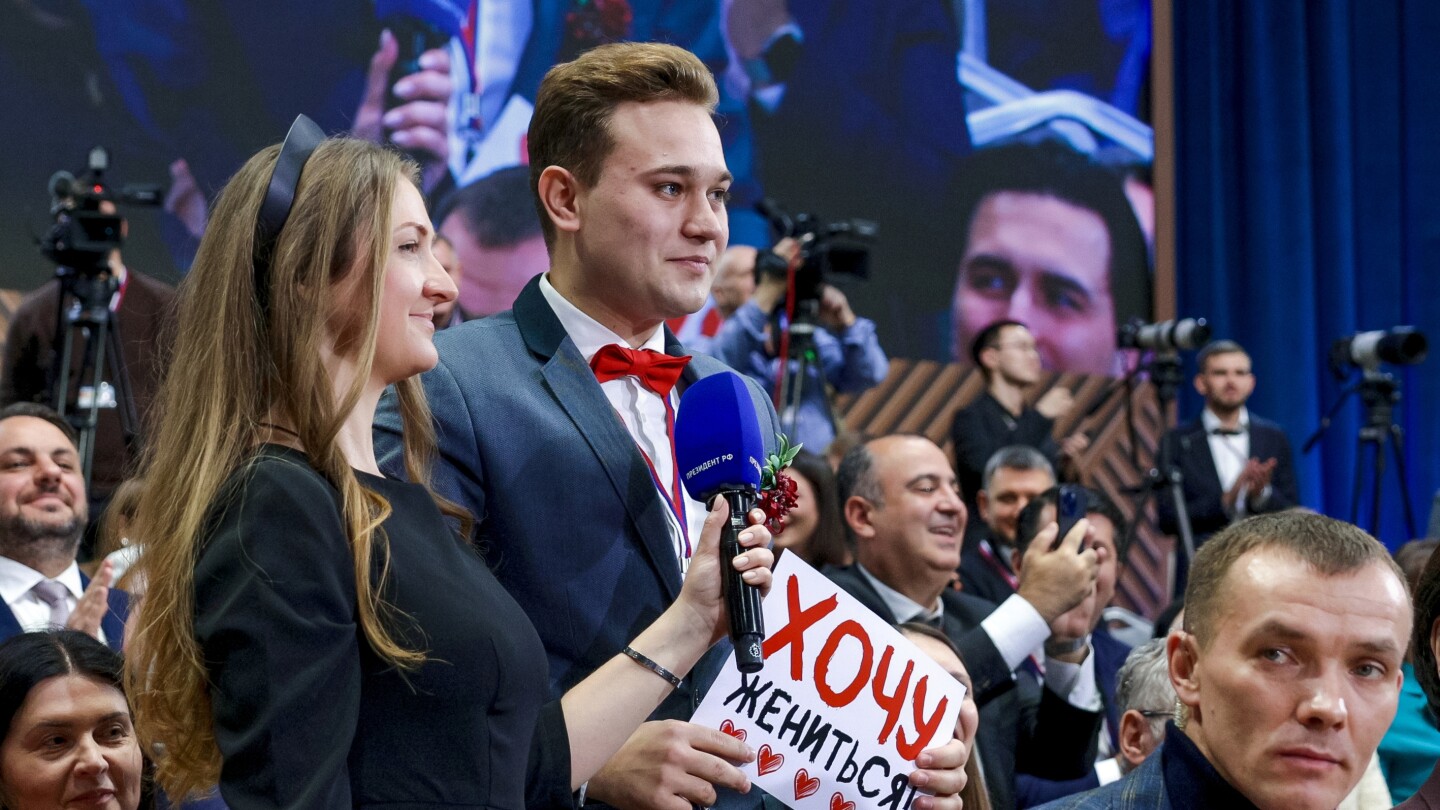
    The proceedings took a romantic turn when Kirill Bazhanov, a journalist from Yekaterinburg’s Channel 4, displayed a marriage proposal directed at his girlfriend Olga during the live broadcast. Putin, noting the reporter’s distinctive red bow tie, remarked, ‘You’re ready to go to the registry office!’ The couple subsequently extended a wedding invitation to the Russian leader.

    Amid these lighter exchanges, the conference addressed substantial concerns including delayed pension payments, problematic construction projects, and Russia’s ongoing military engagement in Ukraine—now approaching its fourth year. The event’s carefully managed nature provided Putin, who has governed Russia for a quarter-century, with a platform to expound on diverse topics while cultivating his image as a leader attentive to ordinary citizens.

    Journalists employed various tactics to capture presidential attention, from holding distinctive signs to wearing traditional national attire. One reporter brought customized Labubu dolls resembling Russian officials and former U.S. President Donald Trump, while another queried about extraterrestrial possibilities regarding an approaching comet.

    The event’s security protocols were briefly tested when Tajik journalist Shamsudin Boboyev attempted to present Putin with a book, prompting swift intervention by security personnel. Kremlin spokesman Dmitry Peskov subsequently advised that gifts should be described rather than physically presented.

    In a concluding personal revelation, Putin affirmed his belief in love at first sight when pressed by journalists, offering a rare glimpse into the private sentiments of the notoriously guarded leader.

  • Putin tells BBC Western leaders deceived Russia

    Putin tells BBC Western leaders deceived Russia

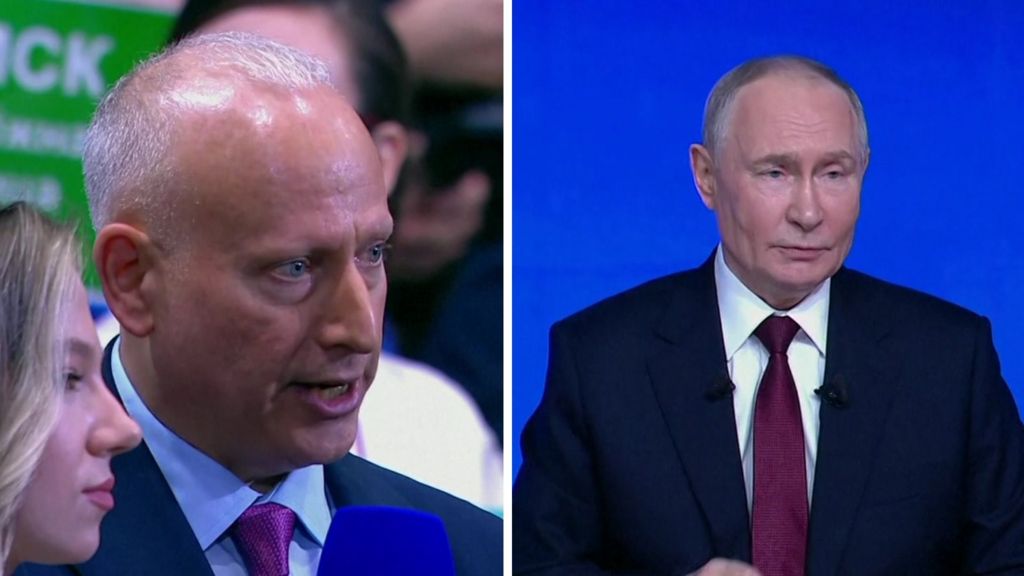
    In a revealing exchange with BBC’s Russia editor Steve Rosenberg, President Vladimir Putin leveled serious allegations against Western political leadership, claiming they had systematically misled Russia through deceptive practices. The Russian leader’s comments came during a rare interview addressing his nation’s future trajectory and its strained relations with Western powers.

    Putin’s assertions centered on what he characterized as a pattern of Western dishonesty in diplomatic engagements, though he stopped short of providing specific evidence to support these claims. The Russian president framed these alleged deceptions as justification for Moscow’s increasingly assertive foreign policy stance and its distancing from Western institutions.

    During the wide-ranging discussion, Putin also outlined his vision for Russia’s development amid ongoing geopolitical tensions. He emphasized national sovereignty and economic independence as cornerstones of his strategy to counter Western influence. The interview provided insight into the Kremlin’s perspective on international affairs at a time of heightened global instability.

    The BBC’s access to Putin marks a significant journalistic opportunity given the Russian leader’s limited engagement with Western media outlets in recent years. Rosenberg’s questioning touched upon multiple aspects of Russia’s domestic and international agenda, with Putin’s responses expected to influence how Western governments interpret Moscow’s intentions moving forward.

  • Watch: President Trump’s name added to facade of Kennedy Center

    Watch: President Trump’s name added to facade of Kennedy Center

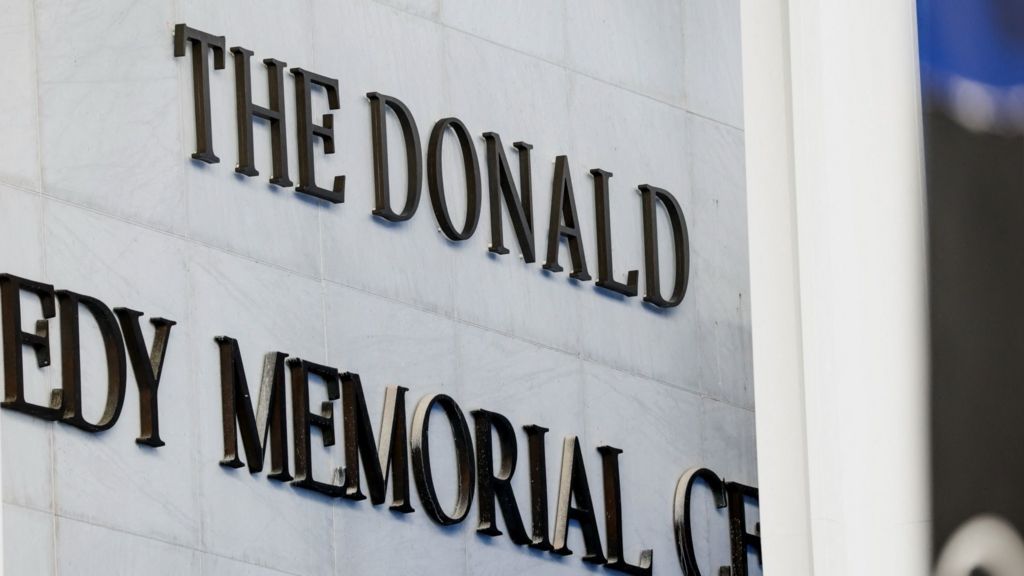
    The John F. Kennedy Center for the Performing Arts has initiated physical modifications to its iconic facade following a decisive board vote to incorporate former President Donald Trump’s name into the prestigious venue’s identification. Construction crews were documented implementing the nomenclature changes at the Washington D.C. institution, which has historically carried solely the 35th president’s namesake since its 1971 inauguration.

    The controversial decision represents a significant departure from the center’s half-century naming tradition and has ignited substantial discourse regarding the politicization of cultural institutions. The Kennedy Center’s leadership defended the move as recognition of presidential contributions to the arts, though the action has drawn mixed reactions from the artistic community and political commentators alike.

    This development occurs amidst ongoing national conversations about presidential legacies and their institutional commemorations. The visual documentation of Trump’s name being physically added to the Kennedy Center’s exterior provides tangible evidence of how political transitions become permanently embedded within the nation’s cultural architecture, potentially setting precedents for future presidential recognitions at non-political institutions.

  • Erika Kirk endorses JD Vance for president at tense conservative event

    Erika Kirk endorses JD Vance for president at tense conservative event

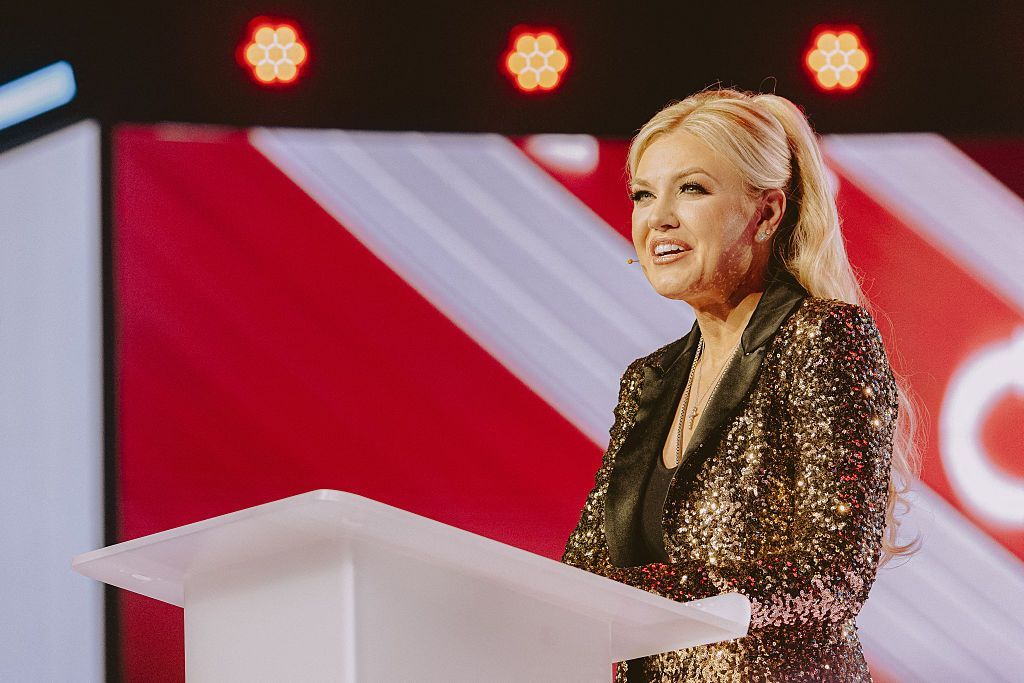
    PHOENIX – The widow of slain conservative activist Charlie Kirk has positioned Turning Point USA as a key force behind Vice President JD Vance’s potential 2028 presidential bid, signaling early political maneuvering within the Republican Party. Erika Kirk’s endorsement emerged during Thursday’s opening session of the organization’s America Fest conference, marking the group’s first major gathering since her husband’s assassination in September.

    Addressing attendees at Phoenix Convention Center, Kirk declared: ‘We are going to get my husband’s friend, JD Vance, elected for 48 in the most resounding way possible’ – referencing the position of 48th U.S. president. Vance, who is scheduled to speak at the event on Sunday, has not formally announced presidential ambitions.

    The conference immediately revealed deepening fractures within the conservative movement as prominent figures engaged in public feuding. Podcast host Ben Shapiro launched scathing attacks against media personalities Candace Owens, Tucker Carlson, Megyn Kelly and Steve Bannon, labeling them ‘fraudsters and grifters.’ He specifically condemned those who refused to denounce Owens’ ‘vicious attacks,’ including what he described as baseless conspiracy theories surrounding Charlie Kirk’s murder.

    Owens, a former Turning Point employee turned independent commentator, has repeatedly challenged Republican establishment figures while promoting controversial theories. The tensions emerged against a backdrop of growing speculation about former President Donald Trump’s grip on the Republican Party and internal struggles over the future direction of the MAGA movement.

    The discord intensified when Tucker Carlson countered Shapiro’s criticisms from the same stage, mocking his call for deplatforming opponents at an event traditionally celebrating free speech. ‘That guy is pompous,’ Carlson remarked. ‘Calls to deplatform at a Charlie Kirk event? That’s hilarious.’

    The conference highlighted the complex legacy of Charlie Kirk’s organization, which supporters view as a bastion of free speech and critics condemn as platform for hate speech. Authorities revealed Kirk’s alleged assassin, Tyler Robinson, told his partner he acted because he ‘had enough of his hatred.’

    Erika Kirk acknowledged the movement’s fractures, stating: ‘We’ve seen bridges being burned that shouldn’t be burnt.’ Her comments came as Trump faces multiple Republican challenges, including public disputes with former ally Marjorie Taylor Greene and congressional Republicans overriding his opposition to releasing Epstein documents.

    The four-day America Fest continues through the weekend with scheduled appearances by Vance and Donald Trump Jr., setting the stage for further political developments within the conservative movement.

  • Death penalty bill to include Palestinians imprisoned for 7 October, Ben Gvir says

    Death penalty bill to include Palestinians imprisoned for 7 October, Ben Gvir says

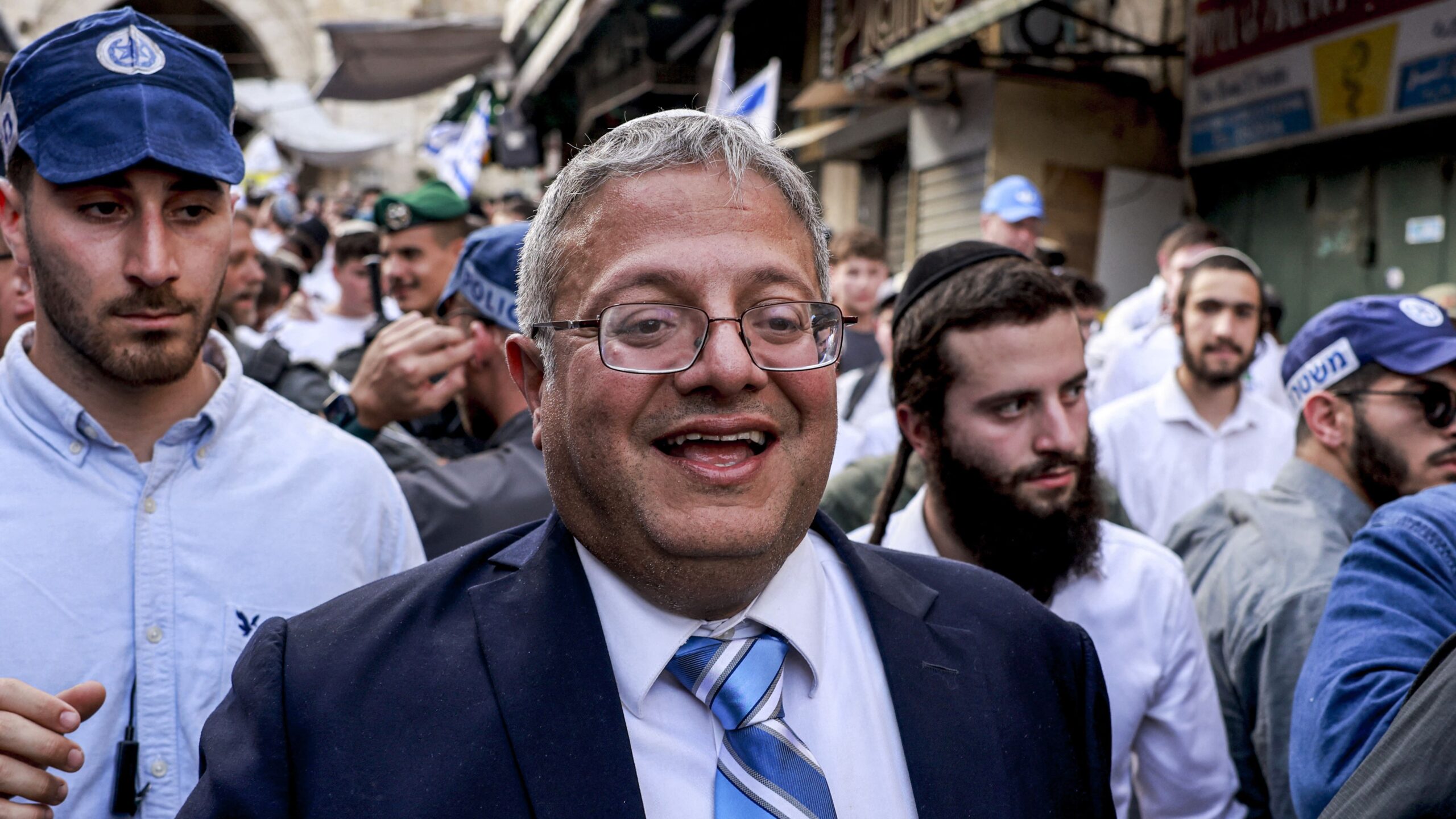
    Israeli National Security Minister Itamar Ben Gvir has unveiled a significantly expanded version of controversial legislation that would mandate capital punishment for Palestinians accused of involvement in the October 7 attacks. The far-right minister detailed the provisions on social media platform X, outlining drastic changes to Israel’s judicial processes regarding Palestinian detainees.

    The revised legislation, initiated by MP Limor Son Har Melech of Ben Gvir’s Otzma Yehudit (Jewish Power) party, originally sought to permit judges to impose death sentences on Palestinians convicted of killing Israelis on ‘nationalistic grounds.’ The newly expanded bill now specifically targets those accused in the October 2023 attacks, classifying such sentences as ‘genocide under the Genocide Law’ and making execution a mandatory punishment.

    Critical changes within the proposed law include the abolition of unanimous decision requirements, allowing a regular majority of panel judges to approve executions. The legislation explicitly excludes Israelis who kill Palestinians under similar circumstances from facing capital punishment. Once formally accused, detainees would be executed within 90 days by the Israel Prison Service (IPS), with multiple methods proposed including shooting, electric chair, hanging, or lethal injection.

    The bill further authorizes military courts in the occupied West Bank to impose death sentences regardless of prosecutorial positions, while eliminating the ability of army commanders to mitigate or commute approved sentences. The identity of execution personnel would remain confidential under the proposed framework.

    Israeli law currently permits capital punishment in limited circumstances, though no executions have occurred since Nazi officer Adolf Eichmann’s 1962 hanging. The bill previously passed its first reading in November with 39 of 120 Knesset members supporting it.

    Human rights organizations have condemned the legislation amid reports of widespread Palestinian detentions on terrorism charges and increasing detainee deaths. Approximately 9,300 Palestinians are currently held in Israeli prisons, with advocacy groups reporting a ‘record high’ of 110 deaths under Ben Gvir’s prison policies since he took office. Palestinian rights groups have characterized the bill as an ‘unprecedented act of savagery’ that effectively legalizes the systematic killing of prisoners.

    International observers have repeatedly criticized Israel’s application of anti-terrorism laws against Palestinians engaged in peaceful activism or humanitarian work, noting frequent use of vague or unsubstantiated charges.