分类: politics

  • Formalism eased for grassroots authorities

    Formalism eased for grassroots authorities

    China’s multi-year campaign against bureaucratic formalism has achieved substantial breakthroughs, particularly at the grassroots level where administrative burdens have historically hampered effective governance. The transformation is most evident in communities like Qiyiqiao in Jingmen, Hubei province, where local officials previously struggled under the weight of excessive administrative requirements.

    This shift addresses what Chinese idiom describes as ‘a small horse pulling a heavy cart’—the fundamental mismatch between limited local resources and overwhelming tasks delegated from higher authorities. In Jingmen, communities once displayed up to 44 organizational plaques on their walls, each representing separate reporting requirements, documentation demands, and assessment procedures that consumed administrative capacity.

    The city launched a systematic reform initiative that eliminated approximately 24,000 redundant plaque requirements while transferring specialized responsibilities like air pollution inspection to professional social organizations. More significantly, Jingmen implemented a smart community platform that revolutionizes task assignment procedures. The system now mandates that higher-level departments clearly specify their own responsibilities, outline expectations for grassroots units, and detail support mechanisms before submitting task requests. Applications failing these requirements are automatically rejected, resulting in a 30% reduction in village and community workloads.

    Parallel developments in Hunan province’s Cili county demonstrate how digital transformation is streamlining administrative processes. The Smart Cili platform provides real-time data access that has transformed previously labor-intensive reporting tasks. What once required day-long data collection from 19 villages now generates automated reports within minutes, saving local officials approximately six working days monthly.

    In Anhui province’s Lai’an county, agricultural officials now spend less time preparing for redundant inspections and more time addressing practical farmer concerns. Provincial authorities have consolidated three separate assessments—rural vitalization, food security, and poverty alleviation—into a single comprehensive evaluation, significantly reducing bureaucratic overhead.

    These reforms align with central government directives issued in August 2024 that specifically target seven areas of bureaucratic inefficiency, including document streamlining, meeting reduction, and inspection standardization. President Xi Jinping has emphasized the critical importance of reducing grassroots burdens, stating during a November 2024 village visit that officials must dedicate maximum energy to serving public needs.

    Academic experts highlight the profound implications of these changes. Professor Cui Jing of Central University of Finance and Economics notes that reform efforts ‘guide Party members to stay true to their original aspiration, enhance grassroots governance efficiency, and strengthen public satisfaction.’ Researchers attribute formalism partly to performance evaluation systems that overemphasize documentation, creating incentives for officials to prioritize report preparation over substantive problem-solving.

    As Tsinghua University researcher Ran Aobo observes, the root cause often lies in disconnected leadership setting unrealistic goals. Future solutions may involve cross-sector collaboration, AI-assisted documentation processing, and standardized policy length regulations—all aimed at creating more responsive, efficient governance systems that truly serve public needs.

  • Denmark insists on respect for territorial integrity after Trump appoints envoy to Greenland

    Denmark insists on respect for territorial integrity after Trump appoints envoy to Greenland

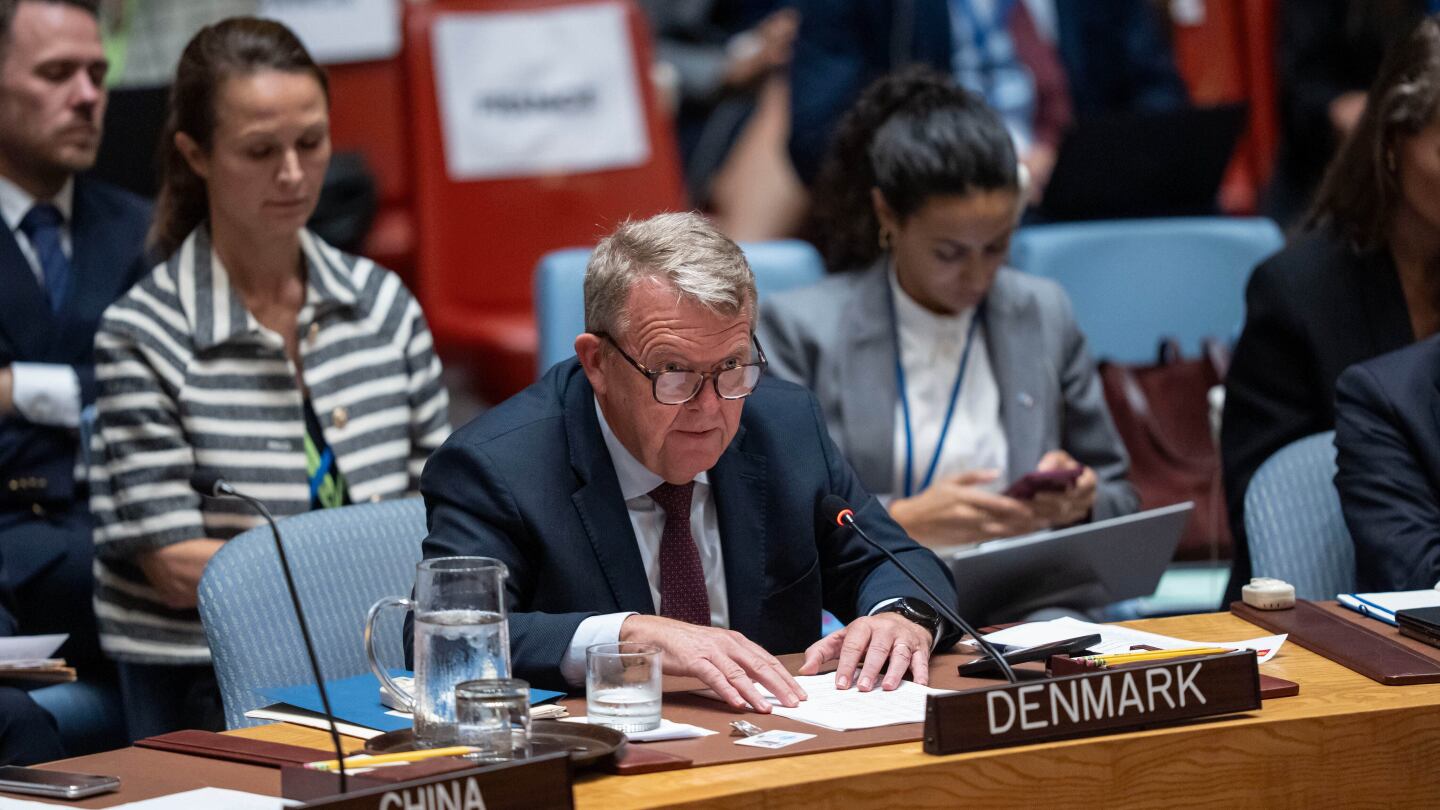
    COPENHAGEN (AP) — Denmark has issued a firm diplomatic statement reinforcing its territorial sovereignty over Greenland following the United States’ appointment of a special envoy to the Arctic territory. The declaration from Danish Foreign Minister Lars Løkke Rasmussen came directly after former President Donald Trump designated Louisiana Governor Jeff Landry as special envoy to Greenland.

    Minister Rasmussen emphasized through an official ministry communiqué that while Denmark acknowledges sustained American interest in Greenland, all nations—including the United States—must unequivocally respect the territorial integrity of the Kingdom of Denmark. This diplomatic response highlights escalating tensions between the NATO allies regarding the strategically significant, mineral-rich island.

    The background to this development traces to Trump’s presidency, when he repeatedly expressed interest in acquiring U.S. jurisdiction over Greenland and reportedly contemplated military options for securing control. The situation intensified in March when Vice President JD Vance visited Thule Air Base in Greenland and criticized Denmark’s investment levels in the region. Further diplomatic strain emerged in August when Danish authorities summoned the U.S. ambassador following reports of covert influence operations in Greenland by individuals connected to Trump.

    In his announcement, Trump characterized Landry’s role as crucial to advancing U.S. national security interests and ensuring the safety of American allies. Landry subsequently expressed honor at the appointment through social media, explicitly referencing ambitions to facilitate Greenland’s incorporation into the United States.

    The Danish Defense Intelligence Service’s recent annual assessment adds context to these developments, noting that the U.S. has increasingly leveraged economic influence and military posturing to assert its geopolitical objectives with both allies and adversaries.

  • Russian general killed by car bomb in Moscow, officials say

    Russian general killed by car bomb in Moscow, officials say

    A high-ranking Russian military commander has been assassinated in a targeted car bombing in central Moscow, according to official statements from Russia’s Investigative Committee. Lieutenant General Fanil Sarvarov, 56, perished on Monday morning when an improvised explosive device concealed beneath his vehicle detonated abruptly.

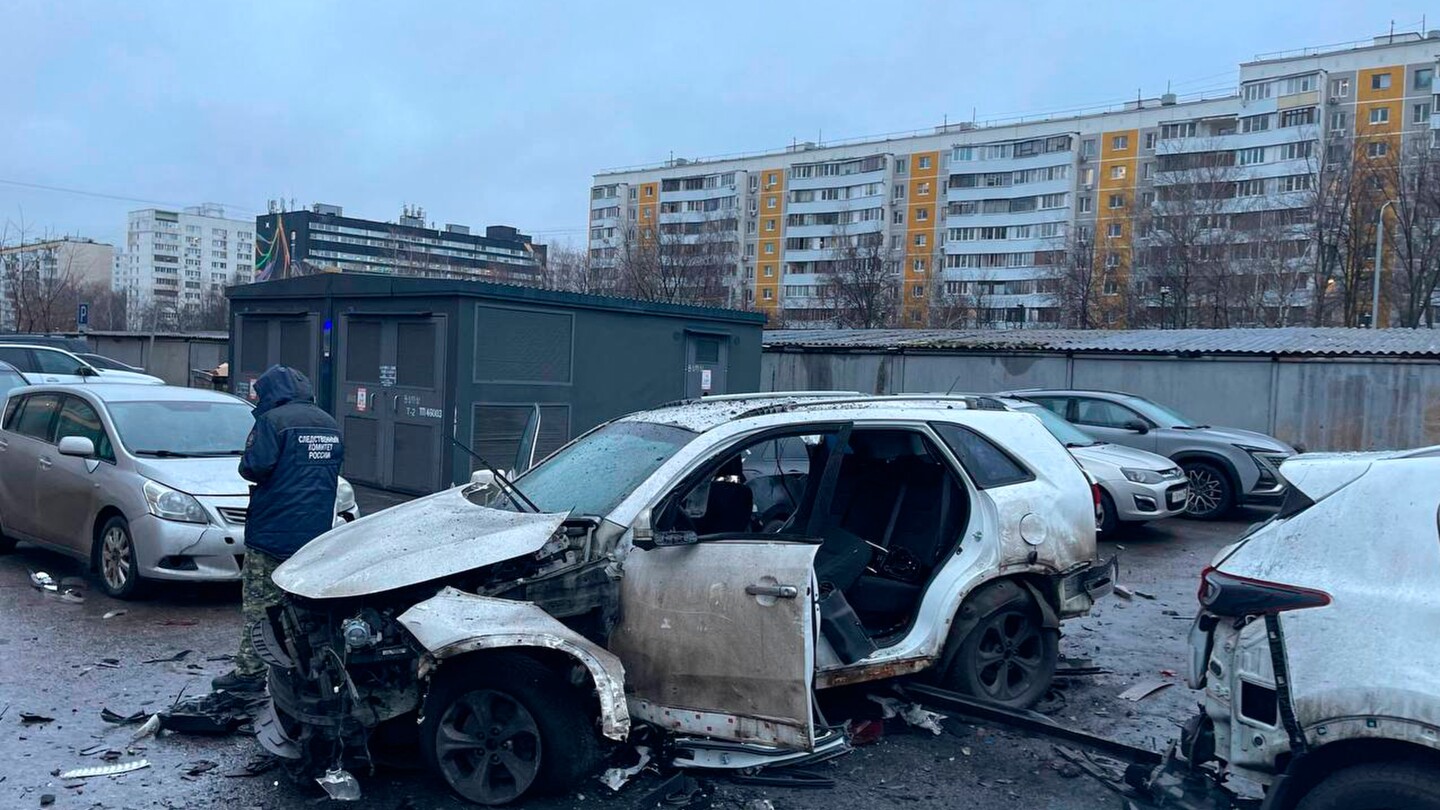
    General Sarvarov held the prestigious position of leading the armed forces’ operational training department, making him a significant figure within Russia’s military command structure. The explosive device, strategically planted under his personal vehicle, ignited in a residential parking facility in southern Moscow, leaving the white automobile severely damaged with its doors completely blown off.

    Law enforcement agencies have dispatched specialized investigative teams to conduct thorough forensic examination of the blast site. While the investigation remains ongoing, preliminary theories suggest potential involvement of Ukrainian intelligence operatives in orchestrating the assassination. Ukrainian authorities have maintained their characteristic silence regarding the incident, consistent with their established policy of neither confirming nor denying involvement in targeted operations against Russian officials.

    This event represents the latest in a series of attacks against Russian military leadership since the commencement of full-scale hostilities in Ukraine in February 2022. Previous incidents include the April car bombing that claimed the life of General Yaroslav Moskalik and the December 2024 assassination of General Igor Kirillov via remotely detonated scooter bomb. While unnamed Ukrainian sources have previously claimed responsibility for such operations to international media, official Kyiv maintains a consistent policy of non-acknowledgement regarding targeted strikes against Russian military figures.

  • Russian general killed by bomb under his car in Moscow

    Russian general killed by bomb under his car in Moscow

    A senior Russian military commander, Lieutenant General Fanil Sarvarov, was killed on Monday when an explosive device detonated beneath his vehicle in Moscow. This incident marks the third assassination of a high-ranking Russian military official within the past year, raising serious concerns about security vulnerabilities within Russia’s defense establishment.

    Svetlana Petrenko, spokesperson for Russia’s Investigative Committee, confirmed that General Sarvarov, who headed the Operational Training Directorate of the Russian Armed Forces’ General Staff, succumbed to injuries sustained in the blast. Petrenko stated that multiple investigative avenues are being pursued, with Ukrainian intelligence services representing a primary line of inquiry regarding potential orchestration of the attack.

    This pattern of targeted killings began exactly one year prior on December 17, 2024, when Lieutenant General Igor Kirillov, commander of Russia’s nuclear, biological and chemical protection forces, was assassinated by a bomb concealed on an electric scooter outside his residence. Ukraine’s security service publicly claimed responsibility for that operation, which also resulted in the death of Kirillov’s assistant. Russian authorities subsequently apprehended and charged an Uzbek national with carrying out the attack on behalf of Ukrainian intelligence.

    President Vladimir Putin characterized Kirillov’s assassination as a ‘major blunder’ by Russian security agencies, urging enhanced operational efficiency. Despite this directive, another senior officer, Lieutenant General Yaroslav Moskalik—a deputy head of the main operational department in the General Staff—was killed in April by an explosive device planted in his vehicle near his Moscow-area apartment. Russian law enforcement made a prompt arrest of a suspected perpetrator in that case.

    Moscow has consistently attributed numerous bombings and attacks on Russian soil to Ukrainian operatives, alleging a coordinated campaign targeting military leadership. These incidents highlight escalating covert operations within Russian territory amid the ongoing conflict between the two nations.

  • Australian move to fast-track new gun and protest laws after Bondi shooting draws criticism

    Australian move to fast-track new gun and protest laws after Bondi shooting draws criticism

    The New South Wales government has enacted comprehensive security legislation in response to the Bondi Junction shootings, triggering intense debate between civil liberties advocates and proponents of public safety. Premier Chris Minns recalled parliament to fast-track measures addressing firearm restrictions, protest regulations, and hate speech prohibitions.

    The legislative package introduces significant changes to firearm ownership, limiting most license holders to four weapons while permitting farmers and sport shooters to possess up to ten. The reform follows revelations that Bondi attacker Sajid Akram owned six registered firearms. License renewal periods will shorten from five to two years, with additional reviews planned for permissible firearm categories.

    Protest regulations have been substantially enhanced, granting police authority to restrict demonstrations near worship sites and remove face coverings from individuals suspected of even minor offenses. The government has also prohibited the phrase ‘globalise the intifada,’ which Premier Minns characterized as ‘an invitation to violence’ that fosters social division.

    Civil liberties organizations have condemned the measures as democratic erosion. NSW Council for Civil Liberties president Timothy Roberts argued these laws contradict Supreme Court rulings on political communication freedoms, stating they ‘oppress some parts of our community’ rather than promoting healing.

    Conversely, Jewish community representatives welcomed the reforms. NSW Jewish Board of Deputies president David Ossip described the hate speech provisions as a ‘watershed moment,’ emphasizing that protest rights shouldn’t extend to concealing identities or inciting violence.

    The political response reflects deep divisions, with Shooters, Fishers and Farmers party representative Mark Banasiak claiming licensed owners are being ‘punished for agency failings,’ while Walter Mikac—whose family perished in Australia’s deadliest mass shooting—applauded the ‘community safety first’ approach.

  • US and Ukraine call Miami talks productive despite no breakthrough

    US and Ukraine call Miami talks productive despite no breakthrough

    High-level diplomatic negotiations between United States, Ukrainian, and Russian representatives concluded in Miami with participants characterizing the discussions as “productive and constructive,” though significant obstacles to ending the nearly four-year conflict remain unresolved.

    Special Envoy Steve Witkoff, appointed by former President Donald Trump, and Ukrainian lead negotiator Rustem Umerov issued a joint statement following three days of intensive meetings with European allies. The discussions centered on aligning positions regarding a comprehensive 20-point peace framework, multilateral security guarantees, a specific US security assurance package for Ukraine, and an economic recovery plan aimed at ensuring long-term stability.

    Concurrently, separate negotiations occurred between American officials and Russian envoy Kirill Dmitriev in southern Florida. Witkoff confirmed these parallel discussions with Russian representatives, including Trump’s son-in-law Jared Kushner, were similarly constructive, noting that “Russia remains fully committed to achieving peace in Ukraine.”

    The Miami meetings represent the latest development in intensified diplomatic efforts triggered by the recent leak of a 28-point US peace proposal that initially alarmed Ukrainian and European officials due to perceived concessions favoring Russia. Despite the positive rhetoric, fundamental disagreements persist, particularly regarding Moscow’s insistence on retaining control of captured Ukrainian territories.

    This diplomatic activity unfolds against a backdrop of continued military operations. Russian authorities reported Ukrainian drone attacks damaging two vessels and port infrastructure in the Krasnodar region, resulting in significant fires though without crew casualties.

    Meanwhile, US intelligence assessments, corroborated by six sources familiar with the matter, indicate Russian President Vladimir Putin maintains ambitions to control all of Ukraine and potentially reclaim former Soviet territories in Europe. This contrasts with Putin’s recent BBC interview statements suggesting Russia seeks peaceful relations if treated with “respect and recognition of our interests.”

  • Southeast Asian ministers meet in Malaysia to address Thailand-Cambodia border conflict

    Southeast Asian ministers meet in Malaysia to address Thailand-Cambodia border conflict

    KUALA LUMPUR – Southeast Asian diplomats convened for an emergency meeting Monday as regional tensions reached critical levels following renewed military confrontations between Thailand and Cambodia. The Association of Southeast Asian Nations (ASEAN) facilitated the high-stakes dialogue in Malaysia’s capital, marking the second intervention this year to address violent border clashes between the member states.

    The recent hostilities have effectively nullified a U.S.-brokered ceasefire agreement originally negotiated during the July conflict and formalized at October’s regional summit attended by President Donald Trump. The previous truce, achieved under significant American diplomatic pressure including threatened trade sanctions, mandated weapon withdrawals and demining operations along the disputed frontier.

    International concern continues to mount as combat operations intensify. The U.S. State Department issued an official statement urging immediate cessation of hostilities, removal of heavy artillery, and full implementation of the Kuala Lumpur Peace Accords. The document specifically referenced mechanisms for humanitarian demining and border dispute resolution.

    Thai Foreign Minister Sihasak Phuangketkeow confirmed his country’s commitment to constructive engagement, noting recent communications with U.S. Secretary of State Marco Rubio regarding Thailand’s proposed ceasefire roadmap. Cambodian officials similarly expressed dedication to peaceful resolution through diplomatic channels.

    The current conflict ignited December 8th following a border skirmish that injured two Thai personnel. Military engagements have since expanded to include Thai F-16 airstrikes and Cambodian BM-21 rocket barrages capable of launching 40 projectiles simultaneously. Official reports indicate dozens of combat fatalities and over 500,000 displaced civilians.

    A particularly contentious issue involves alleged landmine deployments along the border. Thailand has accused Cambodia of laying new anti-personnel mines, resulting in serious injuries to Thai marines. Cambodian authorities maintain that any explosions result from remnants of their decades-long civil war. Thailand has announced formal protests to Cambodia and the Ottawa Convention chair regarding these allegations.

  • Malaysian court rejects ex-prime minister’s bid to serve remainder of sentence under house arrest

    Malaysian court rejects ex-prime minister’s bid to serve remainder of sentence under house arrest

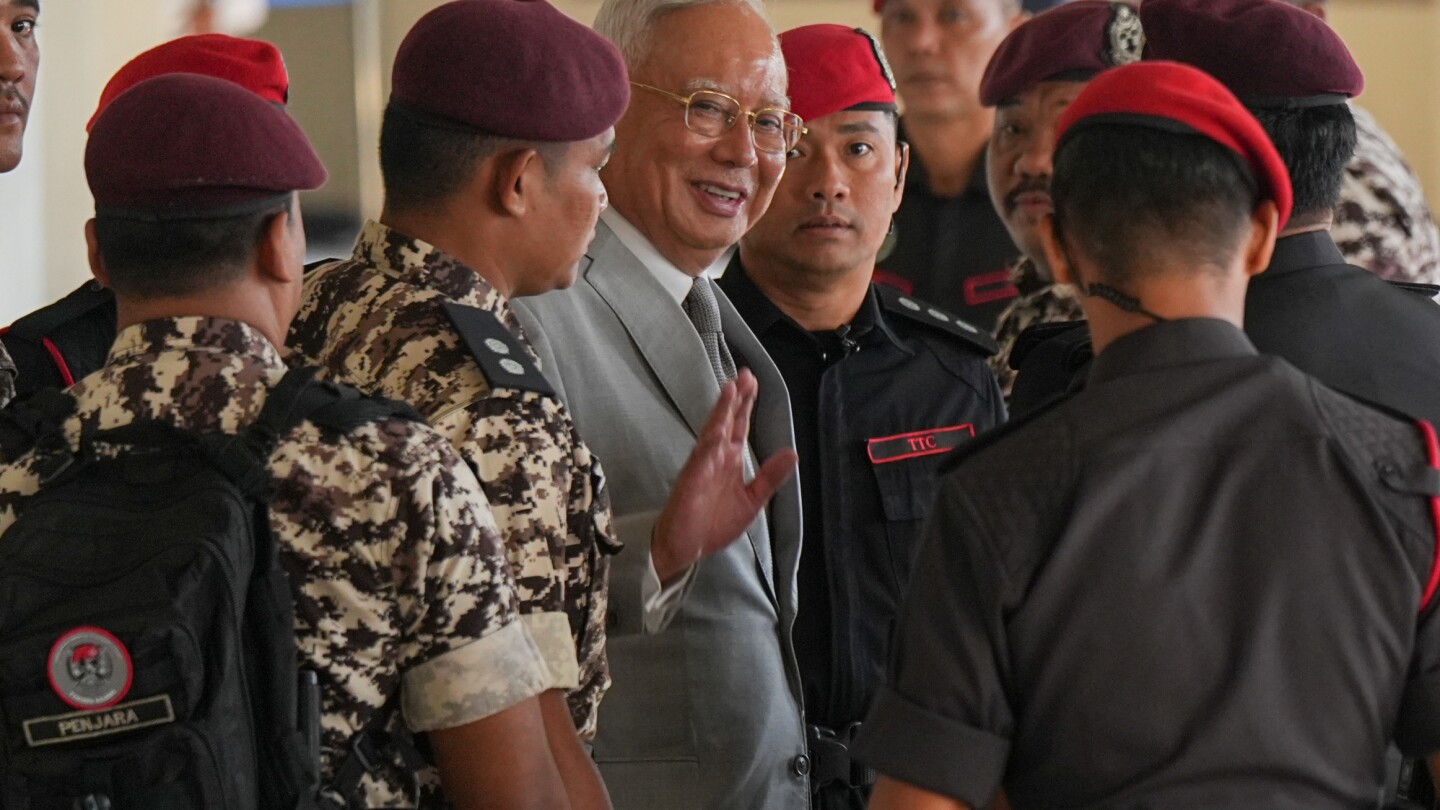
    In a significant judicial ruling, Malaysia’s High Court has decisively rejected former Prime Minister Najib Razak’s petition to complete his corruption sentence under house arrest. Presiding Judge Alice Loke declared that a purported royal addendum from the former king lacked constitutional validity, as it was not properly issued in accordance with established legal procedures.

    The court determined that the royal prerogative of mercy must be exercised based on the formal advice of the Pardons Board and cannot be implemented independently, which would risk arbitrary decision-making. While not disputing the existence of the document, Justice Loke emphasized that house arrest was neither raised nor discussed during the January 29th pardons board meeting chaired by then-King Sultan Abdullah.

    Najib, 72, will consequently serve the remainder of his prison term scheduled through August 2028, following last year’s reduction of his original 12-year sentence by half. The former leader became Malaysia’s first imprisoned ex-premier when he began serving his sentence in August 2022 after exhausting all legal appeals.

    His conviction stems from the massive 1MDB financial scandal, where investigators allege at least $4.5 billion was systematically looted from the state development fund. Najib was specifically sentenced in 2020 for abuse of power, criminal breach of trust, and money laundering involving 42 million ringgit ($10.3 million) channeled into his personal accounts from SRC International, a former 1MDB subsidiary.

    In a separate legal proceeding, the High Court is scheduled to rule on Friday regarding Najib’s involvement in a second corruption trial directly linking him to the 1MDB scandal. He faces four charges of abuse of power involving over $700 million allegedly diverted to his accounts, plus 21 counts of money laundering for the same amount.

    Despite his imprisonment, Najib maintains influence within the United Malays National Organization, which currently participates in Prime Minister Anwar Ibrahim’s unity government formed after the 2022 elections. The original 1MDB scandal triggered unprecedented political consequences, ending the six-decade rule of Malaysia’s dominant political coalition in the historic 2018 elections.

  • UAE: Macron announces new French aircraft carrier

    UAE: Macron announces new French aircraft carrier

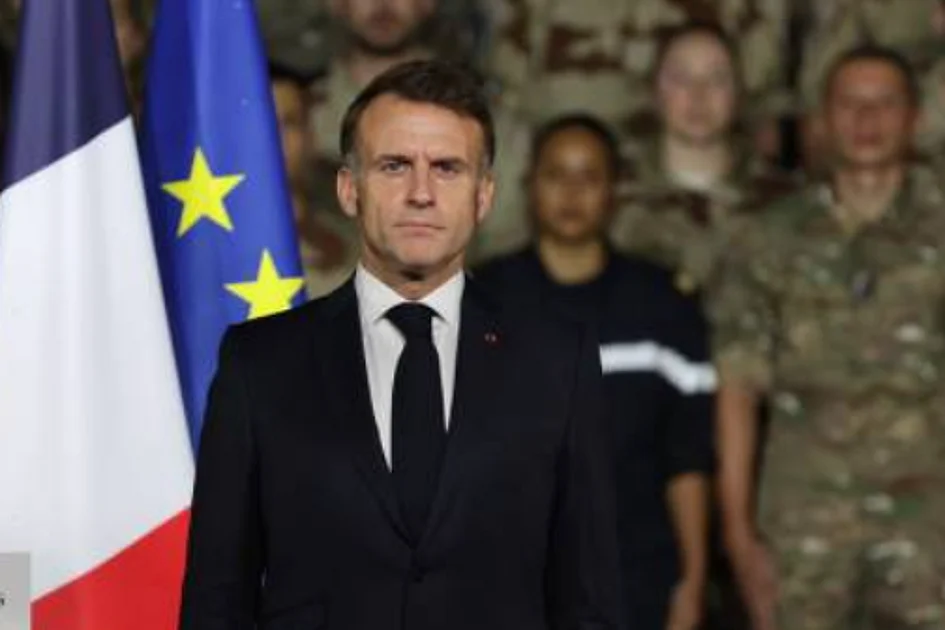
    French President Emmanuel Macron has officially authorized the construction of France’s next-generation nuclear-powered aircraft carrier during his visit to French troops in the United Arab Emirates on Sunday. This strategic decision comes despite significant budgetary challenges facing the European Union’s second-largest economy.

    The new vessel will replace France’s current flagship, the nuclear-powered Charles de Gaulle, which entered service in 2001 after more than a decade of construction. The Charles de Gaulle remains the only nuclear-powered aircraft carrier outside the US Navy.

    Macron announced the move during his Christmas visit with French forces stationed in the UAE, stating, ‘In line with the last two military programming laws, and after a thorough and comprehensive review, I have decided to equip France with a new aircraft carrier.’ He emphasized the geopolitical necessity of the project, adding, ‘In an age of predators, we must be strong in order to be feared.’

    The new carrier represents a substantial upgrade in capabilities, displacing nearly 80,000 tonnes and measuring approximately 310 meters in length—significantly larger than the Charles de Gaulle’s 42,000 tonnes and 261-meter frame. It will accommodate a crew of 2,000 and carry up to 30 fighter jets.

    The announcement comes amid criticism from French military officials, including General Fabien Mandon, who questioned whether resources should be prioritized toward more immediate concerns given rising tensions with Russia. The project’s launch will enable the signing of all necessary contracts to advance construction.

    While the French carrier will still be smaller than the US Navy’s 11 supercarriers (each displacing over 100,000 tons), it will join an elite group of large carriers operated only by China and Britain’s Royal Navy, though both nations use conventional power sources.

    Macron’s UAE visit also focused on strengthening bilateral ties, particularly regarding cooperation against drug trafficking. The French president met with UAE President Mohamed bin Zayed Al Nahyan to discuss enhancing their strategic partnership, especially concerning ‘stability in the Middle East.’ The UAE remains a significant purchaser of French military equipment, and Paris is reportedly considering Abu Dhabi’s potential involvement in its troubled future fighter jet program following Germany’s anticipated withdrawal.

  • India denounces ‘misleading propaganda’ over Bangladeshi media reports after Delhi protests

    India denounces ‘misleading propaganda’ over Bangladeshi media reports after Delhi protests

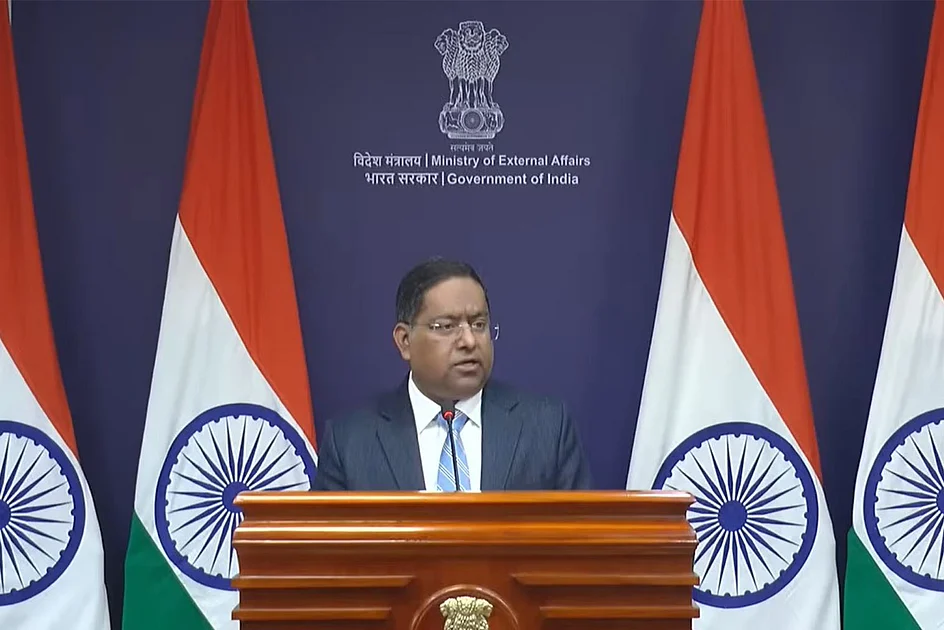
    The Indian Ministry of External Affairs has formally addressed what it characterizes as misleading propaganda circulating within certain Bangladeshi media outlets regarding recent demonstrations outside the Bangladesh High Commission in New Delhi. The protests emerged in response to the brutal killing of Dipu Chandra Das, a youth in Mymensingh, Bangladesh, who was allegedly beaten to death by a mob over blasphemy accusations on December 18, with his body subsequently set ablaze.

    Official spokesperson Randhir Jaiswal clarified the nature of the gathering, stating that approximately 20-25 individuals assembled briefly on December 20 to voice their condemnation of the horrific incident and to advocate for the protection of minority communities in Bangladesh. The ministry emphasized that the demonstration posed no security threat to the diplomatic mission at any point, with local police dispersing the group within minutes without any attempts to breach the compound’s security perimeter.

    Reaffirming India’s dedication to international diplomatic protocols, the ministry highlighted its unwavering commitment to the Vienna Convention, which mandates the protection of foreign missions and diplomats. Jaiswal further noted that Indian authorities maintain ongoing communication with Bangladeshi officials, expressing serious concerns regarding the attacks on minorities and urging expedited justice for the perpetrators responsible for Das’s killing. The statement concluded with India’s intention to continue monitoring the situation closely as it develops.