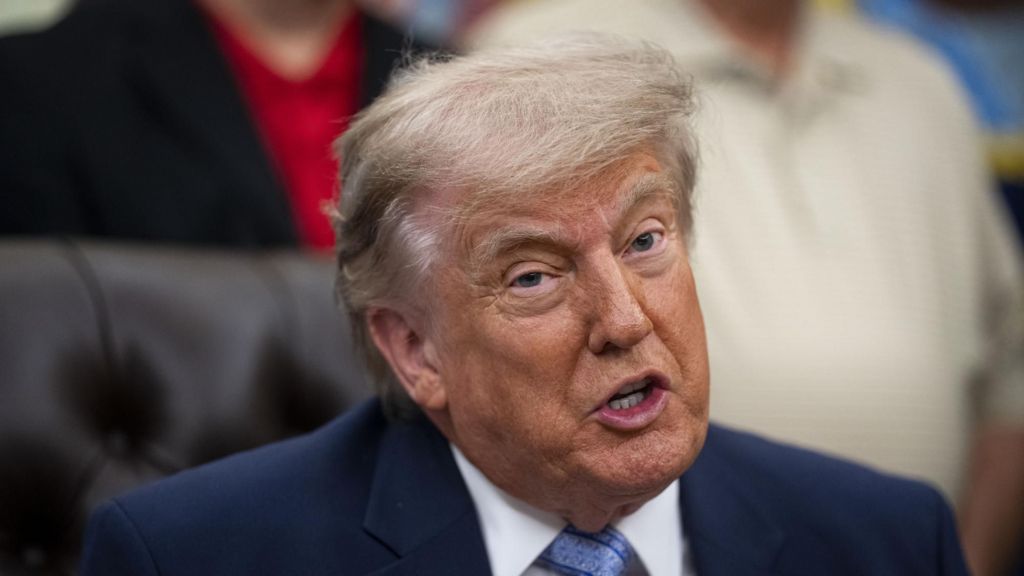
After weeks of shifting tensions and a months-long temporary ceasefire, both the United States and Iran have acknowledged tentative progress in diplomatic talks, even as key sticking points remain unresolved and economic pressure on Tehran continues.
分类: politics
-

US military conducts a rapid response exercise at embassy in Venezuela’s capital
Four months after former Venezuelan President Nicolás Maduro was removed from power, the United States military has carried out a rapid response drills in Venezuela’s capital Caracas, involving Marine Corps personnel and hybrid military aircraft.
The exercise centered on two MV-22 Osprey aircraft — tiltrotor vehicles that combine the vertical takeoff and landing capabilities of a helicopter with the long-range, fuel efficiency of a fixed-wing plane. The aircraft flew over the recently reopened U.S. Embassy in Caracas before touching down in the embassy’s parking lot, where strong downdrafts from their rotors sent tree branches swaying across the area. After landing, uniformed Marine personnel exited the aircraft to complete the exercise’s operational drills.
In a public statement posted to its official Instagram account following the drill, the U.S. Embassy emphasized that maintaining sharp, rapid response military capabilities is a core pillar of operational readiness for U.S. forces, both deployed in Venezuela and across all global U.S. mission locations. Venezuela’s interim government had pre-announced the exercise earlier in the week, with Foreign Minister Yván Gil clarifying that the drill was framed as a preparation to respond to potential medical or large-scale catastrophic emergencies in the capital.
This military exercise comes just two months after the U.S. formally reopened its diplomatic mission in Caracas. The embassy reopening marked the full restoration of bilateral diplomatic ties between Washington and Caracas, a step that followed Maduro’s ouster from office in early January. The last time U.S. military aircraft operated over Caracas was on January 3, when U.S. elite special operations forces rappelled from military helicopters to capture Maduro and his wife. The pair were subsequently extradited to New York to face international drug trafficking charges, and both have entered formal pleas of not guilty to the allegations against them.
The drill drew mixed reactions from local residents on Saturday. Dozens of Caracas locals gathered near the embassy compound to observe the aircraft and exercise activity, while a separate group of several dozen protesters assembled at another location across the city to demonstrate against the U.S. military operation. Protesters carried a large Venezuelan flag emblazoned with the phrase “No to the Yankee drill” to voice their opposition to the deployment of U.S. forces on Venezuelan territory.
-

India’s parody ‘cockroach party’ claims website has been blocked
A satirical Indian political parody movement that has taken social media by storm is facing unexpected digital crackdowns, just days after its official website went live. The Cockroach Janta Party (CJP), which started as an internet joke following a controversial comment from India’s chief justice about unemployed youth, has already accumulated more than 20 million followers across its social media platforms, outpacing the reach of the ruling Bharatiya Janata Party by a wide margin.
The movement traces its origins to a public comment from India’s top judge, who reportedly compared unemployed young people to cockroaches. He later walked back the remark, clarifying that he was targeting only individuals holding fraudulent academic credentials rather than the broader Indian youth population. Even so, the offhand comparison struck a chord with millions of young Indians grappling with systemic unemployment, and the CJP was born as a tongue-in-cheek response.
The parody group deliberately names itself to echo Prime Minister Narendra Modi’s long-ruling Bharatiya Janata Party (BJP), positioning itself as a satirical opposition. Its mission statement, delivered with dry humor, claims it is the voice of “the lazy and unemployed,” with membership requirements that include being constantly active online and having the “ability to rant professionally.” To expand its online reach, CJP has leveraged AI-generated imagery for promotional content and sparked the viral hashtag #MainBhiCockroach, which translates to “I too am a cockroach,” that has spread widely across Indian social media.
Founded by Abhijeet Dipke, a political communications strategist and Boston University graduate student, the movement has grown far beyond a simple joke. Its Instagram account alone boasts more than 22 million followers — more than double the follower count of the official BJP Instagram page. In recent weeks, young supporters have even appeared at public clean-up drives and protest events dressed in full cockroach costumes, turning the online meme into a visible offline movement.
Now, just days after launching its official website, CJP has been hit with widespread digital access restrictions. The site is completely unavailable to users within India, and it appears to be unreachable from other global locations as well. The movement’s official X page, which had accumulated more than 200,000 followers, is also blocked for Indian users, who are shown a notice stating the page has been withheld “in response to a legal demand.” Dipke has also alleged that both his personal Instagram account and the group’s official account have been targeted by hackers.
In a post on his personal X account following the block, Dipke accused Indian officials of deliberately taking down the group’s platform. “They have taken down our iconic website,” he wrote, adding the pointed question: “why are they so scared of cockroaches?” He confirmed that the group, which is not registered as an official political party, is already in the process of building a new online home, closing with a defiant catchphrase: “Cockroaches never die.”
Political analysts say the rapid rise of CJP reflects deep-seated frustration among India’s large youth population. India is home to 1.4 billion people, nearly half of whom are under the age of 30, making it one of the youngest countries in the world. Despite this demographic reality, formal political representation for young people remains limited, and widespread unemployment has left many feeling disenfranchised by mainstream political parties. Dipke previously told the BBC that the movement’s overwhelming popularity is a direct reflection of this widespread discontent, noting that young Indians feel their concerns are being ignored by the country’s established political leadership.
-

France bans Israeli security minister Ben Gvir from country
In a significant diplomatic move that amplifies international backlash against a senior Israeli official, France announced Saturday it has imposed an entry ban on Itamar Ben Gvir, Israel’s far-right National Security Minister, over the official’s public mockery of detained humanitarian activists bound for Gaza. French Foreign Minister Jean-Noel Barrot confirmed the ban in a post on X, stating the restriction was imposed immediately in response to Ben Gvir’s “reprehensible actions” toward French and European citizens who participated in the Global Sumud Flotilla, a grassroots humanitarian mission to deliver aid to blockaded Gaza. Alongside Italy, Barrot added, France is calling for the European Union to implement collective sanctions against Ben Gvir, marking a growing push for punitive measures at the bloc level. The trigger for this international outcry came on Wednesday, when Ben Gvir published a widely circulated video documenting the harsh treatment of detained flotilla activists in Israeli custody. The activists were intercepted and seized by Israeli military forces in international waters while attempting to reach the besieged Palestinian territory. The viral clip shows dozens of activists forced to kneel on the ground with their foreheads pressed to the surface and their hands bound behind their backs. Ben Gvir, holding an Israeli flag, can be seen heckling the restrained detainees as he walks among them, with the video captioned “Welcome to Israel”. The video sparked immediate global condemnation, prompting Israel to announce it would begin deporting all detained activists. Thirty-six French citizens were among the hundreds of activists on the flotilla, which marks the latest activist effort to break Israel’s 17-year air, land, and sea blockade of Gaza. Even as Barrot emphasized that France does not endorse the flotilla’s voyage, noting the mission “serves no useful purpose” in his view, he made clear that the mistreatment of French nationals could not go unanswered. “We cannot tolerate French nationals being threatened, intimidated or brutalised in this way, especially by a public official,” Barrot stated. France’s action is not isolated: Spain has joined the call for EU-level sanctions against Ben Gvir, while the United Kingdom summoned Israel’s top diplomat in London to issue a formal protest over what it called the “inflammatory video”. Even within Israel’s own governing coalition, the incident drew rare criticism. Israeli Prime Minister Benjamin Netanyahu acknowledged that Ben Gvir’s handling of the detained activists was “not in line with Israel’s values and norms”, though he has opted to keep the far-right minister in his cabinet, a move that reflects the fragile balance of power in Israel’s current right-wing government. Netanyahu has previously framed the humanitarian aid mission as a “malicious scheme” designed to support Hamas, the de facto governing authority in Gaza. The Global Sumud Flotilla, which departed Turkey last week with roughly 50 vessels carrying hundreds of activists and planned aid shipments, is the second such attempt to breach the Israeli blockade in as many months. A previous flotilla effort was intercepted by Israeli forces in international waters off the coast of Greece last month, with most activists expelled back to European countries. Since 2007, Israel has maintained full control over all land, air, and sea entry points into Gaza, restricting the movement of people and goods into the territory. During the 10-month Gaza war, the already dire humanitarian situation in the enclave has collapsed into catastrophe, with widespread acute food shortages, critical gaps in medical care, and repeated full shutdowns of aid deliveries by Israeli forces. The international community has repeatedly condemned Israel’s restrictions on aid, but this marks one of the first formal punitive actions taken by a major European power against a sitting Israeli cabinet minister over actions related to the Gaza conflict.
-

France bans Israeli minister Itamar Ben-Gvir after ‘unspeakable’ flotilla detainee taunts
In a significant diplomatic rebuke, France announced Saturday that it has issued an entry ban against Itamar Ben-Gvir, Israel’s far-right national security minister, over what French officials call “unspeakable” aggressive behavior toward detained activists from a Gaza-bound aid flotilla.
French Foreign Minister Jean-Noël Barrot confirmed the ban in a public post on the social platform X, stating that the entry prohibition is effective immediately. The measure follows Ben-Gvir’s widely condemned actions against French and European citizens who were among the passengers of the Global Sumud Flotilla, an initiative aimed at challenging Israel’s long-standing naval blockade of the Gaza Strip.
“We cannot tolerate that French nationals can be threatened, intimidated or brutalized in this way — all the more so by a public official,” Barrot wrote, adding that he has called on the European Union to implement collective sanctions against Ben-Gvir. Notably, the French foreign minister also made clear that Paris does not support the flotilla’s direct blockade-breaking approach, noting that the action “produces no useful effect and places an additional burden on diplomatic and consular services.”
The controversy ignited earlier this week when Ben-Gvir publicly shared a series of videos showing his interactions with detained flotilla participants, triggering widespread global outrage. The footage captures Ben-Gvir taunting bound detainees: in one clip, he waves a large Israeli flag over hunched, restrained captives; in another, he shouts the Hebrew phrase “Am Yisrael Chai” (The nation of Israel lives) at a kneeling activist with zip-tied wrists; a third clip shows dozens of detainees forced to lie face-down on the ground in an open-air pen, surrounded by armed guards as the Israeli national anthem plays.
The 50-vessel flotilla was intercepted by Israeli forces in international waters approximately 400 kilometers off Israel’s coast earlier this month, with around 430 activists taken into custody. Detained participants have accused Israeli security personnel of systematic mistreatment, including beatings, the use of tasers, and deployment of attack dogs against the group.
France is not the first democratic country to move against Ben-Gvir over the incident. On Thursday, Poland announced a five-year entry ban against the minister, with Polish Foreign Minister Radek Sikorski noting in a social post that “In the democratic world we do not abuse and gloat over people in custody.” Even within Israel’s own governing coalition, Prime Minister Benjamin Netanyahu joined other foreign leaders in condemning Ben-Gvir’s on-camera conduct toward the detainees.
The Associated Press has reached out to Ben-Gvir’s spokesperson and Netanyahu’s office for comment on the new French ban, and no response has been released publicly as of Saturday. The entry ban comes amid ongoing international scrutiny of Israeli policy toward Gaza and actions by far-right members of the Israeli cabinet, as global actors continue to track stalled negotiations over a ceasefire to end the months-long devastating conflict in the enclave.
-
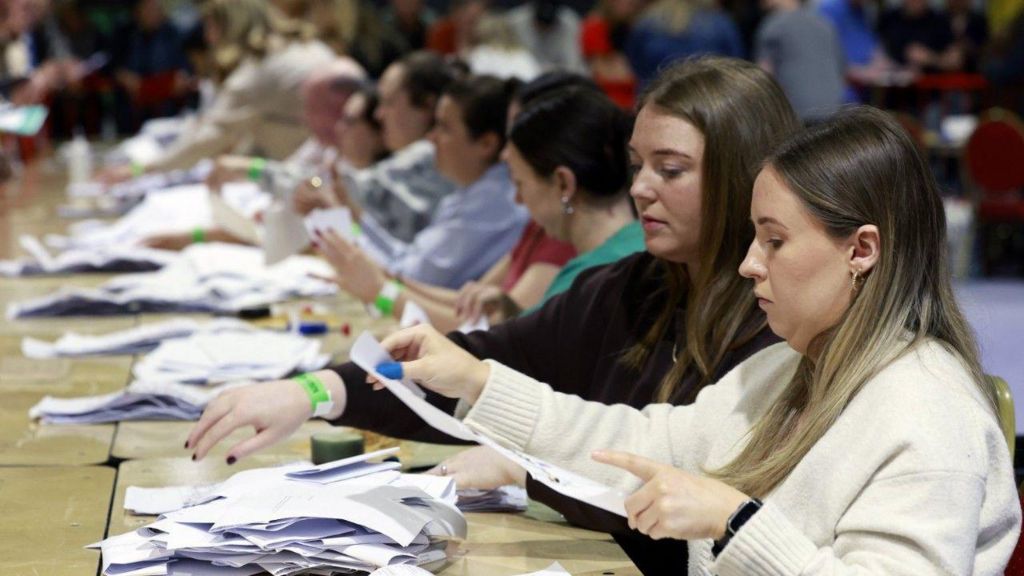
Counting under way in Ireland by-elections
On Saturday morning, vote counting officially kicked off for two pivotal by-elections that will select two new Teachtaí Dála (TDs), or members of the Irish parliament, to fill vacant seats in Dáil Éireann. The contests are taking place across two constituencies: Dublin Central and Galway West, where voters cast their ballots the previous day.
The Dublin Central seat became vacant after former Fine Gael TD and ex-Irish Finance Minister Paschal Donohoe stepped down to take up a senior leadership position at the World Bank. In Galway West, the by-election was triggered by the resignation of local TD Catherine Connolly, who was recently elected to the role of president of Dáil Éireann.
By-elections in Irish politics have long followed a well-established trend: sitting governing parties typically face a disadvantage, as voters often use these special contests to register dissatisfaction with the current administration’s performance. In Dublin Central, pre-count analysis had pegged candidates from the Social Democrats and Sinn Féin as the clear front-runners to claim the empty seat, and early tallies have done little to shift that projection.
After all ballot boxes were opened and tallied in Dublin Central, unofficial vote projections show Social Democrat candidate Daniel Ennis holding a narrow lead over Sinn Féin’s Janice Boylan. Ennis has secured 19.6% of first-preference votes, according to preliminary tallies, while Boylan trails slightly at 17.7%. It is important to note that these early tallies only provide an indication of the initial count outcome, and the final result for both seats will depend heavily on the distribution of transferred votes from eliminated candidates, a key feature of Ireland’s single transferable vote system.
In Galway West, with fewer than half of all ballot boxes processed as of Saturday, the race is also shaping up to be extremely close. Independent Ireland candidate Noel Thomas holds a thin lead with 21.3% of first-preference votes, while Fine Gael’s Sean Kyne is just one percentage point behind at 20.2% in the preliminary counts. Counting is expected to continue through the day as officials work toward finalizing official results for both seats.
-
US Federal Reserve gets new chief
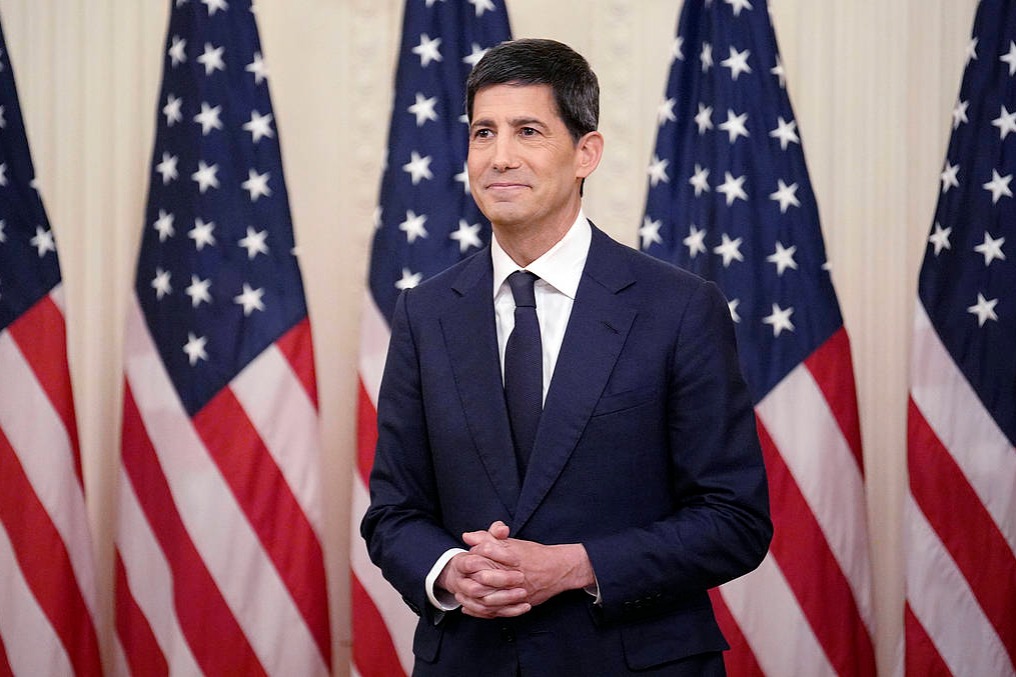
On a Friday ceremony held in the White House East Room, Kevin Warsh officially took office as the 17th Chair of the United States Federal Reserve, marking the start of his four-year term at the helm of the world’s most influential central bank. The oath of office was administered by Supreme Court Justice Clarence Thomas, with the event hosted by U.S. President Donald Trump. Attendees included a roster of high-profile guests: senior White House administration officials, sitting members of Congress, sitting Supreme Court justices, and leading figures from the American business community.
In remarks ahead of the swearing-in, Trump emphasized his expectation that Warsh would maintain full institutional independence from the executive branch. “I want Kevin to be totally independent. I want him to be independent and just do a great job,” Trump told the assembled audience. “Don’t look at me, don’t look at anybody. Just do your own thing and do a great job, okay?” Per CNBC reporting, this White House swearing-in marks the first time a Fed chair has taken office at the presidential residence since Alan Greenspan’s 1987 inauguration, a break from recent tradition that has drawn attention from political and financial observers.
At 56, Warsh succeeds Jerome Powell, who led the Federal Reserve through post-pandemic recovery and a historic inflation surge starting in 2018. Powell, who will retain his seat on the Fed’s Board of Governors after stepping down from the chair role, has already signaled he will remain active in central bank governance.
In his first public remarks as chair, Warsh reaffirmed the Federal Reserve’s core statutory mandates: fostering stable prices and maximizing sustainable employment. “When we pursue those aims with wisdom and clarity, independence and resolve, inflation can be lower, growth stronger, real take home pay higher and America can be more prosperous. And no less important, America’s place in the world is more secure,” Warsh stated. Outlining his policy and institutional agenda, he committed to leading what he called a “reform-oriented Federal Reserve,” saying the body would draw lessons from both past successes and missteps, move beyond rigid, outdated analytical frameworks and models, and uphold strict standards of integrity and accountability in all its operations.
Warsh brings deep prior experience at the central bank: he served as a member of the Federal Reserve Board of Governors from 2006 to 2011, and after leaving the institution, he held academic appointments at the Stanford Graduate School of Business and the conservative think tank the Hoover Institution.
Warsh’s inauguration comes amid a period of heightened tension between the Trump White House and the Federal Reserve, with the administration pushing repeatedly for looser monetary policy to pair with its signature policy agenda of tax cuts and broad financial deregulation designed to accelerate U.S. economic growth. Over the past 12 months, the Trump administration has moved repeatedly to exert greater political influence over the central bank’s decisions. Most notably, Trump attempted to remove Biden-appointed Board member Lisa Cook over unproven fraud allegations, and directed the U.S. Department of Justice to open an investigation into outgoing chair Jerome Powell connected to a Fed headquarters building renovation project. A federal judge later ruled that the investigation was an explicit attempt to pressure Powell into cutting interest rates or resigning from his post.
That investigation was ultimately halted after Republican Senator Thom Tillis of North Carolina threatened to block Warsh’s Senate confirmation vote unless the probe was dropped, clearing the path for Warsh’s appointment.
Going into his term, Warsh has positioned himself as an advocate for institutional change at the Fed, publicly calling for “regime change” that would overhaul how the central bank measures and communicates economic data to markets and the public. He has also signaled openness to lowering interest rates, while pushing back against claims he would defer to the White House on monetary policy. Warsh has repeatedly stated he will rely on his own independent judgment when setting policy, and will not take direct instructions from the executive branch.
The new chair takes office at a critical moment for U.S. monetary policy. As of April 2026, the Federal Open Market Committee has held its benchmark federal funds rate steady at a range of 3.5% to 3.75%, keeping borrowing costs elevated to pull persistent inflation back down to the central bank’s longstanding 2% target. However, recent economic data has upended market expectations for imminent rate cuts. A U.S. Labor Department report released earlier this week showed annual consumer price inflation hit 3.8% in April, the highest reading recorded since May 2023. The sharp rise in price pressures has been fueled in large part by global energy market disruptions: tanker traffic disruptions in the Strait of Hormuz, sparked by the ongoing U.S.-Israeli military campaign against Iran, have driven sharp increases in global crude oil and retail gasoline prices, creating new headwinds for the Fed’s inflation fight.
-

Senegal’s president sacks prime minister Sonko after months of tensions
West African nation Senegal has been thrown into sudden political turmoil this week, after President Bassirou Diomaye Faye announced the immediate dismissal of Prime Minister Ousmane Sonko and the full dissolution of the country’s sitting government. The dramatic move, which followed months of growing public and private friction between the two top political leaders, was formalized in a surprise presidential decree read live on national television by a senior aide to Faye.
The decree explicitly confirmed that Sonko’s tenure as prime minister had been terminated, alongside the end of service for all sitting cabinet ministers and state secretaries that made up the administration. News of the dismissal quickly sparked public reaction, with Sonko — a firebrand populist who retains massive popularity among Senegal’s large youth demographic — taking to social media to share a measured response, saying he would “sleep with a light heart” following his exit from office.
The political split comes at a particularly fragile moment for Senegal, which is already grappling with severe economic headwinds. Data from the International Monetary Fund shows the country’s total public debt has ballooned to 132% of its gross domestic product, putting growing pressure on the new administration that took power just over a year ago.
The break between Faye and Sonko is one of the most surprising political turnarounds in recent African politics, given the deeply intertwined origins of their rise to power. Faye, a relatively unknown political figure before 2024, would likely never have won the presidency without Sonko’s full-throated backing. Sonko, who built the left-wing Pastef party into a major opposition force and was the early favorite to win the 2024 presidential election, was ultimately barred from running over a controversial defamation conviction. Instead of abandoning the race, Sonko tapped Faye as his replacement and threw the full weight of his political machine behind his candidacy.
Remarkably, the pair secured a shocking election victory just 10 days after both were released from prison, where they had been held on political charges ahead of the vote. But the good political fortune that carried them to power quickly fractured, with public and private tensions simmering for months. Reports from inside the ruling party have confirmed Faye repeatedly criticized Sonko for what he called “excessive personalization” of power within Pastef, while Sonko hit back by publicly accusing Faye of a “failure of leadership” for refusing to defend him against political attacks.
The dismissal came directly after a heated parliamentary session Tuesday, where Sonko launched open, direct criticism of Faye’s leadership, pushing the long-running tensions into a public break. By Tuesday evening, hundreds of student protesters had gathered in the streets of Dakar, Senegal’s capital, to voice their support for Sonko, signaling that the political rift could deepen in the coming days as the country prepares for a new administration to be formed.
The upheaval leaves Senegal at a crossroads, with unresolved economic challenges and a ruling movement now split between its two most popular leaders, raising questions about the country’s near-term political and economic stability.
-

Iran destroyed 20 percent of US’s MQ-9 Reaper drone fleet: Report
New reporting from Bloomberg has shed fresh light on the heavy material costs of the ongoing conflict between the United States and Iran, revealing that Tehran has destroyed roughly $1 billion worth of American MQ-9 Reaper drones – equal to approximately 20% of the U.S. military’s pre-war inventory of the advanced unmanned aerial vehicles.
According to Bloomberg’s Friday report, the Iranian military has taken out these high-tech assets in two primary ways: many were shot down mid-flight during surveillance or strike missions over Iranian territory, while others were destroyed on the ground at U.S. military installations across the Gulf region when Tehran launched targeted attacks on those bases.
The MQ-9 Reaper is a dual-capacity unmanned aerial system, designed to conduct long-endurance intelligence, surveillance and reconnaissance missions while also being outfitted to carry offensive ordnance – most commonly Hellfire air-to-surface missiles and Joint Direct Attack Munition precision-guided bombs. Bloomberg’s estimate of up to 30 lost Reapers exceeds the 24-drone loss figure published earlier this month by the nonpartisan Congressional Research Service, marking a higher toll than previously acknowledged by U.S. government analyses.
The $1 billion loss from destroyed Reapers adds to the already staggering cumulative cost of U.S. military operations against Iran. Back in May, a senior Pentagon official told Reuters that total war-related spending had already reached $29 billion, a figure that will grow with this latest accounting of lost equipment. While the U.S. military is currently phasing the MQ-9 out of its own active fleet as it develops next-generation unmanned systems, original equipment manufacturer General Atomics still continues production of the Reaper for export to foreign allied militaries.
Iran’s proven track record of downing the sophisticated Reaper drones also undermines previous claims from former U.S. President Donald Trump, who asserted that Iran’s air defense capabilities had been completely “obliterated” by U.S. military strikes. Instead, the repeated successes against U.S. drones demonstrates that Tehran has maintained and expanded functional air defense networks that can threaten high-value American aircraft.
This week, an unnamed U.S. official speaking to The New York Times raised additional security concerns: the report claims Iranian military commanders have likely mapped out consistent flight patterns used by U.S. fighter jets and bombers operating near Iranian airspace, a development that increases the operational risks to U.S. aircrews if any future U.S. administration chooses to resume large-scale offensive operations against Iran.
Tensions peaked in the weeks before the fragile April ceasefire between the two nations: just days before the truce took effect, Iranian air defenses shot down a U.S. F-15E Strike Eagle fighter jet, triggering a large-scale urgent search and recovery operation to extract the downed pilots. Military analysts note that if Iranian forces had captured one or more of these pilots alive, Tehran would have held enormous leverage to pressure Washington in subsequent negotiations.
The New York Times further reported that Russia may have provided critical intelligence support to Iran to help map U.S. flight patterns, allowing Iran to better position its military and air defense assets to intercept American aircraft. This collaboration aligns with the long-standing security partnership between Moscow and Tehran that has been widely documented for years. Multiple U.S. media outlets have previously confirmed that Russia has aided Iran by sharing satellite imagery of U.S. warship movements and positions of American military personnel across the Middle East.
Today, Iran’s integrated air defense network combines domestically produced interception systems with advanced hardware sourced from both Russia and China. Middle East Eye, which first reported that China supplied complete air defense battery systems to Iran after the June 2025 U.S. bombing of three Iranian nuclear sites that brought the conflict to a peak, was the first outlet to break details of Beijing’s military support for Tehran’s air capabilities.
-
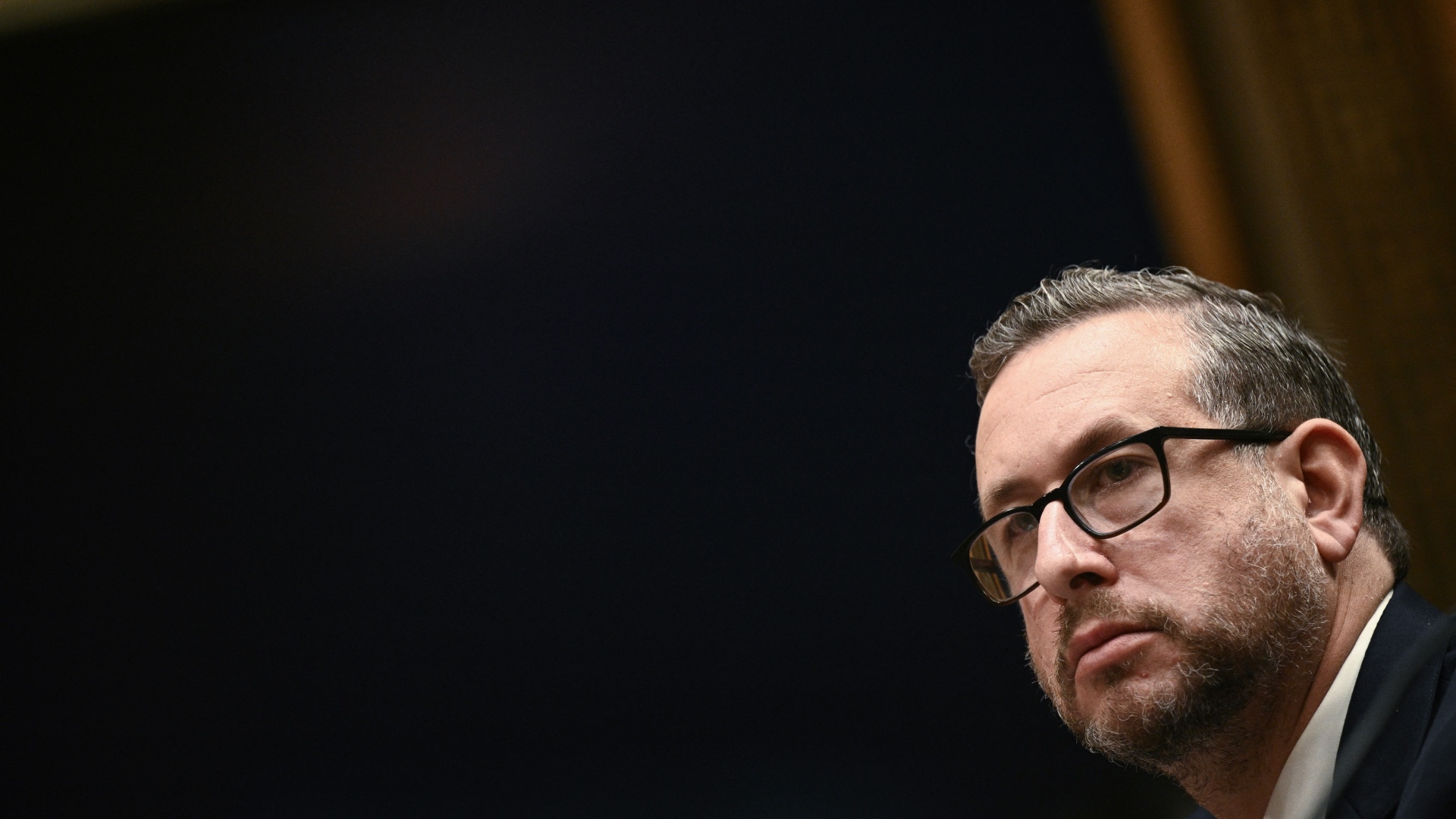
Foreign students, workers will now be forced to leave US to apply for Green Cards
In a sweeping overhaul of U.S. immigration rules announced Friday, the second Trump administration has mandated that all foreign nationals currently residing in the U.S. seeking to adjust their visa status to permanent residency must first leave the country and submit their applications through U.S. embassies or consulates based in their home countries. This sudden, immediate policy shift marks a fundamental break from decades of established immigration practice, with potential impacts stretching across more than 10 million current visa holders in the U.S. — a group that includes international students, temporary skilled workers, humanitarian parolees, and even foreign spouses of U.S. citizens.
In an official statement, U.S. Citizenship and Immigration Services (USCIS) spokesperson Zach Kahler framed the change as a return to the original text of U.S. immigration law. “We’re going back to the law’s original intent to ensure foreign nationals navigate our immigration system the way it was designed,” Kahler said. “From now on, any temporary visitor in the U.S. seeking a green card must return to their home country to file their application, outside of extraordinary circumstances.”
The policy went into effect the same day it was announced, but critical details remain unaddressed: the administration has not publicly defined what qualifies as an “extraordinary circumstance,” leaving the decision largely to the broad discretionary authority traditionally granted to immigration and border enforcement officials. Kahler defended the vague language, arguing that requiring applications from overseas will cut down on cases where applicants denied permanent residency remain in the U.S. illegally. “When people apply from home, we eliminate the need to track down and remove those who choose to overstay after a denial,” he explained, adding that the change will also free up limited USCIS resources to prioritize high-priority cases including visas for victims of violent crime and human trafficking, and naturalization applications. “Following the law, which has been ignored for decades, will make our system fairer and more efficient,” he added.
But immigration advocates and legal experts warn the new rule will carry devastating human and economic costs. Applications processed through overseas consulates typically face multi-year wait times, forcing applicants to give up pending job offers and spend years separated from their U.S. citizen family members. For nationals of countries where U.S. consular services have been suspended entirely — such as Russia and Afghanistan — the process is effectively impossible to complete.
Immigration attorneys were quick to condemn the policy across social media within hours of its announcement. “This isn’t just an issue for immigrants — it hurts U.S. citizens too,” wrote Adrian Pandev, founder of Pandev Law LLC, on platform X. “Roughly one in five married U.S. couples have one spouse born abroad. This isn’t a small fringe group — that’s 21% of all married households in the country.” Pandev noted that the existing in-country adjustment of status process was created specifically to let spouses of U.S. citizens get green cards without leaving their family behind.
Texas-based immigration attorney Steven Brown pointed out that Congress has explicitly allowed in-country status adjustments since the 1950s, codifying the practice in law for core policy reasons: to save applicants from the financial burden and disruption of international travel, to protect family unity, advance U.S. economic growth by supporting a stable immigrant workforce, and enable humanitarian relief. The American Immigration Lawyers Association emphasized that both Republican and Democratic administrations have upheld the in-country adjustment process for decades, and federal courts have repeatedly ruled it is legal. “Reversing settled law through an unvetted policy memo is legally questionable and creates needless chaos for millions of people,” the association said in a statement.
The policy is already expected to face immediate legal challenges in federal court, and it marks the latest aggressive move in the Trump administration’s broader crackdown on both unauthorized and legal immigration since the administration took office in January 2025.
Advocacy groups have also highlighted that the policy disproportionately targets vulnerable groups who came to the U.S. through humanitarian programs. AfghanEvac, an organization that supports Afghan allies who assisted the U.S. during its 20-year military campaign in Afghanistan and evacuated to the U.S. in 2021, called the timing of the announcement no coincidence. “This policy directly targets people who entered the U.S. on humanitarian parole — which is the entry status for nearly every Afghan ally who arrived after the withdrawal,” said Shawn VanDiver, the organization’s president. “There is no U.S. embassy in Afghanistan, so the administration’s required alternative of applying from home simply does not exist for these people.” VanDiver warned the rule sets in motion a deportation pipeline: “This memo doesn’t deport anyone today, but it starts the chain: a denial leads to removal proceedings, which leads to a deportation order.”
Iranians currently in the U.S. on temporary visas also face identical barriers, as Iran is included in the Trump administration’s existing travel ban, and U.S. diplomatic operations in the country have been shuttered for decades. Tens of thousands of Iranian nationals are currently studying, working, or seeking asylum in the U.S. after building lives legally in the country. The National Iranian American Council called the new rule a “trap” for this community. “The administration is telling Iranians who have built their lives here legally to leave — and once they do, they will never be allowed to come back,” said NIAC president Jamal Abdi. “Does the Trump administration seriously expect Iranian nationals legally in the U.S. to return to their country, in the middle of a war and a naval blockade this administration imposed, to apply for a status adjustment that will likely never be approved?”