分类: politics

  • Maduro is taken to a US courthouse for his first appearance on drug trafficking charges

    Maduro is taken to a US courthouse for his first appearance on drug trafficking charges

    In an unprecedented legal confrontation, deposed Venezuelan leader Nicolás Maduro and his wife Cilia Flores appeared Monday in a Manhattan federal courtroom to face narco-terrorism charges—marking the first time a former head of state has been brought to the United States under such circumstances since Panamanian strongman Manuel Noriega in 1990.

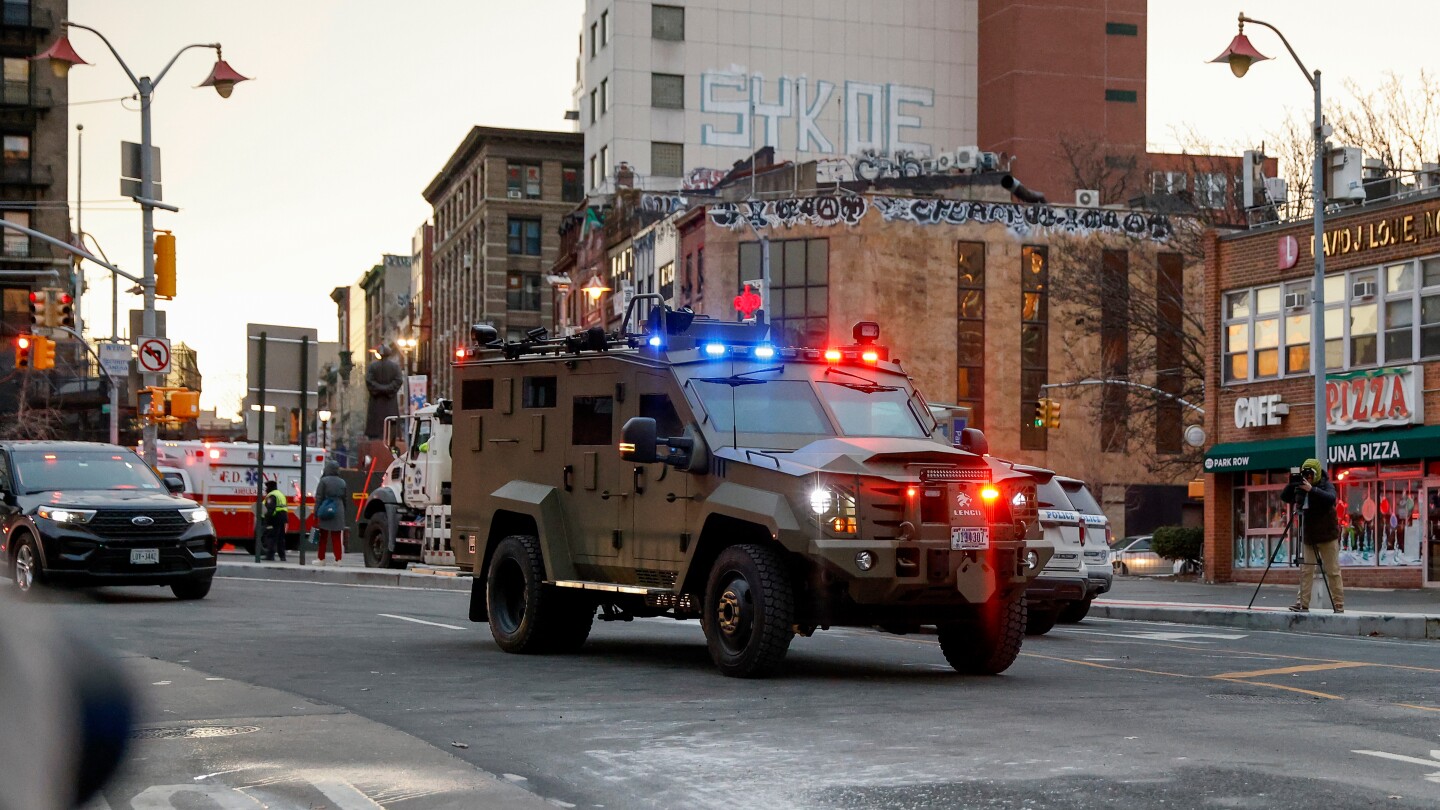
    The couple, transported under heavy armed guard from Brooklyn’s Metropolitan Detention Center, arrived via a meticulously coordinated operation involving motorcades and helicopter transfer across New York Harbor. Their appearance initiates what legal experts anticipate will be protracted proceedings challenging U.S. jurisdiction over a sovereign leader.

    Maduro’s defense team is expected to mount a vigorous challenge based on head-of-state immunity, despite the U.S. government’s position that his disputed 2024 reelection lacks legitimacy. The case presents complex diplomatic implications as Venezuela’s interim president Delcy Rodríguez has demanded Maduro’s return while simultaneously extending an olive branch for ‘respectful relations’ with the Trump administration.

    The 25-page indictment unsealed Saturday alleges Maduro and associates collaborated with drug cartels to facilitate thousands of tons of cocaine shipments into the United States, while further accusing the couple of ordering kidnappings, beatings, and murders related to drug debts. These charges carry potential life sentences if convicted.

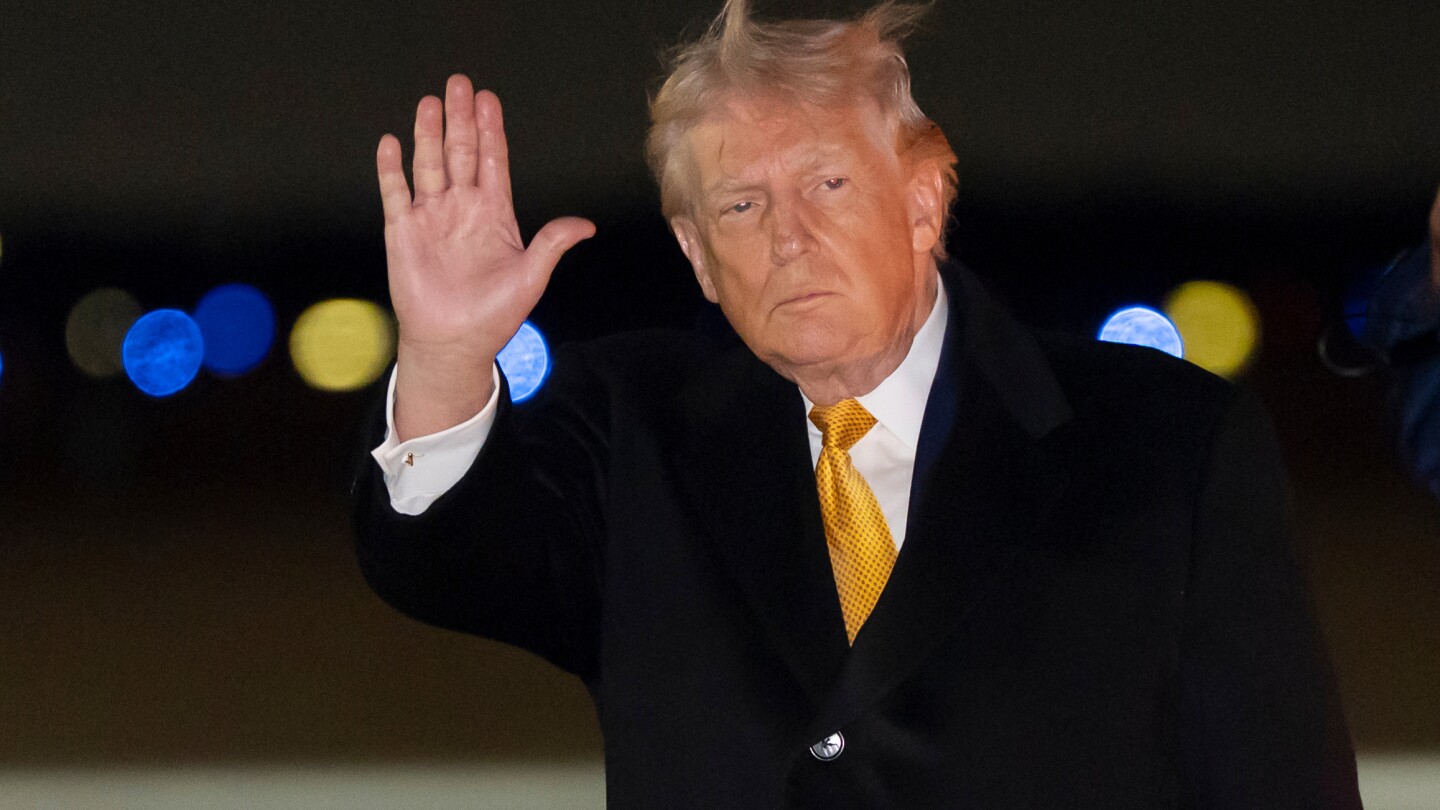
    President Trump’s remarks aboard Air Force One signaled broader regional ambitions, notably threatening Colombian President Gustavo Petro over drug production and demanding ‘total access’ to Venezuela. The administration has clarified it will not govern Venezuela day-to-day but will enforce existing oil quarantine measures.

    Notably, an April U.S. intelligence assessment contradicted portions of the indictment, finding no coordination between the Venezuelan government and the Tren de Aragua criminal organization mentioned in the charges.
  • India’s top court denies bail to 2 Muslim activists after 5 years in jail without trial

    India’s top court denies bail to 2 Muslim activists after 5 years in jail without trial

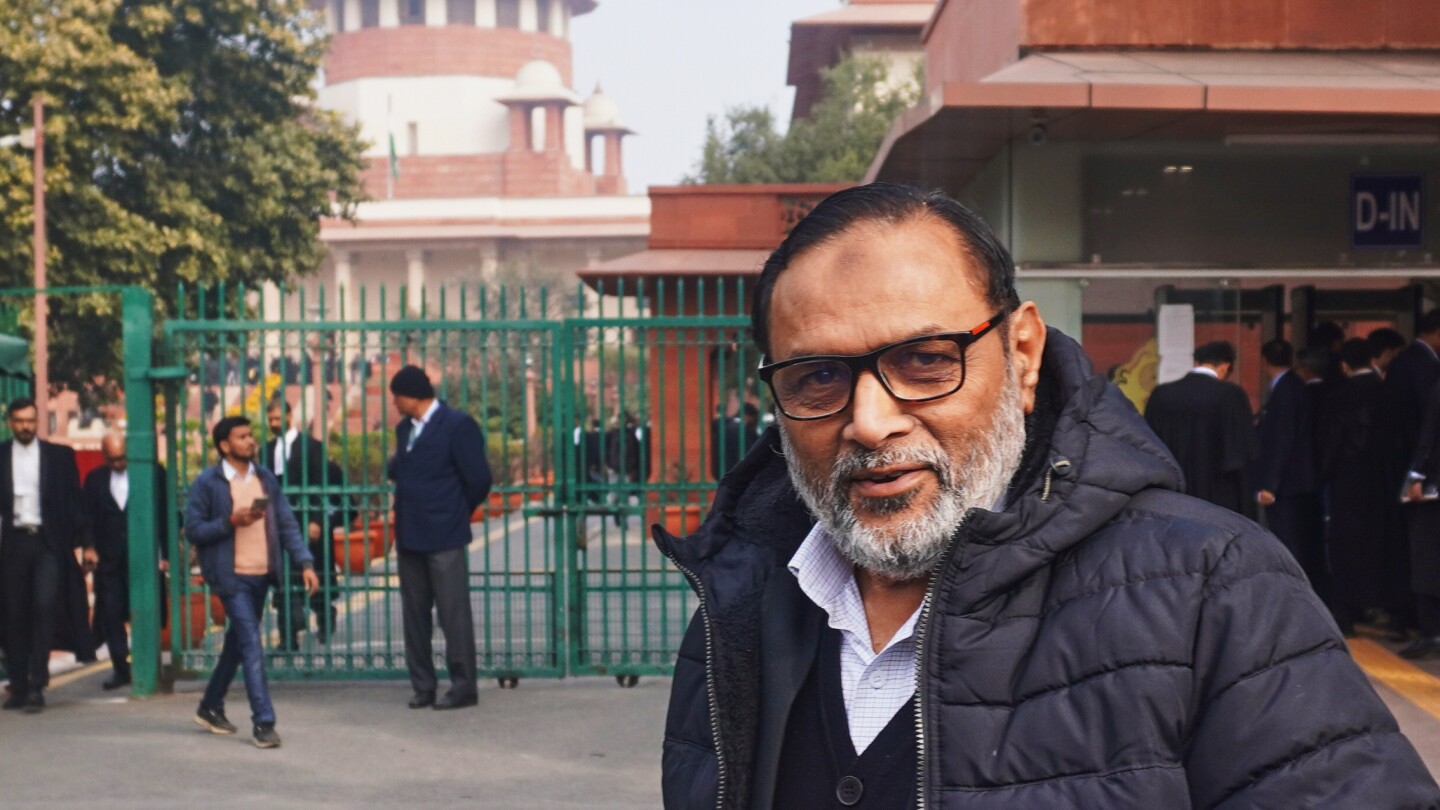
    India’s Supreme Court has upheld the continued detention of two prominent Muslim student activists, Umar Khalid and Sharjeel Imam, rejecting their bail applications in a controversial conspiracy case connected to the nation’s deadliest religious violence outbreak in decades. The justices determined that both individuals occupied a “qualitatively different footing” compared to other defendants in the same investigation, citing their alleged central involvement in orchestrating the February 2020 Delhi riots that resulted in 53 fatalities, predominantly within the Muslim community.

    The court acknowledged the significant delay in trial proceedings but maintained that this circumstance alone did not justify granting pretrial release. The violence erupted during extensive protests against the Citizenship Amendment Act of 2019, legislation widely criticized for its perceived discriminatory provisions against Muslims. Khalid and Imam emerged as leading voices in these demonstrations, which represented one of the most substantial challenges to Prime Minister Narendra Modi’s Hindu nationalist administration.

    Their continued incarceration under the Unlawful Activities (Prevention) Act—a stringent anti-terrorism statute increasingly deployed against government critics—has drawn international condemnation. Recent expressions of concern from eight U.S. lawmakers joined previous criticisms from human rights organizations alleging systematic suppression of dissent. Amnesty International characterized Khalid’s imprisonment as emblematic of justice system derailment and a broader pattern of repressing freedom of expression.

    Notably, the prosecution argued that the defendants deliberately engineered violence to damage India’s global reputation, while defense attorneys maintained the complete absence of credible evidence connecting their clients to the riots. This case occurs alongside numerous similar prosecutions of Muslim individuals following the Delhi violence, some of which have collapsed due to insufficient evidence.

  • Trump declares US ‘in charge’ of Venezuela and Maduro goes to court

    Trump declares US ‘in charge’ of Venezuela and Maduro goes to court

    In a dramatic escalation of geopolitical tensions, former President Donald Trump has declared the United States to be ‘in charge’ of Venezuela, following a military operation that resulted in the capture of the nation’s deposed leader, Nicolás Maduro. The 63-year-old leftist strongman, along with his wife, was apprehended in a surprise assault involving commandos, aerial bombardment, and significant naval deployment off Venezuela’s coast. He now faces narcotrafficking charges in a New York courtroom.

    The operation has triggered international outcry, prompting the UN Security Council to convene an emergency session at Venezuela’s request. Nations including China, Russia, and Iran condemned the action as a breach of international law, while some US allies expressed deep concern over the unilateral move. Chinese officials demanded Maduro’s immediate release, and Colombian President Gustavo Petro labeled the intervention an ‘assault on the sovereignty’ of Latin America, warning of potential humanitarian consequences.

    In a surprising diplomatic shift, Delcy Rodríguez, Maduro’s successor and interim leader, softened her initial defiant stance and extended an offer of cooperation to the Trump administration. This conciliatory gesture came mere hours after Trump issued a stark warning, threatening that she would face a ‘very big price, probably bigger than Maduro’ if she resisted US demands. Trump explicitly stated that Washington requires ‘total access’ to Venezuela’s vast oil reserves and other resources, framing it as essential for rebuilding the nation.

    The White House has clarified that its objective is not wholesale regime change but rather the installation of a compliant government, even if it includes former associates of Maduro. Secretary of State Marco Rubio emphasized that the US seeks a pragmatic assessment of the new leadership’s actions rather than an immediate return to democracy. This stance has left the Venezuelan opposition, which claims it was robbed of electoral victory, in a precarious position, with key figures stating that US intervention alone is insufficient without the release of political prisoners and recognition of their electoral win.

    Despite the withdrawal of ground forces, a formidable US naval presence, including an aircraft carrier, remains stationed near Venezuela. The Trump administration asserts that it maintains powerful economic leverage through an oil tanker blockade and has threatened further military action if necessary. The event has sparked domestic concern in the US, with Senate Democratic Leader Chuck Schumer noting that Americans were left ‘scratching their heads in wonderment and in fear’ over the administration’s strategy.

  • Thirty-two Cubans killed during US attack on Venezuela

    Thirty-two Cubans killed during US attack on Venezuela

    The Cuban government has confirmed the deaths of 32 nationals during a U.S. military operation targeting Venezuelan leader Nicolás Maduro’s compound in Caracas. According to official statements, the deceased were members of Cuba’s armed forces and intelligence agencies who had been providing security protection to Maduro and his wife at Venezuela’s request. The Cuban presidency described the fatalities as occurring ‘after fierce resistance’ during direct combat with American forces or resulting from aerial bombardments.

    While Venezuela has not released official casualty figures, unnamed sources cited by The New York Times suggest the death toll may reach 80 with numbers potentially rising. The operation, which resulted in Maduro’s capture on Saturday, has triggered two days of national mourning in Cuba and raised questions about potential U.S. actions against other adversarial nations.

    In response to developments, President Donald Trump indicated military action against Cuba would be unnecessary, stating the country appeared ‘ready to fall’ without intervention. Secretary of State Marco Rubio meanwhile characterized Cuba’s leadership as ‘incompetent, senile men’ and suggested government officials in Havana should be concerned.

    This incident occurs against the backdrop of tightened U.S. restrictions on Cuba, with Trump having signed a memorandum in July reversing earlier policies that eased pressure on the Caribbean nation. The current administration has maintained economic practices that specifically target Cuban government, military, and intelligence agencies while strengthening enforcement of travel restrictions for American citizens.

    The longstanding U.S. embargo on Cuba, initially imposed in 1962 and continuously maintained despite United Nations calls for its termination, continues to shape bilateral relations between the two nations.

  • Initiative sets clear course for Yangtze

    Initiative sets clear course for Yangtze

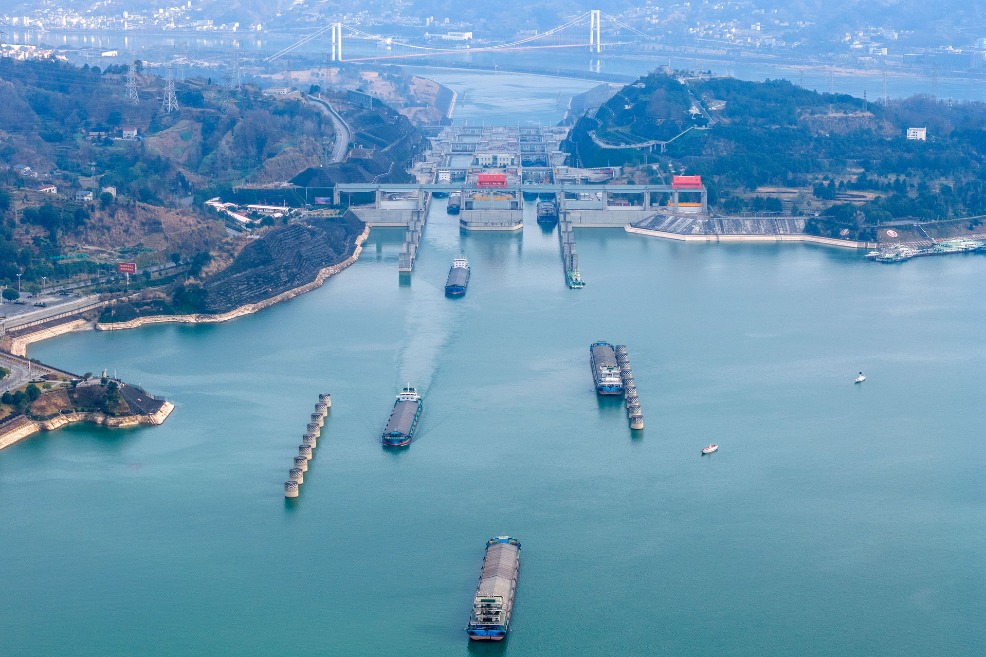
    A profound ecological transformation is underway along China’s Yangtze River, where former fishermen have become guardians of the nation’s ‘mother river.’ In Hukou county, Jiangxi province, a 16-member patrol team led by 58-year-old Shu Yin’an vigilantly monitors the confluence of the Yangtze and Poyang Lake, protecting endangered finless porpoises and combating illegal fishing activities.

    Shu’s personal journey mirrors the river’s remarkable turnaround. ‘My family relied on fishing for generations,’ he recalled, ‘but overfishing devastated the ecosystem until we could scarcely survive.’ His concern that future generations might never witness fish in the Yangtze prompted him to join the patrol team when it formed in 2017.

    This transformation stems from President Xi Jinping’s strategic vision initiated at the first Yangtze River Economic Belt symposium in Chongqing on January 5, 2016. Xi established a groundbreaking principle: ‘Restoring the ecological environment of the Yangtze River should be an overriding priority. We must focus on joint protection and avoid excessive development.’

    The implementation of this vision has been systematic and comprehensive. In 2020, a decade-long fishing ban took effect in key waters, transitioning over 230,000 fishermen like Shu to new livelihoods with government support. The 2016 master plan formally embedded ‘ecological priority, green development’ as foundational principles, marking a fundamental shift from industrial expansion at environmental expense.

    Tangible results emerge across the river basin. Chongqing’s Guangyang Isle, once threatened by massive real estate projects covering 3 million square meters, has undergone comprehensive ecological restoration since 2017. The island now welcomes returning residents and tourists alike, demonstrating successful environmental rehabilitation.

    Chemical pollution, which President Xi described as leaving the river ‘seriously ill’ in 2018, has been systematically addressed. One notable case involved a major chemical company fined 27 million yuan ($3.86 million) in 2016—the largest environmental penalty in the basin’s history. The company subsequently invested 100 million yuan in advanced pollution control facilities, achieving both environmental remediation and industrial upgrading.

    Over the past decade, President Xi has conducted approximately 30 inspection tours along the Yangtze and chaired four pivotal symposiums to steer the economic belt’s development. The strategy has evolved into a multidimensional framework encompassing high-quality development, innovation-driven growth, and regional coordination.

    During the 14th Five-Year Plan period (2021-25), the Yangtze River Economic Belt—contributing nearly half of China’s GDP and hosting over 40% of its population—has emerged as a national model for high-quality development. The region has strengthened its technological innovation capabilities, established 196 national smart manufacturing demonstration factories, and nurtured 1,738 innovative ‘little giant’ enterprises.

    Experts envision a ‘colorful’ development pathway during the 15th Five-Year Plan period (2026-30), driven by innovation and consumption rather than traditional factors. This comprehensive approach demonstrates China’s successful integration of ecological conservation with sustainable economic advancement along its most vital waterway.

  • No bail for Indian activists after five years in jail without trial

    No bail for Indian activists after five years in jail without trial

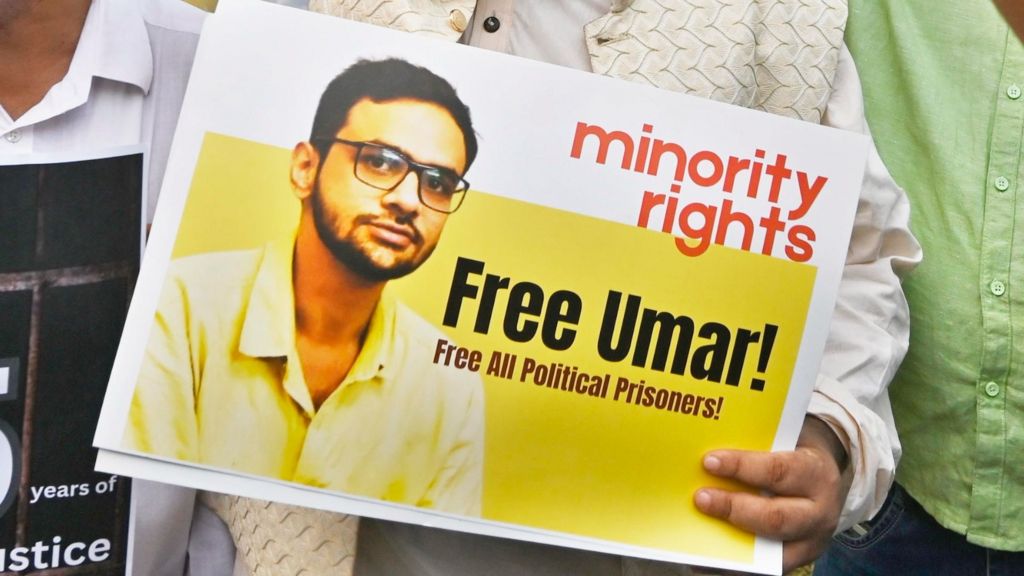
    India’s Supreme Court has delivered a split verdict in a high-profile case stemming from the 2020 Delhi riots, denying bail to two prominent student activists while granting release to five others. Umar Khalid and Sharjeel Imam, both 37-year-old scholars, will remain incarcerated under the nation’s stringent anti-terror legislation despite having never faced trial.

    The two-judge bench ruled Monday that bail petitions required individual examination as defendants were not on ‘equal footing regarding culpability.’ The court established a distinction between charges against Khalid and Imam versus their co-accused, mandating that the denied petitioners must wait one year before submitting new bail applications.

    Both men were arrested following violent clashes in the capital that resulted in 53 fatalities, predominantly among Muslim communities. Authorities accused them of conspiracy under the Unlawful Activities (Prevention) Act (UAPA), which effectively presumes guilt and makes bail exceptionally difficult to obtain.

    The case has drawn international scrutiny, with U.S. lawmakers recently expressing ‘continued concern’ over the prolonged pre-trial detention. In 2022, a report authored by former senior judges and a federal home secretary found no substantiating evidence for terrorism charges against the activists.

    Khalid, who completed his PhD at Jawaharlal Nehru University in 2019, has seen five separate bail petitions rejected over the past five years, receiving only two brief releases for family weddings. Imam, a doctoral scholar at the same institution at the time of arrest, has similarly been denied bail on multiple occasions.

    The court granted release to five other activists: Gulfisha Fatima, Meeran Haider, Mohd Samir Khan, Shadab Ahmed, and Shifa ur Rehman. Their detention originated from protests against the Citizenship Amendment Act, which the United Nations had previously condemned as ‘fundamentally discriminatory.’

  • Africa calls for dialogue, respect for international law

    Africa calls for dialogue, respect for international law

    African political leadership and institutions have issued strong condemnations of recent United States military operations in Venezuela, demanding immediate cessation of hostilities and advocating for peaceful diplomatic resolutions. The African Union expressed profound concern regarding attacks targeting Venezuelan state facilities and the reported abduction of President Nicolás Maduro, emphasizing the critical importance of respecting national sovereignty and territorial integrity.

    In an official communiqué, the continental body reaffirmed its dedication to fundamental principles of international law, asserting that Venezuela’s internal political challenges require inclusive dialogue among its own citizens rather than external military interference. The Union stressed that peaceful dispute resolution through constitutional frameworks and neighborly cooperation represents the only sustainable path forward.

    Simultaneously, South Africa’s Department of International Relations and Cooperation urgently petitioned the United Nations Security Council to address what it termed unlawful unilateral force by the United States. The department characterized the military intervention as undermining global stability and the foundational principle of equality among nations, noting specific violations of the UN Charter regarding territorial integrity and political independence.

    The Communist Party of Kenya joined the chorus of condemnation, labeling American actions as illegal imperialist aggression. Party Chairman Mwandawiro Mghanga warned that such interventions establish dangerous precedents that could eventually threaten nations worldwide, citing additional concerns about potential Western interference in Iran’s internal affairs. The party called for international progressive solidarity with Venezuela amid escalating geopolitical tensions.

  • Guinea’s junta leader is confirmed president-elect after first vote since a 2021 coup

    Guinea’s junta leader is confirmed president-elect after first vote since a 2021 coup

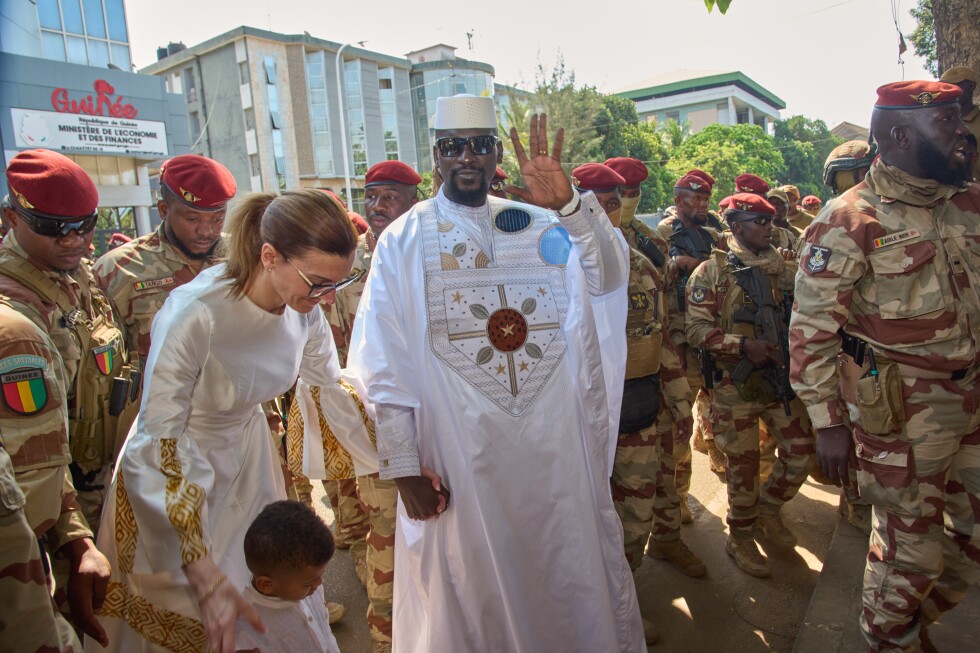
    CONAKRY, Guinea — Guinea’s Supreme Court has officially validated the presidential election victory of General Mamadi Doumbouya, formally transitioning the military junta leader into a democratically elected head of state. The court’s Sunday ruling confirmed Doumbouya’s overwhelming mandate, with official results showing he secured 86.7% of votes cast in the December 28 election—the nation’s first presidential contest since the 2021 coup.

    The judicial endorsement comes despite earlier challenges from opposition candidate Yero Baldé, who had alleged electoral manipulation before unexpectedly withdrawing his petition just prior to the court’s decision. Baldé finished as runner-up with 6.59% of the vote.

    In a nationally televised address following the verdict, President Doumbouya struck a conciliatory tone, declaring: “Today, there are neither winners nor losers. There is only one Guinea, united and indivisible.” He called upon citizens to collaborate in building “a new Guinea, a Guinea of peace, justice, shared prosperity, and fully assumed political and economic sovereignty.”

    The electoral process occurred under a newly implemented constitution that notably eliminated previous restrictions prohibiting military leaders from seeking presidential office while simultaneously extending the presidential term from five to seven years.

    Political analysts note that Doumbouya faced minimal opposition during the campaign, with critics alleging his administration has systematically suppressed political dissent since seizing power in 2021. N’Faly Guilavogui, a Guinean political analyst, observed that the weakened opposition landscape focused attention exclusively on Doumbouya as “the only key figure capable of ensuring the continuity of the state.”

    The newly confirmed president inherits significant economic challenges despite Guinea’s substantial mineral wealth. As the world’s largest exporter of bauxite—a crucial component in aluminum production—the nation paradoxically struggles with pervasive poverty. World Food Program data indicates over half of Guinea’s 15 million citizens experience record levels of food insecurity and economic hardship.

    Among the junta’s most significant economic initiatives is the Simandou iron ore project, representing the world’s largest untapped deposit of its kind. The mining venture, 75% Chinese-owned, commenced operations in December following decades of developmental delays, potentially offering future economic revitalization.

  • US capture of Maduro divides a changed region, thrilling Trump’s allies and threatening his foes

    US capture of Maduro divides a changed region, thrilling Trump’s allies and threatening his foes

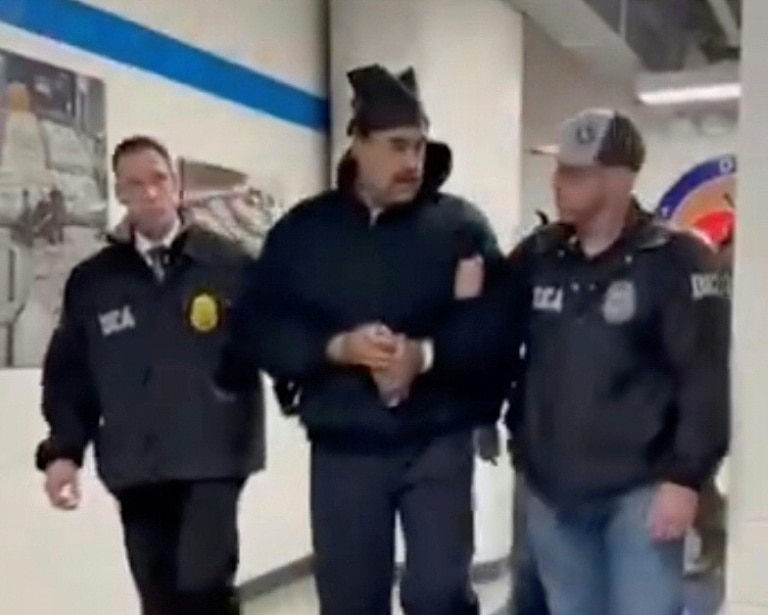
    WASHINGTON — The capture of Venezuelan leader Nicolás Maduro has unveiled a radical transformation in U.S. foreign policy toward Latin America, with President Donald Trump declaring unprecedented American dominance in the Western Hemisphere. The operation, which culminated in Maduro’s perp-walk through DEA headquarters, represents the most aggressive application of what Trump now terms the ‘Donroe Doctrine’—a modern interpretation of the Monroe Doctrine emphasizing overt interventionism.

    This doctrine has been implemented through multifaceted strategies including naval blockades against Venezuelan oil, military strikes against alleged drug traffickers, election meddling in Honduras and Argentina, and extensive use of tariffs and sanctions. The administration’s stated objectives include combating drug trafficking, halting immigration, securing strategic natural resources, and countering Russian and Chinese influence.

    The policy has sharply divided Latin American leaders along ideological lines. Right-wing presidents including Argentina’s Javier Milei, Ecuador’s Daniel Noboa, and Chile’s José Antonio Kast hailed Maduro’s capture as a victory for democracy and regional security. Conversely, left-wing leaders—Brazil’s Lula da Silva, Mexico’s Claudia Sheinbaum, Chile’s Gabriel Boric, and Colombia’s Gustavo Petro—condemned the action as dangerous bullying that violates international law and sovereignty.

    Historical parallels to early 20th-century U.S. interventions have emerged, recalling periods when American troops occupied Central American nations to protect corporate interests and supported repressive military dictatorships during the Cold War. The operation has sparked street protests and uneasy reactions even among some U.S. allies, with El Salvador’s Nayib Bukele remaining uncharacteristically quiet.

    The administration’s broader strategy appears focused on assembling a coalition of ideologically aligned governments across Latin America, leveraging the recent rise of Trump-like leaders who oppose immigration, prioritize security, and reject globalization. Trump explicitly warned uncooperative leaders, suggesting Cuba’s government ‘looks ready to fall,’ criticizing Mexico’s cartel policies, and personally attacking Colombia’s president.

  • North Korea tests hypersonic missiles, says nuclear forces ready for war

    North Korea tests hypersonic missiles, says nuclear forces ready for war

    In a significant escalation of military posturing, North Korean leader Kim Jong Un has personally supervised the test-firing of advanced hypersonic missiles, state media confirmed Monday. The demonstration comes amid growing regional tensions and follows recent U.S. military operations against Venezuela, which Pyongyang has characterized as evidence of American aggression.

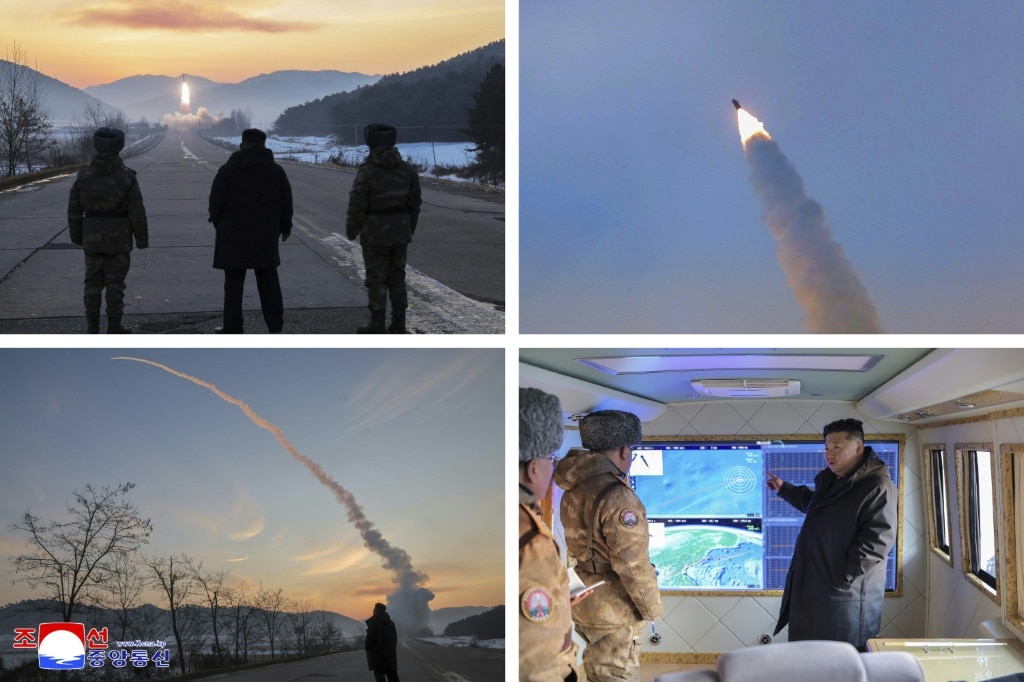
    The Korean Central News Agency (KCNA) reported that Kim emphasized the test underscored the ‘readiness of the DPRK’s nuclear forces’ for actual combat scenarios. ‘Important achievements have been made in putting our nuclear forces on a practical basis and preparing them for real warfare,’ Kim stated during the inspection of the launch exercise near Pyongyang.

    Photographs released by state media depicted Kim observing the early morning missile launch while accompanied by senior military officials. The North Korean leader explicitly connected the test’s timing to what he termed ‘recent geopolitical crisis and complicated international events’—an apparent reference to Washington’s capture of Venezuelan President Nicolas Maduro.

    South Korean and Japanese defense authorities detected the launch of two ballistic missiles on Sunday, marking North Korea’s first weapons test of the year. The incident occurred just hours before South Korean leader Lee Jae Myung departed for Beijing, where he hopes to leverage China’s influence over Pyongyang to improve inter-Korean relations.

    Military analysts interpret the hypersonic missile test as both a technological demonstration and political statement. Hong Min, an analyst at the Korea Institute for National Unification, noted that the launch signals Pyongyang’s possession of advanced war deterrent capabilities that other nations targeted by Washington, like Venezuela, lack.

    Hypersonic weapons represent a significant advancement in missile technology, capable of traveling at speeds exceeding Mach 5 while maintaining maneuverability during flight. These characteristics make them substantially more difficult to track and intercept compared to conventional ballistic missiles. North Korea initially tested its hypersonic weapon system in October, joining a small group of nations including Russia and Iran that have deployed such advanced systems in recent conflicts.