分类: politics

  • US involvement in Venezuela could last years, Trump says

    US involvement in Venezuela could last years, Trump says

    President Donald Trump has indicated that American involvement in Venezuela may extend for an indefinite period following the dramatic capture of Venezuelan leader Nicolás Maduro. In an exclusive interview with The New York Times, Trump stated that “only time will tell” how long his administration would oversee the South American nation’s governance.

    The development comes after US forces conducted a raid on Saturday that resulted in Maduro’s seizure. Trump declined to specify whether or when elections would be conducted to replace the interim government currently led by Maduro loyalist Delcy Rodríguez.

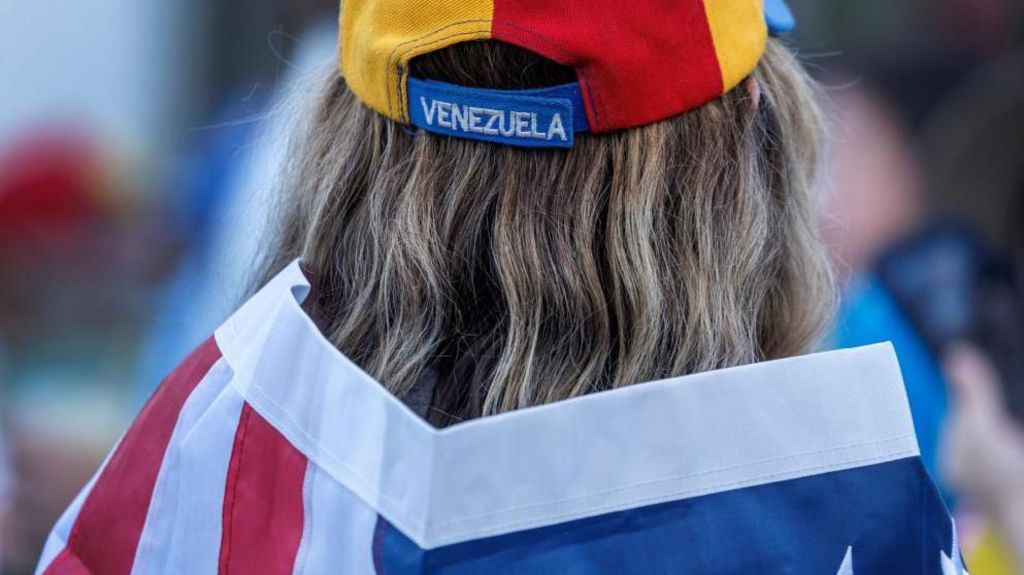
    Meanwhile, Venezuelan opposition leader María Corina Machado characterized Maduro’s ouster as triggering an “irreversible process” toward Venezuelan freedom. This contrast highlights the complex political landscape unfolding in the oil-rich nation.

    The White House announced earlier Wednesday that the United States would control sales of sanctioned Venezuelan oil “indefinitely.” Energy Secretary Chris Wright justified this measure as necessary leverage over Caracas’ interim government. Trump acknowledged that while his administration would be “taking oil” from Venezuela—home to the world’s largest proven reserves—restoring the country’s crippled oil industry would “take a while.”

    Venezuela’s oil production has dramatically declined due to years of mismanagement under Maduro and his predecessor, compounded by extensive US sanctions.

    Trump revealed that Secretary of State Marco Rubio maintains “constant communication” with Rodríguez, who was designated as Venezuela’s interim leader by the Supreme Court—still dominated by Maduro loyalists. According to Trump, Rodríguez is “giving us everything that we feel is necessary.” The US president previously stated that the interim government had agreed to use oil proceeds exclusively for purchasing American-made goods.

    Notably, Trump dismissed opposition leader Machado’s potential leadership, claiming she lacked necessary “respect” and support. This contradicts expectations among Venezuela analysts who anticipated the rapid return of opposition leaders Edmundo González and Machado following Maduro’s removal.

    Machado, who united opposition groups before being barred from the 2024 presidential election, subsequently supported former diplomat González as her proxy. Independently verified voting tallies suggest González won by a landslide, though the government-loyal electoral council declared Maduro re-elected. Both opposition leaders faced government repression, with González going into exile and Machado hiding within Venezuela before her perilous journey to Oslo to accept the Nobel Peace Prize.

    In an interview with Venezuelan opposition news site La Patilla, Machado insisted that González remains the legitimate president-elect and demanded release of over 800 political prisoners—a demand echoed by Republican lawmaker María Elvira Salazar.

    According to NYT journalists, Trump appeared more focused on the rescue mission than navigating Venezuela’s complex political future. When pressed on US plans, he stated: “We will rebuild it in a very profitable way… We’re going to be using oil, and we’re going to be taking oil. We’re getting oil prices down, and we’re going to be giving money to Venezuela, which they desperately need.”

    The president is scheduled to meet with representatives from three major US oil companies at the White House on Friday to further discuss these plans.
  • In pictures: Protests held in US cities after woman shot dead by immigration agent

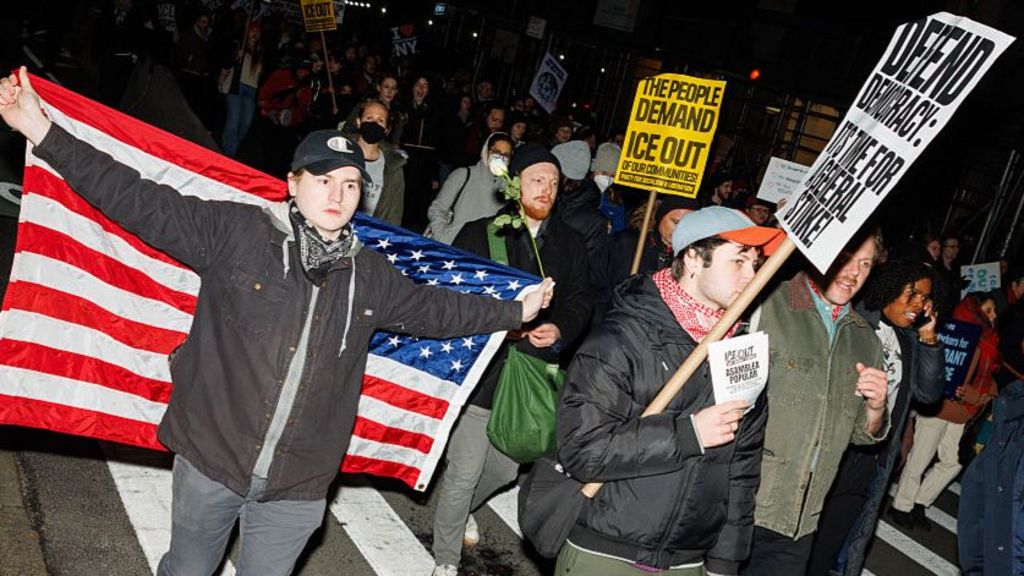
    In pictures: Protests held in US cities after woman shot dead by immigration agent

    Minneapolis has become the epicenter of national unrest following the fatal shooting of 37-year-old Renee Nicole Good by a federal immigration officer on Wednesday. The incident has triggered widespread demonstrations across multiple U.S. cities and sparked conflicting narratives between federal authorities and local officials.

    Federal immigration officials assert that Good attempted to strike immigration agents with her vehicle, necessitating what they describe as a defensive response. However, Minneapolis Mayor Jacob Frey has publicly condemned the shooting as reckless, while other local officials characterize Good as merely caring for her neighbors when she was shot at close range.

    This lethal encounter occurred amid the substantial deployment of hundreds of Immigration and Customs Enforcement (ICE) agents to Minneapolis as part of the Trump administration’s intensified crackdown on illegal immigration. The government had recently assigned an additional 2,000 federal agents to the region following allegations of welfare fraud in Minnesota.

    The shooting has ignited passionate protests from coast to coast. In New York City, demonstrators gathered to express solidarity with Minneapolis residents and demand accountability. Oakland, California saw significant gatherings, while Chicago has witnessed daily protests against ICE operations that have become routine occurrences.

    Vigils honoring Good’s memory have accompanied the protests, creating a dual atmosphere of mourning and civic outrage. The contrasting official accounts of the incident have further polarized communities and raised serious questions about federal immigration enforcement tactics.

  • Starry Lee Wai-king elected president of HKSAR’s 8th-term LegCo

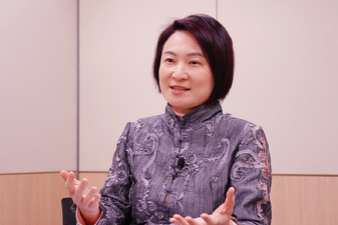
    Starry Lee Wai-king elected president of HKSAR’s 8th-term LegCo

    In a decisive political development, Starry Lee Wai-king has been elected as the President of Hong Kong’s eighth-term Legislative Council (LegCo), marking a significant milestone in the Special Administrative Region’s governance structure. The election, conducted on January 8, 2026, at the Legislative Council Complex, saw Lee prevail over contender Ronick Chan Chun-ying by a narrow five-vote margin.

    The appointment represents a continuation of political leadership within Hong Kong’s legislative framework, with Lee bringing considerable parliamentary experience to her new role. The election process demonstrated the functioning of Hong Kong’s legislative mechanisms under the principle of ‘one country, two systems,’ with all procedures conducted according to established protocols.

    Observers note that Lee’s presidency comes at a crucial juncture for Hong Kong as the region continues to navigate complex socioeconomic challenges while maintaining its unique position within China’s governance structure. The leadership transition occurs amidst ongoing efforts to balance regional autonomy with national integration priorities.

    The new LegCo president’s background suggests a continuation of pragmatic governance approaches, with expectations focusing on legislative efficiency, procedural adherence, and administrative stability. The election outcome reinforces the current political trajectory within Hong Kong’s institutional framework, with implications for both local governance and broader regional dynamics.

  • Ex-Ghana minister detained by US immigration

    Ex-Ghana minister detained by US immigration

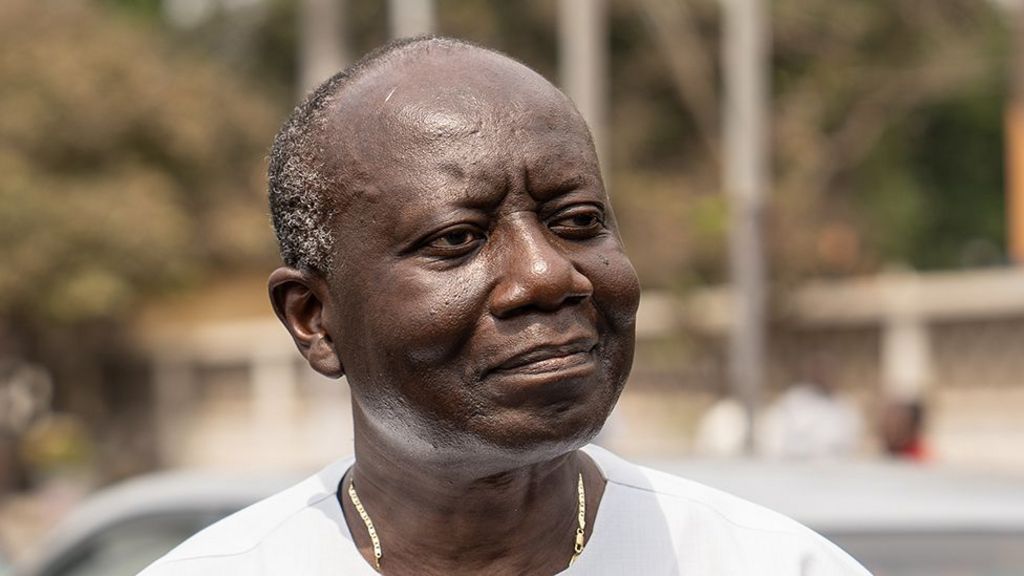
    Ghana’s former Finance Minister Ken Ofori-Atta has been detained by US immigration authorities, according to legal representatives familiar with the matter. The detention comes amid an ongoing extradition request from Ghanaian prosecutors who have charged Ofori-Atta with multiple corruption-related offenses.

    Ofori-Atta’s legal team confirmed the detention while emphasizing their client’s compliance with US immigration procedures. The former minister was reportedly in the process of adjusting his immigration status to remain legally in the United States beyond his current visa’s validity period. His attorneys characterized the detention as a routine immigration matter that they expect to be resolved promptly.

    The case represents a significant diplomatic challenge between the two nations, both of which maintain generally warm relations. Ghana had previously sought Ofori-Atta’s extradition to face charges including conspiracy to commit procurement fraud and causing financial loss to the state during his tenure from 2017 to 2024 under the New Patriotic Party administration.

    Ofori-Atta’s lawyers have consistently challenged the extradition request, arguing that the allegations are politically motivated. The former minister left Ghana approximately one year ago for medical treatment, according to his legal representatives. While Ghanaian prosecutors briefly declared him a fugitive in February, this designation was withdrawn after assurances that he intended to cooperate with investigators.

    The detention occurs against the backdrop of Ghana’s recent political transition. The New Patriotic Party lost power in December 2024 elections, leading to the presidency of John Mahama from the National Democratic Congress, who campaigned on an anti-corruption platform. The case tests the bilateral relationship between the US and Ghana, which have collaborated on repatriation matters despite occasional policy disagreements on international issues.

  • Denmark sees talks with the US as a chance for ‘the dialogue that is needed’ over Greenland

    Denmark sees talks with the US as a chance for ‘the dialogue that is needed’ over Greenland

    Diplomatic channels are activating as Denmark confirms an upcoming high-level meeting with United States officials to address President Donald Trump’s renewed interest in establishing American control over Greenland. The strategic Arctic territory, rich in mineral resources and occupying a crucial geopolitical position, has become the focal point of international discussions.

    Danish Defense Minister Troels Lund Poulsen characterized the dialogue as both necessary and requested, telling national broadcaster DR that the Greenlandic government would participate directly. This confirmation follows statements from U.S. Secretary of State Marco Rubio, who announced the meeting would occur next week without disclosing specific details regarding participants or location.

    The principle of “Nothing about Greenland without Greenland” has emerged as a guiding tenet, with Greenland’s Foreign Minister Vivian Motzfeldt emphasizing their requested involvement. This comes amid heightened rhetoric from U.S. Vice President JD Vance, who asserted on Fox News that Denmark has inadequately secured the territory that hosts critical missile defense infrastructure partially dependent on Greenland’s strategic location.

    Vance maintained that historical military alliances, including Denmark’s support during World War Two and recent counterterrorism operations, don’t preclude current security concerns. “Just because you did something smart 25 years ago doesn’t mean you can’t do something dumb now,” Vance stated, framing Trump’s position as a clear assessment that Denmark is “not doing a good job with respect to Greenland.”

    European leaders have rallied behind Greenland’s sovereignty, with European Council President Antonio Costa declaring “Greenland belongs to its people” and affirming the European Union’s full solidarity. The leaders of Canada, France, Germany, Italy, Poland, Spain, and the United Kingdom joined Danish Prime Minister Mette Frederiksen in defending Greenland’s territorial integrity within the NATO alliance.

    The diplomatic exchange occurs against the backdrop of existing defense agreements. Danish Foreign Minister Lars Løkke Rasmussen referenced the 1951 defense pact between Denmark and the U.S., noting it offers “ample opportunity for the United States to have a much stronger military presence in Greenland” if desired. Rasmussen documented how the American military footprint has diminished from thousands across 17 bases to approximately 200 personnel at the remote Pituffik Space Base, which supports missile warning and space surveillance operations.

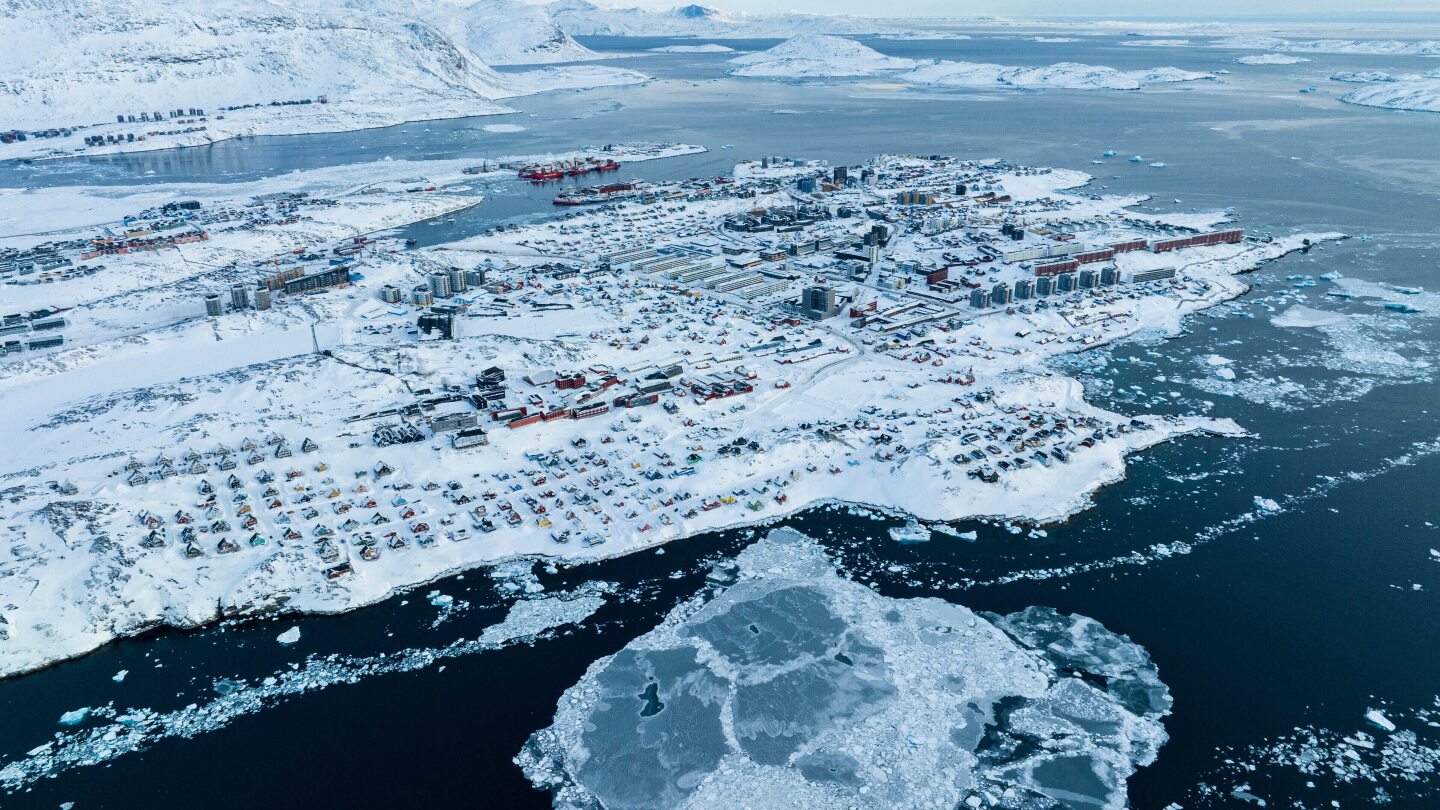
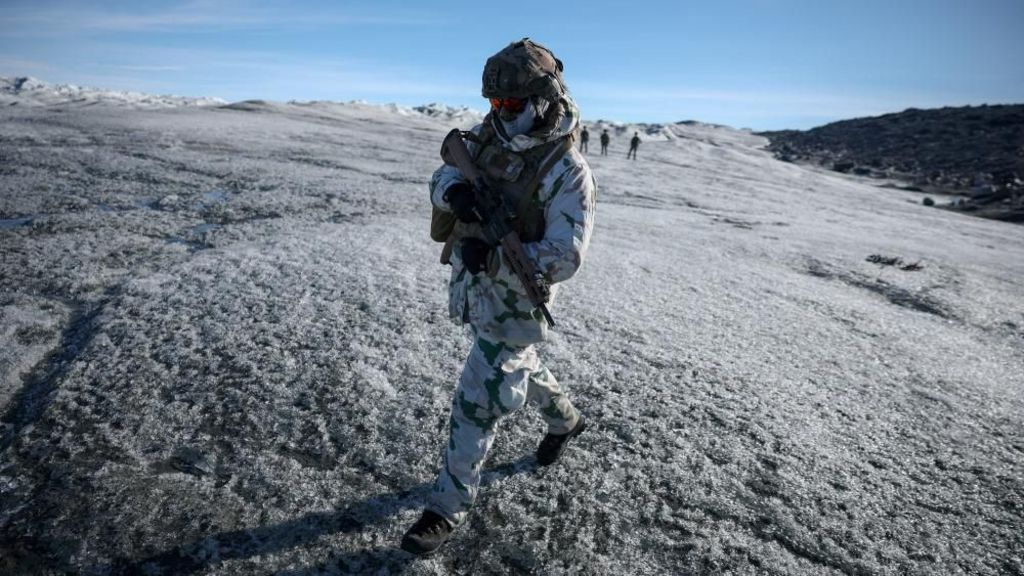
    Denmark is simultaneously enhancing its Arctic capabilities through a substantial 14.6 billion-kroner ($2.3 billion) agreement with Greenland and the Faroe Islands to improve regional surveillance and sovereignty maintenance. This initiative includes three new Arctic naval vessels, additional long-range surveillance drones, and enhanced satellite capacity, complementing the existing Joint Arctic Command headquartered in Nuuk and the elite Sirius Dog Sled Patrol that enforces Danish sovereignty in the Arctic wilderness.

  • Vance criticises Denmark and Europe’s handling of ‘critical’ Greenland

    Vance criticises Denmark and Europe’s handling of ‘critical’ Greenland

    A significant geopolitical confrontation is unfolding across the Atlantic as the United States administration renews its strategic interest in Greenland, triggering a firm diplomatic response from European allies. The situation escalated when US Vice-President JD Vance declared the semi-autonomous Danish territory “critical” for global missile defense systems during a Fox News interview, criticizing European nations for their perceived failure to adequately secure the region.

    Vance articulated concerns about Greenland’s pivotal role in early warning systems against potential Russian or Chinese missile attacks, stating that European partners “have not done a good job” in maintaining the territory’s defensive capabilities. His comments came alongside White House confirmation that officials are “actively” discussing potential acquisition options for Greenland, including military annexation as a viable alternative.

    The Trump administration’s position marks a revival of similar attempts made during the former president’s first term in 2019, though with notably heightened rhetoric following recent military actions in Venezuela. This renewed interest has been met with unequivocal rejection from both Danish and Greenlandic authorities, who have consistently maintained that the island is not available for purchase or transfer.

    In a powerful show of European solidarity, leaders from France, the UK, Germany, Italy, Poland, and Spain joined Denmark in issuing a joint statement affirming that “Greenland belongs to its people, and only Denmark and Greenland can decide on matters concerning their relations.” The European leaders emphasized their commitment to Arctic security through NATO collaboration while explicitly invoking the principles of the UN Charter regarding sovereignty and territorial integrity.

    Greenland’s political representatives expressed alarm at the American position, with Danish parliament member Aaja Chemnitz characterizing the administration’s comments as “a clear threat” and “completely disrespectful” toward a NATO ally. Meanwhile, local residents like Inuit hunter Aleqatsiaq Peary conveyed indifference toward potential ownership changes, noting that transition from Danish to American control would simply represent “switching from one master to another” for the historically colonial territory.

    Beyond military considerations, Greenland’s significance extends to substantial natural resources including rare earth minerals, uranium, and potential oil and gas reserves—assets becoming increasingly accessible due to climate-induced ice melt. The strategic Pituffik Space Base (formerly Thule Air Base), operational under US control since World War II, further underscores the territory’s enduring importance in global defense architecture.

    With US Secretary of State Marco Rubio scheduled to hold talks with Danish officials next week, the diplomatic resolution of this emerging crisis remains uncertain, potentially testing the resilience of transatlantic alliances and established international norms regarding territorial sovereignty.

  • China’s patrols around Diaoyu Island lawful, justified: spokesperson

    China’s patrols around Diaoyu Island lawful, justified: spokesperson

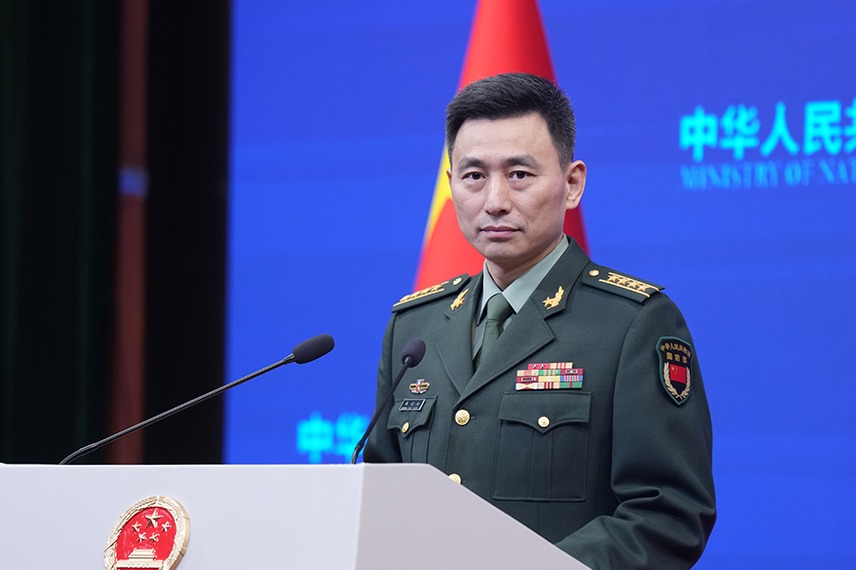
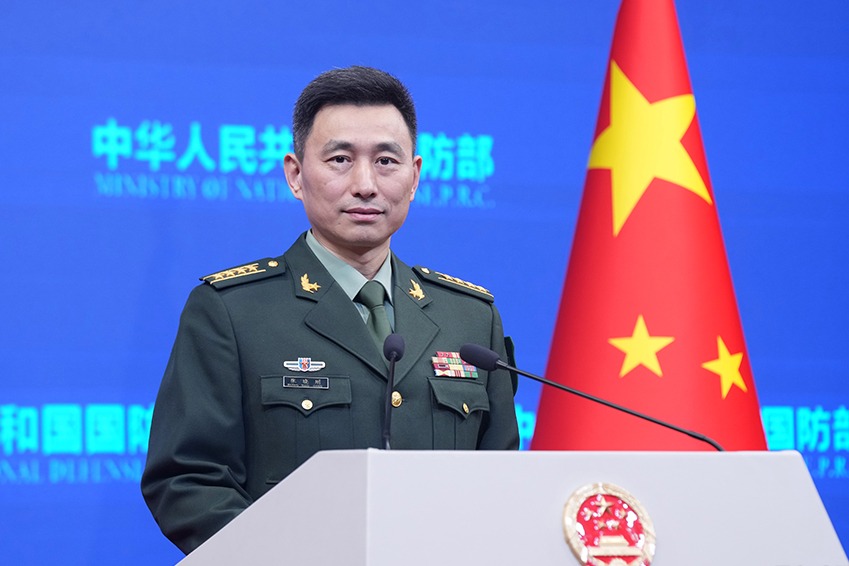
    In a definitive statement addressing regional maritime tensions, China’s Ministry of National Defense has formally declared its patrol activities around the Diaoyu Islands as both lawful and justified. Defense spokesperson Zhang Xiaogang articulated China’s position during a Thursday press briefing, emphasizing the nation’s historical claims to the islands and their adjacent waters.

    Zhang characterized the Diaoyu Islands and their affiliated territories as ‘China’s inherent territory,’ framing coast guard operations in these waters as legitimate measures to protect national maritime interests. The spokesperson’s comments came specifically in response to recent Japanese media reports scrutinizing China’s maritime patrols in the contested region.

    The defense official issued a stern warning to Japan, urging caution in both actions and rhetoric regarding the matter. ‘We urge Japan to act and speak with caution and refrain from taking any moves that may escalate the situation,’ Zhang stated, employing a vivid Chinese proverb to underscore his point: ‘Otherwise, it will lift a rock only to drop it on its own feet.’

    The spokesperson’s remarks reinforce China’s firm stance against external criticism of its maritime activities, presenting them as non-negotiable exercises of national sovereignty rather than subjects for international debate.

  • Farmers block highways across Greece in protest over rising costs and EU trade deal

    Farmers block highways across Greece in protest over rising costs and EU trade deal

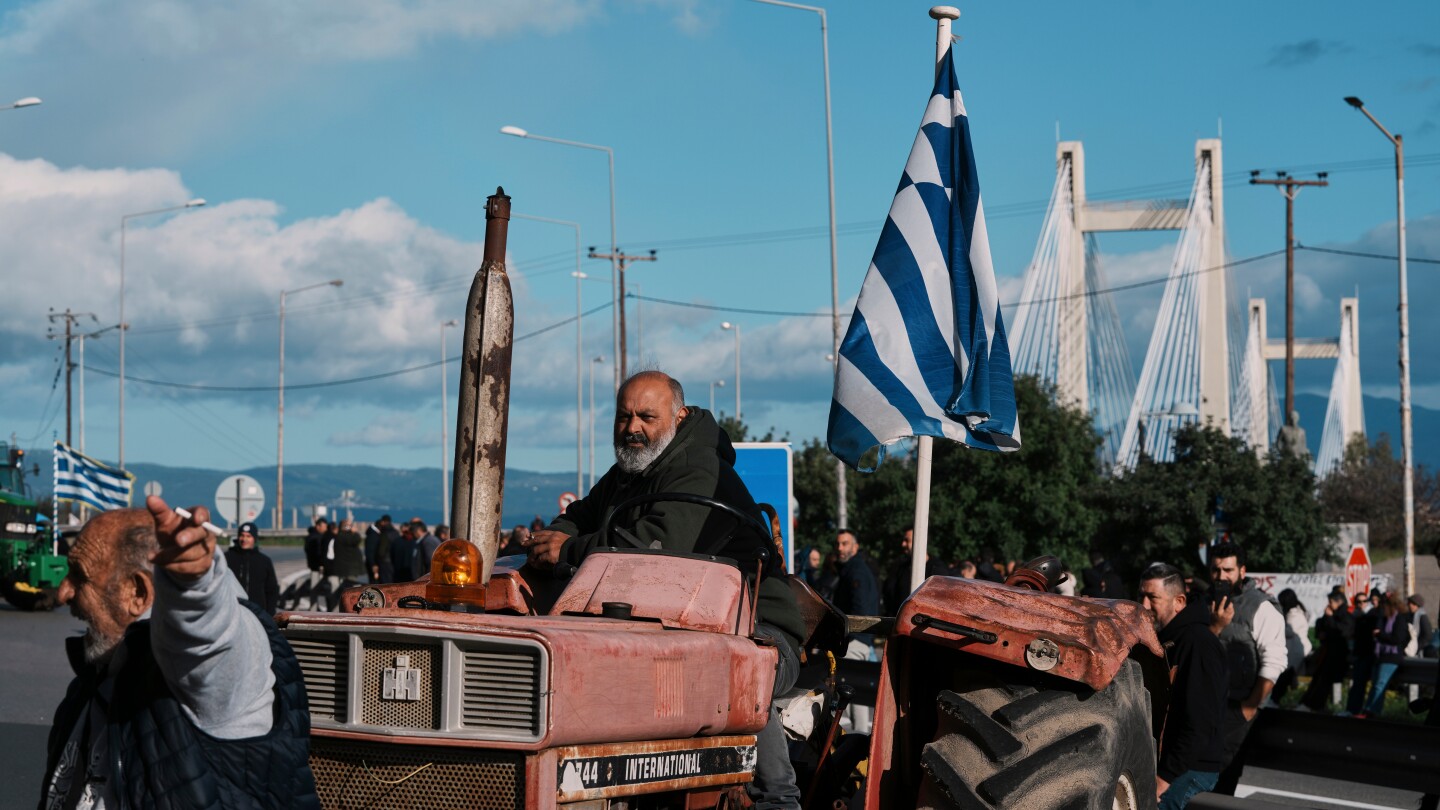
    KASTRO, Greece — Greek agricultural workers intensified their nationwide demonstrations on Thursday by initiating a comprehensive 48-hour blockade of critical highways, major intersections, and toll collection points. This dramatic escalation responds to mounting production expenses and a controversial European Union trade agreement with South American countries under the Mercosur bloc.

    Agricultural machinery formed impenetrable barriers along primary transportation corridors, bringing all vehicular movement to a complete standstill while permitting exclusive passage for emergency services. Law enforcement personnel redirected civilian traffic to alternative roadways without attempting to dismantle the protest formations.

    The conservative administration in Athens has issued formal warnings against prolonged disruptions of public infrastructure. Multiple segments of Greece’s principal north-south highway linking the capital Athens with Thessaloniki experienced complete bilateral closure as cultivators demanded enhanced governmental assistance and outright rejection of the EU-Mercosur pact.

    Yiannis Baritas, a cabbage producer supporting five children, articulated the collective desperation at a southern Greek blockade point: “We’ve encountered an absolute breaking threshold. Our presence here will persist indefinitely to secure our families’ survival. Official policies have driven us to utter despair.”

    These agricultural demonstrations originating in November initially focused on inflated operational costs exacerbated by sequential crises: a fraudulent subsidy scheme delaying legitimate compensations and a contagious outbreak of sheep and goat pox.

    The government proposed eleventh-hour concessions on Wednesday including reduced electricity tariffs for agricultural consumers and fuel tax reimbursements. Nevertheless, producers deemed these measures insufficient to address structural challenges.

    The contested trade agreement would establish an extensive free commerce zone between European and South American economies including Brazil and Argentina. European agriculturalists anticipate market inundation with cheaper imported commodities, sparking parallel protests across multiple EU nations including concurrent demonstrations in France.

    Vangelis Roubis, a protest coordinator near Halkida, warned The Associated Press: “Greek agriculture faces extinction if this ratification proceeds. Our national economy relies fundamentally on cultivation and tourism, lacking the industrial capacity of Germany or France. Our production expenditures exceed Latin American costs by 300%.”

    Roubis cited potato cultivation as representative: Greek producers require 35-40 cents per kilogram for breakeven operations compared to approximately 10 cents in Brazil. The coordinator concluded: “We demand Greece align with EU member states opposing this agreement.”

  • China urges international community to prevent revival of Japanese militarism

    China urges international community to prevent revival of Japanese militarism

    In a significant diplomatic statement, China has issued a forceful appeal to the international community to jointly counter what it characterizes as Japan’s accelerating militarization. The call came from Chinese Defense Ministry spokesperson Zhang Xiaogang during a press briefing in Beijing on Thursday.

    Zhang articulated deep concerns regarding Japan’s recent security policies and military positioning, asserting that Tokyo has been advancing its defense capabilities under various pretexts while disregarding international opposition. The spokesperson emphasized that Japan’s actions demonstrate a concerning pattern rather than showing contrition for historical transgressions.

    According to the Chinese military representative, Japan has engaged in brazen weapons exports and even floated discussions about nuclear armament possibilities. Zhang contended that these developments reveal the underlying agenda of right-wing elements within Japan who seek to restore militarism and reshape the nation’s security posture.

    The spokesperson highlighted that criticism of Japan’s military policies has been consistently voiced by multiple nations, particularly Southeast Asian countries. Zhang urged all peace-seeking nations and populations to recognize what China perceives as Japan’s hidden motivations and collaborate to preserve the post-World War II international framework.

    The Chinese defense official concluded that collective international effort is essential to maintain regional and global stability while preventing the resurgence of Japanese militaristic tendencies that could undermine the existing world order.

  • Chinese vice-premier stresses importance of wheat field management

    Chinese vice-premier stresses importance of wheat field management

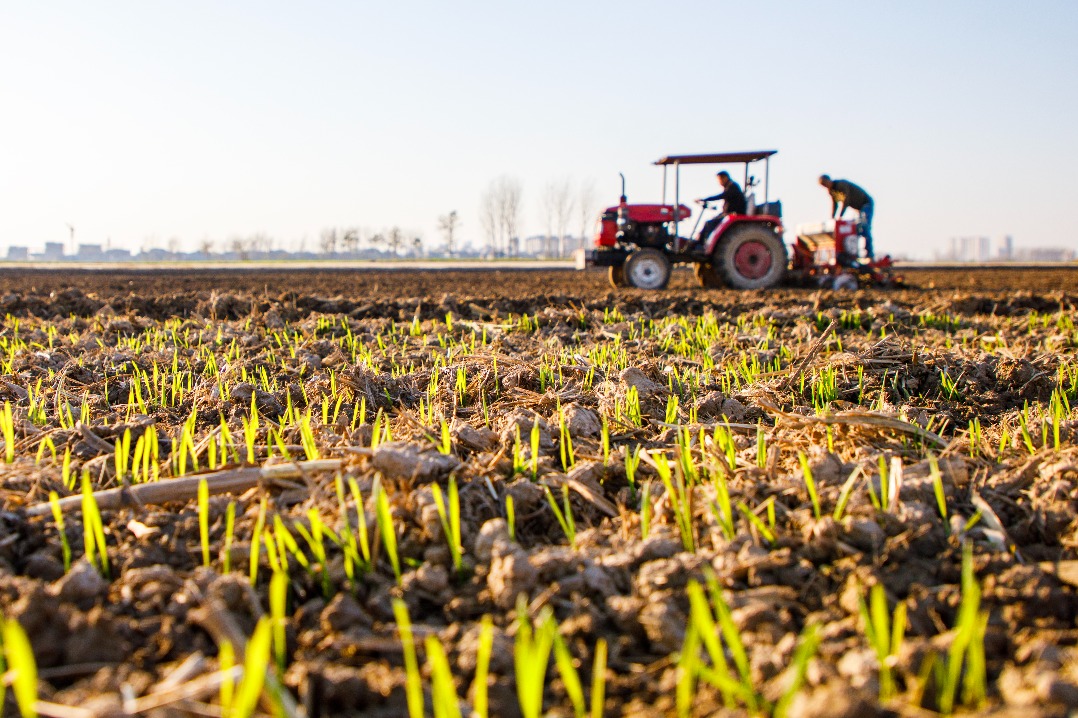
    During a comprehensive inspection tour of Central China’s Henan province from Tuesday to Wednesday, Chinese Vice-Premier Liu Guozhong underscored the critical importance of enhanced wheat field management to safeguard agricultural product stability. The high-ranking official, who also serves on the Political Bureau of the Communist Party of China Central Committee, conducted field visits to Anyang and Neihuang counties to evaluate winter wheat conditions firsthand.

    Vice-Premier Liu personally assessed crop fields and agricultural service centers, examining winter wheat seedling development, cold and drought prevention measures, and agricultural supply availability. While acknowledging that the national winter wheat sowing area has maintained stability, Liu identified concerning weaknesses in seedling conditions across certain regions, urging immediate and continuous monitoring of crop health and soil moisture levels.

    The agricultural inspection extended to vegetable cultivation bases and wholesale markets, where Liu investigated the supply chain stability of essential ‘vegetable basket’ products. With the approaching Spring Festival creating peak seasonal demand, the Vice-Premier emphasized the necessity of enhanced price surveillance and information transparency for vegetables, fruits, meat, eggs, dairy products, and aquatic supplies.

    This agricultural mobilization forms part of broader strategic preparations to ensure food security foundations align with the impending launch of China’s 15th Five-Year Plan (2026-2030), representing a crucial initiative to stabilize domestic food supplies during a period of significant economic planning.