分类: politics

  • US protests erupt nationwide over strike on Venezuela

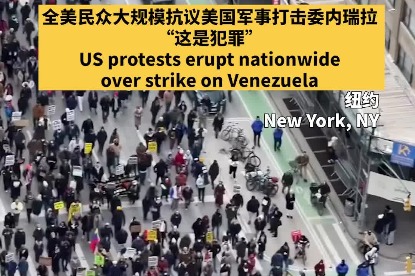
    US protests erupt nationwide over strike on Venezuela

    Across the United States, thousands of citizens mobilized in coordinated demonstrations over the weekend to voice vehement opposition to American military operations in Venezuela. The protests, characterized by passionate outcries against foreign intervention, saw participants brandishing signs declaring “Bombing Venezuela is a crime” while chanting slogans demanding “US hands off foreign soil.

    The widespread civic action represents a significant domestic response to recent developments in US-Venezuela relations. Protest organizers coordinated events in multiple urban centers, drawing diverse crowds concerned about the ethical implications and potential consequences of military engagement in South America.

    This grassroots movement emerges amid escalating tensions between the two nations, with demonstrators expressing apprehension about the humanitarian impact and geopolitical ramifications of the strikes. The scale and coordination of these protests indicate substantial public dissent regarding current foreign policy approaches, highlighting deepening divisions within American society over appropriate international engagement strategies.

    The demonstrations reflect growing public scrutiny of military decision-making processes and underscore the complex relationship between government actions and citizen accountability in matters of international conflict.

  • Beijing moves to cut losses in Venezuela after Maduro’s capture

    Beijing moves to cut losses in Venezuela after Maduro’s capture

    In the wake of the United States’ military operation that resulted in the capture of Venezuelan leader Nicolás Maduro on January 3, China has initiated a comprehensive reassessment of its overseas investment strategy. The Chinese government has been conducting urgent evaluations of potential economic losses and strategic implications stemming from the political upheaval in the Latin American nation.

    Multiple sources within China’s policy circles indicate that Beijing has concluded its initial assessment, with officials and commentators publicly expressing concerns about overexposure in Venezuela. The consensus reveals a recognition that China placed excessive confidence in international law protections and underestimated the Trump administration’s determination to assert dominance in the Western Hemisphere.

    Financial exposure remains a immediate concern, with Venezuela owing China between $10-20 billion, primarily repaid through crude oil shipments. Short-term strategy focuses on maintaining oil flows, while medium to long-term approaches may involve asset sales to Western firms or establishing partnerships to mitigate losses. This recalibration comes as President Trump announced Venezuela’s interim authorities would transfer 30-50 million barrels of oil worth approximately $2.75 billion to the United States.

    Einar Tangen, senior fellow at the Center for International Governance Innovation, notes that China’s total investments in Venezuela exceed $60 billion across various sectors including energy and infrastructure. Despite the political crisis, Tangen observes that Maduro’s government structure remains nominally intact, with the primary current challenge being the naval blockade preventing shipments.

    The Ministry of Commerce reaffirmed China’s commitment to economic cooperation with Venezuela, emphasizing that bilateral agreements operate under international law and should not be subject to third-party interference. Officials condemned US actions as violations of international law and Venezuelan sovereignty while emphasizing that China’s Latin American engagements follow principles of mutual benefit rather than sphere-of-influence building.

    Analysts suggest that while China may experience tactical setbacks in its Belt and Road Initiative, the strategic outcome could ultimately benefit Beijing by validating its warnings about US unilateralism. The incident has sparked serious discussions within Chinese policy circles about enhancing legal protections, diplomatic responses, and even military capabilities to safeguard overseas investments in an increasingly volatile global landscape.

  • Colombia sees ‘real threat’ of US military action, president tells BBC

    Colombia sees ‘real threat’ of US military action, president tells BBC

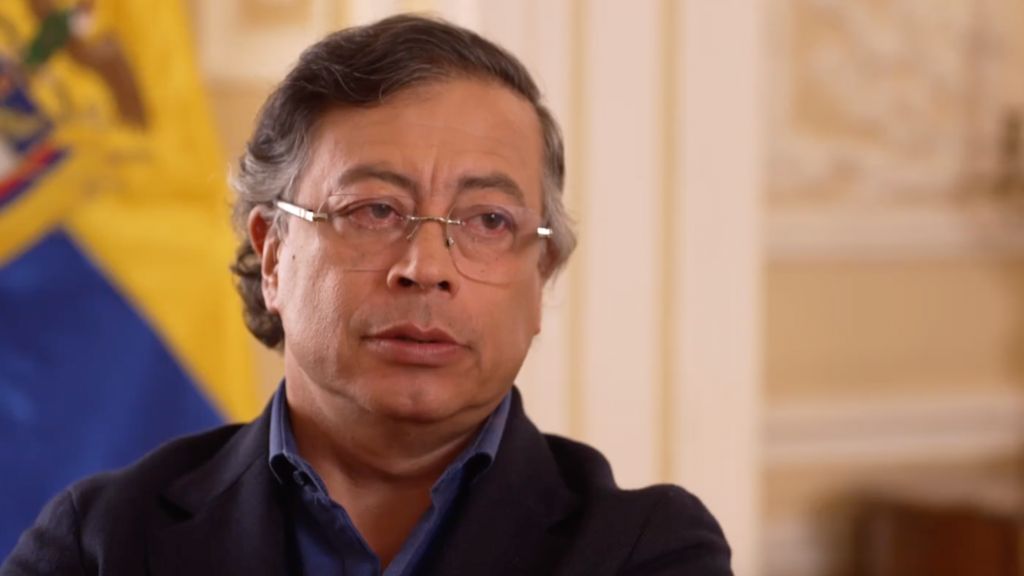
    Colombian President Gustavo Petro has issued a stark warning to the BBC, stating he perceives a ‘real threat’ of potential US military intervention against his nation. This alarming assessment follows former President Donald Trump’s recent threats of military action against Colombia and his characterization of Petro as a ‘sick man’ involved in cocaine trafficking—an accusation Petro vehemently denies.

    The escalating diplomatic crisis reveals profoundly divergent worldviews. Petro accuses the United States of operating as an ’empire’ that treats other nations as subordinates rather than sovereign equals. He delivered particularly sharp criticism of US Immigration and Customs Enforcement (ICE), comparing their operations to ‘Nazi brigades’ and citing recent agent-involved shootings of US citizens as evidence of recklessness.

    Trump’s administration has significantly expanded ICE operations, reporting the deportation of approximately 605,000 individuals between January 20 and December 10, 2025, alongside 1.9 million ‘voluntary self-deportations’ through an aggressive public awareness campaign.

    The relationship between the two leaders has been marked by public confrontations, including Trump’s instruction for Petro to ‘watch his ass’ and Petro’s condemnation of US military actions in Venezuela as motivated by ‘oil and coal’ interests. Despite a recent phone conversation that Trump described as a ‘Great Honour’ on his Truth Social platform, Petro indicates relations remain tense, with the call lasting nearly an hour and covering drug trafficking and regional politics.

    Petro emphasized Colombia’s preference for diplomatic resolution but noted the country’s historical resilience against larger military forces, referencing Colombia’s challenging terrain and popular mobilization capabilities. He also revealed communications with Venezuela’s acting president Delcy Rodríguez and expressed concerns about intelligence agency operations in the region.

    As the world’s largest cocaine producer with significant natural resources including oil, gold, and emeralds, Colombia finds itself at the center of US drug policy enforcement. Petro defends his ‘total peace’ strategy of negotiating with armed groups while maintaining military options, citing reduced homicide rates and slowing coca cultivation growth in southern Colombia as evidence of progress.

  • How Oman went from mediator to silent Saudi partner in Yemen fight

    How Oman went from mediator to silent Saudi partner in Yemen fight

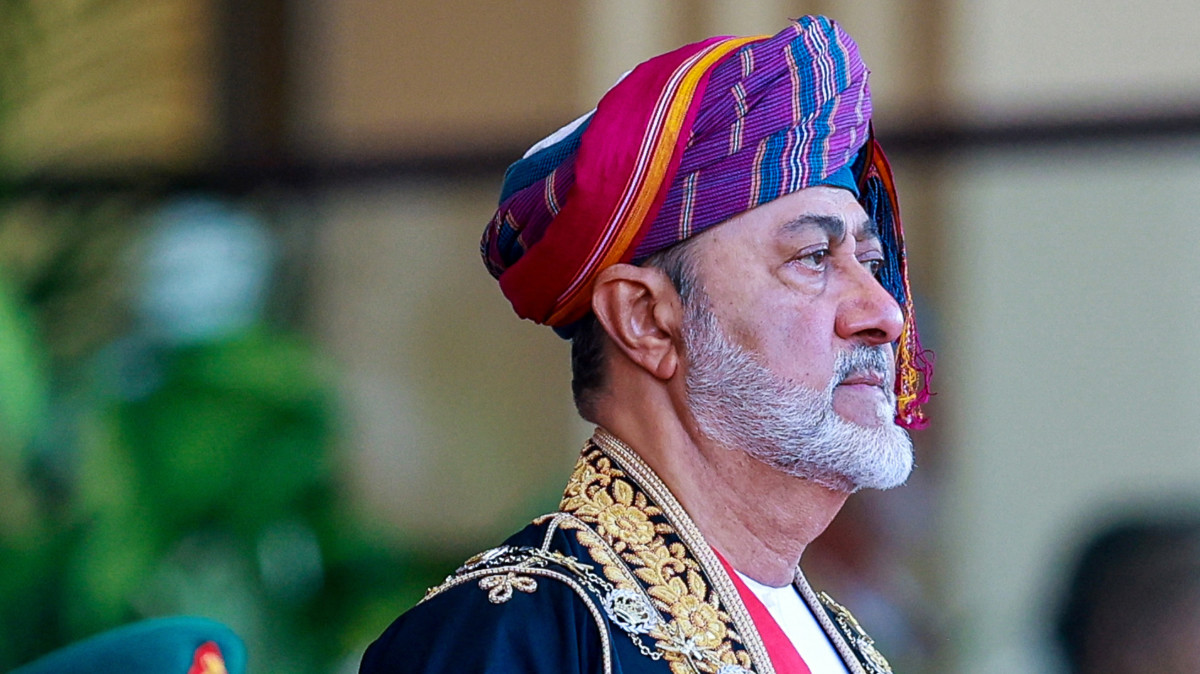
    In a significant departure from its traditionally neutral foreign policy, Oman has engaged in covert military cooperation with Saudi Arabia to counter UAE-backed separatist advances in Yemen’s strategic al-Mahra region, according to diplomatic sources and regional analysts.

  • US Senate advances measure to curb Trump’s war-making powers on Venezuela

    US Senate advances measure to curb Trump’s war-making powers on Venezuela

    In a significant bipartisan move, the U.S. Senate advanced a measure on Thursday to curtail President Donald Trump’s autonomous war-making powers concerning Venezuela. The procedural vote passed 52-47, with five Republican senators breaking ranks to support the Democratic-led initiative.

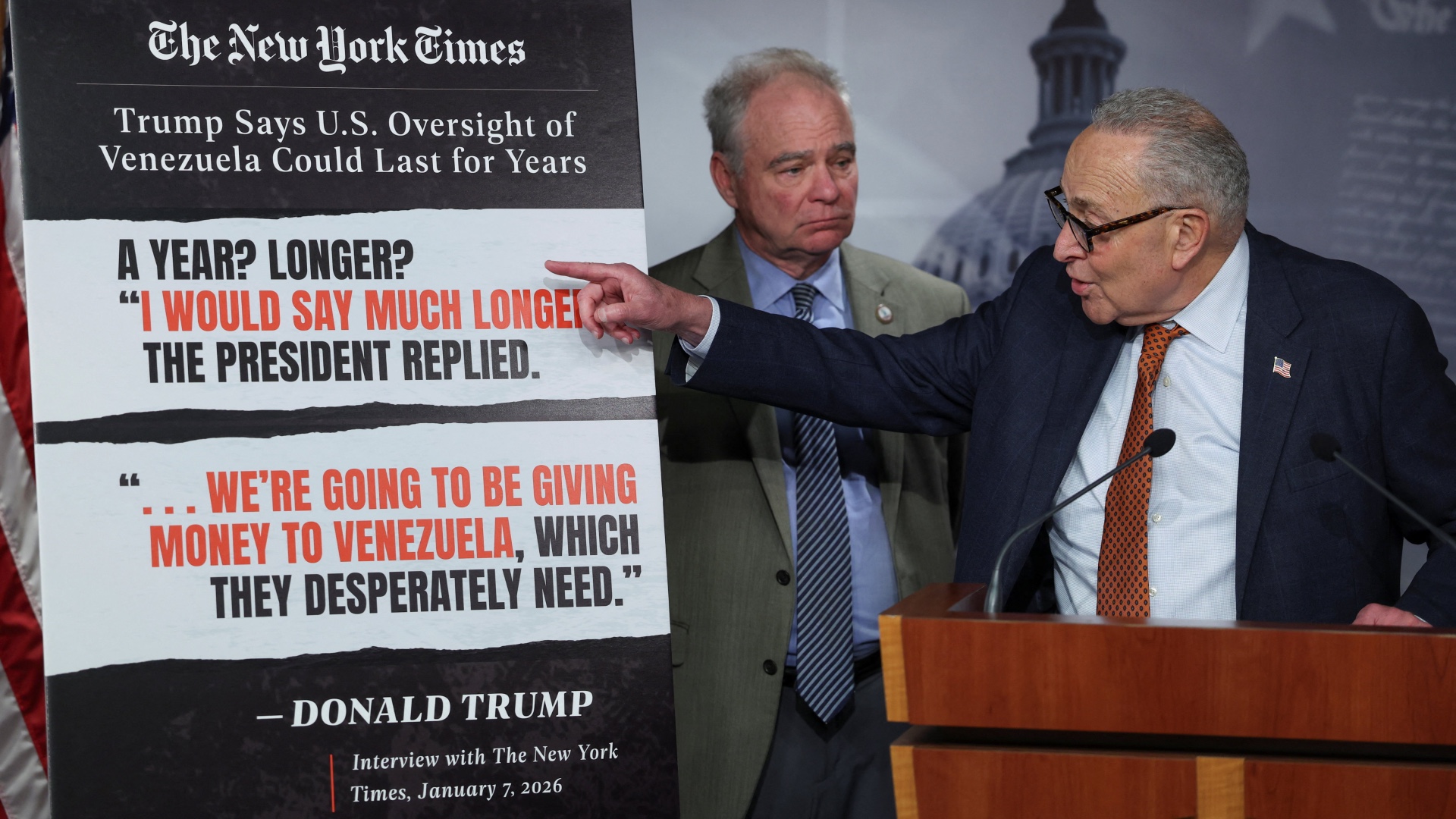
    The resolution, championed by Democratic Senator Tim Kaine and Libertarian Republican Rand Paul, invokes the 1973 War Powers Act. This legislative maneuver enables any senator to propose the withdrawal of U.S. armed forces from conflicts lacking explicit congressional authorization. The move comes amid heightened tensions following recent U.S. military operations in Venezuela that resulted in approximately 80 casualties and the controversial abduction of President Nicolas Maduro.

    Senator Kaine articulated the resolution’s urgency in a social media statement: ‘For God’s sake, let’s not let Trump wage war all over the world without us.’ His sentiment reflects growing congressional concern over executive overreach in military matters, particularly since the post-9/11 era enabled presidents to conduct strikes from Somalia to Pakistan without formal war declarations.

    The vote revealed remarkable political dynamics, with traditionally pro-Trump Republicans like Josh Hawley supporting the measure. Hawley justified his vote constitutionally, stating that future military deployment to Venezuela would require congressional approval. This defiance prompted immediate retaliation from Trump, who threatened electoral opposition against the dissenting Republicans through his TruthSocial platform.

    The advocacy group Demand Progress hailed the development as ‘a rare ray of good news for the nation and our Constitution,’ emphasizing public opposition to unauthorized military engagements. The resolution now moves toward an official Senate vote next week, after which it would face the Republican-controlled House. This action follows last year’s failed attempt by Kaine to restrict U.S. strikes in the Caribbean, which resulted over 100 fatalities despite unsubstantiated White House claims about drug trafficking.

  • Two wounded in shooting involving federal agents in Portland

    Two wounded in shooting involving federal agents in Portland

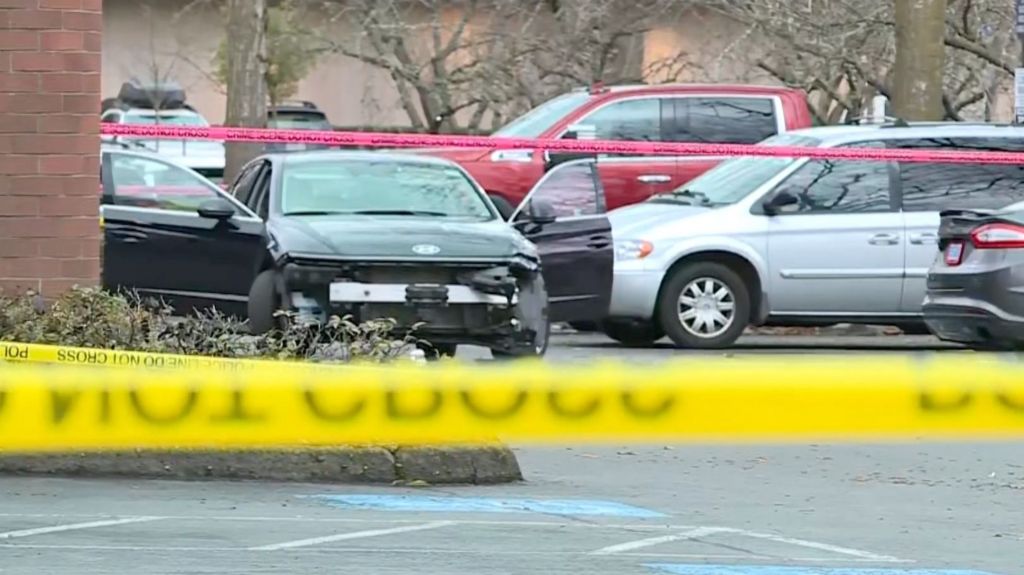
    A contentious shooting incident involving federal agents has intensified the political climate in Portland, Oregon, leaving two individuals wounded and sparking demands for the suspension of federal immigration operations. According to the Department of Homeland Security (DHS), the altercation occurred during a traffic stop targeting a Venezuelan national allegedly affiliated with the transnational Tren de Aragua criminal network. DHS claims the individual attempted to use his vehicle as a weapon against agents, prompting one officer to fire a defensive shot. The wounded driver and passenger fled the scene but were later discovered several blocks away by Portland Police, who administered emergency medical aid before transporting them to the hospital. Their current conditions remain undisclosed. Media sources indicate the victims are a married couple. This event follows closely on the heels of a fatal shooting by federal agents in Minneapolis, which has ignited nationwide protests against aggressive federal law enforcement tactics. In response, Portland Mayor Keith Wilson, a Democrat, has publicly called for Immigration and Customs Enforcement (ICE) to cease all operations within the city pending a full investigation. He accused the federal administration of attempting to ‘divide us and pit communities against each other.’ The FBI has assumed control of the investigation, a move that has raised concerns about transparency and impartiality among local leaders. Democratic State Senator Lew Frederick emphasized that without local oversight, the community is unlikely to trust the investigation’s outcomes. The incident underscores the escalating tensions between local governments and federal agencies, reflecting broader national debates over immigration enforcement and police accountability.

  • US withdrawal from 66 international organisations reasserts America First policy

    US withdrawal from 66 international organisations reasserts America First policy

    In a decisive move underscoring its America-first foreign policy, the Trump administration formally withdrew from 66 multilateral institutions through an executive order signed Wednesday. Approximately half of these entities operate under the United Nations umbrella, spanning critical areas from climate governance to counterterrorism initiatives.

    Secretary of State Marco Rubio justified the unprecedented withdrawal in an official statement, characterizing these organizations as “redundant, mismanaged, wasteful, and poorly run.” He further asserted that many had been “captured by interests advancing agendas contrary to our own” and posed threats to “our nation’s sovereignty, freedoms, and general prosperity.” The administration declared an end to the era of American taxpayer dollars flowing to foreign interests with minimal tangible returns.

    The list of exited organizations reflects established policy priorities, including withdrawals from climate-focused bodies like the UN Framework Convention on Climate Change and the 24/7 Carbon-Free Energy Compact, aligning with the administration’s promotion of traditional energy sources. However, the withdrawal extended beyond predictable targets to include entities with historically bipartisan American support, such as the UN register of conventional arms and the office dedicated to children in armed conflict.

    Paolo Von Schirach of the Global Policy Institute interpreted the move as a logical extension of the administration’s preference for bilateral engagement over multilateral forums, which it views as inefficient and ineffective. This action continues a pattern of disengagement from international institutions that began during Trump’s first term with exits from UNESCO, the UN Human Rights Council, and the termination of funding for UNRWA, primarily citing anti-Israel bias.

    The implications extend beyond symbolism. Organizations like Civicus, a global civil society alliance, warned the order “poses severe implications for people of the US and the world,” stalling progress on human rights and sustainable development. Analysts noted the withdrawal creates a strategic vacuum, potentially allowing powers like China, which openly champions multilateralism, to exert greater influence within these UN bodies. Daniel Forti of The Crisis Group highlighted the particular significance of abandoning the Peace Building Commission, noting the striking symbolism of a founding architect of the post-WWII order stepping back from the very institutions it helped establish.

  • US Senate advances resolution to limit Trump’s war powers following Venezuela strike

    US Senate advances resolution to limit Trump’s war powers following Venezuela strike

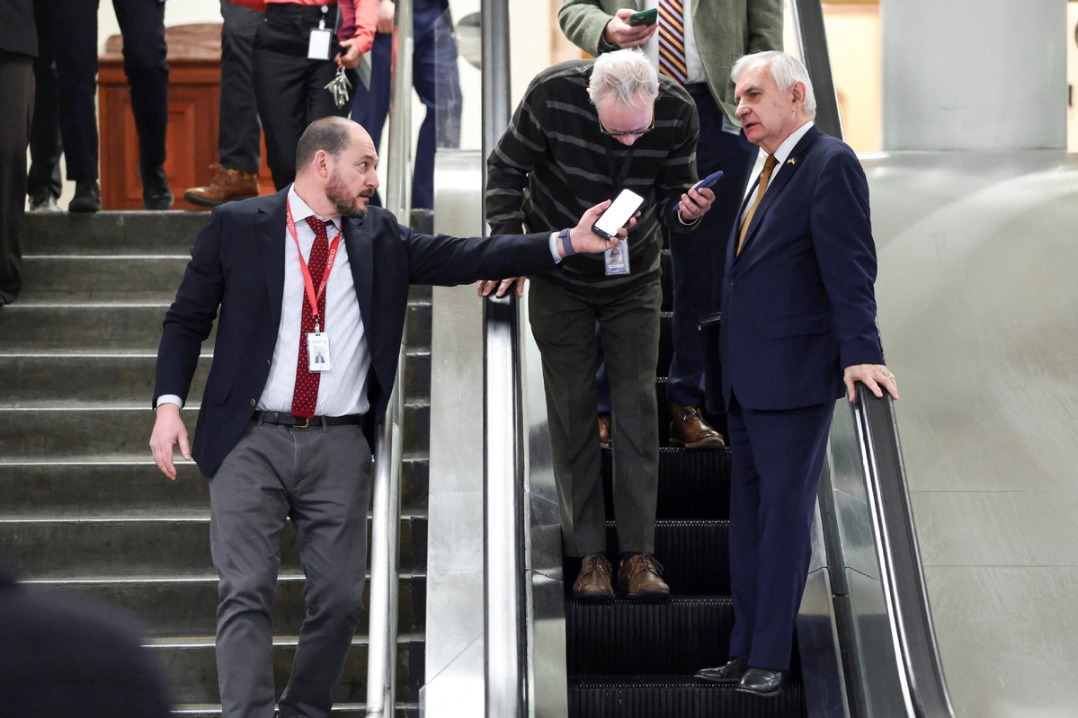
    The United States Senate has taken decisive steps to constrain presidential military authority following recent strikes in Venezuela. On Thursday, legislators advanced a significant resolution designed to limit President Donald Trump’s capacity to initiate further armed engagement against the South American nation without explicit congressional approval.

    The legislative action emerged as a direct response to military operations authorized by the administration, signaling growing congressional concern over executive branch war powers. The resolution, spearheaded by Senator Jack Reed (D-RI), represents a notable assertion of legislative authority in matters of military engagement and foreign policy.

    Following the Senate vote, Senator Reed addressed reporters on Capitol Hill, emphasizing the constitutional responsibility of Congress to oversee military commitments. “This measure reaffirms the fundamental principle that decisions of war and peace must reflect the collective judgment of the representatives of the American people,” Reed stated.

    The resolution development follows reports of significant casualties from recent military actions in Venezuela, with the country’s interior ministry claiming approximately 100 fatalities resulting from US operations. These events have intensified existing tensions between the two nations and prompted renewed scrutiny of presidential war powers.

    The legislative measure continues a longstanding tension between executive and legislative branches regarding military authorization that has persisted across multiple administrations. The resolution’s advancement suggests a reassertion of congressional authority in security matters that could establish significant precedents for future military engagements.

    International observers have closely monitored the development, with several European allies expressing concern over escalating tensions in Venezuela and the broader implications for regional stability in Latin America. The Senate’s action demonstrates increasing congressional willingness to shape foreign policy direction through legislative mechanisms.

  • Significant number of Venezuelan, foreign prisoners to be freed, says top lawmaker

    Significant number of Venezuelan, foreign prisoners to be freed, says top lawmaker

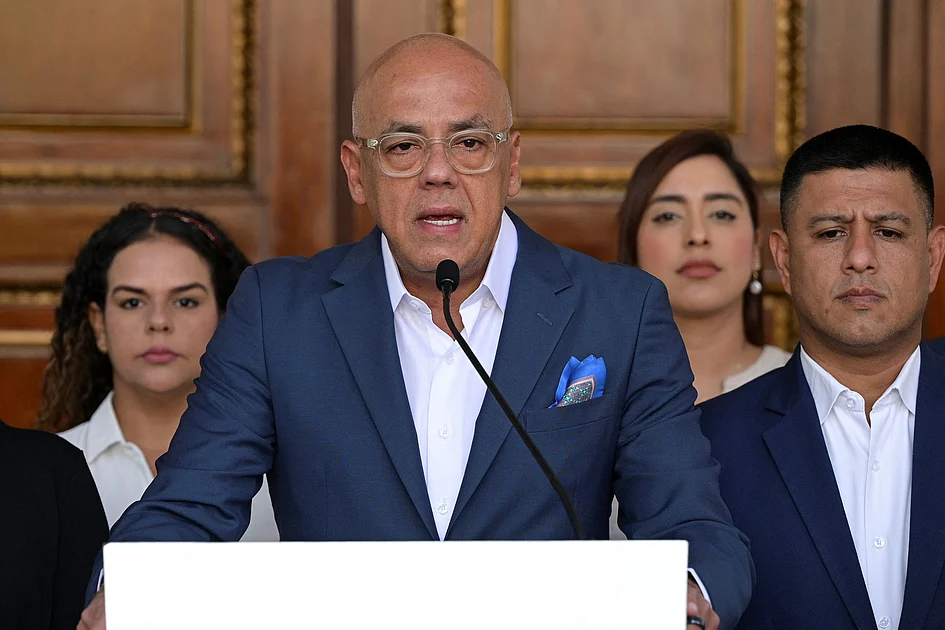
    In a significant political development, Venezuela’s National Assembly President Jorge Rodriguez declared on Thursday that authorities would imminently release a substantial number of detainees, including both Venezuelan nationals and foreign citizens. The announcement marks a notable concession to opposition demands and represents what Rodriguez characterized as a unilateral peace initiative by the Bolivarian government.

    Rodriguez emphasized that this prisoner release operation was already underway during his Thursday announcement, describing it as a sovereign decision made independently without negotiations or agreements with external parties. The move addresses longstanding calls from Venezuela’s political opposition for prisoner releases, though Rodriguez did not specify the exact number of individuals to be freed or provide detailed identification of those included in the amnesty.

    This development occurs within Venezuela’s complex political landscape, where prisoner releases have frequently served as both confidence-building measures and bargaining chips in past political dialogues. The inclusion of foreign nationals suggests potential diplomatic dimensions to the decision, possibly affecting Venezuela’s international relations amid ongoing economic challenges and political tensions.

    The government’s framing of this action as a ‘gesture of peace’ indicates a possible strategic shift in its approach to domestic opposition and international observers, though the ultimate impact and motivations behind this unilateral move remain to be fully assessed as implementation proceeds.

  • Minneapolis ICE shooting: FBI, DOJ exit cooperation on probe, says state crime bureau

    Minneapolis ICE shooting: FBI, DOJ exit cooperation on probe, says state crime bureau

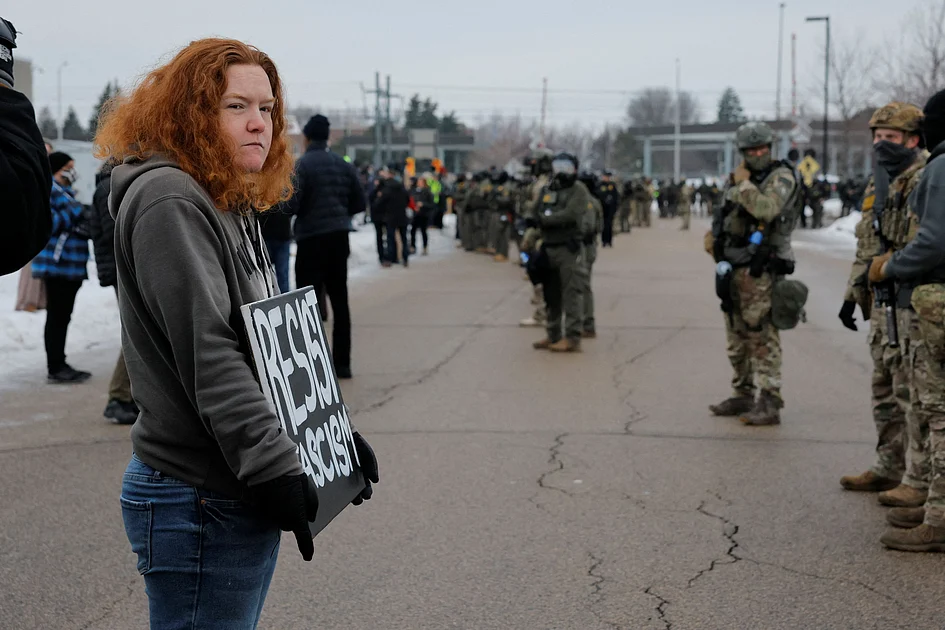
    In a significant development for a high-profile law enforcement case, the Minnesota Bureau of Criminal Apprehension (BCA) announced on Thursday, January 8, 2026, that it has been compelled to withdraw from its investigation into a fatal shooting involving a federal immigration agent. The decision came after the Federal Bureau of Investigation (FBI) and the U.S. Department of Justice (DOJ) abruptly terminated their cooperative agreement with the state-level agency.

    The case centers on the death of a 37-year-old woman in Minneapolis, who was fatally shot by an agent from U.S. Immigration and Customs Enforcement (ICE). The BCA, which had been leading the probe, stated that the federal withdrawal of support created an insurmountable obstacle. The federal agencies’ exit means the BCA no longer has access to critical evidence, witness testimonies, and case information gathered under the federal purview.

    In an official statement, the BCA expressed profound frustration with the turn of events, emphasizing that its standards for a transparent and thorough investigation, as mandated by Minnesota state law and public expectation, could no longer be met. ‘Without complete access to the evidence, witnesses, and information collected, we cannot proceed,’ the Bureau stated, characterizing its withdrawal as ‘reluctant.’ This move halts the state’s independent inquiry and casts serious doubt on the future of accountability in the case, effectively leaving the investigation in the hands of the federal agencies that were subjects of the probe. The incident raises urgent questions about jurisdictional conflicts and oversight in cases involving federal law enforcement officers.