分类: politics

  • Iran confirms death of top security official Ali Larijani

    Iran confirms death of top security official Ali Larijani

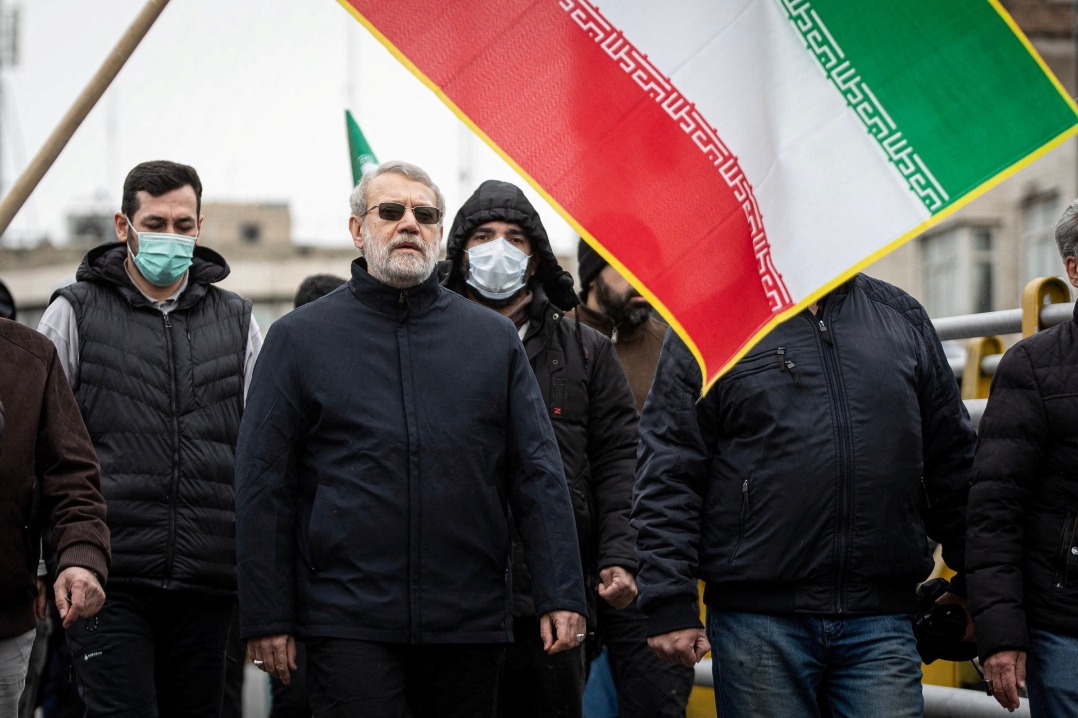
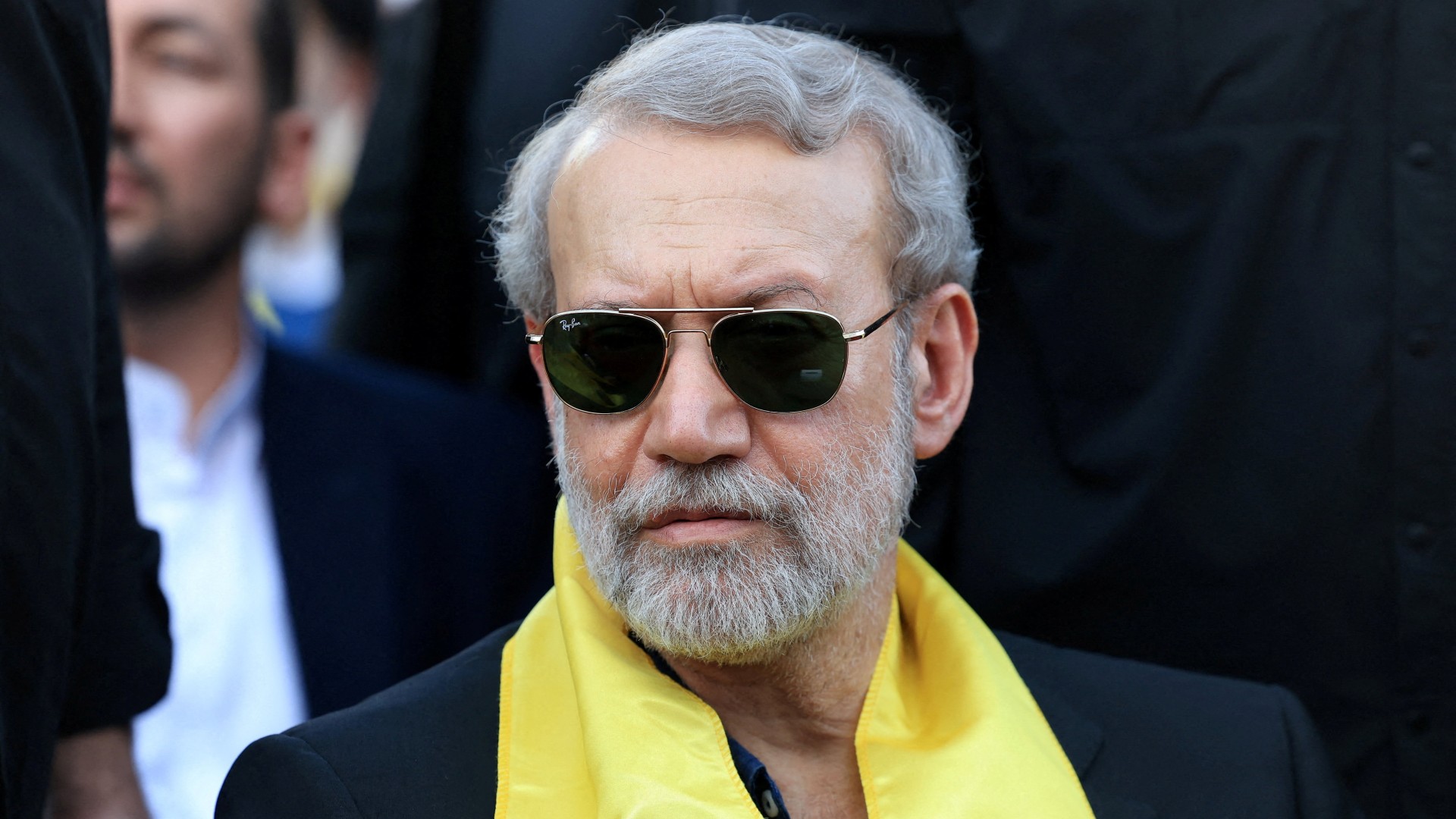
    Iran’s Supreme National Security Council has officially confirmed the death of its secretary, Ali Larijani, alongside several high-ranking officials in what appears to be a targeted attack. The announcement, disseminated through Iran’s Tasnim news agency early Wednesday, revealed that Larijani perished alongside his son Morteza Larijani and Alireza Bayat, deputy for security affairs at the council’s secretariat, among other casualties.

    The security council’s statement lauded Larijani’s extensive contributions to Iran’s developmental trajectory and issued a call for national solidarity in confronting external security challenges. This development occurs against a backdrop of intensifying regional hostilities, with Israeli Prime Minister Benjamin Netanyahu publicly claiming responsibility for Larijani’s elimination during ongoing military operations against Iranian targets.

    Simultaneously, Iran’s Islamic Revolutionary Guard Corps verified the death of Gholamreza Soleimani, commander of the Basij volunteer force, attributing his killing to a coordinated US-Israeli offensive. These significant casualties emerge within a broader context of escalating violence that commenced on February 28 with joint American-Israeli strikes against Iranian interests, prompting retaliatory measures from Tehran and its regional allies against Israeli and US assets throughout the Middle East.

    The elimination of such prominent security figures represents a substantial escalation in the ongoing regional power struggle, potentially altering the strategic calculus of all involved parties and raising concerns about further military escalation and regional destabilization.

  • China ignores Trump’s Hormuz request as the Iran war deepens and his Beijing trip slips

    China ignores Trump’s Hormuz request as the Iran war deepens and his Beijing trip slips

    WASHINGTON — As the United States grapples with escalating tensions in the Middle East, China has adopted a strategically nuanced position regarding President Trump’s request for assistance in reopening the critical Strait of Hormuz. Analysts suggest Beijing is leveraging the geopolitical situation to its advantage while carefully managing diplomatic relations.

    The ongoing military engagement in Iran, now entering its third week, has created significant challenges for Washington as oil shipments through the vital waterway remain suspended. Despite appeals to allies, the U.S. finds itself increasingly isolated in its efforts to secure the strait, raising concerns that America’s principal strategic competitor stands to gain from the prolonged conflict.

    Ali Wyne, senior research and advocacy adviser for U.S.-China relations at the International Crisis Group, observed: “President Trump’s decision to postpone his long-awaited summit with President Xi Jinping reveals a fundamental miscalculation of Operation Epic Fury’s consequences. What was intended as a demonstration of U.S. power has instead exposed limitations in American influence, compelling Washington to seek assistance from its chief geopolitical rival in managing a self-created crisis.”

    The Chinese Foreign Ministry offered a deliberately ambiguous response regarding potential assistance with the strait, instead reiterating calls for “all parties to immediately cease military operations, prevent further escalation of tensions, and avoid additional disruption to the global economy from regional instability.”

    Beijing, which had never formally confirmed Trump’s planned March 31 state visit, has indicated willingness to reschedule through diplomatic channels while clarifying that the postponement was unrelated to the Hormuz request. This careful positioning allows China to maintain diplomatic decorum while advancing its strategic interests.

    According to Sun Yun, director of the China program at the Stimson Center, “The Iranian request has diminished in urgency for Chinese leadership.” Meanwhile, Chinese diplomats have actively engaged with Middle Eastern nations, promising constructive involvement in tension reduction and peace restoration efforts. Beijing has already provided $200,000 in humanitarian aid to Iran through Red Cross and Red Crescent organizations, specifically designated for families affected by the bombing of Shajarah Tayyebeh elementary school in Minab.

    Brett Fetterly, managing principal in the China practice at The Asia Group, noted that the delay benefits both nations: “The current political climate makes international travel challenging for a commander-in-chief overseeing military operations. For China, additional time allows for better assessment of President Trump’s objectives and negotiation positions.”

    The strategic implications extend beyond immediate diplomacy. Military asset transfers from the Indo-Pacific region to the Middle East, including rapid-response units and anti-missile defense systems, have raised concerns about American distraction from its stated Asia-focused priorities.

    Zack Cooper, senior fellow at the American Enterprise Institute specializing in U.S. Asian strategy, warned: “Prolonged engagement in the Middle East, coupled with continued resource diversion from Asia, will exacerbate allies’ concerns about American distraction and capability limitations.” The postponed summit may also delay controversial arms sales to Taiwan, a persistently sensitive issue in U.S.-China relations.

    Cooper added: “Chinese leadership likely welcomes the visit’s postponement and the opportunity to benefit from renewed U.S. entanglement in Middle Eastern conflicts. Most Chinese analysts and officials believe America is undermining its own position, requiring Beijing merely to avoid interference in the process.”
  • Netanyahu says Israel killed Iran’s top security official Larijani

    Netanyahu says Israel killed Iran’s top security official Larijani

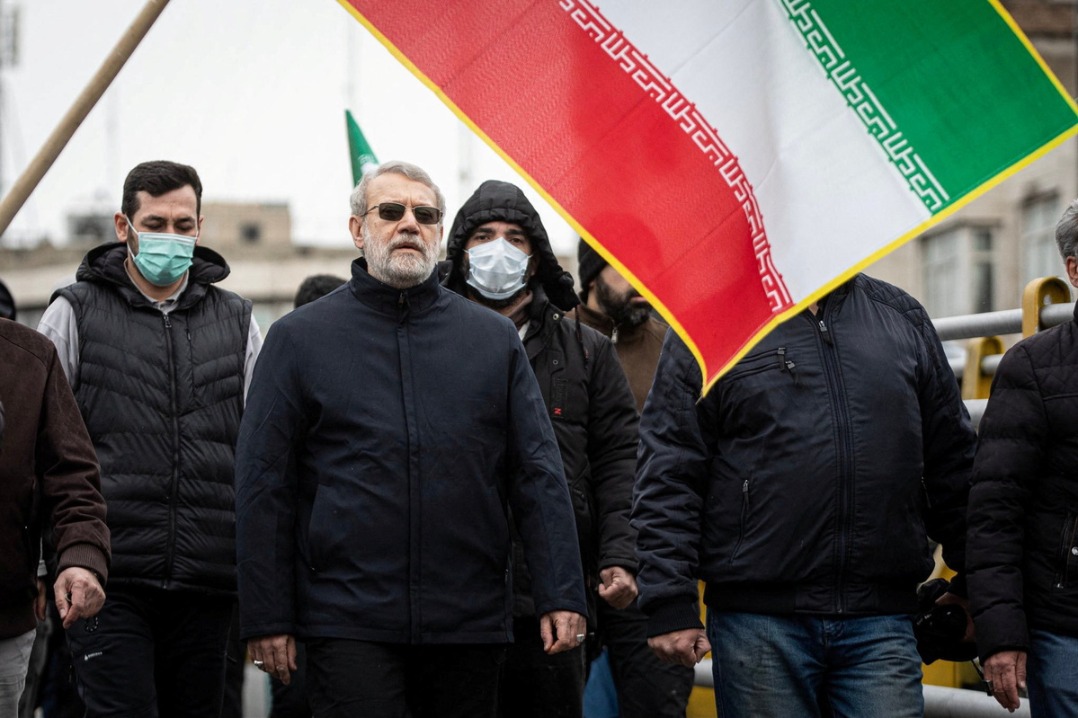
    Israeli Prime Minister Benjamin Netanyahu has publicly claimed responsibility for the targeted killing of Ali Larijani, Secretary of Iran’s Supreme National Security Council, during ongoing aerial operations against Iranian targets. The announcement marks a significant escalation in the already tense military confrontation between the two nations.

    Netanyahu revealed that Israeli fighter jets and drones are currently conducting extensive operations over Tehran and multiple other Iranian cities. In a statement delivered on Tuesday, the Israeli leader asserted that these military campaigns are strategically designed to create conditions conducive to potential “regime change” within Iran’s political establishment.

    The Israeli military operation, now in its eighteenth consecutive day, represents one of the most sustained aerial campaigns in recent Middle Eastern conflict history. According to Israeli Defense Forces statements, the wide-scale strikes have specifically targeted Iranian government infrastructure throughout Tehran, resulting in the additional death of Gholamreza Soleimani, commander of Iran’s Basij volunteer force.

    Netanyahu further disclosed extensive military coordination with the United States, noting prolonged discussions with President Donald Trump regarding cooperative strategic operations. “We will act both through indirect measures that place immense pressure on the Iranian regime and through direct actions. There are many more surprises,” Netanyahu stated, suggesting further escalations ahead.

    Iranian authorities have reported substantial casualties and widespread structural damage throughout affected regions, though official confirmation regarding Larijani’s status remains pending. In retaliation, Iranian forces have effectively halted commercial shipping through the critical Strait of Hormuz, drawing neighboring nations into the expanding regional conflict and potentially disrupting global energy supplies.

    The absence of immediate Iranian response to Israel’s specific claims regarding Larijani’s death creates uncertainty about the complete veracity of Netanyahu’s assertions, though the broader context of sustained military engagement remains undisputed.

  • Ali Larijani: What does the death of philosopher security chief mean for Iran?

    Ali Larijani: What does the death of philosopher security chief mean for Iran?

    The assassination of Ali Larijani, a multifaceted Iranian political figure reportedly killed in an Israeli operation, has removed one of Tehran’s most versatile strategists from its complex power structure. The 67-year-old official possessed rare credentials spanning military, legislative, and cultural spheres, making him a unique entity within Iran’s leadership ecosystem.

    Larijani’s career exemplified the intricate nature of Iranian governance. A veteran of the Iran-Iraq War who rose to brigadier general rank in the Islamic Revolutionary Guard Corps (IRGC), he simultaneously cultivated intellectual pursuits as the author of six philosophy books focused on Immanuel Kant’s scientific and mathematical theories. His administrative portfolio included leadership of Iran’s state broadcaster (IRIB), parliamentary speakership, and two separate tenures heading the Supreme National Security Council.

    Analysts characterize Larijani as a pragmatic operator who maintained connections across Iran’s political spectrum. Sina Toossi, an Iran specialist, noted his unique capacity to “build consensus across factions” and translate strategic vision into coordinated policy. This pragmatism extended to international engagement, with American journalist Barbara Slavin identifying him as a figure with whom the United States had previously maintained backchannel communications during his tenure as nuclear program negotiator.

    Despite his consensus-oriented approach, Larijani demonstrated capability for hardline rhetoric and actions. He issued stark warnings to the Trump administration during regional tensions and was implicated in the brutal suppression of anti-government protests in January.

    Experts suggest his elimination will not critically destabilize Iran’s institutionalized system but may accelerate its ideological hardening. Former U.S. official Alan Eyre predicts replacement by “younger, more hardline candidates,” potentially including current deputy security chief Saeed Jalili. The assassination reportedly eliminates a key figure who had worked with former President Rouhani to oppose the succession of Mojtaba Khamenei as supreme leader.

    The long-term consequence, analysts suggest, is not merely personnel change but institutional shift, with enhanced influence for the IRGC and the Supreme Leader’s office (Bayt-e Rahbari) in determining Iran’s future trajectory.

  • White House pressure on Cuba mounts as island fights power cut

    White House pressure on Cuba mounts as island fights power cut

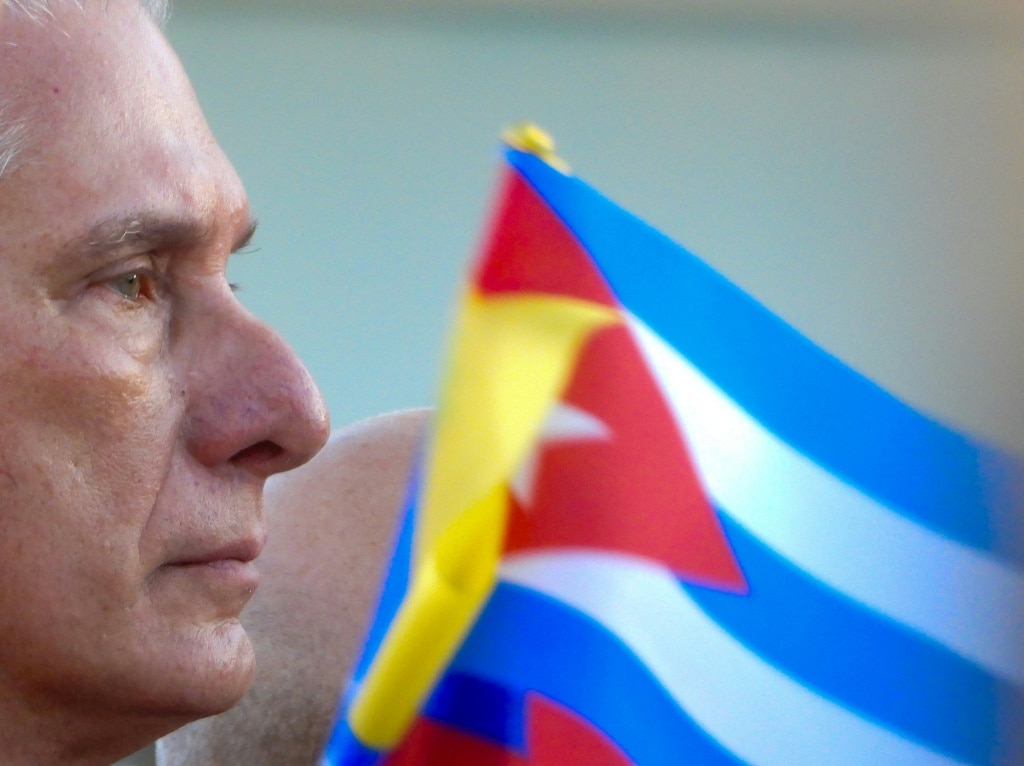
    The United States has escalated its diplomatic offensive against Cuba’s communist government as the Caribbean nation grapples with a severe electricity crisis that has plunged much of the island into darkness. Washington is demanding comprehensive free-market reforms from Havana, dismissing recent limited economic concessions as insufficient to address Cuba’s deepening economic woes.

    Secretary of State Marco Rubio, a prominent Cuban-American critic of the regime, stated that Cuba’s recent announcement permitting exile investment and business ownership falls dramatically short of necessary changes. “What they announced yesterday is not dramatic enough. It’s not going to fix it,” Rubio told White House reporters, emphasizing that Cuban authorities face “big decisions” regarding economic liberalization.

    The Trump administration has intensified pressure through multiple channels, including enforcing an effective oil blockade that has crippled Cuba’s energy sector and transportation infrastructure. Since January 9, no oil shipments have reached Cuban shores, exacerbating power generation problems and forcing airlines to reduce flights to the island—a devastating blow to Cuba’s vital tourism industry.

    President Trump himself added to the tension with provocative statements, suggesting he would “take” Cuba and asserting he could “do anything I want with it” given the nation’s weakened state. These comments came as Cuba experienced a complete nationwide power failure on Monday, highlighting the precarious state of its aging electrical grid, where daily outages lasting up to 20 hours have become routine in some regions.

    Cuba’s diplomatic representative in Washington, Tanieris Dieguez, offered a measured response, indicating openness to broad discussions with the United States while firmly rejecting any negotiation about Cuba’s political system. “Nothing related with our political system, nothing with our political model—our constitutional model—is part of the negotiations, and never will it be part of that,” Dieguez stated, emphasizing that Cuba only requests “respect to our sovereignty and to our right to self-determination.”

    The economic pressure has intensified significantly since January, when Cuba lost Venezuela as its chief regional ally and oil supplier following US-backed efforts to oust socialist leader Nicolas Maduro. This development, combined with the ongoing embargo, has created what experts describe as one of Cuba’s most severe economic crises in decades.

    Ordinary Cubans bear the brunt of these challenges. Olga Suarez, a 64-year-old retiree, expressed the widespread anxiety: “What we fear all the time is that the blackout will drag on and we will lose the little bit that we have in the fridge, because everything is so expensive.”

    As power was gradually restored to approximately two-thirds of the country by Tuesday morning—including 45% of the capital Havana—the nation also experienced a 5.8-magnitude earthquake off its coast, though no casualties or damage were immediately reported. The compound crises underscore the extreme pressures facing the Cuban government as it navigates both domestic infrastructure failures and unprecedented external political pressure from its northern neighbor.

  • Nigeria president begins first UK state visit in 37 years

    Nigeria president begins first UK state visit in 37 years

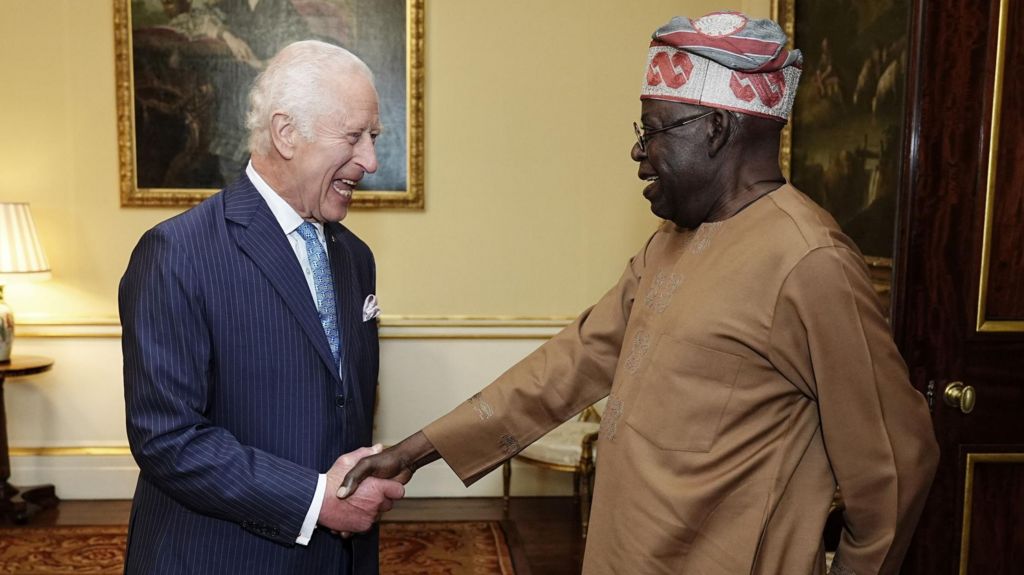
    In a significant diplomatic event marking the first Nigerian state visit to the United Kingdom in nearly four decades, King Charles III will officially welcome President Bola Ahmed Tinubu and First Lady Oluremi Tinubu at Windsor Castle. The two-day visit, commencing with a ceremonial welcome attended by senior royals including Queen Camilla and the Prince and Princess of Wales, aims to transform historical ties into a contemporary economic alliance.

    The visit features traditional royal pageantry including a carriage procession, military parade on Windsor Castle’s lawns, and exchanges of gifts. Notably, the itinerary accommodates religious considerations as President Tinubu, a Muslim currently observing Ramadan, will not participate in the traditional lunch hosted by the King. Instead, the leaders will deliver addresses at an opulent state banquet attended by political figures and Nigerian-linked celebrities.

    Nigerian government spokesman Mohammed Idris characterized the visit as ‘turning a historic relationship into a modern economic partnership,’ emphasizing opportunities in trade, finance, and defense. The visit occurs against a complex geopolitical backdrop including conflicts in Ukraine and the Middle East, as well as recent religious violence in Nigeria’s Borno state where Islamist militants killed 23 people. President Tinubu condemned these ‘evil-minded’ terror groups while UK parliamentarians called for enhanced protection of religious freedom in Nigeria.

    The state banquet also marks King Charles’s first major speech following recent royal family developments, including the arrest of his brother Andrew Mountbatten-Windsor. Additional ceremonial elements include a wreath-laying at Queen Elizabeth II’s tomb and an interfaith event designed to promote religious harmony.

  • Israel ‘assessed Iranians would be slaughtered’ if they rise up against Islamic Republic

    Israel ‘assessed Iranians would be slaughtered’ if they rise up against Islamic Republic

    A confidential diplomatic cable reveals a stark divergence between Israel’s public stance and its private assessment regarding Iran’s internal stability. According to the document, reviewed by The Washington Post, senior Israeli officials have privately conceded to their U.S. counterparts that any popular uprising against the Islamic Republic would be met with overwhelming and brutal force by the Islamic Revolutionary Guard Corps (IRGC), resulting in a probable slaughter of protesters. This private evaluation stands in direct contradiction to repeated public exhortations by Israeli Prime Minister Benjamin Netanyahu for the Iranian people to rise up against their government.

    The cable details meetings held this week between American officials and high-level members of Israel’s National Security Council, Ministry of Defence, and Ministry of Foreign Affairs. In these discussions, Israeli representatives admitted that the IRGC maintains a definitive ‘upper hand’ and that the state apparatus shows no signs of cracking, demonstrating a willingness to ‘fight to the end.’ Officials concluded that any attempt by anti-government activists to seize control would likely end in disaster.

    This assessment is further bolstered by observations of Iran’s continued military capabilities, including its proven ability to launch ballistic missiles and drones ‘everywhere they want to,’ which is cited as proof of the state’s resilience. The officials also noted that despite rumors of his incapacitation, Supreme Leader Mojtaba Khamenei remains firmly in charge and is considered ‘more aligned’ with the hardline IRGC than his predecessor.

    The failure of the exiled opposition to form a coherent front or project significant influence inside Iran has been another critical factor. Interviews with Iranians inside the country by Middle East Eye reveal a growing disillusionment with opposition figures like monarchist leader Reza Pahlavi. A recent call by Pahlavi for public mobilization during a traditional Persian celebration was met with little visible response, amid widespread fear and trauma from the ongoing conflict and a rising civilian death toll. Many citizens expressed anger at being asked to celebrate while living under the constant threat of airstrikes and violence, highlighting a significant gap between the diaspora’s calls to action and the grim reality on the ground.

  • Israeli press review: Confusion over army’s plan in Lebanon

    Israeli press review: Confusion over army’s plan in Lebanon

    Israeli Defense Minister Israel Katz announced on Monday the initiation of a ground military maneuver into Lebanese territory, declaring its objective as the elimination of threats to northern Israeli communities. The operation specifically targets the removal of Hezbollah operatives from border regions rather than the comprehensive dismantling of missile capabilities, according to military sources cited by Haaretz.

    Minister Katz issued a stark warning regarding displaced populations, stating that hundreds of thousands of Shiite residents from southern Lebanon would be prevented from returning to areas south of the Litani River until Israel’s northern security is guaranteed. This declaration coincides with reports from Israeli Channel 13 indicating the establishment of approximately 20 military outposts within Lebanese territory, reminiscent of Israel’s previous ‘Security Zone’ occupation policy between 1982 and 2000.

    Military analysts have raised questions regarding the operational effectiveness. Amos Harel, Haaretz’s military commentator, noted that Hezbollah’s presence south of the Litani remains limited and mobile, with operatives capable of rapid relocation before Israeli forces can engage them. He further observed that most missile and drone attacks originate from north of the Litani, beyond the current operation’s scope.

    The conflict has triggered significant economic consequences, with Calcalist reporting that Mediterranean gas rigs have been shut down for the third time since October, forcing Israel’s energy sector to rely on more expensive and polluting alternatives like coal and diesel. Energy Minister Eli Cohen extended the shutdown until March 26th due to security concerns, costing the economy an estimated 600 million shekels ($193 million) according to financial experts.

    Simultaneously, questions emerge regarding Israel’s defense capabilities. Despite official denials of interceptor shortages, The Marker reported that Israel’s arms industry faces production limitations while fulfilling international contracts, including a recent agreement with Germany. The report indicated intercepted missiles exceeding 1,300 since October 2023, with production rates subject to gag orders.

    Evidence suggests potential interceptor conservation measures, with reports of missiles landing in open areas without interception attempts. Israel’s Home Front Command has concurrently modified its alert system to implement more precise warning mechanisms.

  • Zelensky calls for Trump and Starmer to meet and find common ground

    Zelensky calls for Trump and Starmer to meet and find common ground

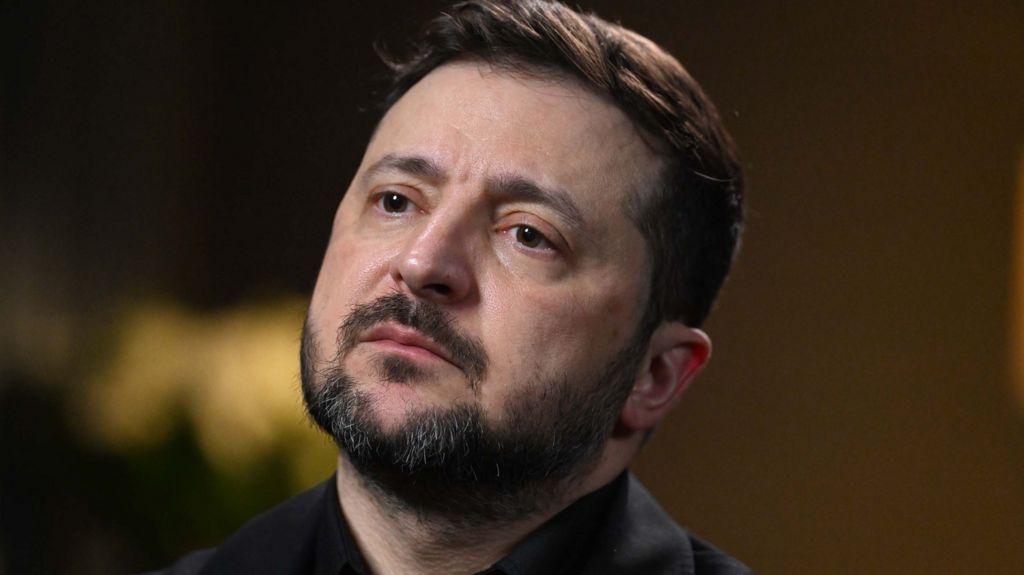
    Ukrainian President Volodymyr Zelensky has issued a diplomatic appeal for U.S. President Donald Trump and UK Prime Minister Sir Keir Starmer to convene and rebuild their strained relationship amid growing Western fragmentation. In an exclusive BBC interview following talks with Starmer in London, Zelensky emphasized the critical need for allied unity, stating he would “really like President Trump to meet with Starmer… so that they have a common position.”

    The urgency comes as tensions escalate between Washington and London following Trump’s repeated criticisms of Starmer’s leadership, including recent remarks dismissing the British leader as “no Winston Churchill.” These diplomatic frictions coincide with a broader Middle East conflict triggered by U.S.-Israeli strikes on Iran, which Zelensky warned is dangerously diverting attention and resources from Ukraine’s defense against Russia.

    Speaking to British parliamentarians in a packed Westminster committee room, Zelensky delivered a stark message: “The regimes in Russia and Iran are brothers in hatred and that is why they are brothers in weapons.” He expressed grave concerns about the Iran conflict’s impact on Ukraine’s war effort, revealing he had a “very bad feeling” about the constant postponement of peace negotiations due to Middle Eastern hostilities.

    Despite the tensions, Downing Street maintained that the U.S.-UK relationship remains “enduring,” with Starmer insisting Britain would not be drawn into a wider Middle East conflict. The Ukrainian president’s London visit marked another stop on his European tour seeking sustained support, having previously visited Paris with Madrid next on his itinerary.

    Zelensky also highlighted Ukraine’s unexpected role as a military innovation hub, suggesting Ukrainian-developed technology could have prevented the recent drone strike on RAF Akrotiri in Cyprus. He told British lawmakers that through necessity, Ukraine has become a pioneer in modern warfare techniques that could benefit allies.

    The gathering brought together key Western leaders including NATO Secretary-General Mark Rutte, Defense Secretary John Healey, and opposition party leaders, underscoring the continued importance of the Ukraine conflict amid competing global crises.

  • Leqaa Kordia, longest-detained pro-Palestine protester, freed from ICE custody

    Leqaa Kordia, longest-detained pro-Palestine protester, freed from ICE custody

    After enduring 365 days in immigration custody, Palestinian activist Leqaa Kordia secured her release from the Prairieland Detention Center in Texas on Monday, following the payment of an extraordinary $100,000 bond. The 33-year-old New Jersey resident walked free as the Trump administration unexpectedly declined to challenge a third consecutive release order from an immigration judge—a stark contrast to its previous appeals against her liberation.

    Kordia’s emotional departure from the facility was marked by her triumphant exclamation, ‘I’m free! Finally, after one year,’ as she emerged draped in a traditional Palestinian keffiyeh to greet awaiting supporters. Her release concludes the longest detention among all individuals arrested during last year’s pro-Palestine campus protests, highlighting what her legal representatives characterize as targeted persecution.

    The case reveals concerning dimensions of immigration enforcement under the current administration. Court documents from the separate case American Association of University Professors v. Rubio disclosed that federal authorities utilized the pro-Israel doxxing platform Canary Mission to identify students for immigration detention—a revelation that raises serious questions about ideological targeting.

    While the Department of Homeland Security maintains that Kordia lacked lawful immigration status due to an expired F-1 student visa terminated in January 2022 for ‘lack of attendance,’ her attorneys argue this technical violation was weaponized against her activism. Staff attorney Amal Thabateh of Clear explained that Kordia had received ‘faulty advice’ leading her to voluntarily terminate her student status while believing she was transitioning to lawful permanent residence through family petitions.

    Kordia’s detention was marked by significant health deterioration, including a recent hospitalization after fainting, hitting her head, and suffering a seizure—a completely new medical development—during which she remained shackled to her hospital bed. Her legal team also documented concerning weight loss and reported inedible food, unsanitary conditions, and lack of religious accommodations at the Texas facility.

    The activist’s case gained political prominence when New York City Mayor Zohran Mamdani raised her situation directly with President Trump during a recent meeting. Kordia, who arrived from the occupied West Bank in 2016 and has lost 200 extended family members in Gaza, now faces ongoing immigration proceedings despite her temporary release.