分类: politics

  • Watch key moments from the King’s address to US Congress

    Watch key moments from the King’s address to US Congress

    On a watershed day for transatlantic diplomatic relations, King Charles III became only the second sitting British monarch in modern history to stand before a joint meeting of the U.S. Congress, marking a rare moment of cross-Atlantic ceremony that came more than three decades after his mother’s last address to the chamber.

    The 1991 address delivered by the late Queen Elizabeth II remains a fixed point in the longstanding diplomatic history between the United Kingdom and the United States, and Charles’s appearance this week has already been framed by historians as a significant update to that shared legacy. While the content of the king’s speech has focused on shared democratic values, ongoing cooperation on global challenges ranging from climate action to collective security, and the deep cultural and historical ties that bind the two nations, audiences across both countries have zeroed in on the key, standout moments from the historic address.

    Diplomatic analysts note that this rare address from a British head of state underscores the enduring strength of the U.S.-UK special relationship, even amid shifting global political dynamics. Unlike routine diplomatic visits, an address to the full Congress is an honor rarely extended to foreign leaders, making the moment all the more notable for both nations. Viewers and lawmakers alike have highlighted moving references to Queen Elizabeth II’s 1991 visit, nods to shared sacrifices over decades of global conflict, and calls for continued collaboration on pressing 21st-century issues as the most memorable takeaways from the event, cementing its place as a key moment in modern transatlantic diplomacy.

  • King gets ovation for speech hailing importance of UK and US partnership

    King gets ovation for speech hailing importance of UK and US partnership

    On a landmark diplomatic visit to Washington D.C., King Charles III delivered a historic address to a joint session of the U.S. Congress, where he emphasized the irreplaceable, enduring nature of the partnership between the United Kingdom and the United States — and earned a dozen standing ovations from the assembled crowd of lawmakers and senior political figures. The moment marked the first address to a full Congress by a reigning British monarch in 35 years, coming at a time of growing geopolitical instability and festering diplomatic tensions between the two allies.

    Addressing the packed chamber of the domed Capitol Building, King Charles opened against a backdrop of heightened uncertainty, noting that the world faces new, profound challenges from spreading conflict across Europe and the Middle East. In an era he described as “more volatile, more dangerous” than many have known, he stressed that the UK and U.S. cannot afford to step back from their shared commitments. The royal visit carried high stakes: after months of strained transatlantic relations, the King’s core mission was to rekindle the long-standing alliance rooted in shared defense of democratic values, a bond once taken for granted that now requires intentional renewal.

    In his speech, drafted in close coordination with the UK Foreign Office, King Charles laid out clear cornerstones for the bilateral partnership. He reaffirmed unwavering support for NATO, noting the alliance’s critical role in protecting North American and European nations from shared adversaries, and doubled down on backing for Ukraine and its courageous people resisting invasion. Directly responding to calls from U.S. President Donald Trump for allied nations to increase their own defense investment, the King confirmed the UK has committed to the largest sustained increase in defense spending since the end of the Cold War, positioning the country to meet future security threats.

    Beyond security and diplomacy, the address carried strong moral undertones tailored to the current moment. Speaking amid heightened tensions in the Middle East and uncertainty around conflict with Iran, the King drew on his personal Christian faith to call for interfaith respect and global peace. “I am inspired by the profound respect that develops as people of different faiths grow in their understanding of each other,” he said, a remark that earned loud applause. His observation that “words carry weight and meaning” was widely interpreted as a quiet rebuke to the culture of incendiary political rhetoric that has grown in many Western democracies, another line that drew warm applause from the chamber.

    The address also touched on sensitive, contemporary issues that have overshadowed the royal visit. Amid ongoing fallout from the Andrew Mountbatten-Windsor scandal and public calls for the King and Queen Camilla to meet with survivors of Jeffrey Epstein’s abuse, the monarch made a coded, compassionate reference to supporting “victims of some of the ills that so tragically exist in our societies today.” He also addressed the recent attempted assassination of Donald Trump over the weekend in Washington D.C., which triggered a massive escalation of security across the U.S. capital. “Let me say with unshakeable resolve: such acts of violence will never succeed,” he stated, drawing a renewed round of applause.

    In a nod to shared history, King Charles noted that 35 years have passed since his mother, Queen Elizabeth II, addressed a joint session of Congress in 1991 — a far different moment, when the Berlin Wall had just fallen, the Cold War was declared over, and liberal democracy stood at the peak of its global influence. Today, he framed the address as a defense of democratic values that face new threats, pushing back against rising isolationism in Western nations and emphasizing shared commitment to the international rule of law. Drawing a lighthearted joke to ease the formality of the moment, he marked the U.S.’ upcoming 250th anniversary: “That’s 250 years, or as we say in the United Kingdom, just the other day,” a quip that drew hearty laughter from the assembled lawmakers.

    King Charles’ mission came on the heels of months of rocky relations between the UK and the Trump administration, and the royal relied on his personal prestige and shared transatlantic history to rebuild trust. Early signs of progress emerged ahead of the speech, when President Trump struck a notably positive tone in remarks at the White House, celebrating shared UK-U.S. history and reaffirming the value of the bilateral military alliance. That positive momentum carried into the congressional address, where the crowd delivered a standing ovation before the King even spoke, and interrupted his remarks more than a dozen times with thunderous applause. For the UK delegation, including Foreign Secretary Yvette Cooper, the warm reception signals a potential turning point in transatlantic relations, marking a shift away from the awkward political frictions that have marked recent interactions with the unpredictable U.S. administration. Closing his address, King Charles framed the relationship between the two nations as a “story of reconciliation, renewal and remarkable partnership,” before departing the chamber to sustained cheers and handshakes across the aisle.

  • Five takeaways from the King’s historic address to Congress

    Five takeaways from the King’s historic address to Congress

    King Charles III’s long-awaited state visit to the United States was framed from the outset as a dual-purpose mission: a celebration of both America’s upcoming 250th anniversary and the decades-old “special relationship” that binds Washington and London, and a quiet diplomatic push to repair frayed bilateral relations. The core test of the King’s outreach came on Tuesday afternoon, when he delivered only the second royal address to a joint session of US Congress, the first since Queen Elizabeth II spoke at the Capitol in 1991.

    Tensions between the two allies have risen sharply in recent months, rooted in Britain’s hesitation to fully back the joint US-Israeli military campaign against Iran. Against this backdrop, the King’s trip was widely viewed as a charm offensive designed to dial down friction, rather than resolve deep rifts outright. Analysts have noted that strained relations do not equal a full break in the alliance, a point the King himself emphasized in his closing remarks, where he highlighted that “reconciliation and renewal” have defined centuries of interaction between the two nations.

    The unpredictable temperament of second-term President Donald Trump adds a layer of uncertainty to the outcome: warm ties can turn cold quickly, but former adversaries have also regained his favor just as fast. In brief remarks following a one-on-one meeting at the White House, Trump offered a warm assessment of the monarch, saying, “He’s a fantastic person. They’re incredible people and it’s a real honour.” That early signal offered a glimmer of hope that the King’s outreach had made headway.

    But the speech also carried subtle political undertones that resonated differently across the US political aisle. Opening his remarks, the King did not shy away from the multiple crises facing both nations, acknowledging openly that the world is living through “times of great uncertainty”. He explicitly named ongoing conflicts in the Middle East and Europe — points of recent disagreement between the US and UK — and referenced the threat to democracy posed by political violence, a nod to the disruption that interrupted the previous weekend’s White House Correspondents’ Dinner.
    “With the spirit of 1776 in our minds,” he joked, “we can perhaps agree that we do not always agree” — a lighthearted line that set up his core argument: when the US and UK align their efforts, they can deliver progress that benefits people across the globe.

    One line drew early cheers that started on the Democratic side of the chamber before spreading across the room: the King’s reference to the British legal tradition of checks and balances on executive power, rooted in the Magna Carta. For left-leaning critics of President Trump, who have spent years decrying what they see as his abuse of executive authority, and who led hundreds of thousands in “no kings” rallies across the country over the past year, the line carried obvious implicit weight.

    Another closing line, “America’s words carry weight and meaning, as they have since independence. The actions of this great nation matter even more,” sparked quiet muttering from Democratic lawmakers, many of whom have repeatedly criticized Trump’s rhetorical choices and policy actions. Whether the King intended it or not, many liberal attendees interpreted the remarks as a subtle nod to their concerns, giving them another opening to voice their long-held “no kings” sentiment.

    Beyond diplomatic tensions, the King wove personal context and longstanding policy priorities into his address. A five-year veteran of the Royal Navy, he referenced his military service to highlight the deep security and intelligence cooperation between the two nations, and between the US and European allies. Notably, he echoed a common point among European NATO allies, recalling that the alliance only ever invoked its collective defense clause after the 9/11 terror attacks on the US, a subtle reminder of the bloc’s shared commitment. He also made space to reference his decades-long advocacy on climate change, noting the “disastrously melting ice-caps of the Arctic” as a shared threat requiring collective action. He even lightened the tone with well-received whimsy: opening with the famous (and often misquoted) Oscar Wilde quip that the US and UK share everything except a language, joking that he had not come to launch a “cunning rearguard action” to retake American rule, and quipping about the British parliamentary tradition of holding an MP hostage during the King’s speech at Westminster.

    One highly anticipated topic was entirely absent from the address, however: the Jeffrey Epstein sex offender scandal. Last year, over the Trump administration’s objections, Congress passed a law mandating the release of previously sealed US government files tied to the Epstein investigation. Those releases exposed new details about Epstein’s deep connections to powerful figures on both sides of the Atlantic, including former UK ambassador to the US Peter Mandelson and King Charles’s younger brother, Prince Andrew. The closest the King came to addressing the issue was an oblique reference to the need to “support victims of some of the ills that, so tragically, exist in both our societies today” — a line widely viewed as insufficient for critics calling for a public acknowledgment. While the scandal has already triggered major political fallout in the UK, it has yet to significantly harm current officeholders in the US, and the issue remains far from fading from public discourse, with more details expected to emerge in coming months.

    For all the underlying tensions and unaddressed controversies, the King’s address appears to have achieved its core immediate goal: breaking the ice between the two allies at a moment of strain. Whether his public remarks and private diplomatic discussions will be enough to solidify and strengthen the bilateral alliance in the long term remains an open question, but the first day of the state visit has already shifted the tone of the relationship.

  • Oil tycoons deny paying bribes to former Nigerian minister

    Oil tycoons deny paying bribes to former Nigerian minister

    A high-profile bribery trial unfolding at London’s Southwark Crown Court has seen core figures, including former Nigerian oil minister Diezani Alison-Madueke, firmly reject all allegations of corruption laid out by prosecutors. The 65-year-old ex-cabinet member faces six total charges: five counts of accepting bribes and one count of conspiracy to commit bribery, all of which she has unreservedly denied.

    Prosecutors claim that a network of oil industry insiders bankrolled Alison-Madueke’s extravagant lifestyle, footing the bill for luxury shopping sprees, high-end private property stays, private jet travel, and chauffeured vehicles during her tenure in office from 2010 to 2015. None of the unindicted industry figures at the center of the prosecution’s allegations have appeared in court during the proceedings, but their pre-trial statements to UK’s National Crime Agency (NCA) were formally read into the court record this week.

    Ghanaian oil executive Kevin Okyere, CEO of multiple energy firms, told NCA investigators in a 2016 statement that the only payment he ever made on Alison-Madueke’s behalf was a £3,900 shopping bill at London’s Peter Jones department store, a spontaneous gesture when the pair ran into each other at checkout and she found herself short of funds. Okyere confirmed that the full amount was later repaid to him in cash at his Abuja office, and called the bribery claim against him “completely untrue”.

    Nigerian oil tycoon Igho Sanomi echoed these denials in a 2017 statement to the NCA. He explained that he occasionally purchased goods for Alison-Madueke in London because accessing foreign currency for large purchases was notoriously difficult in Nigeria at the time, and every single transaction was fully reimbursed. Sanomi added that his companies always won government oil contracts through fair, competitive bidding, and that neither Alison-Madueke nor any other official ever improperly influenced contract allocations to his businesses.

    A statement from former Nigerian president Goodluck Jonathan, who appointed Alison-Madueke to the cabinet in 2010, was also presented to the court on Tuesday. Jonathan noted that it was common practice for third parties to cover temporary expenses for cabinet ministers during official overseas trips, and that all legitimate incidental support was properly documented and reimbursed where required. He also confirmed that he had personally approved Alison-Madueke’s use of private jets for some international travel, countering prosecution claims that these flights were unauthorised bribes.

    Alison-Madueke wrapped up nearly 11 days of testimony earlier this week, pushing back aggressively against prosecution claims that she failed to produce proof of reimbursements for thousands of pounds in luxury shopping at Harrods and other high-end London retailers. She told the court that following her 2015 arrest, she has been barred from returning to Nigeria by UK authorities for a decade, and all her financial and personal documents were seized by Nigerian government officials. She accused the current Nigerian administration, which is politically opposed to the government she served under, of deliberately refusing to cooperate with her defense.

    The former minister forcefully rejected claims she lied about receiving improper benefits from oil executives. “At no time did I do anything to influence or show favour to anyone,” she told the court. During six days of cross-examination by lead prosecutor Alexandra Healy KC, Healy walked Alison-Madueke through a long list of luxury goods, including designer Gucci handbags and high-end home furniture, that prosecutors allege were gifted to her as bribes. In one 2013 incident, prosecutors claim £170,000 worth of antiques and decorative items including Venetian lamps and vases were purchased for Alison-Madueke at a London dealer to furnish a private home she was building in Nigeria. Alison-Madueke countered that most of the items were not for her personal use, and argued that it was absurd to suggest she would risk her decades-long political career for luxury accessories and home decor. “I don’t think anyone would risk their career for furniture and handbags,” she said.

    Three other co-defendants are standing trial alongside Alison-Madueke. Her 69-year-old brother Doye Agama, a former archbishop, is charged with conspiracy to commit bribery, which he denies, and the court confirmed he will not be giving evidence during the trial. 54-year-old oil executive Olatimbo Ayinde also denies one count of bribery linked to Alison-Madueke and a separate count of bribing a foreign public official. None of the co-defendants have entered guilty pleas. The trial is ongoing at Southwark Crown Court, with further proceedings expected in the coming weeks.

  • More than fashion: A pin worn by Venezuela’s Rodríguez on state visits riles Guyana

    More than fashion: A pin worn by Venezuela’s Rodríguez on state visits riles Guyana

    GEORGETOWN, Guyana – A long-simmering centuries-old territorial dispute between Caribbean neighbor Guyana and Venezuela has reignited into a new diplomatic clash, after Guyana’s president issued a formal complaint to regional leaders over a provocative symbolic gesture by Venezuela’s acting president. The controversy centers on a lapel pin worn by Delcy Rodríguez, Venezuela’s interim head of state, during her recent official visits to Caribbean nations: the pin is shaped explicitly to match the borders of Guyana’s resource-rich Essequibo region, a territory that makes up two-thirds of Guyana’s total land area and has been claimed by Venezuela for more than a century. The gesture comes amid already heightened tensions following the U.S. capture of former Venezuelan president Nicolás Maduro in a surprise overnight raid on his Caracas residence in early January, after which Rodríguez stepped into the acting presidency. In the weeks since that political shift, the pin has become an increasingly common public symbol among senior Venezuelan government figures, ruling party lawmakers, state media anchors and other ruling bloc representatives. Guyana President Irfaan Ali delivered his formal complaint in an official note addressed to Terrance Drew, Prime Minister of St. Kitts and Nevis and current chairman of the Caribbean Community (Caricom), the regional trade and coordination bloc that hosts Rodríguez’s recent travels. Ali confirmed that Rodríguez wore the disputed pin during her official stop in Barbados on Monday, marking the second confirmed instance of her displaying the symbol on an overseas trip – the first came during an official visit to Grenada earlier in April, on her first international tour since assuming the acting presidency. In the note, Ali emphasized that the pin serves as an open, public assertion of Venezuela’s invalid territorial claim to sovereign Guyanese land. Beyond the symbolic provocation, Ali outlined a key concern: that when Rodríguez wears the pin during official visits hosted by other Caribbean nations, the gesture could be misread by third parties as quiet acceptance or even endorsement of Venezuela’s claim by the host government. Ali stressed that Caricom has long stood on clear principles in backing Guyana’s sovereignty over the Essequibo region, and that this commitment needs to be reflected not just in official statements, but also in how member states conduct official diplomatic engagements with Venezuelan representatives. The roots of the dispute stretch back to an 1899 international boundary commission, which set the current border between the two territories when Guyana was still a British colony. Venezuela has long argued that the commission’s ruling was obtained through improper means and stripped the country of the Essequibo territory. The competing claims are currently being adjudicated at the International Court of Justice (ICJ) based in The Hague, Netherlands. Ali reminded Caricom member states that the bloc has previously issued unequivocal public support for Guyana’s sovereign claim to the region at major summit meetings. He pushed for clear action, arguing that Venezuelan representatives should not be permitted to display territorial claim symbols such as the Essequibo-shaped pin or altered maps that include the region as Venezuelan territory, as such gestures threaten to undermine the ongoing legal process at the ICJ. Ali has previously publicly pushed back against other Venezuelan moves to assert the claim, including the inclusion of Essequibo on official Venezuelan government maps, which he has called a calculated, intentional provocation that Guyana rejects entirely. Tensions have escalated dramatically in recent years as major offshore oil reserves were discovered in the Essequibo region, which is licensed for exploration and production by Guyana to international energy firms including U.S. operators. On multiple occasions, Venezuela has deployed military gunboats to the offshore oil blocks, issuing demands that all production activity cease – demands that operating rigs have declined to obey to date. As of Tuesday, no response to Guyana’s complaint had been issued by Venezuelan government officials, who could not be immediately reached for comment by reporters.

  • United Arab Emirates says it is leaving Opec and Opec+

    United Arab Emirates says it is leaving Opec and Opec+

    In a seismic shift that reshapes the landscape of global energy geopolitics, the United Arab Emirates (UAE) has formally confirmed its complete withdrawal from the Organization of the Petroleum Exporting Countries (OPEC) and the broader OPEC+ coalition of oil-producing nations. The country’s Ministry of Energy framed the decision as the outcome of a full, strategic review of its national production framework, in a public statement released to global markets.

    The statement acknowledged that short-term market instability, driven by ongoing supply disruptions across the Arabian Gulf and the critical Strait of Hormuz, has already upended global energy supply dynamics. Even so, it noted that long-term structural projections point to consistent, sustained growth in global energy demand through the medium and longer terms, a core consideration that guided the policy shift.

    Emphasizing the legacy of its decades-long participation in the cartel, the ministry noted that the UAE’s membership dates back to 1967, when the Emirate of Abu Dhabi first joined the organization. Following the formal unification of the United Arab Emirates as a sovereign state in 1971, the country retained its OPEC membership, and over the decades, it has positioned itself as an active stakeholder working to stabilize global oil markets and foster productive dialogue between major producing nations across the world.

    The announcement comes against a backdrop of escalating regional crisis triggered by the ongoing US-Israeli military campaign against Iran that began in late February. The conflict has inflicted widespread economic and security damage across multiple Gulf Cooperation Council (GCC) states, with the UAE bearing a disproportionate share of the impact. As the Gulf nation with the closest formal and economic ties to Israel, the UAE has become a primary target for retaliatory Iranian strikes, which have consisted of thousands of ballistic missiles and drone attacks. These assaults have severely damaged Dubai’s reputation as a safe luxury tourism destination, while also cutting the country’s oil export volumes to a fraction of their pre-conflict levels.

    Within the Gulf bloc, the UAE has emerged as one of the most hawkish voices on the conflict, rejecting calls from some neighboring states for diplomatic de-escalation with Iran and openly calling for the US-led military campaign to continue. Regional analysts widely attribute this hardline stance to two core factors: the UAE’s overwhelming dependence on the Strait of Hormuz, the chokepoint through which roughly a fifth of global oil supplies transit daily for export, and the deep reluctance among the country’s ruling elite to allow Iran to consolidate its position as the dominant regional power in the Gulf.

    Tensions between the UAE and its fellow GCC members boiled over earlier this week, when senior UAE officials publicly criticized the bloc’s collective response to the Iran conflict. Speaking at a Dubai policy conference, UAE presidential advisor Anwar Gargash slammed the six-member GCC, half of whose members also hold OPEC membership, for failing to mount a unified, forceful response after Iran launched retaliatory attacks against GCC states.

    “The GCC’s stance was the weakest in its history, when you consider the scale of the attack and the threat it posed to every single member of the bloc,” Gargash told attendees. He added that while he had anticipated a muted, weak response from the 22-member Arab League, the Cairo-based pan-Arab organization, he never expected the same level of inaction from the Gulf Cooperation Council. “I don’t expect it from the GCC, and I am surprised by it,” he said.

    When pressed by Reuters reporters on whether the UAE had consulted with Saudi Arabia, OPEC’s de facto leader and the UAE’s closest regional neighbor, ahead of announcing its withdrawal, UAE Energy Minister confirmed that the country did not hold direct consultations with any other government or OPEC member ahead of the decision. As global energy markets and regional powers digest the unexpected policy shift, further updates on the implications for oil prices and regional alliances are expected in the coming days.

  • King Charles backs AUKUS defence pact in address to US Congress

    King Charles backs AUKUS defence pact in address to US Congress

    In a landmark address to the United States Congress — the first by a British monarch in more than 30 years — King Charles III has publicly thrown his support behind the trilateral AUKUS security partnership, framing the ambitious $368 billion submarine initiative as a cornerstone of collective long-term security for the three allied nations.

    The rare joint address to American lawmakers saw the monarch highlight deep existing defense cooperation between the United Kingdom and the United States, noting that thousands of service members and their families from each country are stationed across the other’s territory. Beyond the joint production of F-35 fighter jets, King Charles centered his remarks on AUKUS, the security pact between the UK, US and Australia that he called “the most ambitious submarine program in history.”

    As the reigning sovereign of Australia, the King emphasized personal pride in the partnership, stressing that the collaboration is not rooted in mere sentiment. “We do not embark on these remarkable endeavours together out of sentiment,” he told the assembled legislators. “We do so because they build greater shared resilience for the future, so making our citizens safer for generations to come.”

    King Charles’ endorsement of the pact comes just one day after a British parliamentary inquiry released a critical assessment warning that the ambitious $368 billion program faces significant risk due to a lack of consistent, high-profile political leadership. The inquiry’s report called on new UK Prime Minister Keir Starmer to step into a more public, active role in advancing the initiative, warning that ongoing political drift could ultimately derail the project.

    But top Australian officials have moved quickly to push back on these concerns, reaffirming that AUKUS remains on track and enjoys unified support across all three partner nations. Australian Prime Minister Anthony Albanese told reporters in Canberra this week that overwhelming backing for the pact exists from Starmer’s British government and UK defense leadership alike. Echoing a phrase used by former US President Donald Trump, Albanese declared: “AUKUS is … full steam ahead. And I’m very confident that it will be so.”

    Australian Defense Minister Richard Marles echoed this confidence, noting that recurring bipartisan and cross-national scrutiny of the initiative is a healthy, normal part of the process. Marles pointed out that the UK parliamentary review was ultimately broadly supportive of AUKUS, and emphasized that strong support for the program holds across all three member states. “That the program is put under constant scrutiny again in all three countries is an important thing to happen as well, and this is a part of that,” Marles told Sky News. He added that Australian officials are fully comfortable with the program’s current trajectory, and expect the UK government will act on the inquiry’s recommendations to keep the initiative moving forward.

    Under the terms of the AUKUS agreement, Australia will acquire three nuclear-powered Virginia-class submarines from the United States, with an option to acquire two additional modified boats if needed, as part of a broader plan to build up Western Indo-Pacific defense capabilities.

  • US regulator to review Disney broadcast licenses after Jimmy Kimmel joke about Melania Trump

    US regulator to review Disney broadcast licenses after Jimmy Kimmel joke about Melania Trump

    A major clash over press freedom and political influence has erupted in the United States after the U.S. Federal Communications Commission (FCC) announced an urgent, accelerated review of broadcast licenses for all Disney-owned ABC television stations, just days after former President Donald Trump demanded the network fire late-night host Jimmy Kimmel over a controversial joke. The chain of events stretches back to a poorly received comedy monologue where Kimmel joked that Melania Trump had the “glow of an expectant widow” — comments made just 48 hours before a would-be assassin opened fire at a Washington D.C. gala attended by the Trumps. That joke quickly drew fierce backlash from the former president and his allies, who framed the quip as an implicit incitement to violence. The 31-year-old suspect, Cole Tomas Allen, was tackled by law enforcement before he could reach the ballroom holding the White House Correspondents’ Dinner, where hundreds of journalists, political figures and public officials had gathered. Allen now faces federal charges for attempted assassination of the former president, and the Trumps escaped the incident unharmed. In the aftermath of the shooting, the Trump administration has doubled down on its demand for Kimmel’s removal. White House Communications Director Steven Cheung went so far as to declare publicly Tuesday that Kimmel should be “shunned for the rest of his life.” Donald Trump himself labeled the joke a “call to violence,” while Melania Trump issued a statement accusing the comedian of exacerbating “the political sickness within America.” Kimmel pushed back against these accusations during the opening monologue of his show Monday night, clarifying that his comment was nothing more than a light-hearted jab at the age gap between the 79-year-old former president and his younger wife. “It was not by any stretch of the definition a call to assassination,” Kimmel said, adding that he has spent years speaking out publicly against gun violence. This is not the first time Kimmel has drawn conservative backlash and been pulled off air: Last September, he was temporarily suspended for a week after suggesting Trump’s Make America Great Again (MAGA) movement was seeking political gain from the fatal shooting of conservative influencer Charlie Kirk. In its official order released Tuesday, the FCC stated that it has opened an investigation into ABC’s owned-and-operated stations over alleged potential rule violations, including claims of unlawful discrimination. The commission has ordered Disney to submit full license renewal applications for all its TV stations within 30 days, a major shift from the original 2028 renewal schedule. As part of the review process, the FCC can require Disney to demonstrate that it meets the agency’s strict public-interest standards to hold a broadcast license. In the most extreme scenario, the review could end with the revocation of ABC’s broadcast licenses — a step the FCC has not taken in more than 40 years, according to reporting from Reuters. Disney has pushed back forcefully against the regulator’s action. A company spokesperson told the BBC that ABC and its local stations have a decades-long track record of operating in full compliance with FCC rules, and deliver vital services including trusted local news, emergency alerts and public interest programming to the communities they serve. “Our focus remains, as always, on serving viewers in the local communities where our stations operate,” the spokesperson added. The move has already sparked sharp criticism from Democratic officials at the FCC. Democratic Commissioner Anna M. Gomez issued a public statement on social media platform X labeling the accelerated review a transparent “political stunt.” “This is unprecedented, unlawful, and going nowhere,” Gomez wrote. “Companies should challenge it head-on. The First Amendment is on their side.” The incident marks the latest escalation in a long-running effort by Trump to penalize media outlets that he claims cover him unfairly. Trump has repeatedly suggested in the past that networks that run what he calls “bad publicity” should have their broadcast licenses revoked, a threat that has drawn widespread concerns about attacks on First Amendment press protections. The current tension is not the first regulatory action the FCC has taken against Disney under the Trump administration: Last year, FCC Chair Brendan Carr sent a formal letter to the company notifying it that the commission had opened an investigation into Disney’s diversity and inclusion practices, over claims that the programs violated federal regulation. Founded in 1934, the FCC was originally created to allocate scarce radio and later television broadcast frequencies, and today oversees rules ranging from sponsor disclosure requirements to emergency broadcast protocols and obscenity standards.

  • Former FBI director James Comey indicted for second time

    Former FBI director James Comey indicted for second time

    In a stunning new development in the ongoing political clash between former FBI Director James Comey and former President Donald Trump, federal prosecutors have brought a second indictment against Comey, multiple US law enforcement sources confirmed to CBS News, the US affiliate of the BBC. This new round of legal action centers on a seemingly innocuous Instagram post Comey shared last year, which has sparked fierce political controversy. The post featured a collection of seashells arranged to spell out the numbers ’86 47′, a pairing that Trump and his allies have framed as a veiled threat against the 47th US president. The specific details of the latest charges have not been made public as of press time, but sources familiar with the matter confirmed they are directly tied to the viral seashell photograph. Comey has repeatedly maintained that he had no prior awareness of the political and cultural connotations attached to the numbers. After facing widespread backlash, he deleted the post and issued a clarification, noting that he recognized the arrangement of shells amounted to a political statement, but had no idea that the phrase ’86 47′ was associated with violent calls for Trump’s removal. He stressed that he opposes all forms of political violence and removed the content out of an abundance of caution. For his part, Trump has dismissed Comey’s explanation, arguing that the meaning of the post is obvious even to a child. This is not the first time Comey has faced federal prosecution. Back in September of last year, a grand jury handed down an initial indictment that accused Comey of making false statements to Congress during his 2020 testimony and obstructing a congressional investigation. That indictment came just days after Trump publicly pressured the Department of Justice to ramp up investigations into his political opponents, with Comey explicitly named as one of the top targets. Comey entered a plea of not guilty, and just two months after the initial charges were filed, a federal judge threw out the entire case. US District Judge Cameron Currie ruled that the interim lead prosecutor on the case, Lindsey Halligan, had been improperly appointed to her role as interim US Attorney for the Eastern District of Virginia. A former White House aide who had never previously led a criminal prosecution, Halligan lacked the legal authority to bring the charges before the grand jury, Currie found. Even as she dismissed the case, the judge did not bar prosecutors from refiling charges at a later date, an outcome Comey correctly predicted in remarks after the ruling, when he noted that Trump would likely target him again. The US Secret Service first opened an inquiry into the seashell post last May, when agents interviewed Comey about the content and context of the share. The latest indictment marks a significant escalation in what has become one of the highest-profile legal confrontations between a former president and one of his most vocal critics. It also renews questions about the perceived politicization of the Department of Justice under the current administration, after the initial case was widely criticized by legal observers for its irregular appointment process and perceived ties to Trump’s political agenda.

  • US soldier accused of betting on Maduro’s removal pleads not guilty to fraud charges

    US soldier accused of betting on Maduro’s removal pleads not guilty to fraud charges

    In a groundbreaking legal case that marks the first insider trading prosecution against a prediction market in U.S. Department of Justice history, 38-year-old U.S. Army Special Forces Master Sergeant Gannon Ken Van Dyke has pleaded not guilty to charges that he exploited classified military intelligence about a covert operation targeting Venezuelan President Nicolás Maduro to earn more than $400,000 in illegal betting profits.

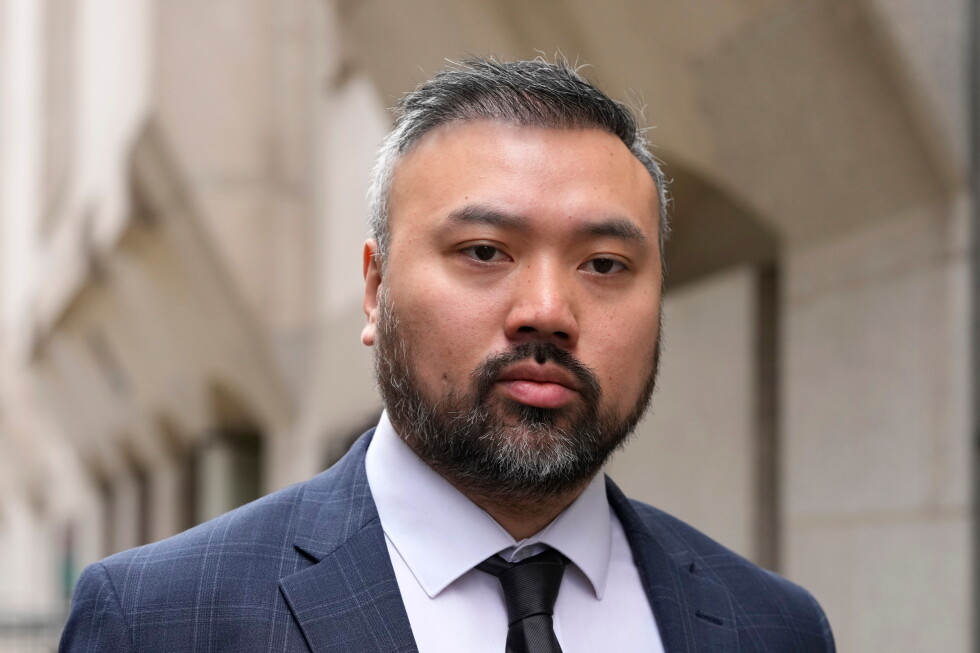
    Van Dyke made his first court appearance at a federal arraignment in New York on Tuesday, one week after federal prosecutors unsealed a multi-count indictment outlining the alleged scheme. Clad in a dark tailored suit and black shirt, he took a seat at the defense table alongside his legal team, which is led by high-profile defense attorney Mark Geragos—recently known for his work on the legal team representing Sean “Diddy” Combs. When U.S. District Court Judge asked Van Dyke to enter his plea, he clearly responded: “Not guilty, your honour.”

    Following the arraignment, Judge granted Van Dyke conditional release on a $250,000 secured bond, with strict travel and supervision conditions. He was ordered to surrender his U.S. passport, and the judge ruled that Van Dyke, who is currently on approved leave from military service, will remain under court-ordered supervision while residing in North Carolina. His approved travel is restricted to limited regions within North Carolina, the Southern District of New York, and California for legal proceedings and case-related meetings.

    In comments to reporters waiting outside the courthouse, Geragos pushed back forcefully against the federal government’s allegations, arguing that the conduct prosecutors have accused his client of does not qualify as a criminal offense under U.S. law. Geragos went on to describe Van Dyke as a decorated “American hero” who has devoted nearly 98% of his adult life to exemplary military service to the United States. The attorney confirmed that he intends to file formal legal motions “shortly” that will challenge both the grand jury indictment itself and the federal court’s jurisdiction over the case.

    The origins of the case date back to a classified U.S. military covert action codenamed Operation Absolute Resolve, which targeted Maduro for removal in early January 2026. According to the unsealed indictment, Van Dyke—who has served on active duty in the U.S. Army since 2008 and earned promotion to master sergeant in Special Forces in 2023—signed multiple binding non-disclosure agreements barring him from sharing or profiting from classified information related to sensitive operations. Prosecutors allege he played a direct role in planning and executing the Maduro seizure operation, which included months of pre-positioning military assets, coordinated air strikes, and an extensive network of on-the-ground intelligence operatives in the region.

    Between December 27, 2025, and January 2, 2026, Van Dyke leveraged his inside knowledge of the operation’s timeline and objectives to place at least 13 separate bets on Polymarket, a crypto-based decentralized prediction market, the indictment claims. He invested a total of roughly $33,934 of his own money across bets predicting the timing of the U.S. military incursion into Venezuela and Maduro’s removal from power. When Maduro was taken into U.S. custody in early January as planned, Van Dyke’s bets paid out a total of more than $409,800 in winnings, prosecutors allege.

    Following the payout, court documents outline a series of alleged attempts by Van Dyke to conceal the illegal profits and his identity. According to the DOJ, Van Dyke first transferred the majority of his winnings to an interest-bearing offshore cryptocurrency “vault” to hide the funds from regulators. He then changed the registered email address associated with his cryptocurrency exchange account to a new, unregistered anonymous address. In mid-January, he transferred the full balance of winnings plus accumulated interest—totaling approximately $444,209—to a newly created personal brokerage account. After independent online investigators began highlighting the suspicious large bet in early January, Van Dyke also deleted his Polymarket account in an attempt to cover his tracks, prosecutors say.

    The case has drawn intense public and regulatory scrutiny in large part because of the anonymous nature of blockchain-based prediction markets. After online analysts noticed the unusually large, perfectly timed bet on Maduro’s capture in early January, widespread public backlash and speculation erupted over the identity of the bettor and whether classified information had been exploited. Polymarket CEO Shayne Coplan has confirmed that the platform’s internal compliance team flagged the suspicious activity early on and voluntarily notified federal law enforcement of the potential violation. While the account linked to the bet was initially anonymous, identified only by a string of alphanumeric characters on the blockchain, investigators were able to trace the account back to Van Dyke because he used a personal email address to register the account.

    In addition to the criminal charges brought by the DOJ, Van Dyke also faces a separate civil insider trading lawsuit brought by the U.S. Commodity Futures Trading Commission (CFTC), the independent federal regulator that oversees commodities and futures trading. The criminal charges against Van Dyke include unlawful use of confidential government information for personal gain, theft of non-public government data, commodities fraud, wire fraud, and unlawful monetary transaction. If convicted on all counts, he faces decades of federal prison time and substantial financial penalties.

    This case also comes amid growing bipartisan concern over the rising risk of U.S. government officials and military personnel with access to classified information exploiting crypto prediction markets to profit off sensitive policy, military, and political events, leading to expanded calls for tighter regulatory oversight of these blockchain-based platforms.