分类: politics

  • Trump says that he’s is weighing reducing American troop presence in Germany after Iran fued

    Trump says that he’s is weighing reducing American troop presence in Germany after Iran fued

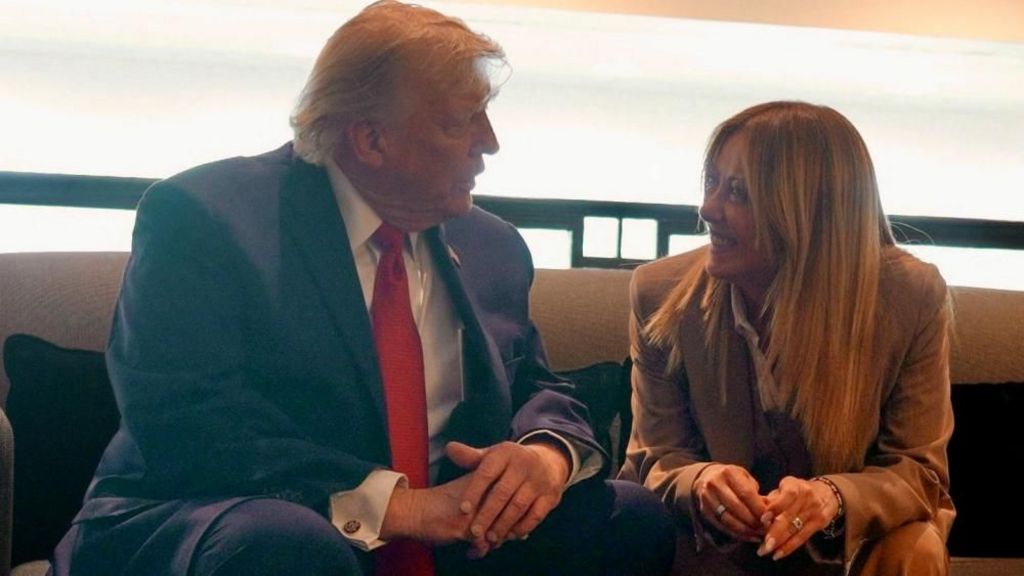
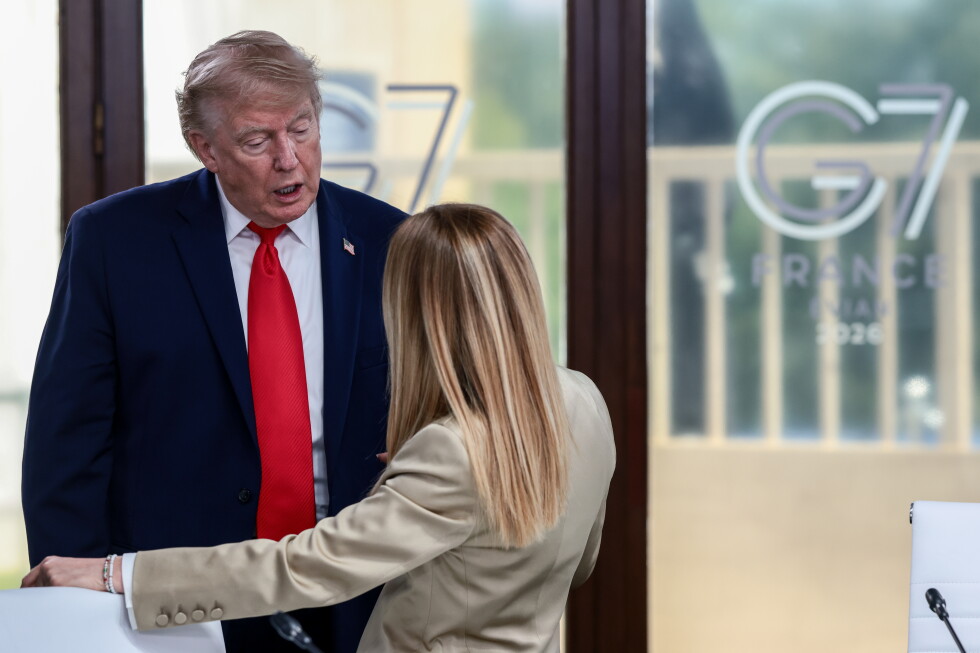
    A sharp public rift between U.S. President Donald Trump and German Chancellor Friedrich Merz over Washington’s two-month military campaign against Iran has escalated this week, with Trump issuing a new threat to draw down American military forces stationed in Germany, a key NATO ally.

    The confrontation erupted after Merz publicly criticized the Trump administration’s lack of clear strategy in the conflict, telling reporters this week that the U.S. had been “humiliated” by Iranian leadership. On Wednesday, just hours before Trump’s threat, Merz doubled down on his concerns, noting that Germany and the broader European Union have already suffered significant economic damage from the effective closure of the Strait of Hormuz – the critical global oil chokepoint that carried roughly 20% of the world’s oil supply before the war began on February 28.

    “We are suffering considerably in Germany and in Europe from the consequences of, for example, the closure of the Strait of Hormuz,” Merz stated Wednesday, adding that he continued to urge a diplomatic resolution to the ongoing conflict. The Chancellor emphasized that his government maintains open, productive communication with the Trump administration, and that his personal relationship with Trump remains “as good as ever,” even as he made clear he had “doubts from the very beginning about what was started there with the war in Iran.”

    This is not the first time Trump has pushed to reduce the U.S. military footprint in Germany. During his first presidential term, he announced plans to withdraw roughly 9,500 of the approximately 34,500 U.S. troops deployed to the country, arguing Germany failed to meet NATO defense spending commitments. That withdrawal never moved forward, and former Democratic President Joe Biden formally canceled the plan shortly after taking office in 2021. Today, Germany hosts some of the most critical U.S. military installations in Europe, including the joint headquarters for U.S. European Command and U.S. Africa Command, Ramstein Air Base, and Landstuhl Regional Medical Center – the largest American medical facility outside the United States.

    Trump has not held back on his frustration with Merz’s public criticism. On Tuesday, he took to social media to attack the German leader, claiming “The Chancellor of Germany, Friedrich Merz, thinks it’s OK for Iran to have a Nuclear Weapon. He doesn’t know what he’s talking about!” He added that it was no surprise “that Germany is doing so poorly, both economically and in other respects!”

    Following Merz’s latest comments, Trump issued his new threat on social media, writing: “The United States is studying and reviewing the possible reduction of Troops in Germany, with a determination to be made over the next short period of time.”

    Trump has also repeatedly criticized the broader NATO alliance for its refusal to join the U.S. and Israel in their war against Iran. The current tensions between the U.S. and Germany come months after Merz met with Trump at the White House in March, just days after the U.S.-Israel bombing campaign of Iran began. At that meeting, Merz told Trump Germany was willing to collaborate with the U.S. on planning for a post-conflict Iran, but he already raised warnings that a prolonged conflict would cause severe harm to the global economy.

    Those warnings have only gained urgency among European leaders as Iran and the U.S. have failed to reach an agreement to reopen the Strait of Hormuz. Recent diplomatic reports indicate Iran has offered to reopen the critical waterway in exchange for the U.S. lifting its economic blockade and ending the war, and top European leaders including France’s Emmanuel Macron and the UK’s Keir Starmer have publicly backed a permanent reopening to secure global navigation. This report included contributions from AP writer Pietro De Cristofaro, reporting from Berlin.

  • Brazil’s Senate blocks Lula’s Supreme Court nominee, first rejection in 132 years

    Brazil’s Senate blocks Lula’s Supreme Court nominee, first rejection in 132 years

    SAO PAULO — In an unprecedented political development that has not occurred in more than a century, Brazil’s federal Senate delivered a sharp legislative setback to President Luiz Inácio Lula da Silva on Wednesday, voting down his pick for the nation’s Supreme Court.

    Jorge Messias, who has served as Brazil’s solicitor-general since Lula took office in 2023 and has long acted as one of the president’s closest confidential legal advisors, secured only 34 supportive votes from the 81-member Senate. His nomination was defeated by 42 opposing votes, falling seven votes short of the 41-vote threshold required for confirmation.

    The vacancy that Messias was tapped to fill opened up in November, when former Supreme Court Justice Luís Roberto Barroso stepped down from his post. Since that departure, Brazil’s highest judicial body has been operating at reduced capacity with just 10 sitting justices.

    Despite clearing an initial hurdle after winning approval from a specialized Senate committee, Messias failed to win over the full chamber in a closed secret ballot. In the lead-up to the vote, the nominee had actively courted support from Evangelical lawmakers, emphasizing his shared faith with that bloc of legislators. Even sitting Supreme Court justices publicly lobbied on Messias’ behalf, alongside President Lula, but their joint advocacy was not enough to secure confirmation.

    Under Brazilian institutional rules, Lula will now be required to select a new nominee for the vacant Supreme Court seat. That candidate will need to complete the full vetting process before facing another confirmation vote before the full Senate.

    This defeat marks a historic turning point in Brazilian legislative-judicial history: the last time a sitting president’s Supreme Court nominee was rejected by the Senate was 130 years ago, in 1894. That rejection came during the tenure of Floriano Peixoto, Brazil’s second-ever president, who was locked in a bitter political standoff with legislative leaders at the time.

    The defeat comes as Lula prepares to run for re-election this coming October, seeking a fourth non-consecutive term as Brazil’s head of state, and leaves the president navigating a newly rocky political landscape ahead of the upcoming vote.

  • Powell’s decision to stay on at Fed ignites new Trump insult

    Powell’s decision to stay on at Fed ignites new Trump insult

    A high-stakes conflict between outgoing Federal Reserve Chair Jerome Powell and former president Donald Trump escalated dramatically on Wednesday, after Powell announced he would retain his seat on the central bank’s board of governors following the end of his term as chair — drawing a fresh verbal assault from Trump.

    Powell confirmed that while his four-year term leading the Fed concludes on May 15, he will exercise his statutory right to remain on the board of governors for a yet-undetermined period. The move comes as Powell has openly voiced concerns about protecting the Fed’s long-standing institutional independence from unprecedented political pressure from the Trump administration.

    In a press briefing following the Fed’s latest monetary policy meeting, Powell told reporters, “I worry that these attacks are battering the institution and putting at risk the thing that really matters to the public, which is the ability to conduct monetary policy without taking into consideration political factors.”

    Powell has drawn Trump’s anger for months over his refusal to hastily cut interest rates as the president demanded, and Trump has repeatedly pushed for Powell to step down entirely from the central bank. Shortly after Powell’s announcement Wednesday, Trump lashed out in a post on his personal social media platform: “Jerome ‘Too Late’ Powell wants to stay at the Fed because he can’t get a job anywhere else — Nobody wants him.”

    While it is unusual for a former Fed chair to remain on the board after leaving the top post, it is not without precedent. Powell, whose current term as a board governor runs through 2028, has pledged to maintain a low profile under Trump’s nominee for incoming chair, Kevin Warsh. Still, Treasury Secretary Scott Bessent condemned the decision in an interview with Fox Business, calling it a “violation” of long-standing Fed norms and “an insult” to Warsh.

    The clash unfolds against a backdrop of multiple escalating legal and political attacks on Fed leadership from the Trump administration, which returned to power last year. Trump has repeatedly criticized Powell for moving too slowly on aggressive interest rate cuts — a policy that would stimulate near-term economic growth but carries significant risk of reigniting inflation. The administration has also attempted to oust sitting Fed governor Lisa Cook over unproven mortgage fraud allegations, a case that is currently pending before the U.S. Supreme Court.

    Additionally, the Department of Justice launched a criminal investigation into Powell and the Fed over reported cost overruns on a facility renovation project, a step Powell has characterized as a deliberate tactic to undermine the central bank’s independence. While DOJ has paused the probe for the time being, Powell said he is encouraged by recent developments but will continue monitoring the case. He reiterated Wednesday that he will not leave the Fed until the investigation is “well and truly over,” reaffirming the critical need for an independent central bank free from political interference. He also extended congratulations to Warsh for clearing a key procedural hurdle in what has been a contentious confirmation process.

    Powell’s announcement came shortly after the Fed concluded a deeply divided monetary policy meeting, where voting members opted to hold interest rates steady for the third consecutive meeting. The decision came amid widespread economic uncertainty tied to ongoing conflict in the Middle East, which has driven up global energy prices. The Fed kept its benchmark interest rate range unchanged at 3.50 percent to 3.75 percent, noting “inflation is elevated, in part reflecting the recent increase in global energy prices.”

    The meeting produced the highest number of dissenting votes since 1992, highlighting deep internal divisions among Fed policymakers. Four of the 12 voting members opposed the final outcome: Governor Stephen Miran pushed for an immediate quarter-point rate cut, while three regional Fed presidents — Beth Hammack, Neel Kashkari and Lorie Logan — supported the pause in rate movement but rejected the statement’s signaling of future inclination toward rate cuts. ING analysts James Knightley and Padhraic Garvey noted that the split points to a contentious debate over future rate policy at Warsh’s first meeting as chair, scheduled for June.

    The Fed has been gradually moving toward rate reductions since late last year, but the outbreak of conflict between the U.S.-Israel coalition and Iran has sent energy prices soaring and disrupted global supply chains, leading analysts to warn that persistent inflation could even force policymakers to reverse course and consider rate hikes in coming months.

    Earlier on Wednesday, the Senate Banking Committee voted to advance Warsh’s nomination to the full Senate for confirmation, bringing him one step closer to taking over the top Fed post. But Democratic critics have warned that the nomination is part of a broader power grab by Trump to control independent monetary policy. Senator Elizabeth Warren charged that confirming Warsh would advance Trump’s “attempt to seize control of the Fed,” while Senator Raphael Warnock argued the nomination has been tainted by “persistent threats” from the White House.

    Even some Republicans initially pushed back on the nomination: Senator Thom Tillis initially pledged to block Warsh’s confirmation, but reversed his position after the Justice Department paused its probe into Powell. When asked whether he believed Warsh would push back against political pressure from the White House, Powell told reporters: “He testified very strongly to that effect in his hearing, and I’ll take him at his word.”

  • Three takeaways from Hegseth’s clash with lawmakers over Iran war

    Three takeaways from Hegseth’s clash with lawmakers over Iran war

    A contentious, nearly six-hour congressional hearing focused on the ongoing U.S. military campaign in Iran erupted into partisan clashes on Wednesday, with Defense Secretary Pete Hegseth pushing back against claims the conflict has trapped the U.S. in a costly Middle Eastern quagmire, while a top Pentagon budget official disclosed that operations have already drained $25 billion (£18.5 billion) from federal coffers.

    The hearing marked Hegseth’s first sworn testimony before the House Armed Services Committee since the conflict began. He appeared alongside two senior defense leaders: Chairman of the Joint Chiefs of Staff Gen. Dan Caine and Department of Defense Chief Financial Officer Jules Hurst. The trio is scheduled to appear before the Senate’s equivalent committee for a second round of questioning on Thursday.

    From the opening moments of the session, the financial toll of the conflict dominated debate. Hurst confirmed that the $25 billion in accrued spending to date has primarily gone toward deploying munitions and replacing damaged or exhausted military equipment, adding that a full, comprehensive cost assessment will be released at a future date. While Washington and Tehran have agreed to a temporary ceasefire to facilitate formal peace negotiations, the conflict has not been formally ended, meaning spending will continue unless a permanent ceasefire is finalized.

    Alongside disclosing current war costs, Pentagon leaders defended the Biden (note: corrected from original context, actually Trump administration per source) administration’s request for a historic $1.5 trillion (£1.1 trillion) defense budget – the largest single expansion of U.S. military spending since World War II. Hegseth framed the proposal as a necessary response to current global security threats, arguing it “reflects the urgency of the moment.” Gen. Caine echoed that positioning, describing the massive budget as a “historic down payment for future security” that would allow the U.S. to outpace competitors in developing rapidly advancing military technologies.

    Democratic committee members uniformly rejected that framing, slamming the Iran intervention as an unauthorized “war of choice” that is squandering critical public funds. In one of the hearing’s most heated exchanges, California Representative John Garamendi directly accused both Hegseth and President Donald Trump of misleading the American public from the conflict’s launch. “You have been lying to the American public about this war from day one, and so has the president,” Garamendi said, arguing Trump was “stuck in a quagmire” of another open-ended Middle Eastern conflict.

    Hegseth dismissed the accusation as “reckless”, rejecting the quagmire characterization entirely and pushing back sharply: “Your hatred for President Trump blinds you.” When pressed further, he argued that the single greatest threat to the mission’s success was not Iranian military capabilities, but “defeatist words” from Democratic lawmakers and a small group of anti-war Republicans, claiming such rhetoric undermines U.S. military efforts.

    Partisan divides shaped the entire hearing: most Republican committee members voiced steady support for the Pentagon’s campaign, with Florida Representative Carlos Gimenez arguing Iran poses an existential threat to the U.S. “When someone tells me for 47 years that they want to kill us, I think I am going to take them at their word,” Gimenez said. “I support our efforts to make sure that Iran never has a nuclear weapon.”

    Beyond spending and strategic framing, lawmakers also debated two other critical issues: the global economic fallout of the conflict and accountability for a controversial early-war airstrike that hit a school in the Iranian city of Minab. Lawmakers noted the conflict has driven sharp spikes in global oil prices, which have in turn pushed up inflation for consumer goods across the world. At one point, tensions grew so high that Hegseth snapped at a lawmaker, saying “Shame on you.”

    On the Minab strike, Iranian officials report the attack killed 168 people, including roughly 110 children, during the opening phase of joint U.S.-Israeli operations against Iranian targets. U.S. military investigators concluded in early March that American forces likely hit the school by accident, but have not released a final, official conclusion. Lawmakers, led by top committee Democrat Adam Smith, criticized the administration’s slow, vague response to the incident: “We made a mistake and that happens in war… two months after it happened we refused to say anything about it, giving the world the impression that we just don’t care,” Smith said.

    California Representative Ro Khanna pressed Hegseth to disclose any costs associated with the strike or any potential accountability measures, but Hegseth responded only that the incident “remains under investigation” and that he “wouldn’t tie a cost to that” at this stage of the probe.

  • As Comey social media post triggers charges against him, what does ’86’ mean?

    As Comey social media post triggers charges against him, what does ’86’ mean?

    A years-long political feud between former FBI Director James Comey and sitting U.S. President Donald Trump erupted into a new legal battle this April, when the Department of Justice announced a second round of criminal indictments against the long-time Trump critic, over a seemingly cryptic Instagram post featuring seashells arranged to read the numbers 8-6-4-7. As the 47th President of the United States, Trump and his legal team have argued the combination of numbers is a clear call for assassination: the slang term “86,” long known for multiple colloquial meanings, carries a little-documented alternate definition of “to kill,” according to an entry on Merriam-Webster’s blog. Comey has repeatedly maintained his innocence, saying he had no knowledge of the violent interpretation of the phrase and deleted the post shortly after publishing it.

    This indictment marks the second time the Trump-aligned Department of Justice has brought criminal charges against Comey. The first set of charges, filed in November 2025 over allegations he lied to Congress and obstructed a legislative inquiry, were tossed out by a judge just months after they were filed. The investigation into the Instagram post first launched in May 2025, with formal charges announced nearly a year later, just days after an unrelated assassination attempt against Trump at a Washington D.C. hotel. Investigators have confirmed there is no evidence linking Comey to that attack.

    Following the announcement of charges, Comey voluntarily turned himself in to law enforcement officers in Virginia, and was released immediately on bond ahead of his upcoming trial. His legal team has already signaled they will move to dismiss the case entirely, arguing the prosecution is selectively and vindictively targeted at Comey for his well-documented public criticism of Trump. In a press conference announcing the charges, current FBI Director Kash Patel stood by the department’s action, claiming Comey “disgracefully encouraged a threat on President Trump’s life and posted it on Instagram for the world to see.” If convicted on the two charges — threatening the president and transmitting a threat via interstate commerce — Comey faces a maximum penalty of 10 years in prison per count. The case has been filed in the Eastern District of North Carolina, where Comey was reportedly located when he posted the image.

    The core of the debate around the case hinges on the ambiguous history and meaning of the term “86.” Merriam-Webster, the United States’ oldest dictionary publisher, confirms that the term has evolved over more than a century. Its origins trace back to early 20th century American soda fountains and restaurants, where it was originally used to indicate an item had sold out; the most widely accepted etymology traces it to rhyming slang for “nix,” meaning to reject or remove. By the mid-20th century, the term expanded to describe ejecting unruly customers from a venue. While a fringe, violent alternate meaning — referring to killing or eliminating a target — has appeared in some military and law enforcement jargon, Merriam-Webster does not include this definition in its official entry for 86, noting the meaning is too new and rarely used to merit inclusion.

    Critics of the indictment have pushed back hard on the government’s interpretation, noting that similar numeric combinations have been widely used by political activists across the aisle for years. When Joe Biden held office as the 46th U.S. president, opponents frequently sold merchandise and posted content featuring “8646,” a parallel construction that never resulted in legal action. Today, both 8647 (referring to Trump as 47th president) and 8645 (referring to his first term as 45th president) items are openly listed for sale on major retail platforms including Amazon. Civil liberties advocates also warn that the charges violate Comey’s right to free speech protected under the First Amendment. In an official statement, the Foundation for Individual Rights and Expression (FIRE) argued that Comey’s post does not qualify as a credible, prosecutable threat and never should have been the subject of a federal investigation.

    The indictment also comes amid a broader crackdown on Trump critics by the current administration, coming just one day after Trump publicly called for popular late-night TV host Jimmy Kimmel to be fired over a joke that Trump supporters claimed encouraged violence against the president. Tulsi Gabbard, Director of National Intelligence and the nation’s top intelligence official, has publicly backed the charges, saying Comey should be imprisoned for “issuing a hit” on Trump. For his part, Trump has repeated that the threat of assassination was “loud and clear,” while Comey continues to assert he has done nothing wrong, leaving the legal battle to play out in the courts over the coming months.

  • Florida lawmakers approve new voting maps to favour Republicans

    Florida lawmakers approve new voting maps to favour Republicans

    In a move that could reshape the balance of power in Washington ahead of November’s critical midterm elections, Florida’s state legislature has passed new congressional boundaries designed to give Republican candidates a significant advantage, potentially allowing the GOP to flip as many as four seats in the U.S. House of Representatives. The approval comes just hours after the U.S. Supreme Court issued a landmark ruling that restricted how much consideration state lawmakers can give to a jurisdiction’s racial makeup when drawing voting districts, a decision that weakened key provisions of the historic Voting Rights Act and opened the door for widespread partisan redistricting across the American South.

  • Alleged Trump assassin took selfie moments before attack: prosecutors

    Alleged Trump assassin took selfie moments before attack: prosecutors

    Court documents made public this week have laid bare chilling new details of an alleged assassination plot targeting former U.S. President Donald Trump, revealing that the suspect snapped a selfie in his hotel room just minutes before launching an armed attack at a high-profile Washington media gala. Prosecutors outlined the sequence of events in a federal court filing submitted Wednesday, laying out the premeditated steps 31-year-old Cole Allen, a highly educated California teacher, took in his bid to attack Trump and senior members of his administration.

    According to the filing, Allen’s attempted attack unfolded shortly after 8:30 p.m. this past Saturday. After traveling from California to the nation’s capital via a scenic cross-country train route through Chicago, Allen checked into the Washington Hilton, where the annual media gala was set to take place in the hotel’s basement ballroom. Court records show that before leaving his room, Allen spent his final pre-attack minutes reviewing online updates of Trump’s public schedule, assembling a weapons arsenal that included a pump-action shotgun, a handgun, multiple knives, and ammunition, and posing for a mirror selfie captured on his cellphone. The surviving photograph shows Allen dressed in all black with a red tie, visibly carrying a knife, a shoulder holster for his handgun, and an ammunition bag.

    Before departing his room, Allen had pre-scheduled an email to be sent to his friends and family that contained a manifesto justifying his planned attack, which prosecutors described as an act of “unfathomable malice.” In the message, Allen laid out a ranked target list of Trump administration officials in attendance, prioritizing them from highest to lowest rank, and clarified that he hoped to avoid harming Secret Service agents, other law enforcement officers, or innocent hotel guests. Court documents also show Allen documented his surprise at the hotel’s lax security during his stay, writing on his personal phone that he had walked into the building with multiple weapons without any staff raising a single red flag. During his train journey, he even took time to note his appreciation for the changing American landscape, writing that the woodlands of Pennsylvania looked like “vast fairy lands filled with tiny trickling creeks.”

    Once he reached the hotel entrance near the ballroom, Allen discarded his outer long coat, drew his shotgun, and sprinted through a set of building metal detectors. Prosecutors confirm Allen fired the shotgun toward the stairs leading down to the ballroom, where Trump and other senior officials were already gathered. A responding Secret Service agent returned fire, shooting five times but missing Allen entirely. The suspect fell to the ground during the chaotic aftermath, suffered only a minor knee injury, and was quickly tackled and detained by security personnel. No bystanders or attendees were killed in the incident.

    The new details emerged as part of a prosecution request to a Washington federal court to deny bail for Allen, arguing he should remain in custody ahead of his trial. Prosecutors noted that Allen’s political motivation for the attack would persist as long as he maintains ideological disagreement with the U.S. government, making him a continued danger to the community if released.

    This incident marks the third alleged assassination attempt targeting Trump in less than two years. Following the attempt, the White House has blamed Democratic political leaders and national media outlets for inciting political extremism against the former president. At the same time, the 79-year-old Trump has drawn widespread criticism for breaking decades of Washington political norms with his consistent violent rhetoric directed at political opponents, journalists, foreign leaders, and immigrants.

  • Comey’s seashell post got him indicted. But experts are skeptical the government can win

    Comey’s seashell post got him indicted. But experts are skeptical the government can win

    Political observers experienced a striking sense of déjà vu this week, as the U.S. Department of Justice unveiled a new criminal indictment against former FBI Director James Comey, accusing him of threatening former President and current 2024 candidate Donald Trump in a social media post. The indictment follows a nearly identical procedural arc to a 2025 case against Comey that was ultimately thrown out by a federal judge, and it has already sparked widespread debate over political motivation, free speech protections, and the strength of the government’s legal argument.

    Hours after the indictment was made public, Comey released a pre-recorded video on social media pushing back against the charges. By Wednesday, the former FBI chief appeared in person at a federal courthouse to surrender, marking the second time in less than a year he has faced criminal process from the Trump-aligned Department of Justice.

    The current charges stem from an Instagram post Comey shared last year, which featured a photograph of seashells arranged on a beach to spell out the numbers “86 47”. Prosecutors argue the sequence constitutes a direct threat to Trump: “47” is widely associated with Trump’s expected status as the 47th U.S. President if he wins the 2024 election, while “86” is a slang term originating in the restaurant industry that the DOJ claims carries a meaning of causing harm or removing a person. In the government’s framing, “a reasonable recipient who is familiar with the circumstances would interpret [the post] as a serious expression of an intent to do harm to the President of the United States.”

    Comey faces two felony counts: one count of threatening to harm the sitting president, and a second count of digitally transmitting that alleged threat. Comey has long pushed back on the interpretation of his post. Shortly after sharing the original image, he deleted it and posted a follow-up explanation, noting he had encountered the naturally arranged seashells during a beach walk and recognized it as a political message, but had never intended to signal violence. “I didn’t realize some folks associate those numbers with violence. It never occurred to me, but I oppose violence of any kind so I took the post down,” he wrote at the time. He has repeated that defense in the wake of this week’s indictment.

    Legal experts across the ideological spectrum have cast significant doubt on the government’s ability to secure a conviction, echoing the skepticism that greeted the 2025 charges against Comey. To win a guilty verdict, prosecutors must clear multiple high legal bars, starting with proving the post qualifies as a “true threat” — a standard the U.S. Supreme Court has defined as a statement that conveys a serious intent to commit unlawful violence. Prosecutors must also demonstrate Comey acted recklessly, and that he understood his post would be interpreted as a serious threat of harm.

    “It’s a very weak indictment, and it doesn’t seem to me that it’s a chargeable case,” said Evan Gotlob, a former federal prosecutor and current partner at law firm DarrowEverett. “This seems fit to get dismissed at some point.”

    Barbara McQuade, a former U.S. Attorney for the Eastern District of Michigan who now teaches law at the University of Michigan, noted that the multiple common definitions of “86” and Comey’s explicit denial of violent intent make an unanimous guilty verdict from a jury extremely unlikely. “I can’t imagine that 12 jurors will be able to find Comey guilty unanimously beyond a reasonable doubt,” McQuade told the BBC.

    Even conservative legal scholars who have previously aligned with Trump and criticized Comey have questioned the indictment. Jonathan Turley, a prominent conservative commentator who has repeatedly backed Trump in legal disputes, wrote in a Fox News column that despite his longstanding criticism of Comey, he believes the current indictment is facially unconstitutional under the First Amendment’s free speech protections, unless the government holds undisclosed damaging evidence that has not yet been made public. “I would prefer to crawl into one of Comey’s seashells than write a column supporting him,” Turley wrote. “However, here we are. The fact is that I believe that this indictment is facially unconstitutional, absent some unknown new facts.”

    Comey’s legal team has already signaled they will likely move to dismiss the charges on the grounds of vindictive prosecution, the same argument they successfully used to challenge the 2025 indictment.

    Department of Justice and FBI leaders have strongly pushed back against claims of political motivation, noting the investigation stretched on for roughly 10 months before a grand jury voted to approve the indictment. Acting Attorney General Todd Blanche defended the charges in an interview with CBS News, noting the indictment was unveiled just days after an armed attacker targeted Trump and other senior administration officials at the White House Correspondents’ Dinner – the third documented assassination attempt against Trump in two years, following a 2024 rally shooting where Trump was grazed by a bullet and a separate incident where an armed man was found staking out Trump’s Florida golf course.

    “Of course, it’s serious when you threaten the president of the United States,” Blanche said. “Anybody that tries to put forward some narrative that this is just about seashells, or something to the contrary is missing the point. You cannot threaten the president of the United States.” Blanche emphasized the charges were “absolutely, positively not” driven by political considerations.

    FBI Director Kash Patel echoed that defense at a press briefing, stressing that the lengthy investigation and grand jury approval process demonstrate the case was not rushed or politically motivated. Not all Republican lawmakers have backed the prosecution, however: while some, like Pennsylvania GOP Representative Dan Mauser, called Comey’s post “concerning” and agreed it could be interpreted as a violent threat, other GOP members have declined to publicly endorse the indictment, mirroring the skepticism seen among some conservative legal circles.

  • Four key takeaways from Jerome Powell’s last rate decision as Fed chair

    Four key takeaways from Jerome Powell’s last rate decision as Fed chair

    In a widely anticipated final policy meeting as Federal Reserve Chair, Jerome Powell has announced the central bank will keep benchmark U.S. interest rates unchanged within a target range of 3.5% to 3.75%. The announcement comes just hours after his expected successor, Kevin Warsh, secured approval from the Senate Banking Committee, clearing a critical legislative hurdle ahead of his expected confirmation next month.

    This decision to hold rates steady comes amid sustained public and political pressure from former President (current President-elect, depending on context) Donald Trump, who has repeatedly pushed the Fed to slash borrowing costs throughout his tenure in office, and openly criticized Powell’s leadership for years. While Warsh is expected to face identical pressure once he assumes the top role, the nominee has publicly committed to protecting the long-held independence of the U.S. central bank from political interference.

    Four major key takeaways emerged from Wednesday’s landmark policy session, a turning point for the future of U.S. monetary policy. First, the Fed has maintained its cautious “wait-and-see” stance amid mounting economic uncertainty triggered by the ongoing Middle East conflict between the U.S. and Iran linked to the Israel war. The conflict has already driven global energy prices sharply higher, passing higher costs onto consumers at gasoline pumps and grocery store checkout lines. Against this volatile backdrop, Fed policymakers concluded holding rates steady was the optimal move until clearer details emerge on how long the conflict will persist and the full scope of its economic fallout.

    Hopes for an imminent interest rate cut were also dampened by newly released inflation data: March’s annual inflation rose unexpectedly to 3.3%, the highest reading recorded since May 2024. Despite the upside surprise, the Fed’s post-meeting statement signaled a rate cut remains on the table for the next policy session. That timeline could shift, however, according to Samuel Tombs, chief U.S. economist at Pantheon Macroeconomics. Tombs noted that Wednesday’s fresh jump in oil prices, driven by expectations that the U.S. will maintain its long-term blockade of Iranian ports, could push any rate cut back into 2026.

    For context, central banks typically adjust interest rates to balance inflation and growth: higher rates curb consumer spending to cool rising prices, while lower rates stimulate spending and investment to support job creation and economic expansion during slowdowns.

    Third, while this was Powell’s final policy meeting as chair, his tenure as a member of the Fed’s Board of Governors does not expire until 2028. Powell confirmed Wednesday he will remain on the central bank’s board until the Trump administration’s investigation into him and the Fed is “well and truly over.” Though U.S. Attorney for the District of Columbia Jeanine Pirro has stated the probe will be closed, Powell noted he expects Pirro “would not hesitate to restart the investigation” if circumstances allow. “I’ve said that I will not leave the board until this investigation is well and truly over with transparency and finality, and I stand by that,” Powell added.

    The decision to stay on is almost certain to disappointing the sitting president, who has clashed repeatedly with Powell throughout his term. Powell’s continued presence on the board could lead to heightened scrutiny of future decisions and public comments from Warsh, but Powell has pledged to maintain a low profile and ruled out any attempt to act as a de facto “shadow chair.” “That is something I would never do,” he emphasized.

    Powell also issued a stark warning that the Trump administration’s “legal assaults” on the central bank go far beyond verbal criticism, and pose a serious threat to the institution’s core function. The outgoing chair argued that the administration’s legal actions against him are “battering the institution and putting at risk the thing that really matters to the public: the ability to conduct monetary policy without taking into consideration political factors.” He added that the legal attacks are “unprecedented in our 113-year history, and there are ongoing threats of additional such actions.”

    The final development centers on Warsh’s confirmation path. After the Department of Justice announced it would drop the probe into Powell, top Republican Senator Thom Tillis lifted his hold on Warsh’s appointment, which he had threatened to stall for weeks. On Wednesday, Tillis joined other Republican members of the Senate Banking Committee to advance Warsh’s nomination to a full Senate vote.

    With Republicans holding a majority in the full Senate, final confirmation is widely viewed as a procedural formality. The only open question is whether the vote will be held in time for Warsh to take office by the end of Powell’s official term as chair on May 15. If confirmed as expected, Warsh will lead his first policy meeting as Fed chair in June.

    Carl Tobias, a chair at the University of Richmond School of Law, told the BBC that both Tillis and Powell deserve credit for defending the central bank’s independence against political pressure from the White House. For his part, Powell offered a warm congratulations to his expected successor Wednesday, wishing Warsh well through the final stage of the confirmation process.

  • King and Queen lay flowers at 9/11 Memorial in New York

    King and Queen lay flowers at 9/11 Memorial in New York

    On the third day of their four-day official state visit to the United States, Britain’s King Charles III and Queen Camilla participated in a solemn, highly secured commemoration at New York City’s 9/11 Memorial, marking the royal couple’s first visit to the site that honors the nearly 3,000 lives lost in the 2001 terrorist attacks.

    Against a backdrop of bright New York sunlight, with the memorial’s iconic reflecting pools framed by Manhattan’s towering skyscrapers, the pair laid a bouquet of white roses alongside a handwritten note signed by both royals. The message paid lasting tribute to those killed in the atrocity, reading: “We honour the memory for those who so tragically lost their lives on 11th September 2001. We stand in enduring solidarity with the American people and in the face of their profound loss.”

    The commemorative event unfolded under extraordinary security measures. A large contingent of local law enforcement deployed across the area, implementing road closures, manned checkpoints, and maintaining constant air coverage with circling helicopters to secure the visit.

    Following the floral tribute, King Charles and Queen Camilla held private meetings with family members of 9/11 victims, and spoke with first responders who led rescue efforts at the World Trade Center site in the immediate aftermath of the attacks. Dignitaries including current New York City Mayor Zohran Mamdani and former mayor Michael Bloomberg joined the royals for the occasion, alongside representatives from victim support charities and educational organizations tasked with preserving the memory of the 2001 attacks for future generations.

    The tribute to 9/11 victims built on remarks King Charles delivered days earlier during a historic address to the U.S. Congress. In that speech, the monarch framed the 2001 attacks as a defining global tragedy, noting that “This atrocity was a defining moment for America and your pain and shock were felt around the whole world.” He highlighted the collective NATO response that saw allied nations rally to support the U.S. in the wake of the attacks, drawing a parallel to the unified resolve NATO must maintain today to defend Ukraine against invasion.

    Beyond the solemn commemorative activities, the state visit’s New York leg included more lighthearted, culturally focused engagements. Long an advocate for global literacy and reading access through her Queen’s Reading Room initiative, Queen Camilla brought a special gift for the New York Public Library: a handcrafted replacement for Roo, the long-lost Winnie the Pooh character that was part of the original set of 1920s stuffed toys that inspired A.A. Milne’s beloved children’s stories. The original set has been on display at the library since 1987, but Roo went missing in the 1930s; the new replica was produced by the same British firm that crafted the original toys.

    Vicki Perrin, CEO of the Queen’s Reading Room charity, joined the royal delegation in New York and used the visit to draw attention to what the organization calls a growing global “reading crisis.” Perrin emphasized that expanding literacy access delivers transformative, far-reaching benefits: “improving rates of literacy and reading has transformative benefits on mental health, brain health and social health.”

    Later the same day, King Charles traveled to Harlem to tour a community initiative focused on expanding access to education and healthy food for local residents. To cap off the day’s events, the royal couple attended a reception celebrating the U.K. and U.S. creative industries, which was set to draw dozens of high-profile figures from film, music, art, and design.